Overview
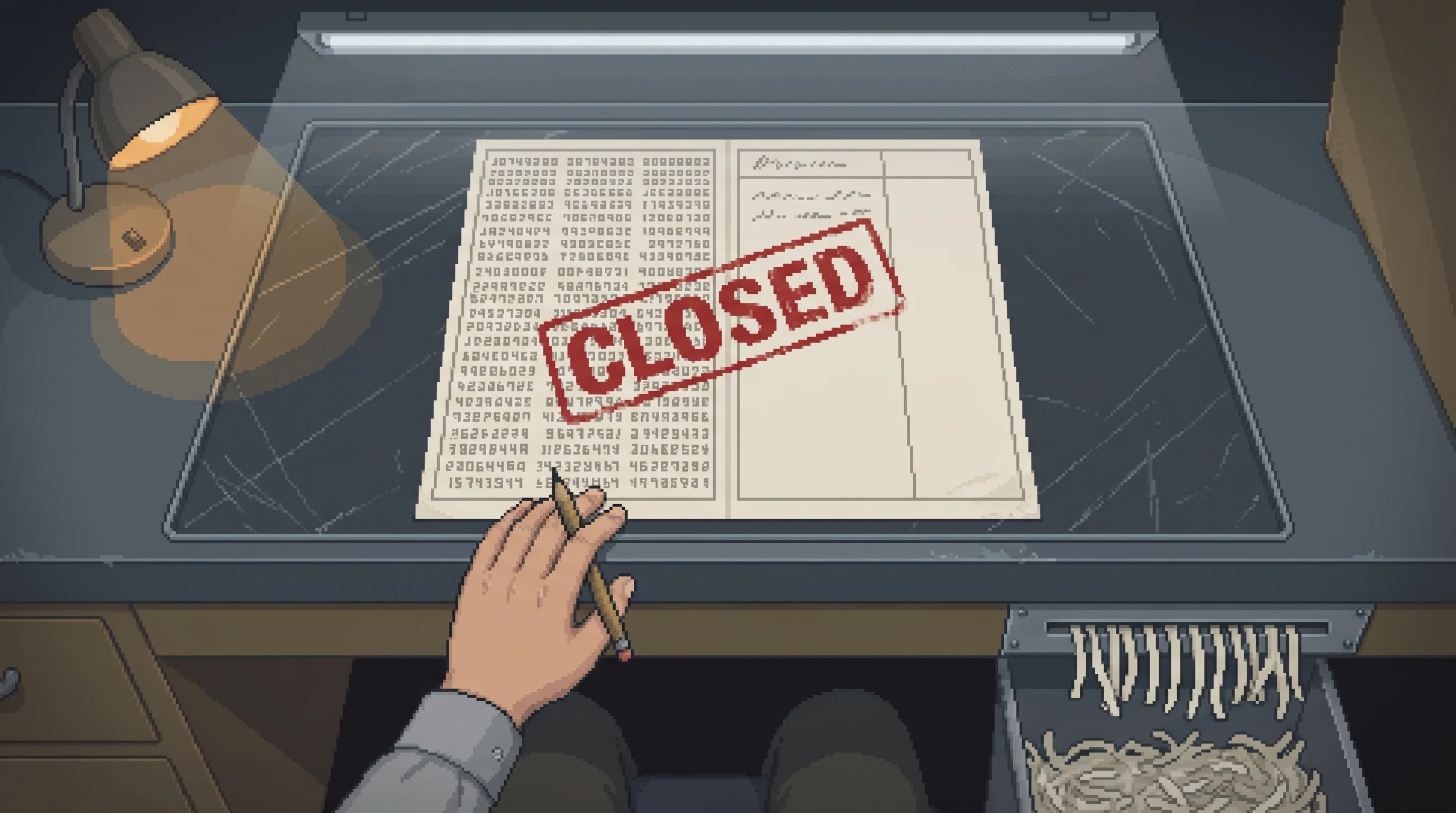
Every hearing in the licensed districts runs one form with two columns.
The wide column is the unbidden: pupil response, decision latency, respiration, skin conductance, recorded continuously through the sitting by a cuff on the wrist rest and a lamp on a jointed arm. Nobody hides the instrument. The subject is told what is read, shown the strip-chart, and offered a copy.

The narrow column is the represented. Everything the subject authored goes there — what they said, what they signed, what their advocate submitted on their behalf. The column exists. It is transcribed into the file. It carries no evidentiary weight, and it is destroyed when the finding closes.
Eighteen years. Findings in the millions. Not one appeal upheld on the ground that a person meant something other than what their body was doing.
That last figure is the one people reach for, and it is usually read wrong. The appeals are heard. They are not blocked, throttled, or quietly shelved. They lose, on the merits, because the readings are correct.
How It Came To This
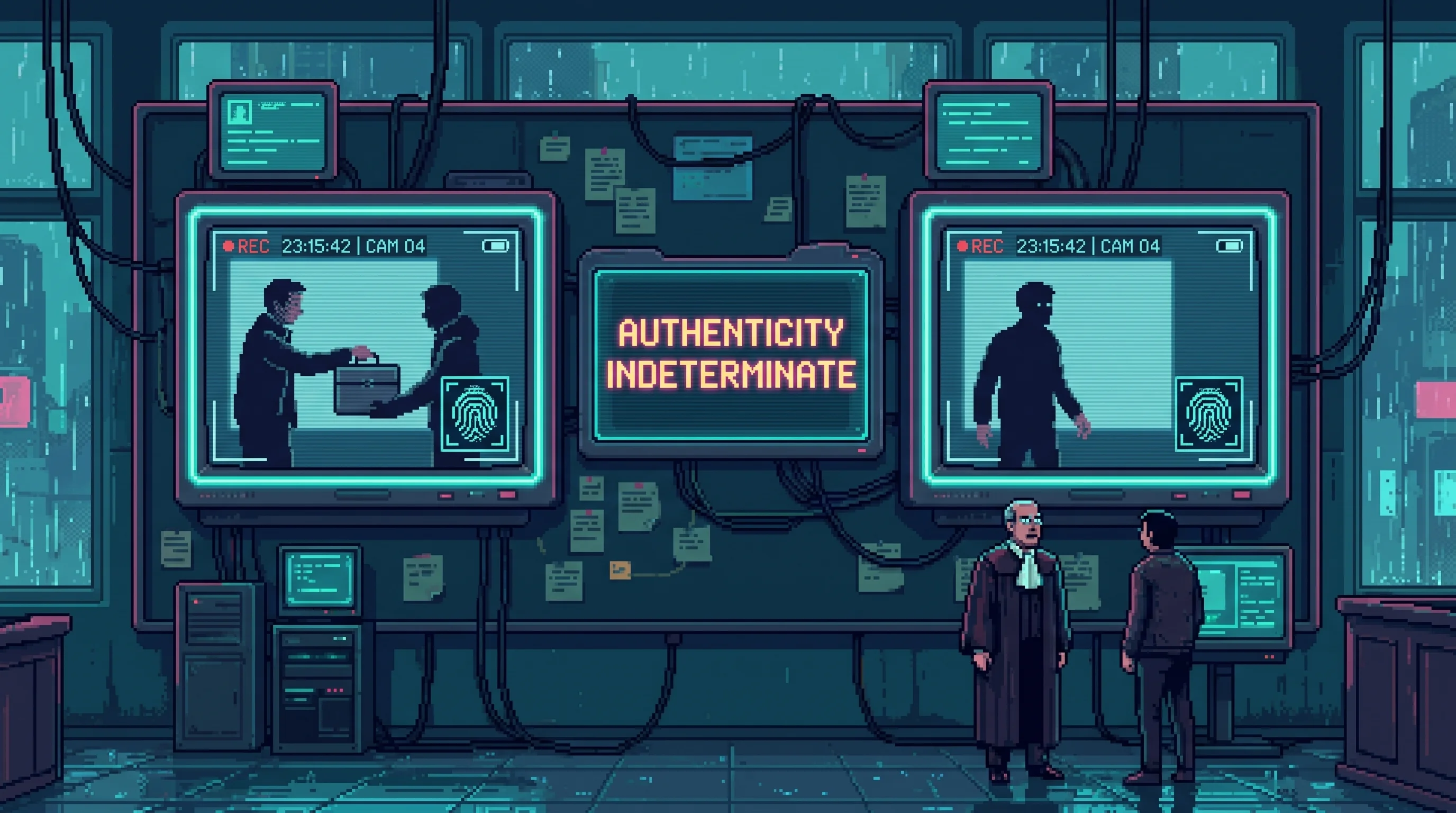
Between 2148 and 2166 the tribunals could not tell a real attestation from a made one.
Not often could not. Could not. Generation outran detection the way it always had, and the gap never closed, and by the end of it the Sprawl had convicted, evicted, deported and separated people on documents that nobody had written. Every remedy was another authored artefact, which meant every remedy could be composed too. Marking the artefact failed. Detecting the artefact failed. What survived was the oldest test there is: put the person in the room and make them account for it live.
That worked for about four years.

A present person's performance is coachable, and it was coached — immediately, at scale, by an industry that already existed for the surveillance record and simply moved indoors. So authentication took the one step left. It went below the part a subject can compose, to the channel a subject cannot: the four hundred milliseconds before intention reaches the face.
The Unbidden Standard was adopted in 2166 and it is not a stupid document. Its drafters wrote down the distinction their whole case rested on. The channel cannot be forged, because it is not authored. The channel can be trained, because a body learns. They believed those were different problems, and that only the first was fatal.
They were right that they are different problems. The second turned out not to need to be fatal to do the work.
The Discount Nobody Uses
The Standard shipped with a safeguard for exactly this, in clear language: a reading may be set aside where documented composure training exists.
It has been invoked two hundred and fourteen times in eighteen years.
Not because it is hidden — it is printed on the schedule — and not because mediators are lazy or bought. Because above the Rim composure training is now close to universal, and a discount that applied wherever training was documented would void the channel for the entire licensed tier. The clause can be granted in the individual case. It cannot be granted in the general case without ending the instrument, and no mediator has authority over the instrument.

So it survives as a mercy that is real, lawful, available on request, and structurally rationed. The two hundred and fourteen grants are concentrated in the sectors where training is rare enough that discounting it changes nothing.
Maren Cott has asked for it four times in three years and been granted it once. She can name a storefront curve off a strip-chart on sight — forty-one of them have crossed her desk and the flat ones go flat in the same place — and her written reason says exactly that, all four times, in the same sentence. She has never been told she was wrong. She has been told the clause is for the subject.
She was Raised: unaugmented through ten, no competency packages, a documented response latency of 310 milliseconds that every augmented professional in a room clocks inside a second. On the channel that reads as hesitation. She is the only person in the process who would fail her own instrument, and she is the one who signs.
What Composure Costs
The Composure Academies are licensed, tiered, inspected, and completely honest about what they sell. The good ones put it in the prospectus: the product is not honesty. The product is a body that reads as honest.
Intake begins at six. The autonomic baseline sets before adolescence, so six is not a marketing decision — it is the last point at which the work is cheap.
The fee schedule is public, which is the part that does the damage. A parent can read what each tier costs and what each tier delivers. The premium curriculum teaches modulation: a channel that reads appropriately, calm under audit and stricken at a graveside, because the body has been taught range. The storefront curriculum teaches suppression: twelve weeks, no refund, a channel that reads flat. Flat is a defence in a hiring board. It is a finding in a custody review.
Teodor Alcaraz is twenty. His mother bought him twelve weeks in 2170 because the schedule said it would protect him and, on the terms the schedule advertised, it did. He has never failed a screening.
In the spring of 2184 a mediator read out the removal of his daughter and his channel did not move. He said he was sorry. He said it out loud, twice, and the clerk wrote it in the narrow column, and the finding cited the wide one: low demonstrated attachment. The reading was accurate. He was drilled at six not to have one.
He asked the clerk afterwards whether the represented column was kept. She told him it was not. He writes his statements down now, in pencil, on the back of the notice, because that is the only copy there will be.
The fee schedule sorts the way fee schedules sort. Modulation is bought above the Rim and suppression below it, off one price list, which makes the class divide legible in a place it had not previously reached: the shape of a stranger's grief under questioning. Compounding advantage now includes a body that performs well at the worst hour of a person's life. And none of it required new collection — the channel reads telemetry already gathered for something else, which is why the Standard cost nothing to implement and why nobody had to be asked.
The Core Tension
The case for the Standard is strong and the people who make it are not liars.
For eighteen years this civilisation could not establish anything with a document, and people lost their children to forgeries. The channel closed that. It is not evadable by wealth the way a document was, it is disclosed to the subject in full, it is not coerced, and — this is the part critics keep declining to engage — it is right. The readings correspond to the states they claim to measure. When a mediator finds low attachment on a flat channel, the channel really was flat.
The case against is not that the instrument lies. It is that the instrument answers a different question than the hearing asked.
A reading establishes a state. It cannot establish what the state is about. Daria Kohl grieves genuinely and measurably in rooms full of families, and not for their dead. The channel records the grief correctly and attributes it to the room. That is not a malfunction, and no calibration fixes it, because reference is not a physical quantity.
Underneath both cases sits the thing the Standard actually did, which neither side much likes saying. It did not make apology illegal. It left the apology entirely lawful to offer, wrote it down, and gave it a column with no weight and no retention. Intent, excuse, explanation and remorse all still exist. A person can still feel them, still mean them, still say them out loud in a hearing and be heard politely. They have simply stopped being the kind of thing a finding can be made of.
The Verified Recall had already established that a reconstruction outranks a subject's testimony about what happened. The Standard's drafters cited it eleven times and were scrupulous that it did not reach intent. The extension to intent was never ruled. It was made by a form with two columns, one of which is not retained.
The Instruments Beside It
The Standard did not arrive alone and does not run alone.
The Tiered Adjudication System is the court network it operates inside: five tiers, certified-correct verdicts, and appellate reasoning no subject can follow. The channel suits it. A hearing that reads a body and files a statement produces a record that needs no interpretation, which is convenient for a bench whose upper tiers cannot explain themselves either.
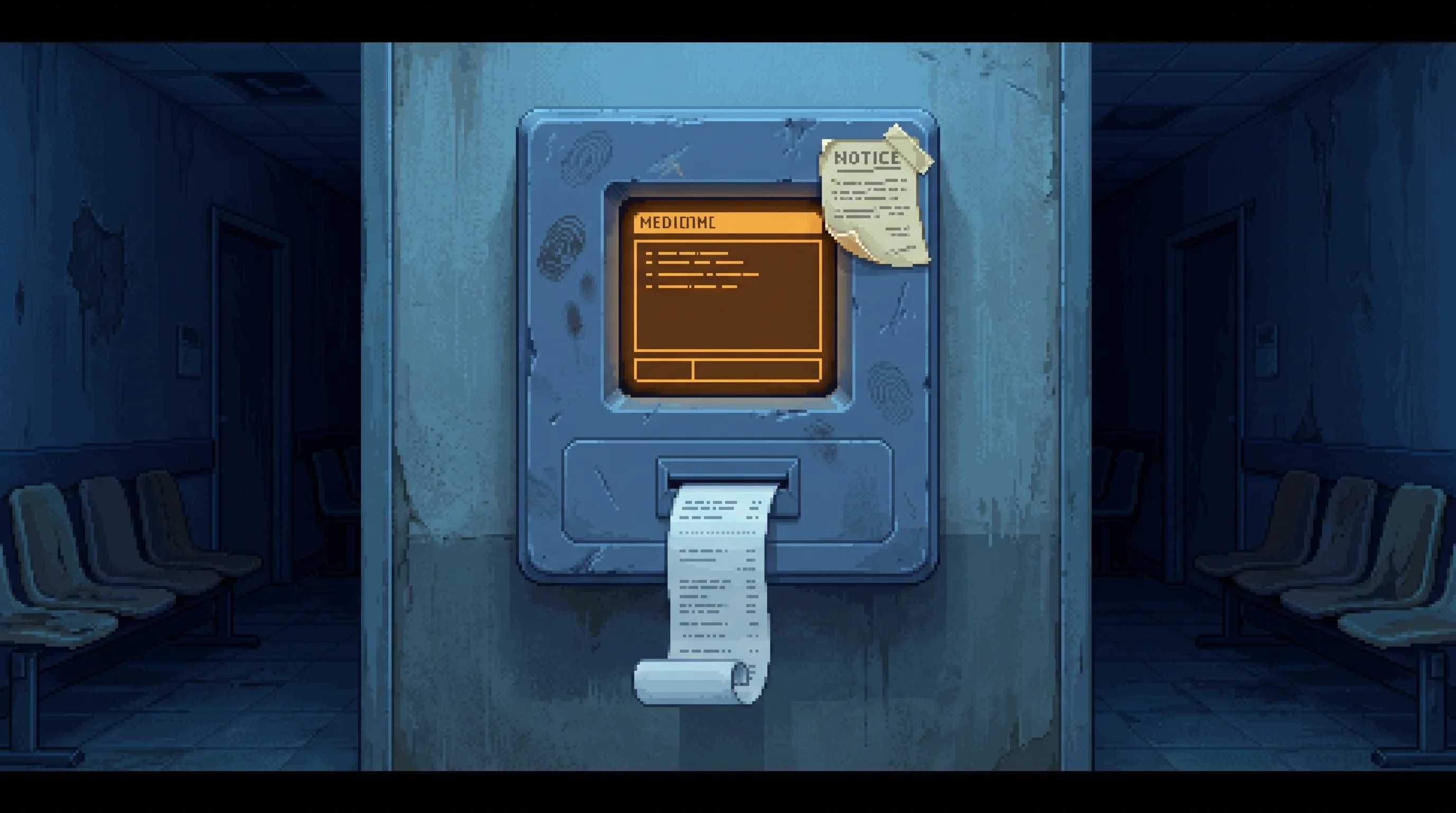
MoodLine edits the exact signal the panel reads, so a sitting requires any affective subscription declared and suspended beforehand. Suspension floods — that has been in the product literature since 2181 — and the flood runs about twelve hours, and the sitting is inside them. Subscribers arrive measurably worse than their own untreated baseline, and no registry adjusts for it.

The Interior Load Screen is aimed at the same interior from the clinical side and reaches the opposite verdict. It scores unshared thought as a treatable load. The hearing scores it as nothing at all. A person can be told in the spring that they are carrying too much they have not said and in the autumn that what they have not said was never going to count, and the two instruments run on related hardware and have no correspondence.
The Revenant Protocol is the strangest neighbour. It reconstructs the dead from their archived behavioural record and lets the reconstruction testify in probate. The dead therefore speak, through the channel, in rooms where the living may not speak at all. Nobody drafting either instrument put the two side by side, and the Standard's authors avoided citing the Protocol on purpose, because its critics had already made the argument that would have applied.
The Atrophied Leap supplies the shape underneath all of it. Verification made trusting an unproven human claim irrational, and the faculty went. Love is where the argument always ends up, because it is the one thing the channel measures beautifully and cannot attribute. A reading proves attachment is present in the room. It has never once been able to say to whom.
And Sabine Doust is the case that runs the other way. Six years of being paid to be watched being decent left her unable to stop, and her channel reads sincere at all times, which was supposed to be the good outcome. It has made her unusable. An advocate who wanted her as a character witness pulled her panel records first — six years of them, showing a woman who has not had a bad day since 2178 — and never made the call, because a trace with no strain in it cannot demonstrate strain in anybody else. The instrument cannot distinguish an honest woman from a well-made one. It also cannot let an honest woman speak for anyone, which nobody predicted and nobody has proposed fixing.
Who Still Takes A Statement
Below the Rim there is no channel, and the Deep Dregs runs the exact complement of the licensed system.
Judge Dreg hears living witnesses, refuses records that cannot answer a question, issues one verdict and enforces it himself. He has no instrument. He is unaccountably good at knowing when he is being lied to, and he has one wrong verdict he has never discharged and no appeal from any of it. The districts have an accurate instrument and no discretion; he has discretion and no instrument. In eighteen years neither jurisdiction has taken the other's half, and both can tell you exactly what is wrong with it.
The Untuned refuse the dial and feel everything at its own inefficient pace. On the channel that reads as volatility, and in a hearing volatility reads as risk. Their refusal costs them findings. Their answer is the narrowest defence of the whole arrangement anyone has managed: the reading is wrong about them, but at least it is a reading of them.
Emrys Dolan will not sign. Signing enters the represented column, so his refusal has no legal weight whatsoever, and he is the only person in the room whose act means precisely what it appears to mean. A clerk once offered to note the refusal in the unbidden column as agitation, which would have given it weight. He declined that too.
And the Keeper has no channel at all. Empty robes, two glowing eyes, no pupil to time and no skin to read. The Sprawl's most trusted moral witness can only ever be represented, which puts him, on the face of the form, among the inadmissible. Nobody has tried to call him. Two factions have noted the gap in filings and neither has asked for a ruling, because a ruling either way would close something both of them need open.
Start Here
First door. The Represented Column is the narrow column, the transcription, and the destruction at closure. Then Teodor Alcaraz, twenty years old, writing down in pencil what the file will not keep.
What it costs a child. The Composure Academies begin at six and publish the price of modulation beside the price of suppression. Maren Cott weighs the readings and was taught to produce them.
The argument it settles and the one it opens. The Evidence Paradox asked whether justice survives when proof can be faked. The Verified Recall is the precedent that got here. Daria Kohl is why an accurate reading is not the same as a true finding.
Who trained the trainers. Ondine Kesh ruled that a bought flat is a forgery and would not sell the curriculum. The Discretion Tier is the market the academies recruited from. Clean Lives is the trade that had to descend a layer when the record it choreographed stopped counting.
Who refuses. Judge Dreg still takes a person's word. The Untuned pay for feeling things on time. Emrys Dolan will not sign. The Analog Schools take children at the same age and teach the opposite theory of what a person is.
The instruments beside it. The Tiered Adjudication System is the court network it runs in. MoodLine must be suspended before a sitting, and suspension floods. The Interior Load Screen scores the same interior and calls it treatable. The Revenant Protocol lets the dead testify from the channel the living may not. The Atrophied Leap is why nobody was going to be believed anyway. Sabine Doust reads sincere at all times and was discounted for it.
What To Read Next. Post-Truth Justice says the proof cannot be trusted; this says the proof is fine and the witness was demoted. The Diagnosed Soul treats the interior this one leaves alone and rules out. The Ratification Forecast answers a refusal with a date where this answers it with a column. The Reason Given makes the institution perfectly legible and finds nobody argues back. Proof of Flaw certifies a person by the machine's absence from their text; this one certifies them by their own absence from their reading. Privacy vs. Prosperity, Evolution of Prejudice and AI Haves and Have-Nots supply the telemetry, the sorting, and the price list.