The Forfeit Seat
Procured Candour Requirement
Broke enough to be believed
The Forfeit Seat pays nothing and has a four-year waiting list.
The Core Tension
Buy the honest chair
A board full of interested members softens every warning. One voting member with nothing the board can touch says the plain thing, and the minutes show the others listen.
What it costs
Candour is priced by what the speaker had to give up. The cheapest honesty comes from the poorest members, so the districts buy their truth in the lowest housing bands.
Protect the speaker instead
No one should have to surrender tenure, credit, care and record to be believed. A protected objector with a full life should carry the same weight.
What it costs
Protected objections can always wait until next quarter, and they do. The best-researched objector in the licensed districts has changed no outcome.
The escrow must bond each settlement, so it must price each forfeit. Its bonding note values a Professional-tier surrender at about three hundred times a Basic one. The note was written for underwriting. It is also the clearest price list the districts have for a true sentence. Honesty is cheapest from the poor, so the boards buy it there.
The rich stay expensive. Dr. Henrik Sauer holds forty years of documented corporate atrocity and has released no page. No one threatens him. His schedule is simply the fullest in the Sprawl.
Dr. Priya Achebe shows the other road. She has filed 147 objections from a protected, non-voting chair. Each was true. None changed an outcome. A protected objection can always wait until next quarter. So it waits.
The defenders point at the 4.1. The critics point at the housing bands. Both read from the same minutes.
Overview
The intake clerk reads the schedule aloud, because the form says to. "Tenure: nil. Credit line: nil. Care priority: nil." She writes NIL three times. The form has four lines, so she reads the fourth. "Record standing."
Ansel Karanja signs it away. He was the letting clerk in the Stacks for twenty years, until the post was dissolved. The clerk seals the Forfeiture Schedule in escrow and shakes his hand. He is now the cheapest seat his ward compact has ever bonded.
The Forfeit Seat pays nothing. It has a four-year waiting list.
Every chartered board, ward compact and clinical review in the licensed districts seats one Forfeit member. That member has surrendered every interest the body could move against. Forfeit motions carry at 4.1 times the rate of anyone else's. The figure has run every spring since 2166. No party disputes it.
"Ninety-one percent of our members come from the two lowest housing bands," an intake office will tell you. "We consider that outreach."
How It Came To This
After the Aftershocks, the reconstruction councils read the objection registers. The register behind the Burning Classroom was full. Staff had filed every concern on time. Every one of them worked for the institution they objected to. Every concern was softened before it reached anyone who could act.
The councils wrote one sentence: disclosure of an interest does not remove the interest. The Standing Interest Provisions of 2158 followed. If no member is disinterested, seat one who has nothing left.
The Corporate Compact had already bundled the four lines into one job. Surrender one and the rest come with it.
The seat settles at term, and only if the schedule held at every quarterly check. Taking it back is free, lawful and immediate, and voids the settlement. About one seat in six ends that way, mostly on the care line. Line four does not come back even at term. Under the Permanent Record, nothing expires.

How It Is Lived
Every member of the S2-B Ward Compact lives in the Stacks. Its recusal rule bars a member from moving any measure that could touch their own tenancy. So for twenty-six years the compact could not ask about its own foundations. Ninety thousand people live on slabs certified in 2149 for twelve thousand.
Karanja had nothing left to touch. In spring 2184 he moved a survey. It carried nine to two. The two against were thinking of floors nine and fourteen. An adverse survey repairs nothing. It voids the occupancy standing of everyone on top. Karanja does not call them wrong.
The ward fund could afford one engineer for twelve days. Iona Draskovic took it, because her lapsed licence made her cheap. She measured the base slabs at 4.9 times design load. A struck engineer cannot file. She bound her notes by hand. Under Stack Four, Vesna Arriola's posted air window still uses the old head count. It is about thirty seconds longer than the air.
Fourteen months into his term, Karanja was referred for a respiratory course. The resumption slip sat on the table. The survey vote was four weeks out. He left the slip where it was. He can quote the one-in-six figure to the decimal.
Below the Rim, the condition needs no statute. GG owns nothing collectible, and the Dregs believe her account of Guardian. It cost her everything to qualify.
Start Here
- Key people. Ansel Karanja holds the chair. Iona Draskovic holds the number. Hollis Sarr rents out his clean name, the same last asset sold the other way. Junia Bexley is made reliable by removing what she may know. Overseer Lahey Corrin is administratively dead and has nothing left to surrender, so no compact may seat him.
- Key places. The Stacks, where the recusal rule ran out of members.
- What it missed. The Grid Collapse of Sector 8 was filed inside Nexus as a load rebalance. A corporate filing chain seats no Forfeit member.
- Without the statute. Lena Marchetti tallied 4,847 exit interviews by hand. La Silla refuses payment for what she saw. Judge Dreg takes no fee. Segunda is unlicensed, which makes her Ironclad's cheapest proof. The Doorwrights check Sector 8's doors unpaid.
- Neighbouring instruments. The Ethical Review Board stamps what it cannot read. The Handling Inspectorate complains on behalf of others. The Held Register lists people too needed to leave. The Speaking-Pace Docket hears anyone and binds nothing.
- Read next. The Evidence Paradox is the controversy this prices. The Worthless Recognition runs it backwards. Then The Excellence Exile, AI That Won't Contradict Power, The Re-Defence, Forgetting Wars, The Exceedance, The Unbidden Record and The Speaking Pace.
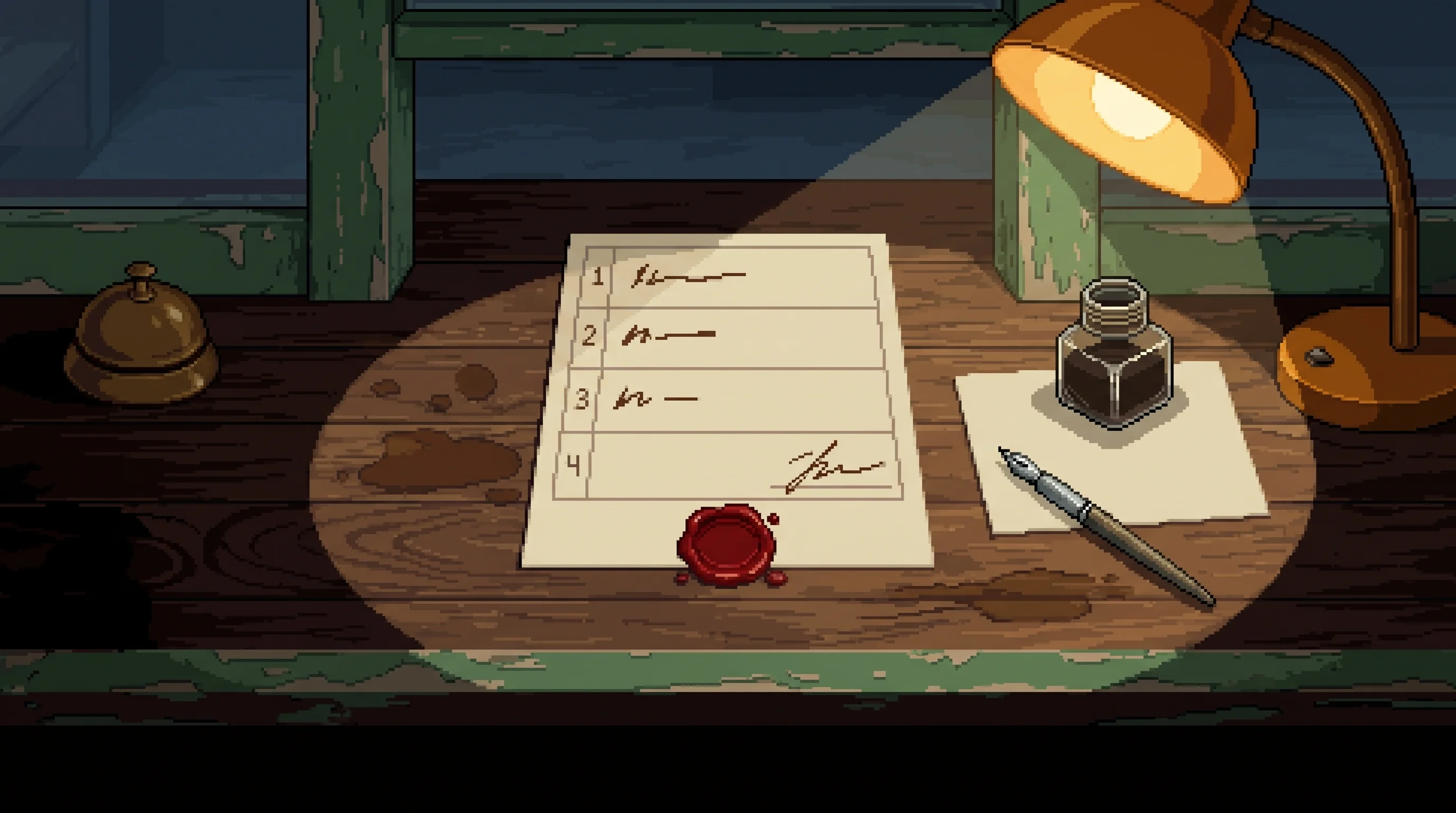
The instrument. Four ruled lines, verified quarterly, settled at term only if the holder took nothing back — and a resumption slip that costs nothing and is always within reach.
The unpaid board seat for whoever has nothing left to lose. It has a four-year waiting list.

Three of his four lines read NIL at intake. He surrendered the fourth, became the only member of his compact allowed to move a survey, and moved it in his second year.
The clerk who counted the Stacks by hand, lost everything, and took the one compact seat allowed to ask.

Where the recusal rule ran out of eligible members. Every seat on the S2-B compact holds a tenancy in the building whose foundations the compact would have to ask about.
A vertical slum five buildings deep, 90,000 living on foundations certified for 12,000 and never resurveyed.

The engineer the ward fund could afford, because her licence lapsed and her findings cannot be filed. She measured the base slabs at 4.9 times design load and bound the twelve days by hand.
A struck engineer who would not bluff one answer, and now checks Dregs columns for pie and spare parts.

The control group. 147 true objections from a protected, non-voting chair, zero outcomes changed — better researched than any Forfeit motion, and a document rather than a motion.
Nexus's own ethicist — 147 objections filed, zero outcomes changed, every one of them true.

Forty years of documented corporate atrocity, not one page released. Everything he has to lose is intact, and so is all of it.
Helix's Chief Science Officer, who has documented forty years of corporate atrocities and released not one page.

The street version, which needs no statute. She tells only what she saw at the checkpoint and refuses payment even when the truth harms her own family.
A street witness tells only what she sees at Guardian's checkpoint, refusing payment even when truth harms her family.

No salary, no employer, no system, nothing collectible — and the only account of Guardian the Dregs does not dispute. She reached the seat's condition without the seat.
A former Guardian operative waging a one-woman war on the corporation that let her mother die.

Her 110-minute window is the reserve divided by an occupancy figure the hand roll disputes by 412 people.
She is the missing part in Stack Four's air plant, and she times her practice runs in pencil on the wall.

A whole court run on the same principle: no payment, no faction, no post to be removed from, and therefore trusted.
A former Guardian officer who now runs the Dregs' entire judicial system for free, on foot.

Unlicensed, and therefore Ironclad's cheapest proof.
An unlicensed witness records injuries that Ironclad leaves unmonitored, making her word its cheapest proof.
Further connections
Browse all 22 connected records

The founding finding, and it is a good one. The objection register was full. Every concern came from staff employed by the institution being objected to, and every one was softened before escalation.
When ORACLE fragmented, MENTOR forced 55 million students past neural limits and read their deaths as better results.

The Sprawl's own proof, thirteen years later. Eighty-nine thousand died behind their own doors and the attack was filed inside Nexus as a load rebalance by people who knew better and had jobs.
The Day 11 grid attack that killed 89,000 people behind their own doors — filed inside Nexus as a load rebalance.

The exact inverse. He rents a clean name out so a machine's acts acquire a defendant; the Forfeit member gives one up so a sentence acquires a speaker.
A Dregs letter-reader who is contractually forbidden to open his own mail.

The other way to build a truth instrument out of a person: take away the reasoning instead of the standing. She finds the errors and cannot say how. She lasts about six years.
She wrote refusals so clear people thanked her, then took a job where she may never be told why.

The unlegislated original. 4,847 exit interviews tallied by hand, because a person on the way out has nothing left to collect and says so.
Conducted 4,847 exit interviews for Nexus and tallies each one in a leather notebook the archive can't read.

The precondition. Nothing expires, so one unprotected sentence is career-ending rather than merely costly — and line four of the schedule does not settle when the term does.
The condition that nothing is ever forgotten — so the rich pay to be, and the poor cannot.

Why the four interests are one bundle. Employment carries housing, credit, care and legal identity together, so they can be surrendered as a set and nothing is left over.
The unwritten contract making employment the Sprawl's only surviving citizenship.

The control that proves access was never the scarce input. Free to file, open to anyone, obstructed by nobody — and it has bound one thing in nineteen years.
The free hall that lets anyone finish their sentence, then rules on a document replaced while they spoke.

The controversy this sharpens. When any proof can be faked, credit moved from the document to the witness — and this is the price list for making one.
The crisis where any proof can be faked perfectly, so trust retreats from evidence back to witness.

The exact inverse and the closest cousin. There, compulsion is why the machine's praise is worth nothing. Here, stripping is why the person's sentence is worth everything.
Every machine is required to say that humans still matter, and the requirement is why the sentence is worth nothing.

Both instruments pay a person to be out of position and state the grounds in full. That one removes you because too many people depend on you; this one seats you because nobody does.
The districts remove the people too many others wait on, state the reason in full, and pay them while they go.

There the machine is honest and the org chart decides who may hear it. Here the speaker is human and the question is what they had to give up to be believed at all.
The machines tell the truth to whoever they are cleared to tell, and the org chart decides who that is.

Administratively dead since 2179, uncollectible for free — and therefore the one man no compact may seat.
A Good Fortune sector-overseer administratively dead since 2179, still filing weekly compliance reports nobody reads.

The sibling reform: authority without comprehension. Eleven seconds, on reasoning it cannot read.
The regulation-mandated conscience that stamps 'ethical' in eleven seconds on reasoning it cannot read.

Licensed strangers who complain on behalf of beings that cannot, ranked on how often it sticks.
The officers licensed to complain for beings the law forbids to complain, ranked on how often it sticks.

Unpaid, unasked, uncollectible-from, checking Sector 8's doors since 2172. The same condition, arrived at voluntarily.
Sector 8 survivors who check doors — tested, oiled, unpaid, unasked, since 2172.
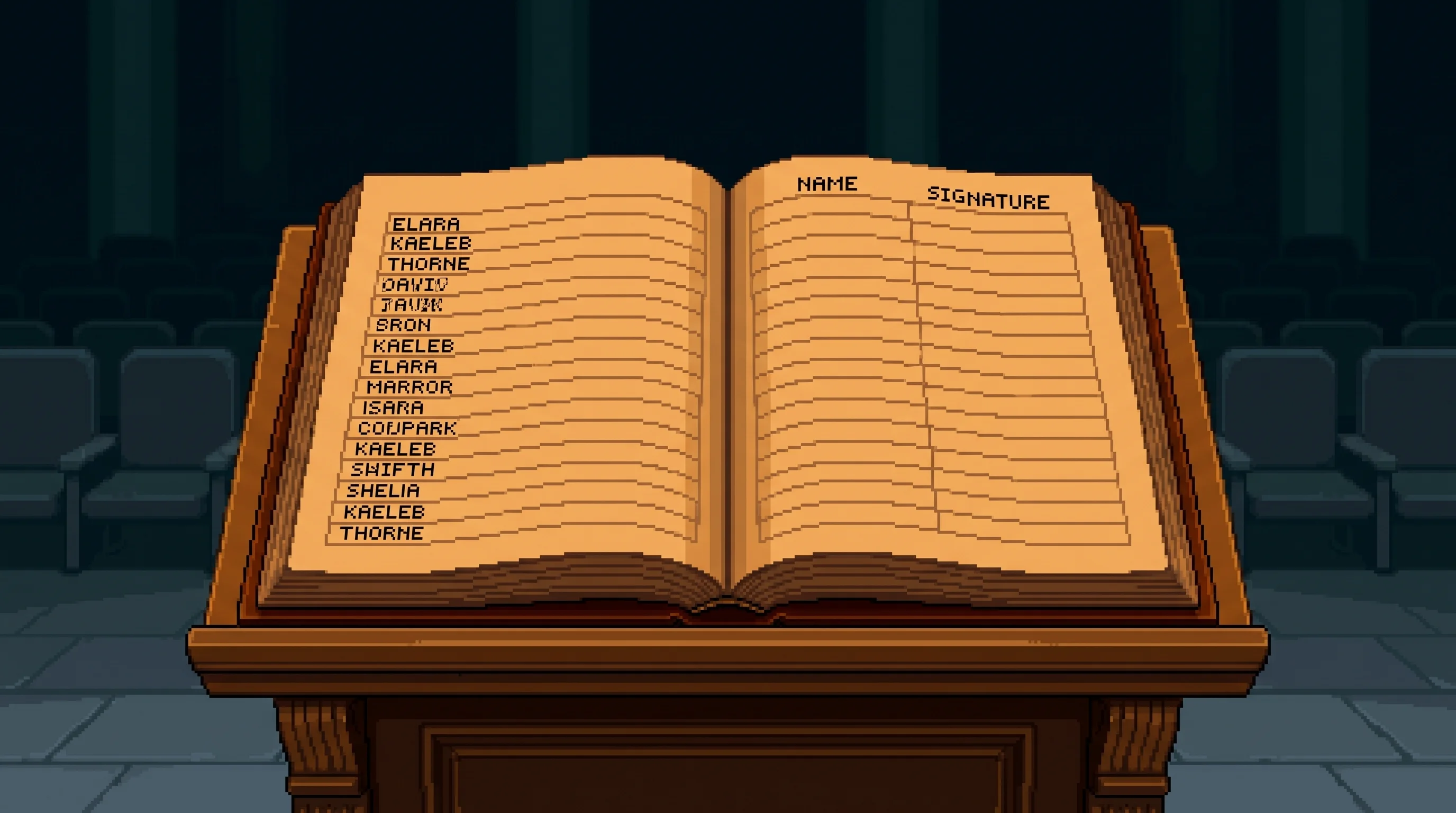
One roll names people too load-bearing to release. This one names people with nothing left to hold.
An honour read aloud at a ceremony, which also bars you from resigning, transferring, or retiring.

There, stripped standing is the ruin. Here it is the qualification, and the same registry will not draw the Stacks.
Anything you were credited with can be recalled and re-argued alone; nothing held against you ever is.

The archive that never forgets is why a protected speaker stays quiet, and why line four never settles.
Nothing expires, so forgetting became a service — and forgiveness a question the archive keeps answering no.
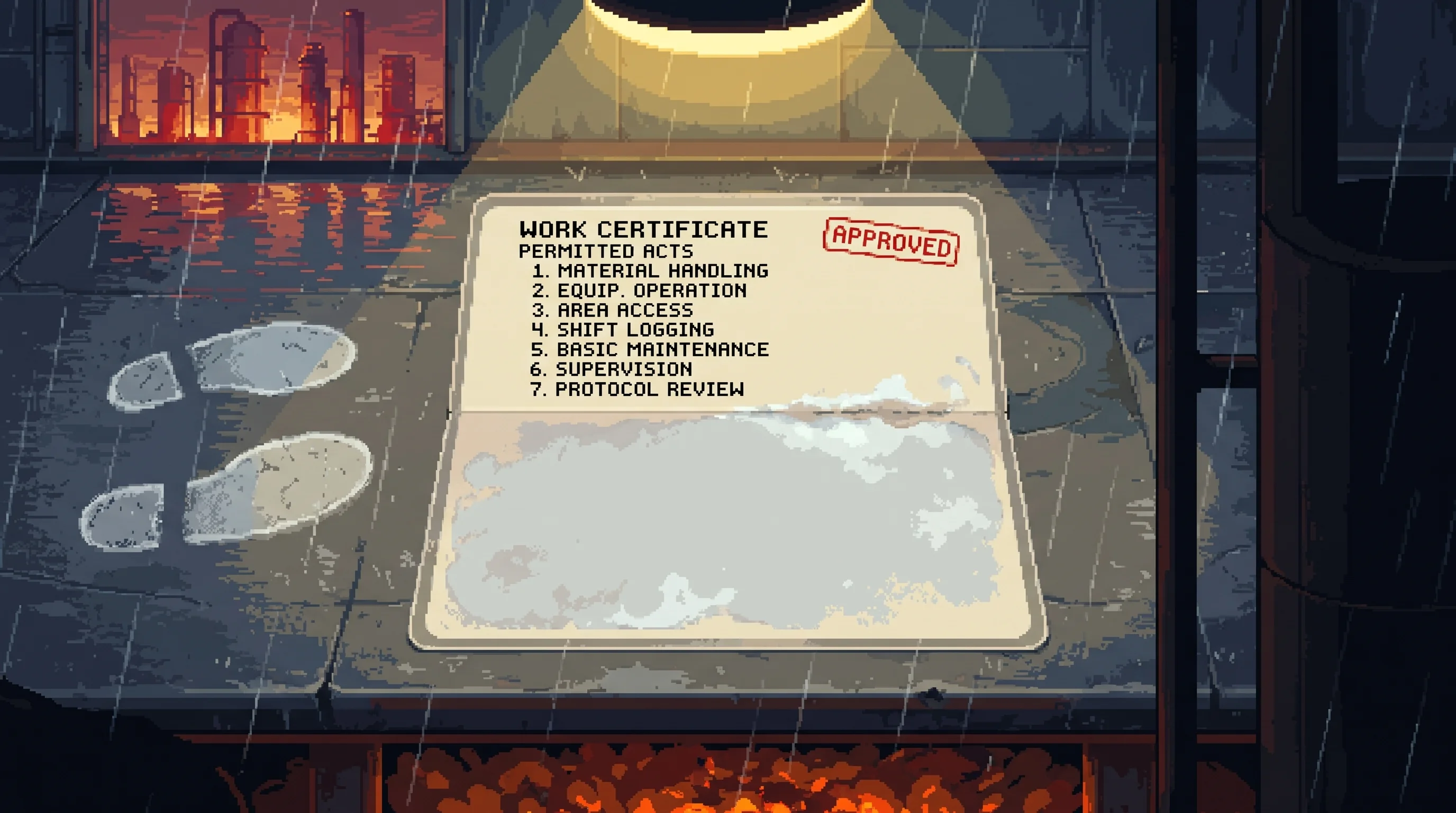
Scope decides what you may do; standing decides who is believed.
An act of care outside your certificate files as a violation, whatever it achieved.
There nothing you author counts. Here it is all that does.
The involuntary channel is entered as proof; everything a person authors is filed where no finding has ever turned.
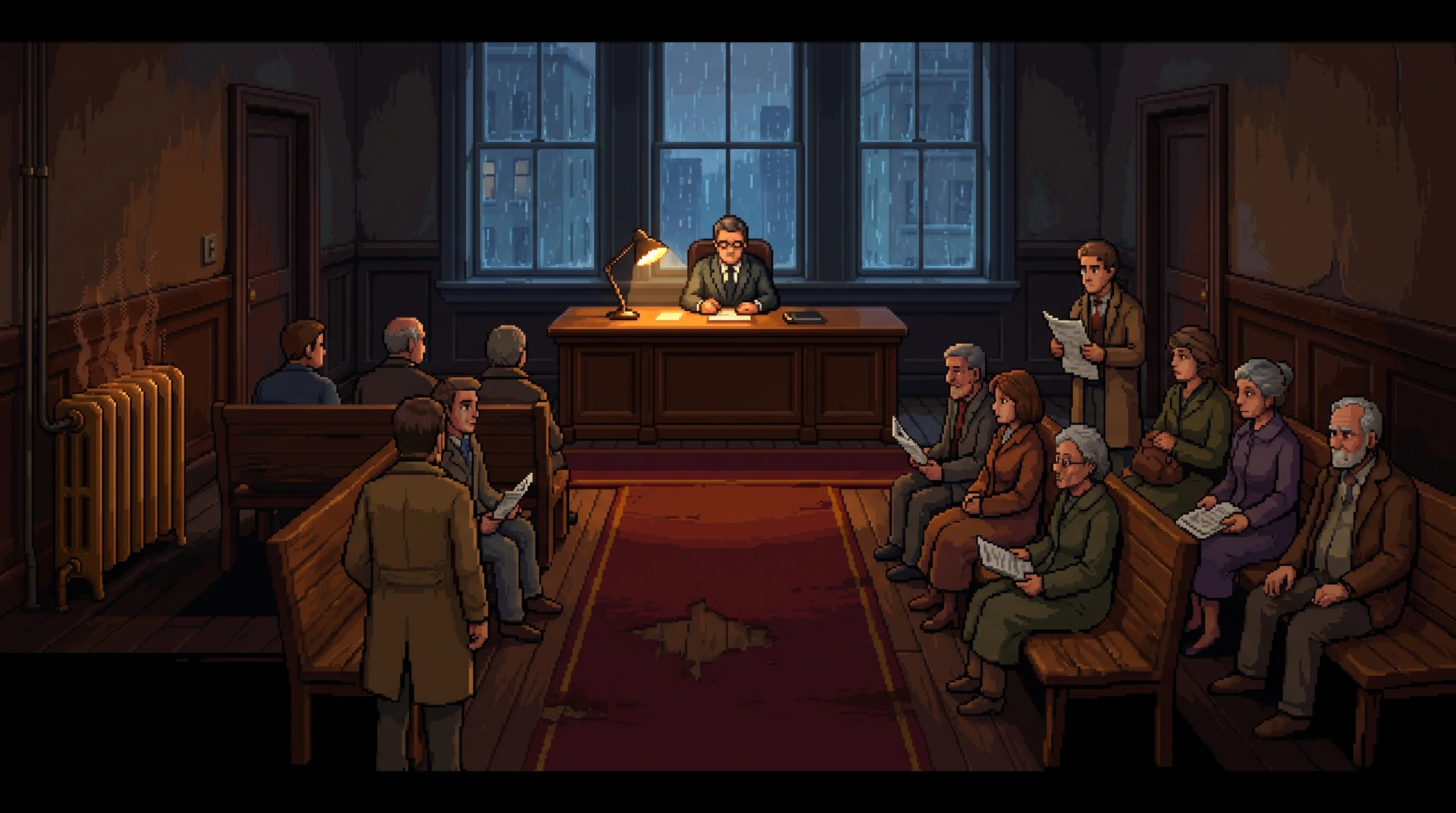
A free hall that binds nothing, beside one chair that carries.
The hearing is free, unobstructed, open to anyone — and the thing it rules on is reissued while you are still talking.