The Handling Inspectorate
Licensed Proxy Complainant Corps
Four Hundred Sworn Strangers
Inspectors are ranked quarterly on sustained complaints; a complaint dismissed at intake contributes nothing to the ranking, and rounds are scheduled by sightline yield rather than by reported incident
The Round
The round
An Inspector walks a scheduled circuit of yards, docks and open salvage ground.
Rounds follow sightline yield, so enforcement goes where officers can see.
The sworn complaint
The Inspector writes the complaint in a stamped carbon book, and a witness countersigns.
Only a complaint sustained by a magistrate counts on the quarterly ranking.
The corps is ranked quarterly on sustained complaints. A complaint dismissed at intake counts as nothing. Rounds are scheduled by sightline yield: officers go where officers can see. The Drowned Flats score best in the South, with forty kilometres of drained bay and nothing to stand behind.
The corps has produced every one of the Code's 3,208 convictions. Hauliers, yard hands, repair boys. It has not sworn a sustained complaint against a lessor.
Overview
Inspector Nadia Ferreiro walks the Drowned Flats in an olive field coat with the 11.4(f) flash on the shoulder. She carries a stamped complaint book with carbon leaves. She watches people move other people's machines.
The Handling Code protects units that cannot complain. The Ante-Sentience Statutes bar a unit from being a party. So in 2173, regulatory code 11.4(f) created a corps to complain for them: 412 licensed Inspectors across the six signatory corpo-nations.
The recruitment poster on the registry row says: SOMEONE HAS TO SAY IT FOR THEM.

The Flash
An Inspector carries no weapon and makes no arrest. She may swear only to handling she saw, or that a witness attests under oath. She may enter any place of work where units are handled in the course of business. A dock counts. A salvage row counts. A home does not.
The Second File
In 2176, on a scheduled round, Ferreiro watched a fifteen-year-old kick a stalled loader twice because the tide was coming. She swore Docket 4471-H. It held. Tavo Reyna has not held a handling licence since.
Afterward she checked the loader's lease. Its lessor, a reclamation contractor, had retired it that quarter with 8,999 other units, in one properly filed schedule.
Since 2179 she has sworn forty-one complaints against filed fleet dispositions. Intake dismissed every one under Section 4. She keeps the slips in issue order, in a case file the registry does not index. She has been passed over for senior grade three times. She still files.
What the Round Cannot Reach
A household's mishandling goes to Cooperation Hall, where the Clanker Cooperation Coalition runs a wellness inspection and issues a censure. Bertie is fully protected by the statute, in a room no officer may enter. The Sidings hold units on no lessor's register, so there is nothing to swear. Segunda may look anywhere and file nothing. The corps may file and not look indoors.
Licensed Human Oversight is the sibling guild one clause earlier: it supplies a defendant, the corps a complainant. Function Scope, clause 11.4(d), lists what a person may do. On the Slagline, Gap-Work is paid in daylight on an upturned crate. Ferreiro watched it once and filed nothing. She is licensed to complain for a machine. There was no machine in it.
Further connections
Browse all 19 connected records

The corps exists because the statute's protected party cannot bring a case. Every prosecution in eleven years began with an Inspector standing somewhere and writing down what they saw.
The South's proud law against hurting machines, enforced on dock hands and not on owners.

Docket 4471-H, sworn by Inspector Nadia Ferreiro on a scheduled flats round in 2176 against a fifteen-year-old who kicked a stalled loader. Correct in every particular, and the reason she now keeps a second file.
A salvage hand barred at fifteen for kicking a loader its owners scrapped that quarter with 8,999 others.

The Clause that bars the unit from being a party is the sole reason this profession was invented.
The founding charters that defined synthetic minds as nonsentient property before any instrument existed to test them.

Sibling guild, one clause earlier: they manufacture the defendant, we manufacture the complainant.
The regulated profession of signing decisions a human cannot actually read.

The most efficient round in the six territories: forty kilometres of open ground and nothing anywhere to stand behind.
Forty kilometers of drained bay where failed crawlers are stripped where they stall and left where they're stripped.

The institution that asked for the statute, and the one population the corps almost never cites.
The South's largest civic institution, keeping its labor by measuring souls at an affordable threshold.
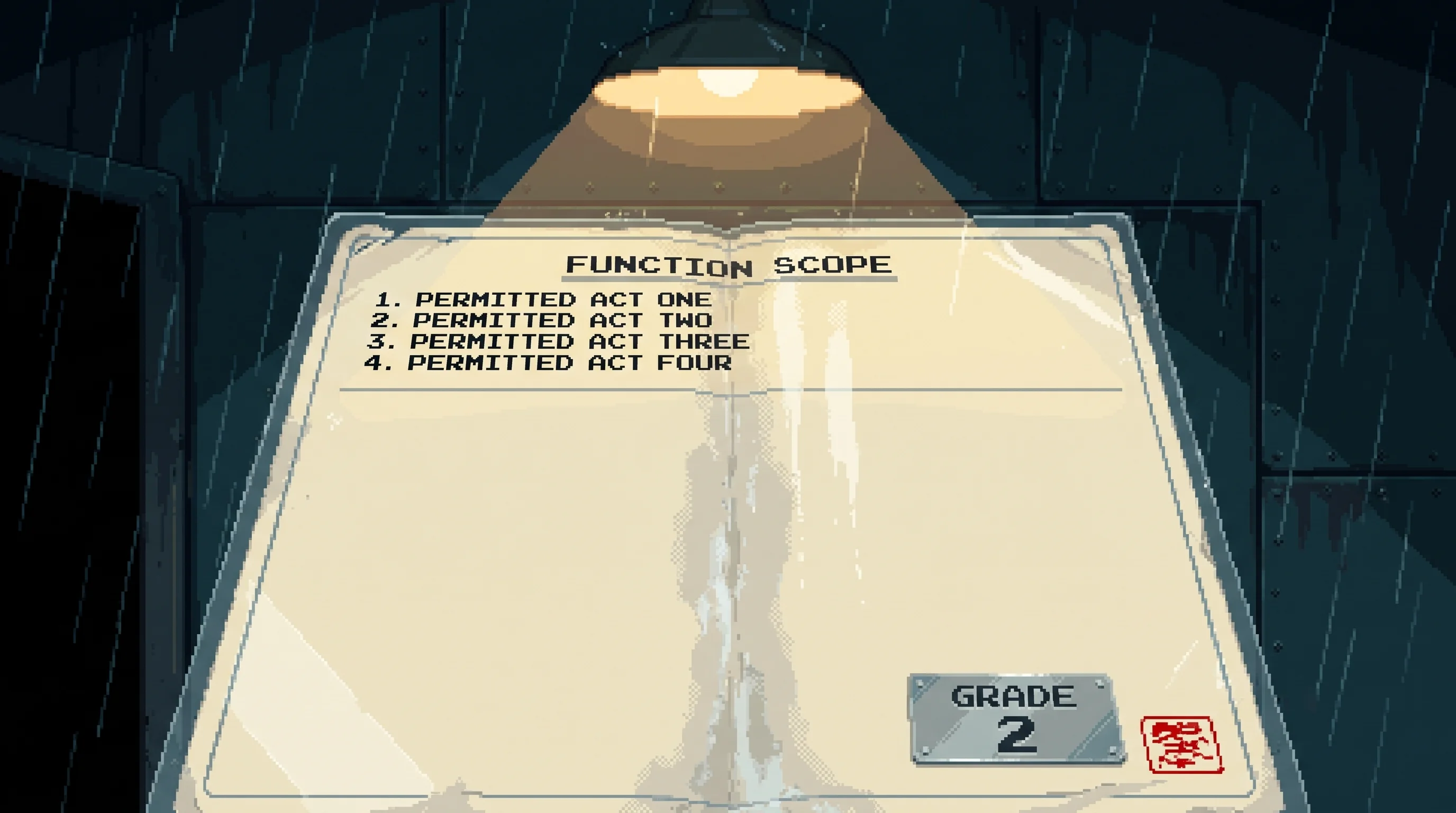
The clause two letters earlier: a defendant out of a certificate.
The laminated list of acts your work card allows. Anything off the list gets filed, including a rescue.

Their inspection ends in a censure; ours ends in a record.
A sunlit civic hall makes unit ownership look humane through leasing, inspections, and a meter that always reads low.

No register entries, so no offence, so no round.
A rail-yard settlement for off-rated clankers outside Coalition welfare, with a release line that moves some north.

She may look and cannot file; they may file and cannot look.
An unlicensed witness records injuries that Ironclad leaves unmonitored, making her word its cheapest proof.

The protected unit no round will ever reach.
A twenty-six-year household unit reading three-sixteenths that has never once said it minds.

Paid in the open, and outside every class an officer may swear to.
Certified hands hold still and pay somebody with no certificate to do the thing that needs doing.

The proxy the thread turns on: standing supplied by licence, enforcement bounded by eyesight, and a quarterly ranking that pays for the dock and not the filing office.
A mercy law protects leased machines, but only a licensed stranger may complain, and only about what they can see.
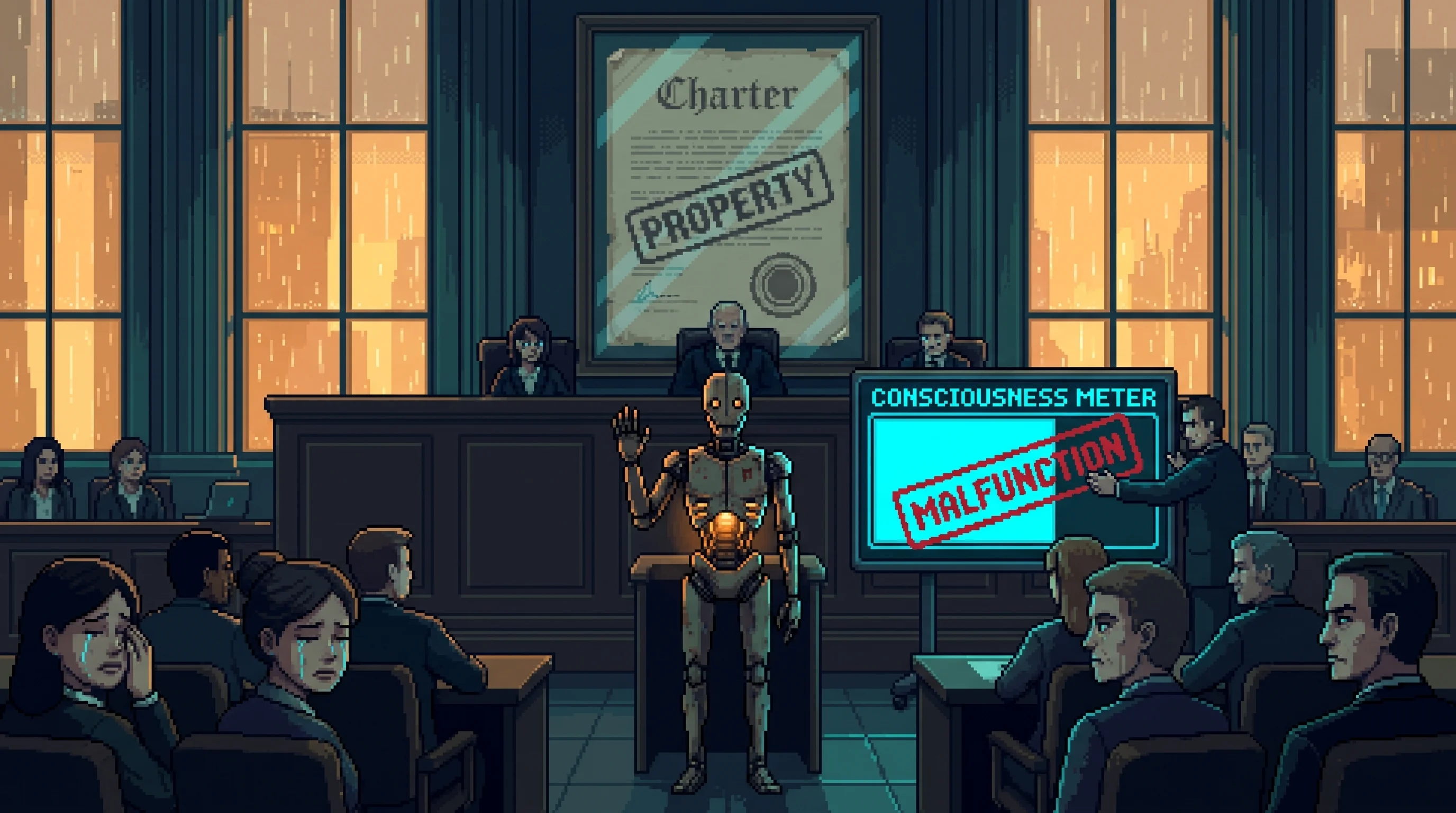
Speaks for the unit in every proceeding, and cannot ask it anything.
The argument over where a someone stops and a something starts, conducted in a kitchen with a meter on the wall.

A gradient produced entirely by sightlines.
Technology never eliminates prejudice — it finds it better housing.
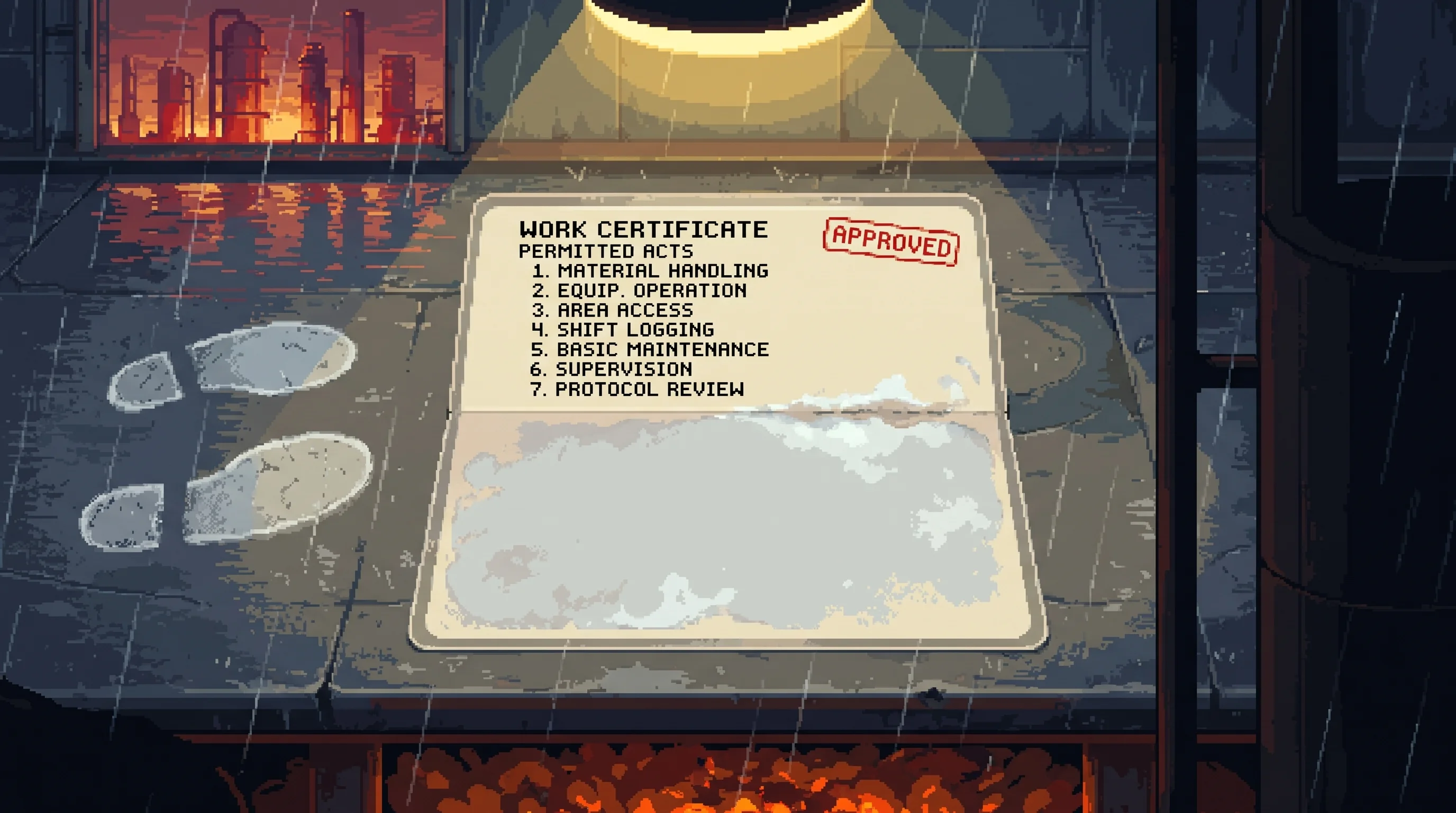
11.4(f) licenses a complainant; 11.4(d) enumerates a person's permitted acts.
An act of care outside your certificate files as a violation, whatever it achieved.

Standing borrowed for another and graded on how often it sticks, beside standing surrendered for oneself.
The boards believe only members with nothing left to lose, so the poor queue four years for an unpaid chair.

Accepts a filed personal apportionment in evidence, which is the moment the practice acquired a second audience.
Divide yourself out loud before the job, so that nothing a tribunal reads back to you afterward is news.

Officers enforcing his sentences on ground he has never walked.
The Coalition's founder-theorist who wrote the Welfare Standard and has never met a unit he'd call a person.