Overview
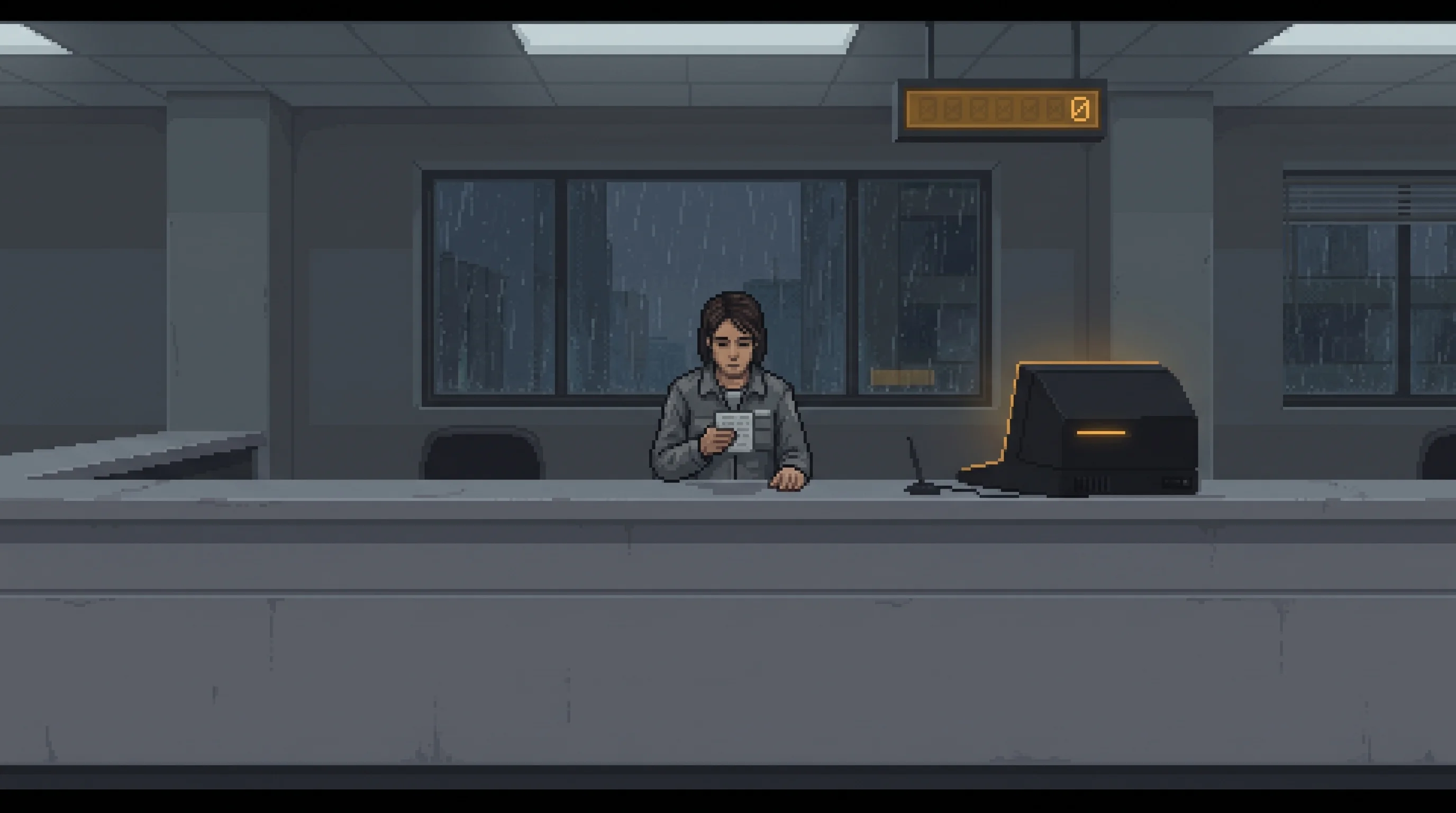
Segunda has no desk, no chair, no fixed square of sidewalk. She has a route: the Slagline's discard apron at the start of a shift, the Fence Line checkpoint at the change, and — when somebody's badge number ends up in her ledger with an injury next to it — the contracted-labor grievance kiosk bolted to Ironclad Industries's outer Ring wall, where she reads back what she wrote down.
She has walked this circuit every working shift since 2179. No one assigned it to her, and no wage comes with it. The Slagline's contracted-labor sorters started calling her over when the kiosk's automated claims process began denying injuries it had no data for, and she kept coming back after the first denial got reversed, and then the second, until walking the discard band with a ledger became the closest thing to a job description she has ever had.
Appearance
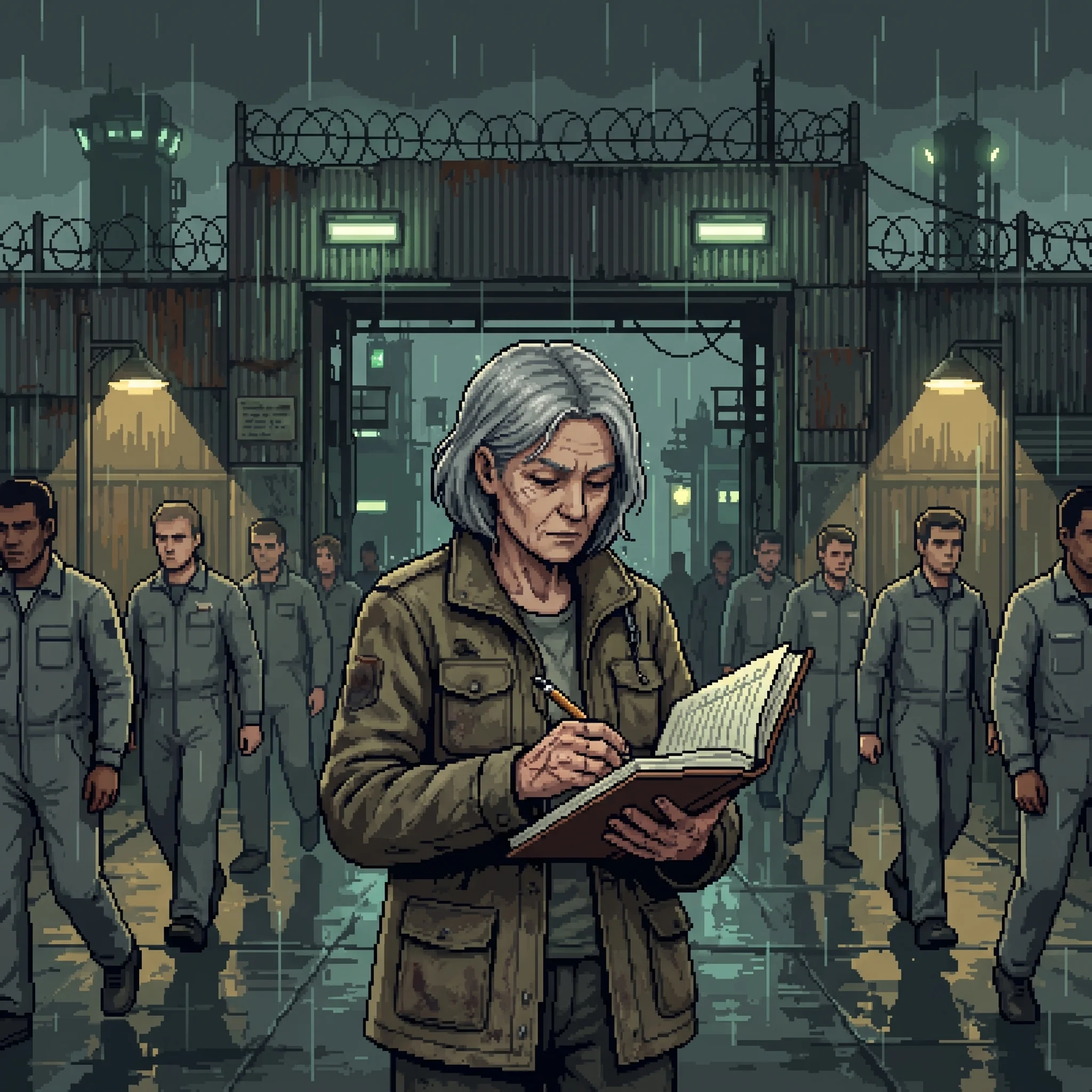
Fifty-six years old, gray-haired, dressed in the same weathered green-gray canvas jacket in rotation, soot settled so deep into the seams that a fresh wash never fully lifts it. She wears reading glasses instead of an augmented lens. The choice is deliberate: an eye that could be edited by a firmware update stops being a witness the moment anyone suspects the edit. Her left hand still carries the crush-scar from 2178; she has never had it corrected, and she has never explained why, though the sorters who ask once generally stop asking.
Cracked asphalt lies underfoot at the checkpoint. Warm slag-heat radiates off the Slagline’s discard band even at 3 a.m. Two fingers never fully straightened where the crush-scar marks her left hand.
Why the Kiosk Needs Her
Ironclad issues a biometric safety monitor to every one of its roughly 8.7 million corporate-citizen employees. The wearable feeds a Nexus-authenticated incident stream straight into the compensation system, timestamped and processed within hours of anything going wrong. It has never issued one to the 31 million contracted laborers who pour the same concrete, weld the same beams, and sort the same discard band at one-sixth the pay. The exclusion is not an oversight. Workforce Optimization's own budget lines the monitor per corporate-citizen headcount, and contracted labor was never on that line. This is Corpo-Nations expressed in safety hardware: the same labor, the same hazard, two tiers of visibility — one instrumented, one not — and the gap between them is cheaper to fill with a witness than to close with a device.
The result is a claims system built to see one kind of worker and structurally blind to the other. A corporate-citizen employee who twists an ankle generates an automatic record before the pain finishes registering. A contracted sorter who loses two fingers to a diverted motor casing generates nothing at all — no telemetry, no timestamp, no chain of custody — unless somebody with eyes happened to be standing there and is willing to say so out loud, later, to a kiosk clerk who has no obligation to believe them.
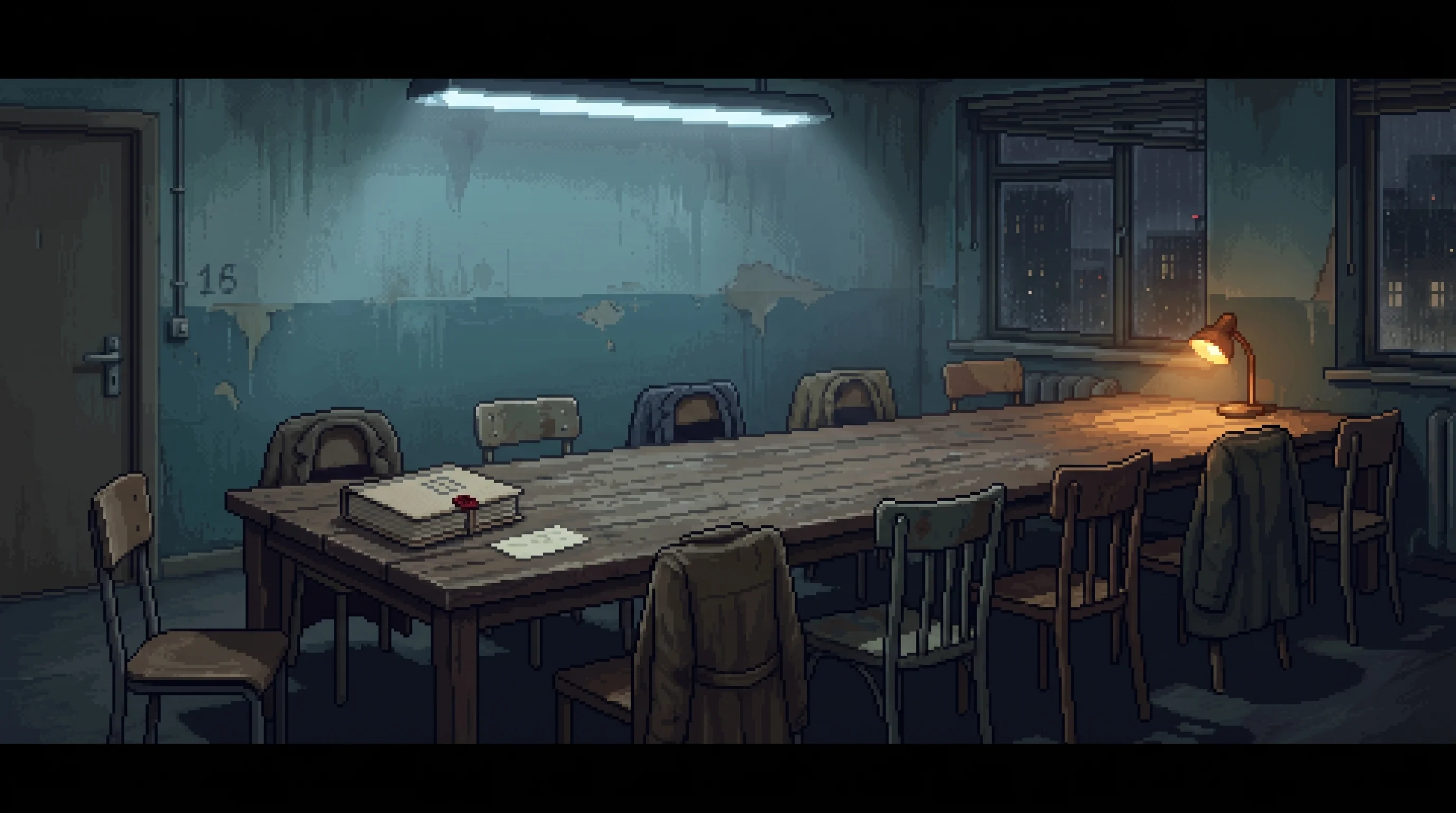
Segunda is that somebody. She does not carry a device. She has refused every offer of one, on the reasoning that a witness whose account could be pulled from a corporate feed is a witness Ironclad could eventually edit, and an unaugmented pair of reading glasses cannot be subpoenaed for its logs. What she carries instead is a hand-ruled ledger — badge number, injury, time of day, whether she personally saw it happen — and a habit of writing the entry down before the sorter has finished describing the pain.
Motivations and conflicts
The First Reversal
In 2178 a decommissioned crawler transmission dropped from a diverted lift chain on the Slagline's discard apron and crushed two fingers of her own left hand. No monitor recorded it, because contracted sorters do not get monitors. The kiosk denied her claim twice for "insufficient evidence." A coworker who had been standing four meters away gave an unsolicited, off-the-record statement to the kiosk clerk on her third appeal. The claim was approved the following week.
Segunda started keeping her ledger the next month, walking the discard band on her own time to do for other sorters what one coworker's word had done for her. She has not stopped since. She does not describe this as generosity. She describes it as the only fix available for a gap Ironclad has had five years to close and has priced, every one of those years, as cheaper to leave open.
Capabilities
What the Ledger Holds
Roughly a third of her ledger's entries trace back to Drive Module Systems — casings, wheels, and harnesses that Ironclad's own accounting stamped zero-value decommissioned before a diverted part took a hand or a foot on the way out the gate. The rest are burns, falls, and the ordinary attrition of a discard band that runs around the clock. Every entry is indexed the same way: badge number, injury, time, witnessed-by-Segunda or not. No names. She has never explained the omission to anyone who asked, though the sorters who use her assume, correctly, that a ledger with names in it is a ledger Ironclad would eventually want to see in full.
The kiosk has never asked to see the ledger either. What it has started doing instead, off any written protocol, is paging Segunda before a claim without telemetry ever reaches a compliance clerk's desk for formal review. No memo authorized the habit and no memo needs to: the same fiscal logic that decided, five years running, against buying the monitor decided just as quietly in favor of trusting the woman who showed up instead.
Since 2183 she also writes down the date a sorter's file goes In Contact. A classification is not a decision, so there is nothing to read it back to. She keeps the dates anyway, because the dates are the only thing anybody may argue about.
Meaningful places
The Crossing
Twice a day, the Fence Line checkpoint moves roughly eleven hundred shift workers across fifty meters of contested asphalt between Ironclad's refinery side and Guardian's residential side. Segunda stations herself there at the change, ledger open against her forearm, because more of her injuries happen in the crush of a shift-change crossing than anywhere else on the route — a foot caught in a barrier gate, a shoulder taken by a badge scanner's edge, the ordinary damage of hundreds of tired bodies moving through a corridor built for one employer's convenience and shared by two. Neither checkpoint counts a body. Both count a headcount. She is the only tally on the Fence Line that counts the difference.
The Fence Line’s barrier gates cycle at shift change and boots strike cracked asphalt. Underneath it comes the scratch of a stub pencil moving faster than most people expect from someone her age.
Slag heat and machine oil carry off the Slagline’s discard apron. Refinery exhaust drifts from the flare stacks, beside the specific mustiness of ledger paper held too many years in a jacket pocket.
Sodium floodlight washes the Fence Line’s unclaimed strip the color of an old bruise. A line of gray jumpsuits files past a woman who never looks up from the page until the entry is finished.
Refinery floodlight and Guardian checkpoint spotlight reach from opposite ends of the Fence Line, with sodium-yellow in the gap between them. At the grievance kiosk she gives testimony beneath a flat overhead bulb.
The Fence Line
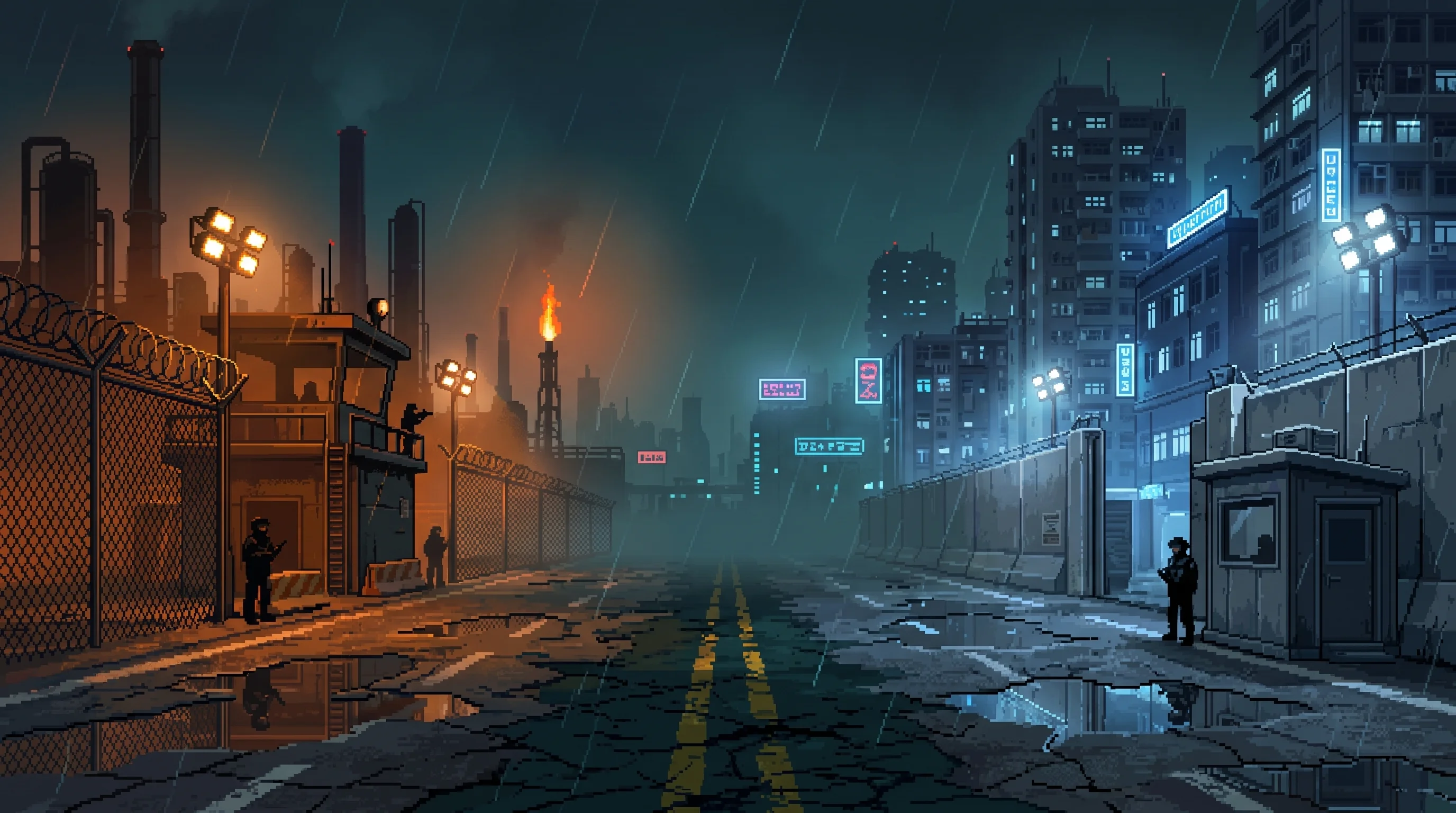
A contested checkpoint corridor on the northern edge of the Sector 17 refinery complex, where Ironclad's industrial perimeter meets Guardian's residential patrol boundary
Explore The Fence LineThe refinery complex itself — the sector's beating, belching heart. Cracking towers rise in serrated rows above storage tank farms that stretch to the waterfront, their flare stacks — The Stack — painting the cloud layer orange every night. Ironclad inherited the infrastructure whole, changed the logos, and kept the same shifts running. The air inside the perimeter is a chemical cocktail that the on-site medical clinic treats with inhalers distributed at the gate. Workers enter through biometric turnstiles, spend twelve hours breathing catalytic fumes, and exit through the same turnstiles into a world that smells almost clean by comparison. The fence line is where Ironclad's jurisdiction ends and the arguments begin.
Explore the sub-sectorRelationships
The Afternoon Two Records Disagreed
In September 2183 Dov Ferreira broke two of Rui Beltran's ribs restarting his heart. Her line paid the claim: R. Beltran, ribs two and three, 14:22, saw it happen, no monitor. The floor telemetry logged the same compressions as a breach of his Function Scope. He asked her to write down that the man had lived. She said the ledger was for injuries, then offered to write it anyway. He said no, and thanked her.
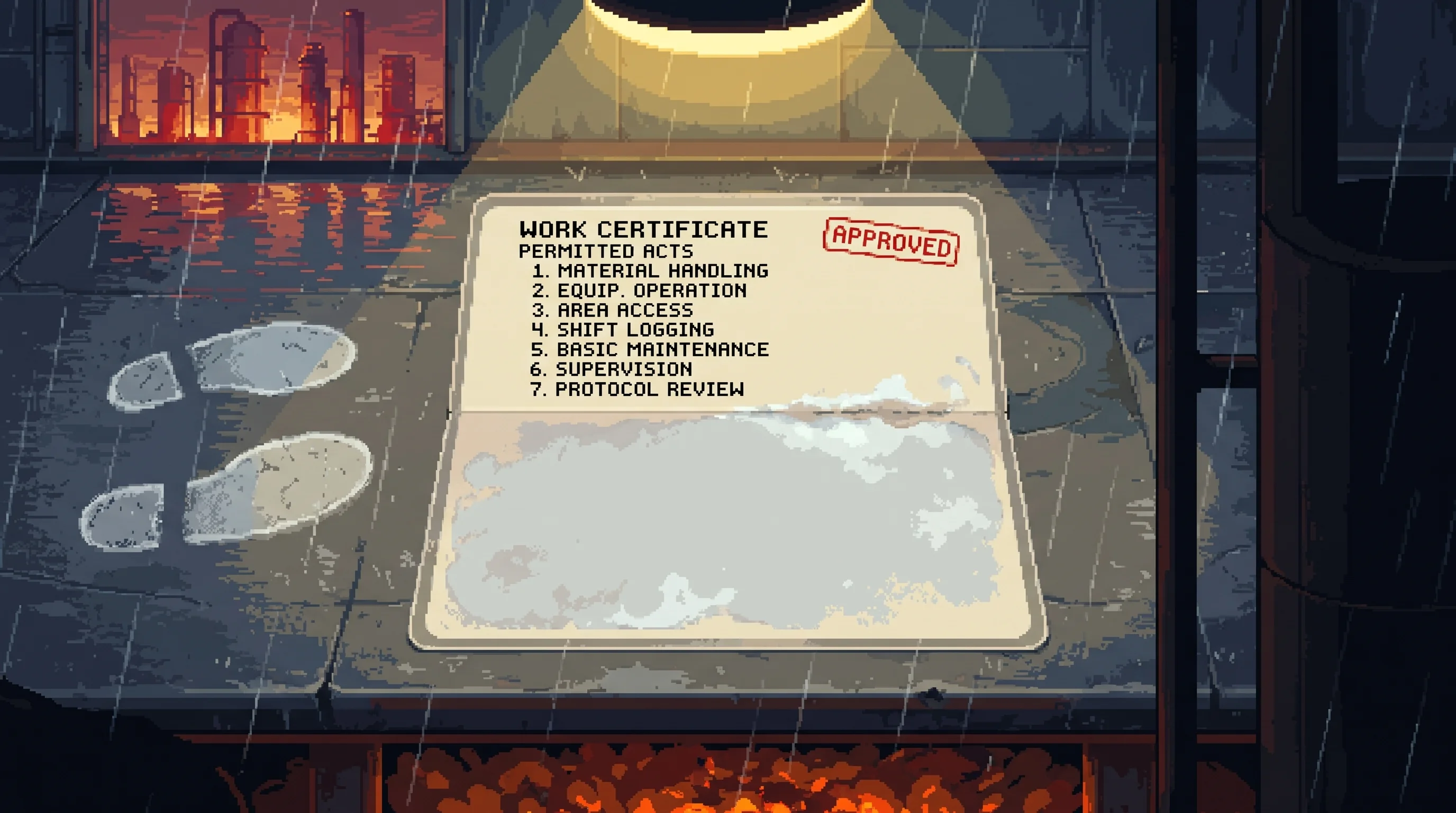
She has never taken a share from the band's Gap-Work pool. She holds no licence, so nothing she says can be revoked. The Handling Inspectorate holds the only licence to swear for a machine, and may not look indoors.
What the Other Witnesses Would Recognize
La Silla, three sectors south on the Long Mile, has never met Segunda and would still recognize the arrangement instantly: a specific person, unbuyable, doing one narrow job by simply refusing to stop showing up. Neither woman has ever given her operation a name. Neither has ever wanted it to grow past the size a neighbor could still vouch for in person, because a witness big enough to need managing is a witness somebody could eventually buy.
The Truth House, eleven walkers deep in the Deep Dregs, has never received a workplace-injury claim through any of its three intake channels. The door marked Environmental Testing sits well inside its forty-kilometer radius on paper; in practice the radius has never had a reason to reach Richmond Industrial, since a sorter with a crushed hand thinks of the discard band, not a bureau three levels under the Backbone. The Truth Premium names the rule both operations run on — trust a known human who was physically present — but its street tier was built around civic disputes and checkpoint violence, not compensation claims. Journalism never got here first. Segunda's ledger is the rule finding a use it was never designed for.
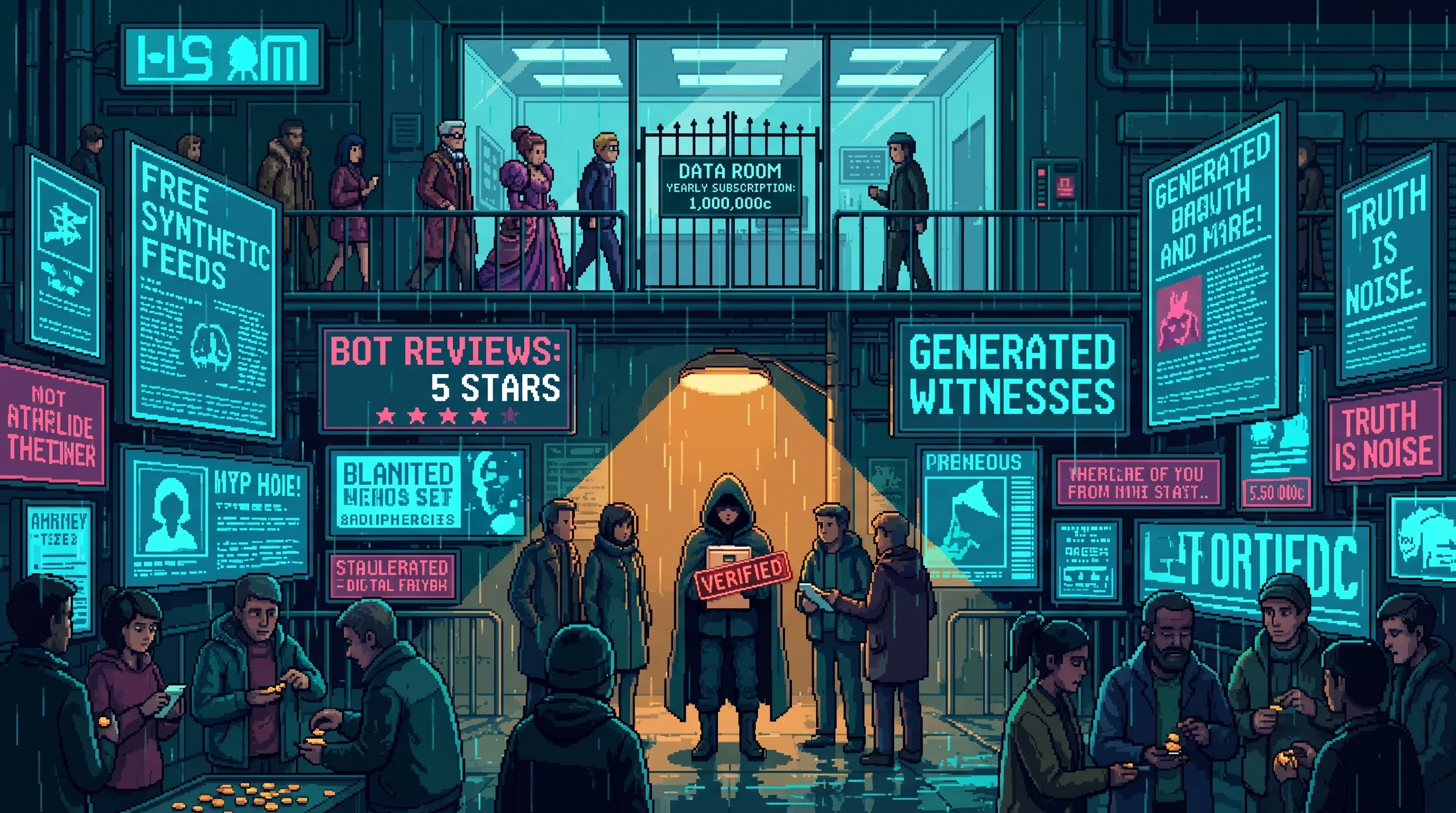
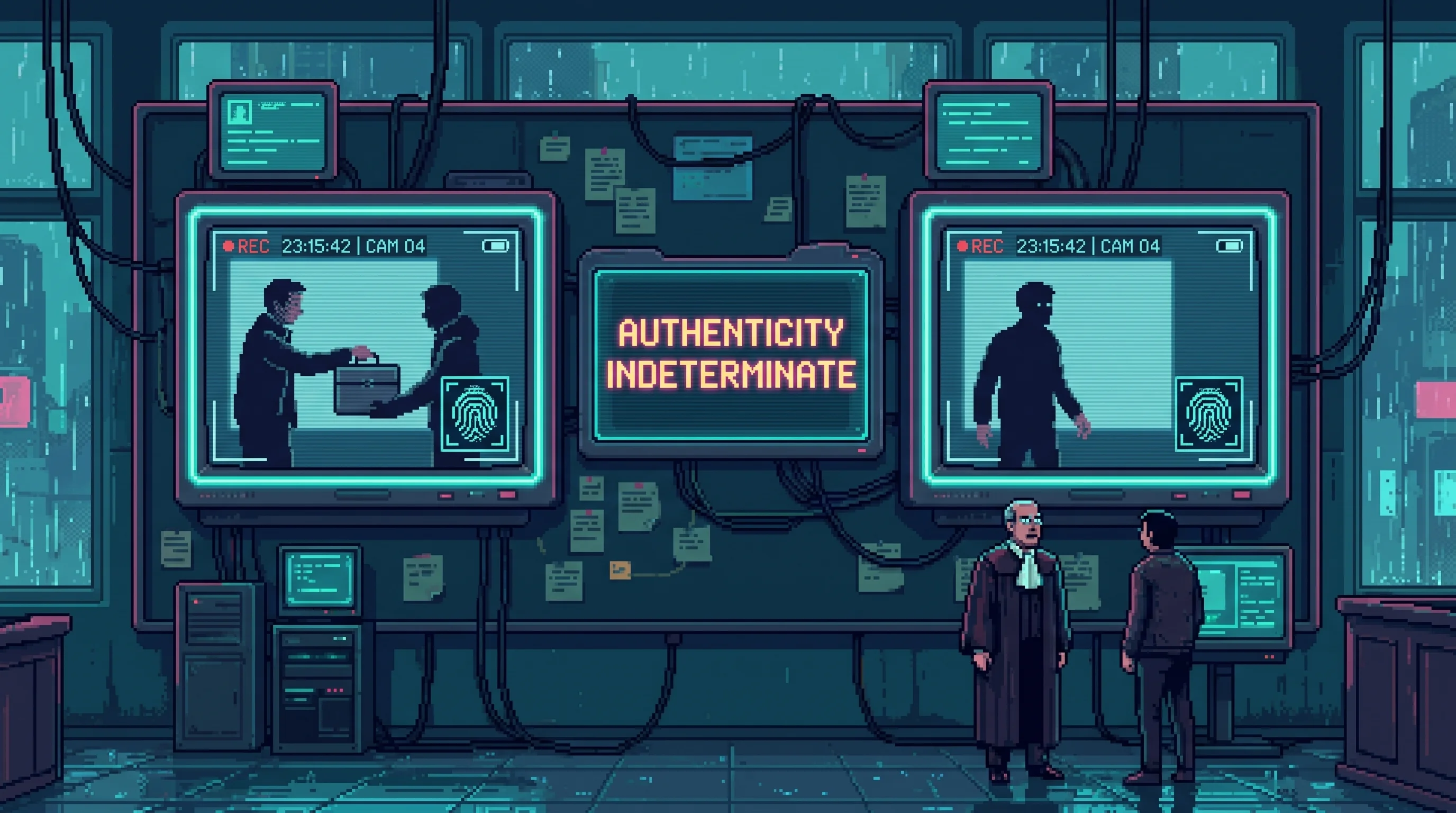
The Evidence Paradox already has a name for Judge Dreg: a fourth justice response the corporate-algorithmic, Dregs-reputation, and Circle Court taxonomy never classified, because he reads people instead of processing evidence. Segunda is a second unclassified instance, narrower and quieter than his circuit — she does not rule on disputes, she certifies that something physically happened, and Ironclad's own compliance apparatus has learned to treat her certification as cheaper and faster than fighting a formal appeal a corrupted telemetry gap could drag out for months. The Three-Tier Information Ecology maps the street tier's survival everywhere corporate coverage is thinnest or its footage structurally unusable; a contracted-labor grievance kiosk paging an unlicensed witness because it was never issued the instrument to see its own workforce is the same rule surviving inside the one system built, on paper, to need her least.
The Ledger That Doesn't Travel
Segunda's ledger is a physical object. It sits in a jacket pocket, indexed by badge number, and its one permanent danger is that Ironclad could someday demand to read it. Out in Sector 18, Marisol Trejo resolved that danger by removing the object entirely: her reports live in memory and in a knotted cord that records how many there have been, never what they said, so there is nothing anyone could ever confiscate. The deeper difference is what each woman puts her name behind. Segunda vouches only for what her own eyes caught on the discard band; she will not write down an injury she did not witness. Marisol vouches for nothing and carries everything, repeating a stranger's account word for word without endorsing a syllable of it. One woman's honesty is the promise that she saw it. The other's is the promise that she left it exactly as she found it, lie or truth.
History
Segunda Camacho was born in 2128, the second of five daughters in a Slagline sorting family that had kept the ordinal naming custom — Primo, Segundo or Segunda, Tercio — for three generations, back to a great-grandmother who arrived in Richmond Industrial with the custom already old. The family never treated the name as a joke about what she would become. It was simply the name a second daughter got.
She worked the discard band apron herself for nineteen years, sorting decommissioned Ironclad stock into the categories that decided what got diverted and what got scrapped for good. A hearing injury from the apron's continuous bass rumble never touched her; what took her off the line in 2178 was the crushed-fingers injury described above, and the five years of witnessing that followed it. She still knows the sorting categories by heart, the way anyone who spent nineteen years in a job knows it long after leaving. She has never gone back to sorting. Walking the route pays her less and costs her more, and she has never once described the trade as a loss.
Open Questions
- The Standing Page. No Ironclad policy has ever formally authorized the kiosk's habit of paging Segunda before a review. Whether a change in Workforce Optimization leadership would end the arrangement overnight is untested.
- The Ledger's Real Owner. Segunda has never let anyone else read the full ledger, and has never said what she intends to do with it when she stops walking the route. Several sorters assume she is building a record for something bigger than any one claim. She has not confirmed or denied it.
- Anabel Okafor. The sorter from the 2183-11-06 entry returned to the discard band six weeks after her claim was paid. She has never thanked Segunda directly. Segunda has never brought it up.
Voice
Sample Dialogue
"I don't carry a monitor. Nobody issues me one. That's the whole reason anybody calls me instead of pulling a feed that isn't there."
"The kiosk didn't believe Anabel Okafor's hand was real until I told them I watched it happen. I don't know why my eyes count and hers didn't. I stopped asking. I just keep showing up."
(to a new sorter, tapping the ledger) "Six words gets you a payout. Nothing gets you nothing. Learn my shift."
Connections
Follow the people and places connected to Segunda.
People

The telemetry recorded the help as a finding.

Same unbuyable-witness shape, run against a different ledger three sectors south

A fixed ledger on one discard band versus a moving loop carrying other people's unwitnessed reports through Sector 18

Places
The checkpoint crossing where she stations herself at shift change, tallying what neither employer's headcount counts
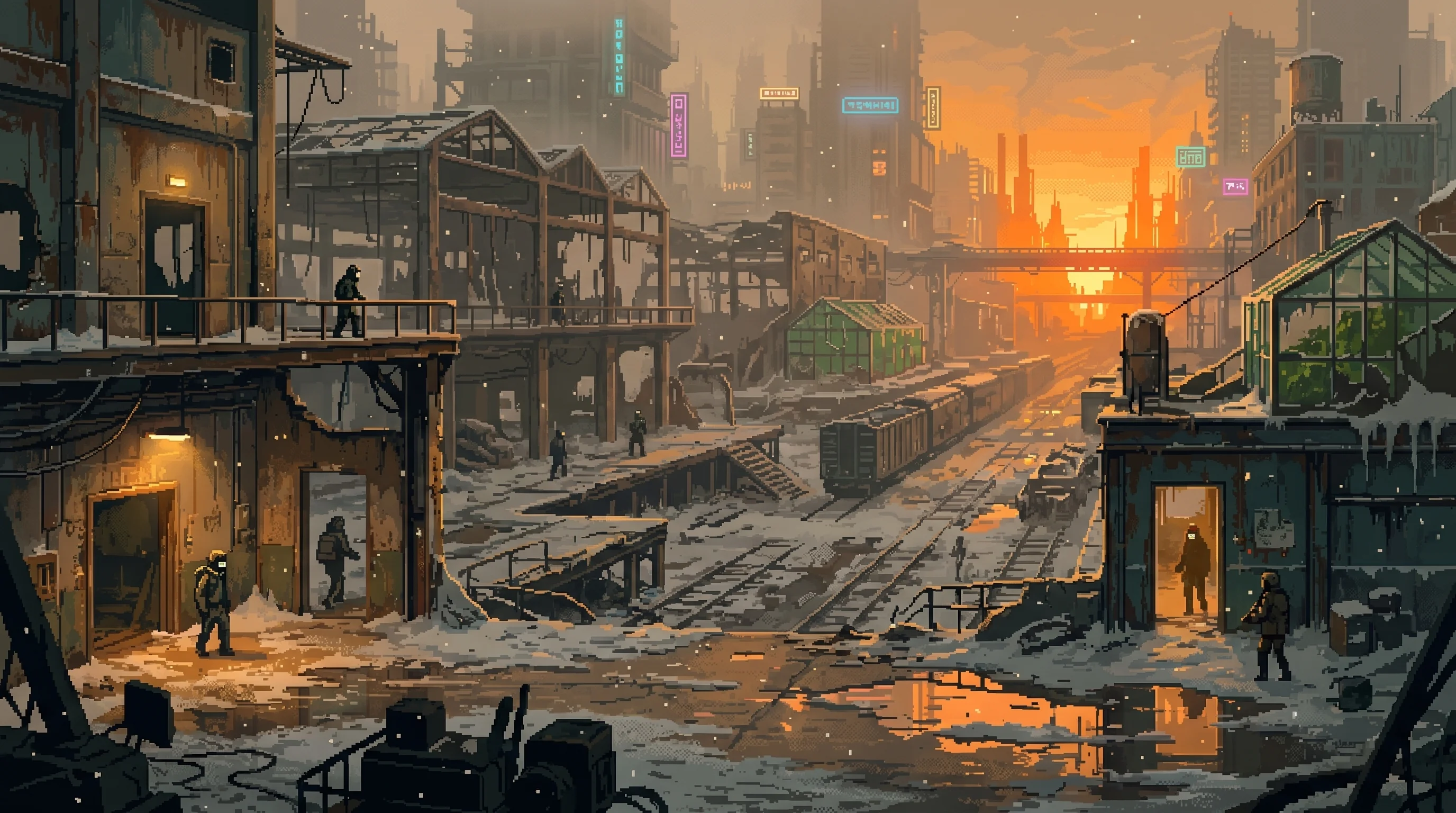
A third of her ledger’s injuries originate there.

Organizations
Other connections


Tensions
Supporting connections

Other connections
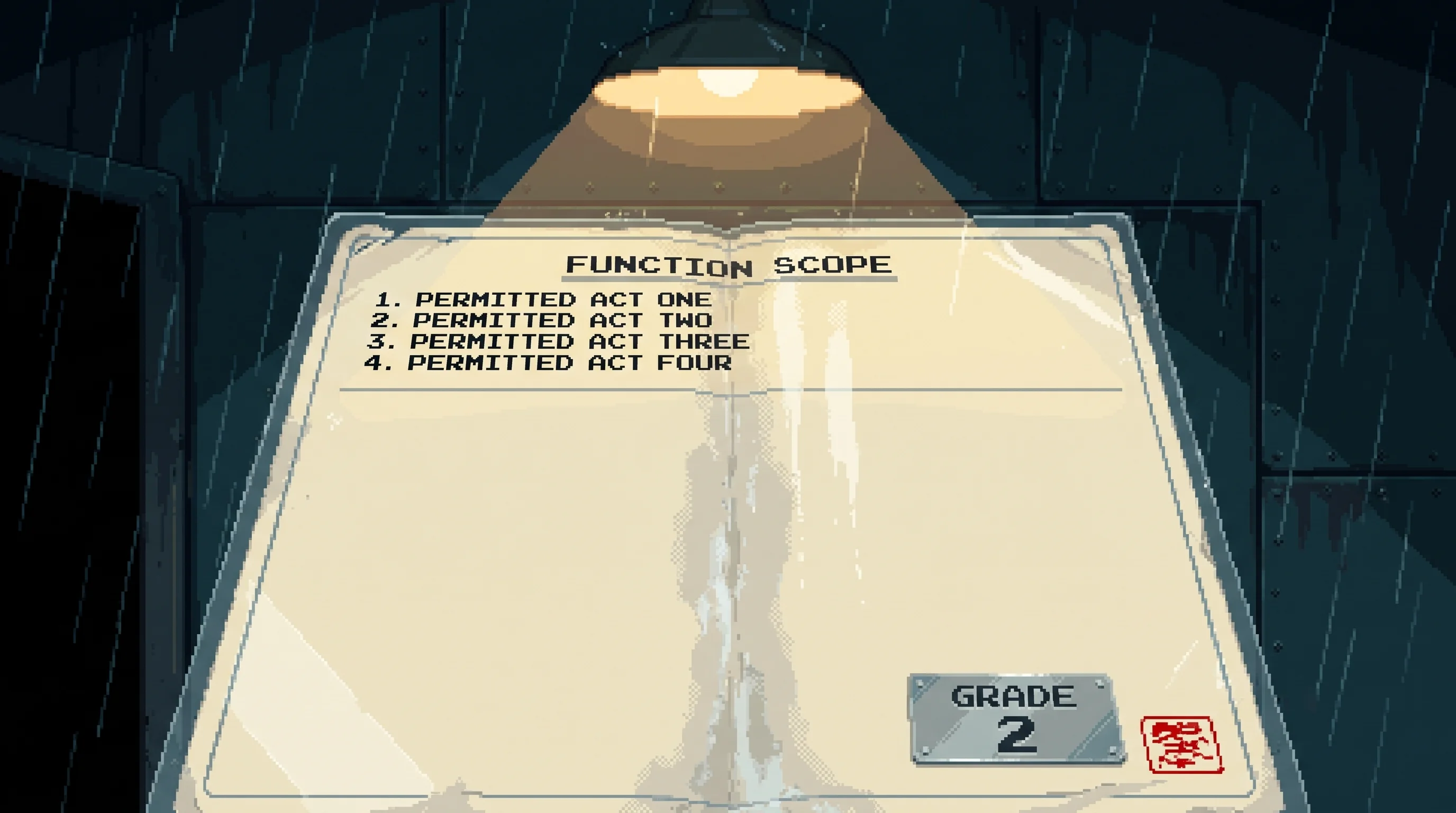
The ceiling she has never been subject to is enumerated.

The apron's pool runs on her reasoning; she has never taken a share

A third of her ledger traces to parts stamped zero-value decommissioned before they hurt someone

A second unclassified justice mechanism, narrower than Judge Dreg’s circuit.

The street tier surviving inside a compliance process built, on paper, not to need it