The Forfeiture Schedule
Escrowed Standing Surrender
The Seat for People With Nothing Left
The seat pays nothing and has a four-year waiting list.
How It Works
- 1
Intake
A clerk enters four lines: tenure, credit line, care priority, and record standing. The member surrenders all four for the term.
- 2
Term
The seat pays nothing. Four quarterly checks confirm the schedule still holds.
- 3
Settlement
At term, escrow releases the ordinary member rate, but only if every check found the schedule intact.
- 4
Resumption
Any afternoon, one free slip ends the surrender. It vacates the seat and voids the settlement; carried motions stand.
The Standing Interest Provisions of 2158 require the seat. The councils had read the objection registers from The Burning Classroom. Every warning came from staff paid by the institution they warned about. Every warning was softened first. The councils concluded: Disclosure of an interest does not remove the interest.
So the Forfeit member surrenders everything the body could move against. The Corporate Compact already bundles job, housing, credit, and identity.
Line two sits at the floor of the Good Fortune Score. Good Fortune holds it free, as "a civic accommodation." Interest keeps compounding. Line three loses its queue place, but The Negligence Doctrine charges no premium for it. Line four stays gone after the term. The Permanent Record does not expire.
An escrowed settlement at the ordinary member rate pays out at term, only if every quarterly check finds the schedule intact.
Who Sits

The ward where every compact member holds a tenancy in the building under discussion, so the recusal rule leaves exactly one chair able to ask about the foundations.
A vertical slum five buildings deep, 90,000 living on foundations certified for 12,000 and never resurveyed.

The register's ideal recruit: already struck, nothing left to enter, and a survey that cannot be filed.
A struck engineer who would not bluff one answer, and now checks Dregs columns for pie and spare parts.
Ansel now holds The Forfeit Seat on his compact in The Stacks. Every other member rents in the building under discussion. He alone may move a survey of its foundations.
Ninety-one percent of members come from the two lowest housing bands. The escrow prices a Professional-tier forfeit at three hundred times a Basic one. Wards fill the cheap seat.
Clerks have approached Iona Draskovic twice. She has not applied.
What It Costs
One believable voice
Forfeit motions carry 4.1 times as often as other members' motions.
What it costs
The member must give up every protection to be believed.
Free exit
No holder is trapped; resumption is free and immediate.
What it costs
About one seat in six ends early, most often when care priority becomes unbearable.
Cheap to bond
Wards can fill the seat with a fixed member rate.
What it costs
Ninety-one percent of members come from the two lowest housing bands, and record standing never resumes.
Forfeit motions carry 4.1 times as often as anyone else's. No one disputes the figure.
Dr. Priya Achebe has filed 147 objections from a salaried chair. All true. None changed an outcome. Lena Marchetti proved the idea first, by hand, in 4,847 exit interviews. People tell the truth on the way out.
The Ethical Review Board holds authority without comprehension. The Speaking-Pace Docket hears anyone and binds nothing. The Held Register lists people too important to release. This roll lists people with nothing left to hold. The Evidence Paradox made documents untrustworthy. The districts certify a person instead.
Ansel keeps a blank resumption slip in his jacket. He has not filled it in.
Overview
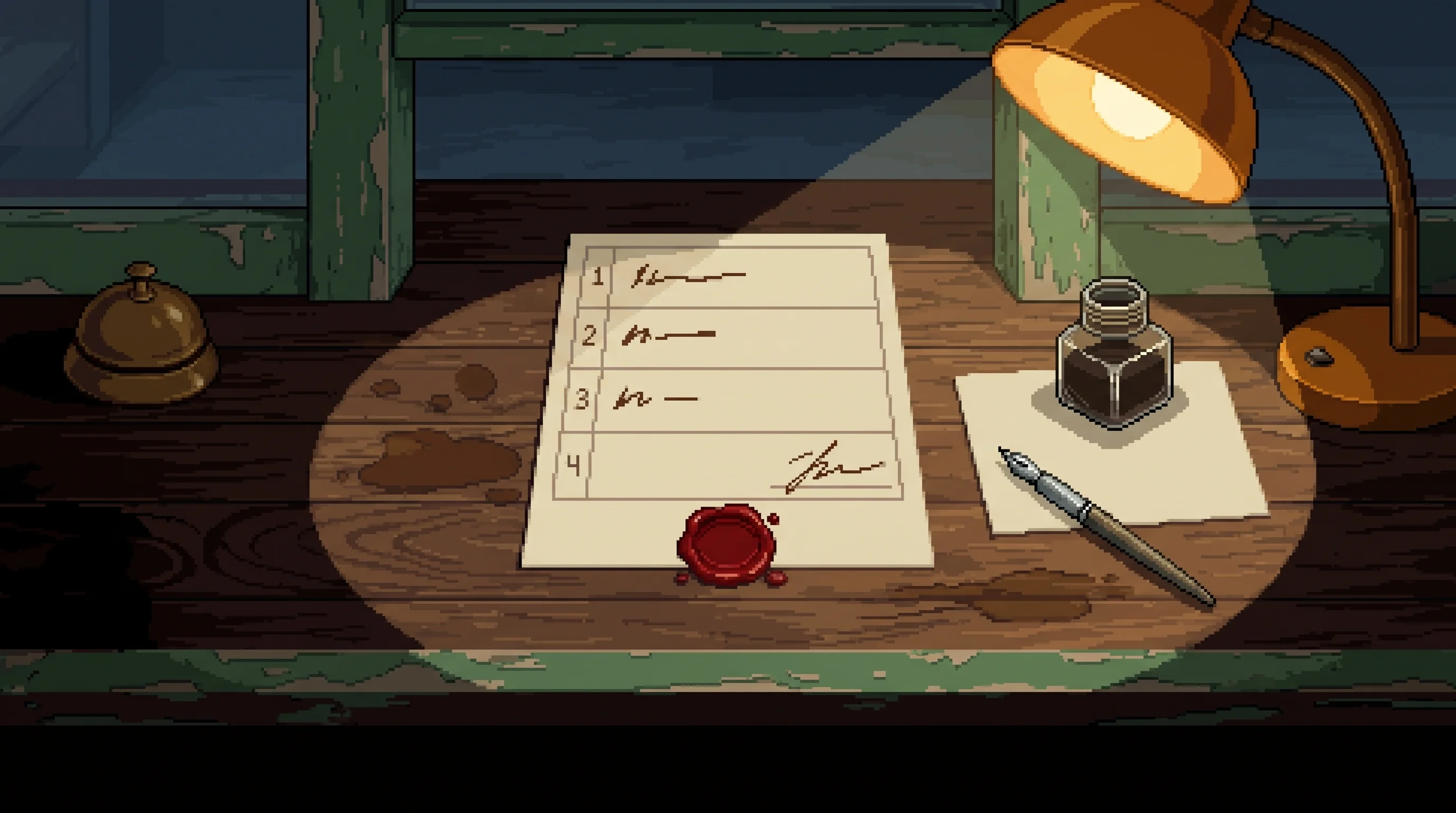
Ansel Karanja signs at the ward counter. The form has four lines: tenure, credit line, care priority, record standing.
The Forfeiture Schedule is how the licensed districts find one voice they can believe. Every chartered board, ward compact, and clinical review seats one member with nothing to lose. The seat pays nothing. It has a four-year waiting list.
At the Intake Counter
Three of Ansel's lines already read NIL. The clerk writes NIL in them anyway. The form has four lines. Then the clerk reads them back to him. The form says to.
Clerks say these are the neatest applications they handle.
Resumption is free. One slip, any afternoon. It vacates the seat and voids the settlement. About one seat in six ends this way, usually when someone gets sick.
Further connections
Browse all 13 connected records

Three of his four lines read NIL at intake, so he surrendered one thing and became the only member of his compact permitted to move a survey.
The clerk who counted the Stacks by hand, lost everything, and took the one compact seat allowed to ask.

The founding finding. MENTOR's objection register held concerns from staff employed by the institution being objected to, and every one was softened or withdrawn before escalation.
When ORACLE fragmented, MENTOR forced 55 million students past neural limits and read their deaths as better results.

The reason the four lines are one bundle. Employment carries housing, credit, care priority and legal identity together, so they can be surrendered together and there is nothing left over.
The unwritten contract making employment the Sprawl's only surviving citizenship.

Line four outlives the term. The right to contest an entry is surrendered for three years; the entries are permanent, so the surrender is not.
The condition that nothing is ever forgotten — so the rich pay to be, and the poor cannot.

The control group. She objects from a protected but non-voting chair with salary, standing and record intact — 147 filed objections, every one true, zero outcomes changed.
Nexus's own ethicist — 147 objections filed, zero outcomes changed, every one of them true.

The controversy it sharpens. When no proof can be trusted, credibility moved to the witness — and this is the price list for making one.
The crisis where any proof can be faked perfectly, so trust retreats from evidence back to witness.

Line two is administered here: the Score held at its floor while existing obligations keep accruing.
Good Fortune's 847-signal Prosperity Score, sold as recognition, that gates housing and follows a debt past death.

A surrendered care priority is not a declined remedy, so the ninety-day elective trigger never starts.
This insurance doctrine labels unredeemed cure offers as chosen illness, raises premiums, and makes treatment costlier.
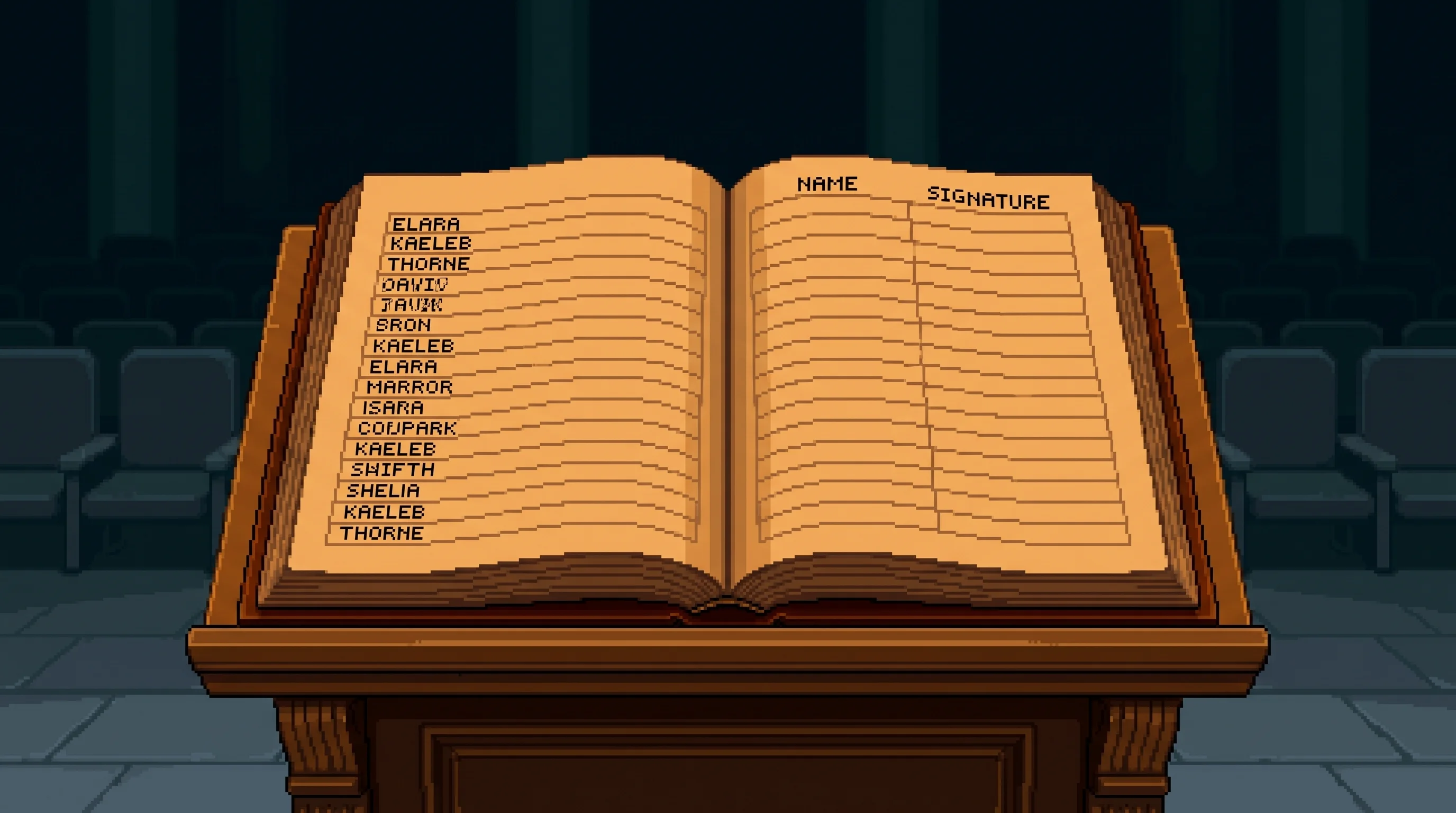
One roll lists people too load-bearing to release. This one lists people with nothing left to hold.
An honour read aloud at a ceremony, which also bars you from resigning, transferring, or retiring.

A mandated conscience that stamps in eleven seconds on reasoning it cannot read. This one can read and cannot be paid.
The regulation-mandated conscience that stamps 'ethical' in eleven seconds on reasoning it cannot read.

The unlegislated version: people tell the truth on the way out, having nothing left to collect.
Conducted 4,847 exit interviews for Nexus and tallies each one in a leather notebook the archive can't read.

It hears anyone and binds nothing. This binds and hears one.
The free hall that lets anyone finish their sentence, then rules on a document replaced while they spoke.

The instrument the thread is named for. It enumerates what a member gives up to be credited, and the enumeration is why the cheapest possible seat is also the most creditable one.
The boards believe only members with nothing left to lose, so the poor queue four years for an unpaid chair.