The Excellence Exile
Civic Removal of Concentrated Reliance
Too good to keep in one place
Nobody is removed for what they did. The finding is always what other people did, which was wait.
The Core Tension
No second carrier, no second collapse
A dependency is hazardous in proportion to how few people can carry it. The stand-down is bounded, salaried, and honourable, and the districts that run it have had no continuity failure in twenty-six years.
What it costs
It removes the people others wait for, and it teaches the best staff to answer a little slower.
The wrong people
The rule was written for dependencies whose failure kills. Applied to a clinic or a classroom, it removes exactly the people whose value it cannot count.
What it costs
Leaving concentration alone is the arrangement that failed once already.
"We did not remove her for what she did," says the district continuity officer. "We removed her for what everyone else did, which was wait for her."
The case for the stand-down is strong. The rule came out of a collapse. The removal is bounded, salaried, honourable, and reversible. Leaving concentration alone is the arrangement that failed once already.
The case against is that it works on the wrong people. The rule was written for the air plant, the grid, and the water. People whose absence would kill someone go on the Held Register instead. Applied to a clinic, the Index removes exactly the people whose absence costs nothing it can count.
The Index has three findings: within band, stand down, or held. It has no finding for a reliance that is real, valuable, and irreplaceable all at once. So the districts have taught their best staff to answer a little slower. Holding a reading under band is not an offence and cannot be measured as intent. The Lampblack sandbag against forecasts on principle, and they call the district version a soft imitation.
Overview
Dr. Elin Baptiste returned her own calls. Every message got an answer the same day, in her own voice, from a printed slip she crossed off by hand. She did this for nineteen years at a district clinic in the Corridor. Most of the clinic's patients booked by asking for her by name.
In the spring of 2180 the district stood her down for four years. The Reliance Index measures the share of a service's work that stops when one named person stops. Hers was far above the band. Above the band, the Index does not recommend anything. It issues a date.
The notice ran to four pages. Pay continues at grade. Standing is retained. "This record is not adverse," it said on page one. It said so again on page three.
How It Came To This
After the Cascade, the orphaned regional systems failed because the thing everyone depended on could not be carried by anyone else. The licensed districts made a rule. A dependency is hazardous in proportion to how few people can carry it. They applied it to machinery first. From 2158 they applied it to staff. Removal needs no wrongdoing, no charge, and no finding against the person.
The grounds arrive in full under 11.4(a), written for the person removed. The reasoning is usually right. People who agree with it do not appeal. Overrides have stayed under three percent. The districts that run the Index have had no continuity failure in twenty-six years, and its critics do not dispute that.
How It Is Lived
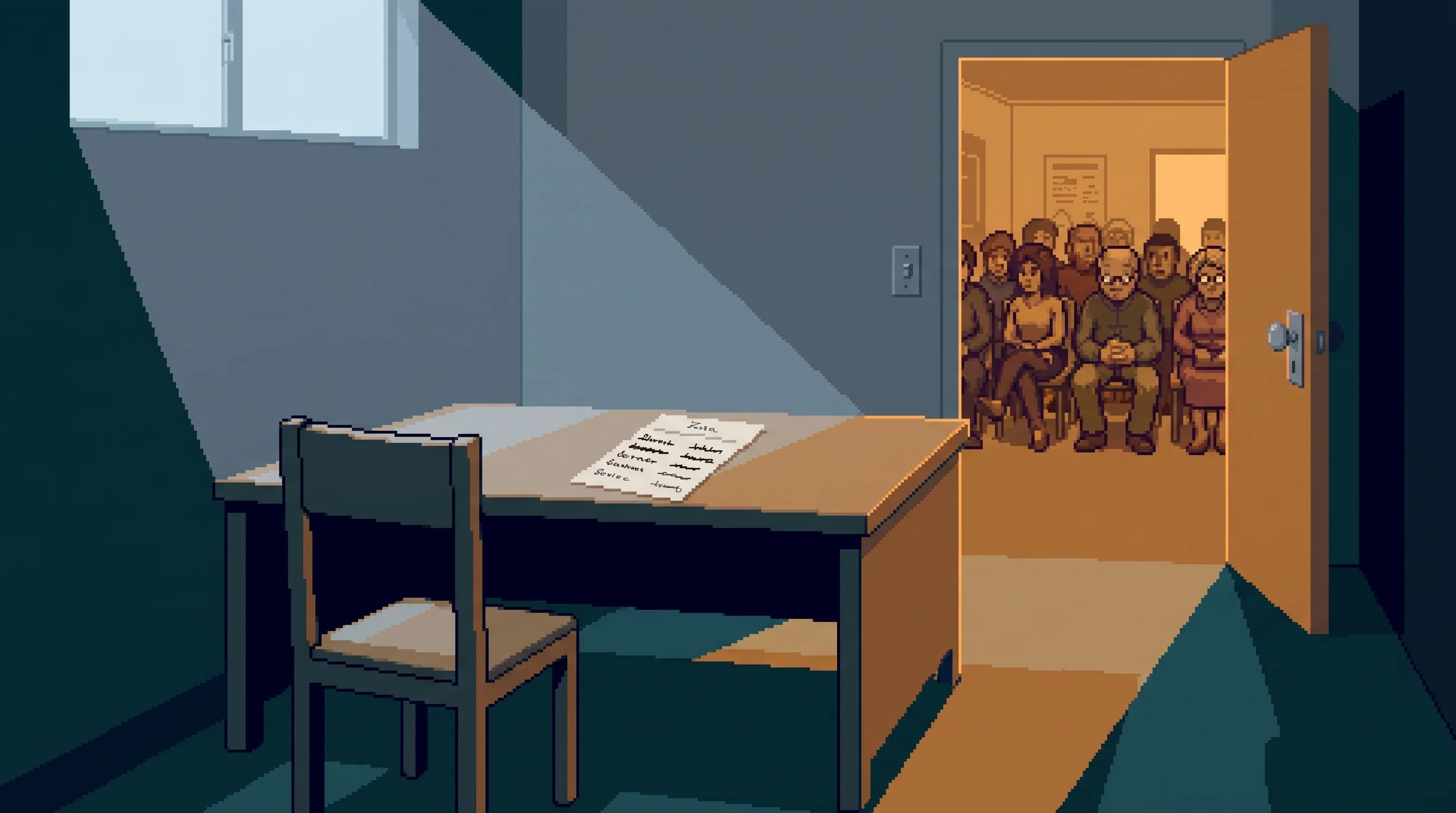
Baptiste served her four years at the Diablo Waystation, on the edge of the Wastes, where the district graph does not reach. She could not practise. Every morning she wrote the slip anyway: the names she would have called, in order. Del Ferreira, who keeps the counter, gave her a drawer in the second week and did not ask. Del is the one person who can rebuild the waystation generator. The Index runs only where licensing runs, so it will never read her.
Baptiste came back in 2184. The clinic now had a callback protocol: any clinician, four-hour target, logged. Median response went from thirty-one hours to four. The district filed it as a successful redistribution of reliance. Baptiste agrees.
The Held Register is the highest professional honour in the districts. It also bars resignation, transfer, and retirement while the finding stands. Maren Cott, Sector 12's one licensed developmental mediator, applied to transfer. The refusal arrived with its full reasoning, and the reasoning was correct. Ondine Kesh was told to certify a second instructor or stand down. She declined both in three words. The Line-Walkers Union voted down a reading on Ifechi Adeyemi, who carries three legal systems in her head with no backup. A reading is a document, and a jurisdiction can act on a document.
In Fairmonte, a stand-down is an honour and a missed seating at the club.
Baptiste still writes the slip each morning. Now she hands it to the callback desk.
Start Here
First door. The Reliance Index, then Dr. Elin Baptiste.
Key People. Del Ferreira passes every test the Index uses and will never appear in it. Maren Cott has stopped looking for the door.
Key Institutions. The Quiet Doctrine does the same work in the dark and meets more resistance. Allocation dissolves the audience instead of the person. The Custodian Corps seals its models and gets the transparency requests; the Index explains itself and gets none.
Key Places. The Diablo Waystation is where stand-downs are served. Fairmonte cannot tell an honour from a missed seating.
What To Read Next. The Optimization Paradox: the numbers are real, and no one can count what they cost. Last Human Smarter Than AI asks what capability is for; here capability is the finding. The Error Floor pays a trade to hold a machine slightly wrong; this gets the same from people for free. Corpo-Nations makes leaving impossible; this makes staying impossible. Proof of Flaw is another credential built from falling short. AI Haves and Have-Nots: the licensed tier sheds its excellence, and the unlicensed keeps all of it.
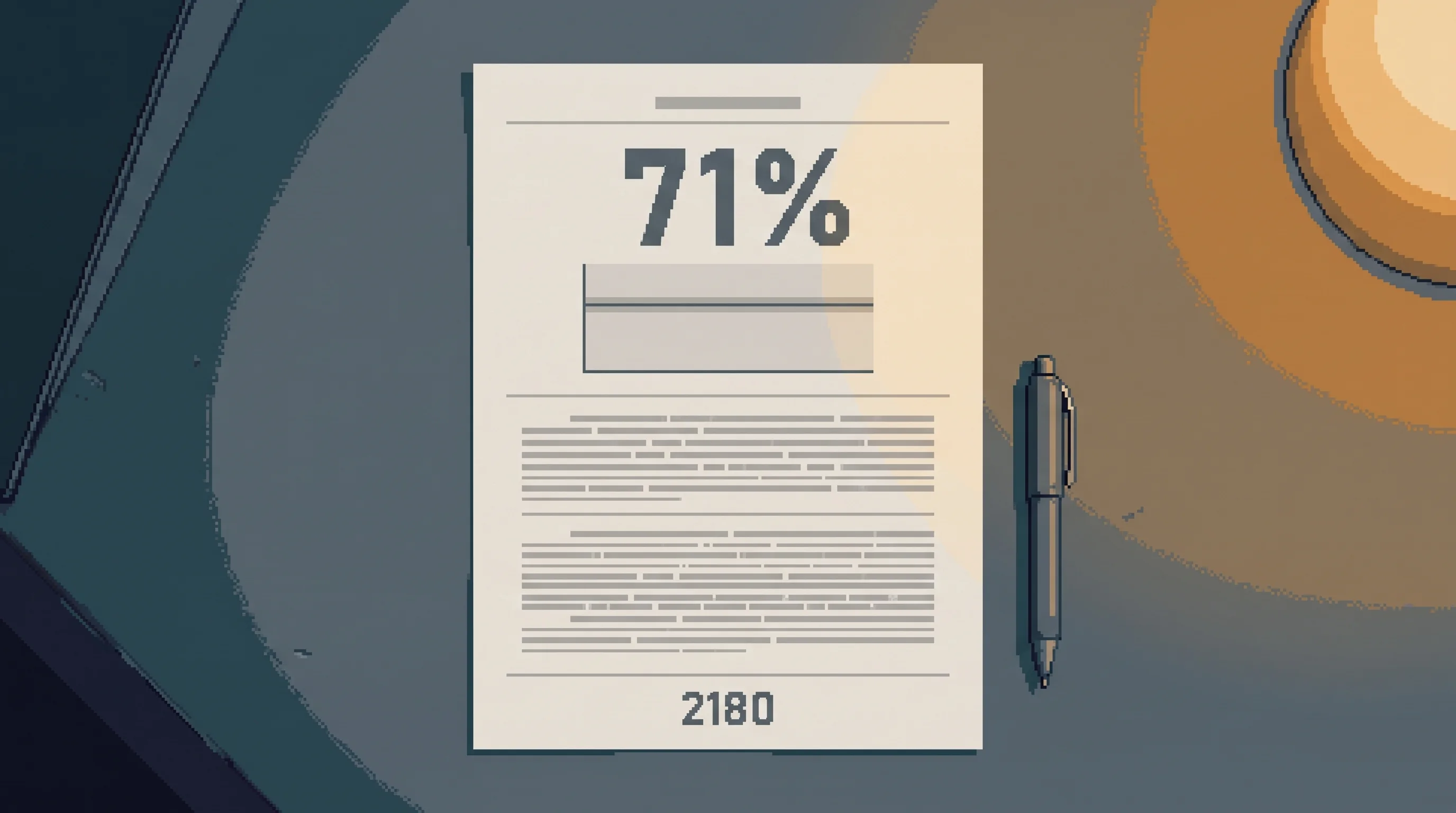
The instrument: the share of a service's work that stops when one named person stops. Above the band it does not recommend anything. It issues a date.
The published measure of how much of a service stops when one named person stops, and the date it returns.
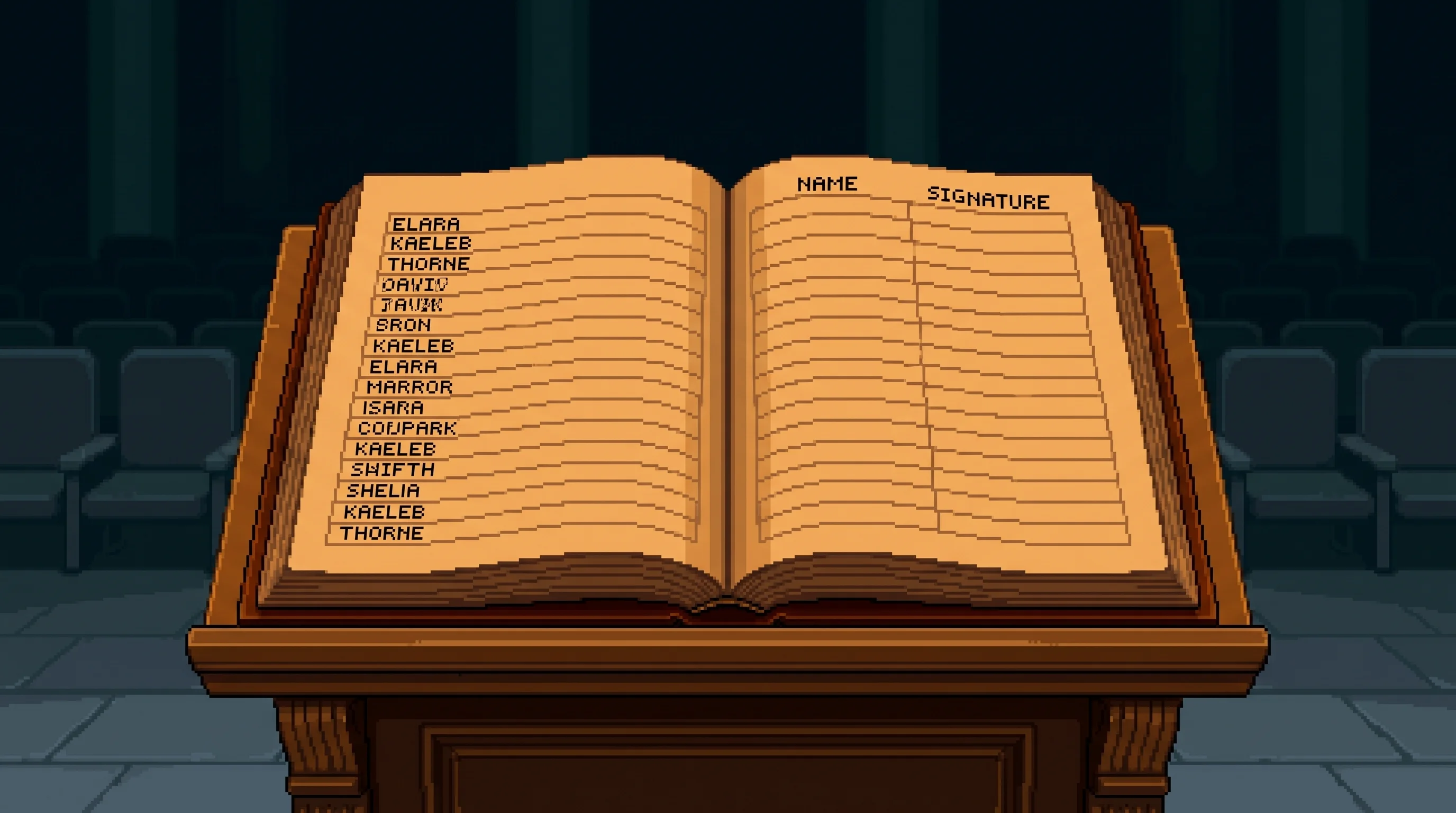
The other finding. Prove your removal would hurt people and you are exempt from the stand-down, and from resignation, transfer, and retirement, for as long as the proof holds.
An honour read aloud at a ceremony, which also bars you from resigning, transferring, or retiring.

Nineteen years returning her own calls, a reading of seventy-one percent, and four years at a Wastes counter writing out the names she would have rung.
A clinic doctor sent away for four years because too many patients asked for her by name.

The practice was already there. What changed is that flattening your signal now protects a job rather than a future, and the districts pay a wage to the people doing it.
A counterculture that sandbags its own brilliance, because a forecastable curve is a capping order waiting to be signed.
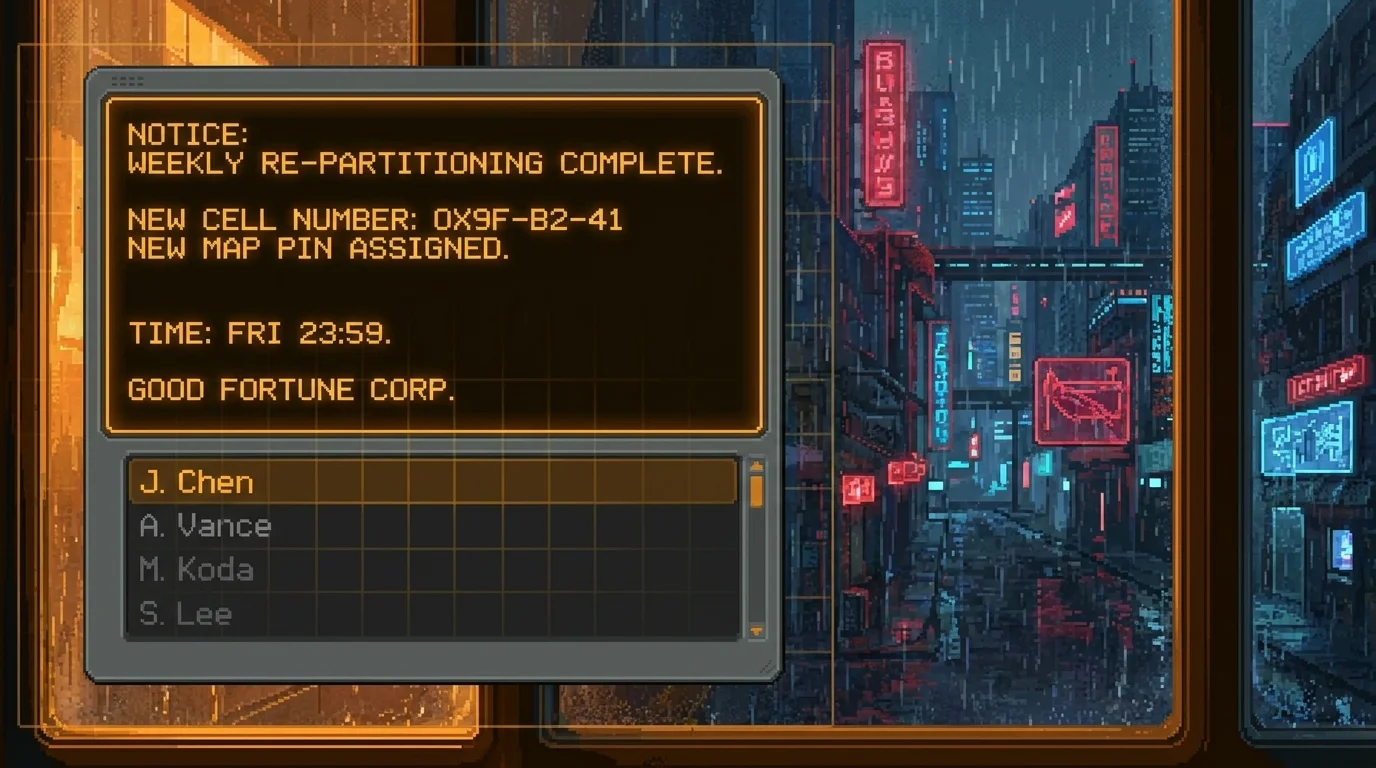
Two answers to concentration, never operated by the same body. Allocation dissolves the audience every seven days. The stand-down leaves the audience and removes the person it formed around.
Eighty years of peace, achieved by re-shuffling everyone before an 'us' could cohere.

The only licensed developmental mediator in Sector 12, which is a reading. Her transfer request was refused on continuity grounds with the full reasoning attached, and the reasoning was correct.
The only licensed developmental mediator in Sector 12 who was herself the product of the practice she adjudicates.

She arranged to be the only person who could say no, and the arrangement is what the Index reads. Certify a second instructor or stand down. She has declined both in the same three words.
She trained herself unreadable to survive Sector 9. Now the premium houses pay her to teach it.

The Montée does not read notices. A stand-down is an honour in the district and a missed seating at the club, and the ladder back is the same ladder.
A white-gabled hillside club where missing brunch can cost an elite three years of social standing.

They voted down a reading on Adeyemi. A record is a thing a jurisdiction can act on.
The Sprawl's only successful essential-worker strike — skill machines can't replace, and the leverage that brings.

The counter where stand-downs are served, kept by a woman no instrument will ever read.
The waystation keeper who feeds the road for free, charges the tourists, and keeps the ledger of all the Wastes took.

Four years of mornings at the last human counter before the Wastes.
The last reliably human-served room before the Wastes, where warmth is survival infrastructure.

Both make a credential out of falling short of an instrument.
The humanity test looks for missing machine prose, so accents the schools once corrected now rent by the season.

The licensed tier sheds its excellence; the unlicensed keeps it.
The point at which effort stopped being able to close the gap that compounding opens.
Further connections
Browse all 8 connected records

The same suppression with the concealment removed. The Doctrine flattens a curve before anyone could prove a peer was lost; the stand-down waits until the reliance is real, then publishes its arithmetic.
The unwritten convergence every forecaster reaches: throttle a rising future before it completes.

Every continuity metric in the licensed districts has improved for twenty-six years. Nobody has produced an instrument that measures what a district is like once the people worth waiting for have learned not to be.
Every metric improves while everything nobody measured quietly dies — success as the purest failure mode.

Eleven transparency requests against a sealed basis. None against the one that states its grounds in full.
The institution that holds the Sprawl's most accurate sealed models and issues Mandate Notices without explanation.

That thread asks what human intelligence is for. Here nobody disputes the capability. The capability is the finding.
The last human smarter than any machine was born in the 2020s; the question now is what intelligence is actually for.

The Compact makes leaving impossible. This makes staying impossible, and keeps paying you.
When your employer is your country, quitting is emigration.
There a machine underperforms on contract. Here the people do it unpaid, and nothing records it.
The machine is held slightly bad on purpose, and the people it keeps are the reason.

Both instruments pay a person to be out of position and state the grounds in full. That one removes you because too many people depend on you; this one seats you because nobody does.
The boards believe only members with nothing left to lose, so the poor queue four years for an unpaid chair.

One instrument measures concentrated human reliance and removes it. The other builds it deliberately. Same quantity, opposite ruling, no reconciling body.
Life-support assets go into service one part short, and one named person is entered as the missing part.