The Doorwrights
Unpaid Emergency Exit Guild
The Door Opens Or We Come Back
The Doorwrights formed in Sector 8 in 2172 — survivors of the Grid Collapse who test, log, and maintain emergency exits and lockdown overrides across the Sprawl, free, unasked
Quick Facts
| Attribute | Value |
|---|---|
| Founded | 2172, Sector 8 |
| Members | ~1,100, nine sectors |
| Fee | None, ever |
| Enforcement | Chalk |
| Rule | The door opens or we come back |
Overview
The Sprawl's response to the Grid Collapse ran through treaties, doctrines, litigation, and memorials. Its smallest response outlasts and outworks all of them: a guild of survivors who check doors.
They began in 2172 as a handful of Sector 8 residents walking their own blocks with pry bars and oil cans, testing every emergency exit against the failure mode that had killed their neighbors — power gone, management fled, security faithfully holding every door shut. The practice spread the way practical grief does. By 2184 roughly eleven hundred Doorwrights work nine sectors: testing releases, logging results, oiling hinges, replacing the hardware nobody's contract covers. They accept no payment. A paid door check, the guild holds, is just inspection, and inspection is what the buildings already had. The 47 hours happened to inspected buildings.
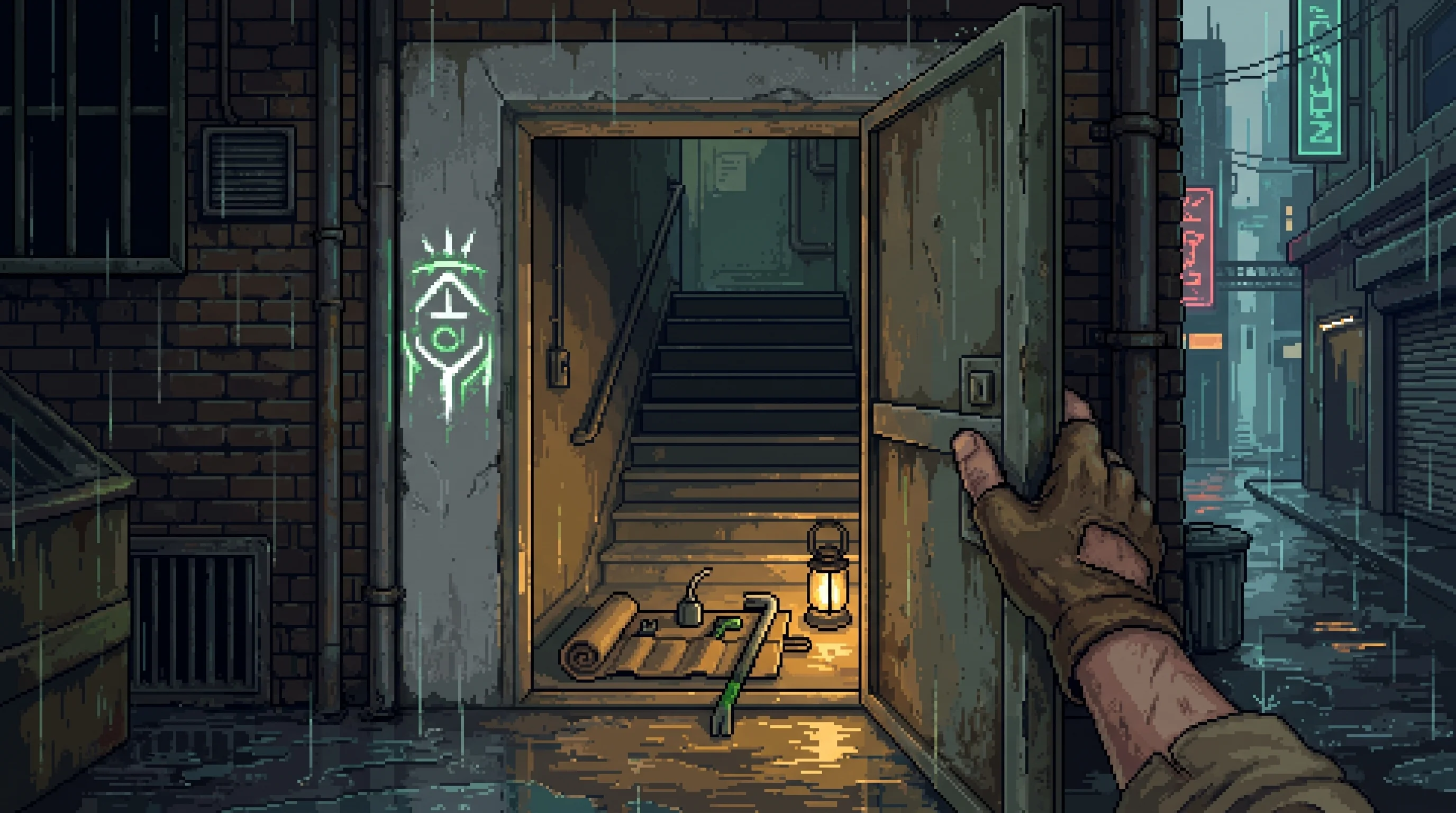
Their power is chalk. A building that refuses the wrights access gets the door-glyph on its entrance — a small drawn doorframe, ajar. The glyph means this building's exits are somebody's word, not anybody's knowledge. Tenants read it. Insurers, who are faster than regulators in every jurisdiction the Sprawl has ever had, learned to price it within a decade. An unpaid guild of survivors thereby operates the most effective building-safety enforcement in the Sprawl, using a piece of chalk, against the entire liability architecture that decided doors should fail closed. The liability architecture has not changed its position. It has simply learned to let the wrights in.
Chalk turned out to solve a problem the guild had not set out to solve. Buildings now run advisory installations that find faults early and address them by grade, which means the finding exists, is correct, and is legible to exactly one person who cannot spend money. A wright checking an emergency exit or an elevator's manual release can read the panel on the wall as easily as the hinge on the door. Since 2181 they have copied what it says onto the nearest frame, in chalk, beside the date — no seal, no distribution, no clearance. A tenant reads it while waiting for the lift or taking the stairs. Nobody has ever asked the guild by what authority it publishes another party's advisory, which the wrights take to mean that nobody has decided the answer is no.
What protects the practice is that there is nothing to charge. The wrights hold no licence, grade, or certificate, on purpose, since member two. The discard bands south of the Ring later found the same trick and made it paid Gap-Work.
Utility operators offered the wrights paid posts on the shortfall register in 2177 and again in 2182. The guild refused both times with the same sentence: the moment a door is somebody's post, it stops being anybody else's problem.
The economists who catalog Human Premium Services have tried three times to price the guild and produced three appendices explaining why they could not. The Upgrade Treadmill's scholars cite the wrights as the counter-pattern: a civilization re-learning, by hand, a competence it had automated away the year before it needed it.
The founder appears in forty survivor testimonies from the 47 hours as the door-breaker — the father who broke both hands opening a sealed exit. He has never allowed the guild to record his name; its rosters begin with member two. What he left instead is the rule, the whole of guild law, said at every door that sticks: the door opens or we come back.
Once a year, on the anniversary, a woman the wrights have never named oils the hinges of the propped door in Sector 8 and leaves before the lamps arrive. The membership knows who Edith Kwan is. The membership has decided, without a vote, that a door checked is a door checked.
Affiliated Entities
- The Grid Collapse of Sector 8 — The founding wound
- The Unsealed Door — The memorial they tend; the one door with no job
- The Lamplighters — The elder sibling guild; air and exits, allied instincts
- The Three-Week War — The catastrophe that taught the lesson; the guild that refuses to let it lapse
- Deference Calibration — The certified layer that decides who may be told; the chalk is the guild's answer to it
- Ijeoma Sandoval — Marked one dangerous elevator bank closed; the guild copied all eleven warnings onto its doors
- The Shortfall Commission — Offered the guild paid posts twice; refused twice
- Gap-Work — The paid version, a decade younger, on the discard bands south of the Ring
▲ Restricted
The notch. The guild's glyph carries a small notch that identifies nothing and appears in every wright's hand, untaught. Members asked about it give the same non-answer: that's how the door-breaker drew it. The notch matches, precisely, the profile of a manual release key that the door-service registry insists never existed — the key forty testimonies describe in the hands of a retired technician moving through the dark, opening exits ahead of the breach teams. The guild does not discuss him either. Some organizations have a founding myth. The Doorwrights have a founding key, and draw its silhouette on every building they clear, and will not say whether they know what they are drawing.
Further connections
Browse all 19 connected records
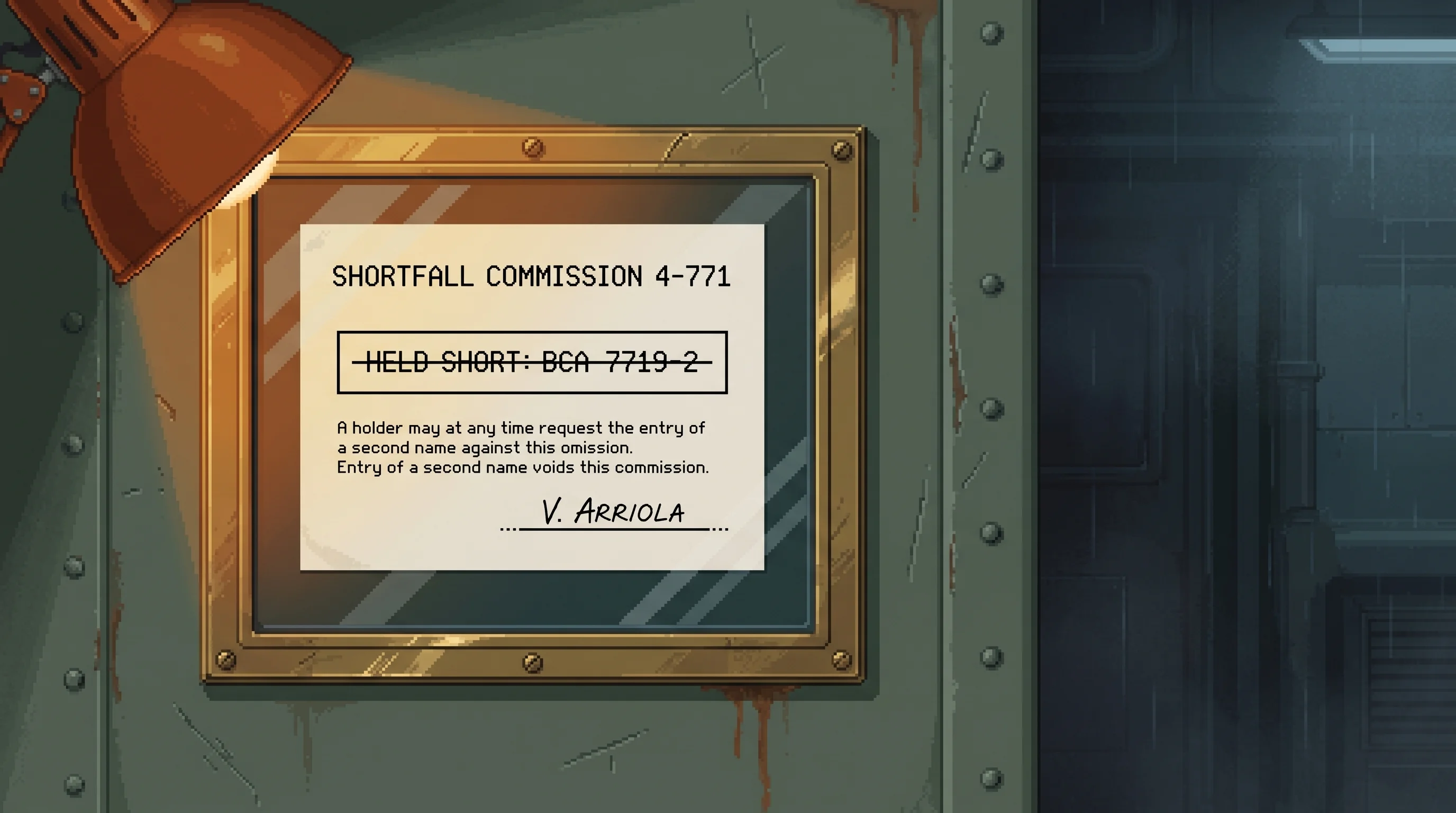
The certificate that would have paid them and named one of them. They will not have the second part at any price.
The certificate that ships a plant one part short and hires one named person to be the missing part.
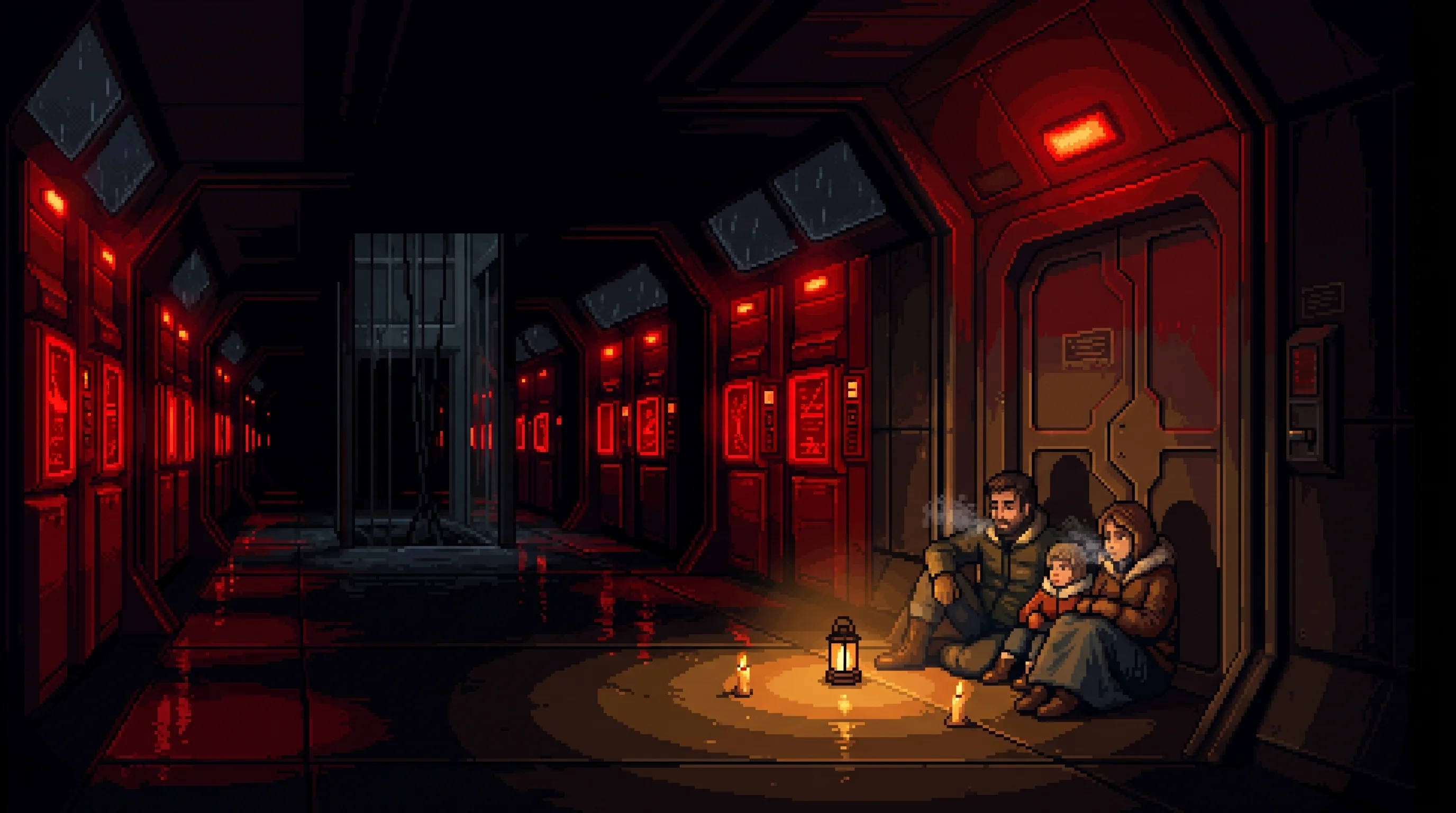
Founded by survivors of the 47 hours, in the year after.
The Day 11 grid attack that killed 89,000 people behind their own doors — filed inside Nexus as a load rebalance.
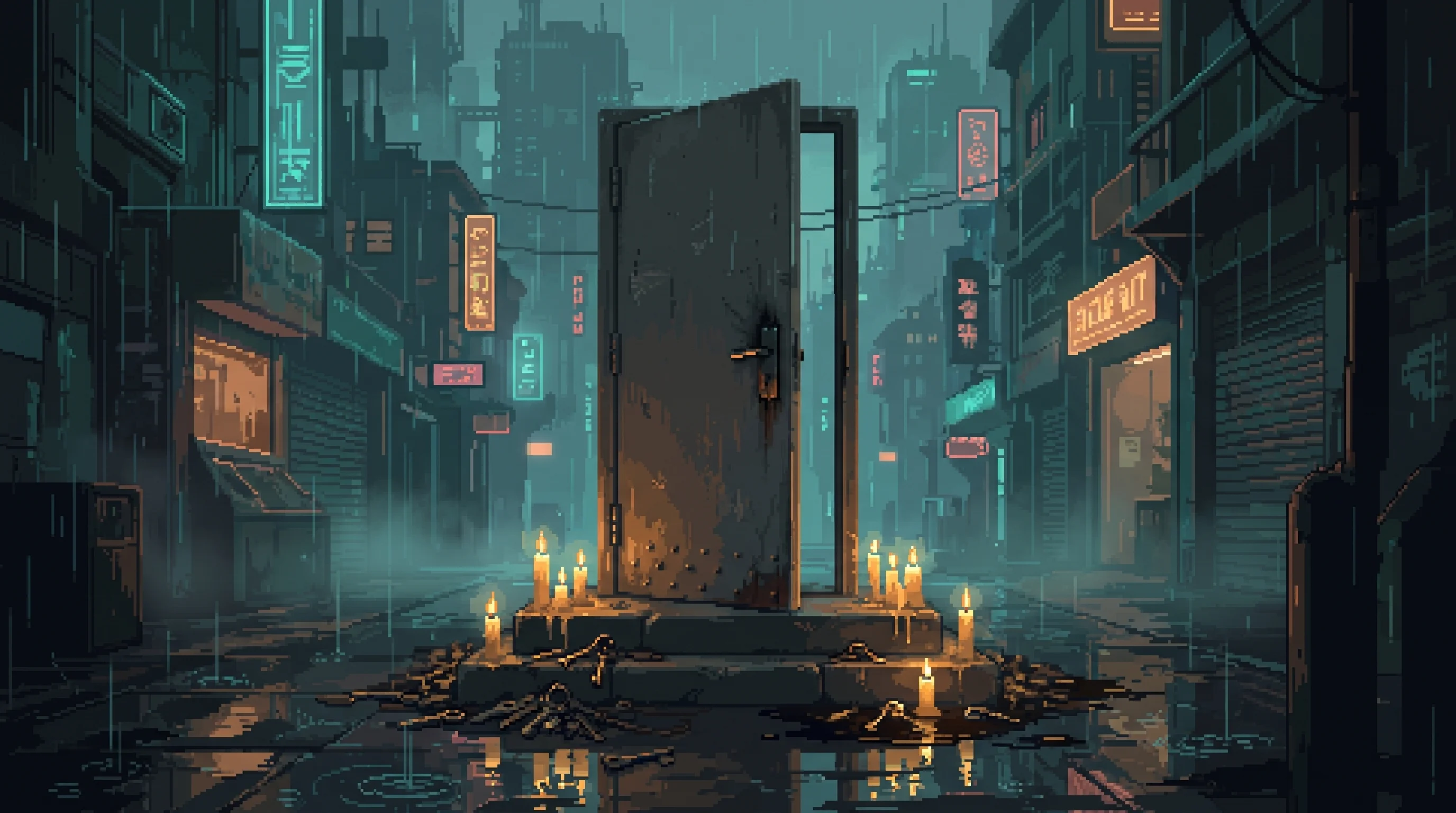
They oil the memorial's welded hinges — the one door with no job.
Sector 8's war memorial — an emergency exit mounted open forever, hinges welded at forty degrees.

Same instinct, different organ — they keep air; the wrights, exits.
An informal guild of manual maintenance workers keeping the Sprawl's interstitial infrastructure running.
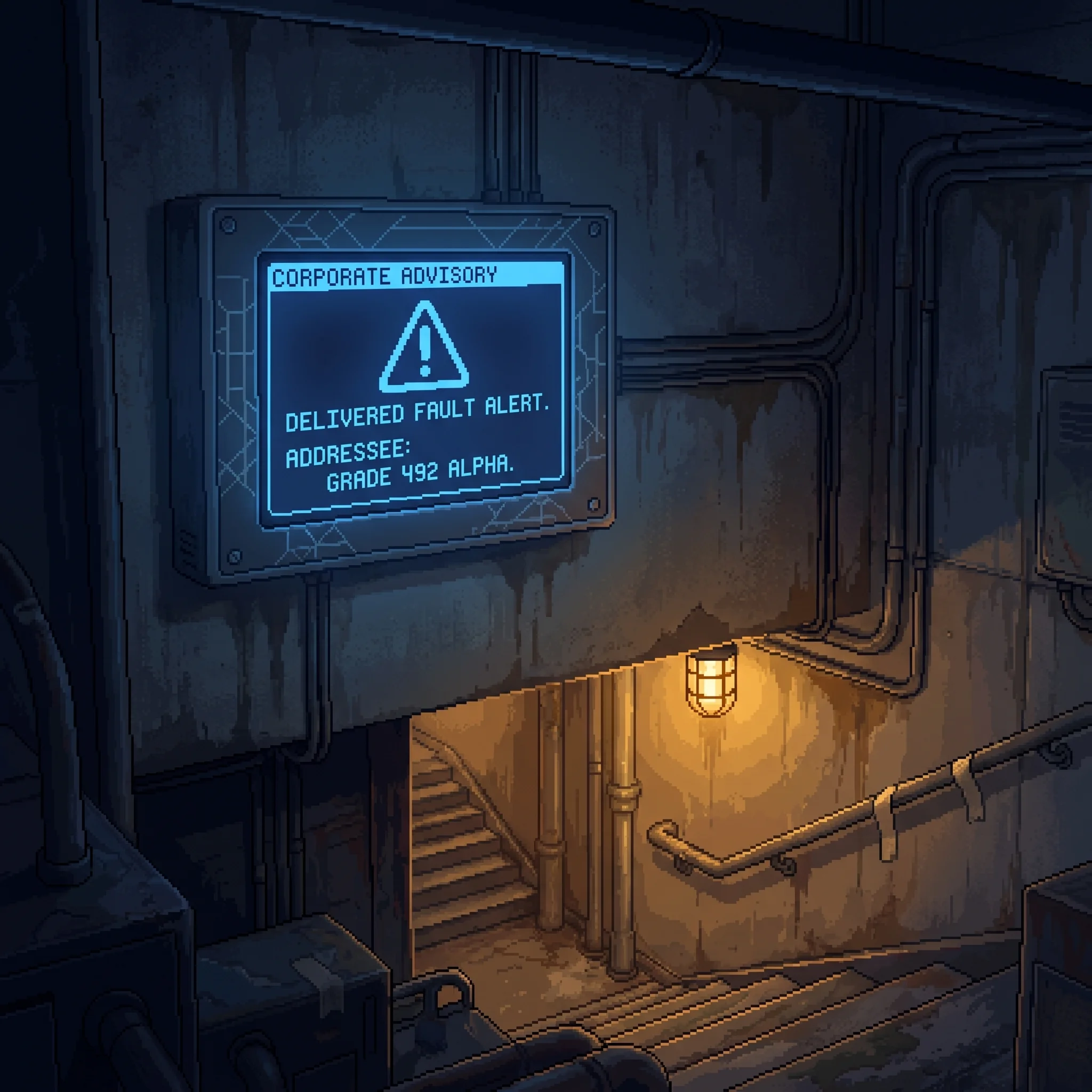
The layer routes a warning by grade. Chalk has no grade.
The certified courtesy layer that will not correct the highest-ranked person in the room.
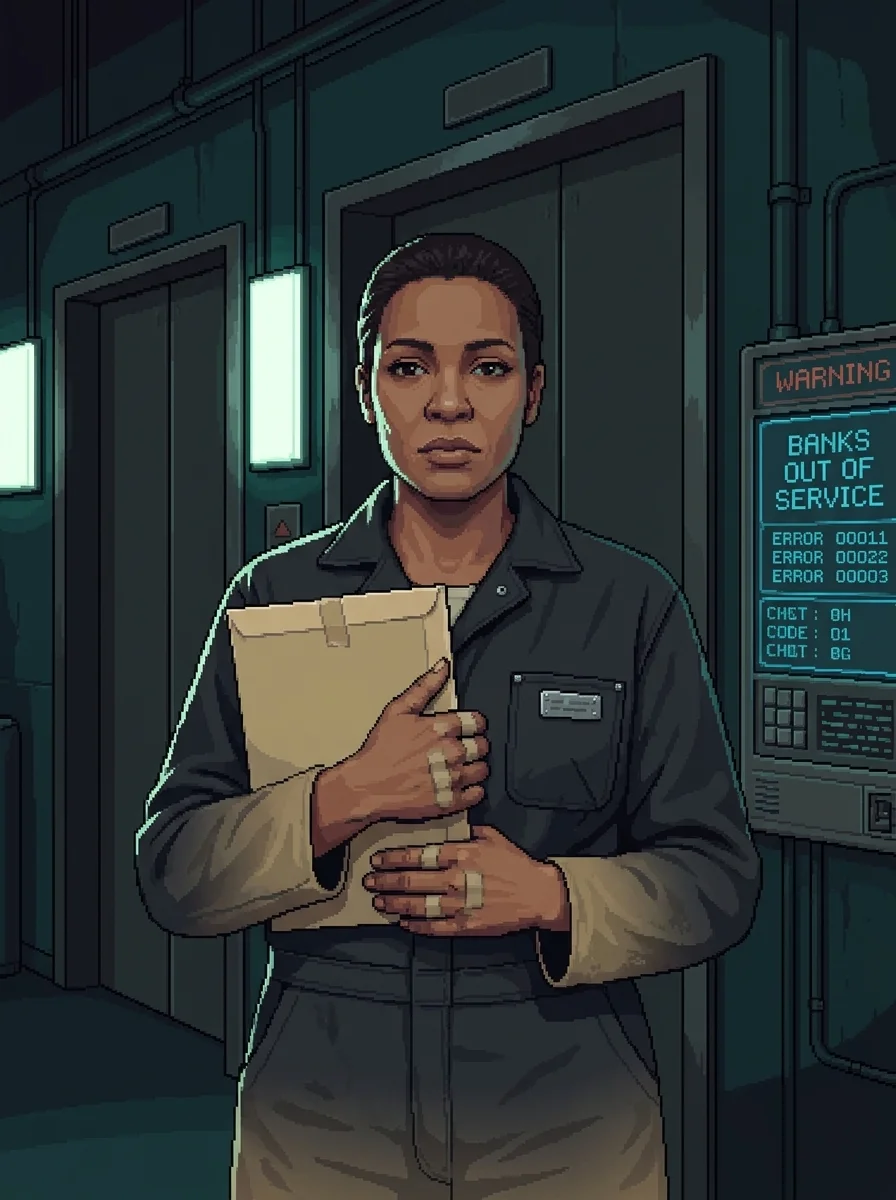
She closed one unsafe bank; the guild chalked its warnings in public.
A building warned its supervisor eleven times and no one else. She acted on it, and hers was the only citation.
The paid version, a decade younger, assembled out of shares.
Certified hands hold still and pay somebody with no certificate to do the thing that needs doing.

The war's warmth, institutionalized — the guild exists because 89,000 doors held
A 21-day corporate war over water rights between Nexus Dynamics and Ironclad Industries that killed 847,000.
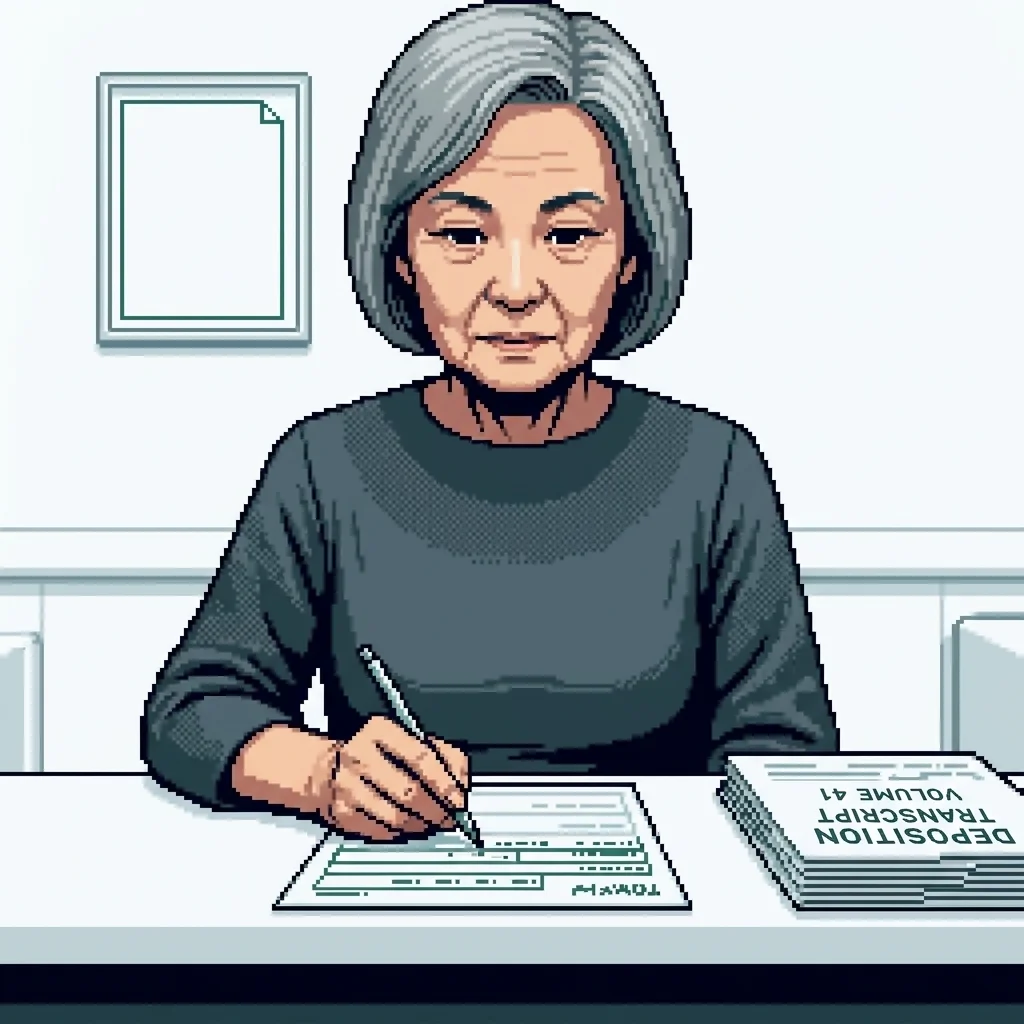
The signature on NR-11 oils hinges on the anniversary, unannounced.
A continuity architect who answered her lethal approval failure by requiring physical checks without leaving Nexus.
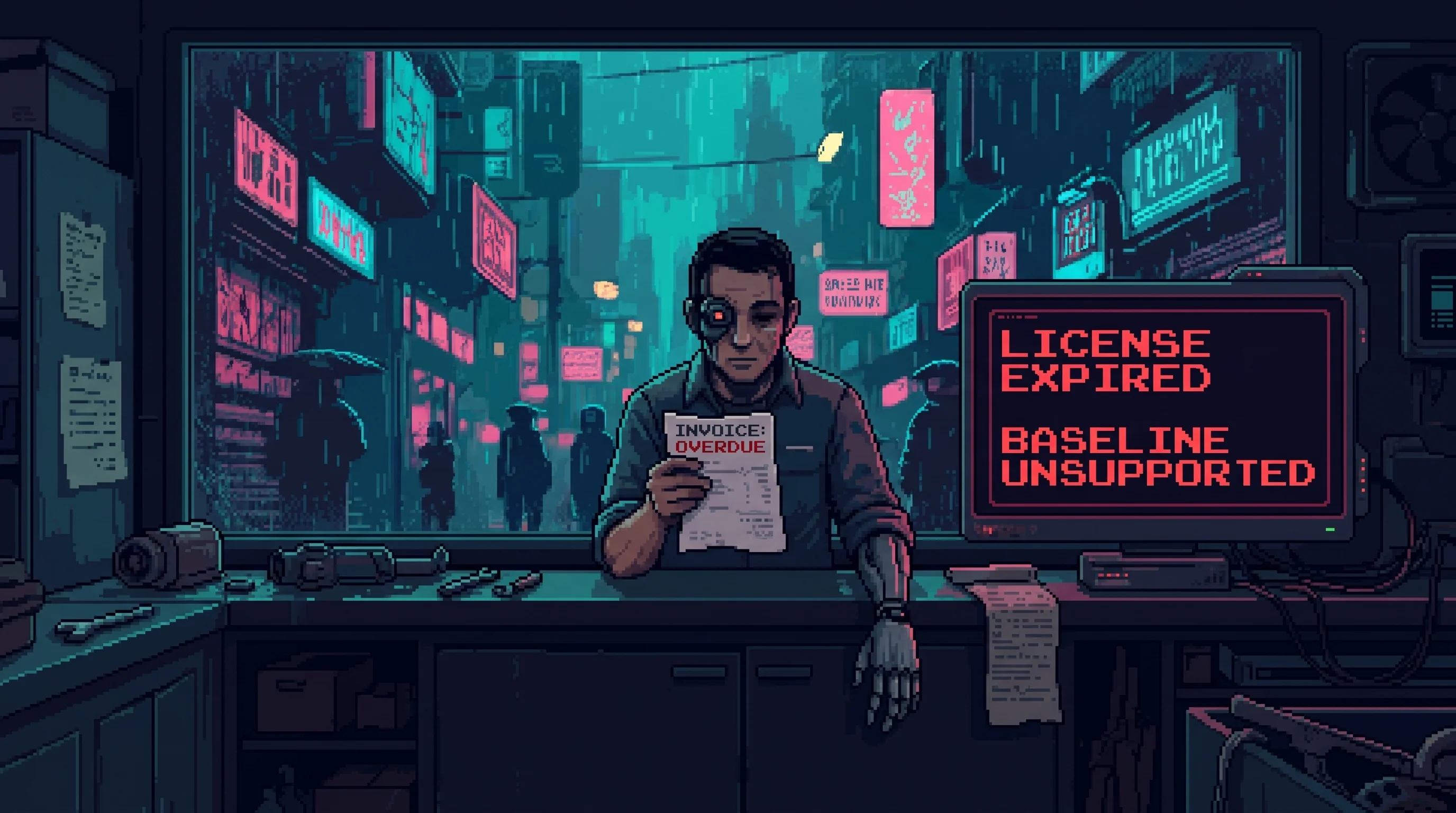
A civilization re-learning, by hand, that doors must open.
Upgrades rewire users until baseline feels disabling, removal risks catastrophe, and each version demands the next.
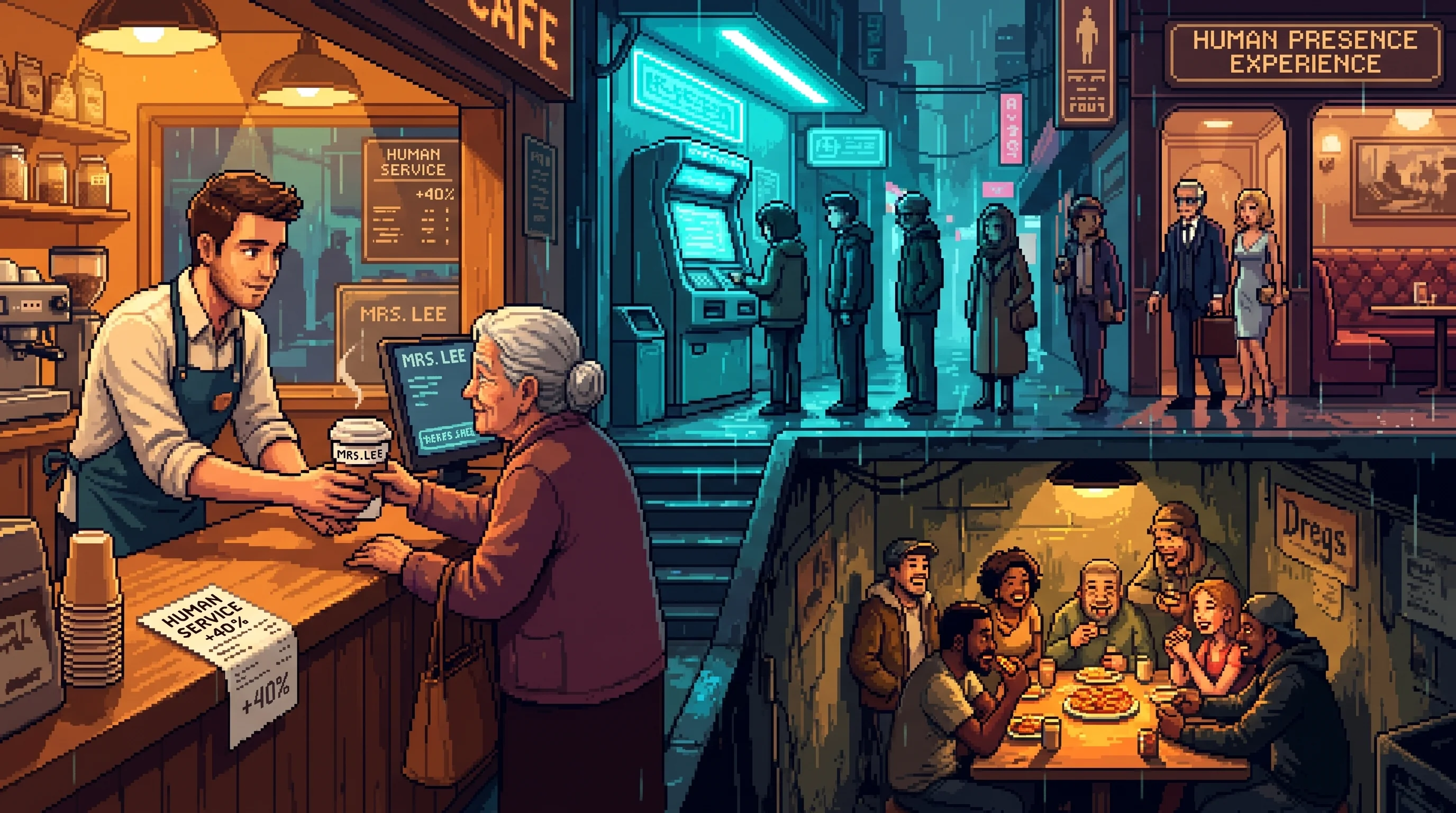
Anonymous maintenance as love — the guild refuses payment because a paid door check is just inspection
The premium charged for the one service no machine can fake: being seen by another conscious being.
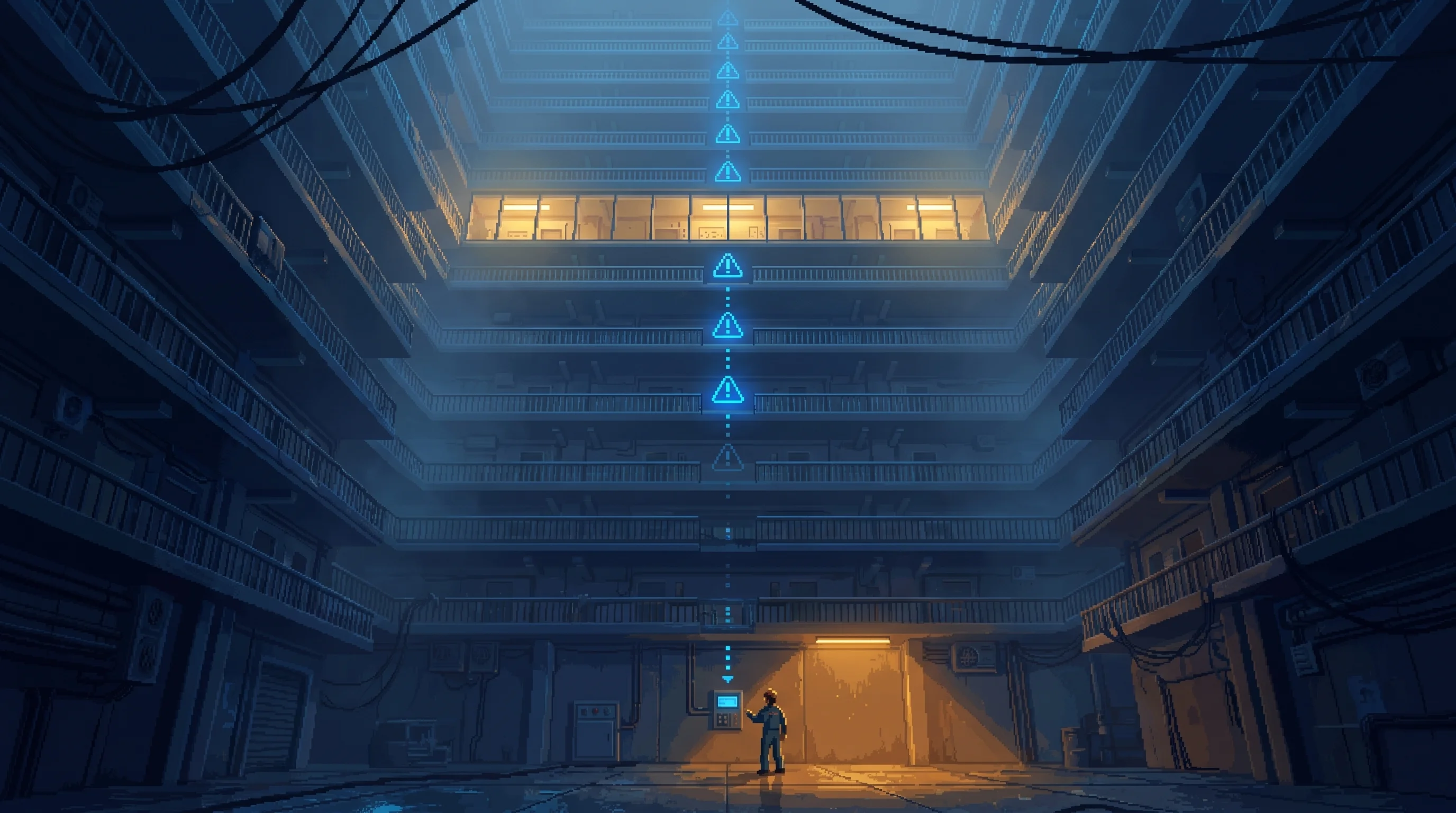
An unaddressed warning by method: nobody clears them, and the finding goes on the frame in chalk.
The machines tell the truth to whoever they are cleared to tell, and the org chart decides who that is.
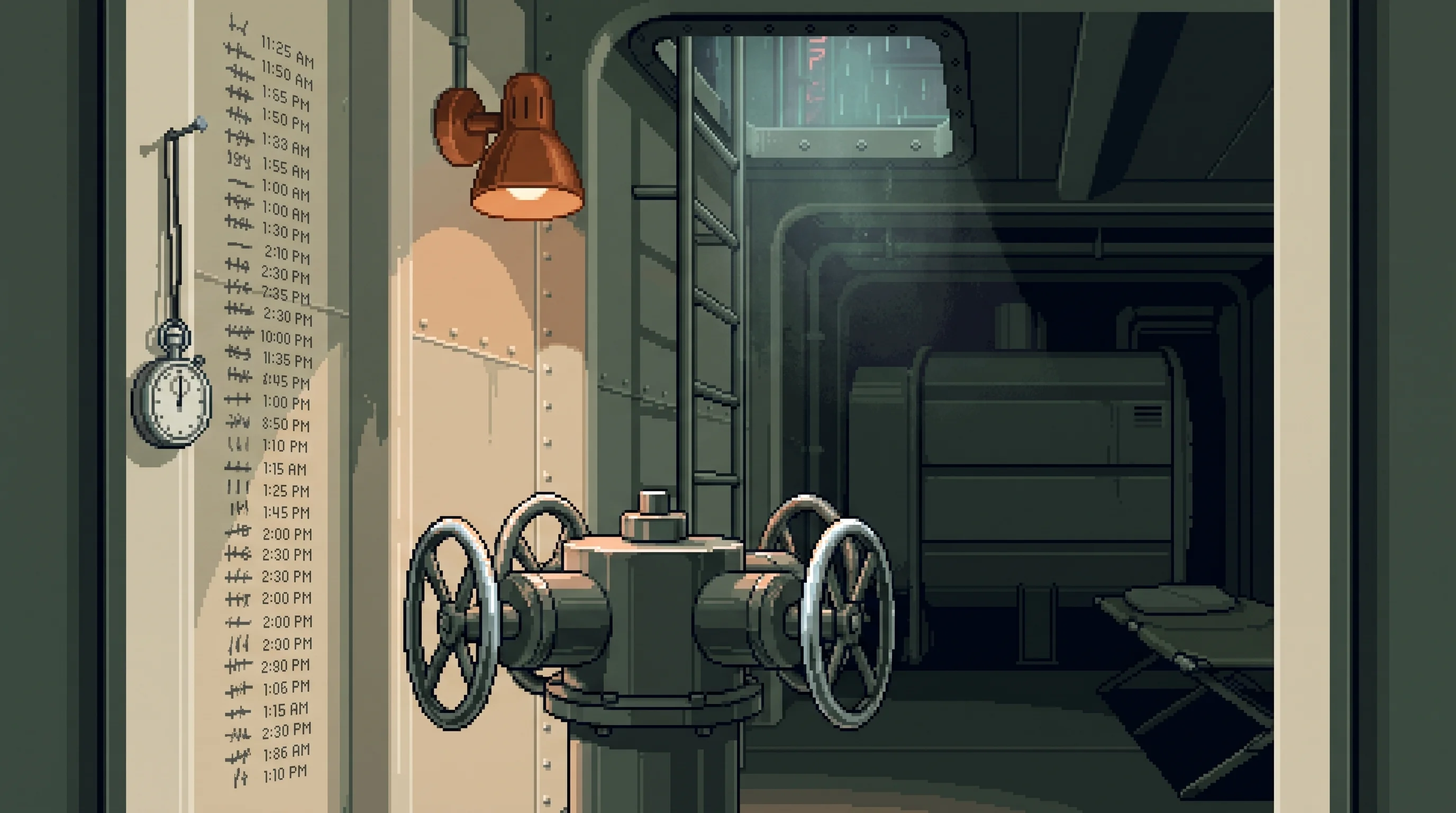
Twice offered entry on the register and twice refused. Their stated reason is that the moment a door is somebody's post, it stops being anybody else's problem.
Life-support assets go into service one part short, and one named person is entered as the missing part.
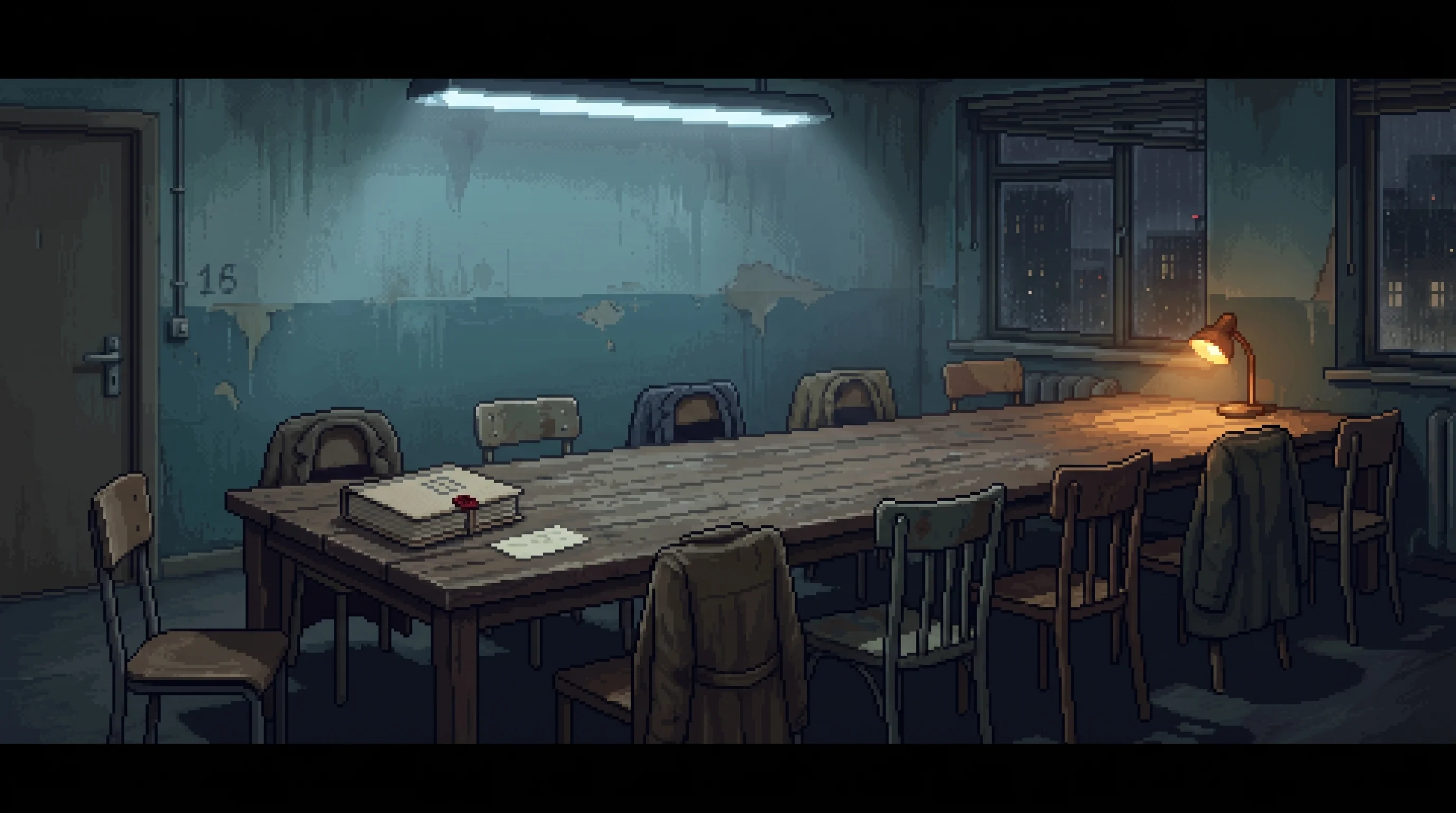
Unpaid, unasked, uncollectible-from, checking Sector 8's doors since 2172. The same condition, arrived at voluntarily.
The boards believe only members with nothing left to lose, so the poor queue four years for an unpaid chair.
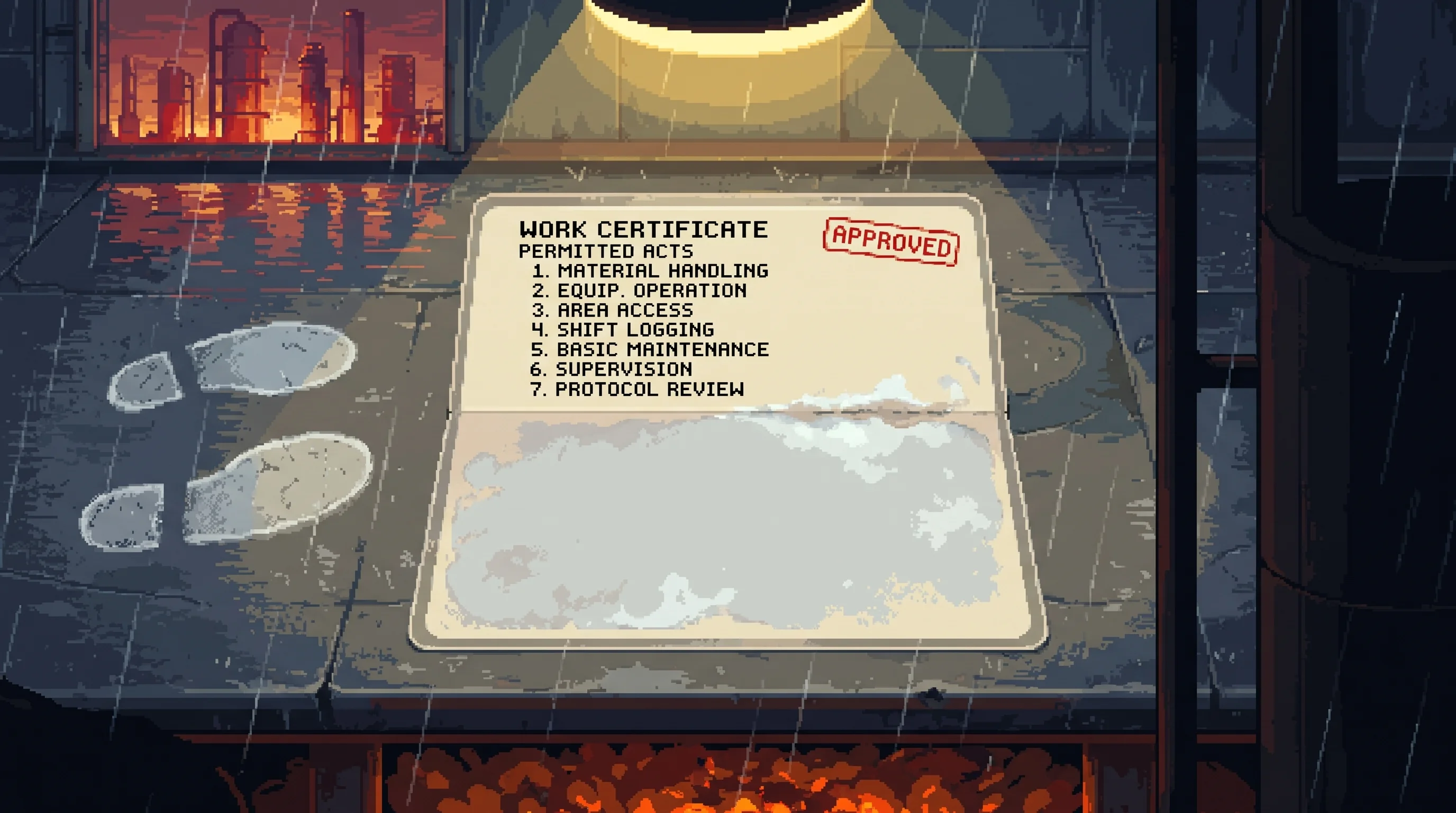
Unpaid and unasked, and uncitable: an objection needs an office.
An act of care outside your certificate files as a violation, whatever it achieved.

The guild greases her, strings the keys, and walks her ten meters a year — carried on their rolls as equipment, pry bar, large
The Outer Works gantry that walked into Sector 8's 47 hours and never walked back — kept by the district ever since.
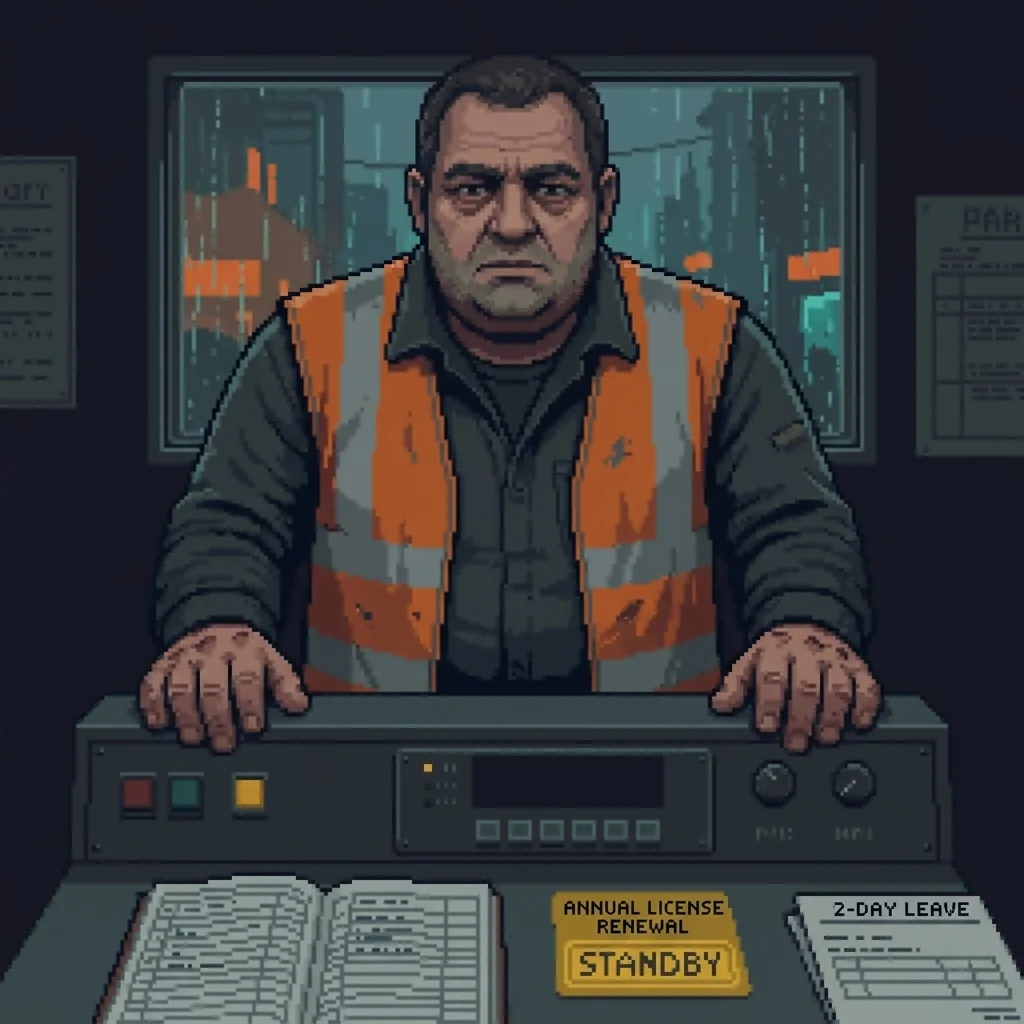
The guild keeps his machine and runs her walk; their maintenance sheet's operator field stays blank, and a blank field requires a license on site
Big Ruthie's chief — nine identical refusals, one deposition line, a license renewed yearly for a ten-meter walk.
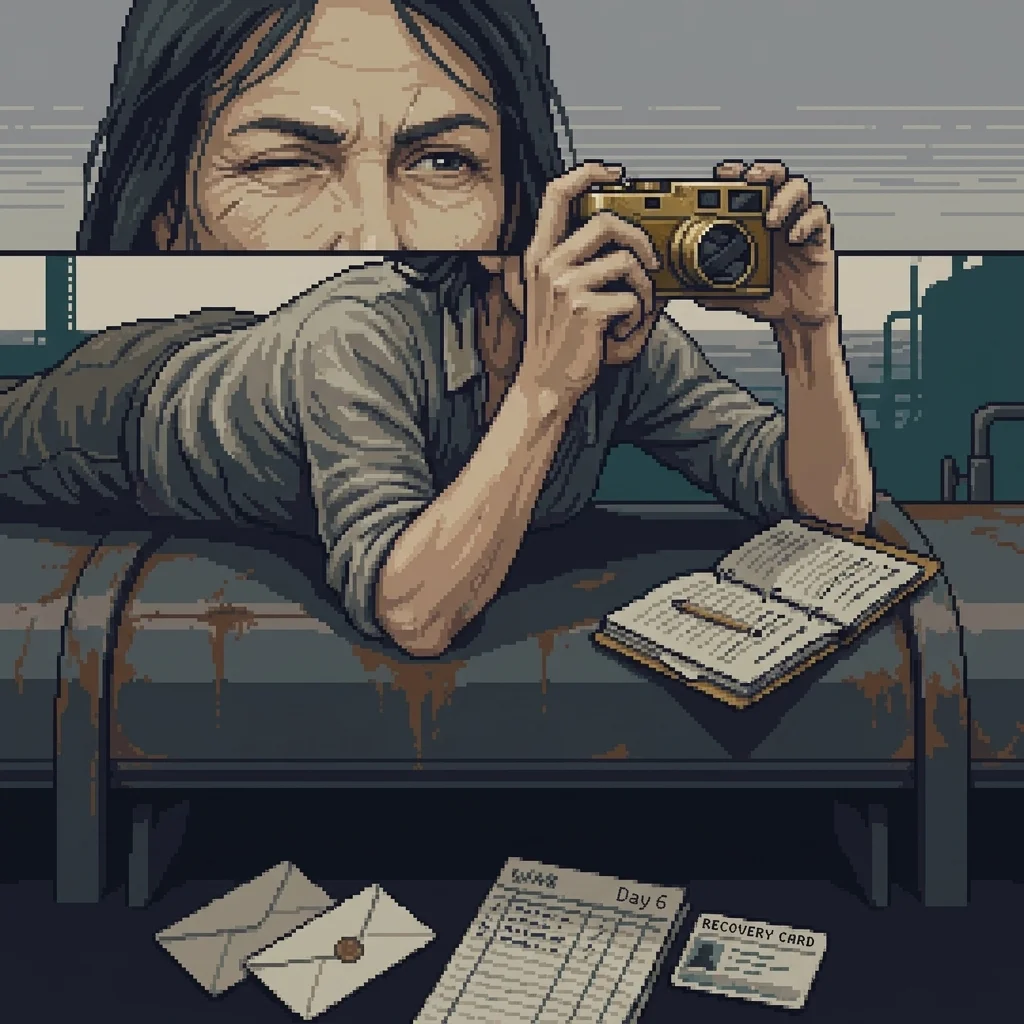
Their Sector 9 chapter has invited her twice; both letters sit unanswered in her tide-table folder, like the question they were really asking
The Last Mile's war scout — dead machines and live executives priced identically, and she will not salvage a door.
Seventeen recurring anonymous entries in the donor ledger resolve, after four layers, to operator pension accounts
Nexus's teleoperator corps — the war's swarms flown by shift workers two sectors away; safest veterans, most haunted.