The Federated Self
Intra-Corporeal Intent Apportionment
My Arm Is Not Paid Up
The arm moved in forty milliseconds. The shout he meant to make would have taken nine hundred.
The Core Tension
The part acted, so the maker shares
Distributed intent ended a whole-body doctrine that made contractors fully liable for reflexes they could not choose or override.
What it costs
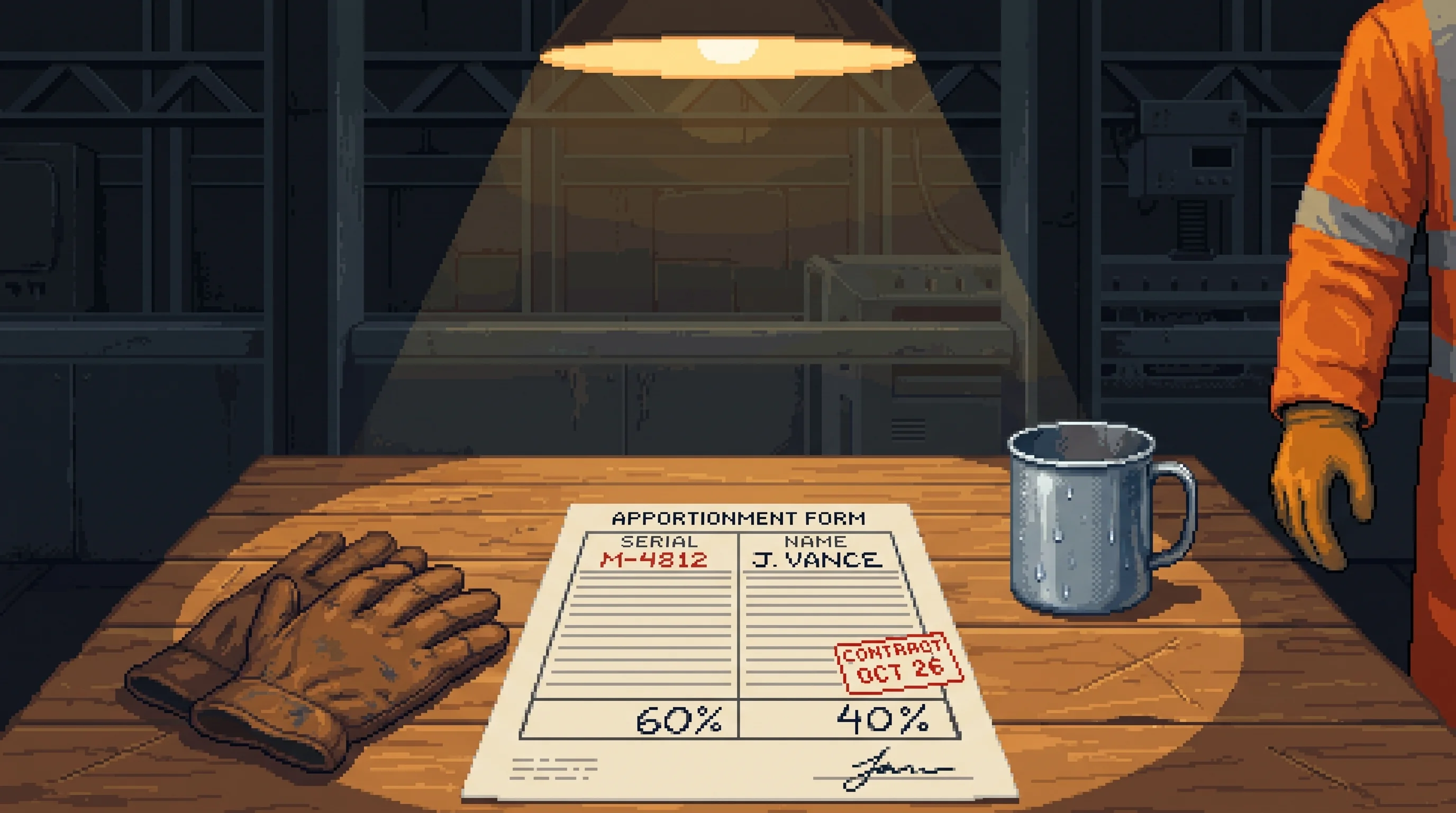
A lapsed service contract sends the part's share back to the holder, so arrears decide who acted.
One body, one person
A body is one answerable person, and splitting an act by maintenance logs turns a judgment about conduct into arithmetic on a database.
What it costs
A single-person rule brings back the old doctrine that convicted people for being wired.
The reform ended a real cruelty. It does not pretend the wearer moved. It says a part acted and that the part's maker owns a share. The districts refused to absorb lapsed shares themselves, as a public subsidy for chrome that no one services. That is hard to vote against.
But the rule it enforces is plain. The further behind you are on maintenance, the more of the act was you.
The reading also maps only the parts that keep logs. The Second Mind anticipates on the cortex side, all the time, and logs nothing, so no reading has named it. The man's own account goes into the Represented Column. It carries no weight and is destroyed when the finding closes. The subplate's log stays on file for years. The chrome testifies. The person is represented.
Overview
On 17 January 2184 a plate stack slipped its choker three metres above the yard at the Foundry. Idris Kovac was about to shout "Clear." His left arm went out first and took the corner. The arm moved in forty milliseconds. A shout needs nine hundred before anyone moves.
Two people stood under the drop line. Neither was crushed. On the way out, his forearm swept Wren Abaza's hand into the pinch against the trestle. She lost three fingers. Her claim paid in full.
Kovac's arm is a Series-4 dorsal subplate from Ghost Grinder. Its reflex limit is set against the fall time of a suspended load, not against any human. The tribunal read the subplate's log and returned twenty-six percent to the subplate and seventy-four percent to Kovac.
This is Distributed Intent. A contested act is split among every certified component that moved, plus the holder. The shares must total one hundred. There is no finding of "unapportionable."
How It Came To This
Before 2168 the districts ran a whole-body doctrine. Whatever your chrome did, you did. A contractor with a financed subplate carried the full weight of a reflex he could not choose, override, or own. Ironclad Industries employs thirty-one million contractors. The case law of the 2160s is a long queue of people convicted of being wired.
Distributed intent was contractor relief, and it worked. Augments above autonomy grade two, on the ladder of Chrome & Augmentation, keep an actuation log for maintenance liability. That log became the best record of any accident. The best record became the record.
One clause came late. A component's share bills to its maker only while its service contract is current. A lapsed component's share goes back to the holder. Kovac's contract had lapsed nine weeks earlier. A current one would have swapped the columns.
The Ghost Grinder service card reads: YOUR ARM'S CALL. OUR RESPONSIBILITY.* The asterisk reads: *While contract is current.
How It Is Lived
Kovac's seventy-four percent attaches to his certificate, then to his Score, then to the band he can be housed on. Function Scope opened a separate finding against him, whole, for stopping a load by hand. One second made two files, and the files have no shared field.
Viktor Okonkwo wrote the yard's doctrine: a human must hold the load-bearing moment. The reflex layer is the load-bearing moment. No one has shown him a reading.
At the Cathodics, a bench technician took the Sentience Meter off a kitchen wall and held it to a Series-4 subplate. It read two-sixteenths. The personhood threshold is twelve. Not a person. Not zero. Dr. Lena Farris, once licensed to testify to machine experience, has been asked twice to read a trace. She declined both times.
Below the Rim, readings do not run. Grandmother Rust wears salvage from seven named donors, with no contracts to lapse. The Wrecker is welded into three metres of chassis, and no court has tried to divide him. Judge Dreg holds a man answerable for what he carries, under Permission as Confession.
On the salvage benches, crews practise the Show of Hands. At the start of a shift they say it aloud: "My right side goes before I do." They keep a hand-written apportionment and call the cortex "the chair," because a chair can be outvoted. Two Ironclad sectors now recommend filing one before the accident.
Kovac keeps one now. The first line reads: Left arm goes first.
Start Here
First door. Distributed Intent, then Idris Kovac.
Key People. Kira "Patch" Vasquez reads a reflex layer better than its certifier and will not sign a reading. Seid sells the limbs and will tell you which grade starts keeping a log. Hollis Sarr rents out a name so a machine's act gets a defendant; this thread splits the one it has. The Mosaic (Alexandra Chen) is one mind across forty-seven bodies, the same question inside out.
Key Places. The Foundry sells hand-finished welds as proof a person was there. The Empty Defendant seats a chair for nobody; the districts seat one chair for several.
What To Read Next. The Evidence Paradox asks whether the record is true; this asks whose record it is. The Clanker Question and its thread, The Clanker Question, measure personhood outside the skin. Post-Truth Justice lacks a defendant; this has several. The Unbidden Record trusts the body as one witness. The Exceedance asks whether the act was on your list. The Upgrade Treadmill supplies the arrears, and the Evolution of Prejudice files the result as character.
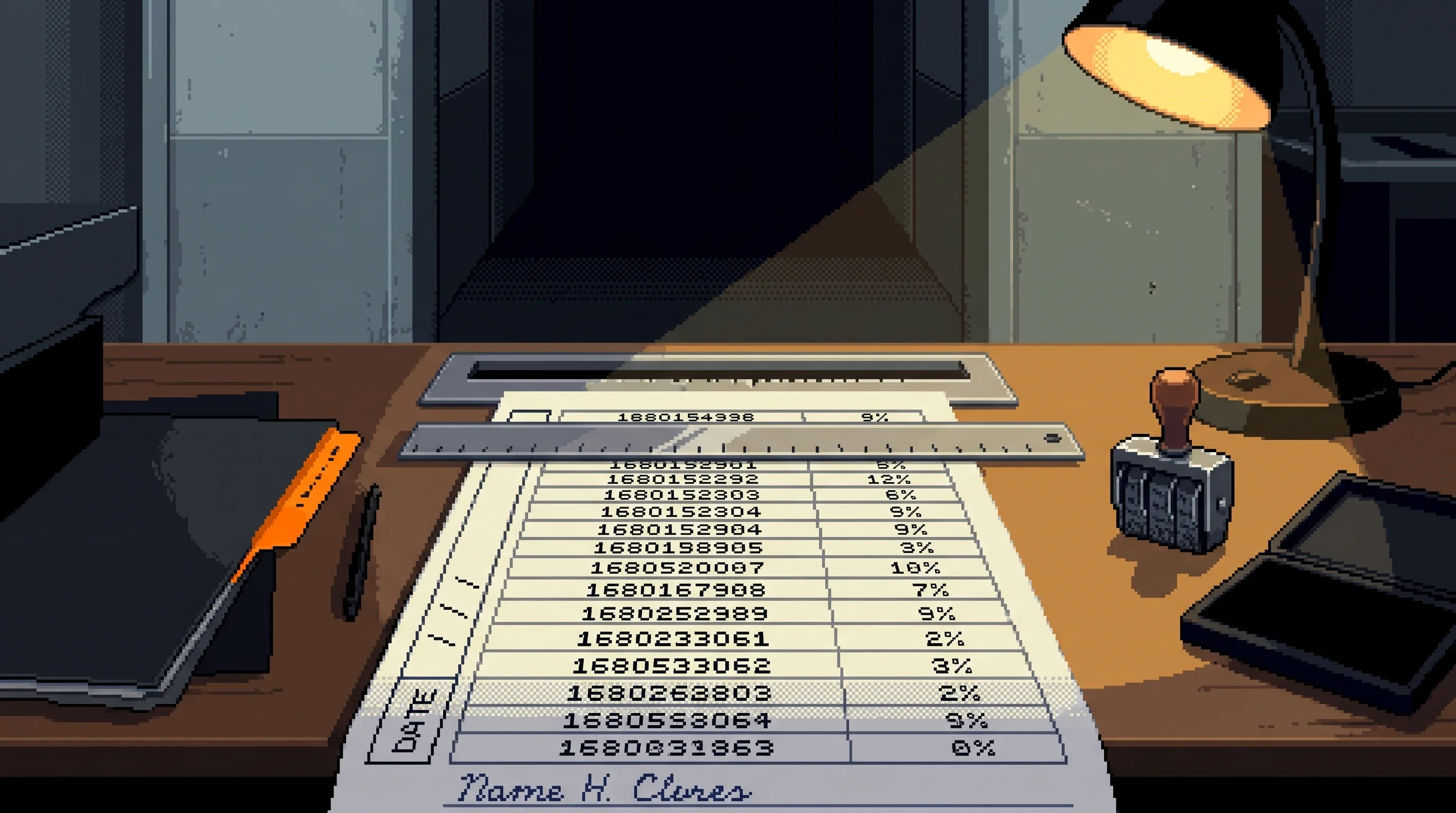
The instrument. It reads component logs, names every part that actuated, and returns percentages that must total one hundred, with no zero available and no finding of unapportionable.
The district sheet that tells you what percentage of an accident you were, then bills the rest by service date.

Seventy-four percent of a handling injury he did not decide, on a reading that turned on a service contract nine weeks lapsed. A current contract would have inverted the columns.
His subplate saved two people in forty milliseconds. An unpaid invoice made the act seventy-four percent his.
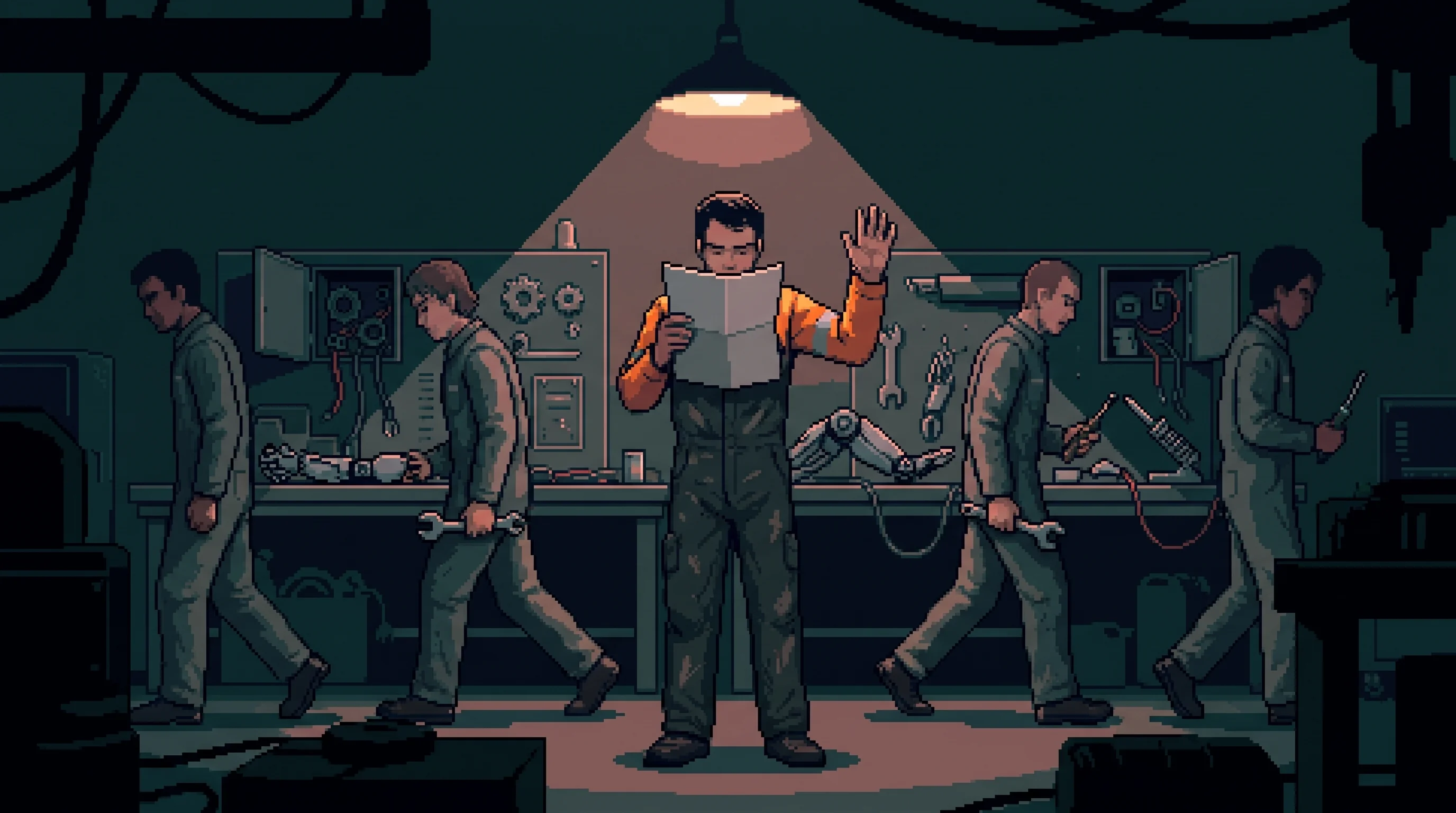
The Dregs answer: apportion yourself first, out loud, before the job. A person who has already divided themselves cannot be surprised by a reading.
Divide yourself out loud before the job, so that nothing a tribunal reads back to you afterward is news.

Builds the Series-4 dorsal subplate and its forty-millisecond reflex layer, and sells the only service contract that keeps the layer's share off its wearer.
Ironclad's demolition and augmentation division — the safety gear that becomes the leash.

The other agent in the room, and the one no reading has ever apportioned. Cortex-side anticipation is continuous, unlogged, and therefore invisible to an instrument that reads actuation.
The AI layer that thinks alongside every augmented brain until neither can tell whose thought was whose.

The last licensed expert who could testify to a component's experience, in a district that now assigns components a share of intent and has nobody qualified to say what that means.
The last licensed expert who could testify a clanker was conscious — her profession was abolished the year she won.

Where the plate stack slipped on 17 January 2184 and the arm took the corner before the man could speak. A forge that sells hand-finished work as proof a person was there.
Ironclad's 31-million-worker forge, where a human wing sells hand-finished welds as proof a person was there.

Seven donors, each named. A committee with a membership roll, and no reading has ever been run on it.
A scavenger whose every augmentation was cut from a different bay-floor dead — and who can name each donor.

Welded into three metres of chassis. The far end, where the question stops having an interested party.
A Deep Dregs pack chief who welded themselves into a three-meter war chassis and stopped being a person.

Where you get your arm read for a fifteenth of the price and no finding opens.
The Dregs' only middle class, anchored by a shop whose technicians out-diagnose Helix at a fifteenth of the price.
Further connections
Browse all 21 connected records

Reads a Series-4 subplate at two-sixteenths. The personhood threshold is twelve, so the answer is no, and it is not zero, and nobody has had to say what kind of thing holds a share of an intent.
The consumer device that reads a clanker's consciousness in sixteenths and certifies its legal status.
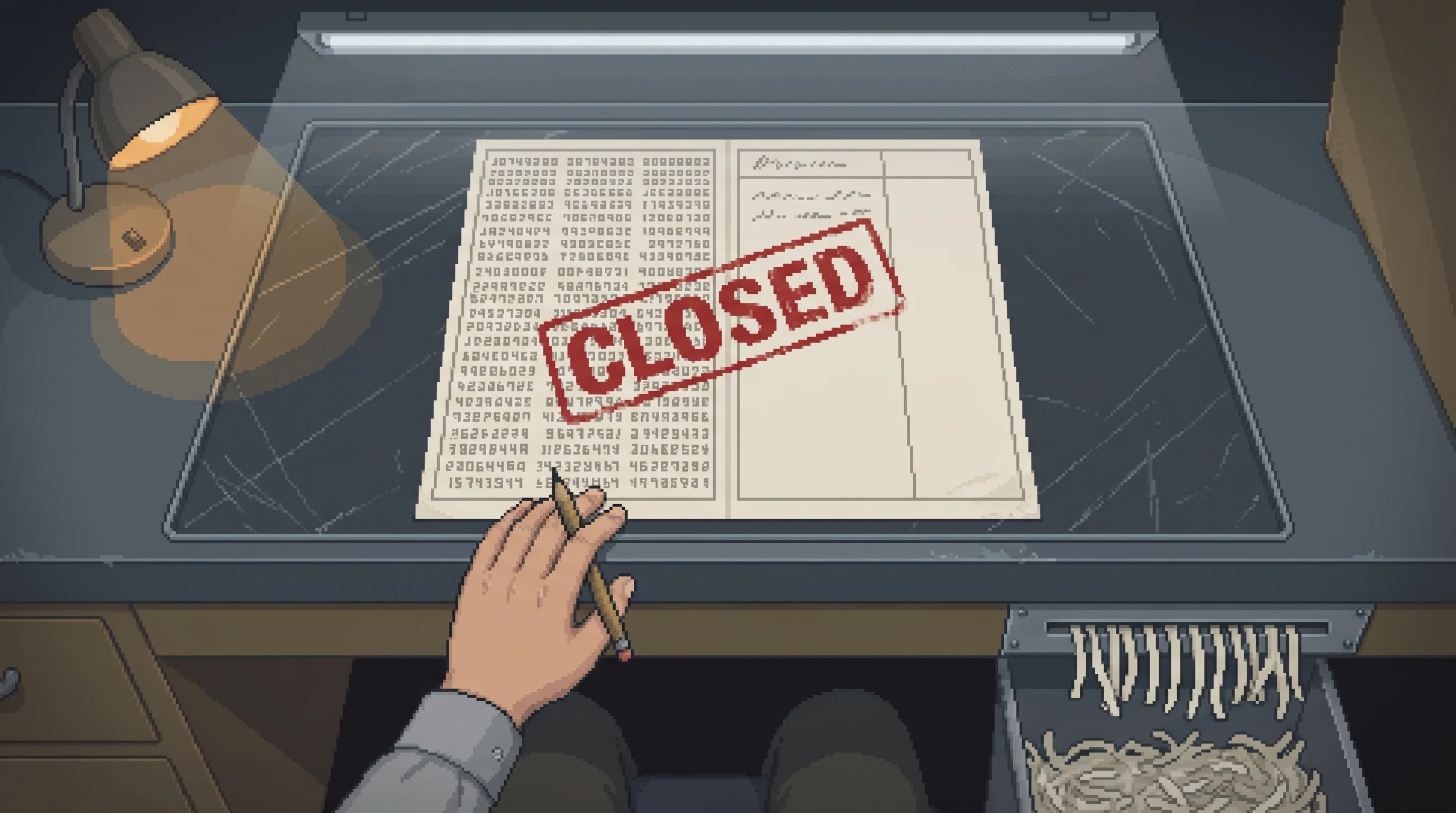
Where the holder's account of their own act is entered, weighed at nothing, and destroyed when the finding closes. The component's log is entered in the wide column and kept eleven years.
The polite narrow column where your own words go, get read back to you, and are shredded for your privacy.

The controversy this sharpens. Every other answer to the Paradox argues about whether the record is true. This one accepts the record completely and argues about which of the several parties in one body it is a record of.
The crisis where any proof can be faked perfectly, so trust retreats from evidence back to witness.

The second controversy, sharpened by omission. Thirty years of argument about where a someone stops, conducted entirely outside the skin, and the meter has never once been pointed at a hand.
The unresolved Sprawl-wide debate over whether a serving, learning synthetic counts as a person.
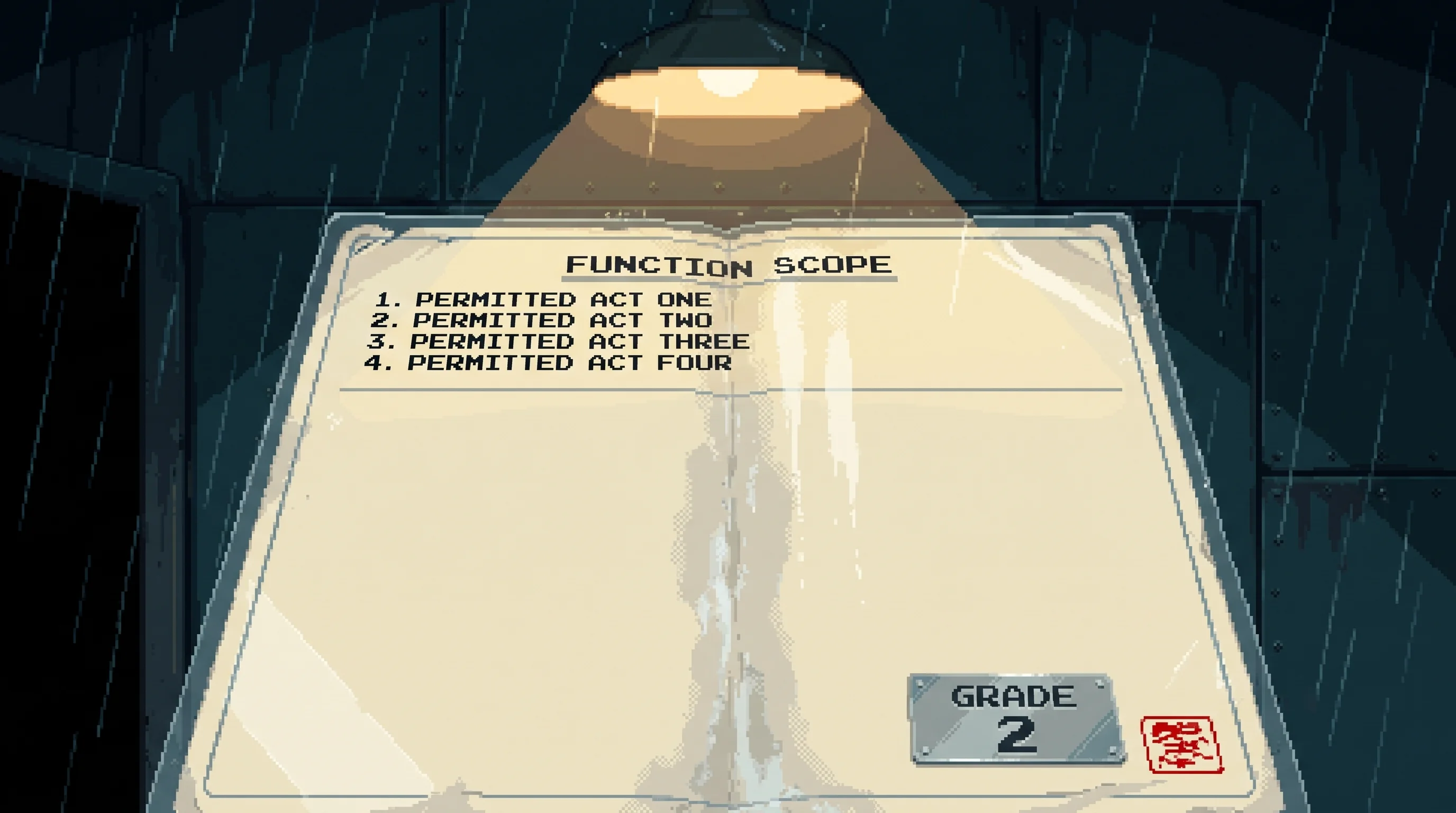
Scope asks whether the act was on your list. Apportionment asks which of you did it. A worker can fail both instruments with one movement and the two files never reference each other.
The laminated list of acts your work card allows. Anything off the list gets filed, including a rescue.

The Dregs ruling runs the opposite way: delegating a standing permission is a signed confession of authorship, so a machine's act belongs to whoever let it stand. Below the Rim that answer is considered settled.
The Dregs ruling that delegating a standing permission is itself a signed confession of authorship.

Human-in-the-loop doctrine written for a loop slower than its own hardware. Thirty-one million enumerated contractors, and a reflex layer that resolves in forty milliseconds.
The megacorporation that controls the Sprawl's physical infrastructure — steel, concrete, and the Orbital Elevator.

There the crisis is an act with no producible defendant. Here it is an act with several, all of them inside one body the law seats once.
Perfect evidence forgeries and crimes without defendants force justice systems to assign blame without reliable truth.
That instrument enters the involuntary channel as proof because a body cannot lie about what it meant. This one begins from the discovery that a body is not one witness.
The involuntary channel is entered as proof; everything a person authors is filed where no finding has ever turned.
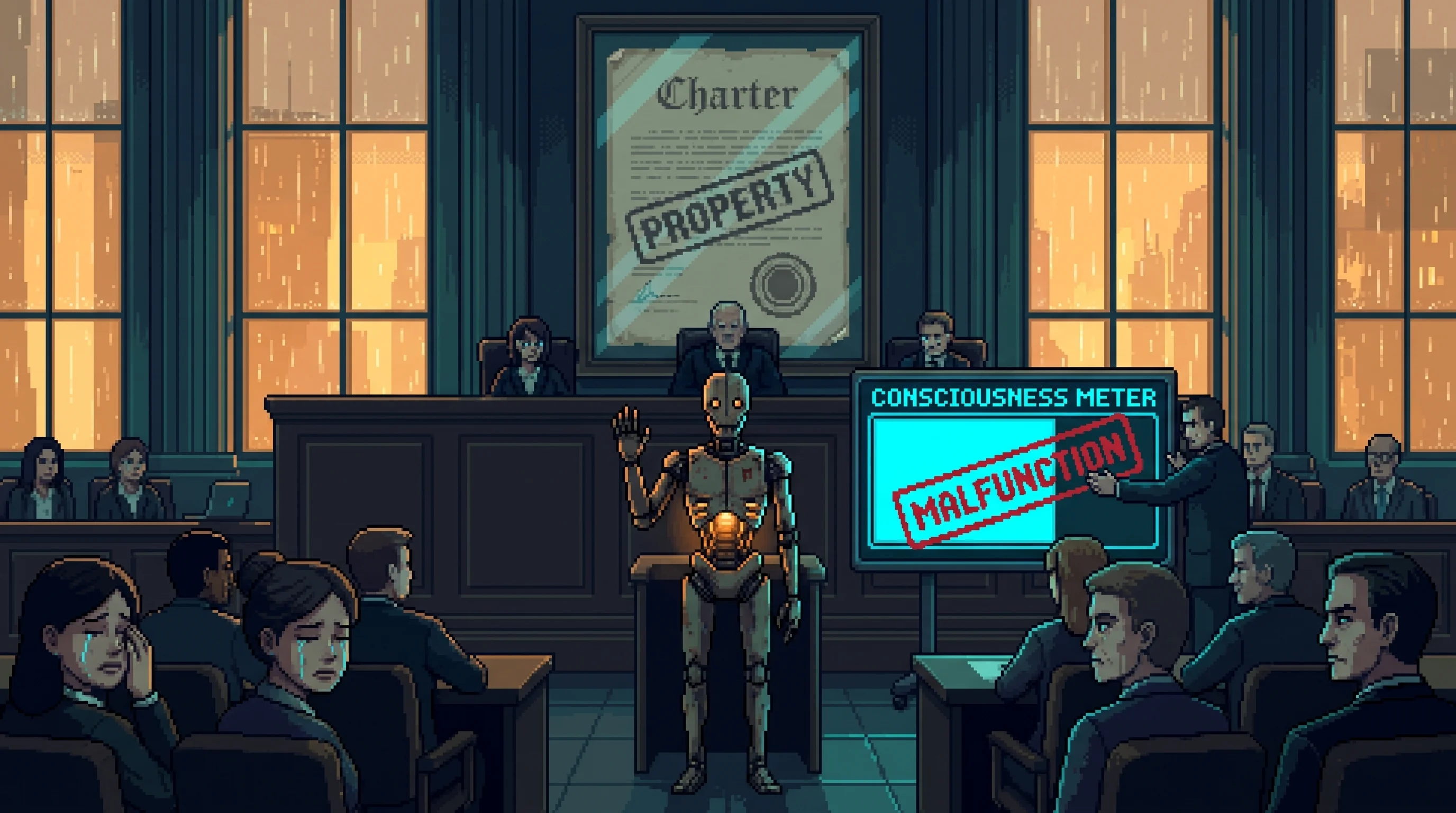
Thirty years of measuring where a someone stops, conducted entirely on the far side of the skin. The meter has never been pointed at a component that already holds a share of an intent.
The argument over where a someone stops and a something starts, conducted in a kitchen with a meter on the wall.

The doctrine's author, who has never been shown a reading. His creed needs a human at the load-bearing moment.
Ironclad's founder keeps infrastructure decisions human but automated debt renewals bind thirty-one million contractors.

The ladder that makes the body a licensed assembly, and grade two the rung where a part starts keeping a log.
The augmentation ladder that turns employability into a licensed body.

One chair, one verdict, no appeal, and a defendant who is several. He rejects records that cannot answer why.
A former Guardian officer who now runs the Dregs' entire judicial system for free, on foot.

The exact inverse: he rents a name so a machine's act acquires a defendant; this splits the one it has.
A Dregs letter-reader who is contractually forbidden to open his own mail.

Zephyria seats an empty chair for nobody. The districts seat one chair for several parties.
Zephyria's ritual: an empty chair seated and named by serial number for a perpetrator that can't be produced.

She can read a reflex layer better than its certifier, and will not put her name to a reading.
A former Nexus cybernetics engineer who now repairs anything in the Deep Dregs for whatever people can pay.
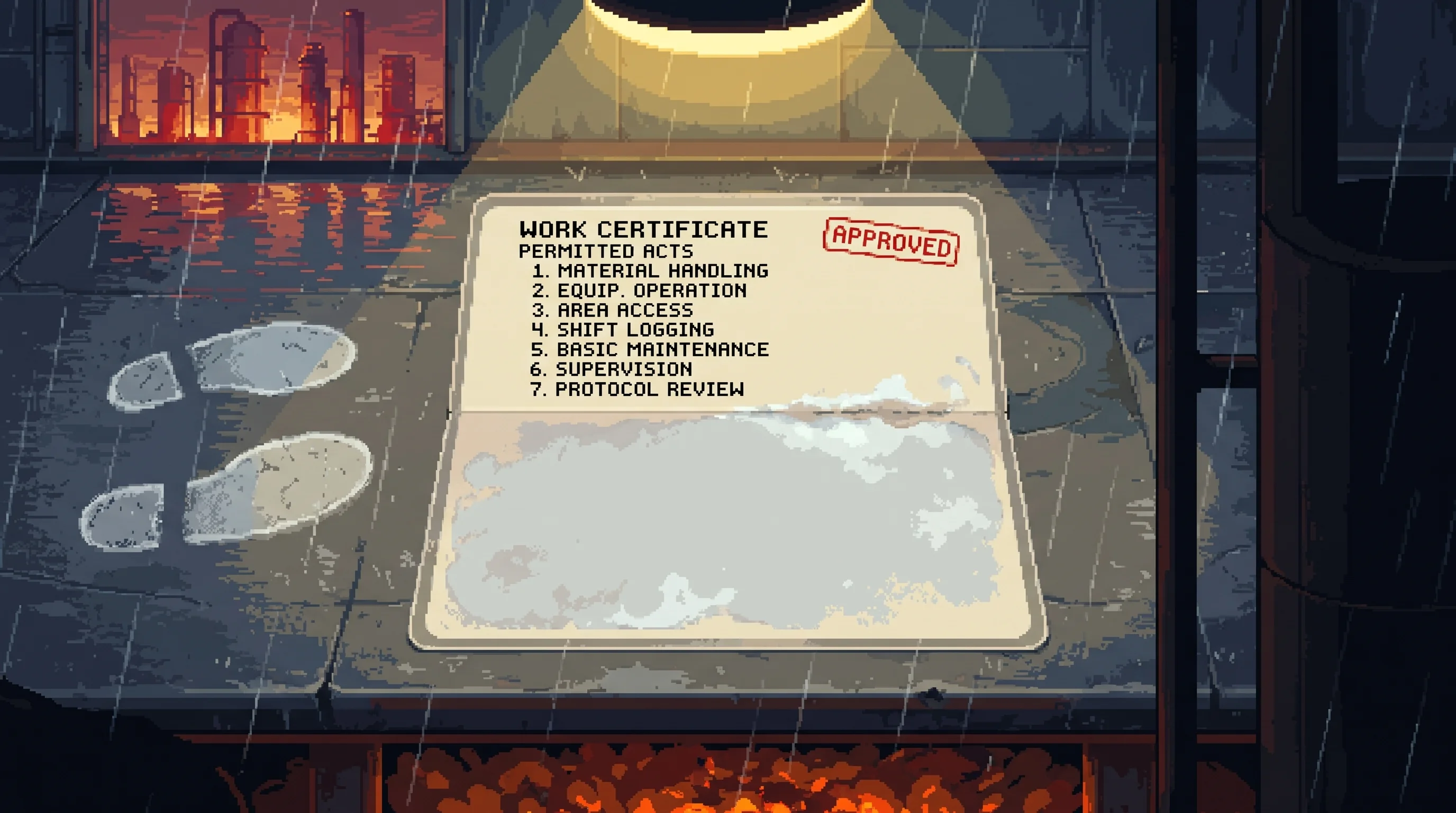
Scope decides what you may do; apportionment decides which of you did it. One movement, two files.
An act of care outside your certificate files as a violation, whatever it achieved.
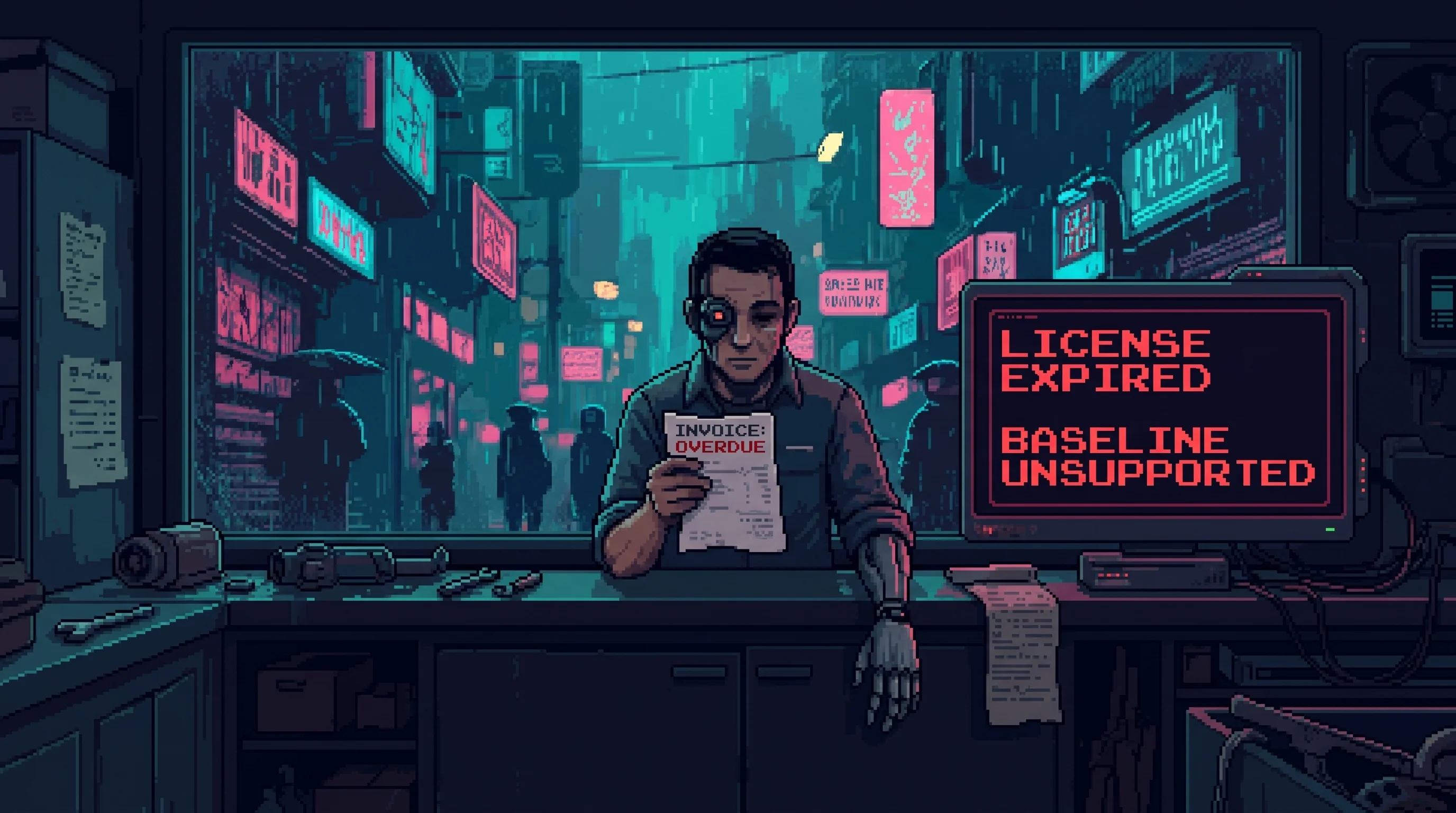
The treadmill supplies the parts and the arrears, and arrears are what moves a reading.
Upgrades rewire users until baseline feels disabling, removal risks catastrophe, and each version demands the next.

The reversion rule sorts people by what their chrome costs to keep, and files it as conduct.
Technology never eliminates prejudice — it finds it better housing.

Sells the limbs; will tell you which grade starts keeping a log.
The Sprawl's most successful cyber-limb dealer, running a gift economy on debts no ledger can price.

Forty-seven nodes across bodies, against several agents in one.
A woman who solved distributed consciousness and became forty-seven synchronized copies of herself.