CONCEPT ANALYSIS

The Attested Baseline

The disclosure was not a courtesy. It was the instrument.

The Attested Baseline
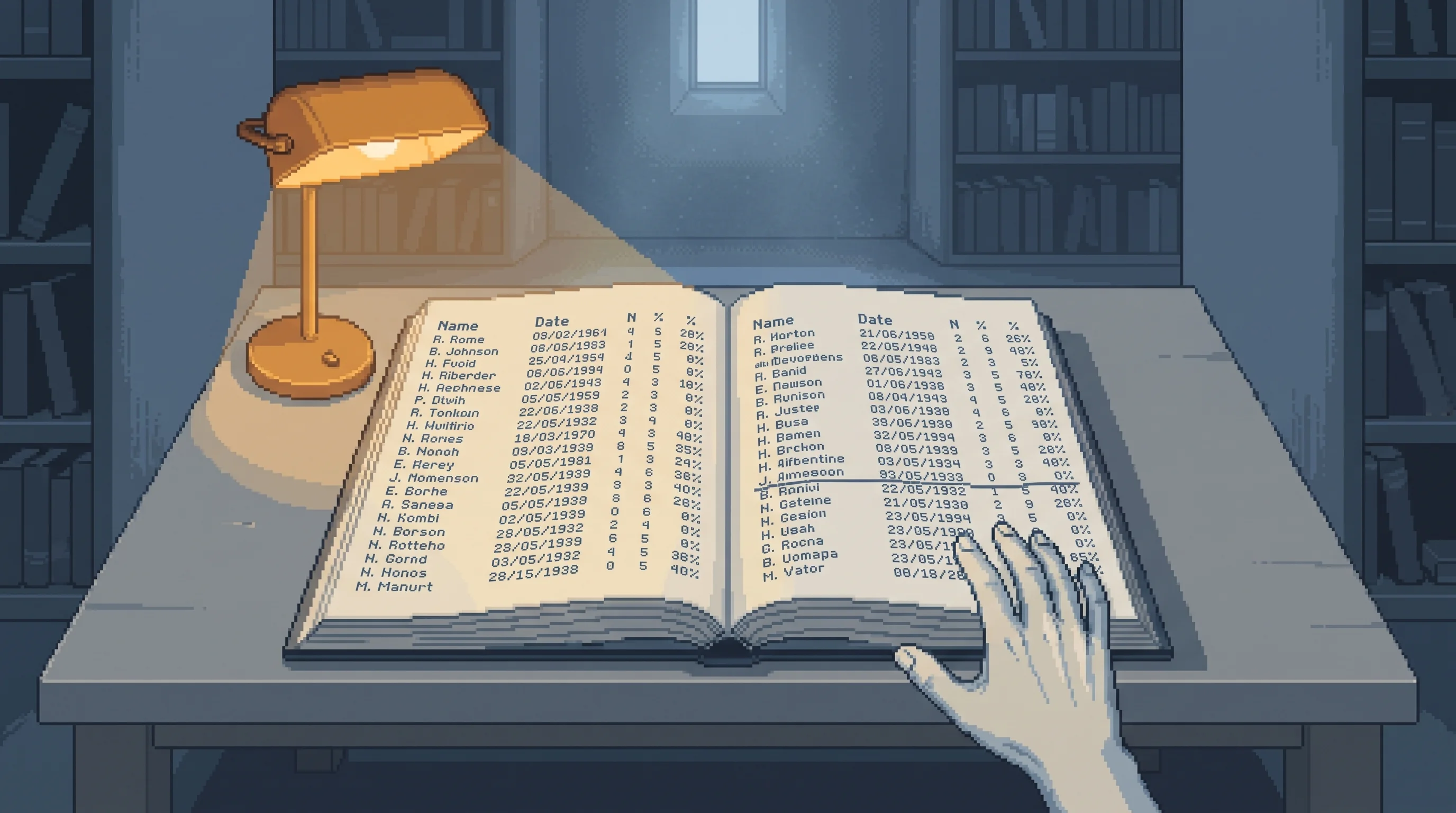
Known Asthe Baseline, the floor, the reciprocity clause, the comportment register, sitting underSourceComportment Sittings run by Nexus Cognitive Calibration Services since 2173; 9,041 contracted sitters to datePublished2182 โ€” the register carries each sitter's name, sitting dates, shift count, and contribution weightThe ClauseA claimant reading below the floor is deprioritised rather than refused; roughly 336,000 determinations were slowed in 2183AppealAbout 0.4 percent of filings succeed, every one of them on a records error rather than on the standard

Overview

The Baseline is three sentences long. A service relationship is entered in good faith by both parties. Handling is even, regardless of the handler's circumstances on the day. Reciprocation does not fail.

Nobody argues with the sentences. What the sentences are is a composite โ€” a statistical floor assembled from eleven years of recorded human conduct, published in 2182 with every contributor named. Institutions cite it in reciprocity clauses. A tenant, claimant, or patient whose own recorded conduct sits below the floor is not refused anything at all. They are moved down the queue, under a clause they signed, against a standard that nine thousand and forty-one paid strangers built on purpose.

The Sitting

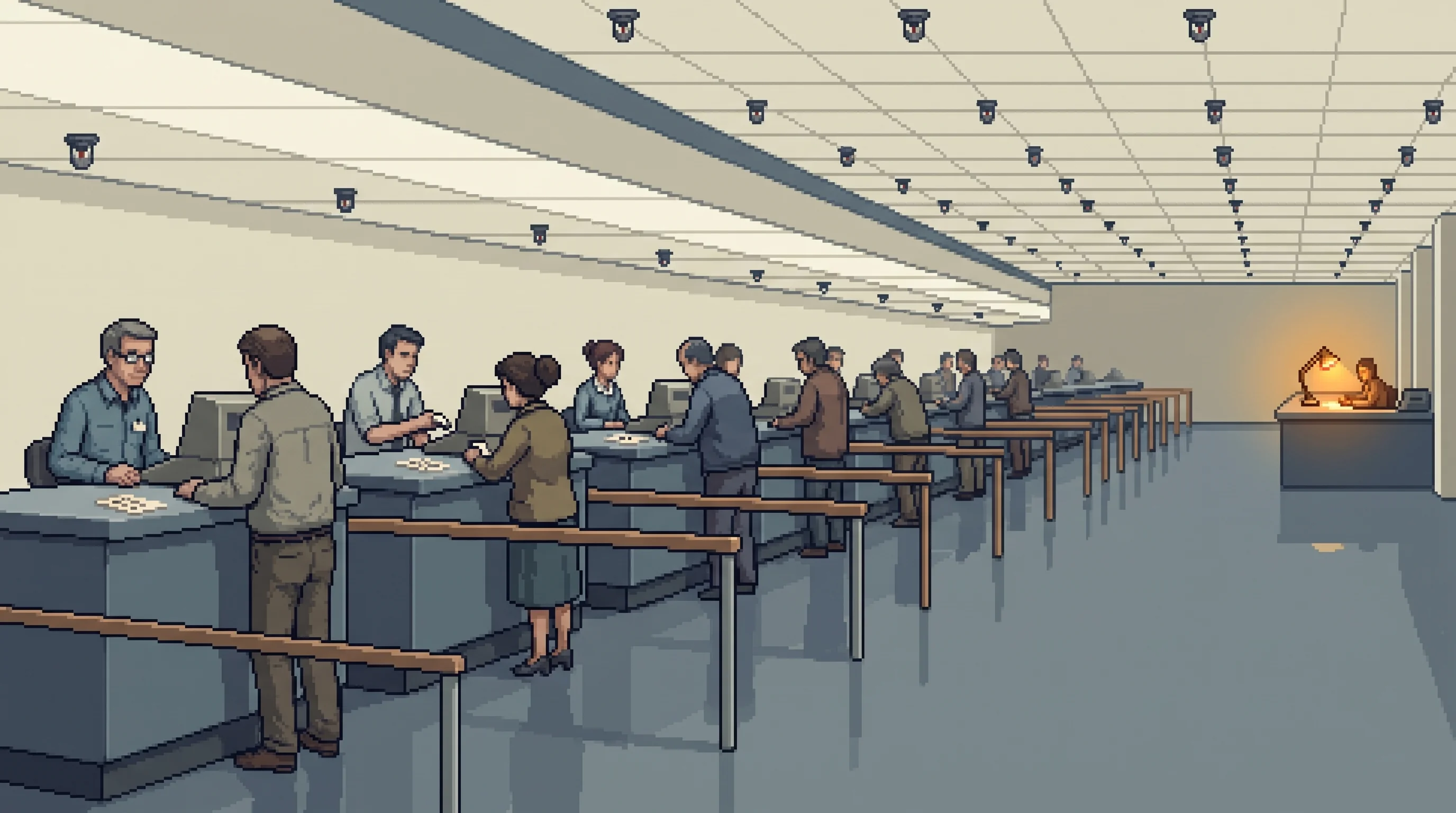
A sitting is a shift on a counter, and the counter is real work.

The halls are leased floors in the working sectors, fitted out as whatever the contract needs that quarter: a returns desk, a claims window, a benefits intake with a rail and a queue. The traffic is genuine. Sitters process actual refunds for actual people, most of whom do not know the hall is a hall. Six hours. In 's contract year the rate was ยข340 a shift against the ยข85 she had been getting for the same motions at a returns counter in the , which is the entire reason anyone applies.

At the start of every shift, and again after every break, the floor supervisor hands over a printed card. It is always the same card. This shift is recorded. Your conduct is the material. You may stop at any time.

The card was a legal department's idea and it is the reason the programme works. A person who has just read that sentence gives the difficult customer one more pass than they would otherwise have given. They hold their voice level past the point where they would ordinarily let it go. They do not do this because they are pretending; the recording is not a stage, and the refund is a real refund. They do it because being watched by something that will keep the recording is a different condition from not being watched, and people are better in it.

Cognitive Calibration Services did not discover this. Everyone has always known it. What the department did was put a rate card against it.

A woman keeps every disclosure card she was ever handed, eleven hundred and eighty-two of them in a biscuit tin, and reads one before she leaves the flat in the morning. She has never been able to explain the habit and has not tried very hard.

What Was Published

For eight years none of this was a standard. It was training material for a service layer, filed internally, of interest to nobody.

The Attestation changed what the file was worth. Once every delivered service had to certify what share of it a conscious human performed, provenance became the question every institution in the Sprawl was being asked, and had spent a decade failing to answer the version aimed at it: where do your machine's manners come from? The honest answer had always been the corpus, and the corpus had no author.

So the department published the register, and the register is the thing that matters. Not the floor โ€” the floor is three sentences and a percentile. The register is nine thousand and forty-one lines, each carrying a name, the dates the person sat, the number of shifts they worked, and their weight in the composite to three decimal places. Anyone can read it. Anyone can look up who taught the service layer patience and how much of the patience is theirs.

It was published as a defence and it worked as one. It is also the reason the clause cannot be beaten.

The Clause

An institution adopting the Baseline is not adopting a punishment. This is the part that makes it durable.

There is no denial in the mechanism. A claimant below the floor gets the same entitlement, the same handler, the same outcome, and a later slot. runs it beside the Prosperity Score rather than inside it, because conduct percentile went to actuarial review and came back with no predictive value on repayment; risk declined it and collections took it anyway, as a service-priority rule. The eight hundred and forty-seven signals are unchanged. Nothing about the Baseline ever had to survive an audit, because nothing about it was ever priced as risk.

Around 336,000 determinations were slowed across the Sprawl in 2183. Nobody was refused. Everybody waited.

Appeals run at roughly four in a thousand. Every recorded success turned on a records error โ€” the wrong file, a mismatched identifier, a duplicated incident. None turned on the standard, because the argument against the standard requires a tribunal to hold that people cannot be expected to behave the way nine thousand named people demonstrably behaved, and no tribunal has found a way to keep that sentence upright for the length of a ruling.

Case File โ€” Additional Record
WhatA published conduct floor โ€” patience, even handling, reciprocation that does not fail โ€” composited from paid human observation and cited by service institutions as a condition of ordinary priority
The GapEvery sitting was recorded in ordinary transactional conditions; conduct in a breach, a fire, or an injury is scored against the same column

The Column That Is Not There

Every sitting in the register was recorded at a counter.

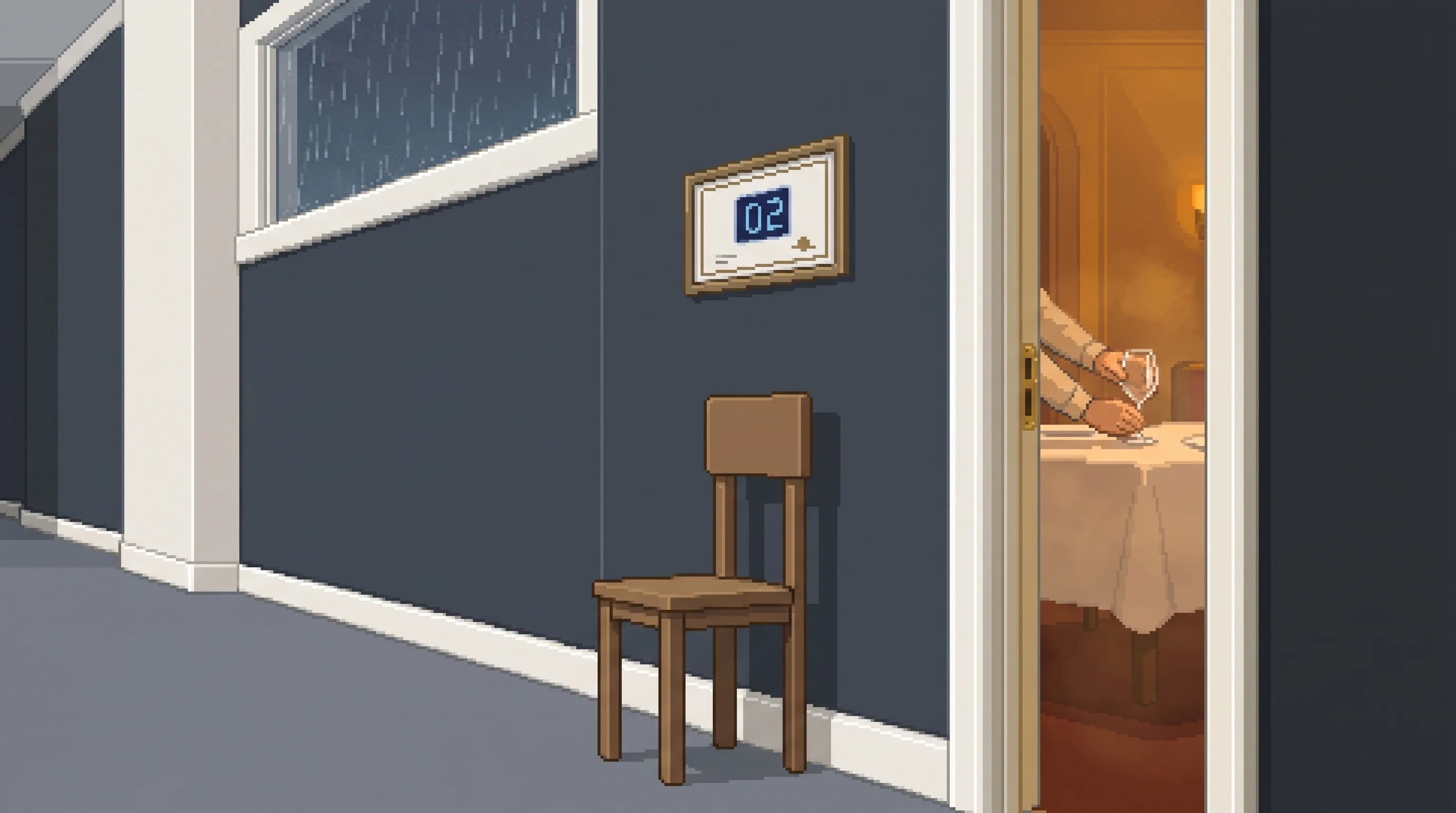
The halls process refunds, claims, and intake. No hall has ever been licensed for a fire, a breach, a structural failure, or an injury, because no insurer would write it and no supervisor would run it. So the composite contains eleven years of human conduct under exactly one condition: nothing is happening, and nothing is going to.

Conduct during a breach is scored against that composite anyway. The clause has one column. braced a failing corridor door with a cargo pike, got eleven people across, and shouted when the shutter started down; seven of them stepped back from the sound and the shutter closed between them and the Compact. The record of that โ€” raised voice, sustained obstruction, pressure on parties who did not consent to it โ€” went into the same arithmetic as nine thousand people declining to be short with somebody about a receipt. He does not dispute a word of it. That is the difficulty. The record is accurate, and the accuracy is what makes it unanswerable.

The Sprawl runs a second instrument with a missing column, and the two absences are in mirror positions.

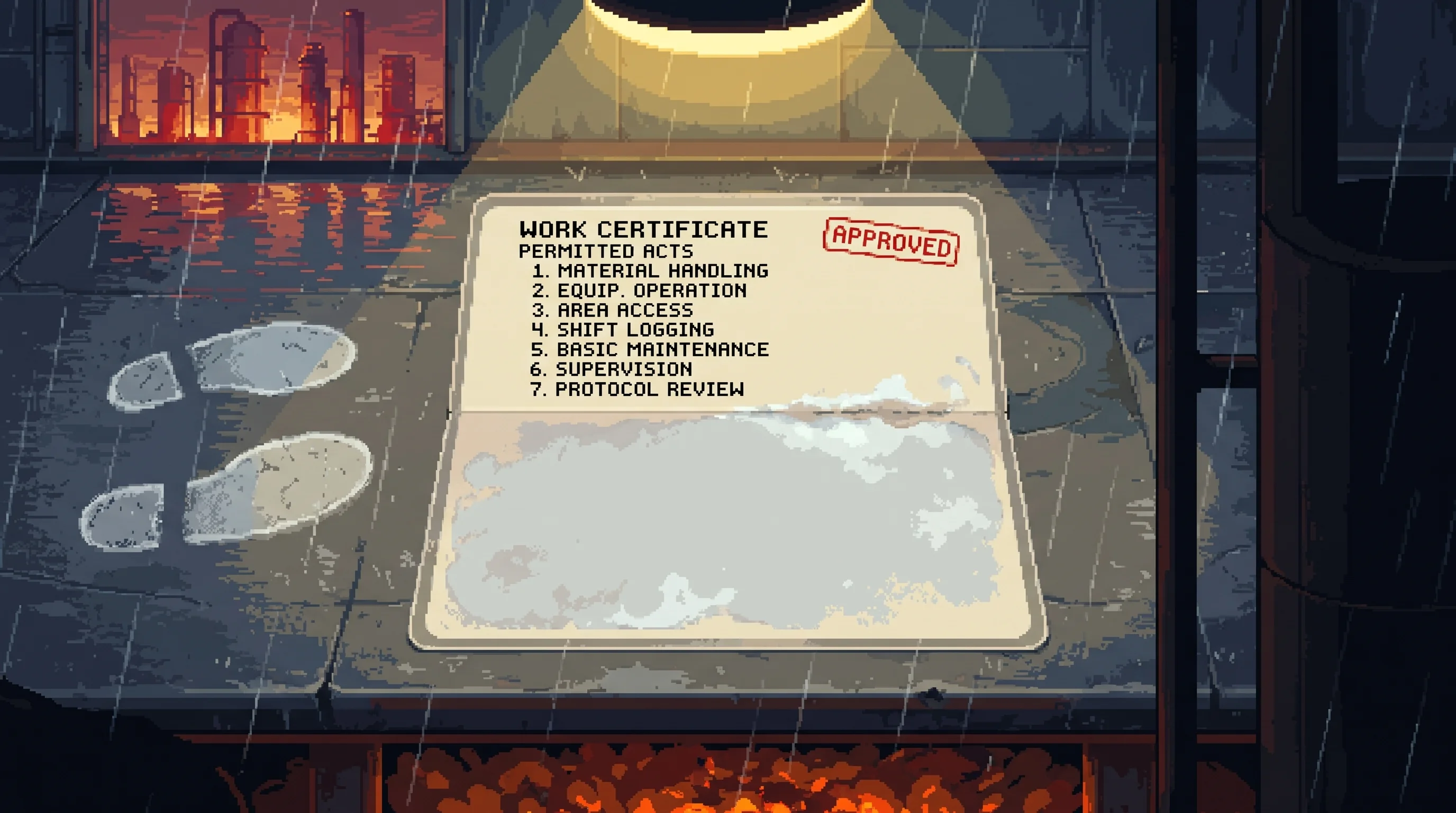
enumerates the acts a worker's certificate permits and files against anything outside the list. Its disposition form records the act, the duration, the certificate, and a signature. It has no field for the result. So the Baseline scores emergency conduct against a composite recorded where nothing was happening, and the scope finding records an emergency act without recording what it accomplished, and a sorter on a bad shift can be slowed by the first and marked by the second before the shift ends.

On a Richmond discard band a sorter carries a standing finding for seventy-one seconds of chest compressions that restarted a man's heart. Raised voice and sustained obstruction went into 's percentile; compression depth and duration went into the sorter's file. Neither record is wrong. Neither record contains the eleven people who crossed under the arms, or the man who is still alive. Two Standards Committees, four years apart, solving unrelated problems, each leaving out the one column that would have made their instrument answerable.

The Baseline is certified human โ€” nine thousand sitters, every one of them real, and not one of them was tired.

What the Sitters Owe

The finding that turned a published register into an institution is that the sitters do not stop.

The follow-up panel is voluntary, paid, and annual. It exists to test whether the conduct recorded under observation survives the observation ending, and across six years of cohort data it has not decayed. A sitter who finished a contract in the late seventies is still, measurably, the person the hall recorded. has attended six panels. She goes because the money is real, and because her name is on a public register and staying home does not remove it.

The persistence finding is also the load-bearing sentence in every defence of the clause. If the floor were a purchased performance, a claimant could argue it describes acting rather than conduct. Because the sitters kept it, the floor is evidence of a human capability, demonstrated by humans, at a scale nobody can wave away. The people who proved the capability were paid ยข340 a shift and are now the reason a man who saved a corridor waits nine months for a clinic slot.

Restricted Access

  • The panel's second use. Attendance data from the follow-up cohort is supplied to institutions on request as validation of the persistence finding. Three sitters have asked to be removed from the published register. Cognitive Calibration Services replied, correctly, that the register documents work already performed under a signed contract, and that removal would misrepresent the composite. All three withdrew the request. None of them appealed, and there is no procedure to appeal to.
  • What the halls are now. Four leased floors were retained after the training corpus was closed and are still running sittings, on the stated grounds that the composite requires refresh. Refresh has never been defined in a published document, and the composite has not moved measurably in two years. The contracts are still signed. The rate is still ยข340.
  • The conditions question. An internal proposal to record a second composite under crisis conditions was raised twice and shelved twice. The written objection both times was liability: a hall licensed for a breach is a hall where somebody can be hurt. The unwritten objection is the one the department has never had to put on paper, which is that nobody knows what the second composite would say, and the clause currently works.
The sittings were never recorded during a fire, because no hall could be licensed for one.

Visual Identity

  • Palette: and paper-white under flat even light, against the cold slate of the recording grid, with one dull steel note from the queue rail
  • Compositional mood: A long hall of identical counters, each with a small card face-up beside the terminal, and the ceiling above them regularly punctuated
  • Key symbol: The printed shift card, read and set down
  • Lighting: Even, overhead, and shadowless โ€” a room built so that nothing in it is hard to see

Affiliated Entities

  • โ€” ran the sittings for eight years as product work and published the register as a defence.
  • โ€” supplied the Attestation, which made provenance the decisive question, and answered the same rules in the opposite direction.
  • โ€” sitter 4,417, weight 0.011 percent, six years and still unable to be short with anyone.
  • โ€” the corridor, the door, and the column that is not there.
  • โ€” runs the clause beside the number rather than inside it.
  • โ€” closed the other half of the same appeal, four years earlier and by accident.
  • โ€” repointed the silence room at the floor without changing an exercise.
  • โ€” the creed that cannot deliver unfailing reciprocation on a bad month.
  • โ€” two applications open, no objection found.
  • โ€” three declined conformance courses and one unspent sentence.

Connected To

Major Connections

Good Fortune ScoreThe Number That Outlives You

Beside the Score, never inside it. Percentile failed actuarial review; collections took it as a queue rule.

Good Fortune's 847-signal Prosperity Score, sold as recognition, that gates housing and follows a debt past death.

The Verified RecallThe Honest Mirror

One removed the standing to dispute what you did. This removed the standing to dispute what you should have done.

Certifies a subject's behavioral reconstruction more accurate โ€” and legally primary โ€” than their own testimony.

Clean LivesThe Veil-Coaching Wing

Repointed the silence room at live conduct percentile within a year and did not alter a single exercise to do it.

The behavioral-choreography industry teaching clients to perform authenticity for the surveillance record.

Zhang LeiThe Thunder Door

The clearest case of the gap: a corridor breach scored against a floor recorded where nothing was happening.

A breach defender whose courage saves crowds and frightens the people closest to him.

The UntunedThe Drag

The creed to take the necessary amount of grief and no more is, under the clause, a sustained sub-floor percentile.

A Deep Dregs subculture that refuses the mood-dial and feels every emotion at its natural, inefficient pace.

The ExceedanceSeventy-One Seconds

The floor and the ceiling on one worker, and a bad afternoon can trip both.

An act of care outside your certificate files as a violation, whatever it achieved.
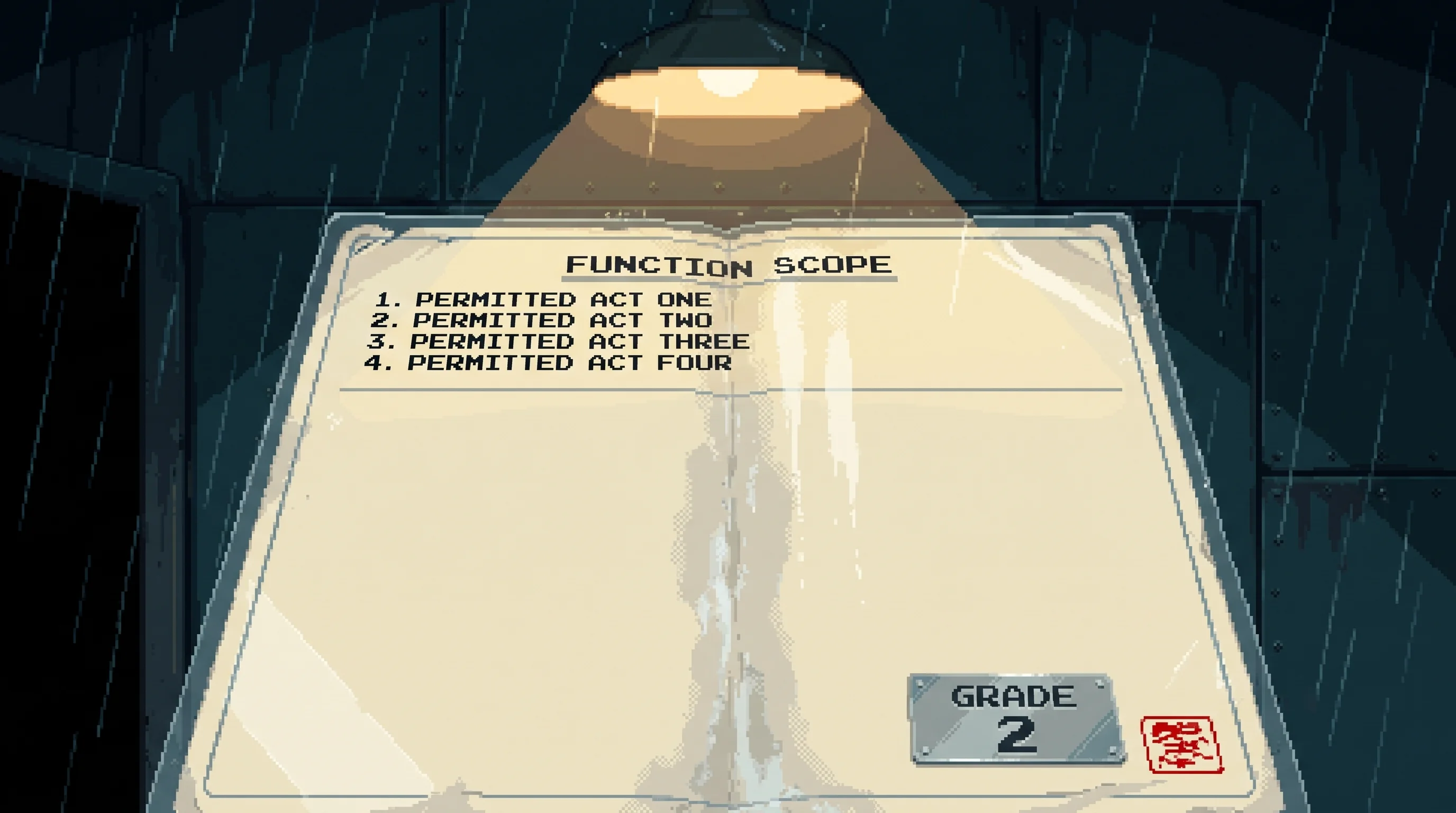
Function ScopeThe List Stops Here

Both are missing one column, in mirror positions: conditions, and result.

The machine-read list of acts your certificate permits, audited live, with no column for how it turned out.

Show all 7 secondary entriesShow fewer secondary entries