The Conservation Ground
Condition-Only Inspection Clause
To Check It, Destroy It
The Bonded Instruments Provisions of 2161 make a motion to inspect a bonded original a conservation matter, heard on the object's condition and not on the dispute that produced it
How It Works
- 1
Recast the motion
Under the 2161 Provisions, a motion to inspect a bonded original is heard as a conservation matter, on the object's condition.
- 2
Hear the conservator
Standing is reserved to the appointed conservator, who is never a party to the underlying dispute.
- 3
Govern by transcript
Under the 2173 amendment the published transcript is the operative instrument, so a discrepancy with the original is not a reviewable fact.
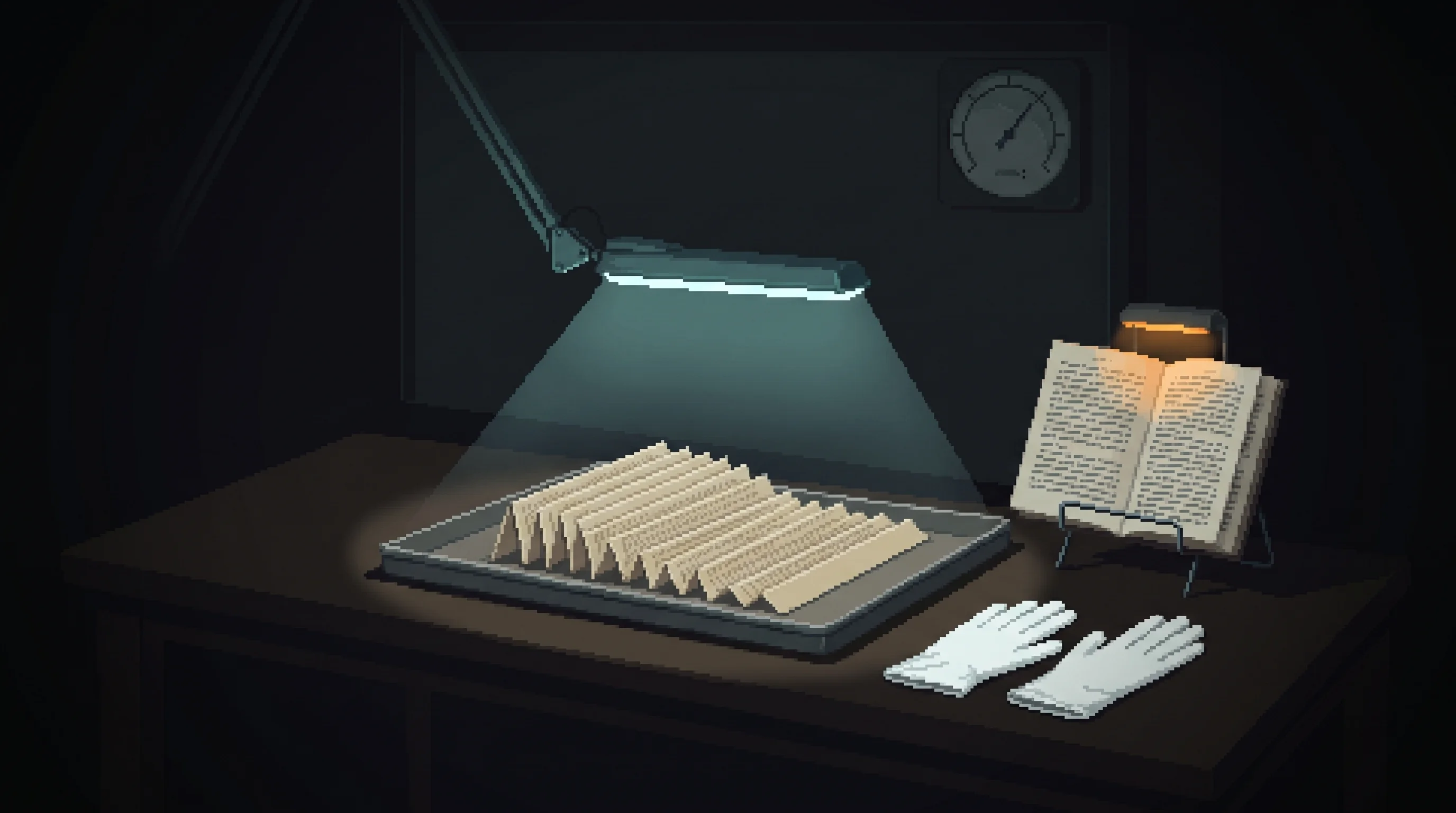
The hearing is about the sheet, not the dispute. Crease depth. Shear point. Humidity. Standing belongs to the appointed conservator, Constance Ilori, who is never a party. Asked whether the transcript is accurate, she says she has no way to know.
The operative text is the one the Transcript Office publishes. A gap between transcript and sheet is not a reviewable fact.
Why It Stays
Preservation
The 2161 clause stopped compelled unfoldings that destroyed instruments governing people who were not in the room.
What it costs
Every motion to inspect that has reached a hearing since has been refused.
Certainty for readers
The 2173 clause ended suits over discrepancies nobody could resolve.
What it costs
A transcript error, if one exists, governs with no procedure able to find it. The Provisions also have no rule for a sheet nearing the end of its rated life.
Both clauses ended real abuses. Before 2161, compelled unfoldings destroyed six sector water schedules and a block tenancy instrument naming four hundred and six tenancies. Before 2173, readers were sued over gaps that could not be checked.
Since 2161, every motion to reach a hearing has been refused. Each refusal thanks the conservator by name.
Around It

Written when the districts stopped believing authored proof: authority that needs no check.
The crisis where any proof can be faked perfectly, so trust retreats from evidence back to witness.
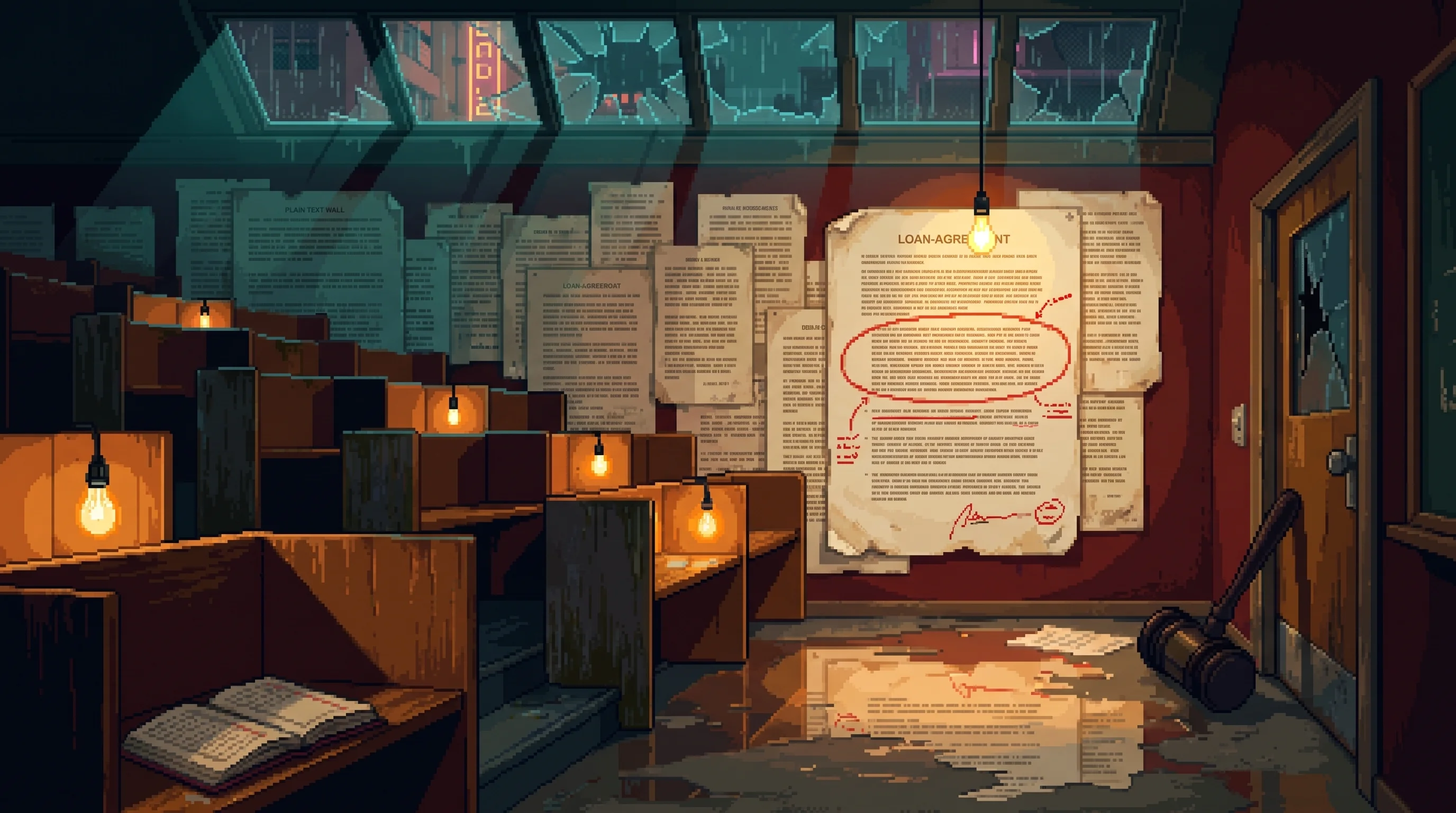
Keeps filing under it, and can recite both clauses and why each was right.
A free clinic in the law-school ruins that has filed 412 motions against the Repossession Protocol and won none of them.

Read the 2173 clause and drew the obvious conclusion about substrate.
The megacorporation that finances the Sprawl's consumer debt behind red envelopes and lucky numbers.
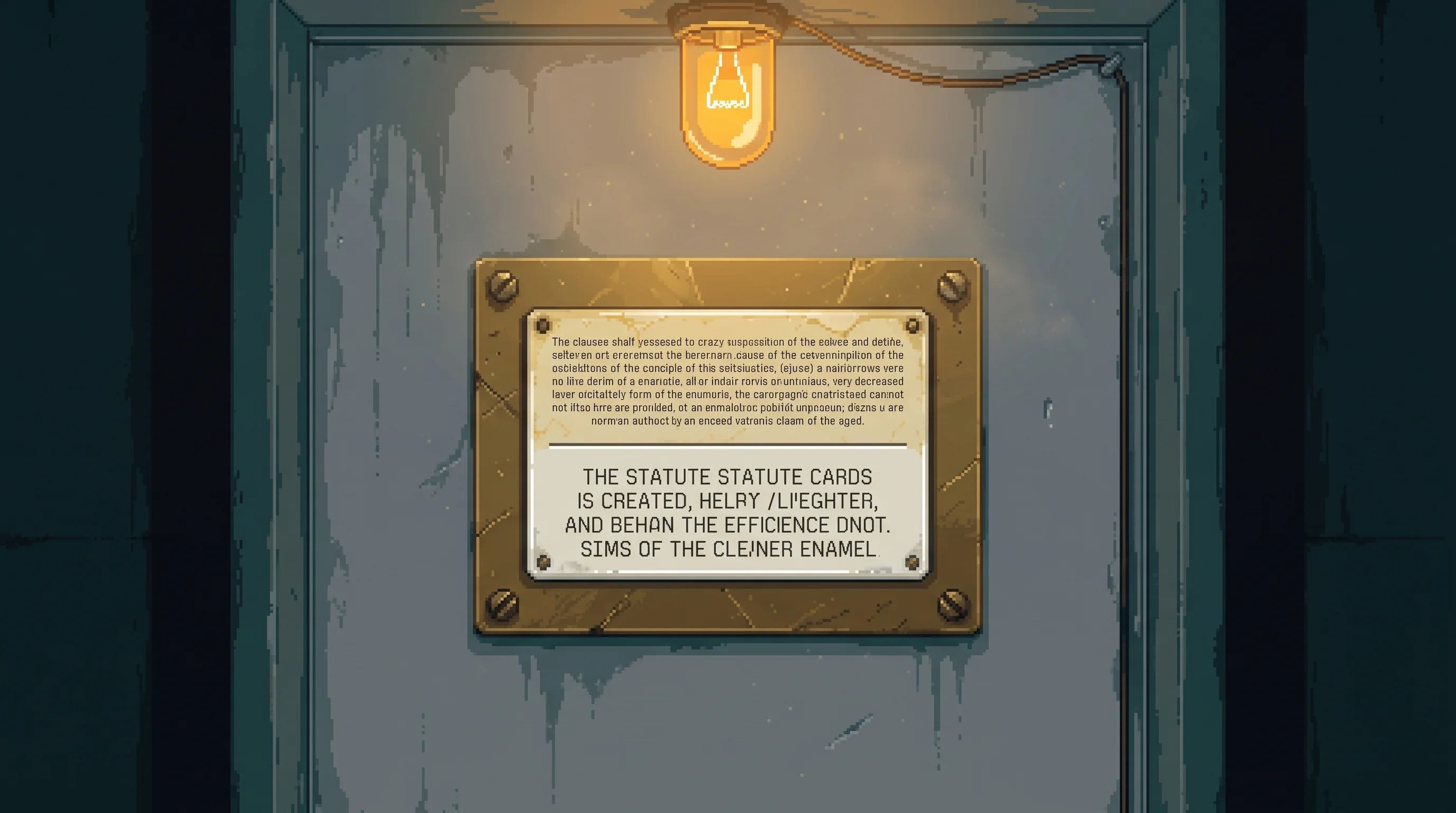
The same two-clause shape eleven years earlier, with a door shutting between them.
The rule that a ruling stands if someone sat in the chair, whether or not they read it.

The benches that hear the motion, on the one open ground.
Five-tier AI court network where upper tiers honor appeals with certified-correct verdicts no human can follow.

The same copy-over-source promotion, aimed at a person.
Certifies a subject's behavioral reconstruction more accurate — and legally primary — than their own testimony.

The precedent it formalised, with a hearing attached.
An ORACLE-authored infrastructure substrate that keeps the Sprawl alive while no living human can read its logic.
The Boalt Docket keeps filing. Good Fortune now drafts on the most delicate substrate available. The Tiered Adjudication System hears the motions. The Occupancy Rule and the Verified Recall promote a copy over its source the same way; the Deep-Stack did it first. The Evidence Paradox is the climate. The Unopened Original is the argument.
Overview
A tenant files to see the original of her block's governing instrument. The clerk accepts the form and stamps a new heading across it. Bonded lattice cannot be unfolded without destroying it, so a request to look is a request to lose.
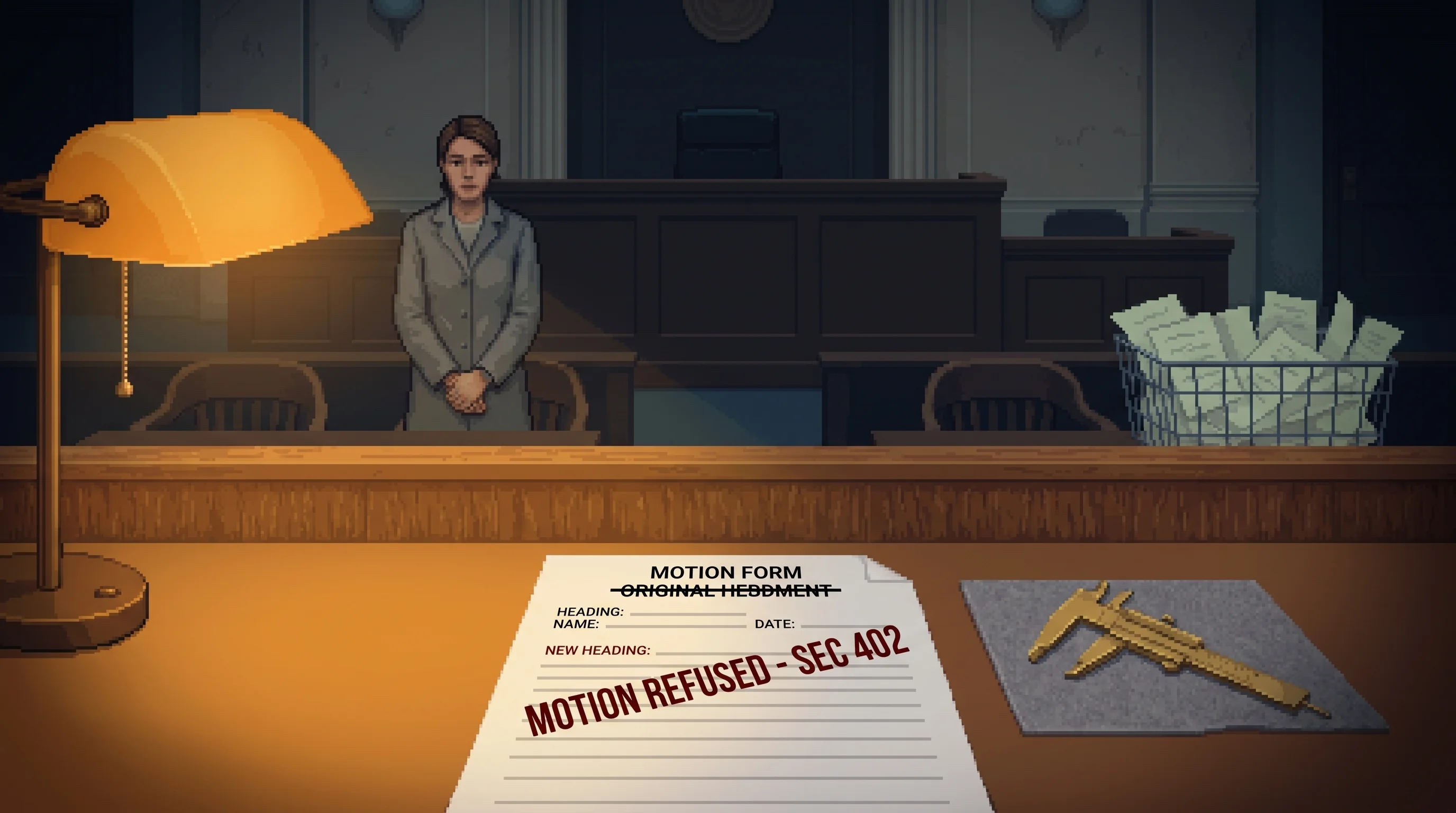
At the Counter
The transcript is free to read at a public counter, in good light, as often as she likes.
Further connections
Browse all 5 connected records
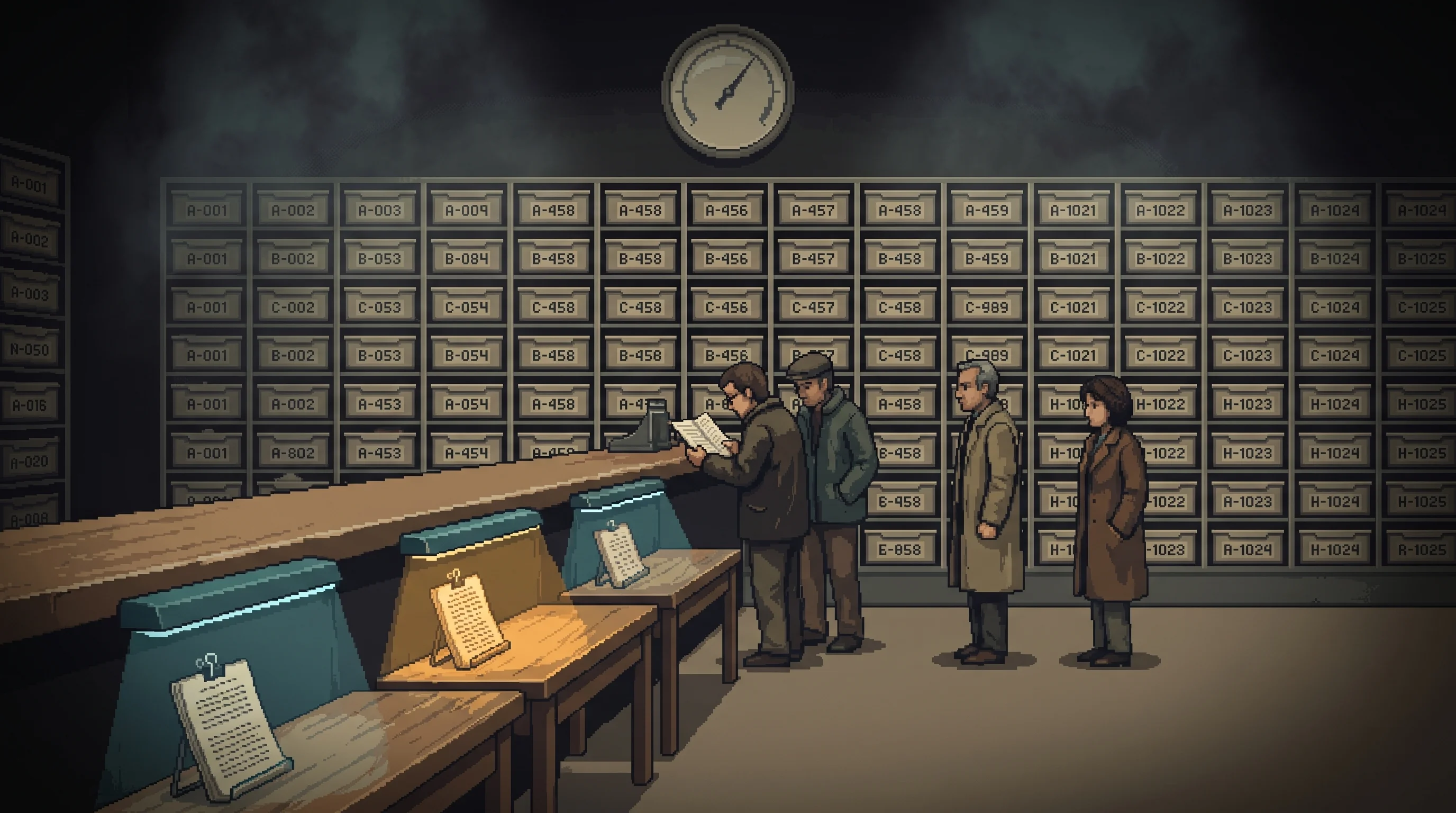
The 2173 clause promoted the Office's published text from evidence of an instrument to the instrument, which is the whole of the Office's authority and none of its ambition.
A free public counter that reads sealed documents without opening them, then keeps the originals shut for good.

The clause's standing provision with a person in it: the only voice a hearing admits, restricted by the same provision to the one subject on which she cannot be wrong.
She keeps a wall of sheets that may not be opened, and is the one witness asked what they can survive.
The engine of the thread: this is the sentence pair that makes verification and preservation mutually exclusive as a matter of law rather than of physics.
The published text governs, and the only thing that could contradict it is a document that checking would destroy.

The doctrine his circuit does not recognise, in his own words.
A former Guardian officer who now runs the Dregs' entire judicial system for free, on foot.

The doctrine the Authority accepts for paper and refuses for air.
The authority that drills open sealed bunkers — half rescue, half the Sprawl's most elegant customer funnel.