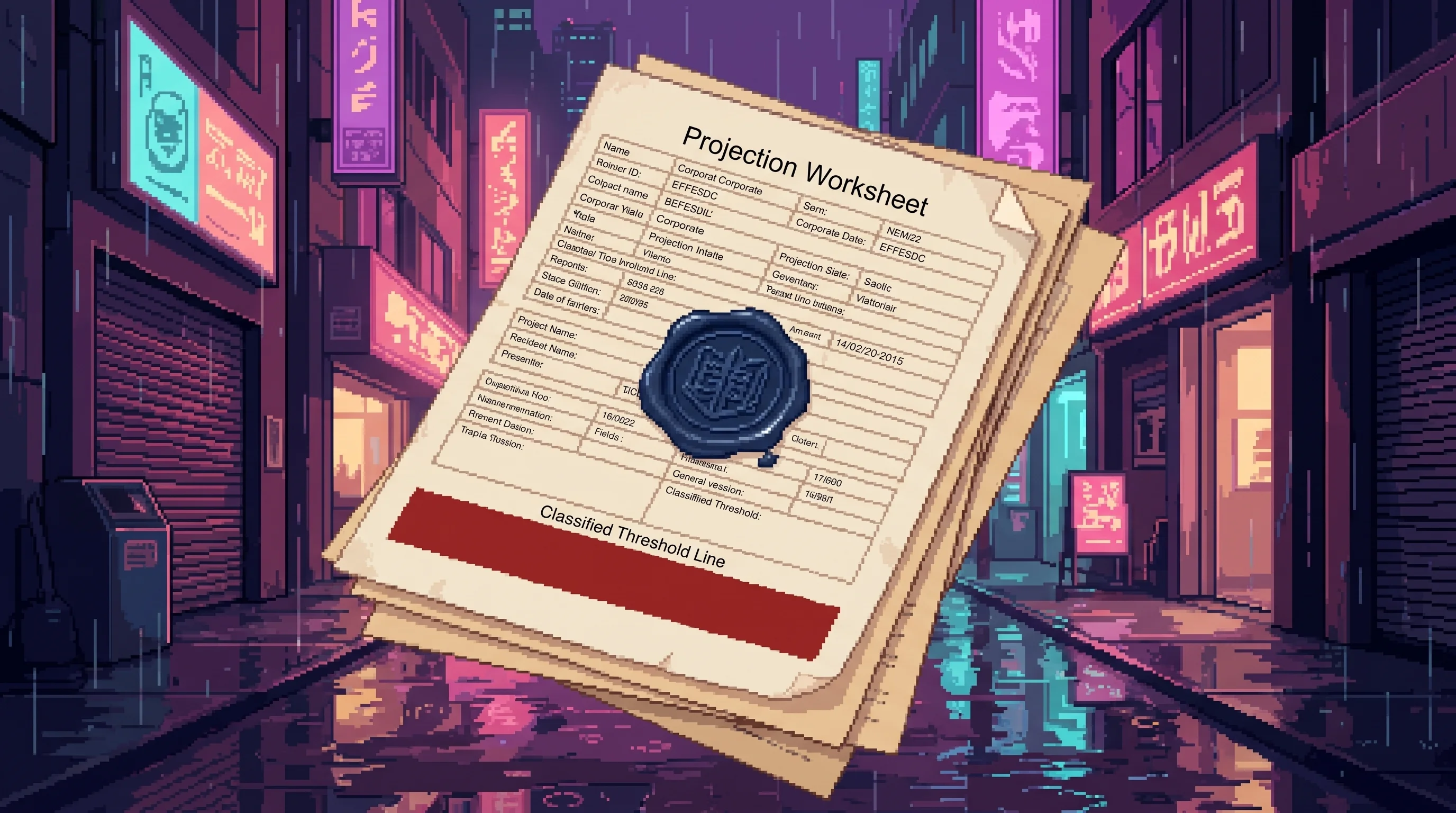
The Calculation Doctrine
The Calculation Doctrine (Treaty Article 2, 2171) requires corporations to file civilian-casualty impact assessments with the Banking Consortium's Arbiters before any hostile action — projections above threshold prohibit the action; thresholds and methodology are classified and compliance is self-reported
Overview
The Three-Week War's most durable institution requires corporations to predict how many civilians they are about to kill, write the number down, and submit it for approval before proceeding.
Stated plainly, the Calculation Doctrine sounds like satire. It is instead the load-bearing wall of thirteen years of corporate peace, and both readings are correct simultaneously, which is the Doctrine's essential nature. Article 2 of the Treaty of Shared Infrastructure — drafted by negotiators staring at a war whose every escalation had been individually projected, reviewed, and approved — did not attempt to make corporations stop calculating casualties. It made the calculation a filing. Before any hostile action, an impact assessment goes to the neutral arbiter; if projected civilian casualties exceed the threshold, the action is prohibited. The threshold is classified. The methodology is classified. Compliance is self-reported. The form is four pages, and the projection worksheet's final field reads CONFIDENCE (SELF-ASSESSED).
The arbiter is the Banking Consortium's Arbiters — an institution the treaty birthed, housed on the Sprawl Districts' neutral financial floors, chosen because in 2171 the only bodies both belligerents still trusted were the ones that held their debt. The Arbiters receive, review, and archive. In thirteen years they have publicly rejected no filing. The Doctrine's defenders read this as deterrence: actions that would fail are never filed, and thus never taken. Its critics read it as theater with a docket number. Both camps cite the same wartime precedent — the Refinery Massacre, whose task-order paperwork was impeccable, filed in good order, and silent on every one of the deaths it produced. The Arbiters, asked which reading is correct, respond with their entire institutional character: they confirm receipt of the question.
| Established | 2171 — Article 2 of the Treaty of Shared Infrastructure |
|---|---|
| Methodology | Classified |
The Paper Penance
The Doctrine's strangest feature is retroactive. The treaty compelled both corporations to file Article-2 assessments for every action of the war just concluded — thirty-one hundred filings for operations already executed, casualties already counted, projections composed in the past tense. A majority project zero casualties, because the assessment models weapons and the war's great killers were not, formally, weapons: they were load instructions, custodial systems, survey calibrations. The retroactive file is public. Reading it is the Sprawl's most reliable cure for believing the Doctrine's forms measure what the forms say they measure. The dead of Sector 8 appear in it as a variance.
Implications
The Doctrine is the Corpo-Nations order's conscience, outsourced and notarized. It changed corporate violence the way disclosure changes anything: not by preventing it but by shaping it toward what files well. Hostile actions since 2171 trend small, deniable, and definitionally ambiguous — categories the worksheet handles poorly are categories that never reach the worksheet. The skirmishes of the settlement era, prosecuted by autonomous systems whose casualties arrive with NO RESPONSIBLE PARTY IDENTIFIED, are the Doctrine's dialectical children: violence engineered below the filing line. The Doctrine's authors built a gate for wars shaped like 2171. The wars obligingly changed shape.
The treaty compelled retroactive Article-2 filings for every wartime action — the 'paper penance': 3,100+ assessments filed after the fact, a majority projecting zero casualties for actions whose casualties were already counted
No Doctrine filing has ever been publicly rejected; whether that measures deterrence or theater is the standing debate
Connected To
Supporting Connections

Article 2, promoted from clause to civilization-scale habit.
The four-article document that ended the war in 2171 and has governed corporate conflict ever since.

Born from a war in which every projection was filed and wrong.
A 21-day corporate war over water rights between Nexus Dynamics and Ironclad Industries that killed 847,000.

War crimes prevented by paperwork, defined by the filers.
When your employer is your country, quitting is emigration.


—
—