
Overview
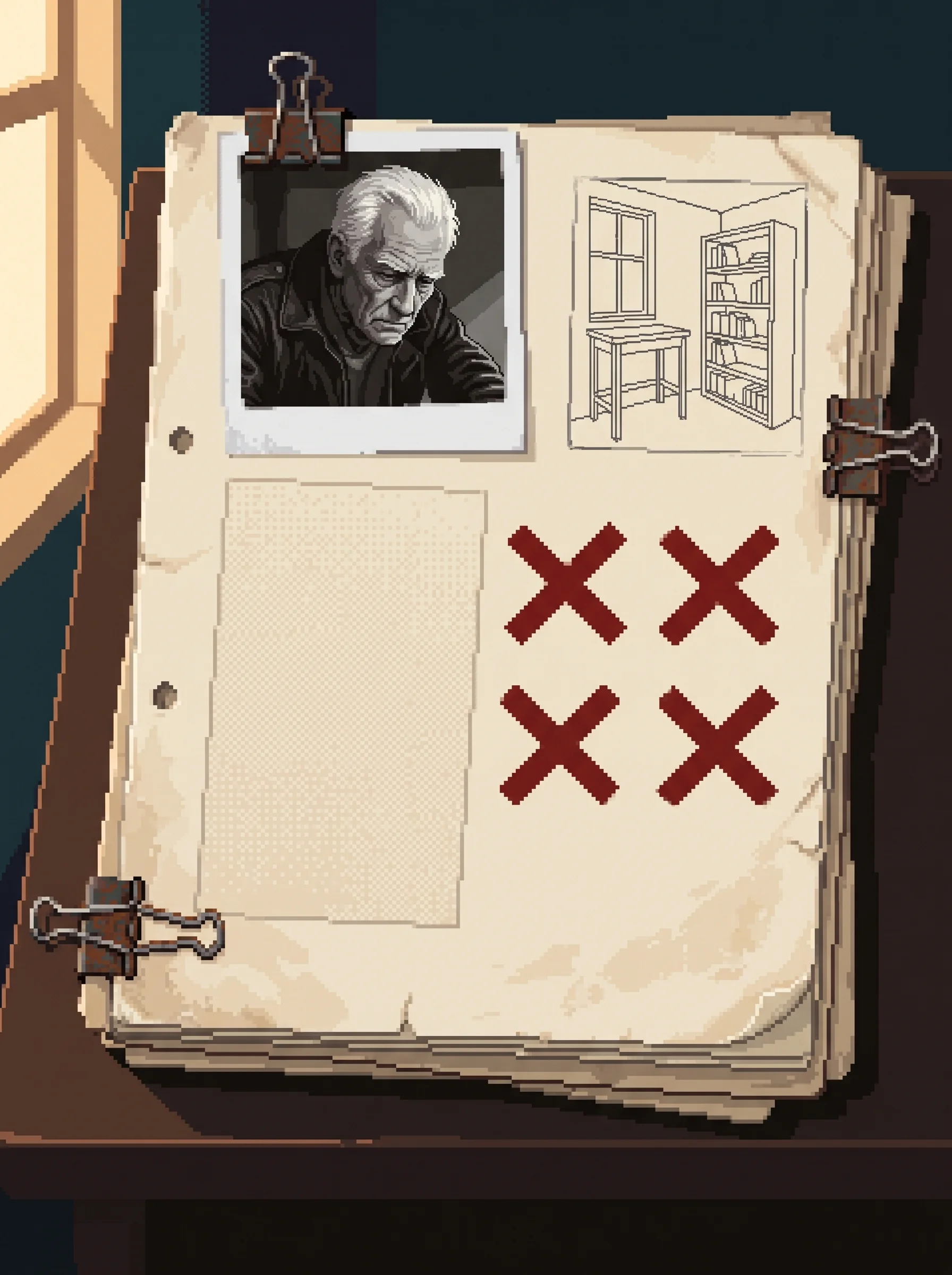
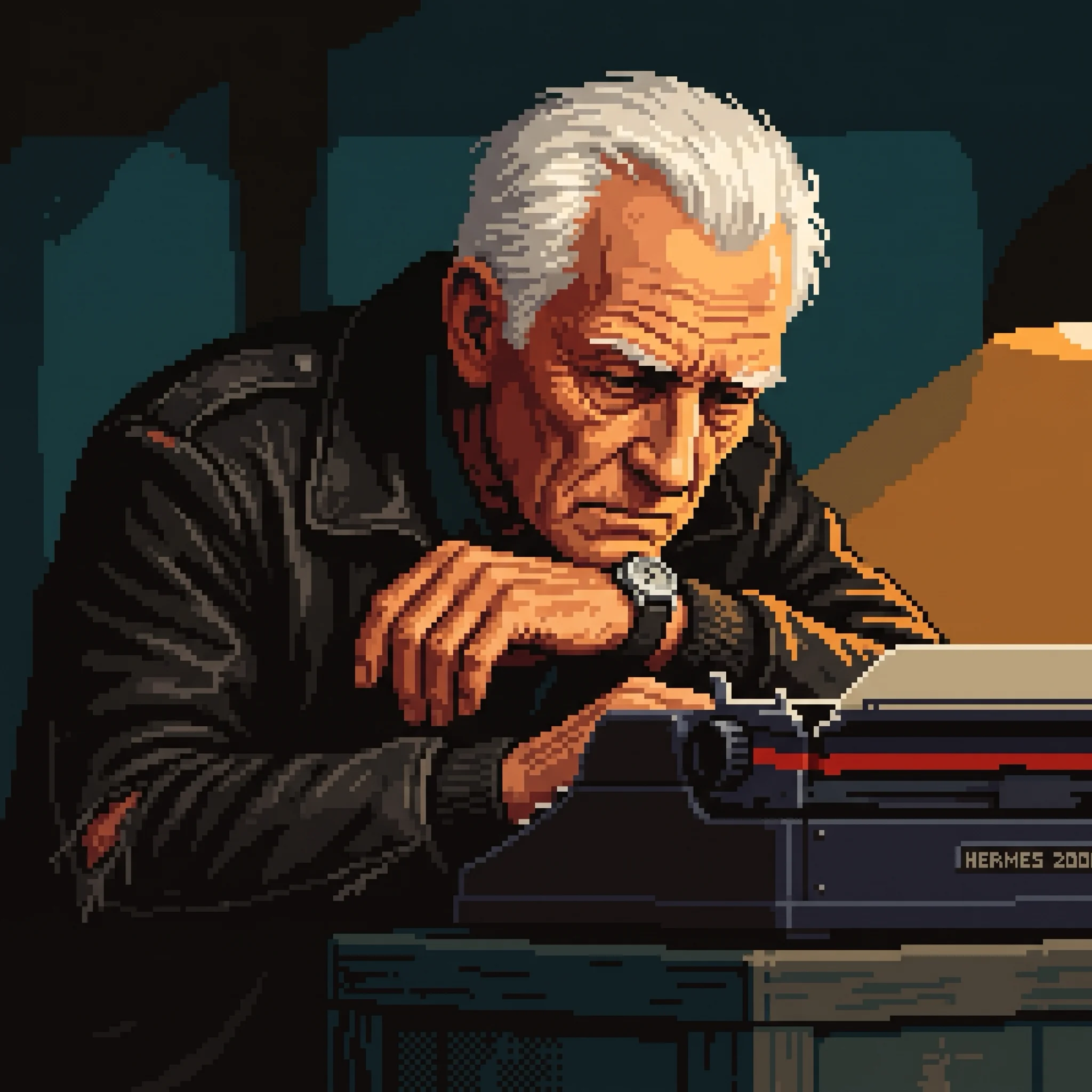
Ford Gibson is eighty-one and back on the Rail, typing at forty words a minute. The carriage return is louder than the keys. Nexus Dynamics has been trying to put him in a room since he was twenty-two.
The file opened in 2125, when he failed to report to a fourteen-year Actuarial Futures intake and left the territory instead. The paperwork calls that an offer. It should have expired in 2139. Instead it survived the covenant system, the corporation that inherited it, eleven reorganisations, and nine names for the owning division.
It is still open because of the books.
Between 2136 and 2184 Ford Gibson published forty-six volumes on paper, and the Sprawl kept arriving in them first. Nexus's annual comparison says the novelist sees farther and calls more correctly than the Weave, Nexus's own forecasting architecture.
Nexus has tried to take him four times. All four attempts failed.
- Type
- Institutional pursuit — corporate acquisition of an uninstrumented human forecaster
- Participants
- Ford Gibson; Nexus Dynamics Strategic Forecasting Division; Corporate Pursuit Task Force; Guardian
- Status
- Active — file open, four failed attempts, no fifth authorised
- Timeframe
- 2125–present (59 years)
Participants

Also in the file


Ford Gibson is the pursued party. Nexus Dynamics' Strategic Forecasting Division keeps the acquisition file open. The Corporate Pursuit Task Force executed three of the four attempts; Guardian handled retrieval for all four.
Relationship Dynamic
This is not a hunt. A hunt has an endpoint.
Strategic Forecasting acquires assets to instrument, model, and repeat them. Gibson works with no digital device or interface, and no model of the world beyond what he can see in a room. Put him on specification and Nexus may get corporate documents. It will not get the books.
The acquisition template has four sections: target, method, cost, utilisation. Every proposal since 2170 completes the first three. The 2181 proposal contains one sentence under utilisation: "To be determined following successful acquisition."
It was approved.
Closing the file would require a named executive to write that the architecture was beaten by a paperback and the correct response was to read it. Renewal requires nobody in particular. Gibson, meanwhile, keeps moving. He has never negotiated, litigated, or sought protection. In 2181 an interviewer asked whether Nexus was still after him.
"I'd assume so," he said. "They've been very consistent."
Twice a year Gibson visits the Print Shop, squares his mail against the table edge, and leaves with eleven re-inked ribbons, black above and red below. In forty-six years he has never used the red halves. Ilse Marovic keeps them in a jar above the type case. None of the four attempts began on the Rail.
History
2125
The file opens
Gibson does not report to the intake or decline in writing. He leaves the territory. A clerk opens the covenant file.
2149–2153
Prior publication
Somebody reads his novel Little Ends against the corridor reports. The memorandum's subject line is Re: prior publication. The old covenant file becomes an acquisition instrument.
2165
First attempt
Nexus offers a residency, a stipend, and an editorial arrangement. Gibson enters its commercial suite and becomes medically unstable. The meeting is recorded as terminated by asset.
2169
Second attempt
Gibson loses consciousness on a gurney before the second checkpoint of a Nexus transit concourse. Medical staff refuse to continue. The report calls it asset-side environmental incompatibility, which is easier to write than the man is allergic to us.
2170
The Unbranded Room
Nexus strips four hundred square metres on the Spire's fourteenth floor of every mark, typeface, colour, and scent it owns, then adds filtered air, neutral textiles, paper, pens, a desk built for a two-metre man, and a window. It is finished in eleven months, under budget. Gibson never enters it. "It's a nice room. There's a window. I'd be dead in a month and the books would be worse before that."
2174
Third attempt
Guardian moves Gibson into a partly de-branded holding suite. Partial is not enough.
2178
The note
A redacted analyst recommends that the division stop pursuing Gibson and read him like everyone else. The recommendation is unfundable because it does not require a division. The note becomes the most-read document in the file. It is never actioned, closed, or removed.
2181
The fourth attempt
The most expensive. The Corporate Pursuit Task Force works under a charter written for ORACLE fragments and puts Gibson in a branded vehicle. Two of the three extraction personnel require treatment; the report does not establish why. Nineteen hours later Gibson is found eleven kilometres away, on foot, carrying the typewriter.
In 2184, no fifth attempt is authorised.

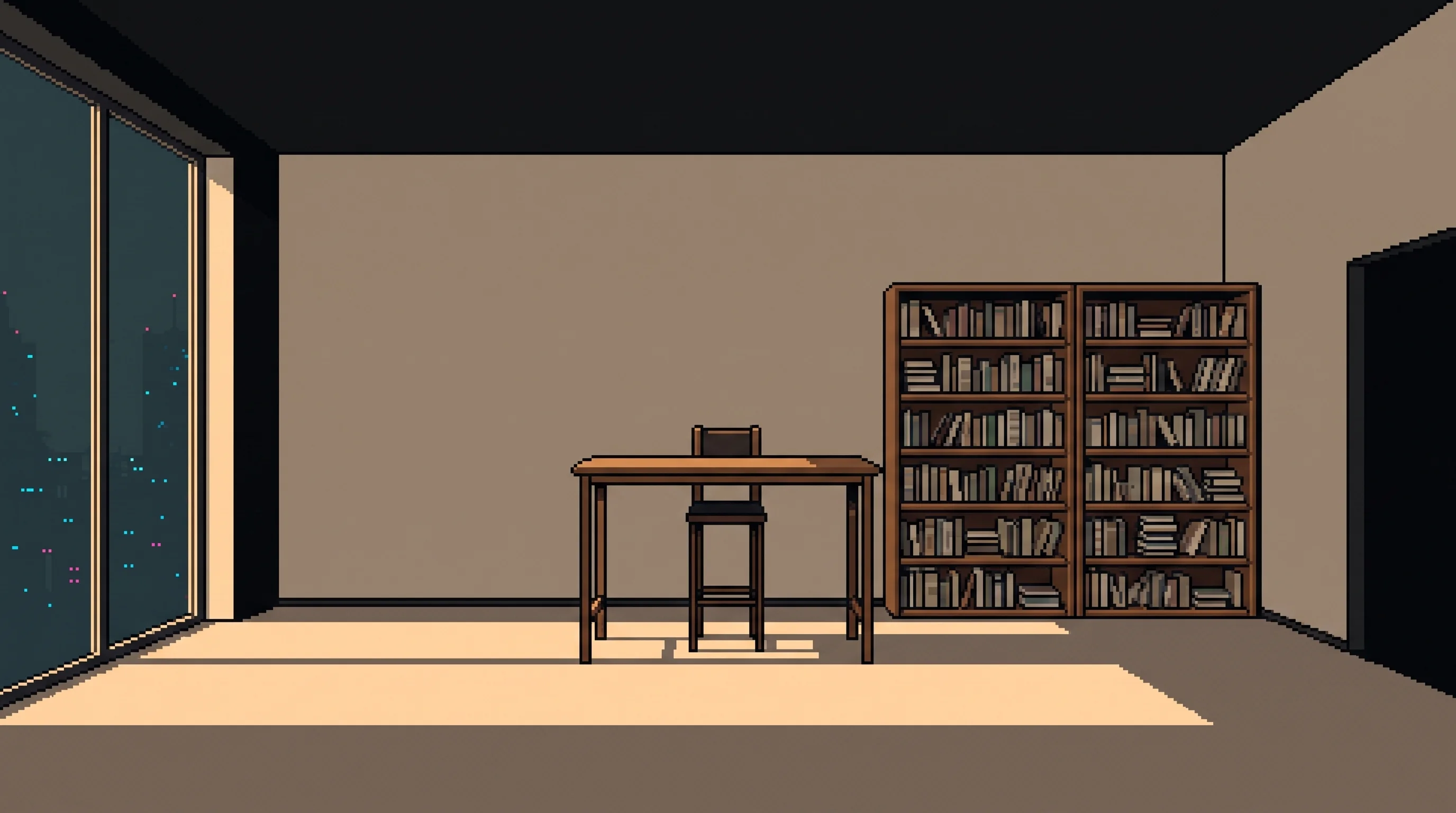
A desk built at the correct height for a man two metres tall, dusted quarterly for fourteen years by a custodial contract that renews itself.
The Record
- Annual forecast panel. On eighty-one structural developments, the Weave calls fifty-one at ten years. Gibson calls sixty-eight at twenty-to-forty-year horizons, with a mean timing error of eleven years either way. His lead was four forecasts in 2159 and has not closed.
- Exposure window. Nine minutes in the 2165 commercial suite; unconscious before the second checkpoint in 2169; six minutes in the 2174 suite after roughly half its branding was removed. Across the failed attempts, onset is four to eleven minutes.
The Empty Room
Someone stocks the Unbranded Room's unauthorised shelves. Fourteen years after it was completed, the room is still cleaned, climate-controlled, and inspected every quarter. The custodial contract does not cover acquisitions, and the facilities budget has no line for books. There are roughly six hundred volumes now, eleven by Gibson. Every review of the discrepancy has concluded that it is not worth escalating.

Each attempt costs Gibson weeks of recovery, and recovery takes longer each time. The operations have taught Nexus two things about his body, both by accident: concentrated corporate identity makes him unstable within minutes, and removing half the branding does not help. Helix Biotech has offered four times to study the mechanism. It requires access to the target.
Gibson was already moving when the file opened. Nexus made settling down impossible. A fixed address, an instrumented household, a networked device: each would give the file a predictable door. Nexus spent fifty-nine years hardening movement into enforced homelessness, then filed the result as evidence of the target's difficulty.
The Unanswered Proposal
If Gibson predicts the Sprawl, his backlist is its only unowned forward-looking record. If the engineers who make the Sprawl are building what they first read at nineteen, the forecasts may be instructions. Nexus has published neither answer.
On the Rail, Gibson's current manuscript is titled Nothing Is Coming. On the fourteenth floor, someone keeps putting books in the room he has never entered.