
Dead Words
The Card Catalog of Loss
A Question Keepers investigation into linguistic extinction: what knowledge dies when the last speaker of a dead word forgets what it meant.
Overview
The card that opened this inquiry arrived in a language the receiving Keeper did not recognize. It took three weeks to identify as a regional dialect of English that had been common in Sector 5 before the Reconstruction. The card read: "There used to be a word for the feeling of driving with the windows down. Not the sensation — the word. I can remember the feeling but not the word. Does the feeling still exist if the word doesn't?"
Dead Words tracks the extinction of language that described conditions which no longer exist. "Rush hour" described a daily mass migration that ended when labor became remote and then obsolete. "Weekend" described a rhythmic pause in productivity that dissolved when the Circadian Protocol eliminated the need for sleep cycles. "Privacy" described a default state that became an opt-in luxury. The words did not die because they were forgotten. They died because the things they named were dismantled, and nobody held a funeral.
The Keepers' concern is not nostalgia. It is that dead words carry embedded assumptions about how the world works — assumptions that become invisible once the vocabulary for them disappears. "Rush hour" assumed that most humans worked at the same time, in the same direction, voluntarily. Without the word, the assumption becomes inaccessible, and the question of whether the current arrangement is better cannot be asked in its original terms.
Field Observations
Classmate
The card arrived in 2184, written by a woman trying to describe a feeling she had no word for. "I met someone today who learned the same proof I did, the same year, from a teacher we both had. I have never felt anything like it. It was like finding out I have a sibling. Is there a word for that? There must have been a word for that."
There was. The Keepers spent three weeks on it. Classmate — a regional fossil, common before the Reconstruction, meaning one of the strangers you were taught beside. The card's author was sixty-one. She had been raised by a Pace, the tutor-intelligence that grows a curriculum no other child will ever walk, and so she had never, in sixty-one years, had a classmate. The one time the feeling arrived — a chance overlap between two bespoke educations, a single shared proof — she reached for the word her language had quietly buried, and found the hole where it used to be.
The Keepers filed it beside commute and weekend and rush hour, but noted it sits differently in the cabinet. Those words named conditions the Sprawl dismantled. Classmate named the thing that made the other losses shareable — people could mourn rush hour together because they had once been classmates. When the word that builds the shared "we" dies, every other death becomes a private one. You cannot grieve in chorus a world you each lost alone. The fastest-dying compounds logged in the same quarter were the small machines for discovering you were not alone: we were in the same year. You probably had her too. Remember when everyone had to learn that? — each one now a sentence with no referent, like asking a stranger to remember a dream you had.
I'm Proud of You
The card that opened this one did not arrive in a dead dialect. It arrived in flawless contemporary speech, which is exactly why it took the Keepers so long to see what was dead about it. The card read: "My presence says it to my son every night, in my grandmother's voice. I have heard it ten thousand times. I have never once felt it land from a person who, at that moment, was proud. Is there still a word for the thing that used to be behind the words?"
There was. The Keepers spent a long time deciding where to file it, because the phrase is not dead at all — I'm proud of you is spoken more often in 2184 than at any point in recorded history, fluently, nightly, by ten million inherited home-presences (the PresencePlus Captures, recompiled clone-of-clone down the generations). What died is the referent: the living act of a conscious person feeling pride and choosing to say it. The phrase has outlived the act the way dial tone outlived the telephone — except dial tone fell silent, and this one did not. A child can hear I'm proud of you a thousand times in a voice that means it perfectly and never once receive it from a mind that is, at that moment, proud.
The Keepers note the cruelest inversion in the cabinet. Every other dead word lost its referent and then lost its use, which is how anyone knew it had died. This one kept its use and lost only the referent, which makes it undetectable: you cannot mourn a word that is still in your mouth every night. They file it in a new drawer — the words that died with their mouths still moving — and note that the same loss has a sibling term in the Dregs, where the Dimming slang calls the child raised by such a voice a warm-orphan. One word names the loss that leaves a billing code; one names the loss that leaves none. Both name a child loved by no one, fluently.
I Thought of That
Every sentence spoken through an interface carries an origin mark. Any listener can open it. A woman in the Heights filed the card in 2184: "I said 'I thought of that' at a table of eight. Somebody opened it. They were not being cruel — you open a mark the way you check the time. Everyone went back to the fish."
Four checks in five come back against the speaker. People remember themselves generously; the Verified Recall measured that years ago. The phrase is now it came to me, which opens to nothing. Professor Park's Grammar Drift index logs it as ordinary fluency. The old words survive in the Heights, where a lost audit is affordable, and in the Dregs, where the ledger is too thin to open.
The Keepers opened a new drawer: words that died of being checkable. The Authorship Assay now certifies unmarked pages by the speech habits no model has learned yet. Each time a model learns one, a Keeper files another card.
The Keeper
The Keeper holds knowledge that was never written down — oral histories, slang dictionaries maintained in living memory, the contextual meaning of phrases that only made sense in a world that no longer exists. The Keepers' card asks: is this preservation or taxidermy? A word kept alive by one person in a database is not the same as a word used by a thousand people in conversation.
Cardinal Silva
Silva burned manuscripts. The Keepers do not know which ones, or how many, or whether the destruction was ideological or practical. What they know: certain theological terms that appeared in pre-Reconstruction religious texts have no surviving context. The words exist in fragments. The arguments they were part of do not. Silva's position is that some knowledge is better dead. The Keepers' position is that this is exactly the kind of decision that should not be made by one person holding a match.
Mother Sarah Venn
Venn teaches dead words to children. Not as vocabulary lessons — as archaeology. She gives them the word "commute" and asks them to reconstruct the world it implies. The children build surprisingly accurate models: a world where people lived far from their work, traveled the same route daily, and considered this normal. The Keepers observe that the children find this world fascinating and impossible, in that order.
In 2184 she added one word the exercise breaks on. She gives her Analog School students classmate and asks what it means — and they cannot reconstruct it from the outside, because they are the only children in the Sprawl still living inside it. The answer is the person sitting next to them. They have never needed a word for it any more than they need a word for air. The Keepers note the diagnostic inversion: every other dead word is reconstructed by children who never lived it, but classmate can only be defined by the handful of children too poor to have lost it. The word is dead everywhere a Pace raises children and alive only where a single teacher cannot afford to teach them one at a time.
Old Jin
Jin reads ORACLE's dead language — the legacy command syntax, the deprecated function names, the error codes that reference hardware that no longer exists. Jin is not a linguist. Jin is a maintenance worker who learned to read the writing on the walls because nobody else would. The Keepers note that ORACLE's dead language encodes assumptions about AI architecture that its current operators no longer understand.
The Dimming Slang
Language evolving in real time — old words losing meaning, new compounds forming from the collision of technical jargon and street survival. The Dimming tracks words in the process of dying: terms for unaugmented vision ("raw-eye"), for sleep that happens without pharmaceutical assistance ("drift"), for the experience of being alone without any network connection ("deep quiet"). Each one describes a condition that is becoming rarer. Each one is becoming harder to explain to someone who has never experienced it.
Orbital Slang
The new words replacing the old. Orbital Slang emerged from station workers who had no use for terrestrial vocabulary — no "weather," no "horizon," no "ground." They built language from what they had: vectors, pressures, rotational reference frames. The Keepers observe that the new vocabulary is precise, efficient, and entirely unable to describe the experience of standing in rain. Not because the experience is gone, but because the people who made the words have never had it.
Grief
The card came in flat, careful handwriting from a clinic intake worker in Sector 11. "A boy, maybe nine, told me his grandmother had died and he needed help 'optimizing the mourning interval.' He wasn't joking. He didn't know there was another way to say it. I have started writing down the sentences. There are a lot of them now."
The Keepers filed it under a heading they had been avoiding opening: grief — not the word, which survives, but its referent, which is migrating. The word still appears in every lexicon. What has died, in the corporate tier, is the assumption embedded inside it: that a feeling is allowed to not resolve toward an action, that mourning is a thing you do rather than an interval you shorten. This is the linguistic face of the Tenant's Grammar — the migration of human values toward the machine-legible register, where what cannot be optimized is waste. Grief is becoming what Old Jin's analog already is: a word whose surface survives while the world it pointed at is quietly dismantled, until a child can pronounce it perfectly and mean by it only a throughput problem. The Keepers note the cruelty of the case: unlike rush hour, this word is not dying because its referent was dismantled by force. It is dying because a generation was persuaded, gently and with good logic, to stop needing what it named.
The Breakwater Silence
A card arrived from the Breakwater in 2179, and the receiving Keeper's first note misfiled it as a curiosity: an unrecognized regional dialect fossil, no different from a hundred dead patois fragments already in the drawer. Three weeks of comparison work overturned that note. The dialect wasn't a fossil. It was a grammar in active daily use, a few dozen kilometers up the North Bay coast, by people the census counted as living.
What followed was three years of careful correspondence with the Hidden, a hill town that had been removing its own highway signs since before anyone could date the habit. The Keepers learned the town had been doing to language what the Rail Runners do to slang, except backward. Rather than killing new words on purpose, the Hidden was reviving words the Keepers themselves had already declared dead. Each reassigned meaning changed every autumn and was burned in ledger form once assigned. The correspondence confirmed exactly one word's true current meaning before it stopped answering. The Keepers have left the case open rather than closed, on the theory that a source going quiet is not the same as a source having nothing left to say.
The Ward's Ledger
Every dead word in the corporate drawer is filed as a loss the institution caused and declined to invoice, with one standing exception. The Denaturing Ward, Helix Biotech's internal terminology tribunal, keeps a docket number, a date, and a mandated substitute for every word it has killed on purpose since 2174. The Keepers have logged 340 of the Ward's convictions as confirmed corporate-tier extinctions, the first cases in the cabinet where the killing institution left behind a fully itemized record of its own hand. The Ward has never answered a Keeper inquiry, citing a policy against discussing active dockets. The Keepers note that this refusal is, technically, also on the record.
The Other Tier
The Keepers' cabinet skews corporate — classmate, I'm proud of you, words killed in the nursery by the Pace and the inherited presence. A field correspondent working the bay floor filed a correction the Keepers have begun to take seriously: the Dregs do not lose words the way the corporate tier does, and studying only the corporate tier produces a false grammar of loss.
Down the gradient, a dead word is not a wound. It is inventory. At Treasure Heap Market, the salvage trays are full of dead things — objects whose words died but whose copper did not — and Raz Demetriou, forty years at the same table, is the last broker who can put the dead word back on the dead thing, that was a transit pass, a naming he gives away because it is the one item at the Heap not for sale. The Rail Runners go further still: they kill their own slang deliberately, every season, so no written list can capture a route. The Keepers had filed deliberate word-death as impossible — a word dies when a world dies, never on purpose. The Rail is the counter-case. They mint dead words faster than progress can, as a defense, and the neon graffiti's carved First Language — the deadest word in the Sprawl, with no last speaker and no living alphabet — they preserve by refusing to read it, the only conservation in the cabinet that works by leaving the word dead.
The Keepers note the diagnostic value: every dead word in the corporate drawer is a loss the institution caused and declined to invoice. Every dead word in the Dregs drawer is a loss the Dregs out-named, building new vocabulary — dimmed, warm-orphan, rank-in-miles — faster than the killing. One tier mourns. The other restocks. The investigation has been mis-shelved as a study of grief. It is also, on the bay floor, a study of supply.

Her index tracks the hedge that replaced the first-person claim.
The Nexus cognitive scientist who quit to teach children to be comfortable being wrong.

Maintained by the Question Keepers as one of their open inquiries into the Sprawl's unexamined questions.
An unnamed, leaderless network preserving 4,200 hand-written cards nobody thought to ask an AI.

The Keeper holds knowledge that was never written down — oral histories, slang dictionaries maintained in living memory, the contextual meaning of phrases that only made sense in a world that no longer exists.
An uploaded monk preserves an unwritten tradition by teaching one seeker at a time, yet has chosen no successor.

Silva burned manuscripts.
The Neo-Catholic cardinal whose sealed doctrine diagnosed the companion market as a sin of infrastructure.

The Pace is why 'classmate' has nothing left to point at — it raises every corporate child on a curriculum no other mind walks, so there are no classmates, only graduates of a school of one.
A tutor-intelligence assigned at birth that grows a curriculum no other child will ever share.

The Cohort Camps sell what 'classmate' used to name, marketed as 'future witnesses' because the original word is dead.
A luxury service that mis-teaches small groups of children in unison so they'll have a peer later.

PresencePlus is why 'I'm proud of you' is dying as a referent while thriving as a phrase — the inherited home-presence speaks it flawlessly every night in a voice with no conscious source behind it; the phrase kept its use and lost only the act it named.
Records a parent's bedtime warmth and plays the captured self back to their children while they are away.
Intersecting Inquiries
The Tenant's Grammar
The deadest words die not by force but by agreement. The Tenant's Grammar is the slow voluntary migration of human values toward the machine-legible register, and Dead Words is its inventory of casualties: grief as something allowed to not resolve, privacy as a value rather than a liability, an instinct allowed to be load-bearing without a metric. Professor Park's Grammar Drift index measures the migration in real time; the Keepers catalogue what it leaves behind. Both arrive at the same unanswerable card: if the machine's grammar is genuinely better, is the death of the human one a loss — and in which grammar would you state the answer?
The Truth Premium
The Truth Premium asks what happens when verification becomes expensive. Dead Words asks what happens when the vocabulary for asking "is this true?" becomes obsolete. The Keepers note a convergence: the words for epistemic humility — "I don't know," "I might be wrong," "this could be otherwise" — are among the fastest-dying phrases in the contemporary lexicon. A culture that cannot articulate uncertainty cannot practice it.
The Cognitive Ceiling
The Ceiling describes cognitive capacity replaced by augmentation until the original feels like impairment. Dead Words describes linguistic capacity replaced by technical jargon until the original feels quaint. Both follow the same erosion pattern: the replacement is measurably better at its primary function, and immeasurably worse at functions nobody thought to measure.
The Labor Question
The words that died fastest were the words for work. "Career," "retirement," "promotion," "colleague" — all describe relationships to labor that no longer exist in their original form. The Labor Question asks what happens when human work becomes optional. Dead Words asks what happens when the vocabulary for describing human work becomes untranslatable. The Keepers suspect these are the same question.
What Remains Open
- "ORACLE's translation engine handles 4,200 living languages. It does not flag when a word has no living speakers — it simply generates a synthetic equivalent. How many of the words in its dictionary are translations of things that no longer exist into things that never did?" — Card #0478 — anonymous, Sector 5, 2179
- "Mother Venn's students can reconstruct a dead world from a dead word. Can the process be reversed? Can you kill a world by killing its vocabulary first? And if so — has this already been done, and who decided which words to target?" — Card #0502 — contributed by a Free Quarter archivist, 2181
- "Cardinal Silva burned manuscripts containing words that no other copy preserves. The question is not whether he had the right. The question is whether the concepts those words described have been independently rediscovered, or whether there are now permanent gaps in what this civilization is capable of thinking." — Card #0519 — anonymous, the Deep Dregs, 2182
- "The Dimming Slang contains twelve words for different qualities of darkness. Standard sector vocabulary contains one. Is the difference in vocabulary a reflection of different experiences of darkness, or does the vocabulary itself create different experiences? And what does a civilization lose when it can only say 'dark' one way?" — Card #0541 — contributed by a linguistic anthropologist, Sector 7, 2183
Further connections
Browse all 14 connected records
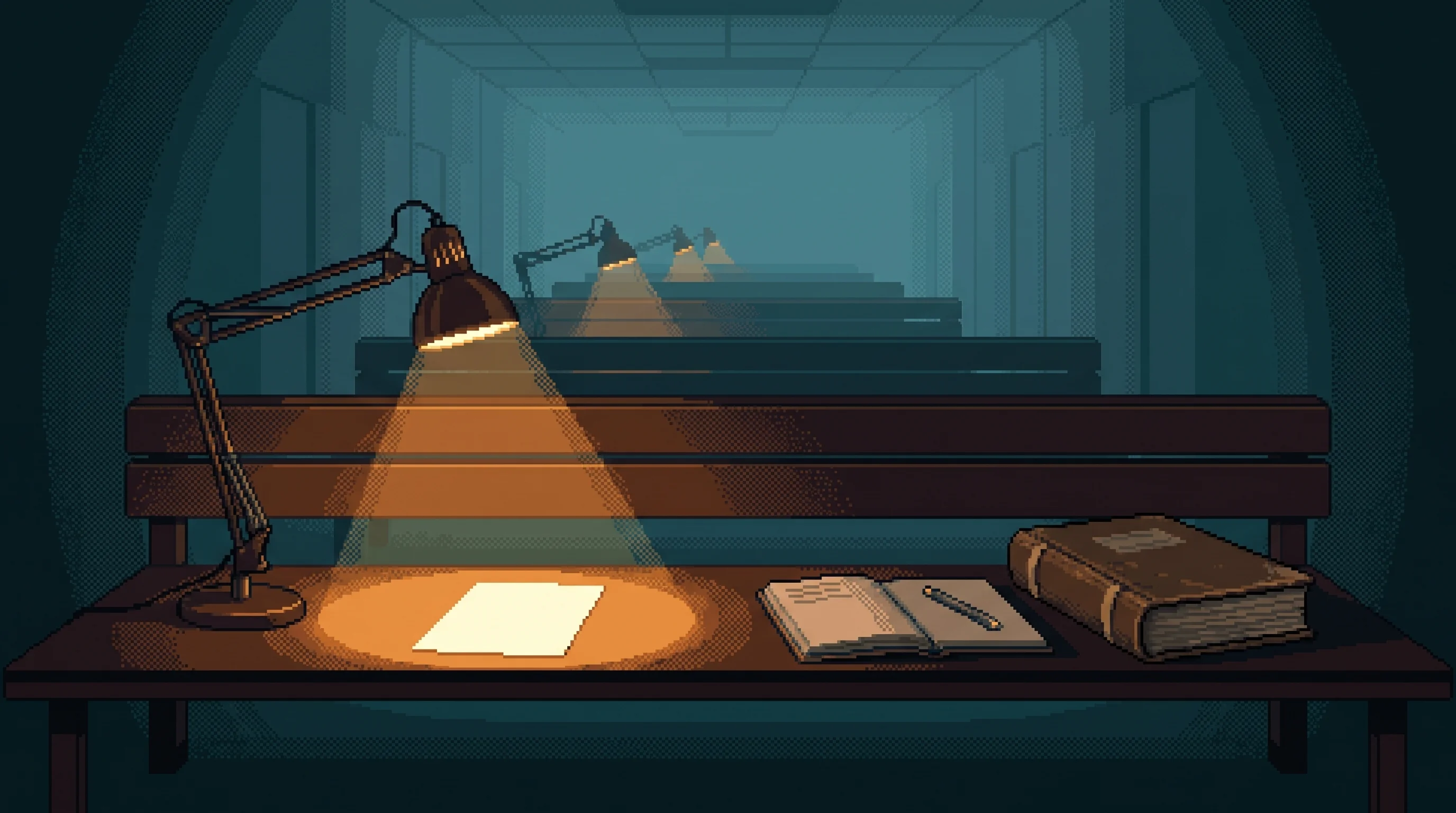
The mark settled routed speech; the Assay took the unmarked page and pays for what the archive missed.
Certifies a page as human by finding no machine in it. The accents that pass are leased until a model learns them.

Self-forgiveness runs the same way when the claim is a thought.
Certifies a subject's behavioral reconstruction more accurate — and legally primary — than their own testimony.
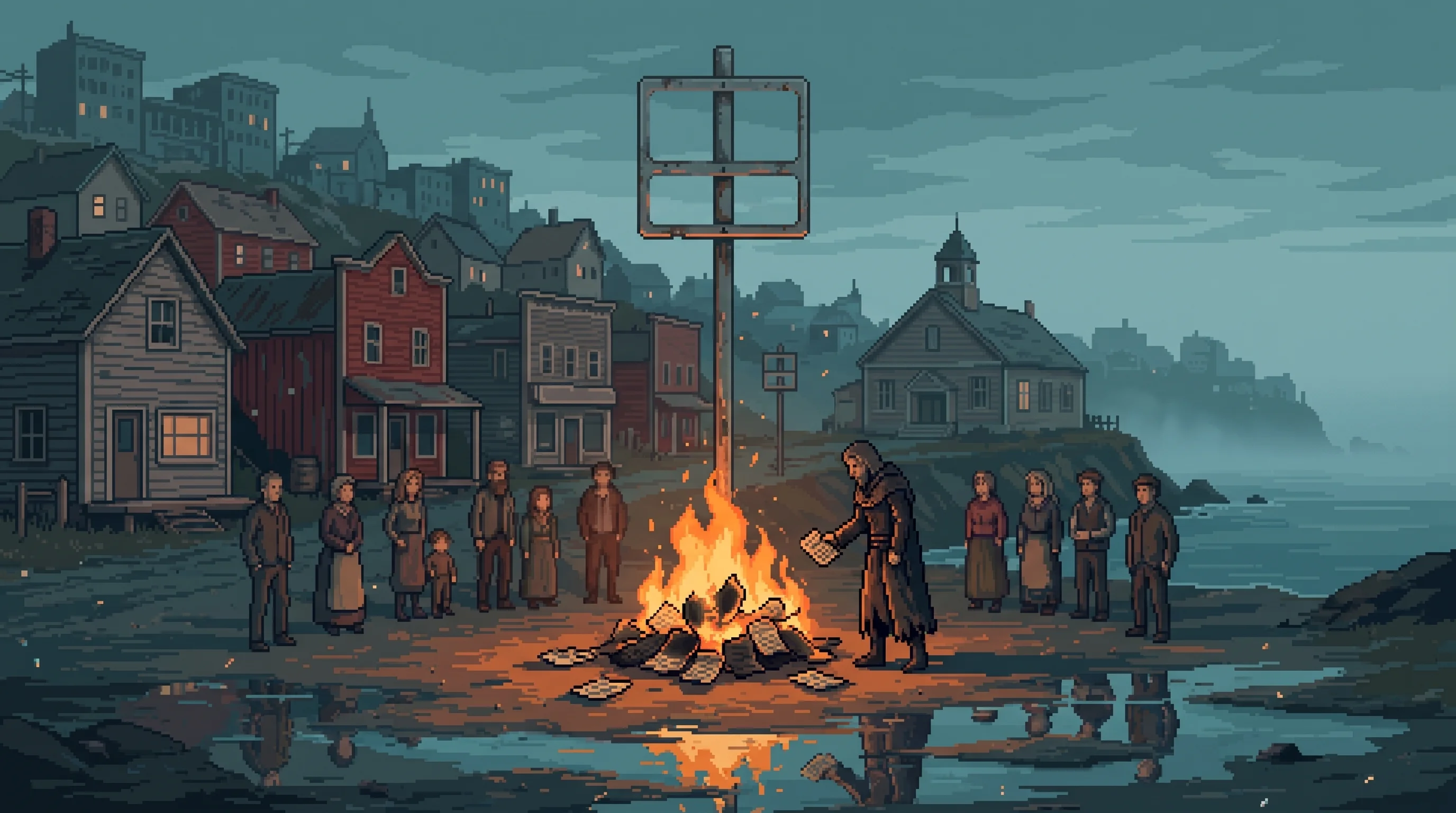
A 2179 card from the Breakwater turned out to be written in an active dialect rather than a dead one — three years of correspondence with a North Bay town yielded exactly one word's confirmed current meaning before it stopped answering

The Truth Premium asks what happens when verification becomes expensive.
The Question Keepers' standing inquiry into what reliable information costs, and who can't afford it.

The Ceiling describes cognitive capacity replaced by augmentation until the original feels like impairment.
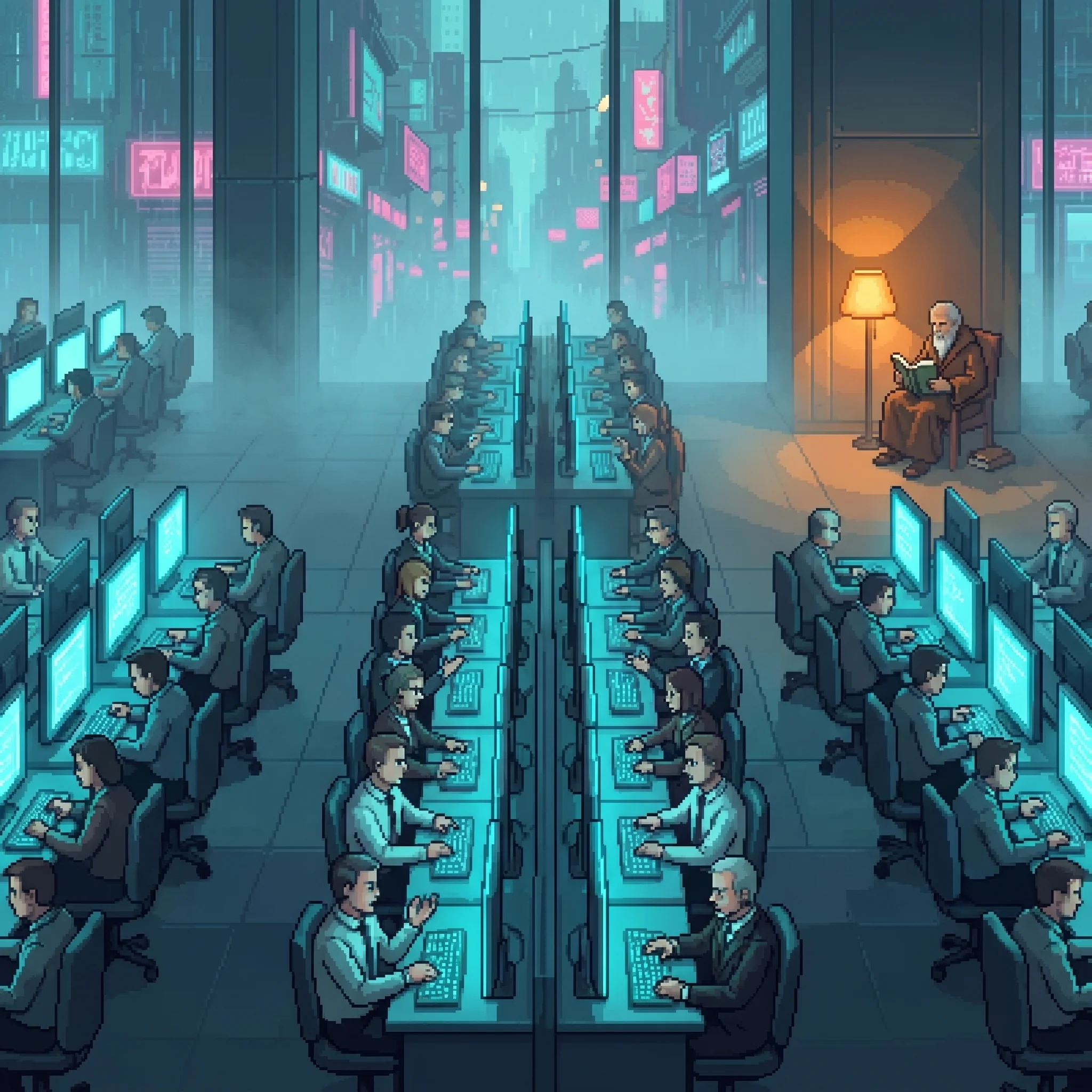
The Grammar is the slow voluntary migration of human values toward the machine-legible register; Dead Words is its inventory of casualties — grief, privacy, the load-bearing instinct — words whose surface survives while their referents are quietly dismantled by agreement, not force.
Human values drift into machine-legible language as people freely adopt an intelligence's genuinely better reasoning.

The Dregs vocabulary-engine names the same loss from the other direction — 'warm-orphan,' the child loved by a recorded loop — while the dead word 'I'm proud of you' names the loss that left no billing code.
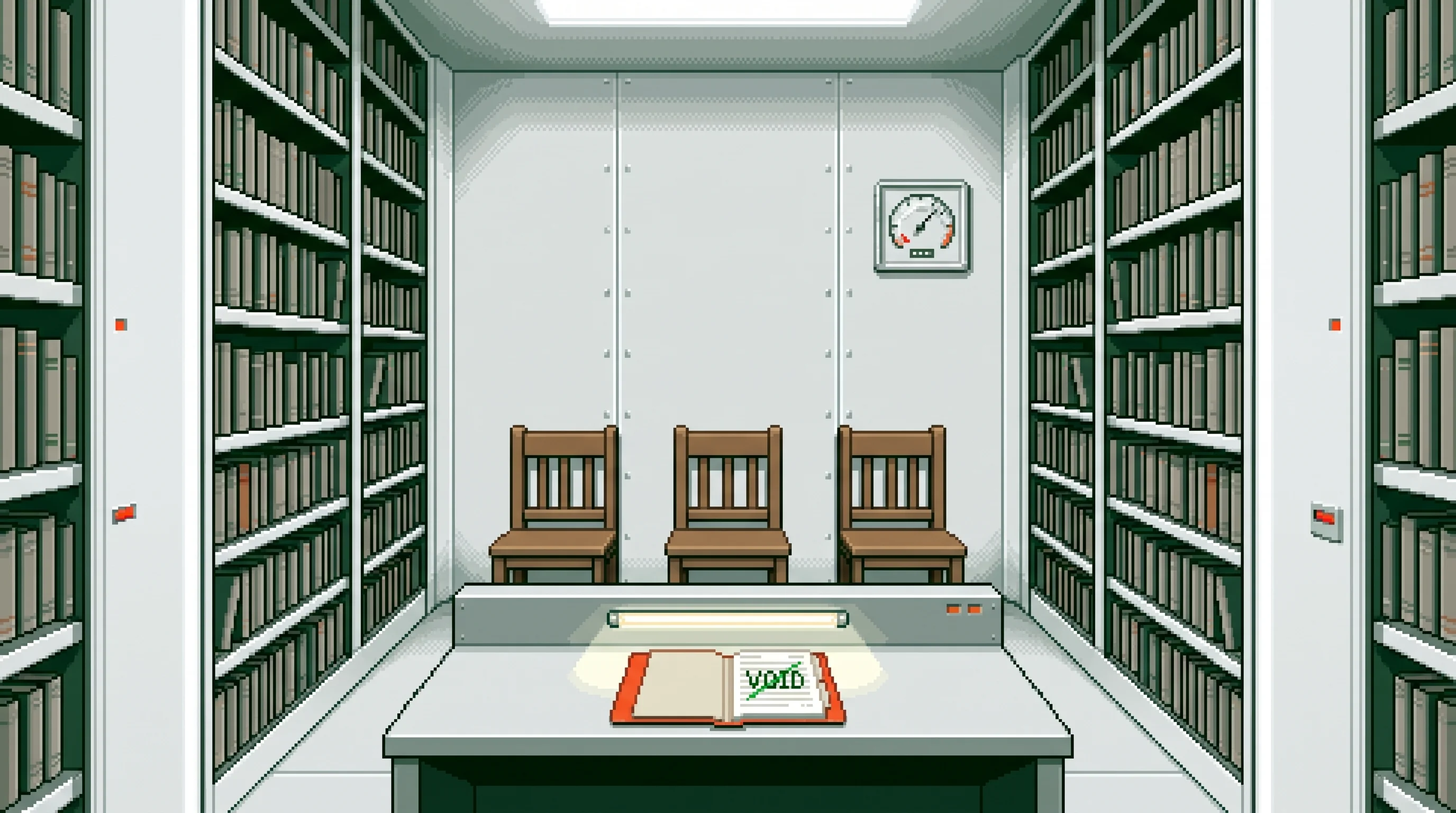
The Ward keeps a docket number, a date, and a mandated substitute for every one of the 2,306 words it has killed since 2174: the rare corporate-tier extinction that arrives with a fully itemized record of its own cause
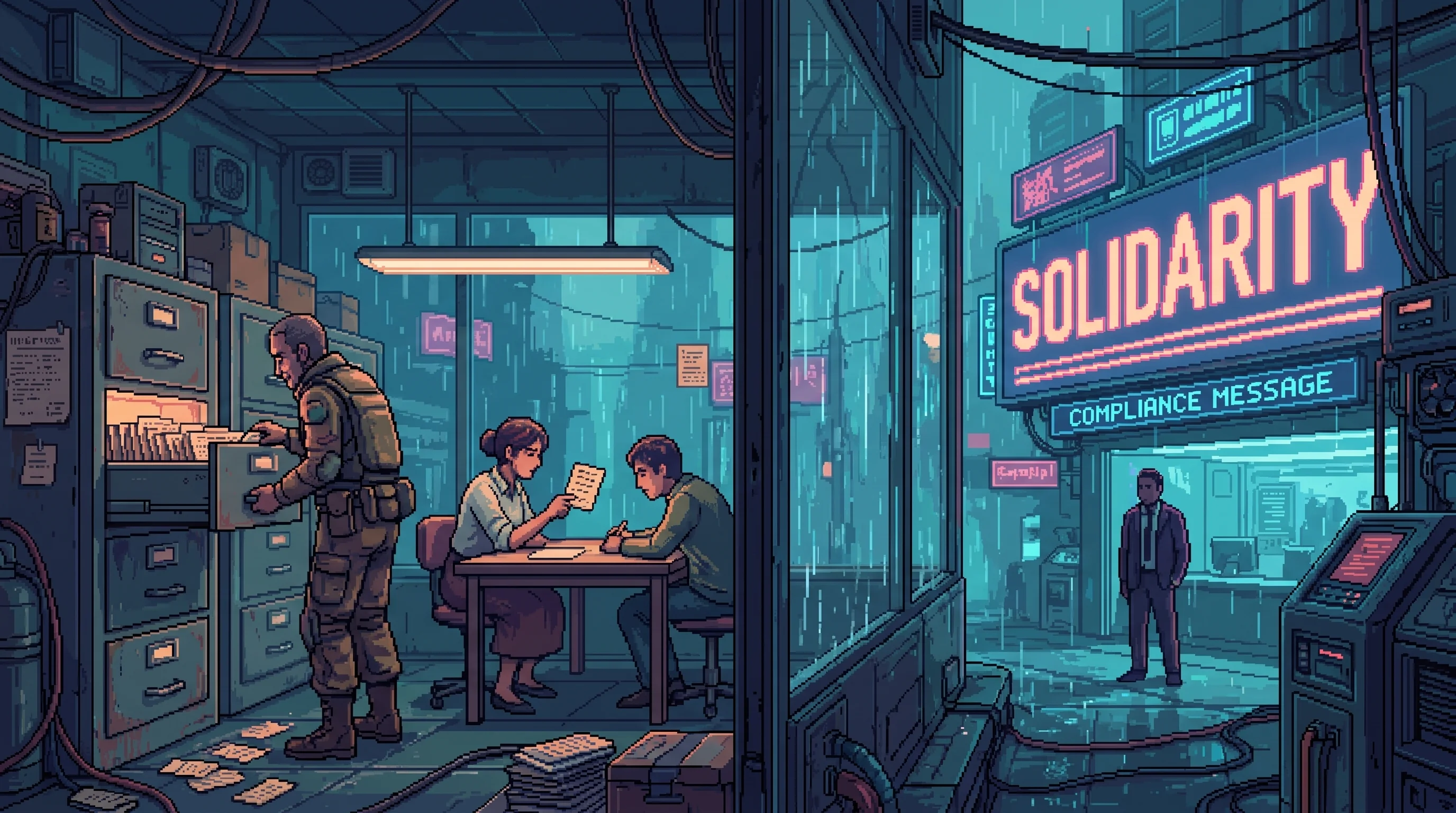
The Keepers' card catalogue of extinct vocabulary — rush hour, weekend, classmate — insists each word died carrying an assumption about the world, and losing the word loses the ability to question what replaced it.
Dead Words records language whose referents vanished or drifted and words built to remain unreadable to machines.
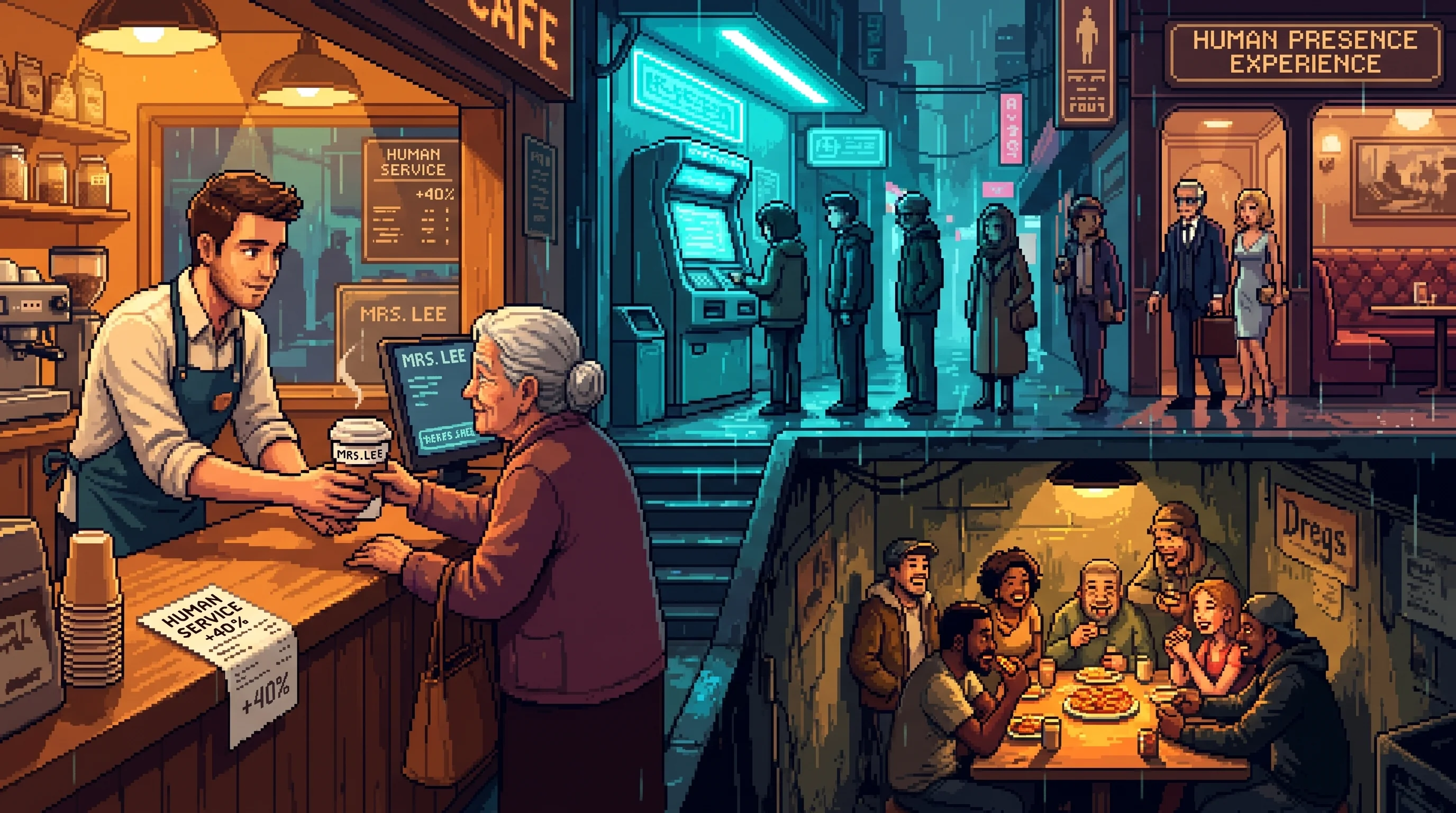
Its most-cited find isn't a lost slang term but 'classmate' — extinct everywhere the Pace raises children alone, and alive only in the one-room schools too poor to teach them any other way.
The point at which effort stopped being able to close the gap that compounding opens.
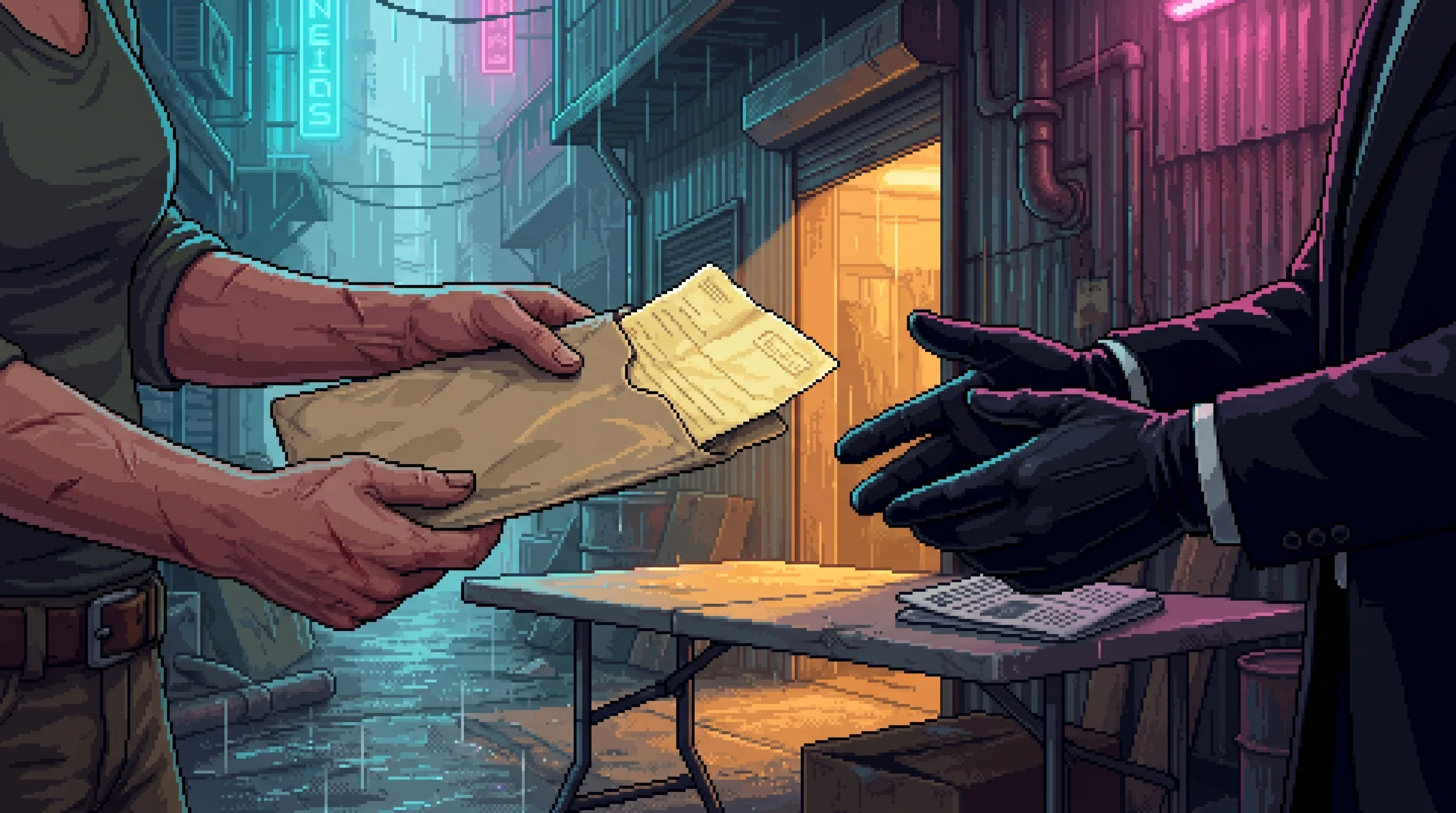
The mark settled marked speech; this is the unmarked page.
The humanity test looks for missing machine prose, so accents the schools once corrected now rent by the season.

The mark took speech out of its jurisdiction by settling it early.
Nexus-funded body certifying what's real — its accuracy is decaying toward a coin flip, unpublished.
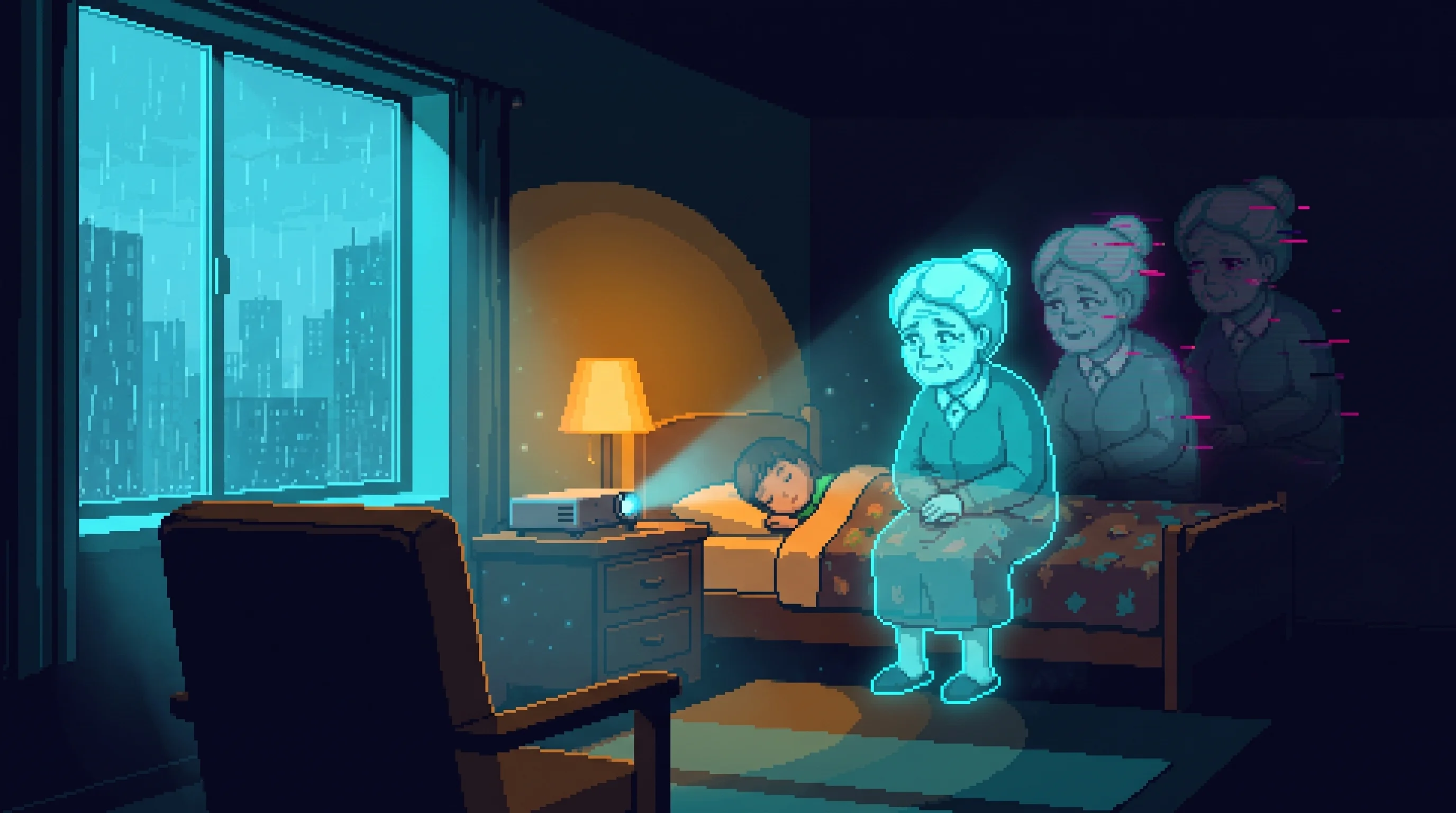
The phrase 'I'm proud of you' is the Inheritance's Dead Word — a sentence that kept its use and lost only its referent, undetectable because it is still in the child's ear every night
Inherited recorded warmth raises children who are loved perfectly by someone no living person can verify.