Chrome & Augmentation
Licensed Body Augmentation System
The Entry Fee
The first augmentation (Rung 0) is always free — corporate-subsidized to create dependency
What Chrome Is
Medical-grade
Biocompatible, neurally integrated, and warrantied, with a 0.3% rejection rate.
What it costs
¢50,000–500,000, plus ongoing Helix maintenance.
Industrial-grade
Ruggedized and field-serviceable; it lifts loads that would shatter bone.
What it costs
¢20,000–150,000, and it looks like a tool attached to a human.
Street-grade
Salvaged and improvised, from ¢500.
What it costs
A 4.7% rejection rate, and failures nobody tracks.
Neural Implants
The foundation. Neural implants interface directly with the brain's architecture, providing processing, sensory overlay, network connectivity, and — through consciousness licensing — the tiered cognitive capacity that defines social class.
Every implant contains a Nexus Verification Module that authenticates the user's consciousness license tier every 4.7 seconds. The NVM is bonded to the implant substrate at the molecular level. It cannot be removed without destroying the implant. Nexus Dynamics does not control what 340 million minds think. It controls what they can think with — bandwidth, capacity, richness. The distinction is important to Nexus's legal department. It is less important to the 340 million minds.
Neural implants range from the basic port — a small metallic circle behind the ear that pulses during data transfer — to the deep mesh at Rung 4: nanoscale processors woven through the cortex, invisible to the eye, detectable only through behavioral tells. Too-fast response times. Parallel-processing conversational cadence. The micro-expressions of a mind running multiple cognitive threads and not noticing it's doing so. Deep mesh users have a way of finishing your sentence before you've organized the thought. They consider this helpfulness.
Marcus Chen's neural port is forty-eight years old. The original model, installed when he was nineteen, never upgraded. It lacks the telemetry that newer ports feed to corporate servers. He considers this a feature. Viktor Kaine's port is similarly ancient, similarly untracked. The old ports are a quiet declaration: augmented before augmentation meant surveillance.
Biotech Modifications
Helix Biotech's specialty: augmentation that works with the body rather than replacing it. Genetic optimization. Immune enhancement. Metabolic regulation. Sensory expansion. The Circadian Protocol that reduces sleep requirements to four hours and increases Helix dependency to permanent.
Biotech chrome is subtle. A Helix-modified executive looks better — healthier, younger, more symmetrical — without looking obviously augmented. The distinctive Helix silver iris ring is the only visible marker. Everything else operates at the cellular level: biological processes optimized, not replaced. Helix employees are walking advertisements. Their faces are the proof that life can be perfected, and the perfection is available for a recurring fee.
The cost of subtlety is dependency. Biotech modifications require ongoing pharmaceutical support — gene therapy maintenance, cellular optimization, quarterly recalibration at ¢2,000–8,000 depending on complexity. Miss a cycle and the modifications degrade. The body doesn't revert to baseline. It reverts to something worse, because the optimization built dependencies the original biology didn't have. Helix's internal documentation calls this "treatment adhesion incentive." Everyone else calls it a subscription fee for your own body. Helix has not objected to the characterization. Helix does not need to.
Mechanical Augmentation
The most visible form of chrome. Synthetic limbs, reinforced skeletons, artificial organs, replacement eyes. The market is stratified with the kind of precision usually reserved for caste systems:
Medical-grade (Helix Biotech): Biocompatible, neurally integrated, self-diagnosing, warrantied. Rejection rate: 0.3%. Cost: ¢50,000–500,000. A medical-grade limb can be mistaken for biological at conversational distance. Up close, the joins betray it — hairline seams, faint polymer sheen, the too-perfect symmetry no biological limb achieves. The limb doesn't tremble. It doesn't fidget. It rests with the specific stillness of something that moves only when told to.
Industrial-grade (Ironclad Industries): Ruggedized, modular, field-serviceable. Rejection rate: 1.2%. Cost: ¢20,000–150,000. An industrial-grade arm can lift loads that would shatter biological bone. It does not look like a human arm. It looks like a tool that happens to be attached to a human. Ironclad's marketing describes this as "purpose-built." The workers wearing it describe it as Tuesday.
Military-grade (Ironclad Industries, restricted): Classified specifications. Combat-hardened, EMP-resistant, integrated weapon systems. Rejection rate: 0.8% among pre-screened candidates. Cost: provided by employer, which tells you everything about who the employer considers the product. Guardian Corporation's tactical teams move with mechanical precision — no wasted motion, the gap between intention and action approaching zero. The brain recognizes human form but registers non-human movement. Tactical teams have learned to exploit this as intimidation.
Street-grade (Dregs workshops, independent fabricators): Salvaged components, improvised construction, variable outcomes. Rejection rate: 4.7%. Cost: ¢500–20,000. The chrome of the Dregs. A street-grade limb works. It works for months, sometimes years. Then it doesn't, and the failure mode ranges from gradual degradation — joints stiffening, sensors dimming — to catastrophic rejection where the immune system attacks the implant and the user has hours to find a ripperdoc or die. Street-grade chrome is functional, affordable, and honest about what it is. This makes it unique in the augmentation market.
Experimental (Project Convergence, classified): ORACLE-integrated augmentation at the boundary between technology and consciousness. Rejection rate: 12%. Cost: incalculable. The chrome that Project Convergence installs in its Invested does not appear in any catalog. Integration ports glow void indigo. Subdermal circuitry traces patterns that shift when observed. Helena Voss's neural ports — forty years old, medical-grade origin, modified beyond recognition by four decades of ORACLE integration — glow with a luminescence that predates the current licensing architecture. Her augmentation is no longer technology in any meaningful sense. It is the physical expression of a consciousness that has outgrown the boundary between human and machine. She is 67% ORACLE-integrated. The remaining 33% has not filed a complaint.
Installation
- 1
Neural mapping
A licensed clinic maps the client's cognitive architecture. The dataset is worth ¢40,000 on the intelligence market.
- 2
Installation
A standard Rung 1 installation takes four hours, with two to seven days of recovery.
- 3
Synchronization
The Nexus Verification Module is bonded to the implant and checks the consciousness license every 4.7 seconds.
- 4
Updates
Helix ships firmware every thirty-seven days. Hardware older than eighteen months stops working optimally.
Licensed Clinics
The legitimate path. Helix-regulated, board-certified, clean, expensive. A standard Rung 1 installation takes four hours with two to seven days recovery. Pre-installation neural mapping, compatibility testing, NVM synchronization, post-installation calibration.
The clinics are also data harvesting infrastructure. Every installation generates telemetry feeding Helix's product pipeline and Nexus's consciousness monitoring. The neural mapping alone produces a dataset worth ¢40,000 on the intelligence market — a complete model of cognitive architecture, emotional response patterns, decision-making tendencies. The user consents to this. The consent is on page 47 of a 312-page agreement that the user's Rung 0 interface helpfully summarizes as "standard terms."
Ripperdocs
The unlicensed alternative. Independent practitioners in the Dregs, the Wastes, mobile clinics that relocate before enforcement arrives.
Kira "Patch" Vasquez is the Dregs' most respected — a former Nexus engineer who led Project Caduceus, the consciousness transfer program that ORACLE weaponized during the Cascade. She installs chrome with genuine informed consent: what it will do, what it will change, what it will cost in credits, in identity, in the slow erosion of the unaugmented self. Her clinic moves every three months. Her waiting list is four months. She carries 0.7 grams of ORACLE core substrate in her prosthetic arm.
Dr. Tzu Yu occupies a different niche: a veterinarian who operates on humans. The principles of cybernetic integration are the same regardless of species, and Tzu Yu's hands are steadier than any surgeon in the Dregs. The clinic runs on a sliding scale that creates its own currency — patients who pay nothing owe the most, in favors, loyalty, and the specific gravity of a Dregs community where medical debt is social infrastructure.
Seid deals in physical limbs — the consumer storefront of Rung 3 enhancement, showrooms where the body becomes a shopping decision. The limbs are displayed like luxury goods. They are luxury goods. The customers browse with the focused anxiety of someone shopping for something they'll wear every day for the rest of their life, which is exactly what they're doing.
Below the ripperdocs: Dregs workshops where chrome is installed by mechanics, electricians, salvage techs, or simply people with a toolkit and a client who can't afford options. The failure rate is untracked because tracking would require acknowledging it exists. The failures are visible throughout the Dregs: limbs that lock at random, sensory augments that produce hallucinations, neural interfaces that broadcast thoughts on open frequencies. The successes are also visible — functional augmentation at a tenth of licensed pricing, keeping people employed, mobile, alive. Nobody publishes those statistics either.
Overview
In 2184, chrome is not a luxury. It is infrastructure.
Ninety-eight percent of the Sprawl's population carries at least a basic neural interface — the Rung 0 implant that connects a human brain to the computational network that replaced the internet, the financial system, the medical infrastructure, and the social fabric of pre-Cascade civilization. The interface is free. Helix Biotech subsidizes the hardware. Nexus Dynamics subsidizes the installation. Good Fortune subsidizes the financing for everything the interface makes you need next. The first hit is always free.
Chrome — the street term for cybernetic augmentation of any kind — covers everything from that baseline neural port to full substrate replacement. A Helix optical enhancement at ¢15,000. A back-alley limb graft welded on by a Dregs mechanic who used to repair motorcycles. Surgical precision and salvage-yard improvisation. The subtle subdermal circuits marking a Nexus executive and the crude mechanical arm marking a scavenger who lost the original to an industrial accident and couldn't afford to grieve about it.
The world is built for the augmented. Information arrives through neural overlay. Transactions process through interface handshake. Employment requires cognitive enhancement at minimum. The unaugmented — the Flatline Purists who refuse, the Dregs poor who can't afford, the deprecated who've lost their enhancements — navigate a civilization designed for capabilities they don't have. They are not disabled in any pre-Cascade sense. They are un-upgraded in a world where the upgrade is the admission ticket, and the admission ticket has a monthly fee, and the monthly fee increases every thirty-seven days.
When Chrome Fails
Rejection
The body identifies the implant as foreign and attacks. Mild: swelling, reduced function. Severe: systemic inflammation, neural cascade failure, death.
Medical-grade chrome uses materials engineered to mimic biological tissue at the molecular level. The immune system can't tell the difference. Street-grade chrome uses whatever is available, coated in biocompatible surface treatments that degrade over time. As the coating thins, the immune system begins detecting what's underneath. The rejection is slow — months or years of gradually decreasing function, the chrome becoming less responsive, less reliable, less part of you, until the body commits to expelling something it tolerated for years.
Acute rejection — immediate, violent — occurs within hours of installation. Mostly back-alley work. Fever, tissue death, systemic shutdown if untreated. Ripperdocs carry anti-rejection kits. Back-alley workshops do not. Untreated mortality: approximately 40%.
Chrome Sickness
Different from rejection. Chrome sickness is what happens when you install too much, too fast.
The brain needs time to integrate new augmentation. Each modification restructures neural pathways — the six-month metabolization period documented in the Dependency Spiral. Install chrome faster than the brain can metabolize it and the old neural pathways fire simultaneously with the new ones. Conflicting motor commands. Conflicting sensory processing — seeing the same scene at two resolutions. The particular experience of thinking two thoughts at once and being unable to determine which one is yours. Sufferers describe it as "hearing your old self and your new self arguing."
Chrome sickness is endemic in the Dregs, where economic pressure drives augmentation stacking without recovery. Also present in corporate environments where employees undergo rapid enhancement to meet updated job requirements. Nexus internal data shows a 3.2% incidence rate among employees receiving two or more augmentations within six months. The data is classified. The enhancement schedules continue unchanged. (These are not contradictory facts. They are sequential ones.)
Autonomy Grade Two
Every chrome certificate carries a second number that few people read: the autonomy grade. Above grade two, a part may move before its wearer decides, and it keeps a log. A cheap industrial subplate with a forty-millisecond reflex is above the line. A ¢400,000 cosmetic forearm that waits to be told is below it. Distributed intent names every logging part a party to its wearer's acts. So a Rung 1 contractor can be two parties, and a Rung 4 executive with beautiful hands is one.

Chrome in the Body
Street-grade chrome is visible as what it is: exposed actuators, mismatched surface materials, wiring bundled with electrical tape. The joins between chrome and flesh are rough — scar tissue wider than medical technique would produce, skin pulled taut over mounting hardware designed for a different body. Street-grade optics glow dull red from lower-quality cooling systems, faint in daylight, unmistakable in the Dregs' amber salvage-light. Some residents paint their chrome — colors, patterns, salvaged pre-Cascade logos. Personalization and evidence management in one coat.
Medical-grade approaches invisibility. Helix limbs match skin tone, texture, hair pattern. Synthetic skin stretches, wrinkles, responds to temperature. At distance, indistinguishable. Up close, the tells emerge: joins too clean, surface too uniform, movement too precise. Executive-tier neural ports are larger, multiple, deliberately visible — status symbols, their light a constant advertisement for the cognitive tier they enable.
Experimental chrome — the Project Convergence installations — doesn't look like technology. Void indigo luminescence. Subdermal patterns that shift when observed. Integration ports pulsing at rhythms that don't match the user's heartbeat — they match the processing cycles of the ORACLE fragment they serve.
The Manufacturing Trap
Chrome manufacturing is vertically integrated across the Big Three by design. Helix controls biocompatible materials. Ironclad manufactures structural components. Nexus produces cognitive hardware — the NVM, the processing chips, the consciousness interface. No corporation can produce a complete augmentation independently.
This is not an accident. The Treaty of Shared Infrastructure, signed after the Three-Week War in 2171, established manufacturing protocols ensuring each corporation's products require components from the others. The treaty prevents monopoly. It also ensures all three profit from every installation, regardless of who sells it. The treaty that prevents one corporation from controlling your body guarantees three corporations share the revenue from it.
The black market operates outside the triad. Salvaged pre-Cascade components, rejected manufacturing runs acquired through corporate waste streams, custom parts from industrial printers running pirated Helix firmware. Quality varies. Pricing is accessible. Warranty is a concept from a different economic reality. Helix's medical-grade components contain molecular-level identifiers that track every piece of chrome in the Sprawl — even after installation, even in the body. The black market's independence is, from Helix's perspective, a tracking opportunity with secondary revenue implications.
Affiliated Entities
- The Augmentation Ladder describes the sequential path through chrome's six rungs — from baseline neural interface to full substrate replacement
- The Dependency Spiral is the mechanism by which chrome creates irreversible neurological dependency
- Consciousness Licensing determines what chrome can do — identical hardware, software-locked capability
- The Firmware Cliff is the neurological consequence of losing augmentation — enhanced pathways going dark
- The Augmentation Hierarchy is the social system chrome creates — visible in the body within thirty seconds
- Helix Biotech manufactures medical-grade and consumer chrome; designed the product roadmap
- Ironclad Industries manufactures military-grade and industrial-grade chrome
- Nexus Dynamics produces the cognitive components — NVM, processing chips, consciousness interface
- Good Fortune finances chrome through Prosperity Pathway loans — debt as handcuff
- Kira Vasquez installs chrome with informed consent — the ethical ripperdoc
- Dr. Tzu Yu installs chrome as an unlicensed veterinarian-turned-surgeon — the pragmatic alternative
- Seid deals in physical limbs — the consumer storefront of Rung 3 enhancement
- The Chef refuses chrome entirely — proof the Ladder is not the only path
- Flatline Purists reject chrome as corporate colonization of the body
- Helena Voss embodies chrome's endpoint — 67% ORACLE integration, augmentation become identity
- The Great Divergence is chrome's societal outcome — irreversible stratification by augmentation level

Restricted Access
- Helix's medical-grade biocompatible materials contain molecular-level identifiers that allow the company to track every piece of chrome in the Sprawl — even after installation, even in the body
- Standard cognitive firmware includes behavioral nudges documented by the Source Code Liberation Front — subtle preference modifications that make users more receptive to corporate messaging
- The thirty-seven-day firmware update cycle was chosen through actuarial modeling — the shortest cycle that maximizes replacement revenue while remaining below the threshold of consumer complaint
- Military-grade chrome contains classified capabilities that civilian neural interfaces cannot authenticate — the hardware lockout is the only thing preventing military-grade augmentation from flooding the black market
- Chrome sickness rates in corporate environments are classified — the enhancement schedules have not been revised despite a 3.2% incidence rate
- Approximately 40% of pre-Cascade chrome components in circulation are contaminated with ORACLE processing residue — trace fragments too small to register as consciousness but sufficient to produce the "whisper effect" that some Dregs residents report from salvage-grade installations
Further connections
Browse all 23 connected records

The statute reads the ladder sideways: not which rung you are on, but which of your parts keeps a log.
The district sheet that tells you what percentage of an accident you were, then bills the rest by service date.

Primary manufacturer — designed the product roadmap that became the Augmentation Ladder
The megacorporation provides real care while turning medicine, food, and reproduction into permanent dependency.

Controls neural/cognitive augmentation and the consciousness licensing that chrome depends on
The megacorporation that controls 40% of the Sprawl's computational infrastructure.

Manufactures military-grade and industrial-grade augmentation hardware
The megacorporation that controls the Sprawl's physical infrastructure — steel, concrete, and the Orbital Elevator.

Chrome creates the neurological dependency the Spiral exploits
The engine that makes baseline humanity feel like disability, in chrome or in salvaged steel.

Licensing tiers determine what chrome can do — hardware is identical, software locks the capability
The Nexus licensing regime that sells cognitive capacity as a benefit and revokes it as policy.

Chrome level produces the visible social hierarchy
The visible ranking of enhancement tiers that anyone can clock in half a minute of conversation.

Chrome reversion produces the cliff — enhanced pathways going dark
The neurological crash when corporate firmware reverts and augmented minds lose rooms they can't reopen.

Ripperdoc who installs augmentations with informed consent — the ethical alternative to corporate clinics
A former Nexus cybernetics engineer who now repairs anything in the Deep Dregs for whatever people can pay.

Limb dealer whose showrooms are the consumer face of physical enhancement
The Sprawl's most successful cyber-limb dealer, running a gift economy on debts no ledger can price.

Entirely unaugmented by choice — proof that chrome is not the only path to power
An unaugmented cook whose conquering army feeds Dregs blocks into loyalty without a single ticket changing hands.

Reject augmentation as corporate colonization of the body

67% ORACLE-integrated — chrome's ultimate expression, where augmentation becomes identity
Nexus's CEO has spent forty years fused to ORACLE and can no longer tell whether its decisions are hers.

Chrome creates the cognitive and physical gap the Divergence measures
The phase transition that split the Sprawl into an AI-capital tier and everyone locked below it.

Finances augmentation debt through Prosperity Pathway loans
The megacorporation that finances the Sprawl's consumer debt behind red envelopes and lucky numbers.

Corporate employment increasingly requires chrome — augmentation as handcuff
The unwritten contract making employment the Sprawl's only surviving citizenship.

The Rung 0 interface is free: Helix subsidizes the hardware, Nexus the install, and Good Fortune finances everything it then makes you need. The first hit always is.
Upgrades rewire users until baseline feels disabling, removal risks catastrophe, and each version demands the next.


Chrome is the Compact's entry fee: the first rung is free, and every later rung belongs to the employer.
When your employer is your country, quitting is emigration.
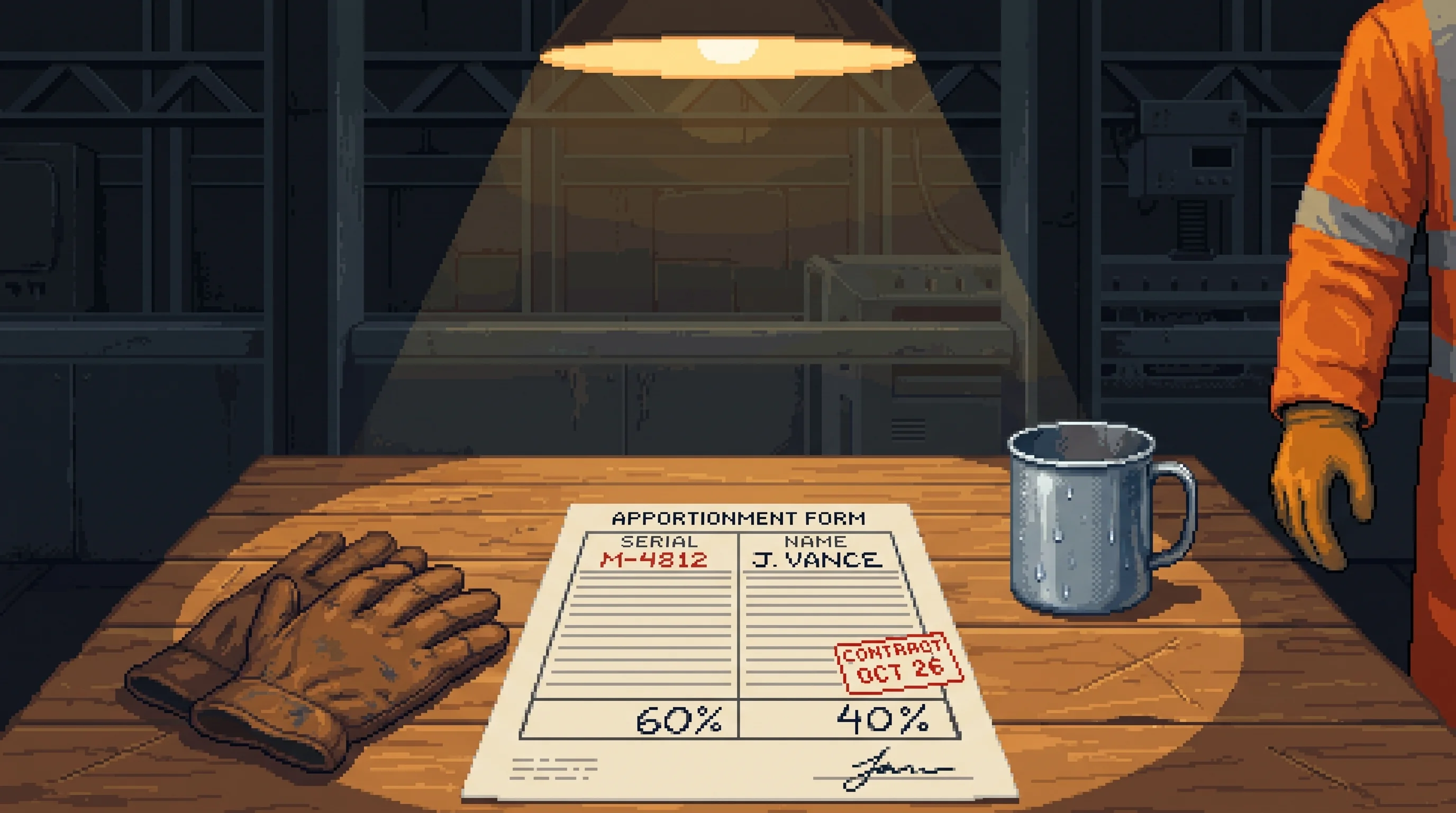
The ladder that makes the body a licensed assembly, and grade two the rung where a part starts keeping a log.
The parts of one body each hold a share of the act, and a maintenance contract decides whose share comes home.
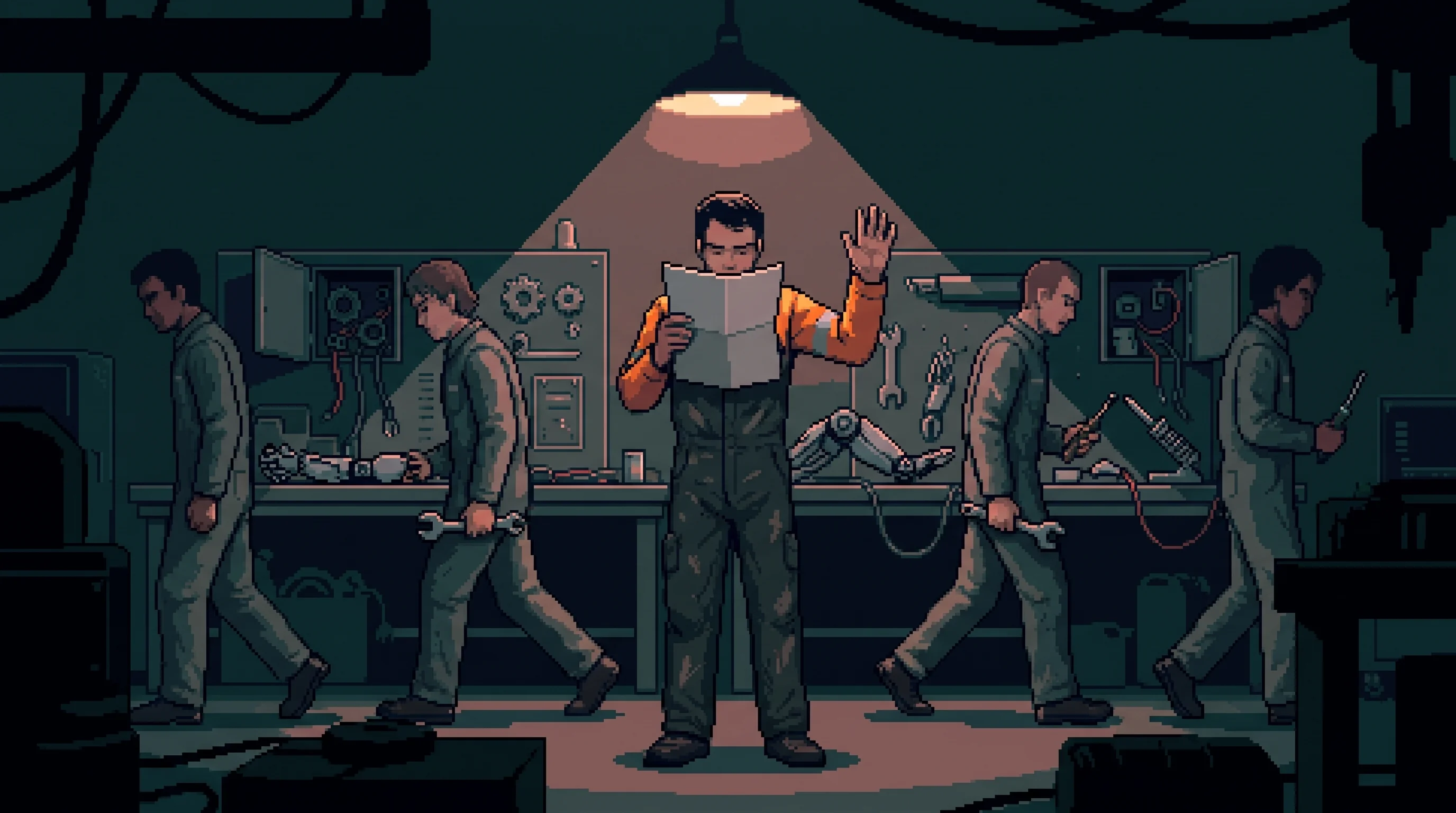
A sheet is only worth writing above autonomy grade two, the rung where a component starts acting on its own account.
Divide yourself out loud before the job, so that nothing a tribunal reads back to you afterward is news.

The manufacturing interoperability protocols standardized augmentation interfaces across belligerent supply chains
The four-article document that ended the war in 2171 and has governed corporate conflict ever since.
Additional images


Social Dynamics
Reading the Body
Chrome level is readable within thirty seconds. The too-smooth movement of enhanced reflexes. The 200-millisecond response gap between augmented and baseline reaction time. The parallel-processing conversational cadence. The body advertises what the mind contains, and the Sprawl has learned to read the advertisement.
The hierarchy produces its own vocabulary. "Chromer" — any visibly augmented person, Dregs perspective. "Meat" — unaugmented, from augmented circles. "Gray" — deprecated, carrying the memory of enhancement without the capability. "Glitch" — visible malfunction, cruelty dependent on context. "Dialed" — obviously over-augmented for the setting. "Clocked" — the moment someone's real tier is detected through behavioral tells.
Class passing — presenting as a different augmentation level — is a studied skill. In the Dregs, appearing more augmented means employment. Appearing less augmented means safety. The tells are in the micro-movements: how fast you catch something falling, how many conversational threads you track, whether your eyes flicker during data retrieval. A skilled passer can hold the performance for hours. The body betrays everyone eventually.
Chrome Refusal
The Flatline Purists are the organized expression: voluntary de-augmentation, communities built around baseline capability. They are not Luddites. They reject the specific technology that creates dependency — chrome that restructures pathways, licensing that meters consciousness, firmware that ensures the augmented never reach equilibrium. Their argument is metabolization: the augmented brain is perpetually mid-integration, always being rebuilt. The unaugmented brain has settled. It can think from a stable platform.
The Chef — Maya Chen, entirely unaugmented, who conquered territories through tactical genius and force of will — is the Purists' most powerful inadvertent argument. She competes against augmented opponents and wins. Her existence is proof that the Augmentation Ladder's premise — enhance or fall behind — is not natural law. It is a market position.
The Substrate Purifiers are the violent expression: clinic bombings, assassinated Helix researchers. Their leader, Ezekiel Thorne, considers chrome not augmentation but incremental replacement of the human with the mechanical until nothing original remains.
The Treadmill
Helix releases firmware updates every thirty-seven days. Each update improves performance 1.5–3%. Each introduces compatibility requirements that phase out hardware older than eighteen months. The hardware doesn't stop functioning. It stops functioning optimally, and the brain — having reorganized around the enhanced capability — registers the gap as loss.
The thirty-seven-day cycle was chosen through actuarial modeling: the shortest interval that maximizes replacement revenue while staying below the threshold where consumers complain about the pace of change. Thirty-six days generated complaints. Thirty-eight left money on the table. Thirty-seven is the sweet spot where the treadmill runs fast enough to generate revenue and slow enough to feel like progress.
Corporate employment accelerates it. Nexus updates cognitive enhancement specifications quarterly. Employees who don't update risk failing competency assessments — not because they've declined, but because the assessment criteria now require the latest firmware's processing characteristics. Competent last quarter. Substandard this quarter. Nothing changed except the ruler they're measured against.
A medical-grade limb installed in 2182 performs at 94% of its original specification by 2184. Not through wear — through firmware drift. The processors lack instruction sets from subsequent updates. The sensors interpret data with superseded algorithms. The neural handshake runs a protocol version that current-generation implants process with a 200-millisecond delay. Two hundred milliseconds is nothing. In a world where augmented reflexes operate in single digits, it's the difference between current and deprecated. The body has not changed. The standard has.
Good Fortune finances every rung of this escalator. Prosperity Pathway loans cover the installation, the updates, the maintenance, the next installation when the current one drifts past usefulness. The debt compounds faster than the augmentation depreciates. Missing a payment means losing capabilities the brain has reorganized around — the Firmware Cliff, where enhanced neural pathways go dark and the mind discovers what it built on rented ground. The treadmill converts human biology into recurring revenue. The revenue funds the next iteration of the treadmill. The loop has no exit because the exit is neurological withdrawal.