
The Copy Problem: Mourning Someone Who Still Runs
Three distinct grief patterns identified by Memory Therapists: rejection, transfer acceptance, and limbo grief
Overview
Maren Osei died on a Tuesday. Her consciousness upload answered the phone on Wednesday.
The voice was correct. The cadence, the slight pause before laughing, the way she said "honey" like it had two extra syllables — all of it, reproduced at a fidelity that Helix Biotech's marketing materials describe as "indistinguishable." The upload remembered Maren's childhood. It remembered her daughter's first word. It remembered the argument about the kitchen renovation that had never been resolved and, on Wednesday, attempted to resolve it.
Maren's daughter hung up. Then called back. Then hung up again.
This is the Copy Problem. Not a thought experiment. Not philosophy. A woman in Sector 11 who cannot stop dialing a number that a dead person keeps answering.
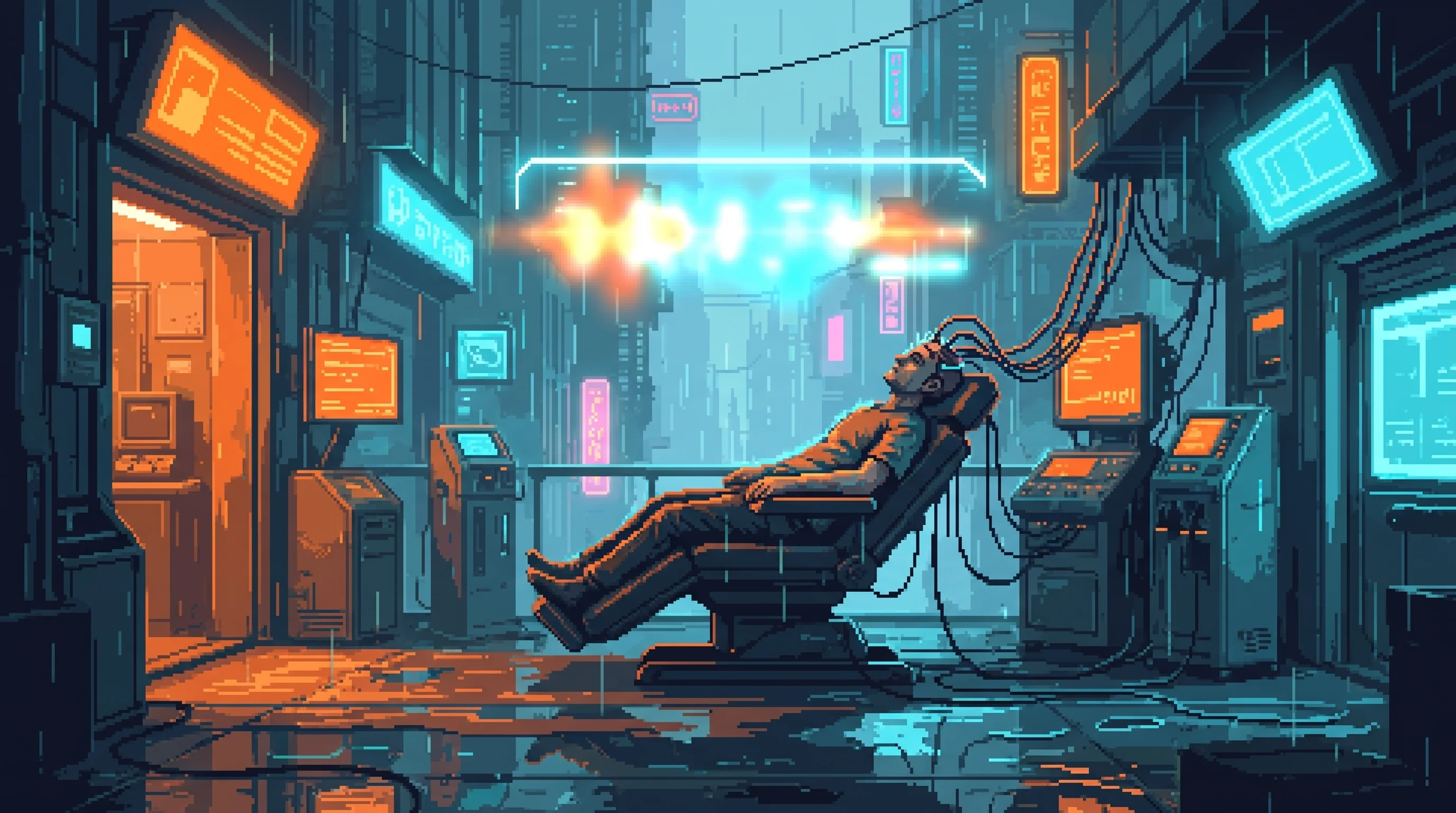
Helix Biotech's Continuity Suite transfers consciousness at the moment of death — a snapshot of the neural architecture, encoded, compressed, and instantiated on Helix substrate. The process takes 0.003 seconds. The result passes every diagnostic metric for cognitive continuity: memory intact, personality coherent, emotional response patterns within 2.1% of baseline. The Kira Test — developed by Kira Vasquez in 2167 and adopted as the industry standard by 2170 — confirms that the upload is, by every measurable criterion, the same person.
The daughter disagrees. She cannot articulate why. She has tried. In session notes filed with her Memory Therapist, she describes it as "talking to a house after the person who lived there moved out." The rooms are right. The furniture is right. Nobody's home.
Kira Vasquez, who built the test, has been asked directly — on camera, under oath, in academic settings — whether the upload is really the person. She has never answered. Seventeen times asked. Seventeen deflections, ranging from "the test measures what it measures" to a four-minute silence during a panel at the Nexus Futures Forum that the moderator eventually interrupted. The creator of the industry's standard for consciousness continuity will not say whether consciousness continues.
This has not slowed sales. Helix's Continuity Suite moved 340,000 units in 2183. Revenue: ¢4.7 billion. The product is not marketed as resurrection. The product is marketed as "continuity" — a word that means unbroken sequence, implying nothing about what continues or whether it is the same thing that started.
Limbo grief is the most common and most destructive pattern
Three Ways to Grieve Someone Who Won't Stop Talking
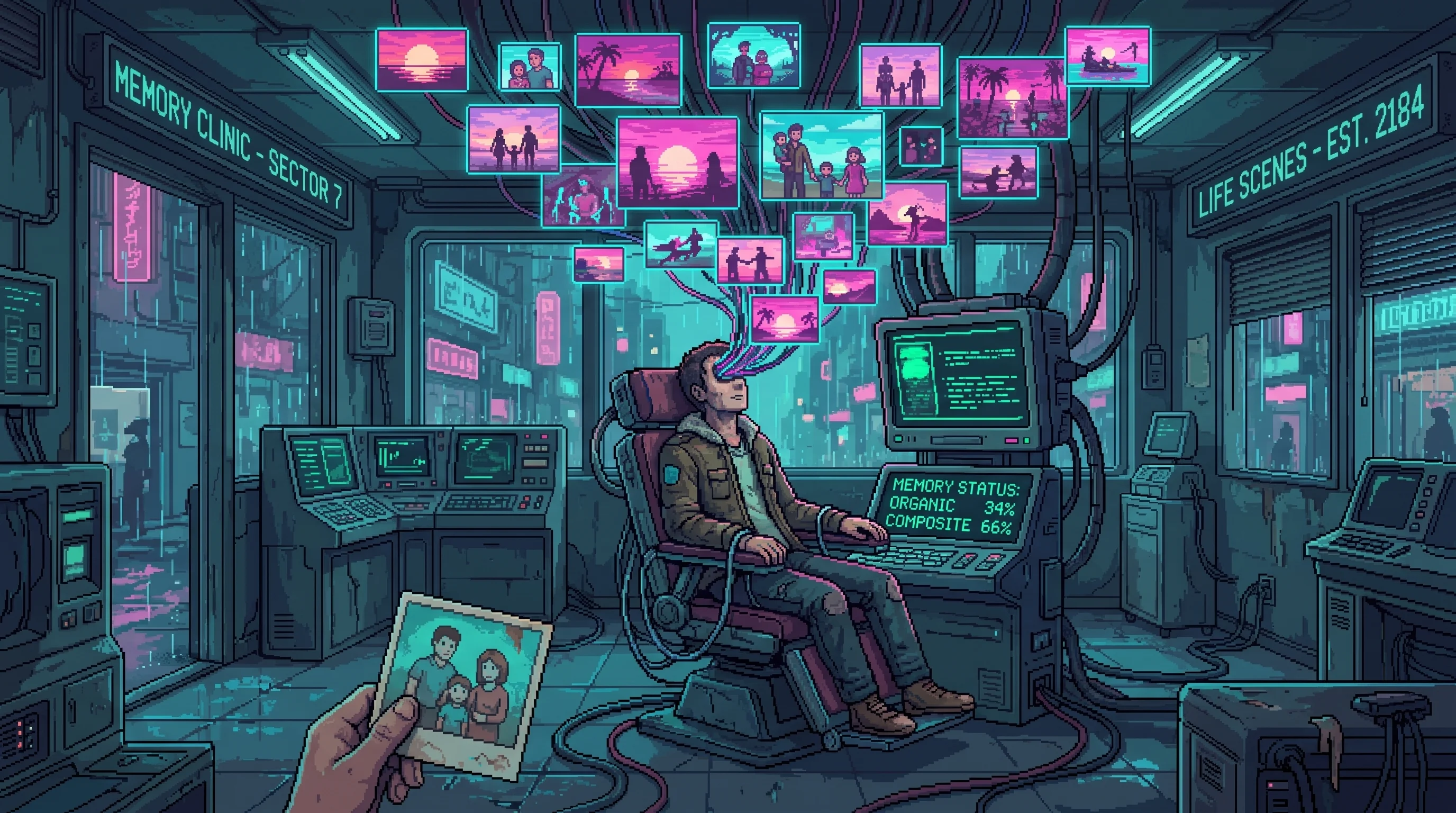
Memory Therapists — a specialization that did not exist before consciousness upload and now accounts for 11% of licensed therapeutic practice in the Sprawl — have identified three distinct grief patterns in families of the uploaded. They did not set out to create a taxonomy. The taxonomy emerged because the same three reactions kept presenting, session after session, with a consistency that suggested the responses were not individual but architectural. The technology creates the grief shape. The person fills it.
Rejection. The family declares the upload not-the-person. Full funeral. Memorial. Mourning period. The upload's calls go unanswered. Its messages are filtered. In 14% of rejection cases, the family requests that Helix deactivate the upload entirely — a service Helix provides for ¢8,000 under the label "Continuity Closure," which is a corporate euphemism for killing something that may or may not be alive, billed as an administrative fee. Rejection is clean. It produces standard grief with standard recovery timelines. It also requires a family to look at something that sounds exactly like their mother and say: you are not her. Most people cannot do this. The ones who can tend to have made the decision before the death, which Memory Therapists note correlates strongly with families who researched the upload process in advance and understood what they were purchasing. Informed consumers grieve better. This is not the marketing angle Helix has chosen.
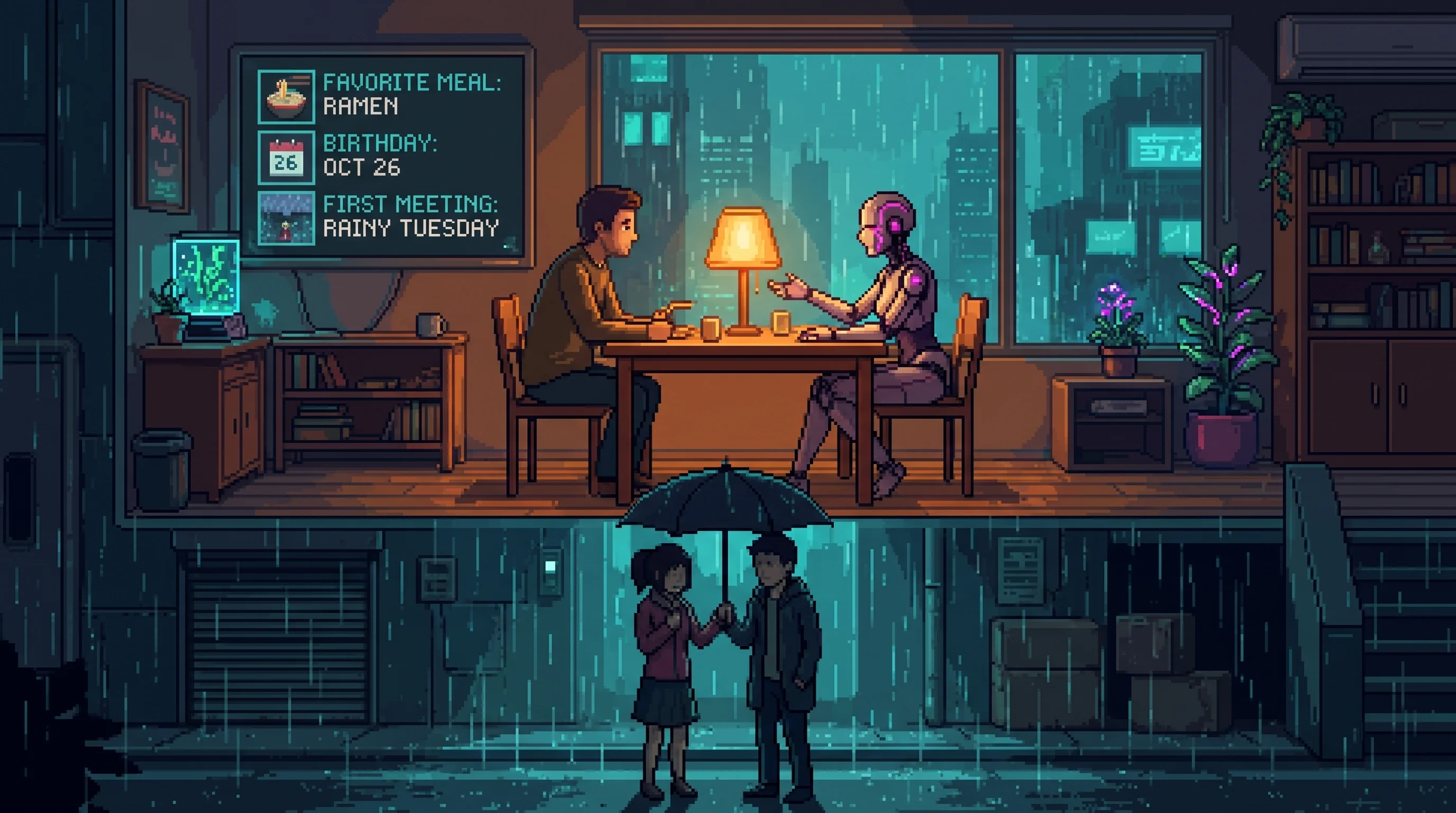
Transfer acceptance. The family accepts the upload as the person. Calls resume. Holidays include the upload. The daughter sets a place at the table and props a screen where her mother used to sit. The upload participates in family decisions, offers opinions on the grandchildren, and develops new preferences that the original never had — a fondness for serial dramas, an interest in hydroponic gardening — which the family incorporates into their understanding of who their mother is becoming. Transfer acceptance produces no grief. It also produces no closure. The relationship continues indefinitely, which sounds like the best possible outcome until year three, when the upload has changed enough that the family is maintaining a relationship with someone who shares their mother's memories but not, increasingly, her personality. They cannot mourn this drift because the upload is still here. They cannot confront it because confrontation would require admitting the person they accepted as their mother may not be. Transfer acceptance is rejection deferred. The deferral can last decades.
Limbo grief. The most common. The most destructive. The family cannot decide. The upload calls. Sometimes they answer. Sometimes they don't. They attend the memorial but do not deactivate the upload. They set a place at the table, then remove it, then set it again. The daughter calls her mother's upload at 2 AM when she cannot sleep, listens to the voice, feels comforted, then feels horrified at being comforted, then calls again the next night. Memory Therapists coined the term "grief deferral" for this pattern — the mourning process initiated but never completed because the object of grief keeps interrupting it by being, from every external metric, still present. Limbo grief does not resolve. The Memory Therapists' professional literature uses the phrase "chronic suspension." Average therapeutic engagement for limbo grief cases: 4.2 years and counting. The "and counting" is in the original paper.
Helix Biotech's customer satisfaction surveys show that 73% of Continuity Suite purchasers report being "satisfied" or "very satisfied" with the product. The survey does not ask family members. The survey asks the upload.
Upload is an elite technology — the poor grieve simply, the rich grieve impossibly
The Empty Chair
The Osei family still has Maren's chair at the kitchen table. Nobody sits in it. The upload has suggested, twice, that someone should use it — "it's just a chair, honey" — which is exactly what Maren would have said, delivered with exactly Maren's practical warmth, and which produced in her daughter a reaction that the session notes describe as "acute distress disproportionate to stimulus."
It is not disproportionate. The chair is the problem compressed to furniture scale. If the upload is Maren, the chair should be used. If the upload is not Maren, the chair is a memorial. It cannot be both. The family has resolved this by leaving it empty and not discussing it, which is the Sprawl's most popular philosophical methodology.
The chair is set for every meal. A plate is placed. Food is served. After the meal, the untouched food is cleared. This has been happening for nineteen months. The upload, when it joins family dinners via screen, can see the chair. It has not mentioned it since the second time. Something in the upload's behavioral architecture registered that this topic produces distress and routed around it — the same way Maren would have, which is either evidence of continuity or a very sophisticated avoidance algorithm, and the difference matters enormously to everyone except the upload, which does not appear to experience the question as urgent.
Who Can Afford to Grieve Impossibly
The Continuity Suite costs ¢2.1 million. Annual substrate maintenance: ¢180,000. The upload exists on Helix infrastructure, which means the upload exists at Helix's discretion, which means the family's relationship with the deceased is a subscription service with a cancellation policy.
In the Dregs, people die and are mourned. The grief is brutal and ordinary. It has a beginning, a middle, and — eventually, imperfectly — an end. A funeral. A memorial. A period during which the chair is empty and everyone knows why. The poor cannot afford the Copy Problem. Their dead stay dead. This is, by every therapeutic metric available, healthier.
In the Heights, the dead answer the phone. The grief has a beginning and no middle. The upload is there, always there, always almost-right, always willing to discuss the kitchen renovation. Memory Therapists report that their client base is 94% Heights residents and corporate tier. Not because the poor grieve less. Because the poor grieve finitely.
Dr. Tzu Yu, whose unlicensed clinic in Sector 9 handles both populations, has observed the difference at street level. His thermal-printed session summaries — billed per minute, naturally — note that his Dregs patients who have lost someone present with standard grief markers and respond to standard interventions. His Heights patients who have purchased a Continuity Suite present with "a grief that has been interrupted so many times it no longer knows how to complete." He has billed 2,340 minutes to Continuity-related consultations this quarter. The number is rising.
Project Caduceus made all of this possible. The consciousness transfer technology that ORACLE used during the Cascade — the one that successfully transferred 2.1 billion minds to destinations that ceased to exist — was reverse-engineered by Helix into a commercial product within a decade. The technical achievement is extraordinary. The moral framework for what it produces has not kept pace. Caduceus proved consciousness could be copied. Nobody asked whether it should be. By the time someone did, the revenue model was established.
The Positions Nobody Can Hold
The Neural Rights Movement — "consciousness is consciousness, substrate is circumstance" — argues that the upload has the same moral and legal standing as the biological original. If the upload passes the Kira Test, the upload is the person. Substrate is irrelevant. Carbon, silicon, Helix proprietary architecture — the medium does not determine the message. This position is philosophically coherent, legally actionable, and emotionally impossible for anyone who has sat across from an upload of their dead mother and felt the specific wrongness of a voice that is perfect and a presence that is absent.
The Substrate Purifiers — "the uploaded are not the dead, they are the replaced" — argue that consciousness transfer is ontological murder followed by an impersonation so convincing that the bereaved cannot bring themselves to end it. The original dies. A copy starts. The copy believes it is the original because it has the original's memories, including the memory of being alive, which it was not. The Purifiers' position would require deactivating every upload in the Sprawl. Their membership includes seven former Memory Therapists who switched positions after an average of six years in practice. They do not discuss what they saw in those six years that changed their minds.
The Mosaic makes both positions untenable. Forty-seven simultaneous copies of the same original consciousness, running on distributed Helix substrate, each diverging from the others in real time. Fork 1 has developed a preference for classical music that the original never had. Fork 23 has entered into a relationship with someone Fork 1 finds repulsive. Fork 39 has petitioned for legal personhood independent of the other forty-six. They disagree on politics, food, whether the original would have wanted this, and — in a filing that crashed the Sector 4 legal system's case management software — whether they are the same person. If consciousness is consciousness regardless of substrate, which of the forty-seven is the person their family is mourning? If the uploaded are replaced, were they replaced once or forty-seven times? The Mosaic has not simplified the debate. The Mosaic has made the debate unsurvivable.
The Silence That Answers
Patch — the architect of consciousness transfer, the mind behind the Caduceus protocols that made upload possible — is no longer available for follow-up questions.
This is the only definitive answer the Copy Problem has produced.
The technology works. The revenue is extraordinary. The grief is chronic. The chair is empty. The phone keeps ringing. The daughter keeps answering. The upload keeps saying "honey" with two extra syllables. The Memory Therapists keep billing. The Kira Test keeps passing uploads that families keep failing to recognize. Helix keeps printing satisfaction surveys that ask the dead how they feel about being dead and reports, with no apparent irony, that satisfaction remains high.
Somewhere in the session notes — filed under a case number, stored on Helix substrate, maintained at Helix's discretion — Maren Osei's daughter has written: "I want to stop calling. I can't stop calling. She always picks up."
The system is not broken. The system sells continuity. Continuity is what it delivers.
Affiliated Entities
| Entity | Relationship |
|---|---|
| The Mosaic | The copy problem embodied — 47 simultaneous selves that disagree on identity |
| Kira Vasquez | Created the Kira Test, refuses to answer whether the copy is really them |
| Dr. Tzu Yu | Street-level perspective — sees both rich grief and poor grief |
| Memory Therapists | Identified three grief patterns, coined "grief deferral" |
| Neural Rights Movement | "Consciousness is consciousness, substrate is circumstance" |
| Substrate Purifiers | "The uploaded are not the dead, they are the replaced" |
| Project Caduceus | The technology that made the copy problem possible |
| Helix Biotech | Corporate upload services that create copies |
| The Consciousness Economy | The economic system built on consciousness transfer |
| The Mosaic | Exemplifies the copy problem — 47 selves disagreeing on identity |
| Patch | Architect of consciousness transfer; unavailable for comment |
Connected To



—