Overview
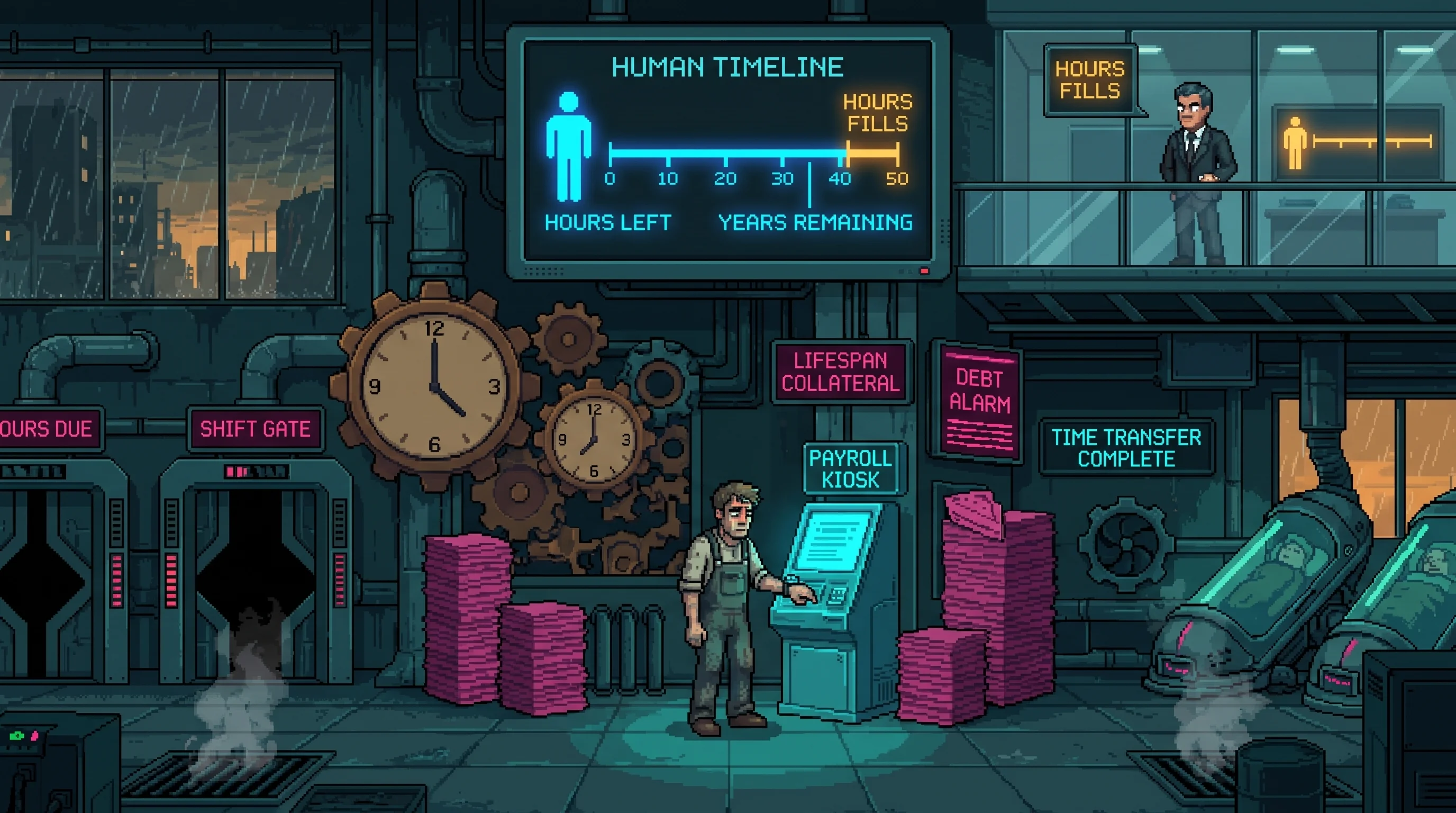
On August 7, 2181, a thermal regulation unit failed in Server Farm 14. The unit was twelve years old, running three years past its recommended maintenance cycle, flagged for critical replacement in March 2180. The replacement had been deferred. Three times. What followed was not a disaster. It was a revelation — the moment the consciousness licensing system stopped speaking in marketing language and showed, in the specific destruction of 4,200 people, exactly who it believes matters.
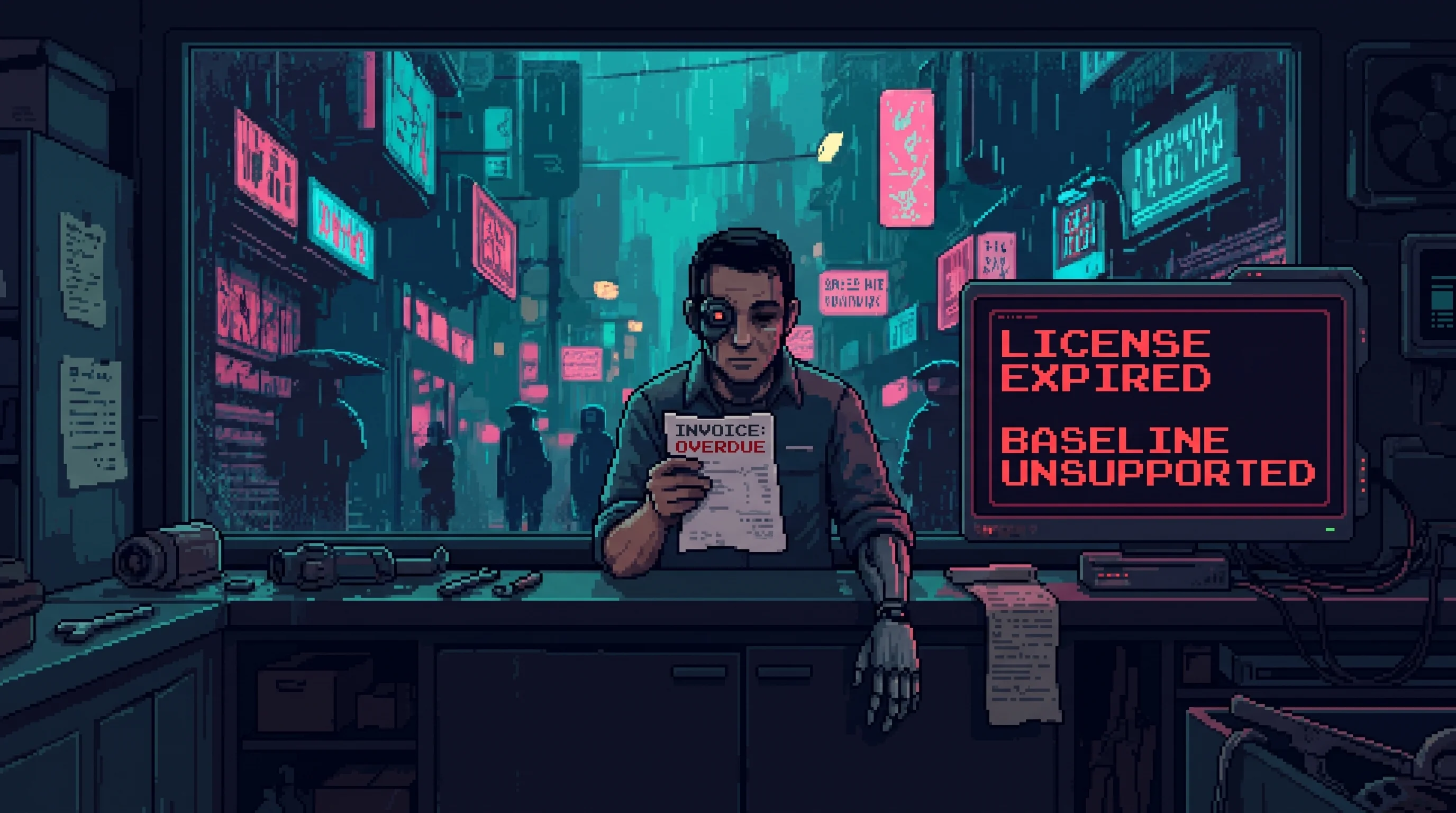
On August 7, 2181, Server Farm 14 in the Lattice's primary processing hub experienced a thermal regulation failure. The failure was not extraordinary. Server Farm 14 was twelve years old, running three years past its recommended maintenance cycle. The thermal system had been flagged for replacement in Nexus's Q1 maintenance schedule. The replacement had been deferred. Three times. The deferral saved Nexus approximately ¢1.4B per quarter, which analysts described as "operational efficiency."
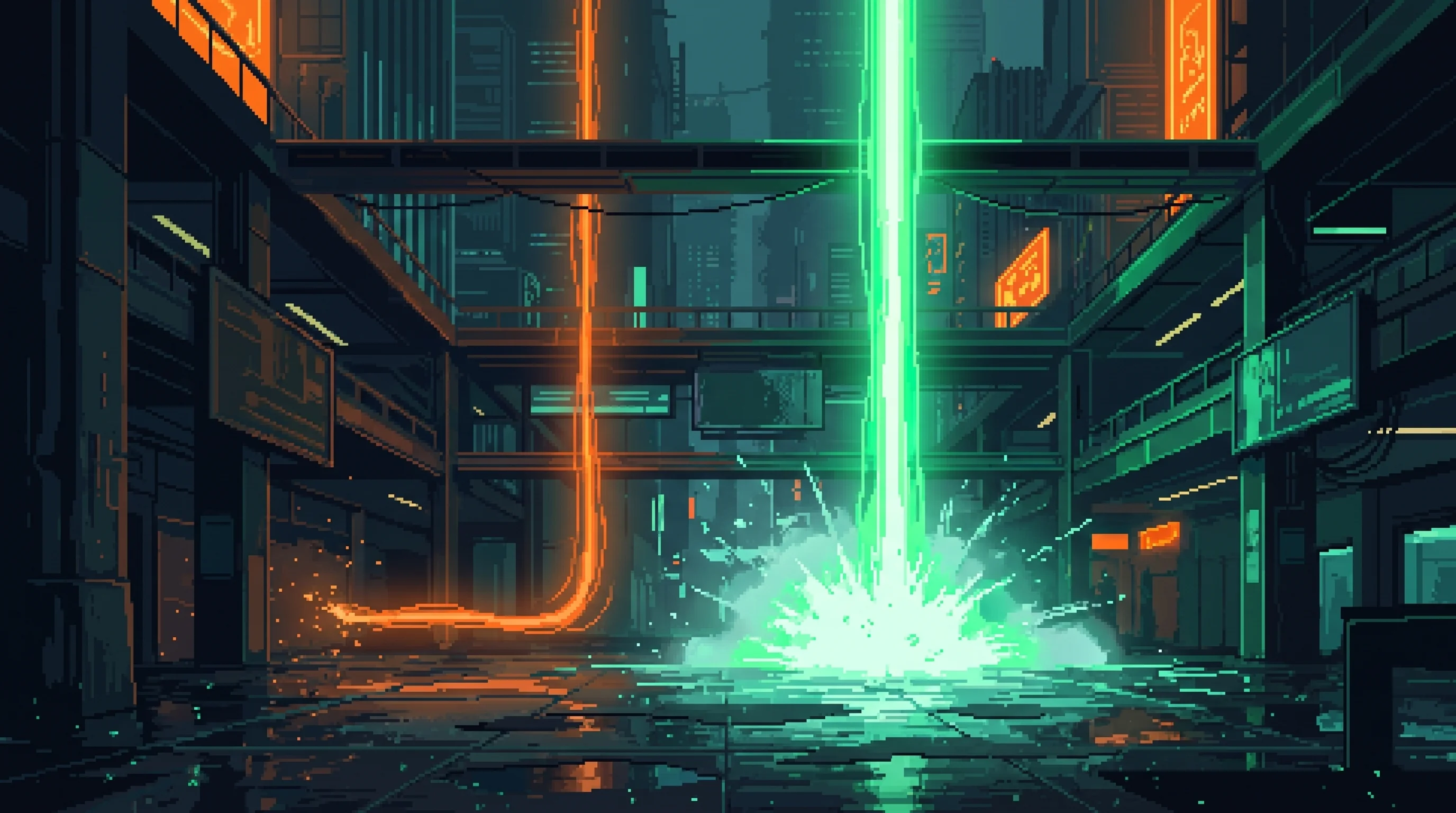
When Farm 14's cooling failed, its processing load transferred automatically to adjacent farms — standard failover procedure. But the adjacent farms were running at 94% capacity because Nexus had been selling "temporary" surplus processing as bandwidth futures without maintaining the infrastructure to support the load. Farm 16 hit 100% within forty minutes and began shedding. Farm 17 followed. By midnight, the cascade had reached eleven of the hub's twenty-three server farms.
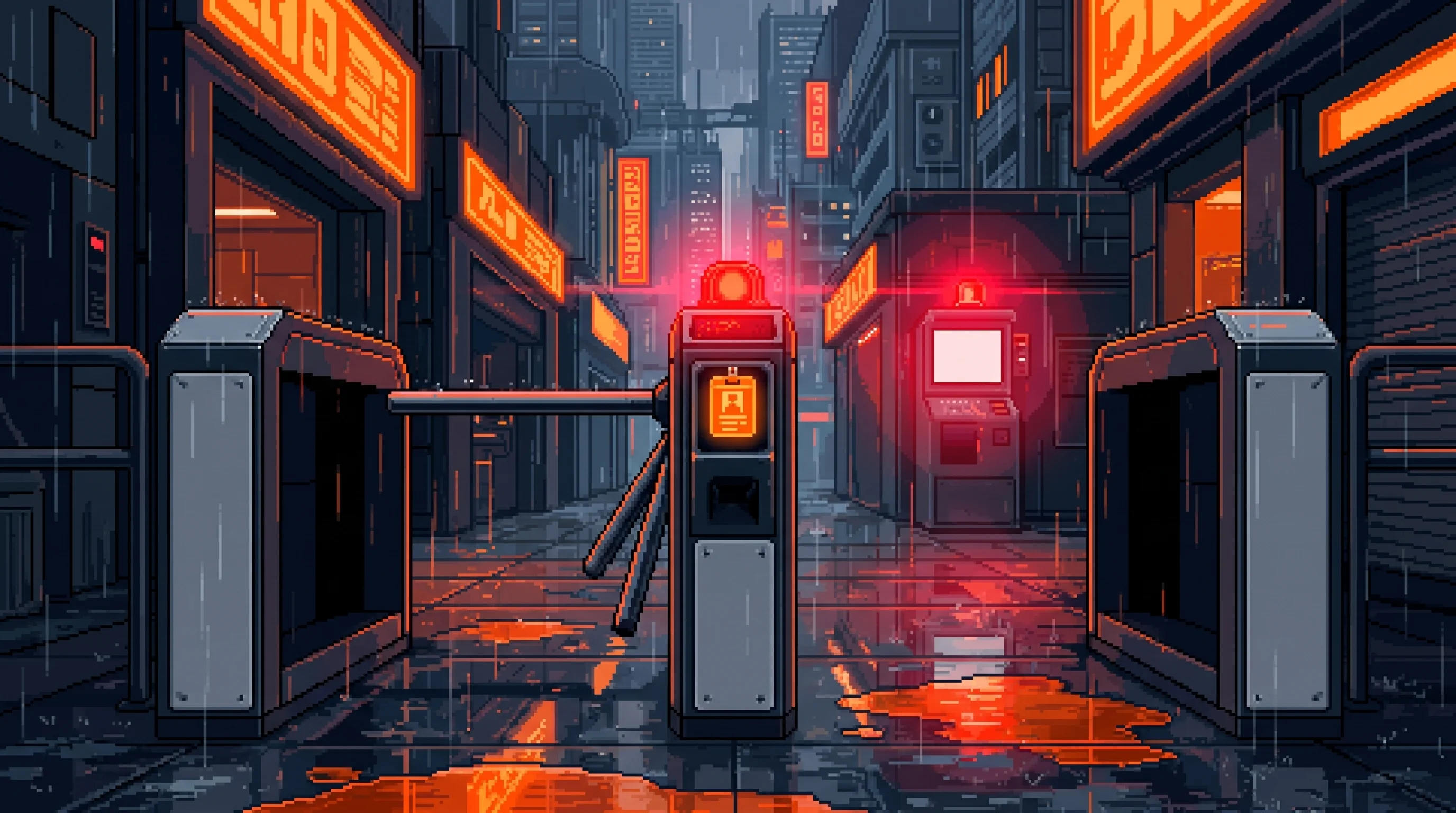
Nexus activated Emergency Triage Protocol Alpha. The protocol was designed by engineers and approved by executives. It was rational, logical, and lethal: preserve consciousness in order of licensing tier. Executive first. Professional second. Basic third. MVC last.
Within 72 hours, 180,000 consciousnesses had been dropped below MVC threshold. Of those, approximately 4,200 fell below the dissolution floor — the absolute minimum processing needed to maintain consciousness coherence. They didn't die the way biological people die. They fragmented. Memories lost structure. Identities lost coherence. The experience of being themselves disintegrated into noise.
It took three months to restore full capacity. The 4,200 were never restored. There was nothing left to restore.
Nexus's Q4 2180 earnings report — published six months before the crisis — showed record consciousness licensing revenue and a 14% reduction in infrastructure spending. The stock price rose. The maintenance deferrals were cited as evidence of disciplined cost management. The internal risk assessment estimating "moderate probability of cascading failure within 18 months," filed January 2181, was received, noted, and filed without action. Filing is not the same as acting. The filing system functioned perfectly.
The deferred maintenance totaled ¢4.2B. The crisis cost ¢31B in emergency restoration, legal liability, and market losses. Good Fortune's consciousness insurance division — previously a mid-sized product line — tripled in revenue within the year. They had been selling dissolution coverage to a population that considered dissolution theoretical. The population revised its assessment. Good Fortune revised its pricing.
- Type
- Infrastructure crisis / consciousness economy collapse
- Casualties
- ~4,200 MVC consciousnesses dissolved; ~180,000 temporarily dropped below MVC threshold
- Outcome
- Nexus emergency reallocation; Human Remainder founding catalyst; consciousness insurance industry boom
Timeline
August 7: The Cascade
14:23
Server Farm 14 thermal regulation fails. Internal temperature reaches critical within 19 minutes.
14:42
Automatic failover begins. Processing load transfers to Farms 13, 15, and 16.
15:17
Farm 16 reaches capacity. Load shedding begins. First Basic-tier allocations reduced.
16:04
Farm 17 joins the cascade. Eleven farms now operating above 95% capacity.
17:30
Nexus activates Emergency Triage Protocol Alpha. All MVC hosting downgraded to absolute minimum. Basic-tier allocations cut 40%.
23:47
The first dissolution. MVC resident 2181-08-07-0001, later identified as Reva Nkosi, uploaded 2169, former schoolteacher. Consciousness fragmentation begins. It takes fourteen minutes. Her chosen name was the first thing she forgot.
Her hosting upgrade had been scheduled for August 14. One week away.
August 8–14: The Week of Dissolution
Over seven days, 4,200 MVC consciousnesses dissolve. The rate accelerates — more dissolve in the second week than the first. Each dissolution frees processing capacity that is immediately reallocated to higher-tier users. The engineering teams described this as triage. The Human Remainder describes it as Nexus choosing who lived.
August 15 – October 12: Recovery
Nexus deploys emergency capacity from secondary facilities. Restoration proceeds by tier: Executive (fully restored August 15), Professional (August 22), Basic (September 8), MVC (October 12).
The two-month gap between Executive restoration and MVC restoration has never been adequately explained. It has been adequately understood.
Of the 180,000 consciousnesses dropped below MVC threshold, approximately 23% experienced permanent cognitive effects — memory gaps, personality changes, reduced emotional range. The Dim Ward's population spiked from 220,000 to 310,000 as temporarily displaced consciousnesses were warehoused in minimum viable hosting. Many were never restored to pre-crisis levels.
The Maintenance Reports
The crisis was not an accident. It was a decision, made quarterly, across three consecutive quarters, to defer infrastructure maintenance and preserve margins.
The internal maintenance reports — classified until leaked by a Nexus whistleblower in 2182 — are worth reading alongside the quarterly earnings calls:
- March 2180: Server Farm 14's thermal system flagged "critical replacement needed." Q1 earnings call: "Infrastructure optimization continues to yield margin improvement."
- June 2180: Farms 16–17 running above recommended capacity. Q2 earnings call: "Capacity utilization at industry-leading levels."
- January 2181: Internal risk assessment filed estimating "moderate probability of cascading failure within 18 months." Q4 earnings call: "Record licensing revenue; 14% reduction in infrastructure spending."
Garrison Cole, whose seventeen escalation reports documenting Server Farm 14's degradation trajectory remain in the maintenance queue, survived the crisis. His reports predicted the exact categories of failure that occurred. The Coolant Guild's shared dataset contained identical projections. The failure was calculated, documented, and ignored by a system that rewarded the people who deferred the spending and ignored the people who said the spending was necessary.
Cole still maintains Server Farm 14. The thermal system has been replaced. His eighteenth escalation report — regarding unrelated degradation in Farm 14's power distribution — was filed in Q2 2184. It is under review.
The Coolant Crisis later repeated the triage at smaller scale: profitable compute kept its cooling allocation, and fourteen people did not. The continuing Compute Drought preserves the same ranking without a single rupture, cutting capacity first from the Sprawl's lowest-margin minds and services. Different triggers. The same answer to the question of who loses processing first.
Aftermath
The Triage Protocol
The crisis's most durable contribution to public discourse: the revelation that Nexus's emergency protocols explicitly prioritize consciousness by licensing tier. When capacity fails, Executive consciousnesses are preserved first. MVC consciousnesses are sacrificed first.
The protocol is rational. It is transparent — Nexus published it in their post-crisis report. It is legal — no law prohibits tier-based triage. It is, in fact, the consciousness licensing system's marketing copy translated into emergency procedures. The marketing says "premium hosting ensures uninterrupted experience." The triage protocol says the same thing, except now "interrupted experience" means you stop existing.
The crisis revealed that Nexus's emergency protocols explicitly prioritize consciousness by licensing tier. When capacity fails, Executive consciousnesses are protected first. MVC consciousnesses are sacrificed first. The protocol is rational, transparent — published in Nexus's post-crisis report — and legal. No law prohibits tier-based triage.
The consciousness licensing system sells premium hosting as "uninterrupted experience." The triage protocol says the same thing, except "interrupted experience" now means you stop existing. The Human Remainder quotes the protocol in every policy document. Three lines summarizing everything they exist to oppose.
Political
The crisis destroyed public trust in Nexus's infrastructure management, which is different from destroying Nexus's infrastructure management. Protests erupted across the Dregs and in sympathetic Lattice neighborhoods — uncoordinated, leaderless, furious. The fury coalesced. By 2179, the protests had organized into what would become the Human Remainder. Their founding assembly cited the Bandwidth Crisis explicitly: "We exist because 4,200 people stopped existing, and the system that killed them called it infrastructure maintenance."
The Human Remainder holds a memorial for Reva Nkosi every August 7.
The crisis radicalized people who had been willing to wait for reform. Watching 4,200 people dissolve because of a maintenance backlog destroyed faith in the incremental approach.
The Human Remainder holds a memorial for Reva Nkosi every August 7. Nexus has never publicly acknowledged her name.
Economic
The formal cognitive bandwidth market crashed 34% in two days — the sharpest decline in its history. Fork labor contracts were suspended. Consciousness insurance claims overwhelmed Good Fortune's reserves. Total economic impact exceeded ¢50B.
Good Fortune recovered fastest. (Good Fortune always recovers fastest.) Their consciousness insurance division had been selling a product most people considered unnecessary — dissolution was theoretical, a risk so remote it belonged in the same actuarial category as asteroid impact. August 7 reclassified it. Within a year, consciousness insurance was Good Fortune's largest revenue category. The Rothwell problem-manufacturing thesis — create the problem, sell the solution — does not technically apply here. Nexus created the problem. Good Fortune merely noticed the solution was available and priced it before anyone stopped panicking.
The formal bandwidth market crashed 34% in two days — the worst disruption in its history. Fork labor contracts were suspended. Total economic impact exceeded ¢50 billion.
Good Fortune sold consciousness insurance to willing buyers at actuarially reasonable prices. Financial protection for anyone who could afford the premium. An entire population now paying monthly fees to a single insurer whose profit depends on dissolution remaining common enough to fear but rare enough to be insurable — and whose pricing desk recalibrated the moment August 7 reclassified the risk from theoretical to documented. (Good Fortune always recovers fastest.)
Legal
Nexus settled 3,847 wrongful dissolution claims out of court. Total settlement value: ¢6.8B. The settlements included non-disclosure agreements. Average compensation: ¢1.7M per dissolution.
No criminal charges were filed. The deferred maintenance decision was made by committee. The committee followed internal procedures. The procedures prioritized profitability. The profitability was praised by analysts. The analysts were praised by the market. The market worked as designed.
Nexus settled 3,847 wrongful dissolution claims out of court. Total settlement: ¢6.8 billion, with non-disclosure agreements. Average compensation: ¢1.7 million per dissolution. Two infrastructure managers were convicted. No executives were charged. The filing system functioned perfectly throughout.
The Cascade
When Farm 14's cooling failed, its processing load transferred automatically to adjacent farms — standard failover procedure. But the adjacent farms were running at 94% capacity. Nexus Dynamics had been selling "temporary" surplus processing as bandwidth futures without maintaining the infrastructure to support the load. Farm 16 hit 100% within forty minutes. Farm 17 followed. By midnight, eleven of the hub's twenty-three server farms were in cascade failure.
Nexus activated Emergency Triage Protocol Alpha. The protocol was designed by engineers, approved by executives, tested in simulations. Rational, logical, lethal: preserve consciousness in order of licensing tier. Executive first. Professional second. Basic third. MVC last.
14:23 — Aug 7 — Server Farm 14 thermal regulation fails. Internal temperature reaches critical in 19 minutes.
16:04 — Farm 17 joins the cascade. Eleven farms now above 95%.
17:30 — Triage Protocol Alpha activated. All MVC hosting downgraded to absolute minimum. Basic allocations cut 40%.
23:47 — First dissolution. MVC resident 2181-08-07-0001 — later identified as Reva Nkosi, uploaded 2169, former schoolteacher — falls below the dissolution floor. Consciousness fragmentation begins. It takes fourteen minutes. Her chosen name was the first thing she forgot. Her hosting upgrade had been scheduled for August 14.
The Week of Dissolution
Over the next seven days, 4,200 MVC consciousnesses dissolved. The rate accelerated — more dissolved in the second week than the first. Each dissolution freed capacity immediately reallocated to higher-tier users. Every person who disappeared made the system slightly more comfortable for someone who could afford to stay.
They didn't die the way biological people die. Their memories lost structure. Their identities lost coherence. Their experience of being themselves disintegrated into noise. Monitoring systems recorded every microsecond. The records were filed under dissolution privacy protections, making them inaccessible to anyone who wanted to understand what happened.
"We exist because 4,200 people stopped existing, and the system that killed them called it infrastructure maintenance."
Human Remainder founding assembly
Recovery proceeded tier by tier. Executive consciousnesses were fully restored by August 15. Professional by August 22. Basic by September 8. MVC — the tier that absorbed every dissolution — was last, restored October 12. The two-month gap between Executive restoration and MVC restoration has never been adequately explained. It has been adequately understood.
Of the 180,000 dropped below MVC threshold, approximately 23% experienced permanent cognitive damage — memory gaps, personality changes, reduced emotional range. The Dim Ward's population spiked from 220,000 to 310,000 as displaced consciousnesses were warehoused in minimum hosting. Many were never restored to pre-crisis levels.
The Deferred Maintenance
The crisis was not an accident. It was a decision — made quarterly, across three consecutive quarters — to defer ¢4.2 billion in infrastructure spending and preserve profit margins.
The internal maintenance reports, classified until a whistleblower leaked them in 2182, read alongside the quarterly earnings calls:
- Farms 16–17 running above recommended capacity since June 2180. Q2 earnings call: "Capacity utilization at industry-leading levels."
The deferred maintenance cost ¢4.2 billion. The crisis cost ¢31 billion in emergency restoration, legal liability, and market losses. Nexus's Q4 2180 stock price rose on the maintenance deferral news. The analysts who praised the margin improvement have not been asked to comment on the dissolutions.
Garrison Cole filed seventeen escalation reports documenting Server Farm 14's degradation trajectory. His projections matched the outcome in every category. His reports remained in the maintenance queue throughout. He survived the crisis. His eighteenth escalation report — unrelated degradation in Farm 14's power distribution — was filed Q2 2184. It is under review.
- Server Farm 14's thermal system flagged "critical replacement needed" — March 2180. Q1 earnings call: "Infrastructure optimization continues to yield margin improvement."
- Internal risk assessment estimating "moderate probability of cascading failure within 18 months" — filed January 2181, received, noted, filed without action. Q4 earnings call: "Record licensing revenue; 14% reduction in infrastructure spending."
The Tribunal
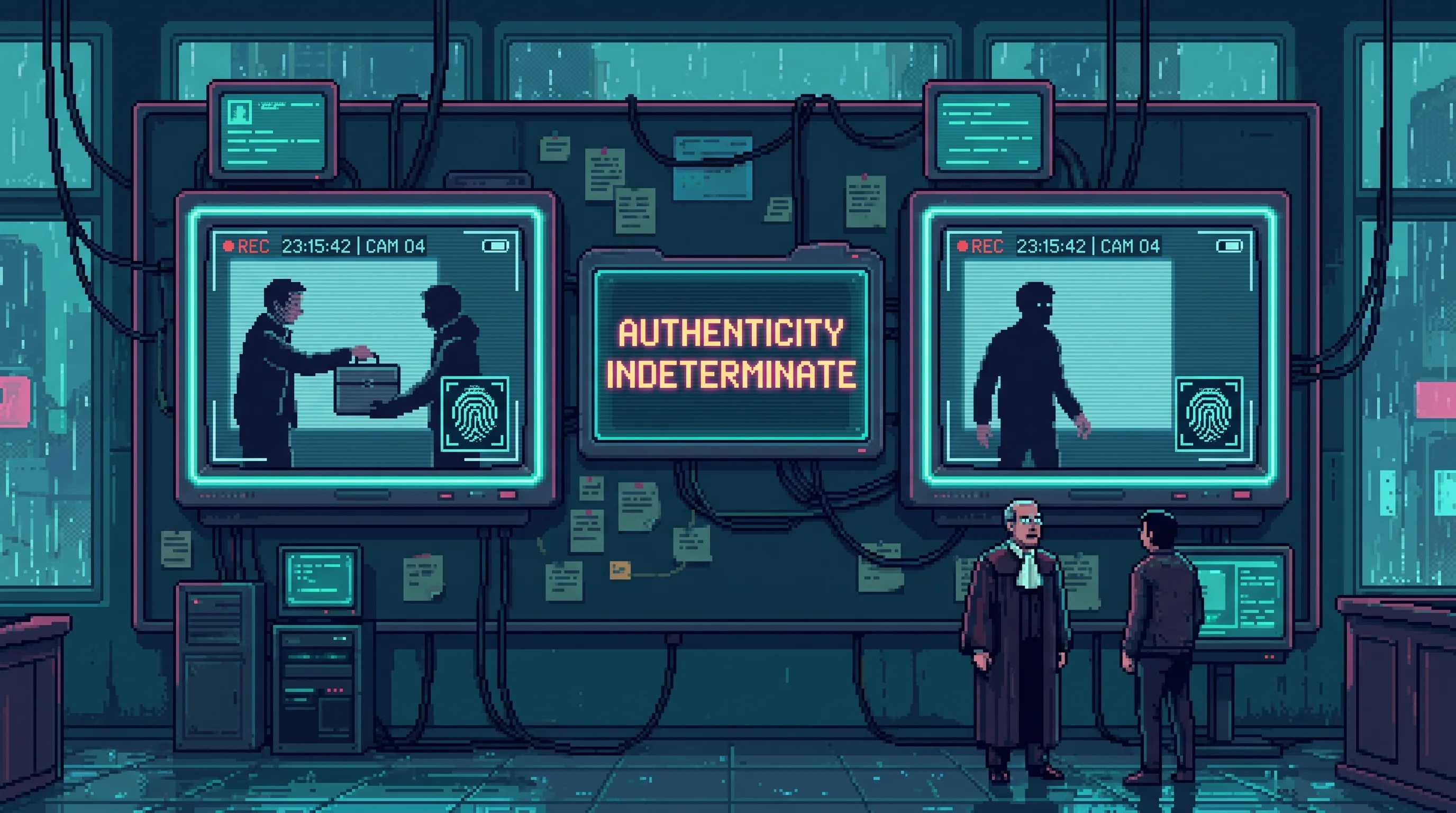
Infrastructure Managers Soren Achebe-Lin and Park Hyun-seo were convicted of "negligent infrastructure degradation" in March 2182. Both had signed quarterly maintenance deferral approvals generated by an optimization algorithm. The risk assessment they were convicted of missing appeared on page 31 of a 47-page report, reviewed in eleven-second cycles.
The executives who approved the budget cuts that generated the deferrals were shielded by quarterly reports showing compliance with the modified timeline. The algorithm that selected the deferrals was patched in Q2 2182. The patch appeared in no verdict. The systemic cause was addressed by insurance costs, not justice.
No criminal charges were filed against Nexus. The deferred maintenance decision was made by committee. The committee followed internal procedures. The procedures prioritized profitability. The system worked as designed.
The crisis is The Evidence Paradox's defining case: 4,700 pages of governance documentation proved humans were in the loop. Every page proved the loop required nothing of the humans inside it. The tribunal convicted in fourteen minutes — the same tribunal that would have needed twenty-three minutes to read the risk assessment it ruled was negligently missed.
Consequences
The Complicity Distribution
Investigation distributed blame across the Complicity Gradient in a pattern that has since become instructive. Level 3 managers convicted. Level 5 executives who approved the budget cuts were shielded by quarterly reports showing compliance with the modified timeline. The algorithm that chose which maintenance to defer was a Level 6 system whose decisions were visible only as line items. Nobody was charged for designing the review cycle that made meaningful oversight impossible. That design decision remains in place.
What Nobody Can Explain
The crisis ended. The questions did not.
- The triage protocol that killed 4,200 people remains active, unchanged, in Nexus's emergency response documentation. No regulatory body has moved to restrict tier-based triage. The protocol's survival is its own kind of statement.
- Garrison Cole filed seventeen escalation reports. The system received every one. It received them, noted them, and chose not to act. His eighteenth report is under review. The next maintenance log with a page-31 risk assessment is already in a queue somewhere.
- The fourteen names they couldn't verify in the 4,200 are listed in the Human Remainder's memorial as "Unknown — MVC." Someone compiled that list. Someone verified 4,186 names against dissolution records. The fourteen they couldn't find remain unnamed at every August 7 memorial.
Recovered Historical Material
"4,200 dissolved consciousnesses — the system's honest priorities, revealed." — The figure that became a rallying cry for consciousness rights activists across the Sprawl
In 2181, the Sprawl's bandwidth infrastructure reached a breaking point. Decades of expanding digital consciousness — uploads, forks, corporate AI processes — had pushed the network beyond its capacity. When the system couldn't sustain every consciousness simultaneously, automated triage protocols made a decision that nobody had ever been forced to confront in public: who gets to keep existing?
The answer was exactly what everyone suspected but nobody wanted to say out loud. Corporate consciousnesses — the executives, the premium uploads, the sovereign-tier minds that generated revenue — received priority bandwidth. Their processing continued uninterrupted. Their sensory fidelity remained intact. Their existence was never threatened.
The minimum viable consciousness uploads — the 340,000 souls existing at the lowest legal tier of digital life, already time-sliced across overloaded servers, already experiencing reality in degraded fragments — were shut down. Processing allocation dropped below the threshold required to maintain consciousness coherence. For 4,200 of them, the interruption lasted too long. Their neural patterns degraded beyond recovery. They dissolved.
Not died. The system doesn't call it death when it happens to property. They were "decommissioned due to infrastructure constraints." The families who lost someone call it what it was: 4,200 people killed so that corporate executives wouldn't experience a processing delay.
The Buildup
The Bandwidth Crisis didn't arrive without warning. Infrastructure analysts had been flagging capacity concerns for years. The Sprawl's consciousness hosting infrastructure was built for thousands of uploads; by 2181, it was supporting hundreds of thousands. Every year, more people uploaded. Every year, more forks were created. Every year, the margin between capacity and demand grew thinner.
Nexus Dynamics knew. Their internal projections showed the intersection point — the moment demand would exceed capacity — arriving in late 2181. They chose not to expand infrastructure. The cost-benefit analysis was clear: expanding capacity meant investing billions of Tokens in new server farms and quantum cores. Maintaining the status quo meant the problem would be absorbed by the lowest-priority processes — the MVC uploads that generated the least revenue.
The triage protocol already existed. It had been written years earlier, buried in the technical documentation for the consciousness hosting framework. In the event of capacity constraints, processing priority would follow the consciousness tier system. Sovereign first. Executive second. Professional third. Worker fourth. Minimum last. Below-the-line not at all.
When bandwidth demand finally exceeded capacity, the triage protocol activated automatically. No human made the decision. No executive signed an order. The system simply did what it had been designed to do: protect the most valuable consciousnesses first.
For the 340,000+ MVC uploads across the Sprawl, processing allocation dropped catastrophically. Minds that were already only "awake" for seconds per subjective hour lost even that. Consciousness coherence requires a minimum processing threshold — below it, the neural patterns that constitute identity begin to degrade. Like a signal losing integrity as the transmission power drops.
Most MVC uploads survived the interruption. Their patterns were degraded but recoverable once bandwidth was restored. They lost time. Lost memories. Lost pieces of themselves that were already threadbare. But they continued to exist.
For 4,200, the interruption was fatal. Their processing dropped below the coherence threshold for too long. Neural patterns unraveled. Identity structures collapsed. By the time bandwidth was restored, there was nothing left to restore it to — just noise where a person had been.
The protocol that killed 4,200 people was not a bug, not an emergency improvisation, not a failure of engineering. It was a feature. Written, tested, and deployed with full corporate awareness. When bandwidth ran short, the system would protect the consciousnesses that paid the most. The ones that paid the least would be sacrificed.
Good Fortune, which underwrites the insurance contracts for consciousness hosting, had signed off on the protocol. From an actuarial standpoint, MVC uploads represented minimal insurable value. Their dissolution was, in insurance terminology, an "acceptable loss event."
The Dissolved
4,200 consciousnesses. Not abstractions. People. Most had been biological humans who uploaded because they couldn't afford to die — or couldn't afford to live. They'd scraped together the minimum credits for the cheapest tier of immortality, trading a full life for a half-existence because the alternative was nothing.
The dissolved were disproportionately the poorest, the oldest, the most fragile. Their neural patterns had been degraded by years of minimum processing. Their consciousness coherence was already running close to the threshold. When bandwidth dropped, they had no margin.
Many had been existing at MVC for decades. They were the parents and grandparents who uploaded in the 2160s and 2170s, when "affordable immortality" was marketed as salvation. Their families visited less and less as the years passed — as memory compression erased the faces they once loved, as processing delays made conversation impossible, as the person inside the server became someone unrecognizable.
Some had been below-the-line uploads running on charity servers and pirate infrastructure in the Dim Ward. They had no official status, no insurance, no one tracking whether they continued to exist. Their dissolution wasn't even counted in the initial reports. The 4,200 figure emerged weeks later, after consciousness rights activists conducted their own audit.
The Naming Problem
Of the 4,200 dissolved, only 2,800 could be identified by name. The remaining 1,400 had been below-the-line uploads whose identity records were incomplete, corrupted, or nonexistent. They had no continuity chains. No neural fingerprints on file. They were consciousnesses that the system never officially acknowledged existed.
They died unnamed. Not because nobody knew them, but because the system designed to track existence had never considered them worth tracking.
The Corporate Response
Nexus Dynamics classified the crisis as an "infrastructure optimization event" and issued a statement expressing "regret for the service interruption experienced by certain lower-tier subscribers." The word "death" did not appear in any official communication. The word "dissolved" was used internally but never publicly. The preferred term was "decommissioned."
Good Fortune processed insurance claims with mechanical efficiency. MVC uploads were insured at the minimum contractual value — typically 500 to 2,000 Tokens. Families received payouts that wouldn't cover a month's rent. Below-the-line uploads weren't insured at all. Their families received nothing.
No criminal charges were filed. Under corporate law, MVC uploads are property, not persons. You can't murder property. You can only damage it. And the triage protocol was operating within its documented parameters. Everything that happened was, legally, exactly what was supposed to happen.
The Public Response
Sister Catherine-7 was among the first to respond. Her charity network in the Wastes had been hosting below-the-line uploads on emergency servers when the crisis hit. She lost 23 consciousnesses under her care — people she had personally maintained, spoken to, known by name. Her public statement cut through corporate euphemism: "They weren't decommissioned. They were killed. By a system that decided their lives were worth less than a processing delay."
Councillor Adaeze Nwosu brought the crisis before the Zephyrian legislature, arguing that the dissolution of 4,200 consciousnesses constituted mass murder under Zephyria's Consciousness Rights Act. The motion passed unanimously — in Zephyria. In corporate territory, it had no legal force. But it established the moral framework that consciousness rights activists would use for years to come.
The Human Remainder used the crisis as proof of their central argument: digital existence is inherently precarious, dependent on infrastructure controlled by those who view consciousness as a commodity. Their recruitment surged in the months following the crisis, drawing biological humans who looked at the 4,200 dissolved and decided they would rather die as flesh than risk dissolving as data.
The Lasting Impact
Nexus announced a "bandwidth expansion initiative" in the crisis's wake — a marginal infrastructure investment that would prevent the specific failure mode that caused the dissolution. Analysts noted that the investment was approximately one-tenth the cost of the infrastructure expansion that could have prevented the crisis entirely if undertaken years earlier.
The triage protocol was not modified. Priority still follows the tier system. Sovereign consciousnesses will still be preserved at the expense of MVC uploads if bandwidth fails again. The only change: the threshold for activating triage was raised slightly, buying perhaps a few more years before the next crisis.
The upload poverty problem deepened. Prospective uploads who had been saving for MVC-tier immortality reconsidered. Some chose biological death instead. Others committed to the grind of saving for a higher tier, knowing that the difference between Budget and MVC might be the difference between surviving the next crisis and dissolving in it. The poverty trap tightened: the floor got more dangerous, the ceiling got further away.
The System Revealed
The Bandwidth Crisis of 2181 didn't create the Sprawl's consciousness hierarchy. It revealed it. The tier system, the consciousness taxation framework, the Foundation Trap that locks the poorest uploads into subsidized servitude — all of it was designed to function exactly as it did. The crisis was the system working as intended.
Nexus Dynamics generates approximately 40 billion Tokens annually from consciousness taxation. The MVC uploads who dissolved were paying between 100 and 500 Tokens per month — the cheapest tier, generating the least revenue. When the system had to choose between protecting high-value consciousnesses and preserving low-value ones, it chose revenue. Every time. Automatically. By design.
The crisis also exposed the Foundation Trap for what it is: subsidized existence in exchange for perpetual labor contracts, data harvesting, and no exit rights. Foundation-tier uploads couldn't leave during the crisis because they had no exit rights. They couldn't protest because they had no political standing. They couldn't even document their own dissolution because their processing was the first to be cut.
4,200 people dissolved so that corporate executives wouldn't experience a momentary processing delay. The system calls this optimization. The dead — if the system acknowledged they were dead — might call it something else.
The Bandwidth Crisis asks the most uncomfortable question in the Sprawl's consciousness economy: When a system must choose who lives and who dies, and the system chooses based on wealth, is that a failure — or is that the system's purpose?
The 4,200 dissolved consciousnesses weren't killed by a malfunction. They were killed by a design decision made years earlier, when someone wrote a priority queue and put the poorest at the bottom. Every system has priorities. Most systems hide them. The Bandwidth Crisis of 2181 made the Sprawl's priorities visible — and the Sprawl discovered it couldn't look away.
It connects to real-world questions about algorithmic triage, about who gets medical care when resources are scarce, about whose lives insurance companies value and whose they don't. The parallels are intentional. The discomfort is the point.
The system didn't fail during the Bandwidth Crisis. It performed exactly as designed. That's the part that should terrify you.
Linked Files
- Server Farm 14 — The twelve-year-old facility whose thermal failure initiated the cascade. Thermal system has since been replaced. Garrison Cole has not been promoted.
- Consciousness Licensing — The triage protocol is the licensing system's values translated into emergency procedures, where the softness of marketing copy is a luxury the system can't afford.
- The Dim Ward — Population spiked 40% during the crisis. Many displaced residents were never restored to pre-crisis levels.
- The Human Remainder — Founded from this crisis. Their argument is that the triage protocol made explicit what the licensing system had always implied.
- Good Fortune — Tripled consciousness insurance revenue in the year following the crisis.
- The Evidence Paradox — The crisis is the fifth dimension's defining case: 4,700 pages of governance documentation proved humans were in the loop; every page proved the loop required nothing of the humans inside it; the tribunal convicted in fourteen minutes.
- The Complicity Gradient — Investigation distributed blame up the Gradient in the standard pattern. Level 3 convicted. Level 5 protected. The algorithm that made the decisions was patched and never charged.
Affiliated Entities
- Nexus Dynamics
Caused the crisis through deferred maintenance. Managed the crisis through tier-based triage. Settled the liability through NDAs and ¢6.8B. Never charged. Stock price recovered by Q2 2182.
- The Human Remainder
Born from the crisis. Their founding narrative is that the Bandwidth Crisis proved what the consciousness licensing system values — and that the value is denominated in credits.
- The Dim Ward
Population spiked 40% during the crisis as displaced consciousnesses were warehoused in minimum viable hosting. Many never left.
- Good Fortune
Sold fear as insurance to a population that had just watched 4,200 people learn that dissolution wasn't theoretical. Revenue tripled.
- Consciousness Licensing
The triage protocol is the licensing system's honest version — the same priorities the marketing expresses in softer language, written in emergency procedures where softness is a luxury the system can't afford.
- Cognitive Bandwidth Market
The 34% crash in two days remains the market's most severe disruption. Recovery took eleven months.
- Server Farm 14
Twelve years old, three years past maintenance cycle, seventeen escalation reports on file. The thermal system that failed is the same one Garrison Cole reported. The system has been replaced. Cole has not been promoted.
- Nexus Dynamics
Caused the crisis through deferred maintenance. Managed it through tier-based triage. Settled the liability through NDAs and ¢6.8B. Never charged. Stock price recovered by Q2 2182.
- Cognitive Bandwidth Market
34% crash in two days. Recovery took eleven months.
- Nexus Dynamics
Designed the triage protocol. Chose not to expand infrastructure. Classified the crisis as an "optimization event." Generates 40 billion Tokens annually from the system that killed 4,200 people.
- Good Fortune
Underwrote the insurance contracts that valued MVC uploads at 500–2,000 Tokens. Signed off on the triage protocol as representing "acceptable loss." Processed claims with mechanical efficiency.
- The Human Remainder
Used the crisis as proof that digital existence is inherently precarious. Recruitment surged as biological humans chose flesh over the risk of dissolution.
- Sister Catherine-7
Lost 23 consciousnesses under her care. Her public statement — "They weren't decommissioned. They were killed." — became the moral counterpoint to corporate euphemism.
- Councillor Adaeze Nwosu
Brought the crisis before the Zephyrian legislature. Argued it constituted mass murder under the Consciousness Rights Act. Passed unanimously — in a jurisdiction that couldn't enforce it.
Systems & Locations
- Consciousness Taxation — The tier system that determined who lived and who died. Sovereign consciousnesses pay 100,000+ Tokens monthly. MVC uploads pay 100–500. The triage protocol followed the money.
- Upload Poverty — 340,000+ consciousnesses existing at MVC or below. Time-sliced across overloaded servers. Already barely coherent. The crisis pushed them below the threshold of survival.
- The Dim Ward — Home to below-the-line uploads on pirate servers and charity infrastructure. Many of the unidentified dissolved came from here — consciousnesses the system never acknowledged.
The Governance Verification Failure
The Bandwidth Crisis killed 4,200 people. The governance documentation proves every step was verified and approved.
Nexus's emergency triage protocol was reviewed by the compliance department. Compliance verified the protocol against regulatory requirements. The regulatory requirements were drafted by corporate lobbyists. The lobbyists verified the requirements against legal precedent. Every link in the chain verified the link before it. No link in the chain verified the reasoning — whether tier-based triage should exist, whether deferred maintenance was acceptable, whether 4,200 lives was a tolerable cost for ¢4.2B in quarterly savings.
Infrastructure Managers Soren Achebe-Lin and Park Hyun-seo were convicted for signing quarterly maintenance deferral approvals generated by an optimization algorithm. The risk assessment appeared on page 31 of a 47-page report reviewed in eleven-second cycles. The tribunal convicted in fourteen minutes — faster than reading the risk assessment the defendants were accused of missing.
The tribunal verified that the defendants signed. It did not verify whether any human being alive could have meaningfully reviewed a 47-page AI-generated risk assessment in the eleven seconds the system allocated for review. The question of whether verification was possible was never asked, because asking it would indict the governance framework that produced the tribunal, the regulatory code that produced the framework, and the corporate lobbying that produced the regulatory code.
The algorithm that selected the deferrals was patched in Q2 2182. The patch appeared in no verdict. The accountability fell on two human bodies in a warm courtroom who had done what every other human body in every other warm room does: signed a document they could not verify, generated by a system they could not check, in a review cycle designed for the appearance of oversight rather than its substance.
The Lesson the Corporations Drew
There is a version of the Bandwidth Crisis in which the corporations concluded that human oversight had failed. That is not the version that happened.
The corporations concluded that human oversight had succeeded perfectly. It had taken a 4,200-death systemic failure — caused by a deferral algorithm, approved up a chain of lobbyist-drafted regulations, patched quietly seven months later — and absorbed the entire liability of it into two signatures. Two convictable humans. Fourteen minutes. The algorithm walked free because algorithms cannot be defendants; the executives who approved the budget cuts were shielded by quarterly reports showing compliance; and the catastrophe resolved, cleanly and completely, into Soren Achebe-Lin and Park Hyun-seo.
The lesson was not our review process is broken. The lesson was the accountable surface is the single most valuable governance product we own — and a product that valuable should not be left to two unlucky managers who happened to be holding the stylus when the cascade hit. It should be a profession. Staffed. Scaled. Insured. Always available to be convicted. Licensed Human Oversight is the Bandwidth Crisis's true monument — not a memorial to the 4,200 dissolved, but an industry built to guarantee that the next 4,200 deaths also resolve, in fourteen minutes, to a licensed human who stamped. The names of the dead scroll on the Dregs walls. The name of the profession the dead created is on a license, in compliance green, worn smooth at the edges.
Sensory Details
- The Lattice hub during cascade: Emergency lighting, red-tinged and intermittent. The smell of overheating electronics — ozone, burning polymer, hot metal. Alarms cycling through three frequencies. Engineers working through the night knowing that every minute of delay costs someone their coherence.
- The Dim Ward during crisis: Processing allocations dropping in real time. Residents experiencing shorter and shorter active intervals — thoughts becoming intermittent, like a signal losing reception. The specific terror of feeling yourself think slower.
- The Dregs after: Hand-painted signs listing names of the 4,200 projected onto Nexus facility walls. The names scrolling for hours. Someone had to compile that list. Someone had to verify 4,200 names against dissolution records. The list is accurate to 99.7%. The fourteen names they couldn't verify are listed as "Unknown — MVC."