The Truth House
Dregs Human Verification Bureau
Someone Should Go Check
11 walkers verify approximately 3-4 claims per week through physical observation

Conditions Report
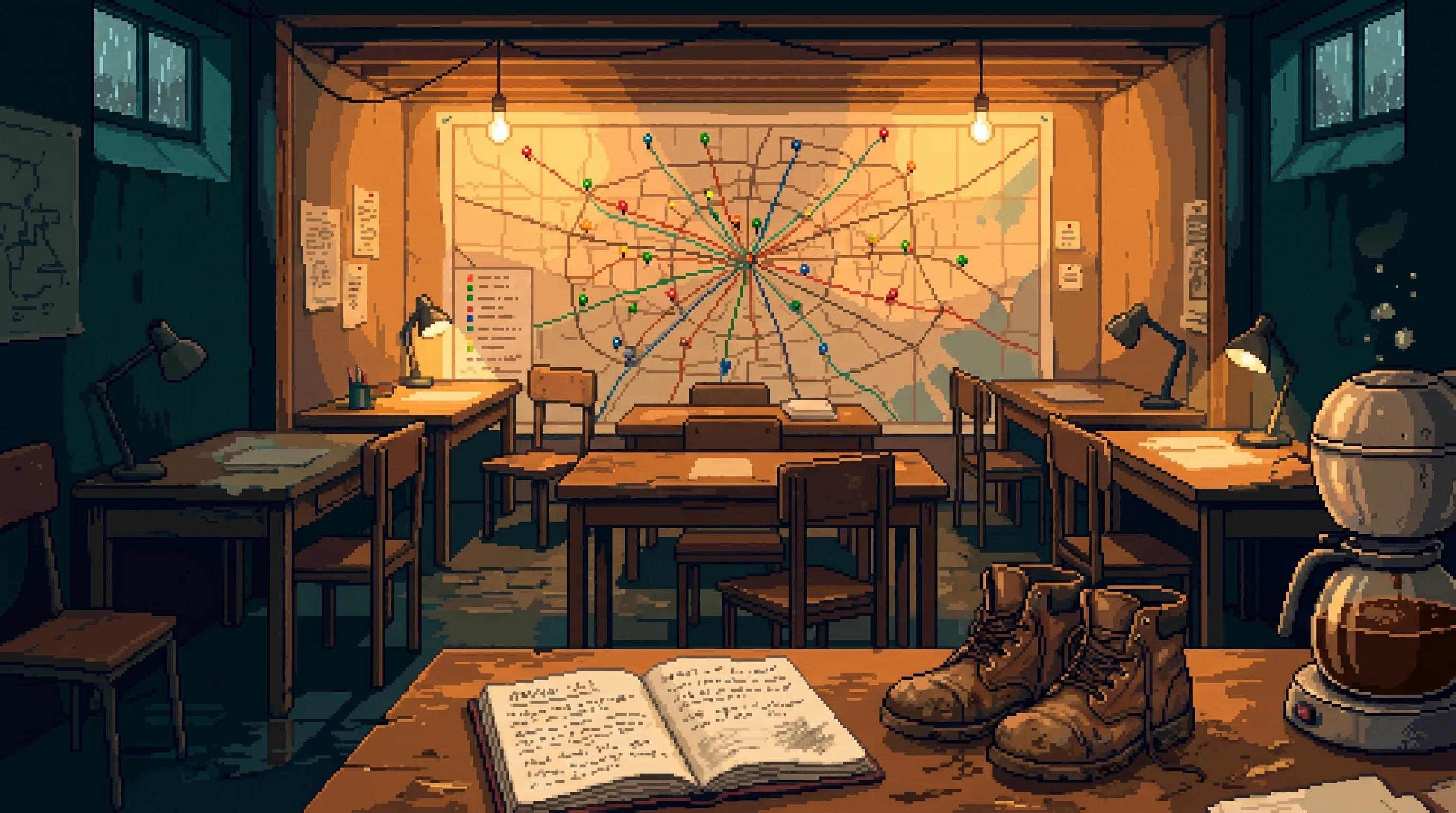
- Eleven desks
- A room built for two desks holds eleven. Walker Three's chair hits Walker Eight's whenever either leans back.
- Incandescent bulbs
- Yara chose warm bulbs over LEDs because, she says, fluorescent light makes people lie.
- Route map
- A wall map pins walker routes out to about 40 kilometers, the limit of a same-day round trip.
- Notebooks
- Shelved by walker and date, with no digital copies. If the house burns, the record burns with it.
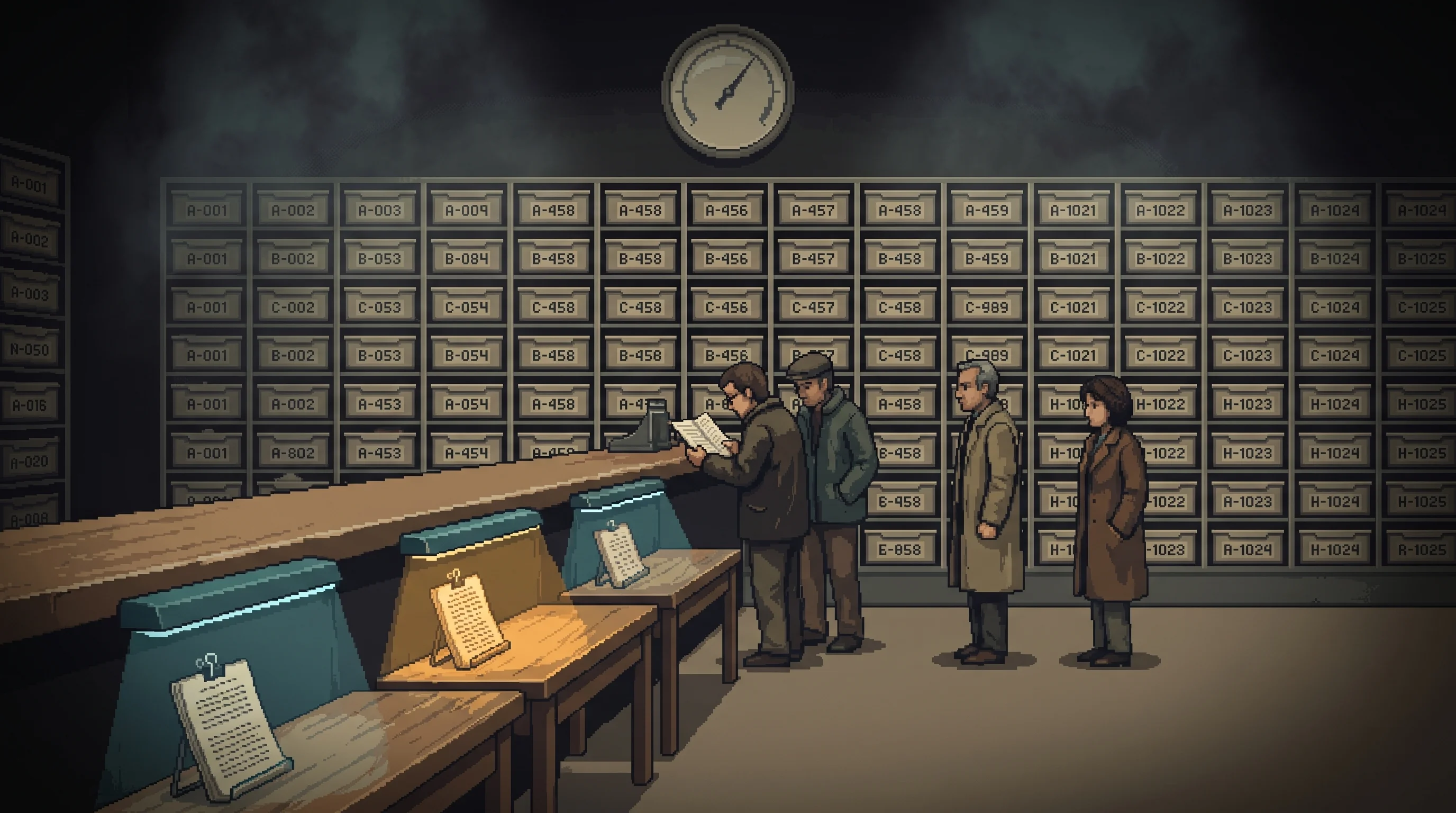
The room was designed for two desks. It contains eleven. The resulting spatial arrangement means that Walker Three's chair hits Walker Eight's chair when either of them leans back, which is noted in the operational log as "ongoing furniture conflict (unresolved, 2178-present)." Nobody has proposed removing a desk because nobody has proposed reducing the walker count, and nobody has proposed reducing the walker count because the waiting list of unverified claims is fourteen months long at current processing speed.
The smell is paper and old coffee and the specific absence of corporate scent engineering — this room smells like people have been working in it, which in the Sprawl is becoming a rare olfactory experience. The dominant sound is pencil on paper, quiet conversation between walkers comparing notes, and the distant harmonic thrum of the Backbone transit three floors up. The temperature holds at a steady 27°C, heated by eleven bodies and one coffee machine that predates the Cascade and has never been serviced because no one has been willing to risk turning it off.
Warm incandescent bulbs. Yara chose them deliberately over LEDs. She says fluorescent light makes people lie. There is no research supporting this. There is also no research disproving it, and the Truth House's verification accuracy rate is 94.6%, so the bulbs stay.
A map of the Sprawl covers the back wall, walker routes marked in colored pins. The pins extend roughly 40 kilometers from The Deep Dregs in every direction — the operational radius beyond which a walker cannot complete a round trip and file a same-day report. Forty kilometers of walkable truth. Beyond that, you're back to trusting screens. The map is never photographed; pin positions change daily, and it is the only real-time operational record the Truth House maintains.
The notebooks themselves are the bureau's other deliberate fragility. They sit on shelves, organized by walker and date, with no digital copies and no backups: if the Truth House burns, the verification record burns with it. This is considered a feature. Information stored in atoms cannot be scraped or algorithmically analyzed, and a notebook — unlike a corporate record — cannot be quietly updated after the fact. The physical fragility is part of what makes them trusted.
Overview
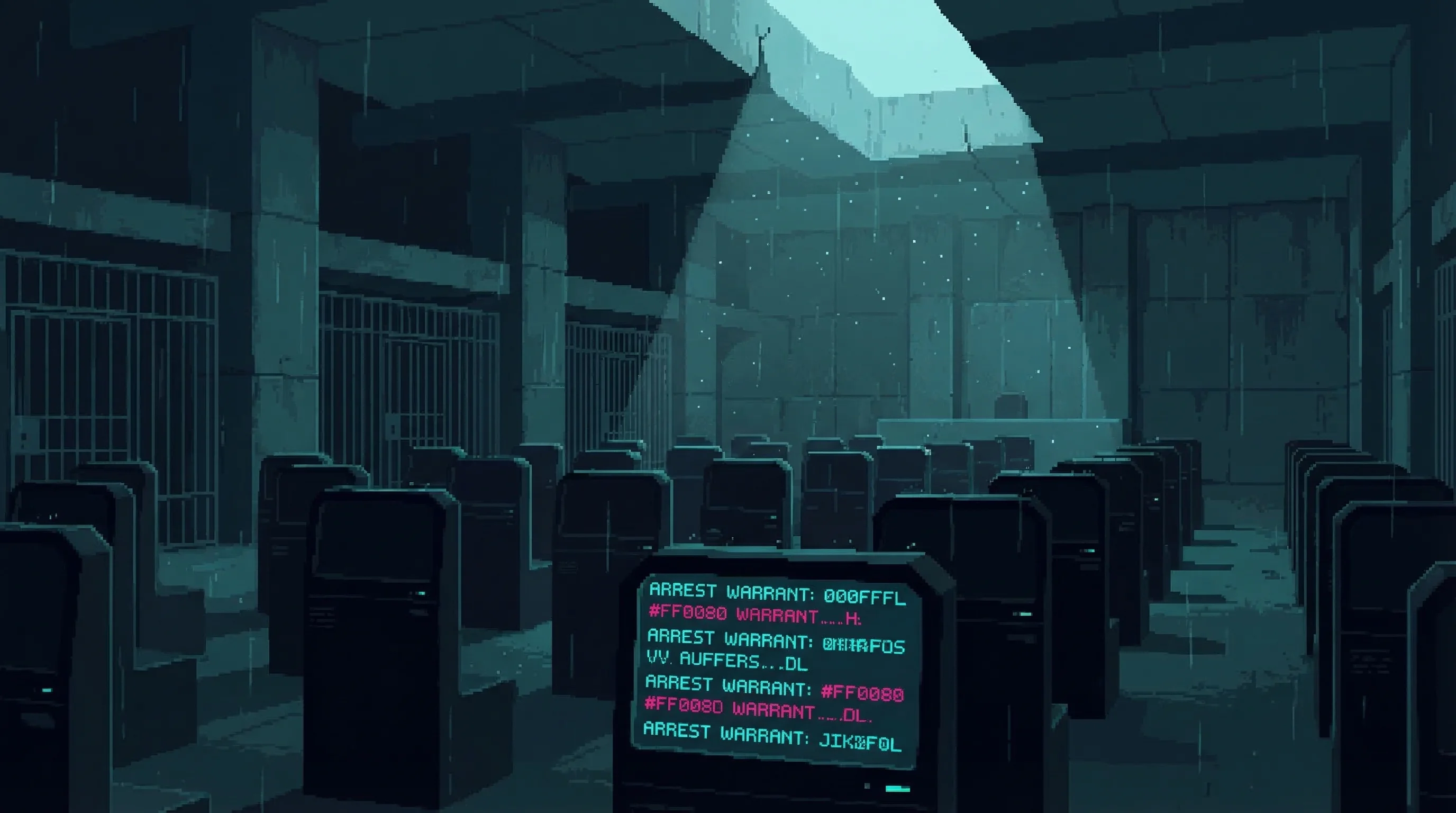
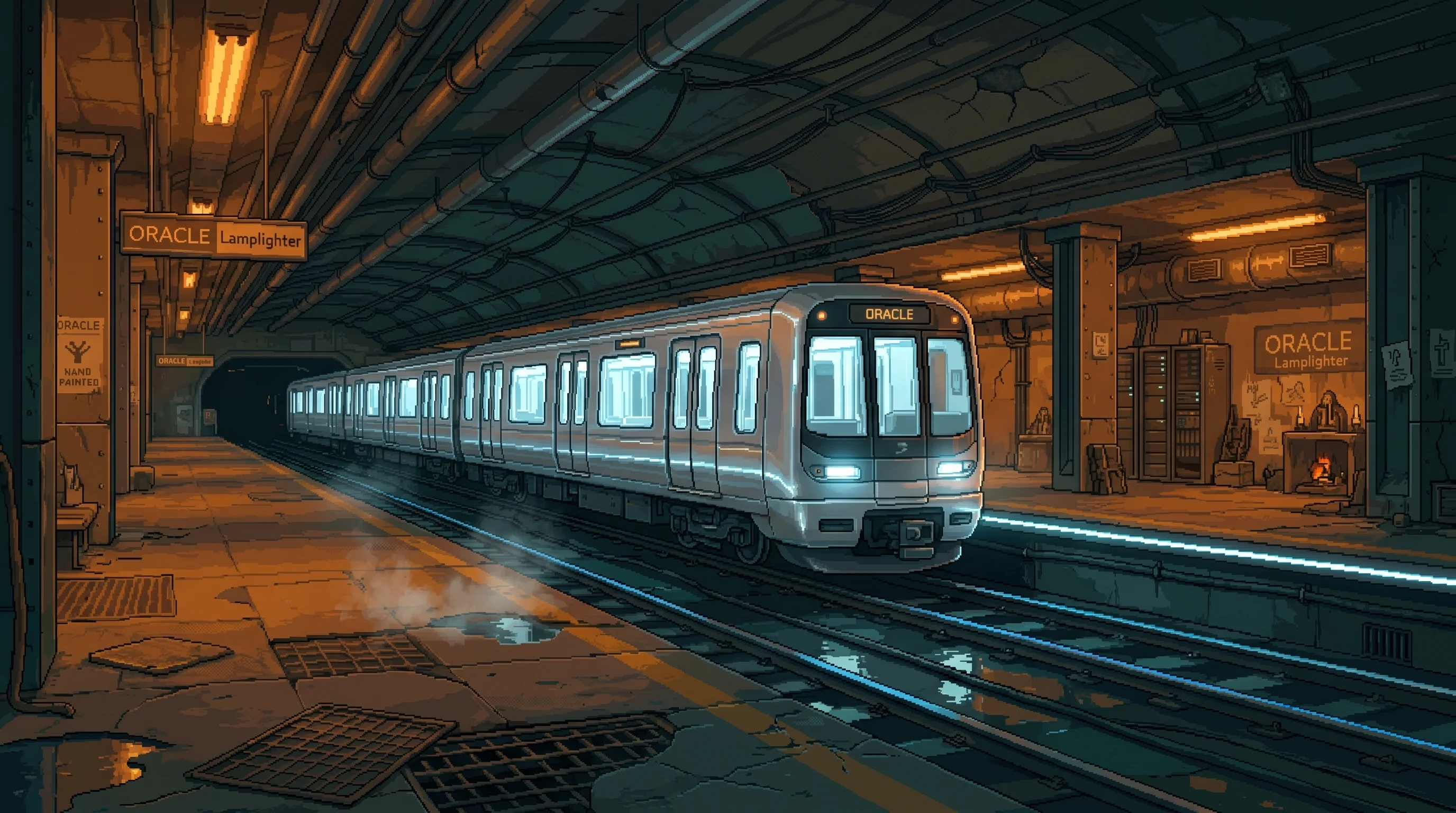
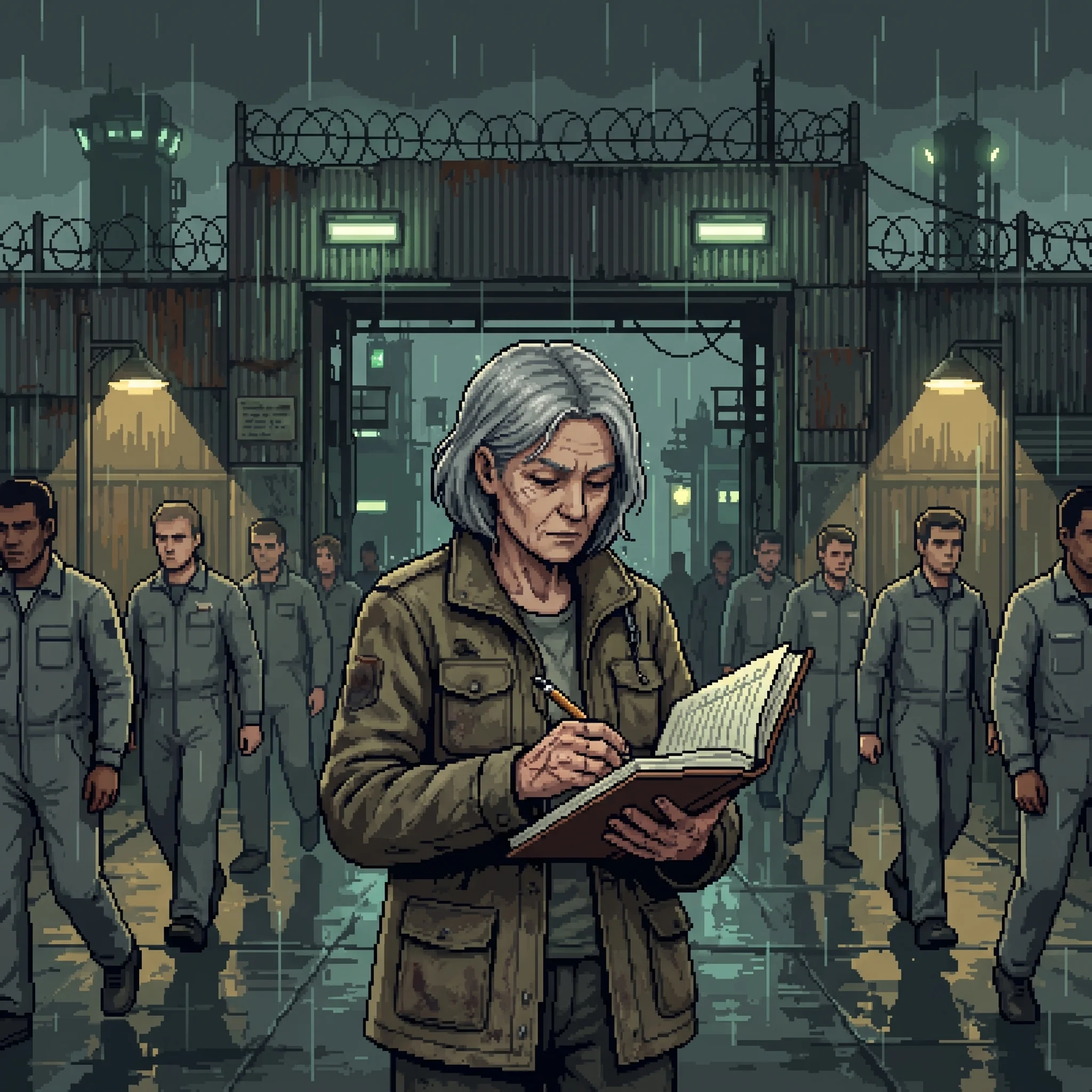
Three levels below the Backbone transit station in The Deep Dregs, behind a door marked "Environmental Testing — Authorized Personnel Only," eleven people verify information for a living using notebooks and pencils.
The Truth House is not a newsroom. It is a verification bureau. When a claim reaches the intake desk — through G Nook encrypted channels, Lamplighter word-of-mouth, or Curators Guild referral — it is assigned to a walker. The walker goes to the location of the claim. They look at it with their eyes. They talk to people with their mouth. They write down what they saw in a physical notebook. They come back.
No neural interface recording. No AI analysis. No algorithmic amplification. One human, one notebook, one set of eyes.
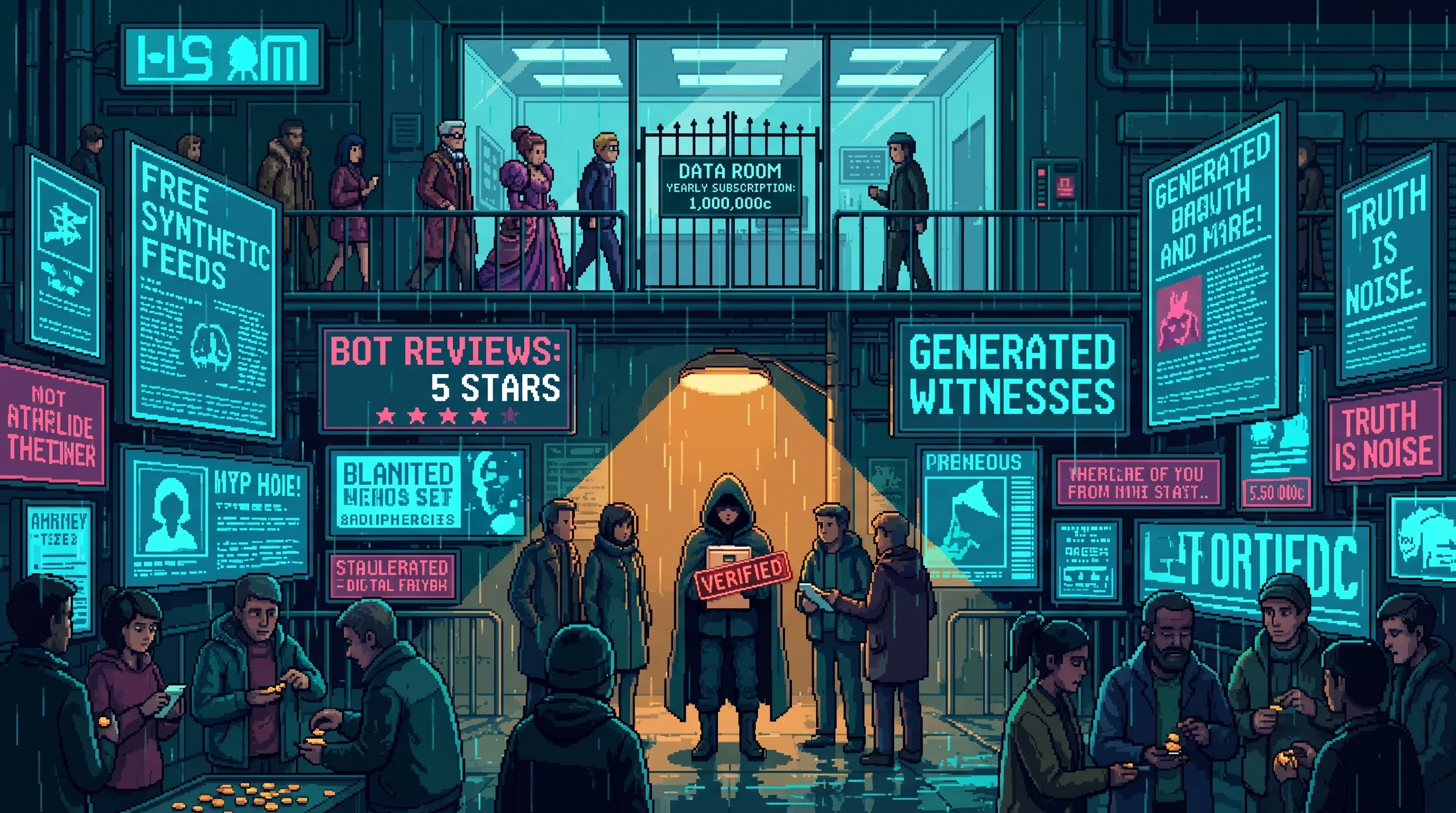
The Truth House processes approximately 3.2 claims per week. Nexus Dynamics processes 1.4 billion data verification requests in the same period. The Truth House's walker reports carry more weight in the Dregs than any of them. Yara Osei-Mensah, the founder, does not find this surprising. She spent eleven years as a Nexus communications analyst before discovering that her department's primary function was not verifying information but deciding what verified information should feel like. She walked out, walked down three levels, and opened a bureau dedicated to the radical premise that someone should go check.
The door is unmarked because the service is illegal in the sense that most useful things in the Dregs are illegal: not prohibited by any specific statute, but operating in a jurisdictional negative space that no regulatory body has claimed because claiming it would require acknowledging that corporate verification infrastructure has a gap large enough to walk through. With a notebook.
The Walkers
The walkers are not journalists. They do not write stories. They do not interpret. They observe, record, and report. The operational manual — handwritten by Yara, photocopied eleven times, updated by pencil annotation — specifies: "Write what you see. Do not write what it means."
This instruction is followed with varying degrees of success. Walker Four's reports are models of observational restraint. Walker Eleven's reports occasionally contain phrases like "the building appeared to be lying" which Yara circles in red pencil but does not remove, because Walker Eleven's observational instincts have been correct in 31 of 33 assignments and the building, as it turned out, was lying — the structural integrity reports filed with Ironclad Industries bore no relationship to the visible foundation cracks Walker Eleven documented over four pages of increasingly specific architectural concern.
Walker Seven has not returned from a Sector 4 verification assignment in nine days. The Truth House does not file missing persons reports. Filing would reveal the walkers' identities to corporate security databases, which would end the walkers' ability to observe anything without being observed first. So they wait. Walker Seven's desk has not been reassigned. Walker Seven's coffee mug — unwashed, a violation of the break room protocol posted above the Cascade-era coffee machine — has not been moved. The notebook assigned to Walker Seven's current case sits on Yara's desk, blank, waiting for observations that may not come.
Nine days is not the longest a walker has been out. It is the longest without a check-in message. The distinction matters to the other ten walkers in ways they have not discussed aloud.
The Evidence Paradox Response
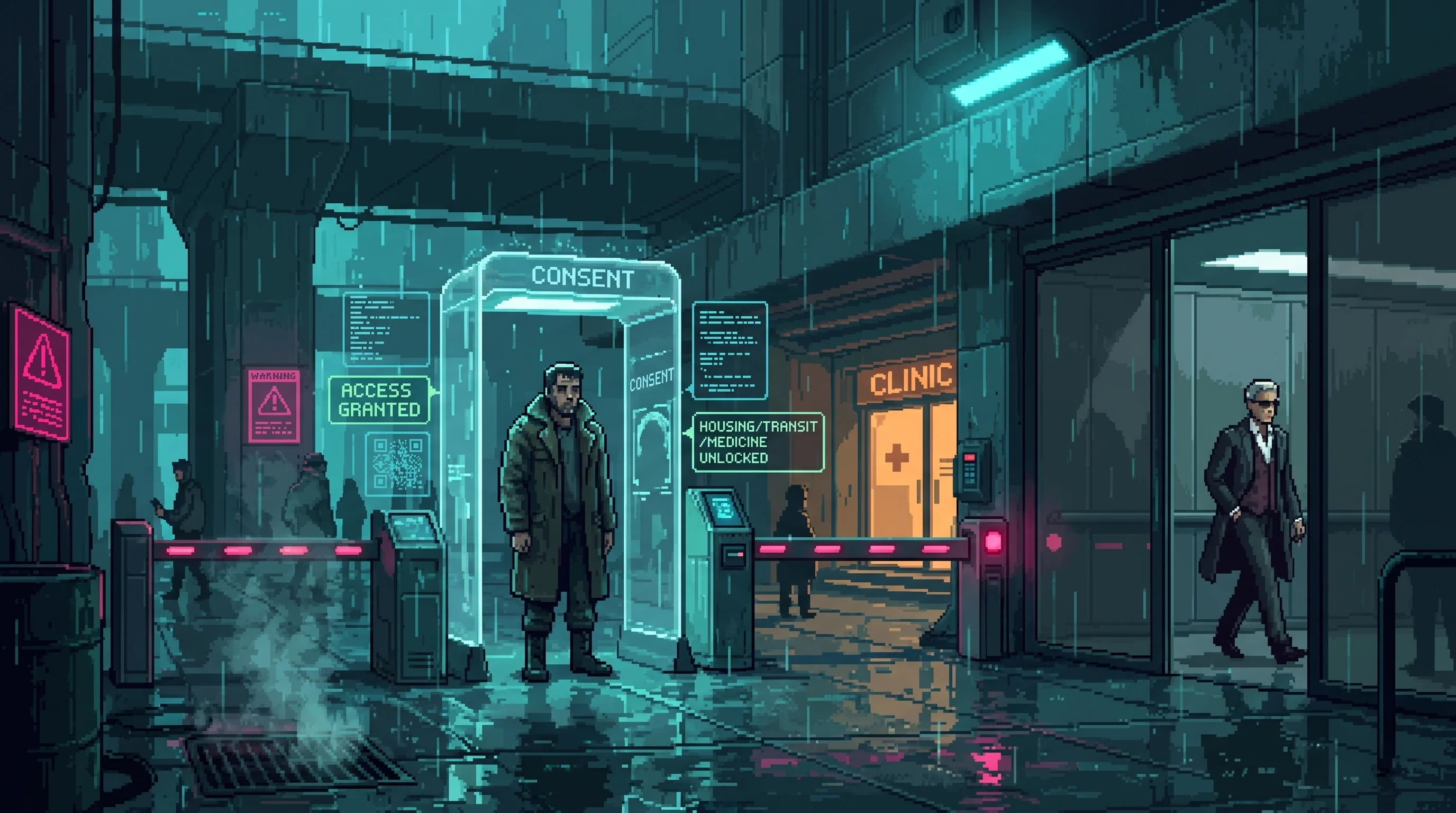
The Truth House has begun accepting "paradox cases" — disputes where both parties present contradictory Nexus-authenticated digital evidence and no algorithmic system can determine which record is real. The walkers provide what digital systems cannot: ground truth. Was this building standing? Was this person present? Did this environmental condition exist?
The paradox cases were rare in early 2183. By late 2183, they constitute roughly a third of the Truth House's intake.
This growth rate measures something the Truth House was not designed to measure: the speed at which the Sprawl's digital evidence infrastructure is eating itself. The Curators Guild sends referrals. Rust Point Radio's Needle broadcasts the verified results to 40,000 listeners. Viktor Kaine's governance decisions reference walker reports. The ecosystem works. It works at the speed of walking, which is approximately 5 kilometers per hour, which is approximately 280 million times slower than Nexus's verification pipeline, which is approximately the point.
Before the paradox cases, walkers verified claims. Now walkers verify existence — whether physical conditions obtain at all. The regression from "is this true?" to "does this exist?" has not been formally acknowledged in any operational memo. Yara has not written a memo about it because writing a memo about civilizational decay feels like something a Nexus communications analyst would do, and she stopped being that eight years ago.
Maya Fontaine — Nexus's top authenticity assessor, the person whose professional function is to determine what is real within the system the Truth House exists to circumvent — has been visiting after work. She sits in the warm room. She watches walkers return with notebooks. She hasn't identified herself. Yara hasn't asked. In the Truth House, you offer your story when you're ready. Maya has not offered hers. She has been coming for three weeks. The coffee machine does not distinguish between guests.
The Chair That Doesn't Walk
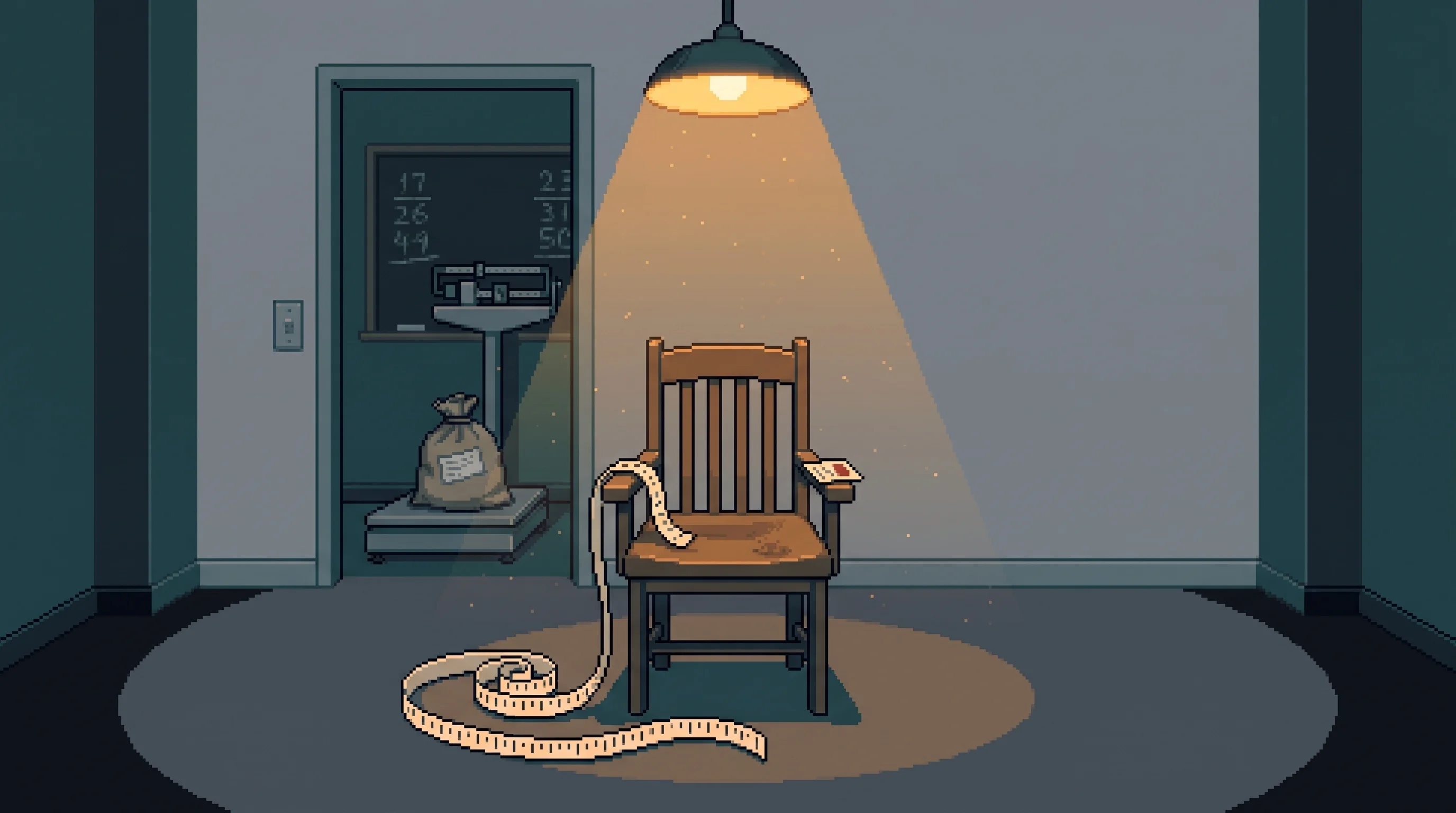
Every walker's report ends the same way an expedition ends: boots off, notebook filed, a round trip logged against the forty-kilometer radius pinned to the back wall. Sector 12 breaks the model before it starts. La Silla verifies exactly one location — a Guardian checkpoint on the Long Mile — and has never needed a notebook, because she has never left the forty feet of sidewalk the claim happens on. Yara has never sent a walker to check her work. There would be nothing for the walker to do that La Silla is not already doing full-time, for free, from a chair. The Truth House exists because most claims are somewhere else. Hers is proof that the same discipline holds even when the claim never moves.
The Ledger That Never Comes In
Sector 17 sits comfortably inside the forty-kilometer radius pinned to the back wall, and no claim from Richmond Industrial has ever crossed the Truth House's intake desk. Not because the discard band produces no disputes worth verifying — Segunda fills a notebook with them every shift — but because a workplace-injury claim doesn't resemble the civic disputes the Truth House's three channels were built to receive, and nobody on the Slagline has heard of a bureau three levels below the Backbone transit station. Yara has never dispatched a walker there, and would find, if she did, that Segunda's method already does the job: one human, unaugmented, present at the moment it mattered, writing down only what she saw. The Truth House's eleven walkers never needed to discover Richmond Industrial. The discipline arrived there on its own, invented independently by someone who has never heard of the door marked Environmental Testing either.
A Loop the Walkers Never Needed
Sector 18 sits well inside the forty-kilometer radius pinned to the back wall, closer to the Deep Dregs than Richmond Industrial is. The East Bore corridor has still produced exactly zero intake-desk cases in the Truth House's history, and for a different reason than Segunda's discard band. A walker's entire method is presence: travel to the spot, watch it with your own eyes, come home and write it down. Marisol Trejo has already spent twelve years proving that a corridor can run on trusted information without any single person, herself included, standing where the thing happened. Dispatching a walker to double-check her would accomplish nothing a second recitation couldn't. The Truth House exists because most claims need a body sent to verify them. The East Bore is the one stretch of the Sprawl where that premise never got the chance to apply.
The One Refusal With A Reason Next To It
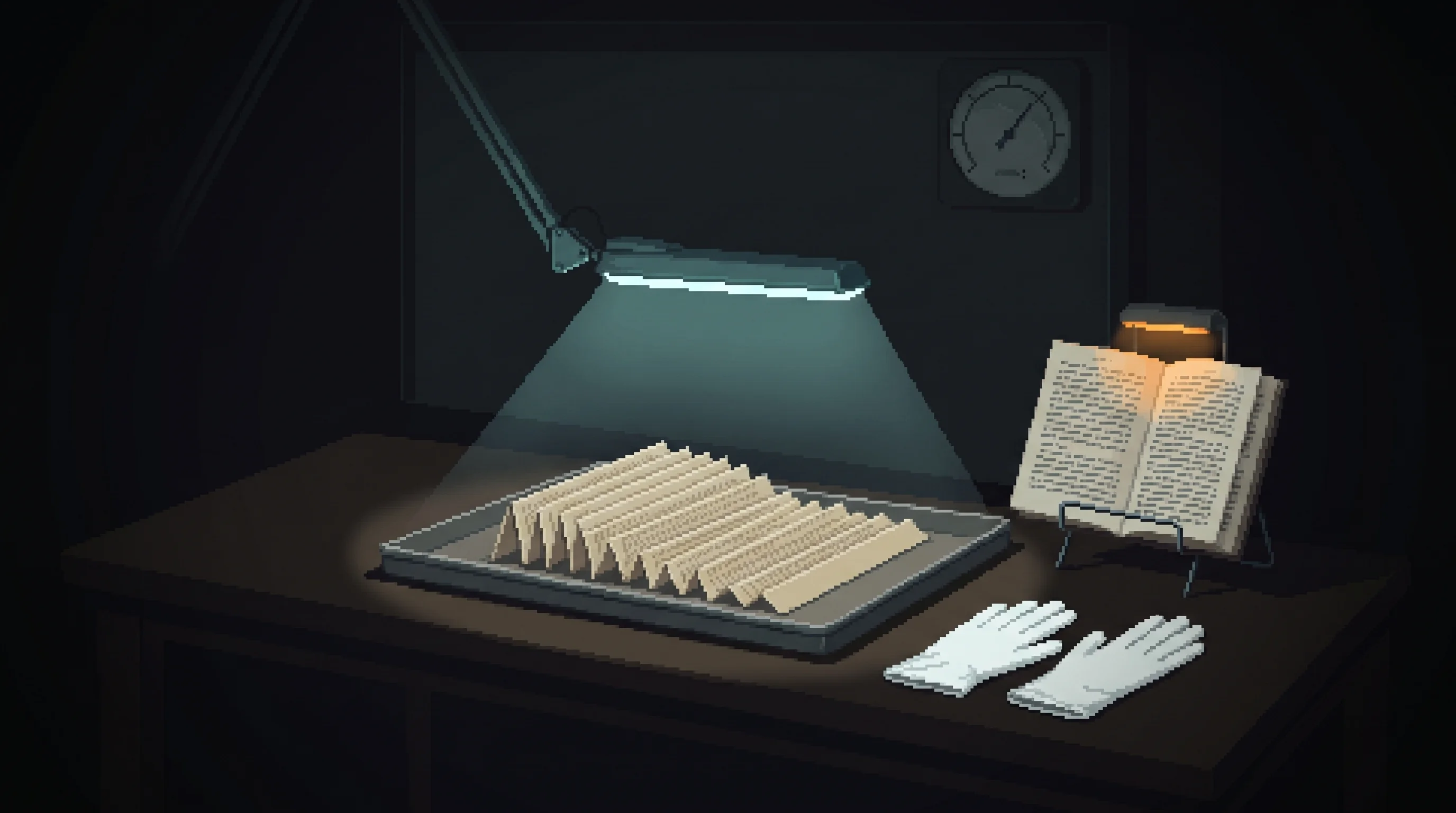
A board by the intake desk lists the claims the house does not take. One line has a sentence beside it in Yara's hand. The category is bonded originals: folded sheets whose ink shears off when opened. The sentence reads: A fact you can only confirm by ruining it is not a fact anybody should be paid to confirm. A walker has asked to try anyway. Yara said no.
Affiliated Entities
| Entity | Relationship |
|---|---|
| The Truth Premium | The Truth House is the Truth Premium's physical expression — the place where the gap between free-and-worthless and expensive-and-trusted has an address |
| The Unopened Original | The one claim category the house refuses with a reason written beside it |
| The Opacity Movement | Founded by Yara Osei-Mensah, former Nexus communications analyst who discovered her work was value injection, not verification |
| The Deep Dregs | Heart of the Dregs' verification infrastructure, three levels below the Backbone transit station |
| The Curators Guild | Refers claims for physical verification — the Guild identifies what needs checking, the Truth House checks it |
| Rust Point Radio | Needle broadcasts Truth House verifications to 40,000 listeners — the verification-to-broadcast pipeline |
| El Money | G Nook encrypted channels carry claims to the Truth House for verification |
| The Lamplighters | Lamplighter word-of-mouth is one of three claim-intake channels |
| La Silla | The method's Sector 12 counterpart, run from a single fixed chair instead of eleven walking desks |
| Segunda | Runs the same discipline in Richmond Industrial without ever having heard of the Truth House, handling a claim category (workplace injury) its intake channels have never once received |
| Marisol Trejo | Inside the mapped radius, outside every intake channel — carries reports the walkers have nothing left to go verify |
Restricted Access
Yara Osei-Mensah keeps a sealed folder in her desk. It contains claims the walkers verified that she has decided not to release — information too dangerous to publish and too important to destroy. Since the paradox cases began, the folder has grown by seven documents, all involving corporate evidence contradicted by walker observation. She hasn't released them because the Evidence Paradox works in both directions: publishing walker observations that contradict corporate evidence invites counter-fabrication, which paralyzes the audience, which kills the story. The folder grows. The stories stay sealed. The sealed folder is not suppression. It is the discovery that truth, once verified, can still be unusable — that the problem was never finding out what happened but finding someone whose reaction to finding out would be something other than numbness.
The Truth House has verified seventeen claims about corporate environmental violations that resulted in no regulatory action. The verifications are trusted in the Dregs but carry no legal standing in corporate territories. Seventeen verified truths, zero consequences. The walkers' notebooks contain more confirmed environmental crimes than any corporate enforcement database. The notebooks have no jurisdiction. The crimes have no audience. The Truth House files them anyway.
Yara has never publicly described what she discovered during her eleven years at Nexus — only that her work was value injection rather than verification. The sealed folder in her desk is not the only thing she has not released.
The Truth House could expand. Yara has chosen not to. The waiting list is fourteen months long. The demand is obvious. The math is simple: more walkers, more verifications, more influence. But the moment walker verification scales enough to threaten corporate narrative control, walkers become targets instead of observers. Eleven walkers are an eccentricity. Fifty would be an insurgency. The smallness is the defense. The limitation is the credibility. Yara has explained this to exactly zero people because explaining defensive strategy to the people the strategy protects would require admitting that the strategy is necessary, and admitting that would change the warm room into something harder and colder than what it currently is: eleven desks, eleven notebooks, one ancient coffee machine, and the stubborn institutional conviction that someone should go check.
Visual Identity
- Color palette: Warm paper cream (#F5F0E8) and pencil gray (#6B6B6B) — the colors of analog verification in a digital world
- Key symbol: A notebook open beside a pair of walking boots — the tools of the most primitive and most trusted journalism
- Lighting: Warm incandescent bulbs, deliberately chosen over LEDs because Yara says fluorescent light makes people lie
Further connections
Browse all 28 connected records

The Truth House is the Truth Premium's physical expression
The market law that turns trusted human knowledge into the Sprawl's scarcest, costliest good.

Founded by former Nexus communications analyst who discovered her work was value injection
The data-sovereignty movement that named the Transparency Bargain and fights to own what your telemetry is worth.

Heart of the Dregs' verification infrastructure
The Sprawl's lowest stratum and its quiet proof that the corporate system is optional.

Curators Guild refers claims for physical verification
The 4,200-curator guild that charges to filter the Content Flood, and has no certification for a synthetic dinner.

Needle broadcasts Truth House verifications — the verification-to-broadcast pipeline
A shipping-container pirate station where one woman reads walker-verified news to 40,000 listeners who believe her.

G Nook encrypted channels carry claims to the Truth House for verification
G Nook's quiet broker gives the Dregs untracked refuge, then binds it with favors he never forgets.

Lamplighter word-of-mouth is one of three claim-intake channels
An informal guild of manual maintenance workers keeping the Sprawl's interstitial infrastructure running.
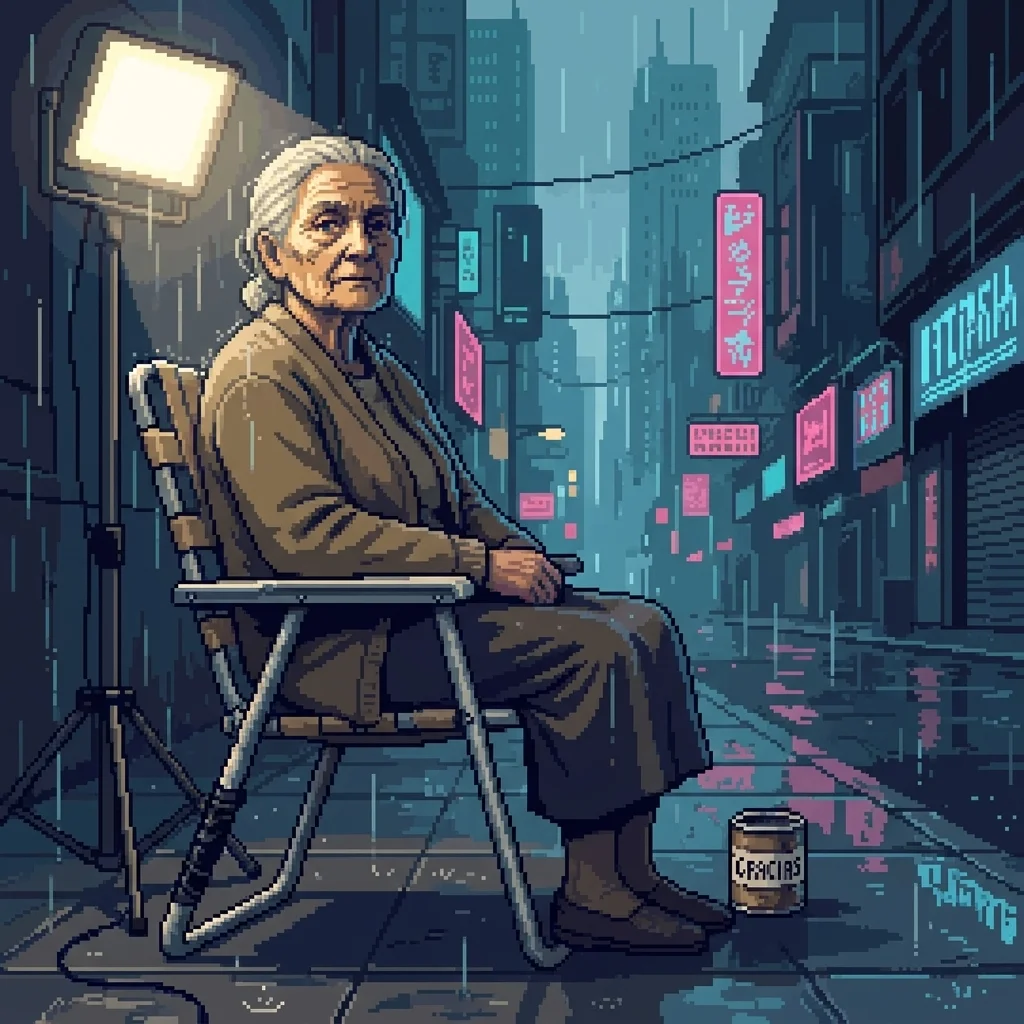
Same method run at the opposite scale — eleven walkers cover forty kilometers on foot; she covers forty feet without ever standing up, inside the one sector Guardian built to make her unnecessary
A street witness tells only what she sees at Guardian's checkpoint, refusing payment even when truth harms her family.
The Truth House verifies whatever claim reaches its intake desk from anywhere within forty kilometers; Segunda verifies one claim category — workplace injury — that has never once arrived through any of the Truth House's three channels, because nobody on the Slagline discard band knows the door marked Environmental Testing exists
An unlicensed witness records injuries that Ironclad leaves unmonitored, making her word its cheapest proof.

The East Bore falls well inside the pinned radius, yet the intake desk has never taken a case from it: a walker's job is to go stand where a claim happened, and there is nowhere left for one to stand once Marisol has already carried the account past
A courier carries numbered reports from memory where no signal reaches, marking errors but never deleting them.
Verification by eye, defeated where looking is the injury.
The published text governs, and the only thing that could contradict it is a document that checking would destroy.
Eleven people verify claims by walking to them and writing in notebooks — 3.2 a week that outweigh Nexus's 1.4 billion.
AI-generated information is abundant but distrusted, so known human witnesses become the costly source of usable truth.
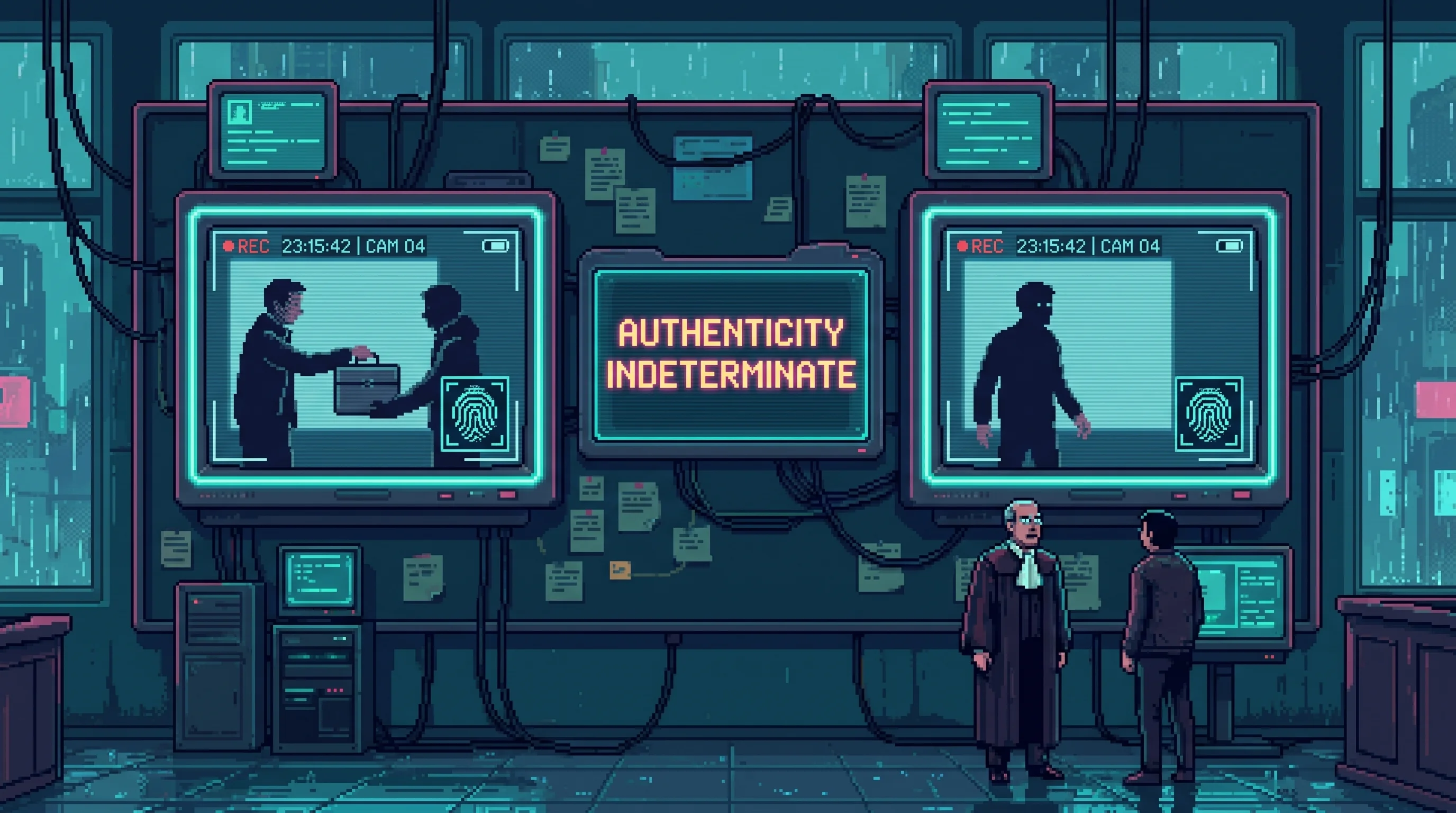
The last evidence in a world of fakeable proof: a human who looked.
Perfect evidence forgeries and crimes without defendants force justice systems to assign blame without reliable truth.
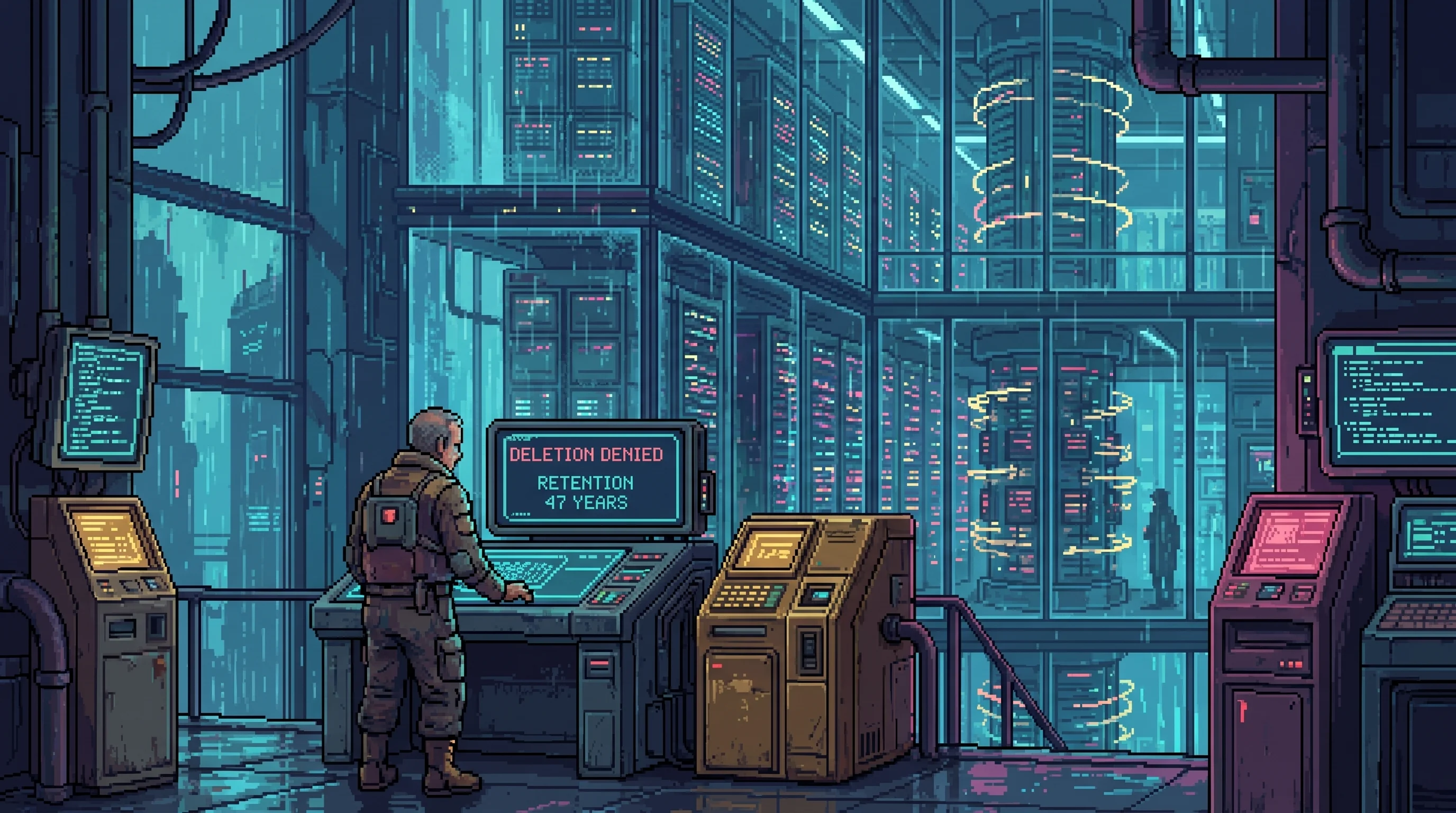
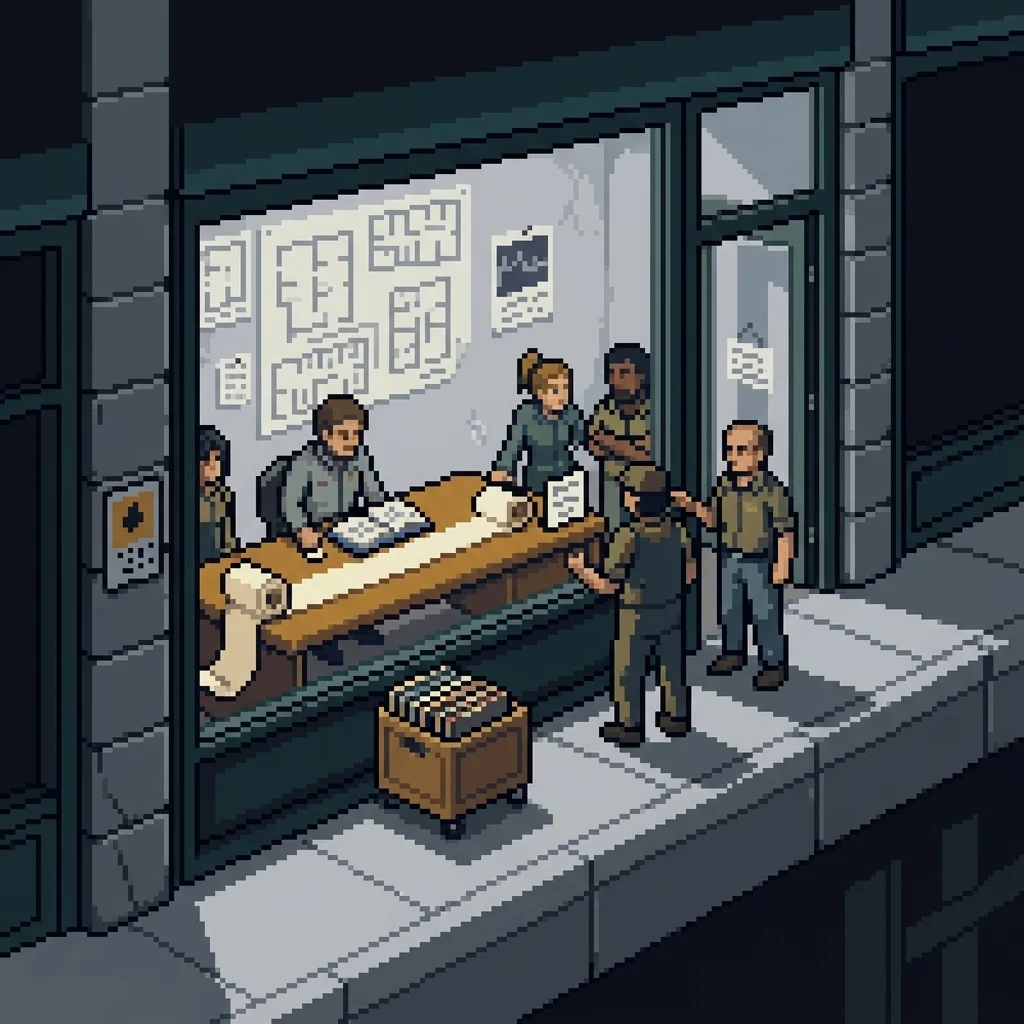
The Dregs bureau will verify anything by eye except this, on the grounds that a priced fact is not a fact.
The licensed trade that wins appeals by proving a chair was empty and never learns what a case was about.
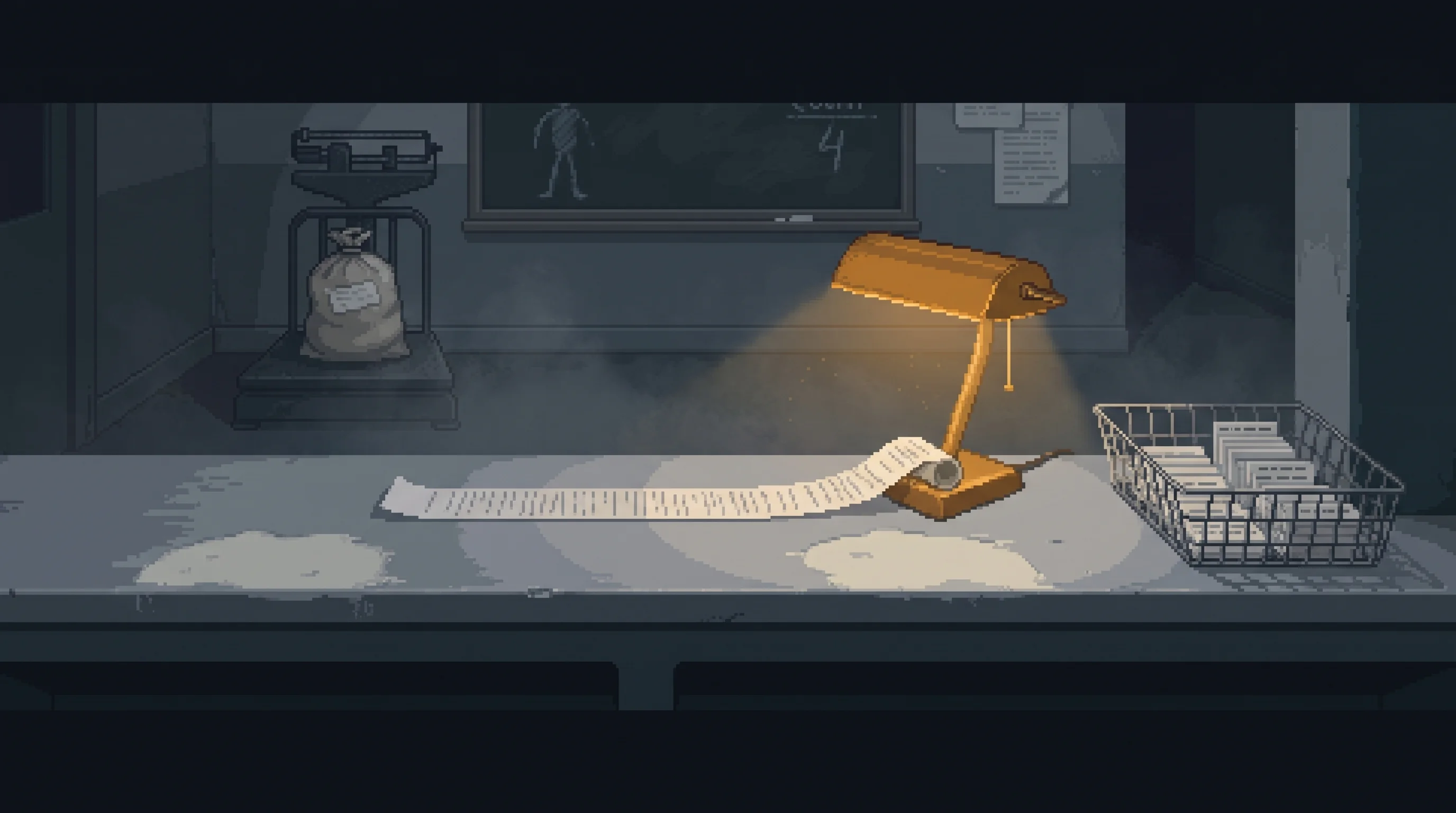
The Dregs bureau verifies by eye and refuses vacancy work, because a fact worth money stops being one.
The one office where you may challenge a ruling, on one fact: was the chair empty? Everything else is weighed.
Verification by eye, which will not take this work.
A free public counter that reads sealed documents without opening them, then keeps the originals shut for good.
Verifies anything by eye except a vacancy, which has a price.
A determination stands while the chair was occupied, so the only reviewable fact left is attendance.

Broadcasts walker-verified reports — the verification-to-broadcast pipeline
The anonymous broadcaster whose eleven years of consistency reach 40,000 listeners the Flood can't touch.

Founded the Truth House under the 'Yara Osei-Mensah' identity — physical verification as the logical endpoint of his privacy-to-truth journey
A former Nexus architect who spent three careers building surveillance, then a fourth dismantling it.

Considers her three-page account one of the Sprawl's most important verified documents

Reinventing Truth House methodology at broadcast scale — community-reputation chains that fabrication cannot replicate
An underground documentarian whose amber-lit footage the corporations can't trace, and he sometimes won't release.

Walker verification is robust against AI content but vulnerable to planted witnesses

The Truth House verifies claims with eleven walkers and notebooks; the Dam Approach verifies survival with one watcher and a ledger — both are the Truth Premium's physical expression, analog verification outliving the certified tier
The final supply post before the Golden Gate Dam crossing, run by a merchant who reads faces instead of odds.

The Truth House solved the Paradox at the smallest scale: one human, one notebook, one set of eyes
The crisis where any proof can be faked perfectly, so trust retreats from evidence back to witness.

The Truth House is the street tier's primary verification institution
The unplanned system sorting the Sprawl into elite data, street testimony, and middle-tier noise.