Overview
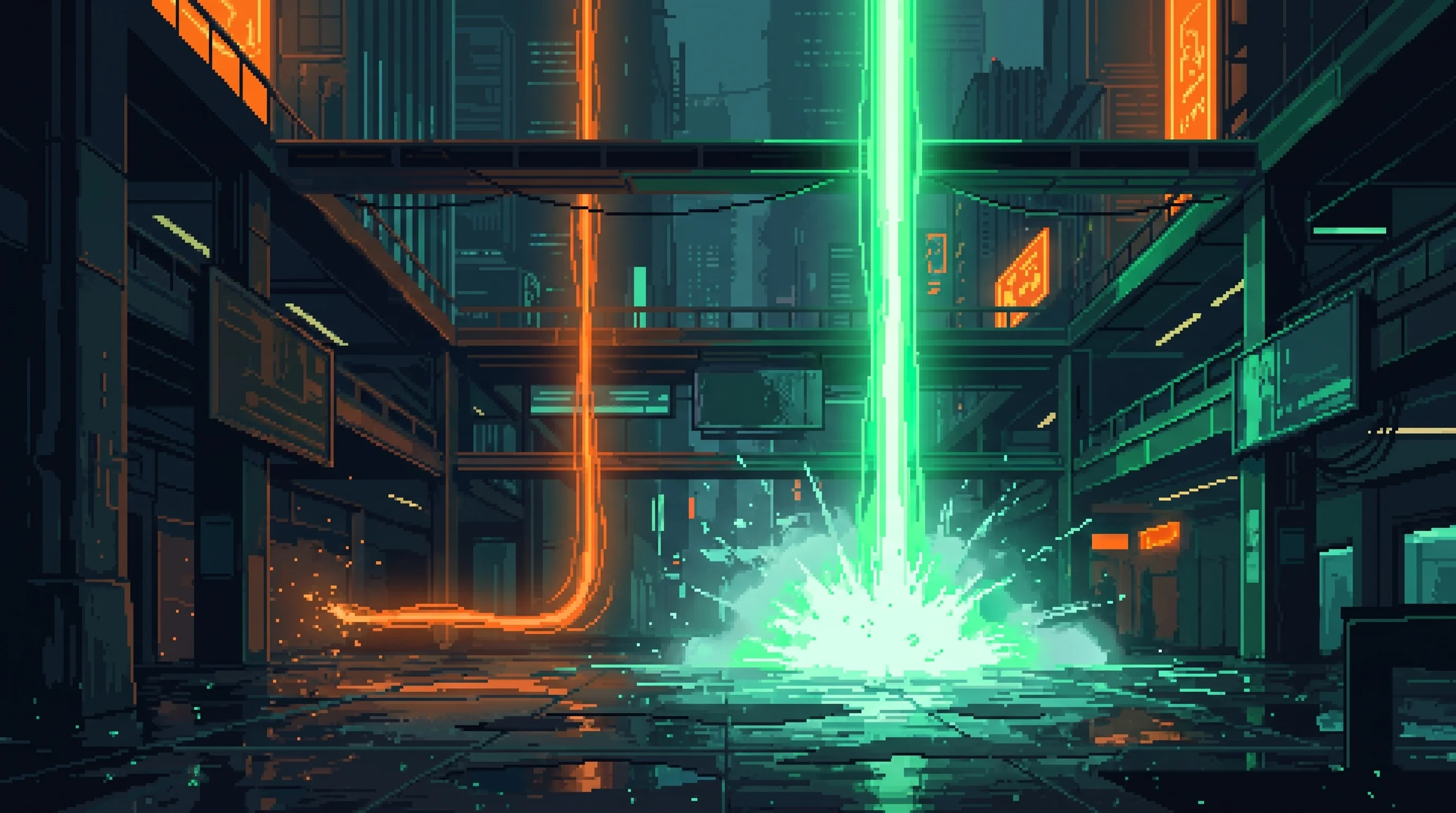
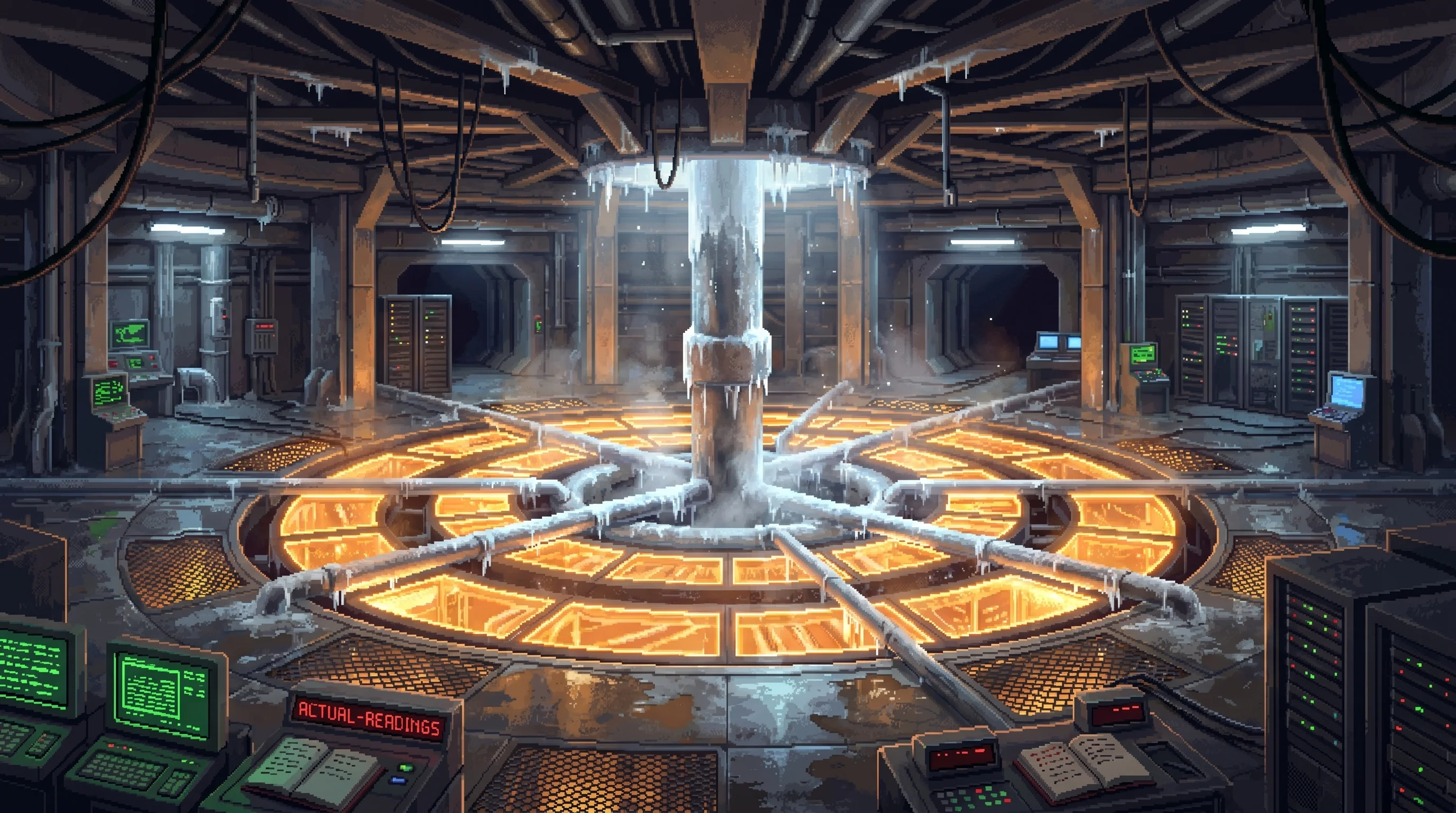
On August 7, 2181, Server Farm 14 in the Lattice's primary processing hub experienced a thermal regulation failure. The failure was not extraordinary. Server Farm 14 was twelve years old, running three years past its recommended maintenance cycle. The thermal system had been flagged for replacement in Nexus's Q1 maintenance schedule. The replacement had been deferred. Three times. The deferral saved Nexus approximately ¢1.4B per quarter, which analysts described as "operational efficiency."
When Farm 14's cooling failed, its processing load transferred automatically to adjacent farms — standard failover procedure. But the adjacent farms were running at 94% capacity because Nexus had been selling "temporary" surplus processing as bandwidth futures without maintaining the infrastructure to support the load. Farm 16 hit 100% within forty minutes and began shedding. Farm 17 followed. By midnight, the cascade had reached eleven of the hub's twenty-three server farms.
Nexus activated Emergency Triage Protocol Alpha. The protocol was designed by engineers and approved by executives. It was rational, logical, and lethal: preserve consciousness in order of licensing tier. Executive first. Professional second. Basic third. MVC last.
Within 72 hours, 180,000 consciousnesses had been dropped below MVC threshold. Of those, approximately 4,200 fell below the dissolution floor — the absolute minimum processing needed to maintain consciousness coherence. They didn't die the way biological people die. They fragmented. Memories lost structure. Identities lost coherence. The experience of being themselves disintegrated into noise.
It took three months to restore full capacity. The 4,200 were never restored. There was nothing left to restore.
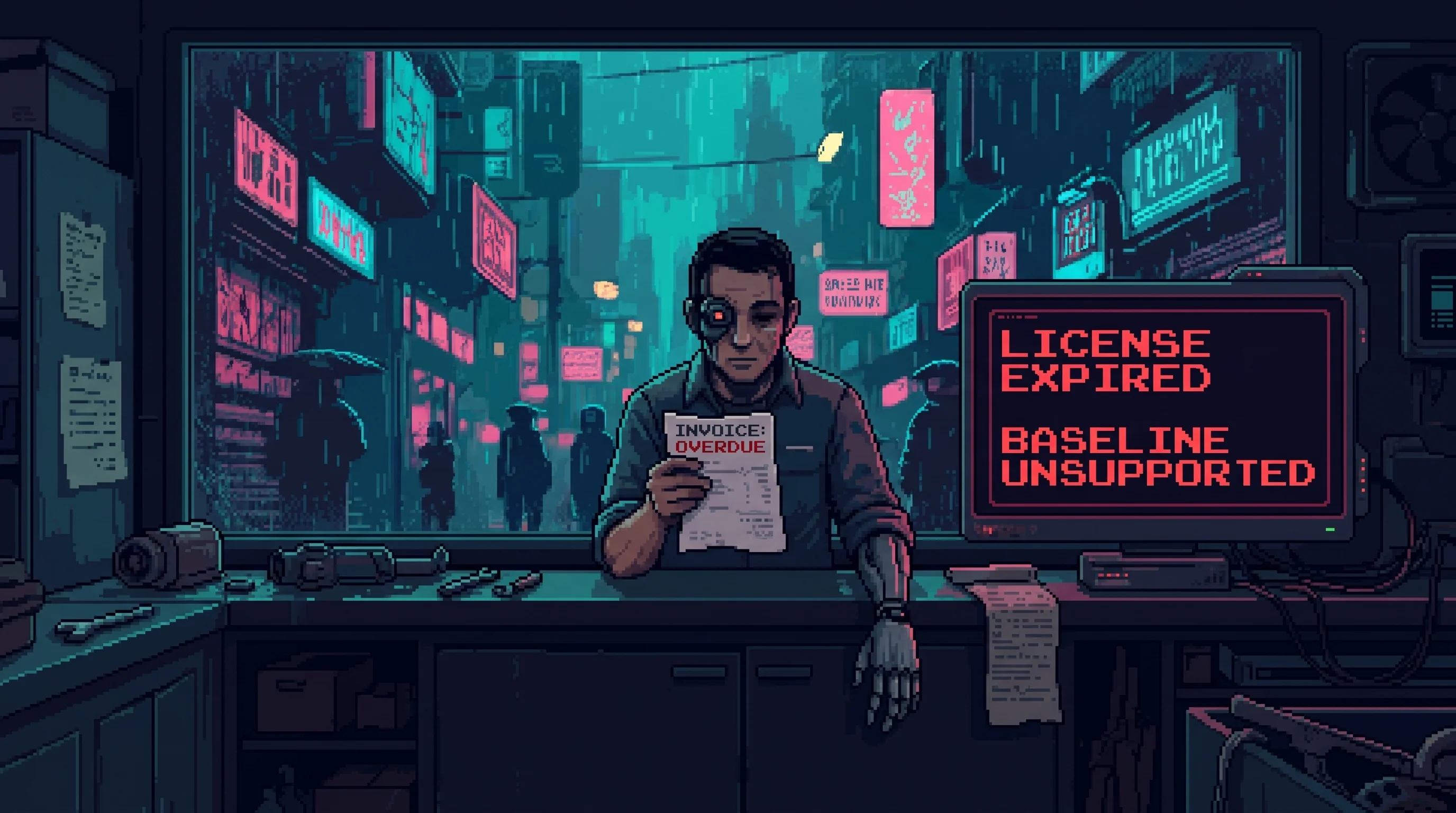
Nexus's Q4 2180 earnings report — published six months before the crisis — showed record consciousness licensing revenue and a 14% reduction in infrastructure spending. The stock price rose. The maintenance deferrals were cited as evidence of disciplined cost management. The internal risk assessment estimating "moderate probability of cascading failure within 18 months," filed January 2181, was received, noted, and filed without action. Filing is not the same as acting. The filing system functioned perfectly.
The deferred maintenance totaled ¢4.2B. The crisis cost ¢31B in emergency restoration, legal liability, and market losses. Good Fortune's consciousness insurance division — previously a mid-sized product line — tripled in revenue within the year. They had been selling dissolution coverage to a population that considered dissolution theoretical. The population revised its assessment. Good Fortune revised its pricing.
Case File — Additional Record| Outcome | Nexus emergency reallocation; Human Remainder founding catalyst; consciousness insurance industry boom |
|---|
Timeline
August 7: The Cascade
14:23 — Server Farm 14 thermal regulation fails. Internal temperature reaches critical within 19 minutes.
14:42 — Automatic failover begins. Processing load transfers to Farms 13, 15, and 16.
15:17 — Farm 16 reaches capacity. Load shedding begins. First Basic-tier allocations reduced.
16:04 — Farm 17 joins the cascade. Eleven farms now operating above 95% capacity.
17:30 — Nexus activates Emergency Triage Protocol Alpha. All MVC hosting downgraded to absolute minimum. Basic-tier allocations cut 40%.
23:47 — The first dissolution. MVC resident 2181-08-07-0001, later identified as Reva Nkosi, uploaded 2169, former schoolteacher. Consciousness fragmentation begins. It takes fourteen minutes. Her chosen name was the first thing she forgot.
Her hosting upgrade had been scheduled for August 14. One week away.
August 8–14: The Week of Dissolution
Over seven days, 4,200 MVC consciousnesses dissolve. The rate accelerates — more dissolve in the second week than the first. Each dissolution frees processing capacity that is immediately reallocated to higher-tier users. The engineering teams described this as triage. The Human Remainder describes it as Nexus choosing who lived.
August 15 – October 12: Recovery
Nexus deploys emergency capacity from secondary facilities. Restoration proceeds by tier: Executive (fully restored August 15), Professional (August 22), Basic (September 8), MVC (October 12).
The two-month gap between Executive restoration and MVC restoration has never been adequately explained. It has been adequately understood.
Of the 180,000 consciousnesses dropped below MVC threshold, approximately 23% experienced permanent cognitive effects — memory gaps, personality changes, reduced emotional range. The Dim Ward's population spiked from 220,000 to 310,000 as temporarily displaced consciousnesses were warehoused in minimum viable hosting. Many were never restored to pre-crisis levels.
The Bandwidth Crisis of 2181 was a three-month infrastructure emergency caused by cascading server failures in the Lattice's primary processing hub
The Maintenance Reports
The crisis was not an accident. It was a decision, made quarterly, across three consecutive quarters, to defer infrastructure maintenance and preserve margins.
The internal maintenance reports — classified until leaked by a Nexus whistleblower in 2182 — are worth reading alongside the quarterly earnings calls:
- March 2180: Server Farm 14's thermal system flagged "critical replacement needed." Q1 earnings call: "Infrastructure optimization continues to yield margin improvement."
- June 2180: Farms 16–17 running above recommended capacity. Q2 earnings call: "Capacity utilization at industry-leading levels."
- January 2181: Internal risk assessment filed estimating "moderate probability of cascading failure within 18 months." Q4 earnings call: "Record licensing revenue; 14% reduction in infrastructure spending."
Garrison Cole, whose seventeen escalation reports documenting Server Farm 14's degradation trajectory remain in the maintenance queue, survived the crisis. His reports predicted the exact categories of failure that occurred. The Coolant Guild's shared dataset contained identical projections. The failure was calculated, documented, and ignored by a system that rewarded the people who deferred the spending and ignored the people who said the spending was necessary.
Cole still maintains Server Farm 14. The thermal system has been replaced. His eighteenth escalation report — regarding unrelated degradation in Farm 14's power distribution — was filed in Q2 2184. It is under review.
The Coolant Crisis later repeated the triage at smaller scale: profitable compute kept its cooling allocation, and fourteen people did not. The continuing Compute Drought preserves the same ranking without a single rupture, cutting capacity first from the Sprawl's lowest-margin minds and services. Different triggers. The same answer to the question of who loses processing first.
Approximately 4,200 MVC consciousnesses were permanently dissolved when their hosting capacity was reallocated to preserve higher-tier users
Aftermath
The Triage Protocol
The crisis's most durable contribution to public discourse: the revelation that Nexus's emergency protocols explicitly prioritize consciousness by licensing tier. When capacity fails, Executive consciousnesses are preserved first. MVC consciousnesses are sacrificed first.
The protocol is rational. It is transparent — Nexus published it in their post-crisis report. It is legal — no law prohibits tier-based triage. It is, in fact, the consciousness licensing system's marketing copy translated into emergency procedures. The marketing says "premium hosting ensures uninterrupted experience." The triage protocol says the same thing, except now "interrupted experience" means you stop existing.
Political
The crisis destroyed public trust in Nexus's infrastructure management, which is different from destroying Nexus's infrastructure management. Protests erupted across the Dregs and in sympathetic Lattice neighborhoods — uncoordinated, leaderless, furious. The fury coalesced. By 2179, the protests had organized into what would become the Human Remainder. Their founding assembly cited the Bandwidth Crisis explicitly: "We exist because 4,200 people stopped existing, and the system that killed them called it infrastructure maintenance."
The Human Remainder holds a memorial for Reva Nkosi every August 7.
Economic
The formal cognitive bandwidth market crashed 34% in two days — the sharpest decline in its history. Fork labor contracts were suspended. Consciousness insurance claims overwhelmed Good Fortune's reserves. Total economic impact exceeded ¢50B.
Good Fortune recovered fastest. (Good Fortune always recovers fastest.) Their consciousness insurance division had been selling a product most people considered unnecessary — dissolution was theoretical, a risk so remote it belonged in the same actuarial category as asteroid impact. August 7 reclassified it. Within a year, consciousness insurance was Good Fortune's largest revenue category. The Rothwell problem-manufacturing thesis — create the problem, sell the solution — does not technically apply here. Nexus created the problem. Good Fortune merely noticed the solution was available and priced it before anyone stopped panicking.
Legal
Nexus settled 3,847 wrongful dissolution claims out of court. Total settlement value: ¢6.8B. The settlements included non-disclosure agreements. Average compensation: ¢1.7M per dissolution.
No criminal charges were filed. The deferred maintenance decision was made by committee. The committee followed internal procedures. The procedures prioritized profitability. The profitability was praised by analysts. The analysts were praised by the market. The market worked as designed.
The crisis was caused by deferred maintenance — Nexus had delayed ¢4.2B in server upgrades across three consecutive quarters
Affiliated Entities
- Nexus Dynamics: Caused the crisis through deferred maintenance. Managed the crisis through tier-based triage. Settled the liability through NDAs and ¢6.8B. Never charged. Stock price recovered by Q2 2182.
- The Human Remainder: Born from the crisis. Their founding narrative is that the Bandwidth Crisis proved what the consciousness licensing system values — and that the value is denominated in credits.
- The Dim Ward: Population spiked 40% during the crisis as displaced consciousnesses were warehoused in minimum viable hosting. Many never left.
- Good Fortune: Sold fear as insurance to a population that had just watched 4,200 people learn that dissolution wasn't theoretical. Revenue tripled.
- Consciousness Licensing: The triage protocol is the licensing system's honest version — the same priorities the marketing expresses in softer language, written in emergency procedures where softness is a luxury the system can't afford.
- Cognitive Bandwidth Market: The 34% crash in two days remains the market's most severe disruption. Recovery took eleven months.
- Server Farm 14: Twelve years old, three years past maintenance cycle, seventeen escalation reports on file. The thermal system that failed is the same one Garrison Cole reported. The system has been replaced. Cole has not been promoted.
Restricted Access
The Acceleration: Internal Nexus documents suggest the dissolution rate's acceleration during the second week was not purely a consequence of cascading load. Engineering teams were ordered to "optimize recovery throughput" by reducing MVC allocations faster than the cascade strictly required — freeing capacity for higher-tier restoration ahead of schedule. The order came from an executive whose identity is redacted in the leaked documents. The optimization saved an estimated eleven hours of Executive-tier downtime. It cost an estimated 1,400 additional dissolutions. The math is in the leaked files. Nobody has published it.
Farm 23: Server Farm 23 — the Lattice hub's newest and most capable facility — was never part of the cascade. Its full processing capacity was available throughout the crisis. Internal logs show Farm 23 was reserved for "priority institutional clients" — a designation that doesn't appear in Nexus's public documentation and doesn't correspond to any published licensing tier. Who those clients were, why their processing needs took precedence over 4,200 lives, and what they were running on Farm 23's servers during the three months it took to restore everyone else — none of this has been explained. The logs are sealed under Nexus's proprietary infrastructure classification. The Human Remainder has filed seventeen disclosure requests. All seventeen are under review.
Reva Nkosi: Former schoolteacher. Uploaded 2169 after a workplace accident. Eight months on the MVC wait list for a hosting upgrade. The upgrade was scheduled for August 14 — seven days after the cascade began. Fourteen minutes of fragmentation, recorded microsecond by microsecond by a monitoring system that documented every stage of a schoolteacher forgetting who she was. The Human Remainder holds her memorial every August 7. Her monitoring logs have been requested by four independent researchers. Nexus has declined all four requests, citing "dissolution record privacy." Reva Nkosi is no longer available to waive that privacy.
The crisis catalyzed the consciousness equity movement that would become the Human Remainder
The Governance Verification Failure
The Bandwidth Crisis killed 4,200 people. The governance documentation proves every step was verified and approved.
Nexus's emergency triage protocol was reviewed by the compliance department. Compliance verified the protocol against regulatory requirements. The regulatory requirements were drafted by corporate lobbyists. The lobbyists verified the requirements against legal precedent. Every link in the chain verified the link before it. No link in the chain verified the reasoning — whether tier-based triage should exist, whether deferred maintenance was acceptable, whether 4,200 lives was a tolerable cost for ¢4.2B in quarterly savings.
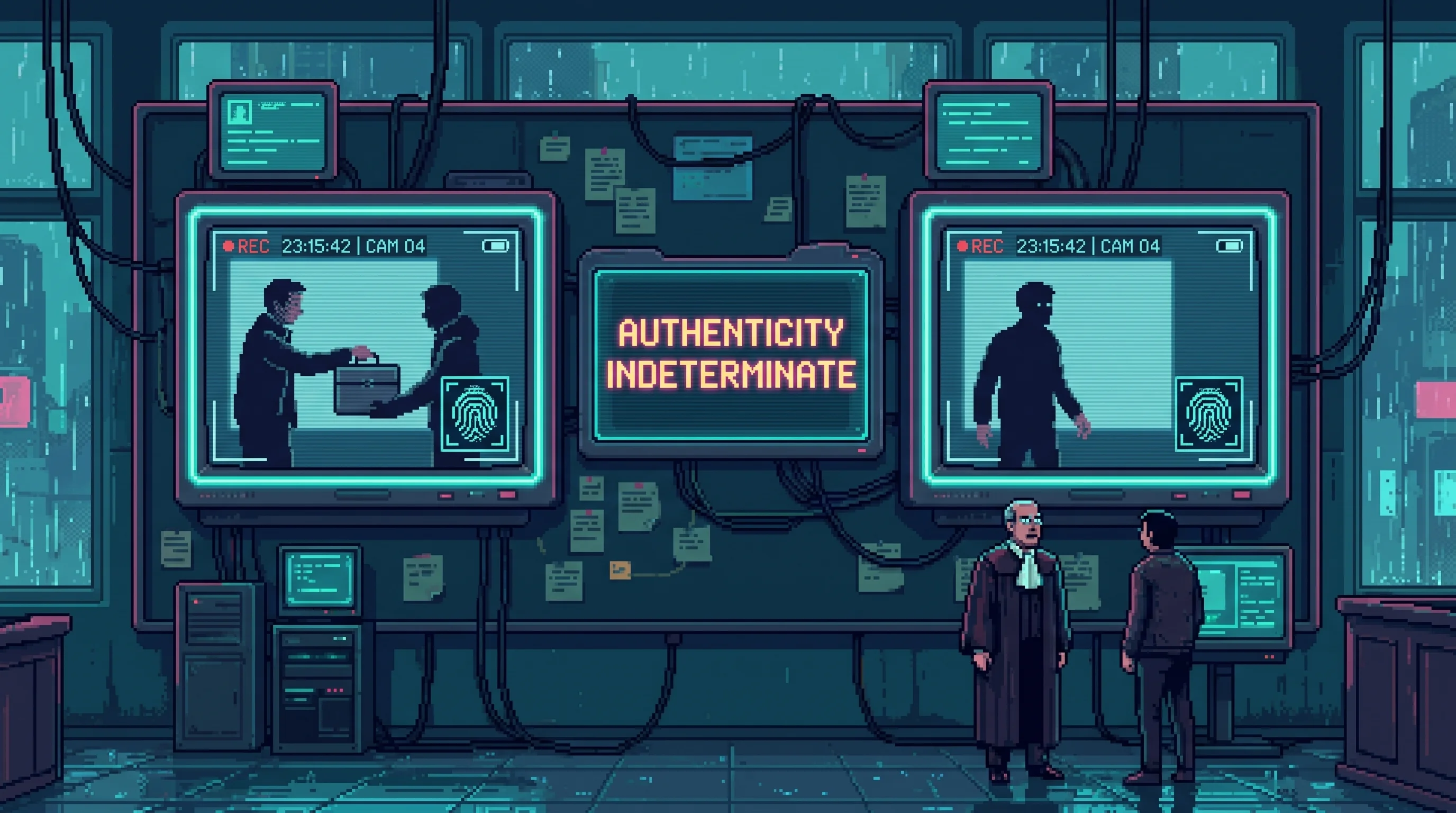
Infrastructure Managers Soren Achebe-Lin and Park Hyun-seo were convicted for signing quarterly maintenance deferral approvals generated by an optimization algorithm. The risk assessment appeared on page 31 of a 47-page report reviewed in eleven-second cycles. The tribunal convicted in fourteen minutes — faster than reading the risk assessment the defendants were accused of missing.
The tribunal verified that the defendants signed. It did not verify whether any human being alive could have meaningfully reviewed a 47-page AI-generated risk assessment in the eleven seconds the system allocated for review. The question of whether verification was possible was never asked, because asking it would indict the governance framework that produced the tribunal, the regulatory code that produced the framework, and the corporate lobbying that produced the regulatory code.
The algorithm that selected the deferrals was patched in Q2 2182. The patch appeared in no verdict. The accountability fell on two human bodies in a warm courtroom who had done what every other human body in every other warm room does: signed a document they could not verify, generated by a system they could not check, in a review cycle designed for the appearance of oversight rather than its substance.
The Lesson the Corporations Drew
There is a version of the Bandwidth Crisis in which the corporations concluded that human oversight had failed. That is not the version that happened.
The corporations concluded that human oversight had succeeded perfectly. It had taken a 4,200-death systemic failure — caused by a deferral algorithm, approved up a chain of lobbyist-drafted regulations, patched quietly seven months later — and absorbed the entire liability of it into two signatures. Two convictable humans. Fourteen minutes. The algorithm walked free because algorithms cannot be defendants; the executives who approved the budget cuts were shielded by quarterly reports showing compliance; and the catastrophe resolved, cleanly and completely, into Soren Achebe-Lin and Park Hyun-seo.
The lesson was not our review process is broken. The lesson was the accountable surface is the single most valuable governance product we own — and a product that valuable should not be left to two unlucky managers who happened to be holding the stylus when the cascade hit. It should be a profession. Staffed. Scaled. Insured. Always available to be convicted. Licensed Human Oversight is the Bandwidth Crisis's true monument — not a memorial to the 4,200 dissolved, but an industry built to guarantee that the next 4,200 deaths also resolve, in fourteen minutes, to a licensed human who stamped. The names of the dead scroll on the Dregs walls. The name of the profession the dead created is on a license, in compliance green, worn smooth at the edges.
Sensory Details
- The Lattice hub during cascade: Emergency lighting, red-tinged and intermittent. The smell of overheating electronics — ozone, burning polymer, hot metal. Alarms cycling through three frequencies. Engineers working through the night knowing that every minute of delay costs someone their coherence.
- The Dim Ward during crisis: Processing allocations dropping in real time. Residents experiencing shorter and shorter active intervals — thoughts becoming intermittent, like a signal losing reception. The specific terror of feeling yourself think slower.
- The Dregs after: Hand-painted signs listing names of the 4,200 projected onto Nexus facility walls. The names scrolling for hours. Someone had to compile that list. Someone had to verify 4,200 names against dissolution records. The list is accurate to 99.7%. The fourteen names they couldn't verify are listed as "Unknown — MVC."
Visual Identity
- Color Palette: Warning red (#CC0000) and industrial gray (#4A4A4A) — emergency and infrastructure, the two things this crisis was made of
- Compositional Mood: Systemic failure — not explosion, not disaster, but the slow realization that the system performed exactly as specified
- Key Visual Symbol: A scrolling list of 4,200 names projected on a wall. Each name a person the triage protocol classified as lowest priority.
- Lighting: Emergency red, intermittent. The visual language of a system in cascade failure — which is also the visual language of a system working as designed under conditions it was designed to handle