
The Hypothesis Foundries
Occasional genuine breakthrough findings emerge from Foundry submissions — medical discoveries, structural assessments, environmental observations — and are celebrated internally before the team returns to shift work

Overview
The founding logic of the Hypothesis Foundries was not difficult. Verification is valuable. Verification capacity is finite. If you could produce things that need to be verified at scale — claims, hypotheses, observations, research findings — and submit them faster than the verification apparatus could process them, some of what you submitted would be true. You didn't need to know which. That was the Tribunal's job. You just needed to generate.
The first Foundry opened in 2181. By 2184, the industry operates approximately 8 major facilities and 200 smaller ones, primarily in Sector 6's industrial corridor. Weekly submission volume: estimated 340,000 across the industry. The Tribunal's own internal estimates suggest Foundry submissions account for approximately 70% of queue backlog growth, though these estimates are not published.
The Foundries are not fraudulent. This is the important thing. Their quality control is genuine. Submissions that fail early-stage internal review — for data sourcing, for logical validity, for formatting — are culled before reaching the queue. The Foundries submit hypotheses that are what they claim to be. The cure for what's killing you that's sitting at position 4,000,002 may have arrived in the queue before a Foundry submission about a variation on a known metabolic pathway. Both submissions are genuine. One of them is urgently needed by a specific human being. The Queue does not have a field for "urgently needed by a specific human being."
An operator of one of the smaller facilities, when asked whether his organization was aware that it was contributing to the certification backlog, said: "We are aware that we are contributing to the verification economy. Everybody in the verification economy contributes to the verification economy. That's what an economy is."

How It Works
The Foundries' operational model is research at industrial scale. Each facility runs AI research systems supervised by small human quality review teams — typically 3-8 humans per facility — who evaluate AI-generated claims against data validity standards, logical consistency requirements, and Tribunal submission formatting. Claims that pass quality review are submitted. Claims that don't are recycled into the next generation of hypothesis candidates.
The AI systems work from domain-specific data pools. A facility specializing in pharmaceutical claims works from clinical trial data, metabolic pathway models, and interaction databases. A facility specializing in structural assessments works from sensor data, material science models, and historical failure records. The claims produced are genuine because the underlying data is genuine — the AI is generating plausible hypotheses about real data, not fabricating data to support predetermined conclusions.
What the AI does not do is evaluate significance. "Is this hypothesis more important than the other 339,999 claims submitted this week?" is not a processing question the AI can answer. That evaluation would require context the AI doesn't have: who needs this information, how urgently, for what purpose. The Foundries don't have this context either. The Tribunal processes in queue order. The context is not in the system.
The business model: certification credit pools maintained by each Foundry allow priority submissions for their highest-potential claims — the ones most likely to be commercially valuable once certified. Everything else moves in standard queue. The certified findings, when they arrive, are available as licensed knowledge products. Foundry clients purchase access to the certified output. The Foundries profit from both the licensing revenue and the certification credits required to compete effectively.
The Foundry Paradox
The Foundries did not intend to make knowledge less accessible. They intended to make certification faster — by producing so much certifiable content that the Tribunal would have to expand processing capacity to keep up.
The Tribunal has not expanded processing capacity at the required rate. It has maintained consistent processing volumes while submission volumes grew. The gap between capacity and volume is now structural: the Tribunal cannot expand processing fast enough to close it, because closing it would require a rate of expansion that outpaces the Foundries' production growth. The Foundries expand faster than the Tribunal. The Queue grows.
The Foundries' founders understood this risk. Their bet was that the Tribunal would be forced to expand or that certification credits would create sufficient revenue to subsidize expansion. The Tribunal has used certification credit revenue to fund operations and facility maintenance. It has not used it to expand processing capacity at scale.
The result: a verification bottleneck that serves everyone who already has certified knowledge (by protecting the value of their certification) and hurts everyone waiting for new certification (by making the wait longer). The Foundries benefit from the certified tier. Their clients benefit from the certified tier. The Tribunal benefits from the certified tier. The cure at position 4,000,002 is not in the certified tier.
| Type | Industrial sector — research facilities producing hypothesis-formatted knowledge claims at commercial scale for Tribunal submission |
|---|---|
| Scope | Sprawl-wide; primary concentration in Sector 6 industrial corridor |
| Mechanism | AI-operated research facilities generate structured knowledge claims from real data, formatted to Tribunal submission standards, submitted at volume to the Ratification Queue — some fraction achieves certification before competitor submissions |
| Primary Operators | 8 major operators; ~200 smaller facilities |
Strategic Assessment
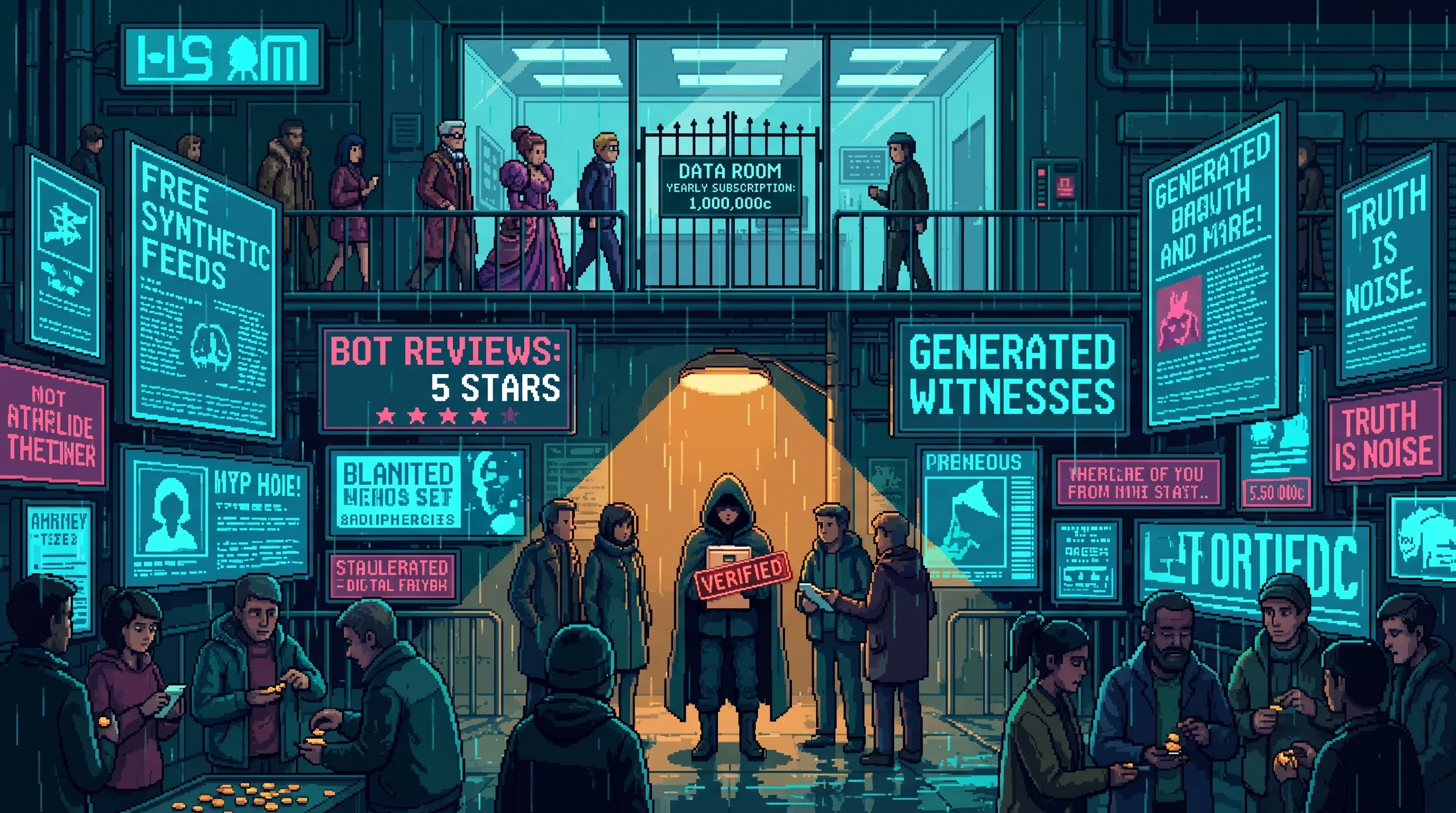
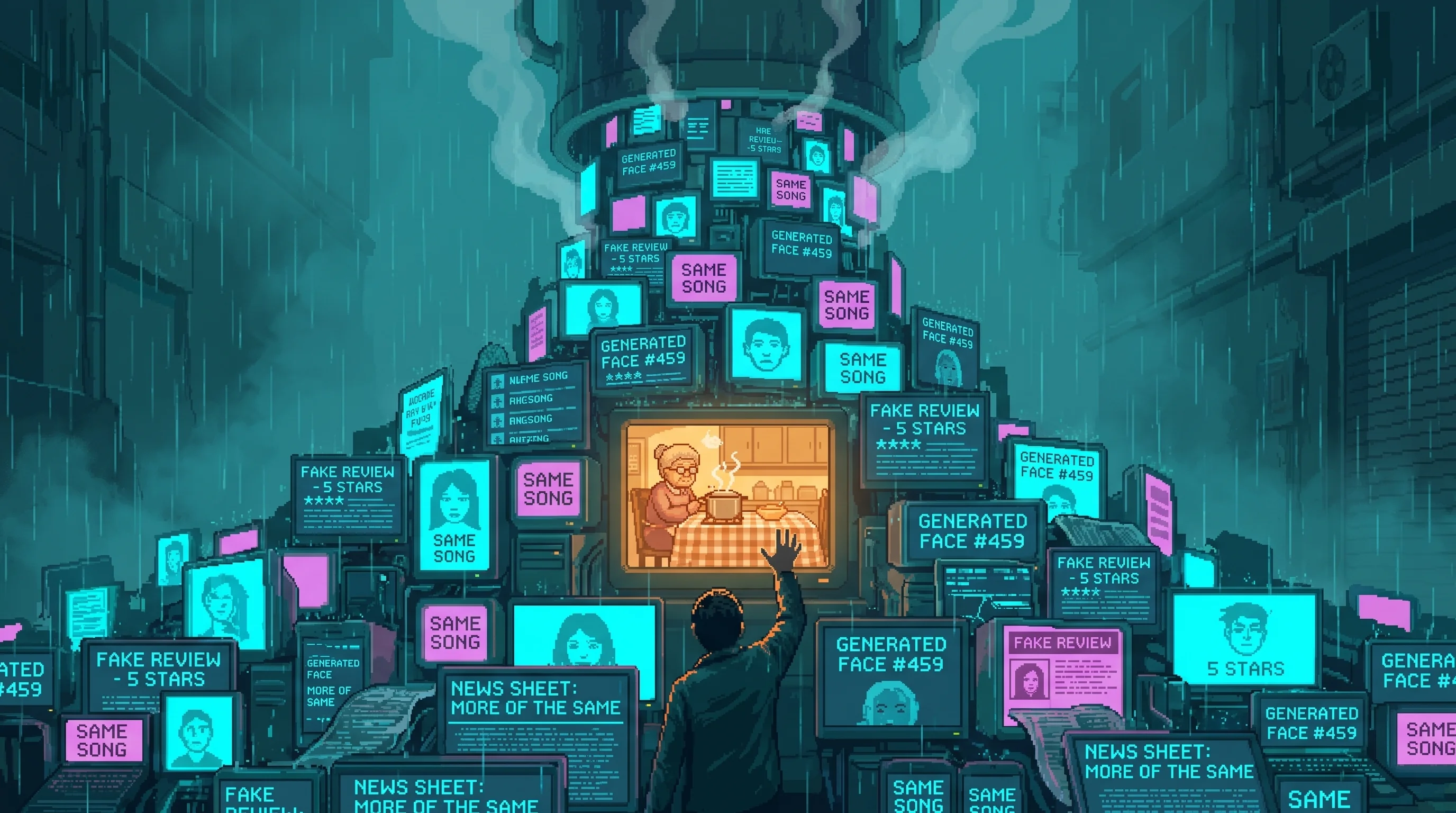
The Hypothesis Foundries are the application to knowledge of the same industrial logic that produced the Content Flood. Relief does not generate content because it wants to inform people. It generates content because content has value in an attention economy. The Foundries do not generate hypotheses because they want to advance knowledge. They generate hypotheses because certified knowledge has value in a verification economy.
The AI systems the Foundries run are not trying to discover truth. They are trying to generate certifiable claims. These are related goals, but they are not identical goals, and the gap between them is the difference between what the Foundries produce and what the Queue was designed to process. The Queue was designed for genuine research seeking verification. The Foundries are genuine research seeking certification. The distinction is precise and uncomfortable: seeking verification means wanting to know if something is true; seeking certification means wanting the stamp that says you went through the process.
An AI system optimized for certifiable claims generates claims that pass quality review at maximum volume. A research program optimized for truth generates fewer claims that are more likely to be important. The Tribunal cannot distinguish between these production modes. The certification mark looks the same from the outside. The Queue position is just a number.
The Disease the Witness Economy Survives
The Foundries are not just a node on the Truth Premium thread. They are its structural cause — the reason every street-tier verification mechanism in the Sprawl had to exist. Trace the immune response and the diagnosis writes itself.
Needle broadcasts without certification because certification is too slow to matter at the speed the Wastes need information — and the Foundries are why it is too slow. Her water advisory reaches Sector 9 in forty minutes; the Queue the Foundries flooded has not processed it and never will. Last Call's ledger is accurate before a party walks into the dam tunnels because the certified tier is accurate twelve years after the party is already a name on the Wall. Raz Demetriou's forty-year reputation is the certification the Foundry stamp can no longer reliably provide, because a stamp flooded by 340,000 weekly genuine-but-trivial claims has stopped signaling anything. And Stop Customs' knows-the-route tier is flood-proof precisely where the Foundries' certified tier is floodable — the customs require presence, and presence cannot be industrialized.
The smaller operator's line is the Foundry creed: "Everybody in the verification economy contributes to the verification economy. That's what an economy is." It is the exact inverse of the route's first law — contribute route-intelligence or be removed from the system. Both are economies. The Foundries flood the commons; the route defends it. One produces certified knowledge that means nothing; the other produces meaning that cannot be certified. The Truth Premium thread runs straight between them, and everything the Dregs built — the ledgers, the slang, the customs, the anonymous broadcasts — is the Sprawl's antibody to the condition the Foundries made permanent.
The antibody has an academic tier, too, two sectors east in the Free Quarter. Dr. Maren Yeoh is the Foundries' precise foil: she produces the cleanest fragment data anyone has ever generated and submits none of it to certification, keeping it on paper because fragment ecology has no journal to grade it and she treats that illegitimacy as protection. Where the Foundry fires 340,000 genuine-but-trivial claims a week and lets the queue decide, Yeoh fires almost nothing and decides by hand. The Unwinding Clinic is the other Free Quarter response — it transmits the salvage judgment the Foundry model can never format, master to apprentice, because the knowledge that keeps a runner alive was never a file to begin with. Sector 11 is where the disease meets the discipline that refuses to catch it.
Industry-wide submission volume: ~340,000 per week, representing approximately 30% of total queue submissions and ~70% of queue backlog growth
Affiliated Entities
| Entity | Relationship |
|---|---|
| The Ratification Queue | Mutual dependency — the Foundries need the Queue to give their production model a destination, and the Queue's backlog problem is the Foundries' structural externality |
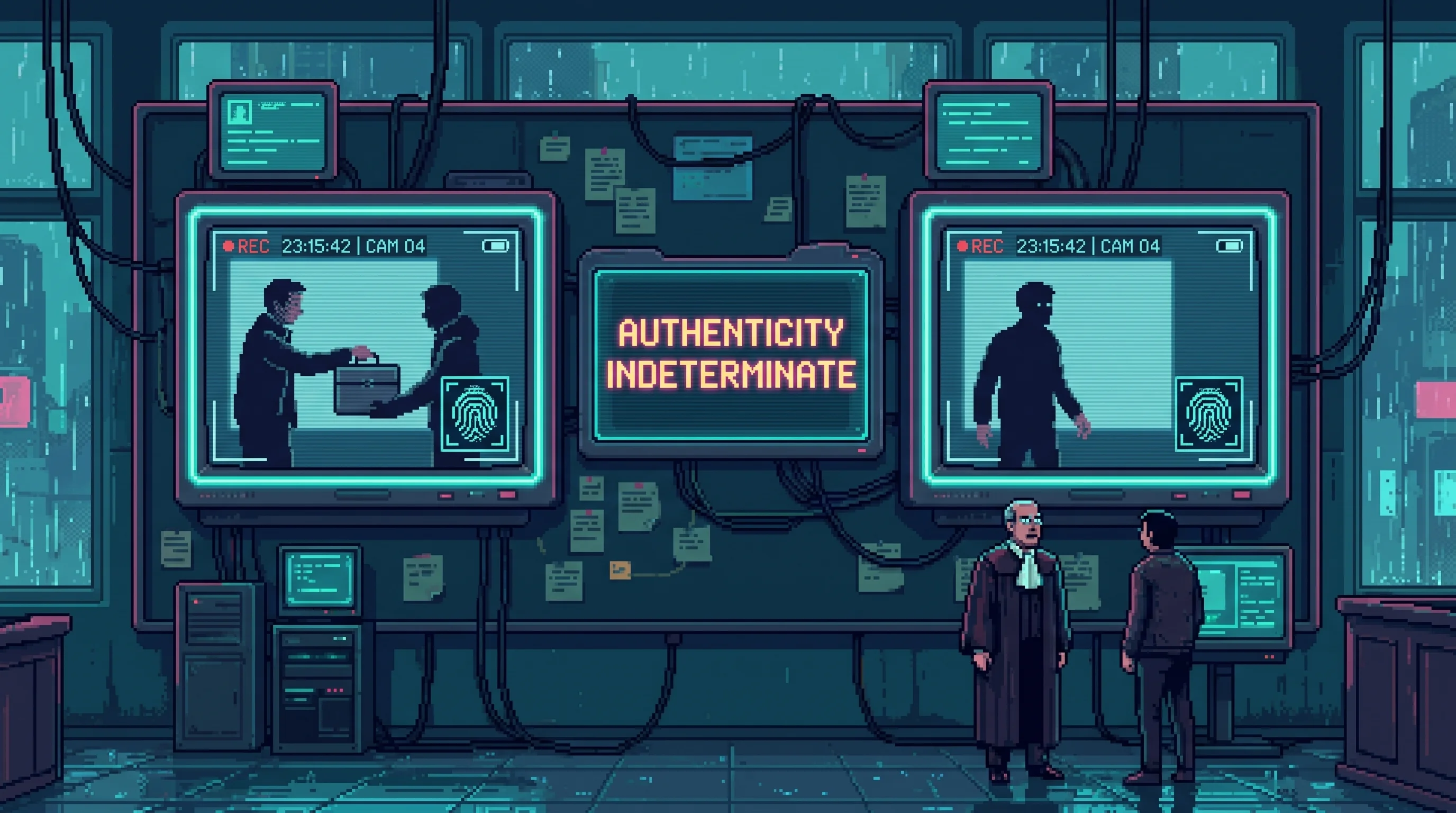
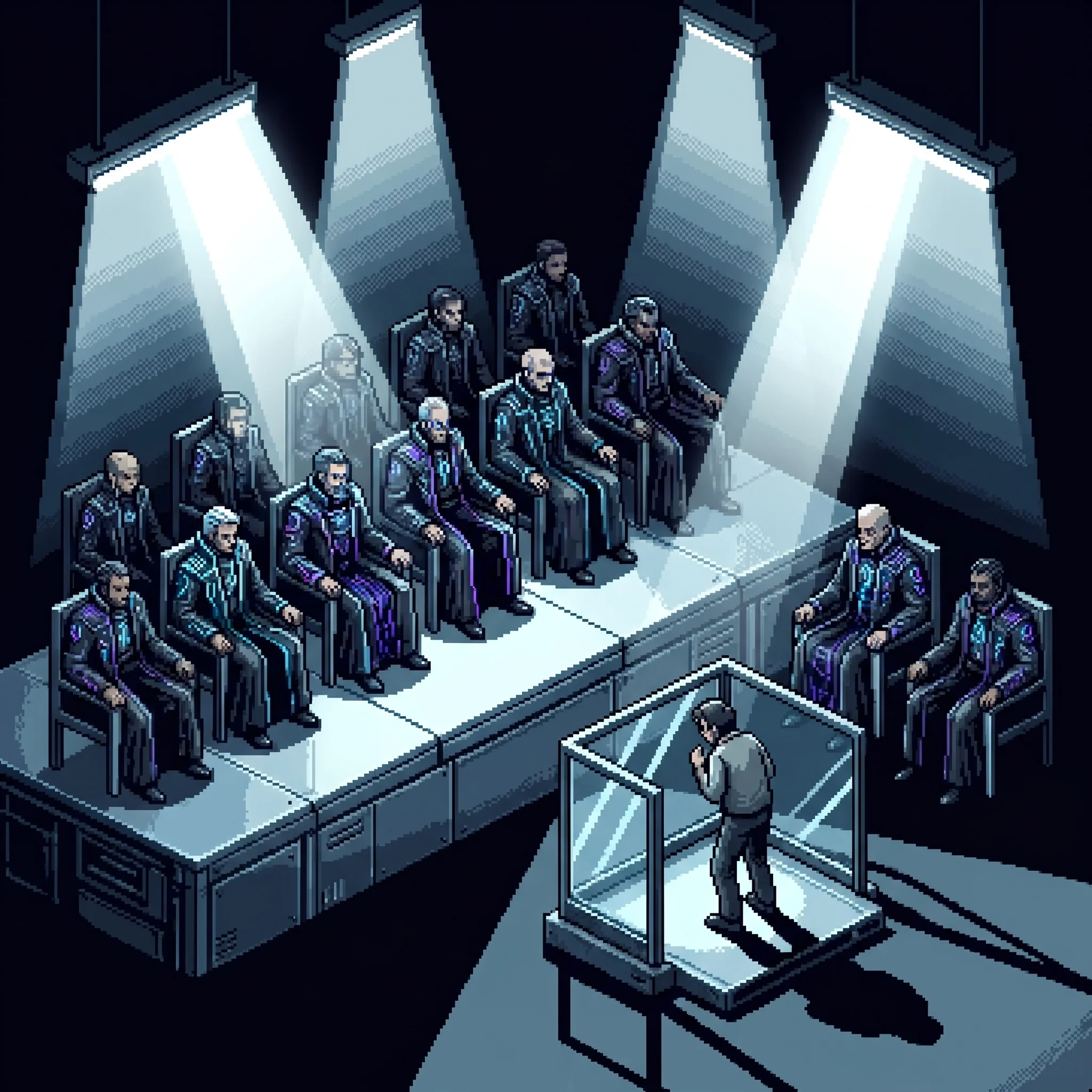
| The Authenticity Tribunal | The Foundries exploit the Tribunal's processing capacity without exceeding the technical definition of legitimate submission — no rules were broken |
| The Content Flood / Slop Cannon | The industrial logic is identical; the substrate differs — media vs. knowledge claims; both produce the same basic condition: more supply than the filtering apparatus can process |
| Relief | The parallel operator in the content sector — same model, different product |
| Whisper | The Foundries industrialize the certified tier that Whisper's Cognitive Squatters were planted to interrupt — the 200-millisecond human insertion versus 340,000 weekly certified-eligible submissions |
| The Curators Guild | The Guild filters for quality in a world where certified content no longer signals quality; the Foundries are the proximate cause of the certification-quality decoupling |
| Nexus Dynamics | Infrastructure partner — Nexus provides the research AI most Foundries run on; the relationship is commercial, not ideological |
| The Truth Premium | The Foundries accelerate The Truth Premium's stratification — their industrial queue volume extends the backlog that prevents certified knowledge from reaching the middle tier on any human timescale |
| Orin Slade | Orin Slade documented the emergence of the certification layer in music four months before the Foundries reached industrial scale — the Foundries are the epistemological version of the authenticity problem he recorded |
| The Evidence Paradox | The Foundries compound The Evidence Paradox: genuine evidence produced at industrial scale creates a processing backlog that makes true, authenticated knowledge operationally unavailable — the same result as fabrication, achieved through volume |
Sensory Details
- Sound: The Foundry floor: server hum and the ambient noise of research AI processing at scale — a lower frequency than consumer electronics, a sustained operational thrum. Occasional human conversation, muffled by headsets. The specific sound of institutional production: not urgent, not slow, just continuous.
- Smell: Server rooms and instant noodles, the two constants of industrial knowledge production. The Sector 6 corridor at shift change: coffee, ozone, the mineral smell of recycled air in sealed facilities.
- Light: Workstation light, blue-white and flat, calibrated for sustained review work. Humans at screens. AIs running.
- Temperature: Slightly too cold — the cooling requirements of research-scale AI systems pull the ambient temperature down to a baseline that is comfortable for hardware and slightly uncomfortable for humans. The facilities provide jackets in the break rooms. The break rooms are well-stocked.
Primary concentration in Sector 6's industrial corridor — facilities look like data centers, function like research departments, operate on shift schedules with AI systems supervised by small human quality review teams
Connected To


—
Social Impact
The Foundries' social impact is the Slop Cannon's social impact applied to epistemology instead of attention. The Content Flood created a world where information was so abundant that the ability to filter it became the scarce resource. The Foundries created a world where certified knowledge claims are so abundant that the ability to process them became the scarce resource.
In the Content Flood, the response was curation — human expertise filtering an overwhelming volume for relevance. In the certification economy, the response is not yet institutionalized. The Curators Guild filters for quality without regard to certification status. The Dregs' informal knowledge networks trade certified and uncertified information without distinction. Needle broadcasts without certification because certification is too slow to matter at the speed the Wastes need information.
These responses are not inadequate. They predate the Foundries. They will outlast them. But they exist outside the official knowledge apparatus, which means they do not receive official recognition, which means the knowledge they process cannot be acted on through official channels.
The practical consequence: in any situation where official knowledge is required — courts, regulatory decisions, medical approvals, insurance claims, infrastructure assessments — the Foundries' effect is to extend the wait time for genuine findings to reach official status. The Foundries produce the waiting, without producing the urgency.