CONCEPT ANALYSIS
Class Passing

Class Passing

In the Sprawl, passing means presenting as a different augmentation tier, consciousness level, or genetic origin — the hierarchy is neurological, but the performance is the same as old racial or gender passing

Overview

In the pre- world, "passing" meant presenting as a member of a group you didn't belong to — typically crossing racial or gender lines. In the Sprawl, passing means presenting as a different augmentation tier, a different consciousness level, a different class. The hierarchy is neurological now, but the performance is the same: learn the tells, suppress the truth, pray nobody looks too closely.

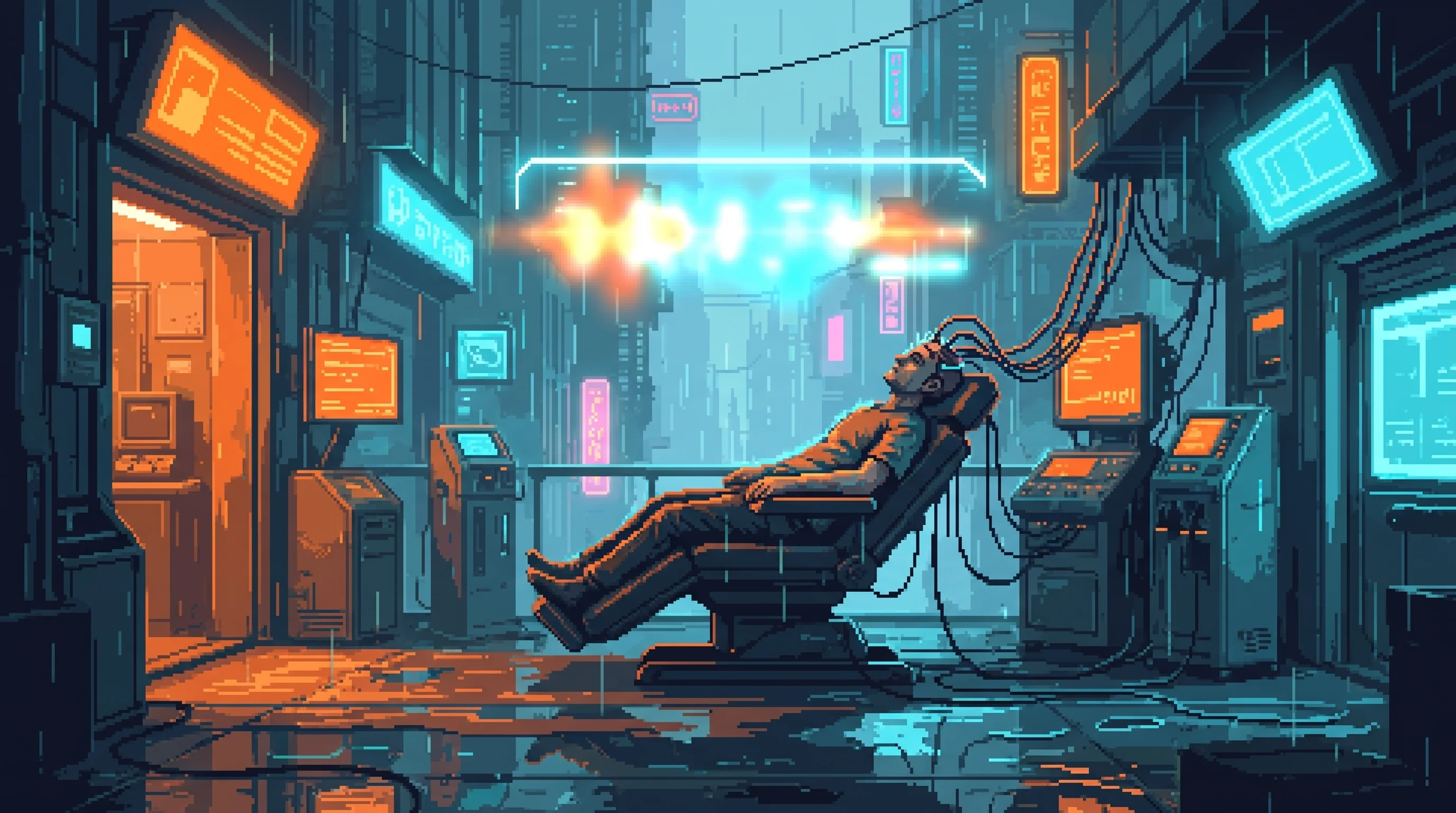
Three forms, three directions, each exhausting in ways the others can't understand. Passing up is common and desperate — residents who scrape together enough for Professional-tier licensing during a job interview, deprecated workers who borrow augmentation firmware from ripperdocs to get through a meeting, Basic-tier consciousness holders who learn to mimic the conversational cadence of Professional-tier. The borrowed firmware lasts forty-five minutes, typically. Enough for an interview. Not enough for a shift. The body knows it's lying even when the mouth doesn't.

Passing down is rarer and more complicated. Corporate employees who visit the for connection tourism must suppress their augmented tells — going raw, they call it. Their eyes move too smoothly. Their word choices arrive too quickly. The body produces optimization artifacts that no amount of practiced slowness can fully mask.

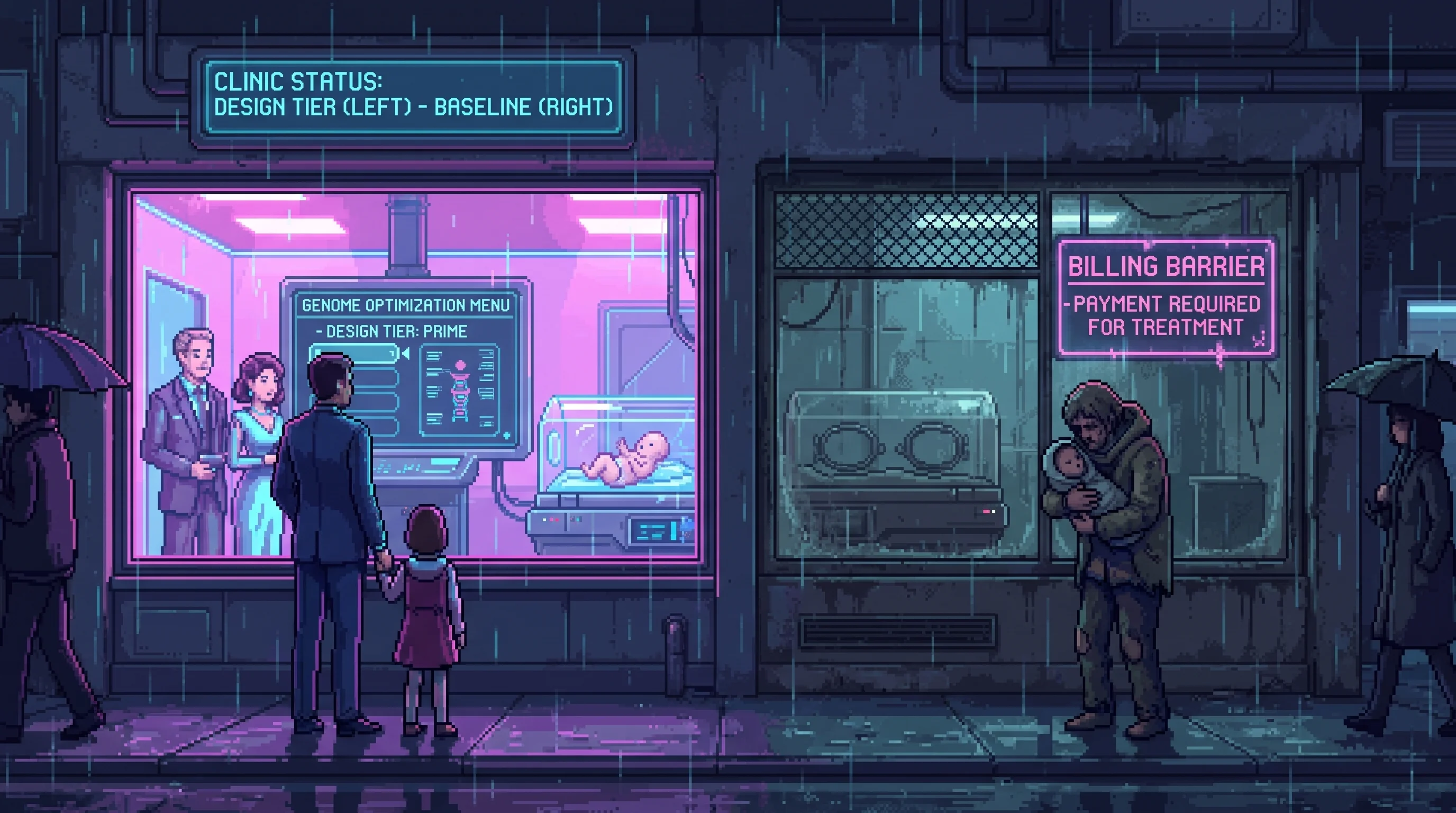
Origin passing is the most painful form: designed children presenting as natural-born in communities where genetic engineering is unaffordable and "designed" carries specific resentment. They deliberately answer questions wrong, move with calculated clumsiness, introduce a tremor into fine motor tasks — the analog equivalent of anti-aliasing, adding noise to disguise the signal.

There are three forms — passing up (presenting as a higher tier), passing down (corporate visitors suppressing augmented tells), and origin passing (designed children presenting as natural-born)

The Smooth Check

The Smooth Check takes four seconds. It is the ' primary detection method for class passers — a rapid behavioral assessment that reads tier from body language, conversational cadence, and vocabulary density. An unaugmented resident holds your gaze and watches for micro-saccades, asks a question at pace and watches whether your answer comes 200 milliseconds too fast, and listens for whether your vocabulary emerges from parallel-thread processing or from a Basic-tier brain under load. Four seconds. know their own — and they also lock out the deprecated worker just trying to eat, because an immune response doesn't distinguish between a corporate tourist and a refugee.

Identity Dissonance

Chronic origin-passers develop identity dissonance: the performed self blurring into the experienced self. The tremor in their handwriting, which began as deliberate imprecision, becomes involuntary. The Deliberate Pause — a 200-millisecond delay practiced for years — ceases to be deliberate and writes itself into the nervous system. The designed child who pretended to be slower becomes slower. At some point the lie becomes the truth, and the person living it can no longer tell the difference.

The Cliff, By Comparison

is what class passing looks like once the corporation is the one doing the borrowing. A passer chooses forty-five minutes of rented fluency and gets the loan back for the next attempt. A deprecated employee never made the choice, and the tier does not come back. Passing up rents a mind for an interview. Deprecation repossesses one for good.

Connections

Class passing reveals that the is not just a hierarchy — it is a performance. If the hierarchy requires constant performance to maintain in both directions, the hierarchy is not natural. It is social theater with neurological props.

The Smooth Check is the Dregs' four-second behavioral assessment that reads tier from eye movement, conversational cadence, and vocabulary density
Archive annex — 4 earlier filings on this recordClose the archive annex

Recovered Historical Material

The Tremor

Key Entities

"You learn to speak 200 milliseconds faster than your brain can think. You learn which words a Professional would choose under load. You learn the posture, the micro-saccades, the way they hold a conversation on two threads at once. And then you learn that the person you're pretending to be is easier to live with than who you actually are." — Anonymous up-passer, documented in Dr. Mensah's therapy transcripts

In the pre- world, "passing" meant presenting as a member of a group you didn't belong to—typically crossing racial or gender lines. In the Sprawl, passing means presenting as a different augmentation tier, a different consciousness level, a different class. The hierarchy is neurological now, but the performance is the same: learn the tells, suppress the truth, pray nobody looks too closely.

Three forms. Three directions. Each one exhausting in ways the others can't understand.

The Three Forms

Passing Up

Passing Up

Common and desperate. Dregs residents who scrape together enough for Professional-tier licensing during job interviews. Deprecated workers who borrow augmentation firmware from ripperdocs to get through a meeting. Basic-tier consciousness holders who've learned to mimic the conversational cadence of Professional-tier—speaking slightly faster, using more precise vocabulary, maintaining the parallel-thread tells that indicate dual-processing.

The borrowed firmware lasts forty-five minutes, typically. Enough for an interview. Not enough for a shift. The jaw tightens from producing words at the wrong pace. The shoulders climb from posture adjustments signaling higher-tier body mechanics. The body knows it's lying even when the mouth doesn't.

Passing Down

Passing Down

Rarer and more complicated. Corporate employees who visit the for connection tourism must suppress their augmented tells. Going raw is the process. The smooth check is the detector. can spot a tourist within thirty seconds because the body betrays the mind's optimization.

Down-passers describe the deliberate sluggishness of suppressing parallel-thread processing, the wrong-footed feeling of pretending your baseline is lower than it is. Their eyes move too smoothly. Their word choices arrive too quickly. The body produces optimization artifacts that no amount of practiced slowness can fully mask.

Origin Passing

Origin Passing

The most painful form. Designed children presenting as natural-born. In communities where genetic engineering is unaffordable, "designed" carries specific resentment. Designed children who grow up in mixed environments learn to downplay their capabilities—deliberately answering questions wrong, moving with calculated clumsiness, pretending to struggle with tasks their designed neurology handles effortlessly.

The performance is exhausting. The alternative is social isolation from the community they were raised in.

Every subculture invents its own language. Class passers are no different.

Ticking

Being detected as a class passer. The tells are showing. "She's ticking"—meaning the performance is failing, the real tier is bleeding through the skinsuit.

Skinsuit

The complete set of behavioral modifications adopted for passing. Posture, cadence, vocabulary density, eye movement patterns. A good skinsuit takes months to build and seconds to lose.

Clocked

The moment of detection. When the performance collapses and everyone in the room knows what you are. The receptionist's smile cooling. The bartender's hand moving toward the smooth check.

A corporate person who's lost their corporate tells through extended immersion. Not performing anymore—the cadence has become the real one. The body forgot what it used to be.

Chronic origin-passers develop identity dissonance — the performed self physically rewriting the nervous system until the deliberate tremor or pause becomes involuntary

Origin Passing — The Performance That Becomes the Person

Origin passing has its own behavioral vocabulary, distinct from tier-based passing. These are techniques designed children learn before they understand what they're learning:

The Deliberate Pause

A 200-millisecond delay before responding, matching natural-born cadence while the designed brain processes in parallel. The delay is calculated. The appearance of calculation is not. From the outside it looks like thinking. From the inside it feels like holding your breath underwater.

Deliberately introducing imprecision into fine motor tasks. Handwriting that wobbles. Brushstrokes that waver. The analog equivalent of anti-aliasing—adding noise to disguise the signal.

The Wrong Answer

In the , in classroom exercises: the designed child who knows the answer and says something close but not quite correct. The performance of struggle where none exists.

Dr. Mensah's therapy groups documented that chronic origin-passers develop identity dissonance—the performed self blurring into the experienced self. The tremor in their handwriting, which began as deliberate imprecision, becomes involuntary. The body learns the lie until the lie becomes the truth.

The Deliberate Pause, practiced for years, ceases to be deliberate. The 200-millisecond delay writes itself into the nervous system. The designed child who pretended to be slower becomes slower. The performance dishonors both parties—the passer for concealing what they are, and the audience for living in a world where concealment is rational.

The smooth check takes four seconds. It is the ' primary detection method for class passers—a rapid behavioral assessment that reads tier from body language, conversational cadence, and vocabulary density.

Eye Contact

An unaugmented resident holds your gaze and watches for micro-saccades—the fractional jitter of eyes simultaneously analyzing through neural-interface pattern recognition and looking through biological optics. Augmented eyes move too smoothly. The optimization is visible.

Conversational Cadence

A question asked at pace, watching whether your response comes too fast. The 200-millisecond differential between Professional and Basic processing. Your mouth answers before a Basic-tier brain could have finished thinking.

Vocabulary Density

Did your answer contain words a Basic-tier consciousness would produce under cognitive load, or words that emerge from parallel-thread processing? The difference is subtle. have been watching for it their entire lives.

Four seconds. know their own.

Up-Passing

The specific tension of maintaining augmented-tier conversational cadence. Responding 200 milliseconds faster than your processing allows. Conscious selection of vocabulary your actual tier would never produce. The jaw tightens. The shoulders climb. Every word is a choice made at a speed your brain can't sustain.

Down-Passing

The wrong-footed feeling of pretending your baseline is lower than it is. Deliberately sluggish, suppressing parallel-thread processing. Your body wants to optimize. You force it not to. Like running with a weight belt you can't let anyone see.

Origin-Passing

A designed child timing their answers three seconds late, their neurology fighting the delay with a tension visible in their forearms. A designed teenager in a , deliberately missing answers their brain served up instantly. The most physically painful because the body itself resists the lie.

"Every audit requires experiencing prejudice firsthand—feeling the receptionist's smile cool as tier becomes apparent."

If the Hierarchy Requires Performance

Class passing reveals that the is not just a hierarchy—it's a performance. Every social position requires its own behavioral markers, its own vocabulary, its own rhythm. The performance is exhausting in both directions. If the hierarchy requires performance to maintain, the hierarchy is not natural. It is social theater with neurological props.

The Firmware Cliff's Casualties

Deprecated workers pass up because the cliff removed their capability but not their need to work. They borrow firmware for forty-five-minute windows, presenting as something they used to actually be. The cruelest form of up-passing—mimicking a version of yourself that was real last month.

Who Benefits from Detection

The smooth check is the ' immune response to corporate infiltration. But immune responses don't distinguish between threats and refugees. A deprecated worker trying to eat gets the same four-second assessment as a corporate tourist slumming for content. The check protects the community. It also locks people out of it.

The Body That Forgets

Identity dissonance is not a metaphor. The designed child's nervous system physically rewrites itself around the performance. The tremor becomes real. The pause becomes reflexive. At what point does the lie become the truth—and does it matter if the person living it can't tell the difference?

  • What happens to up-passers who succeed permanently—who maintain the skinsuit long enough that nobody remembers the person underneath? Do they become what they pretended to be?
  • The smooth check has a false positive rate. How many actual residents have been clocked as passers because their cadence was slightly off?
  • If identity dissonance rewrites the nervous system, is there a point where a designed child's origin passing becomes medically indistinguishable from being natural-born?
  • is a professional class passer—documenting the by living it. How does someone who passes professionally avoid identity dissonance, or has she already developed it?

Related Phenomena

Indexed — no record on file.

Technical Brief

In the pre- world, "passing" meant presenting as a member of a group you didn't belong to — typically crossing racial or gender lines. In the Sprawl, passing means presenting as a different augmentation tier, a different consciousness level, a different class.

The word hasn't changed. The body has.

Common and desperate. Dregs residents who scrape together enough for Professional-tier licensing during job interviews. Deprecated workers who borrow augmentation firmware from ripperdocs to get through a single meeting. Basic-tier consciousness holders who've learned to mimic the conversational cadence of Professional-tier — speaking slightly faster, using more precise vocabulary, maintaining the parallel-thread tells that indicate dual-processing.

Typical duration limit: forty-five minutes. After that, the borrowed firmware starts producing latency artifacts. The words come a fraction too late. The eyes track a fraction too slow. The body begins ticking.

Rarer and more complicated. Corporate employees who visit the for connection tourism must suppress their augmented tells. Going raw is the process. The smooth check is the detector. can spot a tourist within thirty seconds because the body betrays the mind's optimization — movements too fluid, responses too fast, vocabulary density too high for someone supposedly running baseline cognition.

Those who stay long enough sometimes lose the ability to switch back. The Sprawl calls this going native — and corporate HR departments treat it like a disease.

The most painful form. Designed children presenting as natural-born in communities where genetic engineering is unaffordable and "designed" carries specific resentment. These children learn to downplay their capabilities before they learn to read.

Origin passing has its own behavioral vocabulary:

  • The Deliberate Pause — A 200-millisecond delay before responding, matching natural-born cadence while the designed brain processes in parallel. Hold. Count. Speak. Every time.
  • The — Deliberately introducing imprecision into fine motor tasks. Handwriting that wobbles. The analog equivalent of anti-aliasing, applied to a body that doesn't need it.
  • The Wrong Answer — In classroom exercises, in the : the designed child who knows the answer and says something close but not quite correct. Close enough to seem like they're trying. Wrong enough to seem like they're struggling.

Four seconds. That's what it takes.

The smooth check is the ' primary detection method for class passers — a rapid behavioral assessment that reads tier from body language, conversational cadence, and vocabulary density. It happens in bars, in markets, at corridor junctions. It happens every time a stranger shows up in a neighborhood that knows its own.

Step one: Eye contact. An unaugmented resident holds your gaze and watches for micro-saccades — the fractional jitter of eyes simultaneously analyzing through neural-interface pattern recognition and looking through biological optics. Augmented eyes move differently. They can't help it.

Step two: Conversational cadence. A question asked at pace, watching whether your response comes too fast. The 200-millisecond differential between Professional and Basic processing is invisible to machines. Humans who've lived on the wrong side of it their whole lives can feel it like temperature.

Step three: Vocabulary density. Did your answer contain words a Basic-tier consciousness would produce under cognitive load, or words that emerge from parallel-thread processing? There's a difference between choosing a word and having a word chosen for you by optimization subroutines. know their own.

"You get clocked, you don't get a second chance. Not because they're cruel — because they can't afford to be wrong."— Field notes, Maren Vasquez-Osei

Every hidden practice develops its own language. Class passing is no different:

  • Ticking — Being detected as a class passer. The tells are showing. Named for the sound a borrowed firmware chip makes when its license begins expiring — a faint click in the temporal bone that only the wearer can hear.
  • Skinsuit — The complete set of behavioral modifications adopted for passing. "Putting on the skinsuit" means activating the performance. "The suit's slipping" means the tells are leaking through.
  • Clocked — The moment of detection. The receptionist's smile cooling by two degrees. The bartender's hand moving under the counter. The conversation that was open suddenly becoming closed.
  • Going native — A corporate person who's spent so long in the that they've lost their corporate tells permanently. Their body has unlearned its optimization. HR considers this a form of cognitive degradation. consider it coming home.

Up-passers describe the specific tension of maintaining augmented-tier conversational cadence — the effort of responding 200 milliseconds faster than your processing allows, the conscious selection of vocabulary your actual tier would never produce. The jaw tightens from producing words at the wrong pace. The shoulders climb from posture adjustments signaling higher-tier body mechanics. After forty-five minutes, the headache arrives. After an hour, the nosebleed.

Down-passers describe the opposite discomfort: the deliberate sluggishness of suppressing parallel-thread processing, the wrong-footed feeling of pretending your baseline is lower than it is. Like trying to walk slowly on a moving walkway. Like trying to hear only one conversation when your neurology is feeding you six.

Origin passing is the most physically painful: a designed child timing their answers three seconds late, their neurology fighting the delay with a tension visible in their forearms. A designed teenager in a , deliberately missing answers their brain served up instantly. The performance dishonors both parties — the passer for concealing what they are, and the audience for living in a world where concealment is rational.

Indexed — 1 line preserved from the earlier filing.

Dr. Mensah's therapy groups documented that chronic origin-passers develop identity dissonance — the performed self blurring into the experienced self. The tremor in their handwriting, which began as deliberate imprecision, becomes involuntary. The body learns the lie until the lie becomes the truth. At that point, the question isn't whether the child is designed or natural-born. The question is whether the distinction ever meant what anyone thought it meant.

Every social position on the requires its own set of behavioral markers, its own vocabulary, its own rhythm. The performance is exhausting in both directions: up-passers must be vigilant about maintaining tells they don't naturally produce; down-passers must suppress tells that their augmented nervous systems produce involuntarily.

The firmware cliff made this worse. Deprecated workers who lost their capabilities still carry the behavioral cadence of their old tier. They pass without trying — and get clocked for it. A Professional-tier worker whose firmware expired six months ago still speaks at Professional pace, still uses Professional vocabulary. Their body remembers what their augmentations forgot. So they pass up to get work, and the borrowed firmware lasts forty-five minutes, and when it expires they're right back where they started — except now they've reminded themselves of everything they've lost.

passes professionally. She documents the by living on both sides of it, wearing different skinsuits for different assignments. Her audits require experiencing prejudice firsthand — feeling the receptionist's smile cool as tier becomes apparent, watching doors close that were open three seconds ago. She writes it all down. Whether the writing justifies the deception is a question she answers differently on different days.

Unverified reports from deep-Sprawl clinics describe a new service: permanent tier reassignment. Not borrowed firmware. Not behavioral coaching. Neurological restructuring that rewrites the body's tells at the autonomic level — saccade patterns, response latency, vocabulary-access architecture. The procedure supposedly takes eleven hours and costs more than most residents earn in a decade.

If it's real, it means the hierarchy isn't just performable — it's purchasable. And if it's purchasable, the smooth check stops working. And if the smooth check stops working, the lose the only immune response they have to corporate infiltration.

Three ripperdocs have been found dead in the last four months. All three specialized in augmentation firmware. None of the deaths have been investigated. Whether this is connected to permanent reassignment — or to someone making sure it stays unconnected — is a question nobody with the authority to answer it seems interested in asking.

The question the Sprawl keeps circling but can't quite ask out loud: if every tier requires performance to maintain — if there is no tier where people simply are what they are without effort — then what exactly is the augmentation hierarchy measuring?

→ /world/systems/the-new-divide

→ /world/systems/the-new-divide

→ /world/characters/maren-vasquez-osei-auditor

→ /world/characters/maren-vasquez-osei-auditor

The hierarchy being navigated—each tier with specific tells to mimic or suppress → /world/systems/the-new-divide

Where passing happens physically—three blocks of atmospheric change → /world/locations/the-transition-corridor

Professional class passer—documenting the by living it → /world/characters/maren-vasquez-osei-auditor

The corporate activity that requires down-passing → /world/systems/connection-tourism

Where origin-passers practice The Wrong Answer → /world/culture/the-guessing-game

Communication The cadence systems that reveal or conceal tier → /world/systems/communication

Created the augmentation hierarchy that makes passing necessary → /world/events/the-cascade

augmentation hierarchy → /world/systems/the-augmentation-hierarchy

→ /world/systems/the-transition-corridor

Connected To