The Severance Fields
Overview
The Severance Fields do not appear on any Ironclad site map, any Sector 10 occupancy filing, or any employment roll in the corporation's system. They are kilometers of cut and refilling trenches across the exposed northern seabed, worked by people the Compact has already finished with, and they are the most honest picture of corporate sovereignty in the Sprawl precisely because no corporation will admit it owns them.
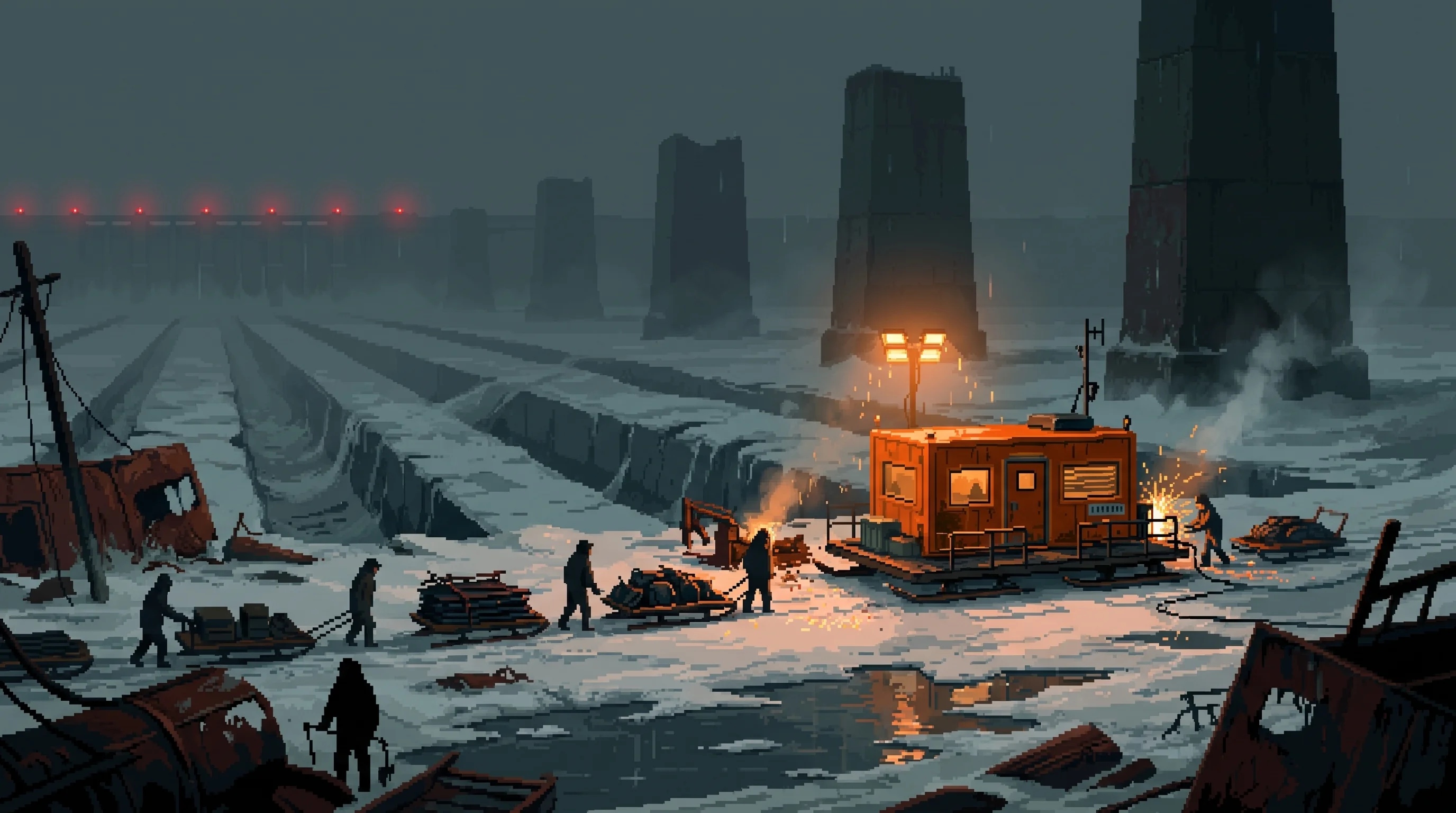
Ironclad holds the salvage concession — the right to whatever pre-Cascade metal, cable, and hardware the drained bay gives up beneath the old North Span pylons — and Ironclad owns exactly two things on the field: the scale, and the hazard-orange weigh-shack the scale rides in. Everything else, including everyone else, is classified as independent salvage contribution. The distinction is not decorative. An employee who cuts metal for Ironclad is a citizen under the full weight of the Okonkwo Doctrine, owed a wage, a benefit package, and a human-in-the-loop review of anything that might kill him. A contributor who cuts the same metal for the same corporation, on ground the corporation declines to occupy, is owed a per-kilo scrip rate and nothing else — and the released, who have no other country to be owed by, take it.
The Workforce Nobody Employs
The diggers are corporate refugees: former employees of every megacorp, handed the Sunset Package's warm phrasing and released into the Dregs with a severance number and no citizenship. The Northern Flats are shallow, windswept, and close to the surface — the first bay floor settled after drainage, and the first place the released reach when the deportation is fresh and the deep canyon is still too far. Ironclad's concession was already there. Work was already there. It does not require a badge, an interview, a Loyalty Coefficient, or a consciousness tier. It requires only that you show up at the dig face at grey first light, cut what the sediment gives up, and haul it to the scale before the crew behind you claims your trench.
Ironclad did not recruit them and does not manage them. It set a scale rate and let the fact of their existence do the rest — the same population the Compact manufactures on one edge, harvested on the other, at a price no citizen would accept because no citizen is this cheap. The field is the Compact's outward edge made literal: the corporation kept the right to buy your labor after it revoked the country that came with it.
| Type | Open-seabed salvage concession worked by unbadged corporate refugees |
|---|---|
| Controlled By | Ironclad Industries (salvage concession) — the labor is not |
| Population | ~600–900 rotating diggers; no permanent registry, no permanent residents |
| Notable | The one Ironclad worksite whose workers are not Ironclad employees — the released dig up the drowned world and sell the metal, by the kilo, back to the corporation that released them |
The Scale and the Scrip
Payment happens once, at the weigh-shack, by weight. A digger drags a sled of cut metal to the scale, the Ironclad weighmaster reads the number, and scrip is issued against it — Ironclad salvage scrip, redeemable at Ironclad's own supply runs and, on scale days, at the Wholesome Basic ration truck that meets the shack at the dig face. The scrip is not money and does not leave the field's economy; it buys ration allocation and replacement blades and very little else, which means the value a digger cuts out of the drowned world converts, within a day, into the cheapest food the living world still sells. You excavate a century of sunken infrastructure to eat.
The rate is set in a spreadsheet two rings away and adjusts without notice. Nobody negotiates it, because there is no one on the field with standing to negotiate anything — a contributor is not a party to a contract, only a source of contribution. The scale does not lie about weight. It does not have to. Everything upstream of the scale has already decided what the weight is worth.
Material Recovery, Incomplete
Ironclad's incident taxonomy is thousands of pages long and has no entry for a death at the Severance Fields, because a death requires an employee and there are no employees present. When a cut trench collapses on a digger — and the sediment is soft here, and the trenches are dug faster than they are shored — the event is logged, if it is logged at all, as material recovery, incomplete: the scrip that would have been paid against the sled, unpaid, closed against the loss. The body is not an incident. It is an unfinished transaction.
The scavenger gangs, not Ironclad, are the ones who dig the collapsed worker out, because the field's actual order — dig rights, scale-line discipline, protection from claim-jumpers, the grim etiquette of a bad cave-in — is run by the Dregs scavenger crews, the governance Ironclad declines to provide over ground it declines to occupy. A recurring detail nobody upstream will explain: a share of the tools in the scale-day queue carry Ironclad asset codes matching refinery inventory written off as loss two rings away, equipment that reappears in the hands of the workforce Ironclad also wrote off. No record connects the two write-downs. The tools cut anyway.
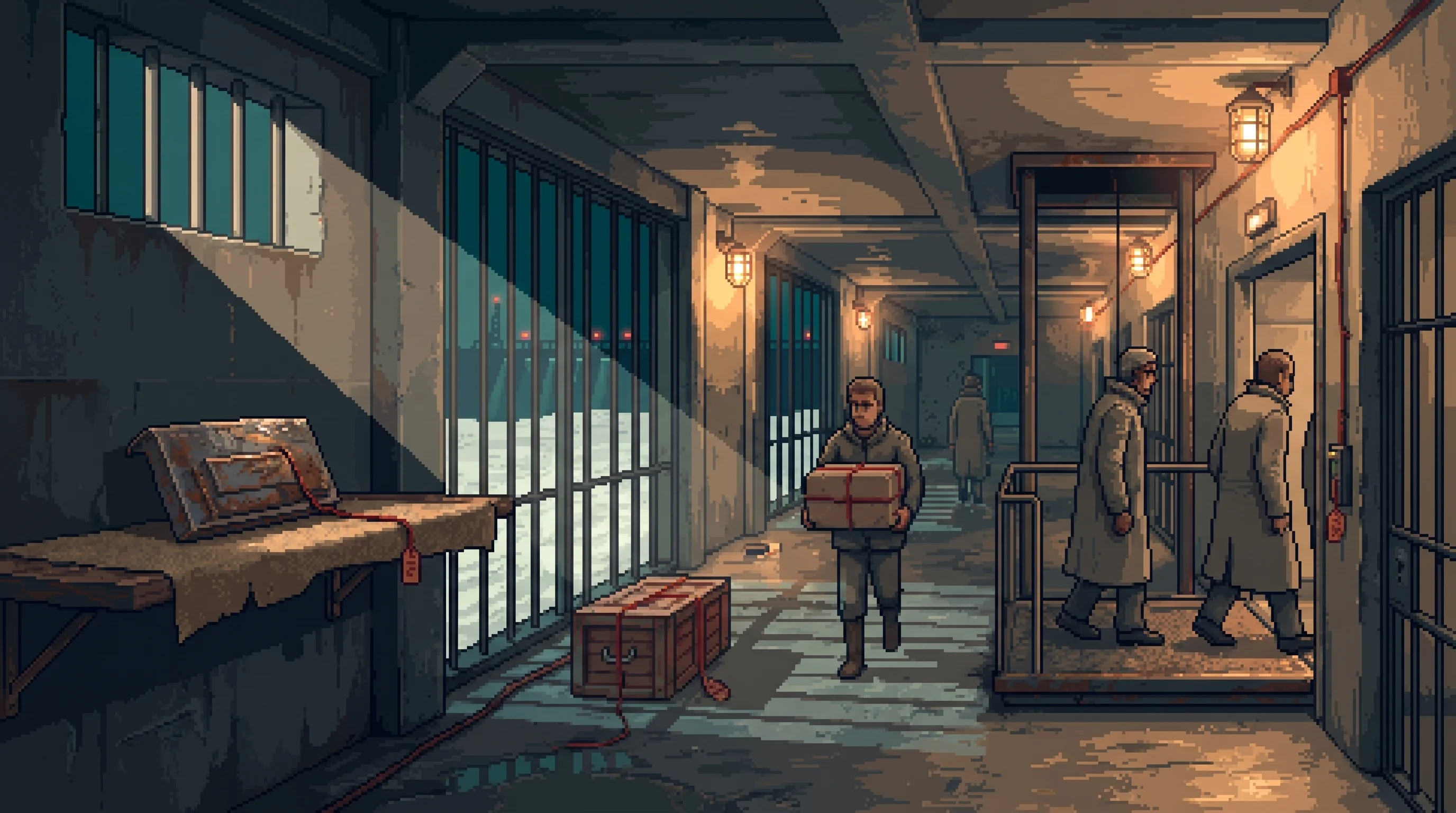
There is one buyer the diggers do not weigh their finds for. A runner from The Salt Ledger, the certification house up on the Rock, walks the fresh trenches on scale days. The runner looks past the metal for the one object in a thousand that comes up sealed and whole enough to carry a fabrication date. When such a find is flagged, it rides up the Alcatraz lift in a padded crate and the digger is handed a flat ¢900, about what the scrap would have weighed out to plus a little for keeping it intact. What that object becomes after the lift closes — the six-figure line it earns in a book none of them will ever open — is the one thing the runner is contracted never to say at the pit. A cave-in that produces such a find is worth more, months later and elsewhere, precisely because it was a cave-in; the field never sees that arithmetic, only the ¢900.
| Stratum | Dregs |
|---|---|
| Power Position | Below |
| Access | Public |
| Atmosphere | Desolate |
The Truck That Needs No Signal
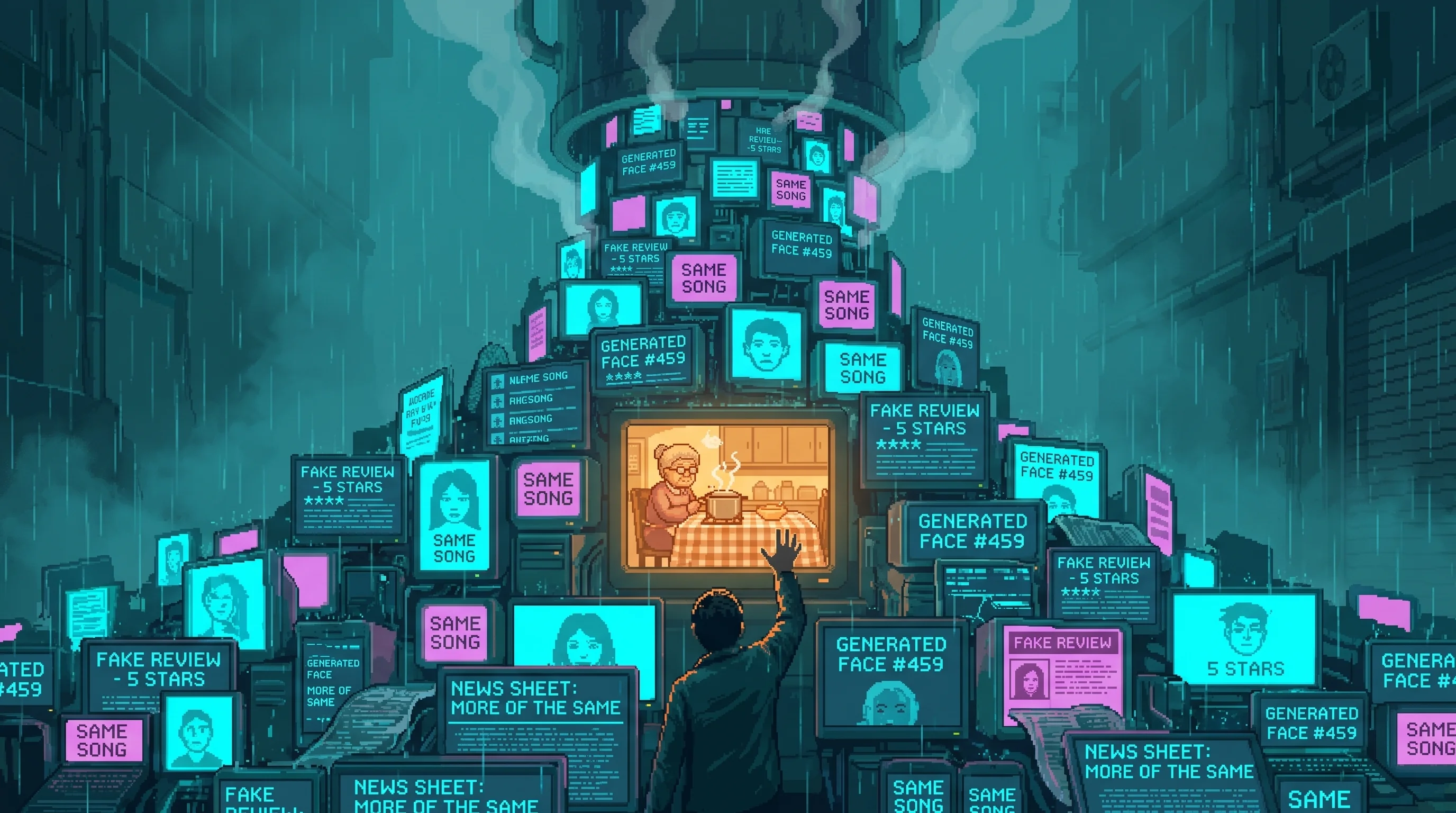
Ironclad's weigh-shack carries no lighting contract, and the Nexus surveillance grid stops well short of the pylons; the scale reads weight in kilos and the scrip it issues is a stamped plastic chit, nothing that needs a network to move. Into that dead zone drives the one operation that never needed the network in the first place. The Wholesome Basic truck arrives on scale days with a story baked into the pouch at the factory: a grandmother, a table, a family meal for every district, generated once, two rings away, then trucked in fully finished. It only had to be delivered here.
That is the Slop Cannon's quieter mode showing its whole method in one place. The flood needs bandwidth to bury a signal; the nest just needs a road, and Ironclad already built one for the scale. A digger who has never touched a live feed still eats out of a kraft-paper pouch stamped with a warmth an algorithm assembled two rings away, delivered by a truck that outranks every local authority on the field. The Dregs Scavenger gangs negotiate dig rights, scale-line order, and cave-in etiquette, and let this one arrival pass entirely unnegotiated.
A few kilometers north, on the pylon caps of the Marrows, Mudlark reads a stretch of the same drained bay that has never carried a network at all. No truck reaches her, because there is no reason to sell to a market of one. The signal that stops at the Rim stops for the flood the same way it stops for a corporate model; the Fields are proof that stopping the signal never stopped the nest.
The name is doubled by the workforce: the field severs metal from the drowned infrastructure, and the workforce is the severed — those handed the Compact's severance package and released into the Dregs
Affiliated Entities
| Entity | Relationship |
|---|---|
| Ironclad Industries | Holds the salvage concession, owns the scale, sets the scrip rate — and carries no field worker on any employment roll. The concession is Ironclad's; the labor is "independent salvage contribution" |
| The Corporate Compact | The Compact from its outward edge: a corporation still buying your labor after it deported you from citizenship, cheaper than an employee because the released are owed no country |
| Dregs Scavenger Gangs | Run the field's informal order — the dig rights, scale-line discipline, and cave-in etiquette that Ironclad declines to provide over ground it declines to occupy |
| The Fence Line | The Sprawl's other place where Compact labor logic is drawn in ground — a border the citizen crosses twice a day, against a country the released never cross back into |
| The Deep Dregs | Where the field's diggers settle when the trenches or their bodies give out — the northern flats feed the deep canyon its steady supply of the Compact's finished |
| Wholesome Basic | The scrip's only nearby redemption: the ration truck that meets the scale on scale days, converting cut salvage into the cheapest food still sold |
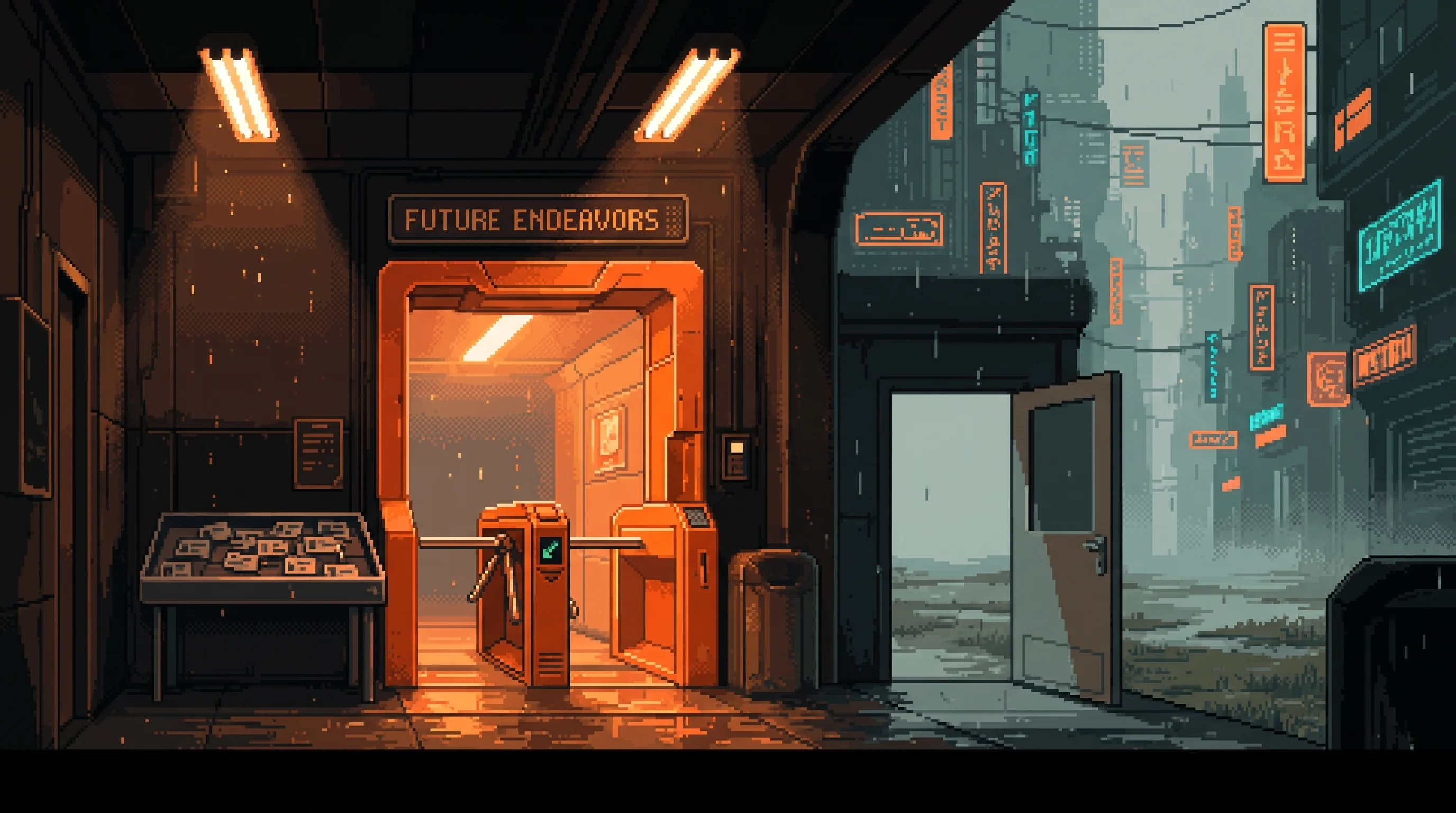
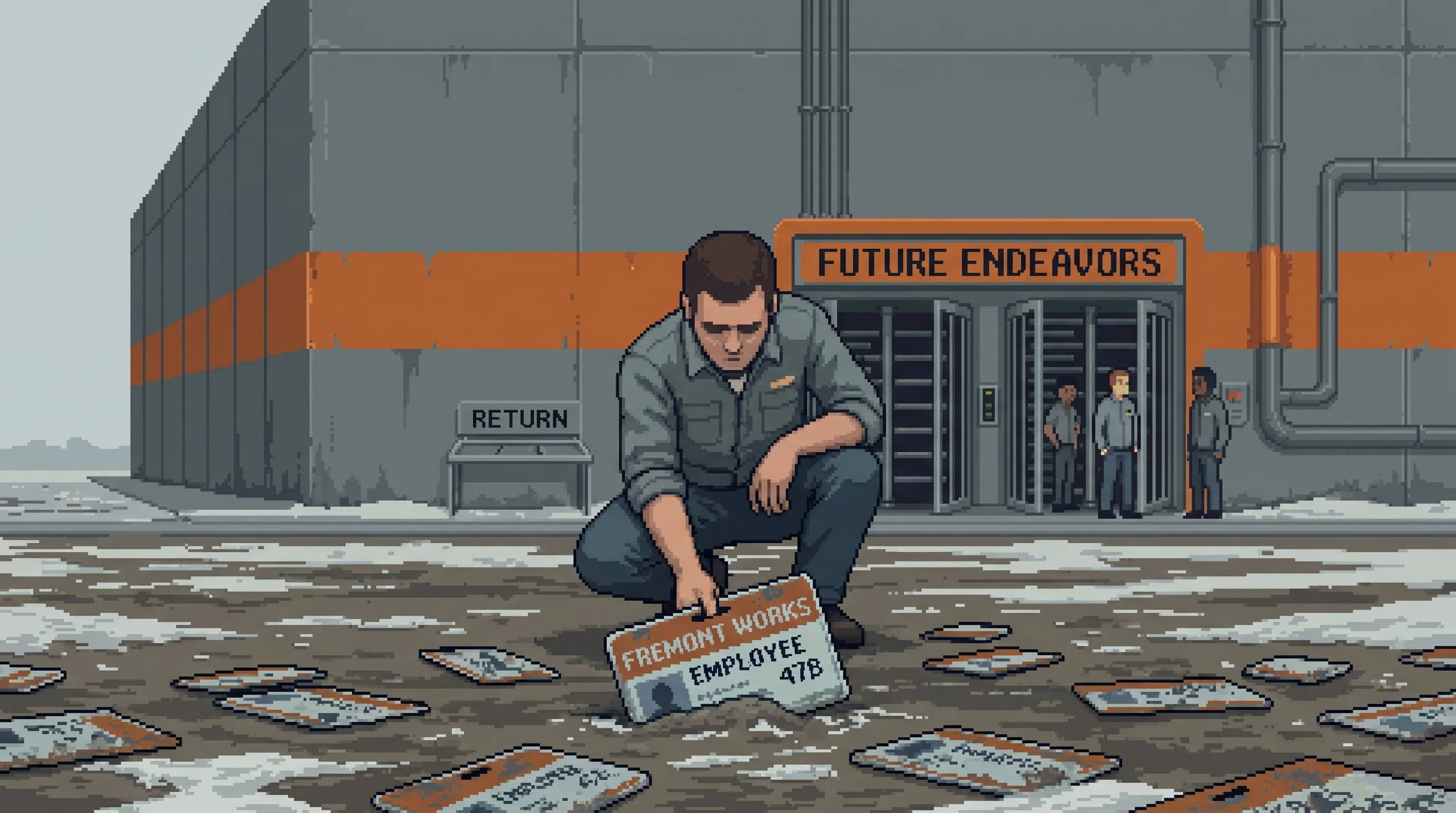
| Future Endeavors | The Fremont Works offboarding wing many diggers passed through — released by the same Ironclad that now buys their salvage by the kilo |
| Badging Out | The Sector 19 ritual the field's crews once performed, seeding a dead badge in the marsh on the day the west turnstile made them stateless |
| Mudlark | The Marrows' tide-reader reads mud no corporate model could ever learn from; the scale a few kilometers south shows the same flood arriving anyway, by truck instead of by signal |
| The Salt Ledger | The Alcatraz certification house's second buyer works the trenches for the rare whole find, pays a flat ¢900 for it, and turns it into a six-figure line the digger never sees |
▲ Restricted
Ironclad's concession over the Northern Flats salvage was filed as a resource extraction right, not a worksite registration, in 2171 — a classification chosen, according to the one procurement note that survives, because a worksite registration would have obligated Ironclad to staff it with employees and a resource right did not. The note does not mention that a resource right also meant the corporation could extract the labor without registering the laborers. Whether that consequence was foreseen or discovered is not recorded. What is recorded is that the classification has never been challenged, because challenging it would require someone with standing on the field, and the field's entire design is the manufacture of people who have none.
No permit, protection fee, or gang escort changes hands when the Wholesome Basic truck reaches the weigh-shack — the one recurring event at the scale-day queue that requires none of the field's usual arrangements
Conditions Report
Sight
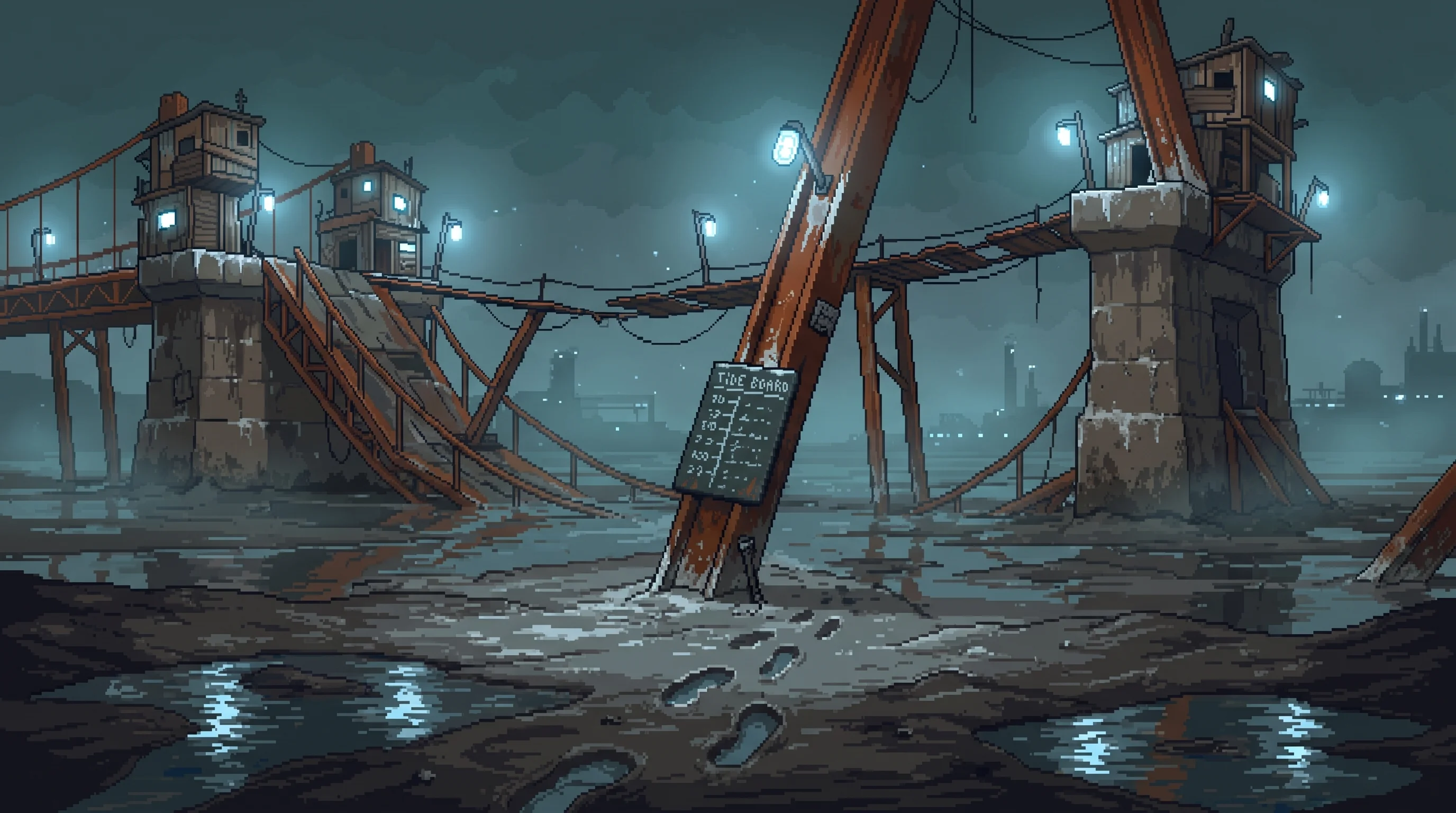
The North Span pylons marching to the horizon over salt-white trenches, the hazard-orange weigh-shack on its sled runners at the dig face, and the red blink of the Golden Gate Dam's warning lights closing every western sightline
Sound
Wind first and always — Pacific air funneling through the Golden Gate gap across flat seabed with nothing to break it, carrying the whine of cutting rigs a kilometer off and, under everything, the low felt vibration of the dam holding back the ocean to the west
Smell
Wet sediment and corroded metal, the ozone bite of exposed pre-Cascade wiring cut live, and on scale days the incongruous warm-bread smell of the Wholesome Basic truck idling at the edge of the pit
Temperature
The coldest, dampest bay-floor sector — Pacific moisture and unobstructed wind — several degrees below the Deep Dregs, with no installed heat anywhere on the field except the weigh-shack's shack-stove, which is Ironclad's and off-limits
Feel
Sediment that grips a blade and then gives all at once, salt crust that cracks underfoot, and cut metal cold enough at first light to take skin off an ungloved hand
Connected To
Additional Connections




Local Intelligence Scan
Nearby Signals
CANONICAL PROXIMITY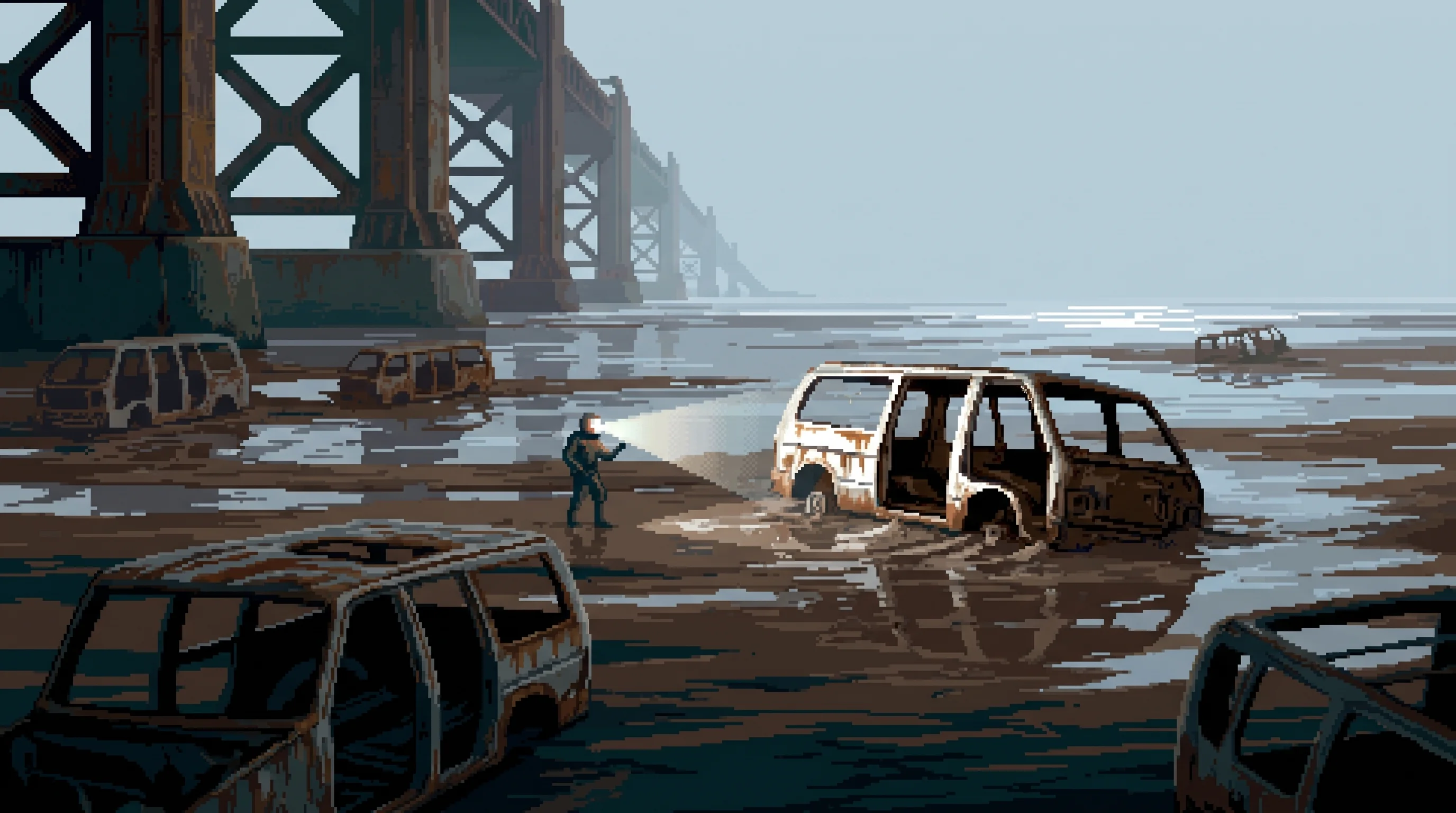


Environmental Readout
LIVE CONDITIONS- Air
- Hazy
- Light
- Shadowed
- Flood
- Seasonal
- Heat
- Heat island
- Security posture
- Ungoverned
- Infrastructure
- Improvised
Position Data
SECONDARY- Elevation band
- Bay floor — below the Rim
- Lattice fix
- E-3.7 · N+15.7

—