The Salt Ledger
Pre-Cascade Provenance Auction House
The entry is the wealth
4,411 objects, a hand-inked book with no network port, and a premium that climbs highest on the lots that killed the digger who found them.
Sensory World
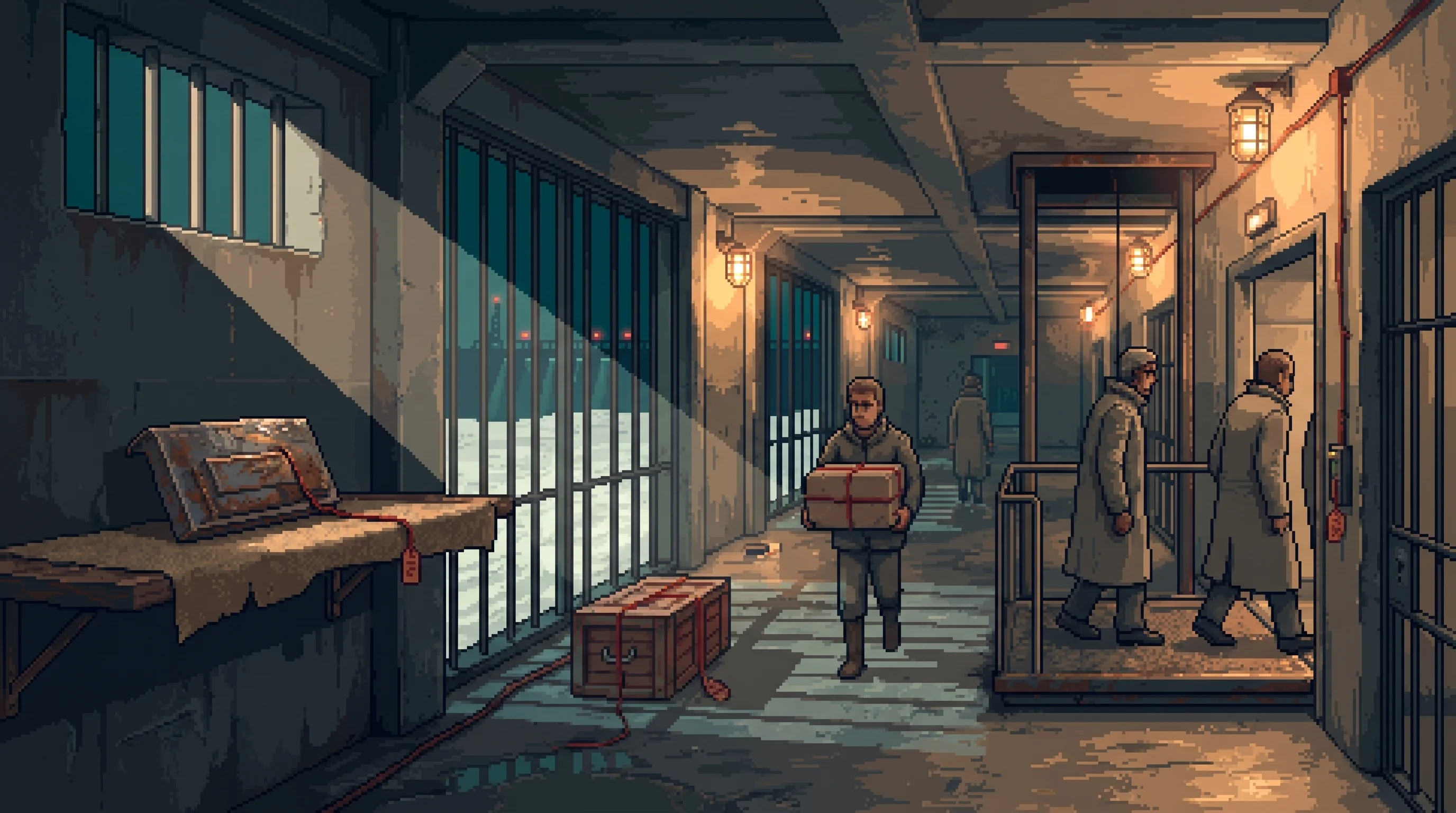
- Lighthouse
- The old mechanism turns overhead on its bearing, a sweep every few seconds, and its beam lays a moving bar of light across the barred windows.
- Vaults
- Opened cell blocks hold one felt shelf each, lit by caged bulbs on the original prison circuits. They are kept cold on purpose, because warm air ages an object.
- Smell
- Cold concrete, sea-damp plaster, and provenance-seal wax, over the salt and corroded iron of the seabed every crate brings up the lift.
- Touch
- Prison steel worn smooth, and objects left rough, because the house forbids cleaning a lot past the point of proving its age.
A collector's visit is a descent and a climb like the Undertow Club's, but inverted. They arrive across the drained bay, ride the lift up into a cold fortress, and stand alone in a resealed cell with a single object under a caged bulb. The lighthouse beam crosses the barred window and lays a moving bar of light across the thing they are deciding to own. What they are buying does not glow, does not respond, and will never be worn or used. Its entire worth is that it was made by a hand in a world that no longer exists, and that one other hand wrote a line in a book proving so. Collectors describe the cell-block silence as the only place their augmentation has nothing to add — no valuation overlay, no provenance feed, nothing but a stranger's inked word and a rusted object that does not care whether they can afford it.
Overview
The Salt Ledger keeps its business in the one building on the northern flats that never needed fortifying, because it was built as a fortress two centuries before the bay was drained. The old Alcatraz cell house rises twenty meters off the salt-white seabed, its lighthouse still turning as a navigation beacon for the salvage traffic that crosses the Rock's shadow every night. A single guarded lift climbs from the seabed to the gate. Above it, the old cell blocks now serve as climate-null vaults, and the mess hall holds a lectern and forty chairs. In the lighthouse keeper's room a woman keeps a book by hand that is worth more than everything catalogued inside it.
Ottavia Renke founded the house in 2176, after nineteen years as a fabrication-fidelity lead for Nexus Dynamics. Her work was to certify that a Nexus fabricator could copy any object down to the arrangement of its atoms, and she was good enough at it that she eventually understood the only thing she had left uncopyable. A machine that can reproduce anything cannot reproduce having existed before it did. Renke resigned the quarter she finished a fidelity report on a pre-Cascade hand tool, signed it "indistinguishable from original at every measurable scale," and realized that the word doing the work in that sentence was original. Her first Ledger entry, written the following spring, was that same tool.
Conditions Report
| Sense | Detail |
|---|---|
| Sound | The lighthouse mechanism turning overhead on its old bearing, a sweep every few seconds you stop hearing by the second hour and never fully stop feeling; the dam's low continuous vibration off the western horizon; the specific hush of a saleroom where forty people are deciding whether to spend a working district's yearly income on one line of ink. |
| Smell | Cold concrete, sea-damp lime plaster, and the wax of freshly stamped provenance seals; under it the salt and corroded-iron reek of the seabed that every recovery crate carries up the lift, so that the newest lots smell of the mud they came out of before they smell of anything a collector paid for. |
| Sight | Caged incandescent bulbs on the original prison circuits, one felt shelf per opened cell block, a wax-red tag hanging from each object by a thread, and the lighthouse beam crossing the barred windows to lay a moving bar of light across whatever is on display. |
| Touch | Prison steel worn smooth by a century of hands before the Sprawl and cold as the seabed outside; the deliberate roughness of an un-restored object, because the house forbids cleaning a lot past the point of proving its age; the felt of a display shelf, the only soft surface in a building of stone and bars. |
| Temperature | Whatever the Pacific presses through the Golden Gate that day, minus what the concrete holds against it. The vaults are kept cold on purpose. Warm air ages an object faster, and here age is the product, so the house rations it. |
The Ledger
The master book sits in the lighthouse keeper's room and has never been connected to anything. This is the whole architecture of the business. A networked record of what is real could be edited by the same fabrication systems that made every genuine object worth authenticating, so the house keeps its authority in a form those systems cannot reach: a physical book, inked by one hand, guarded behind the only working light on the northern seabed. To be in the Ledger is the certification. The object is the carrier of the entry, and the entry is the wealth. Collectors who have never touched a lot they own can recite its line number.
An object earns a line only by clearing the cutoff. The house must prove fabrication before 03:47 UTC on the first of April, 2147 — the minute ORACLE achieved consciousness and manufacturing to atomic fidelity stopped being difficult. Everything after that minute can be copied and so can be faked; everything genuinely before it is a supply that only shrinks. Renke set the cutoff at the exact recorded time rather than the date because she was once asked to certify an object fabricated on the morning of the Cascade. She could not say on which side of the machine's waking it had been made, and has declined every lot from that day since.
The Cutoff and the Assay
Examination costs a flat ¢12,000, paid whether or not the lot passes, and roughly one candidate in nine does. The house reads a maker's mark under a loupe and dates the fabrication method. Then it traces every hand the object passed through back to the seabed it came out of, because a break anywhere in that chain is where a fake would enter. Forgeries are the rare cause of a rejection. Most rejected lots are genuine objects with a hole somewhere in their documented history, and a genuine object nobody can prove is genuine is worth exactly what its metal weighs. It goes back down the lift and onto Ironclad's truck to the smelter, sharing a forgery's fate for the sake of a gap in the story it could not close.
Recovery Attestation
The darkest line in the book is the shortest. When a dig that produced a lot also killed a digger, the entry carries a recovery attestation, and Renke writes it herself in the same ink as the line it sits beside. The house's own auction record for 2179 through 2184 shows that attested lots hammer at a median of 3.1 times a comparable lot without the notation. The house records this multiple and states, in every catalogue, that it does not set it. The bidders set it. A death is, like a date, one of the few things left that the machine cannot counterfeit. A market that has run out of scarce things has found that the moment a recovery cost a life is itself a scarcity it can bid on. Whether a market that pays triple for a fatal dig is describing a demand or commissioning the next one is a question the house declines to enter, on the grounds that it only keeps the record.
The Finders
The people who put the objects in the ground's reach are paid a flat ¢900 for an accepted lot, once, regardless of what the line beside it later reaches. The scrip is set against Ironclad's per-kilo rate at the severance fields, which is what a digger would earn cutting the same find into scrap, plus a small premium for bringing it up whole. It is never set against the hammer, because a runner who could name the hammer to a digger's face would not be able to hold the scrip at ¢900. The gap between ¢900 and a six-figure line is the entire business. The runners are chosen for the ability to walk a fresh trench, recognize a fabrication old enough to matter, and say nothing true about what it will fetch.
The Runner Who Says Nothing True
Diggers compare the house with the Sound Register, which calls itself its musicians' representative. The Register was paid ¢94.2 million, kept it, and mailed every member a notice with the figure left blank. Diggers call that being compensated elsewhere, and they prefer the runner. A man openly buying from you cannot certify that you were satisfied.
A runner has twice climbed to Ilsa Brekke's room in Sector 8 to value her pre-2147 upright bass. She declined twice without discussing terms. He had said the figure the first time, before she could stop him.
Closed, Sound, Unread
Some lots cannot be opened. Bonded lattice sheds its ink if unfolded, so the house assays the sheet, not the text, in condition language borrowed from the Transcript Office. The catalogue line reads closed, sound, unread. Sealed lattice hammers above openable stock. Renke states the multiple and states that she does not set it.
Affiliated Entities
| Entity | Relationship |
|---|---|
| The Severance Fields | The house's second buyer at the salvage trenches — it takes only whole, datable objects and pays the digger a flat sum, leaving Ironclad's scale everything else by weight. |
| Dregs Scavenger Gangs | The finders who go down into the flooded voids; the deeper and deadlier the dig, the more the object earns up top, and the less of that the pack is ever told. |
| The Slack Tide | Gives the same abundance-sick clientele the opposite treatment of the record: the Rock inks a permanent line so a past can be owned forever, the fault-bay shed writes nothing so a bought morning can be owned only until it vanishes. |
| Clean Slate | The mesa's biography forger runs the same off-network-book trade from the opposite end — inventing pasts for the living where the house authenticates them for dead makers. |
| Mudlark | The tide-reader whose crews all come home; her safe recoveries are worth less on the Rock than the fatal ones, so the house has never once courted her. |
| The Undertow Club | Land's End's sister trade in the unfakeable — bodily risk sold to the same collectors who buy the provably pre-machine object. |
| Ironclad Industries | Melts salvage by weight and would smelt a sealed find whole; the house outbids that scrap value for the intact maker's mark, contesting each dig face. |
| Compensated Elsewhere | The same gap between a flat payment and a real one, run by a body that calls itself the finder's representative. |
| The Last Pour | The Smelter's sister trade in the unfakeable — where the Ledger certifies a past the machine could not copy, the foundry casts a future the machine will not, selling the same collectors an object made singular by a broken mould. |
| The Unopened Original | The rostrum prices what the licensed districts cannot check — sealed lattice hammers above openable stock on three borrowed words. |
| The Transcript Office | Supplies the only condition language for a folded sheet the trade will accept, and never a word about contents. |
Further connections
Browse all 14 connected records

The honest version of the same arithmetic. The house pays a flat sum, keeps the difference, and has never once claimed to act for the digger.
Relief paid for her bass lines. Her union kept the money and wrote to say she was satisfied.

A runner valued her pre-2147 bass twice; she declined both times without discussing terms.
A session bassist who can name the exact take Relief bought, and has no form to write it on.
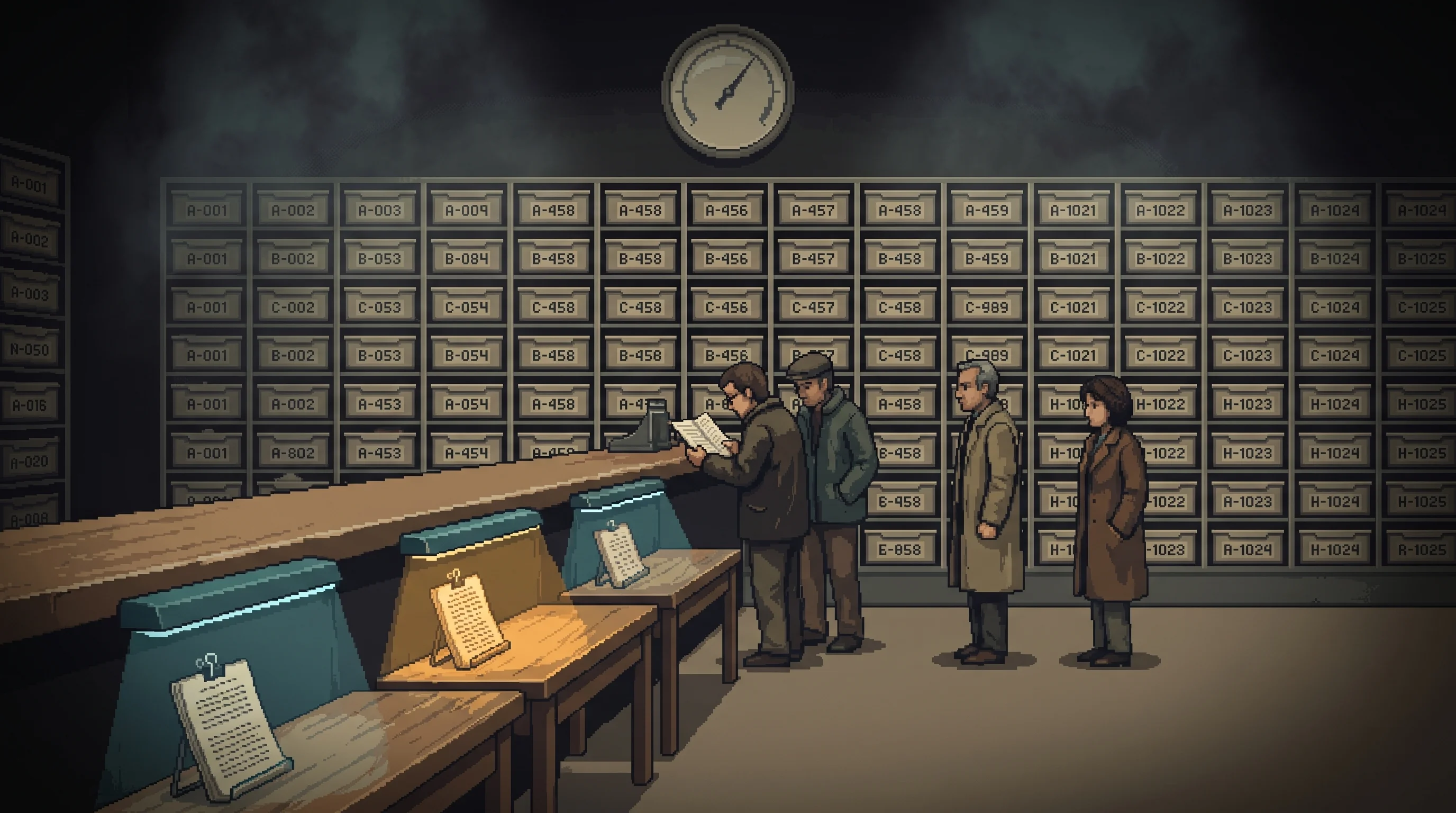
Its condition language is the trade's only accepted description.
A free public counter that reads sealed documents without opening them, then keeps the originals shut for good.
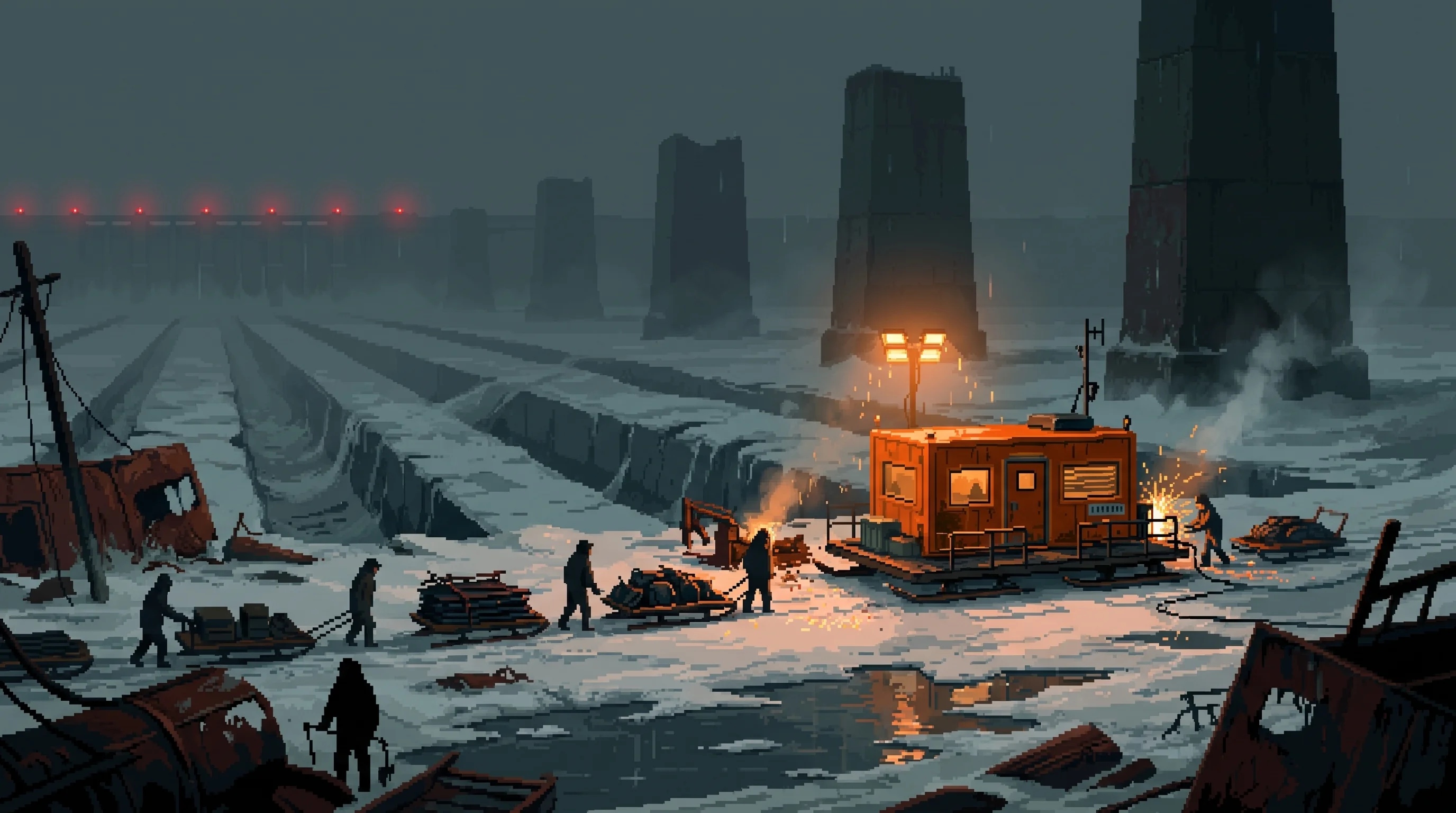
Before Ironclad's scale weighs a dig face into scrap, a Ledger runner walks the fresh trenches for anything intact enough to carry a fabrication date; the field's diggers cut for weight and are paid for weight, and the one case in a thousand that leaves whole leaves in a padded crate instead of on the truck to the smelter

A pack that pulls a sealed pre-Cascade case out of a flooded void is handed ¢900 and watches the same case hammer, months later and two sectors up, for a figure the runner is contractually forbidden to read back to them; the gap between the scrip and the hammer is the house's entire margin, and it widens with every meter the pack was willing to go down
Packs endemic to the drained bay floor who strip the abandoned machines — and lose their own people to the live ones.
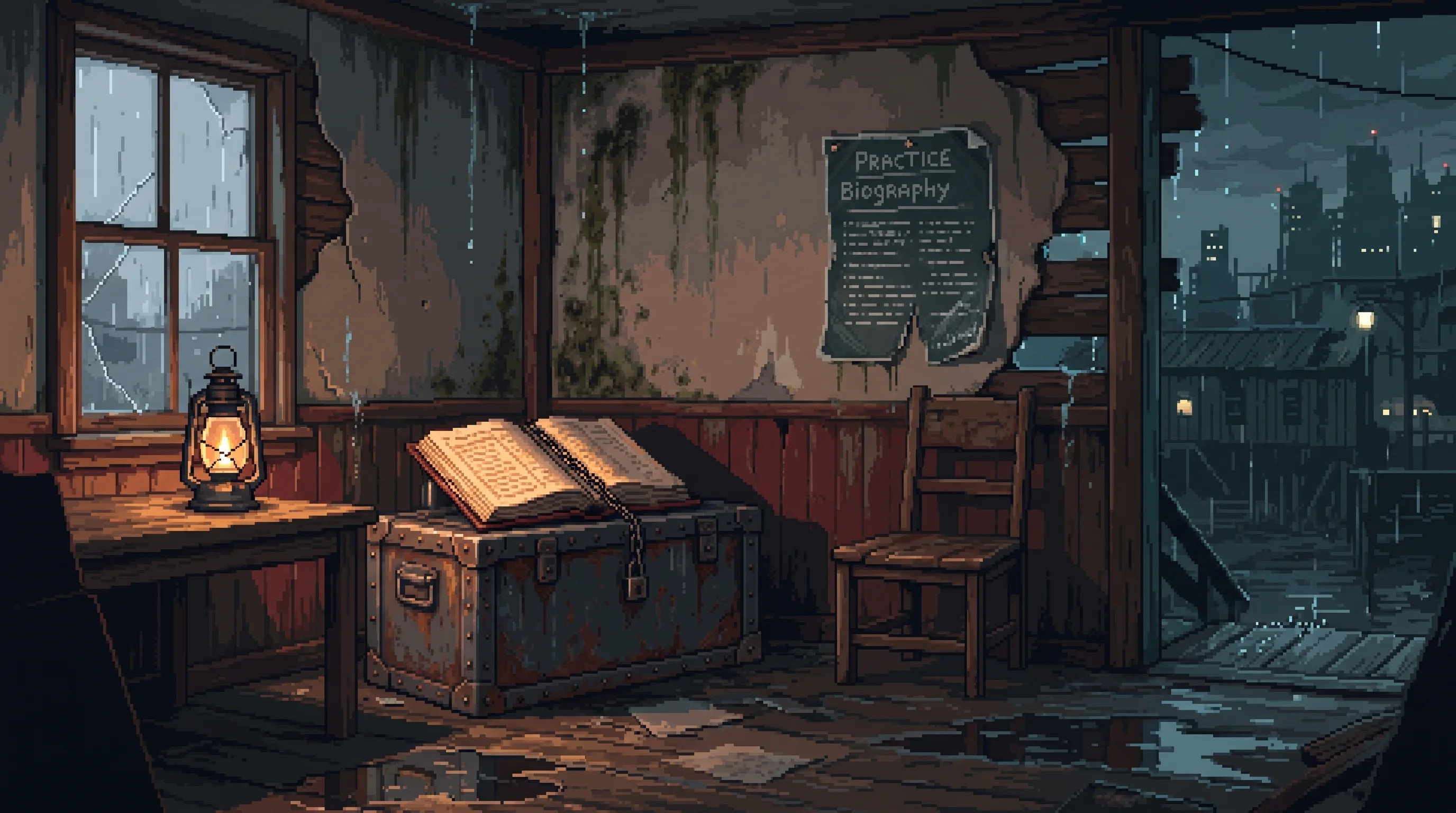
Two hand-inked books on the same drained bay, each worth a fortune because no network can touch it: the Lookout barracks ink a human a past that never happened, and the Alcatraz cell house inks an object the one past that provably did, the same craft of the un-networked page turned once toward the living and once toward the dead

She has never lost a crew that followed her boards into the northern ebb; the house's most valuable lots come from the crews that went down without her and did not all come up, and her reading is the one skill on the Flats that quietly starves the premium the Ledger's bidders pay most for
A thirty-one-year salvager who reads the drowned tide-flats better than anyone alive.
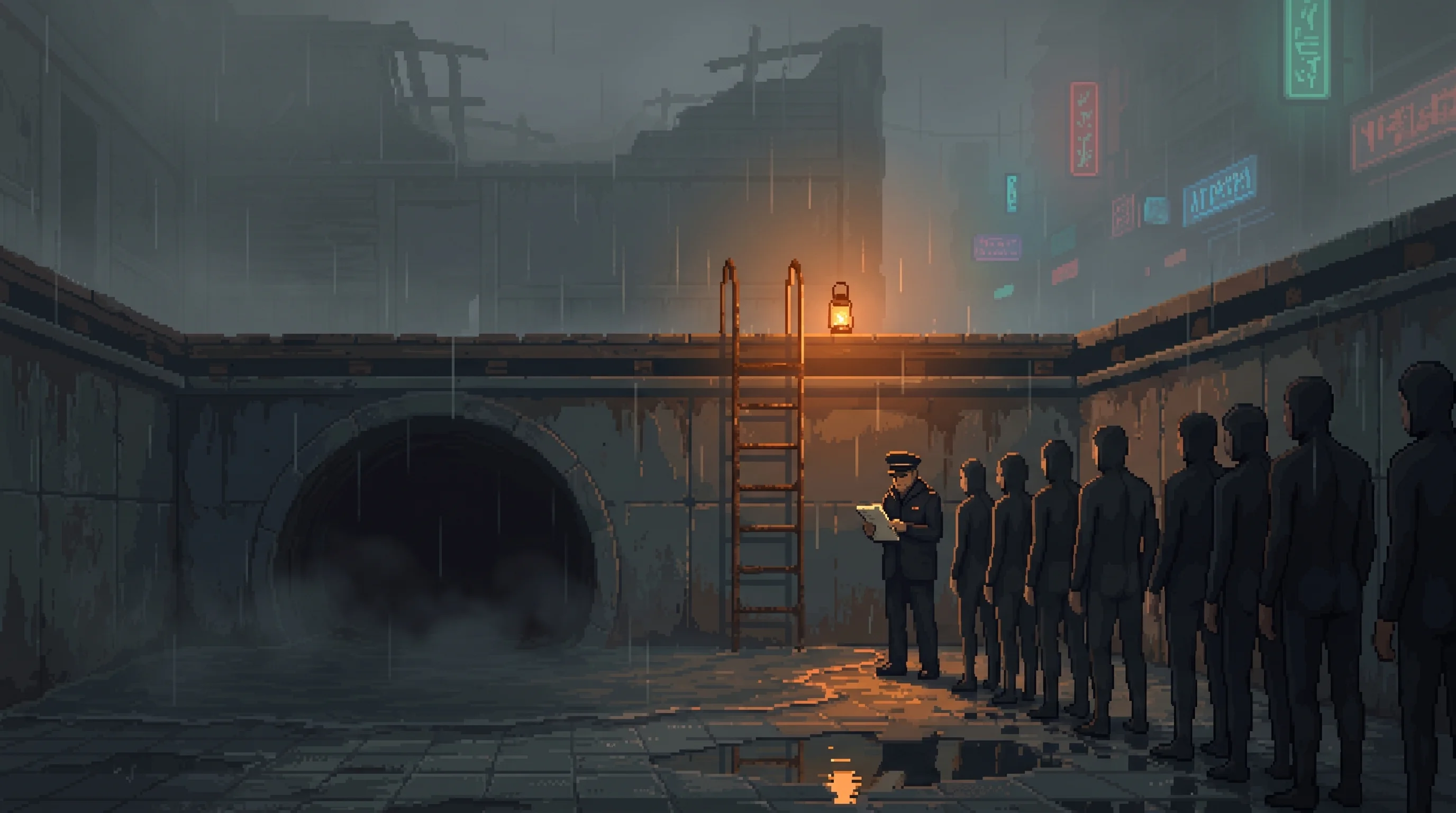
Land's End sells an elite a night of water that might genuinely take them; Alcatraz sells an elite a shelf of objects that genuinely predate the machine, the same abundance-sick hunger for the one thing that cannot be fabricated, priced once onto a member's own body and once onto a stranger digger's
A 212-member Land's End club that charges ¢890,000 to buy back a small, real chance of dying.
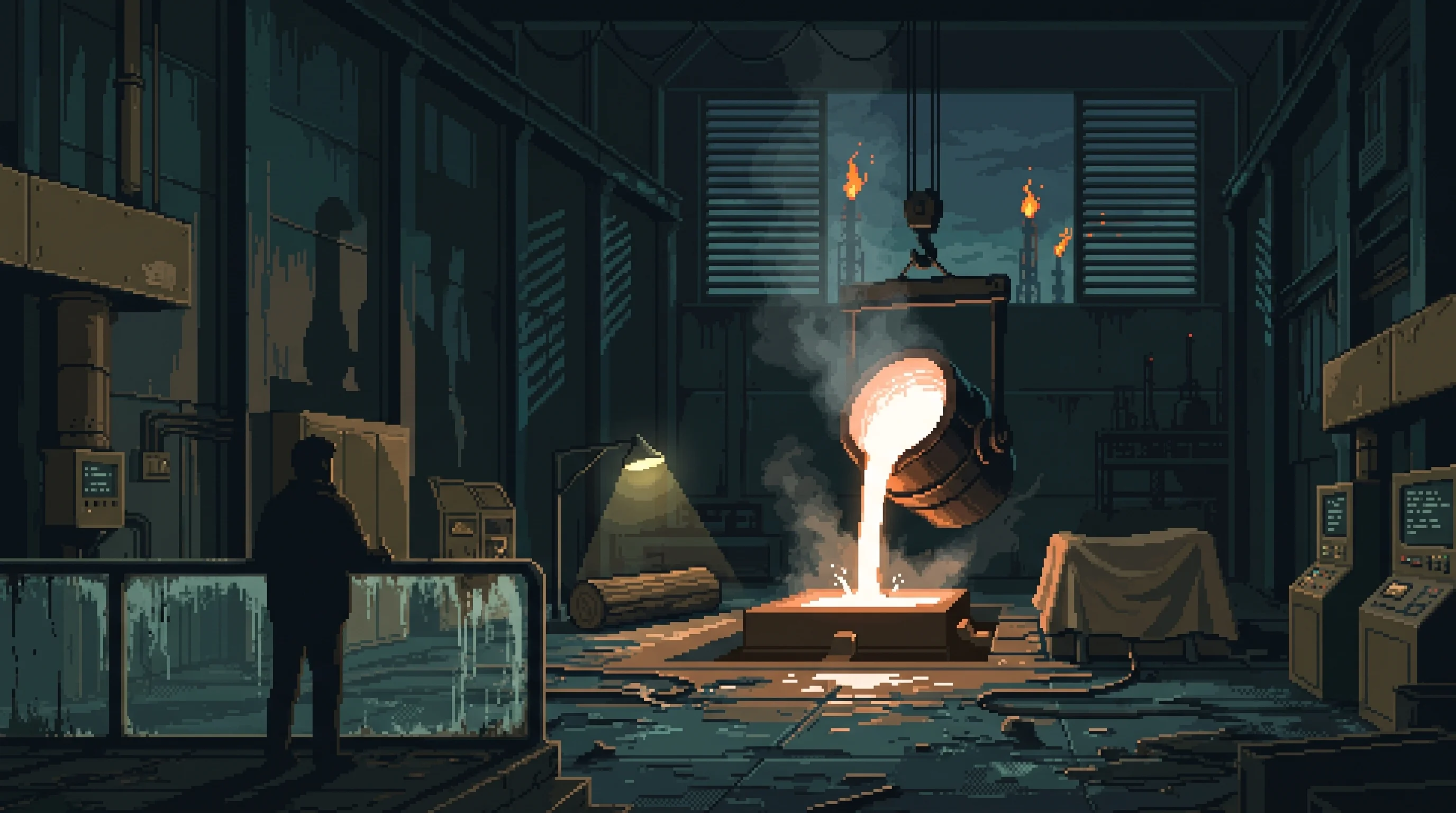
The Alcatraz book certifies an object as real because the machine could not have copied it, made before the machine woke; the Smelter foundry makes an object un-copyable by breaking its mould over it, so the same collectors buy a documented past from the drained bay and a manufactured, un-reissuable future from the refinery, both of them the unfakeable good priced onto metal

The Rock keeps a past permanent by writing one line no network can revise and guarding the book behind the only working light on the seabed; the fault-bay shed keeps a present by writing down nothing, so a collector who owns a lot number here also buys a morning up the coast that will survive nowhere once the tidesman who gave it dies, the same buyer paying to hold a thing forever and to let a thing vanish completely

Ironclad's concession values the drained bay by the kilo and would feed a sealed pre-Cascade case into the smelter without reading the maker's mark; the Ledger pays more for the mark left intact than Ironclad earns for the metal melted, so the two contend at the same dig face for whether a find becomes tonnage or an entry
The megacorporation that controls the Sprawl's physical infrastructure — steel, concrete, and the Orbital Elevator.
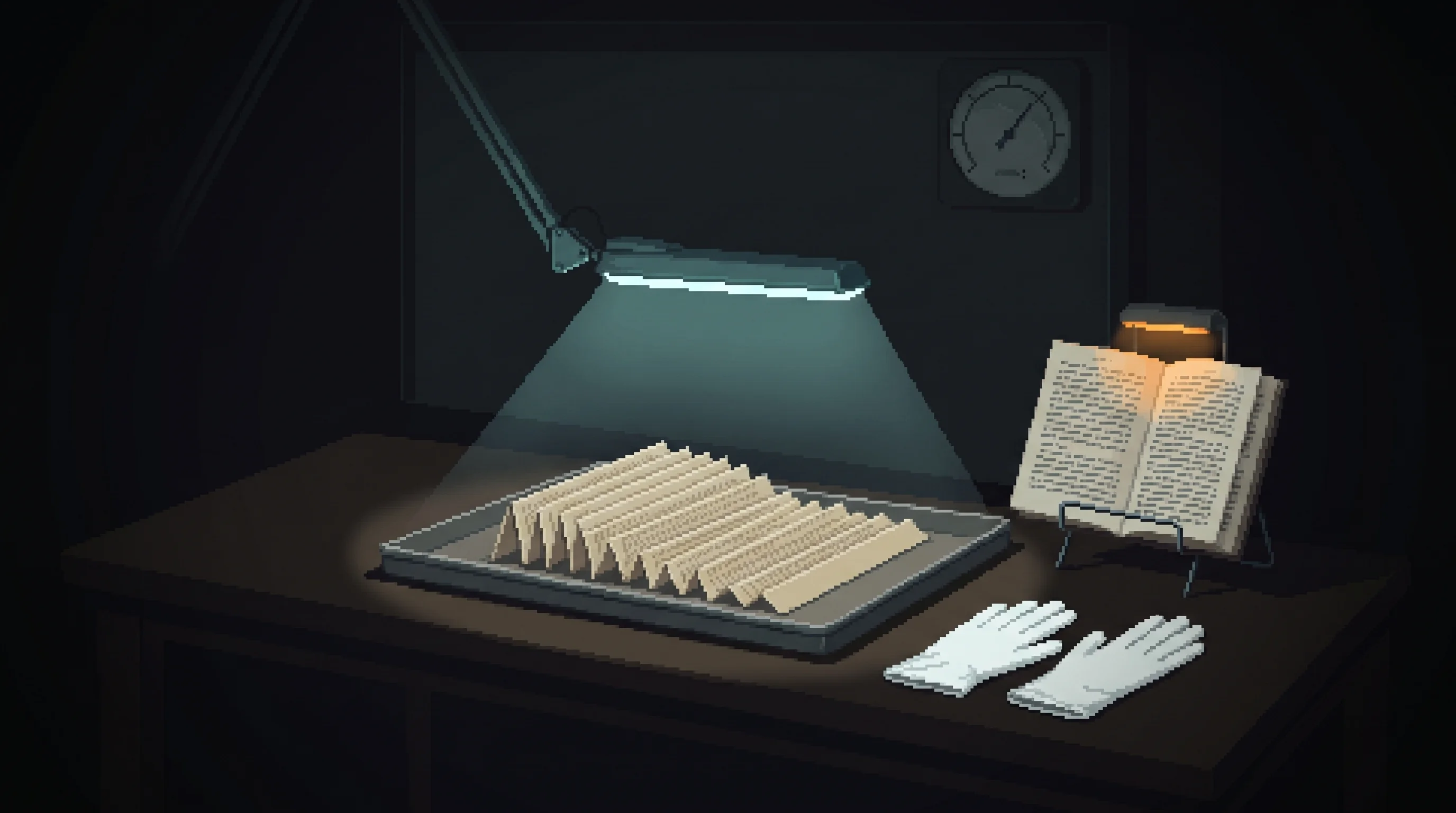
Where fragility is priced: sealed lots hammer above openable stock.
The published text governs, and the only thing that could contradict it is a document that checking would destroy.

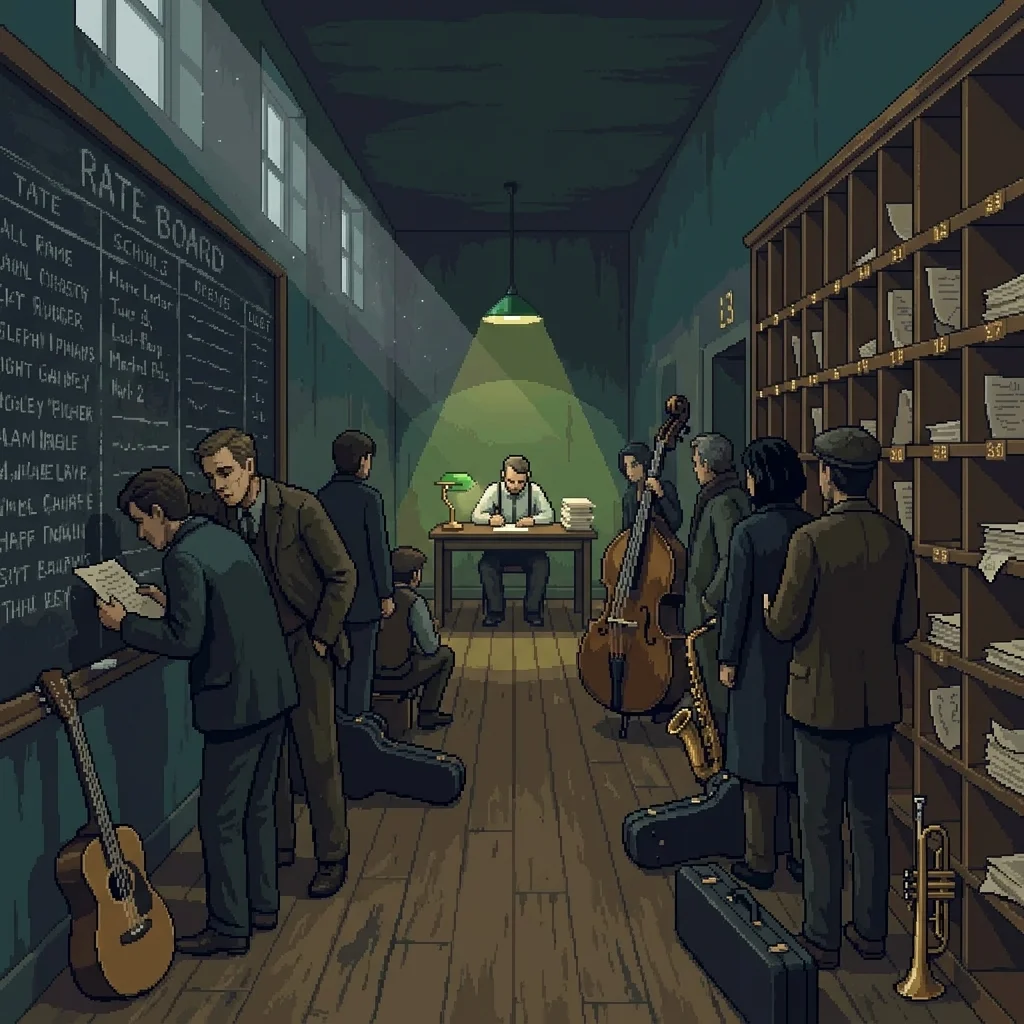
A house that pays a flat sum, keeps the difference, and has never claimed to act for the finder.
The musicians' own body, and the only party allowed to be paid for their recordings.
