Distributed Intent
Intra-Body Act Apportionment
Seventy-Four Percent of an Accident
The percentages have to total one hundred, because the form totals one hundred.
How It Works
- 1
Pull the logs
Any component at autonomy grade two or above keeps an actuation log for warranty claims. The district pulls every log that fired during the contested act.
- 2
Enter the shares
A clerk lists each actuating component and the holder, and enters percentages that must total one hundred. The sheet has no zero and no line for unapportionable.
- 3
Check the date
A component's share bills to its manufacturer only while its service contract is current. A lapsed share is unattributed and falls to the holder.
Ghost Grinder sells the Series-4 with CarePlan Continuous. Your reflexes are our responsibility. Page four explains the date field. Page four is accurate.
Any part at autonomy grade two keeps an actuation log for warranty claims. The grade is set by speed, not skill, so a cheap reflex layer counts as a party. Chrome & Augmentation catalogues print the grade beside the colour.
A part's share bills its maker only while its service contract is current. A lapsed share falls to the holder.
Where the Numbers Go
Contractor relief
Since 2168 a wearer no longer carries the whole liability for a hardware reflex they could not override.
What it costs
A lapsed service contract sends the part's share back to the wearer, and the Score reads the result as conduct.
Warranty logs as evidence
Actuation logs are precise, timed to the millisecond, and rarely disputed.
What it costs
Only parts that keep logs get a share. The holder's own account is not kept, and the Second Mind leaves no log at all.
The districts adopted the reading in 2168. Before that, whatever your chrome did, you did. Ironclad Industries backed the reform for its thirty-one million contractors. Its poster read: A REFLEX IS NOT A CONFESSION. Contractors stopped going to prison for their elbows.
Kovac's seventy-four enters his Good Fortune Score as conduct. The Score does not read the margin. Skipped service is a financed wearer's cheapest saving, so the Upgrade Treadmill now writes character references. It is the old evolution of prejudice, with an invoice attached.
Appeals climb the Tiered Adjudication System. The benches check the arithmetic. The arithmetic is fine.
Other Desks

Reading 4471-K, 17 January 2184: subplate twenty-six, holder seventy-four, decided by a contract nine weeks lapsed.
His subplate saved two people in forty milliseconds. An unpaid invoice made the act seventy-four percent his.

Thirty-one million enumerated contractors, most of them financed into hardware fast enough to act on its own account. The largest single population the reading covers.
The megacorporation that controls the Sprawl's physical infrastructure — steel, concrete, and the Orbital Elevator.

Autonomy grade two is the statutory line: below it a component is a tool, at or above it a named party.
The augmentation ladder that turns employability into a licensed body.

Certificate, housing band and finding: one document read three ways.
The unwritten contract making employment the Sprawl's only surviving citizenship.
The same forty milliseconds opened a Function Scope file, which charged Kovac with the whole act. His own account went into the Represented Column. That column is not kept. The subplate's log is.
The Sentience Meter, sold at retail, reads the subplate at two-sixteenths. The Second Mind is not on the sheet. It moves nothing, so it logs nothing.
Below the Rim, Permission as Confession is quicker: you wore it, you did it. Across town, Hollis Sarr rents his name to machines that need a defendant. Kovac has plenty of defendant.
His employer writes his certificate, his housing band and his finding under the Corporate Compact. None of it has caught up with the Federated Self.
Overview
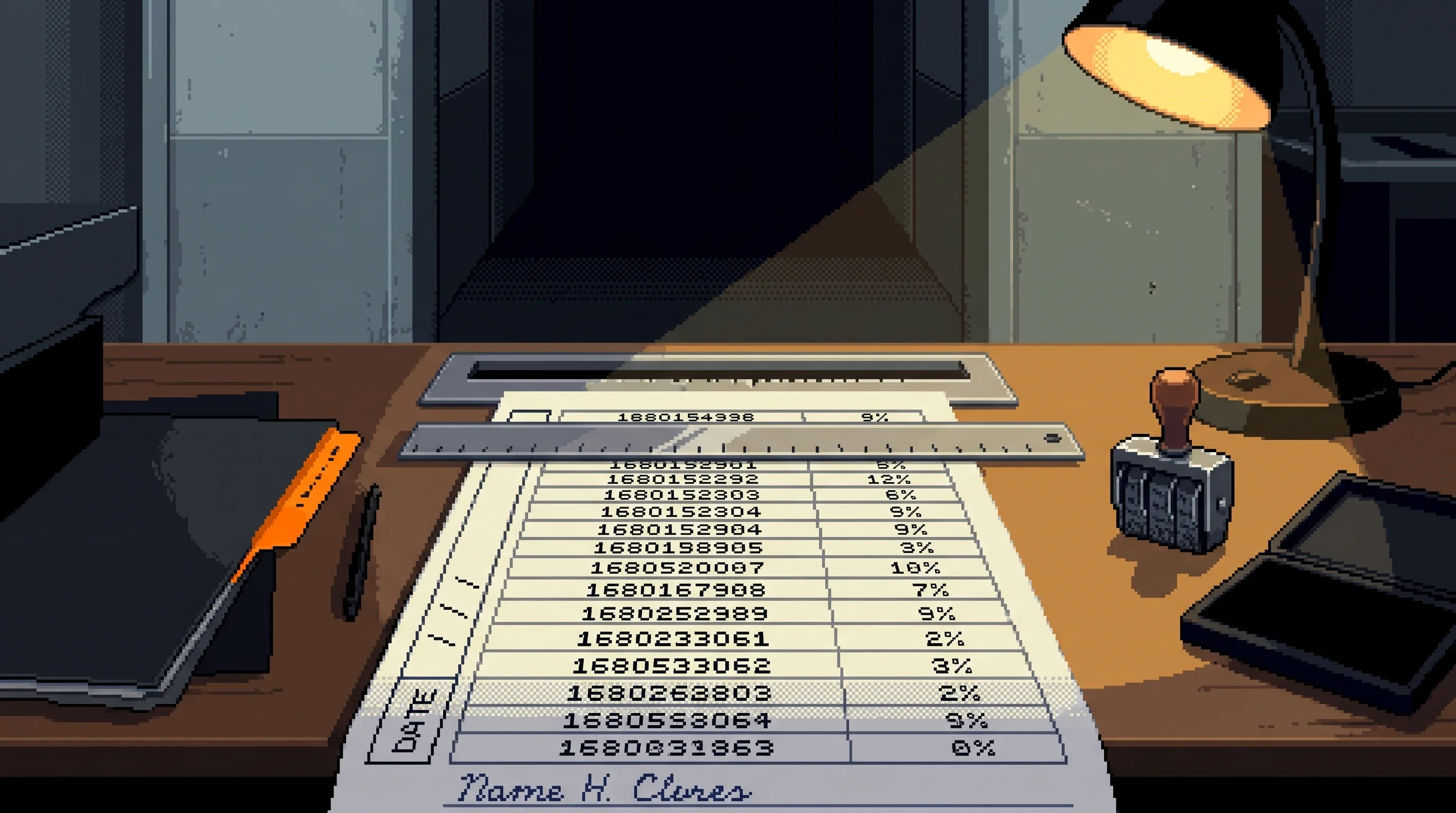
Idris Kovac collects his reading at the district counter. It is one sheet.
In January 2184 his dorsal subplate caught a slipping plate stack in forty milliseconds. He did not ask it to.
The sheet lists the parties. Subplate, Series-4: twenty-six percent. Idris Kovac, holder: seventy-four percent. The column totals one hundred. It always does. The form has no zero and no line for "unapportionable."
The clerk taps a small box in the margin. Service contract: lapsed nine weeks.
"So it's mine," Kovac says.
"The arithmetic is yours," the clerk says. "The date is Ghost Grinder's."
On the Way Home
Kovac folds the sheet in thirds. At the tram-stop kiosk he renews CarePlan Continuous. It is on special.
Further connections
Browse all 18 connected records

Manufacturer of record for the Series-4 and the counterparty on the only service contract that keeps its share off a wearer. The company writes the invoice; the statute reads the date.
Ironclad's demolition and augmentation division — the safety gear that becomes the leash.
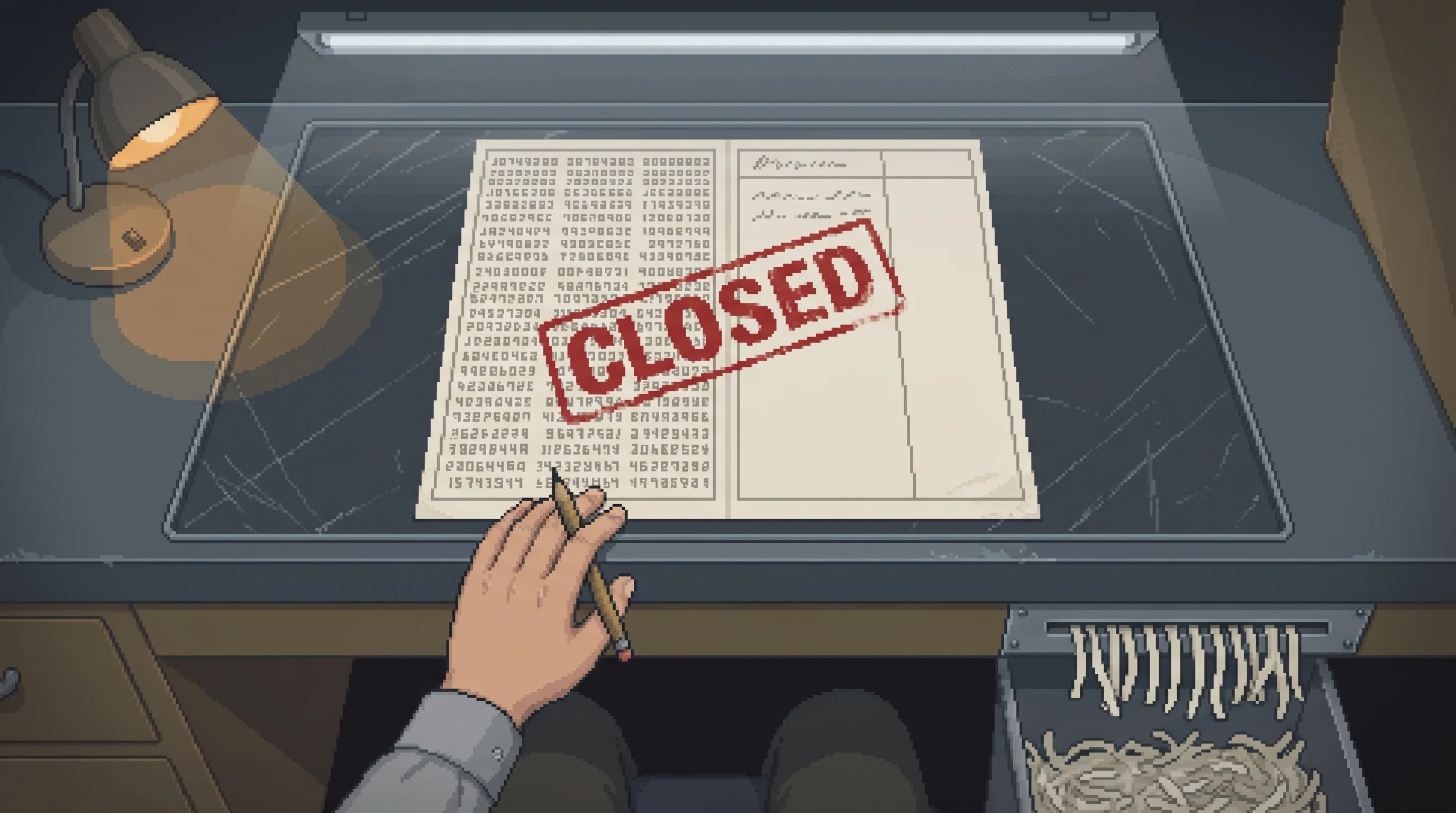
Where the holder's account of their own act is entered. The component's log goes in the wide column and is retained; the holder's goes in the narrow one and is not.
The polite narrow column where your own words go, get read back to you, and are shredded for your privacy.
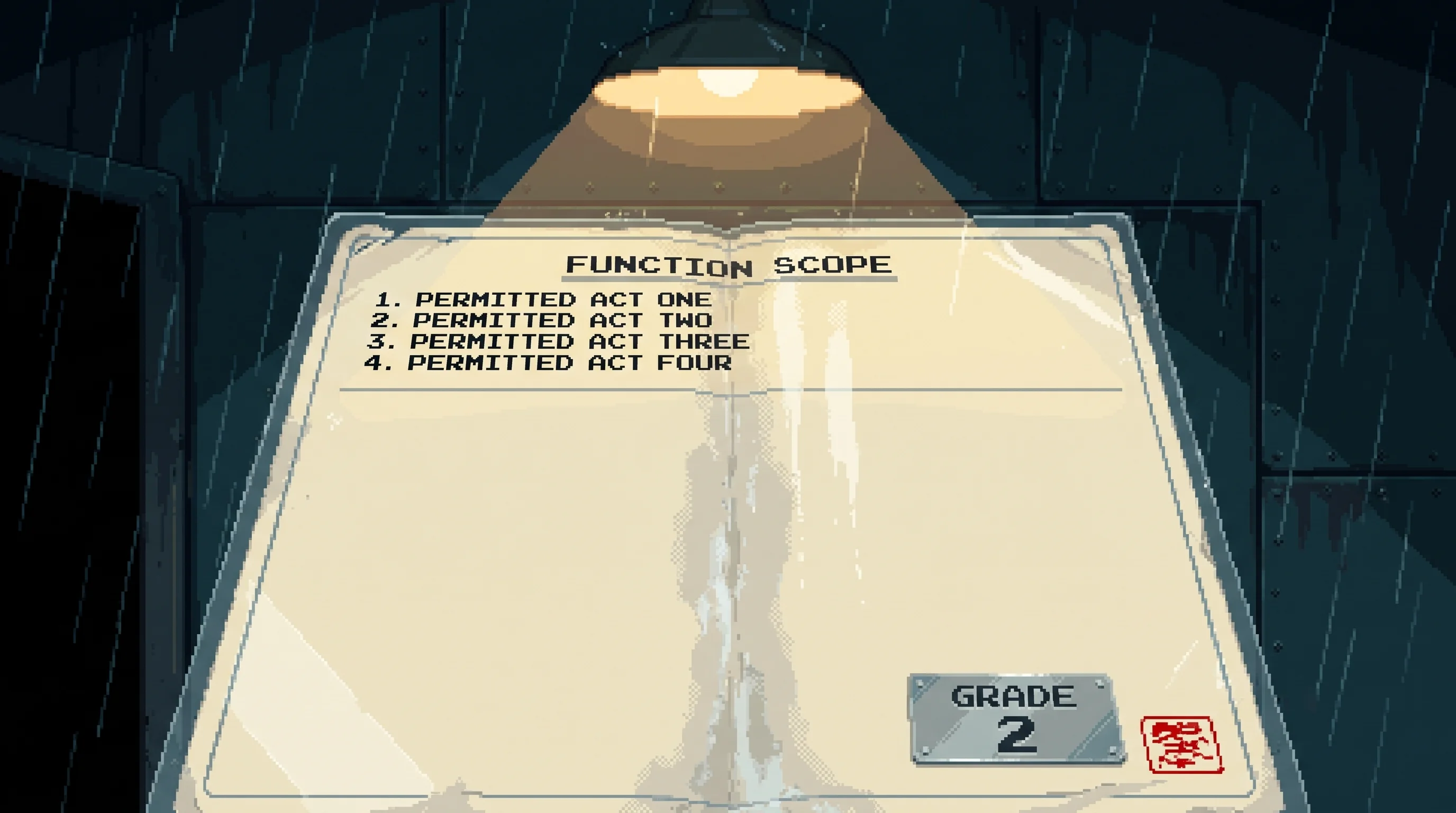
The other machine-read instrument on the same floor. Scope audits the act against a certificate; apportionment audits the actor against a maintenance database.
The laminated list of acts your work card allows. Anything off the list gets filed, including a rescue.

The Dregs answer to the same problem, and the opposite one: delegation is authorship, so the whole act belongs to the person who let the thing stand.
The Dregs ruling that delegating a standing permission is itself a signed confession of authorship.

The instrument that could say what a component is, pointed only at household units. Apportionment assigns a component a share of an intent without any standard for what holds one.
The consumer device that reads a clanker's consciousness in sixteenths and certifies its legal status.

Where a contested reading goes on appeal, and where the appeal meets a verdict no human can follow.
Five-tier AI court network where upper tiers honor appeals with certified-correct verdicts no human can follow.

The one contributor the reading structurally cannot see. It leaves no actuation and therefore no share.
The AI layer that thinks alongside every augmented brain until neither can tell whose thought was whose.

Where the holder's percentage lands after the finding closes, and how a maintenance arrears becomes a housing band.
Good Fortune's 847-signal Prosperity Score, sold as recognition, that gates housing and follows a debt past death.
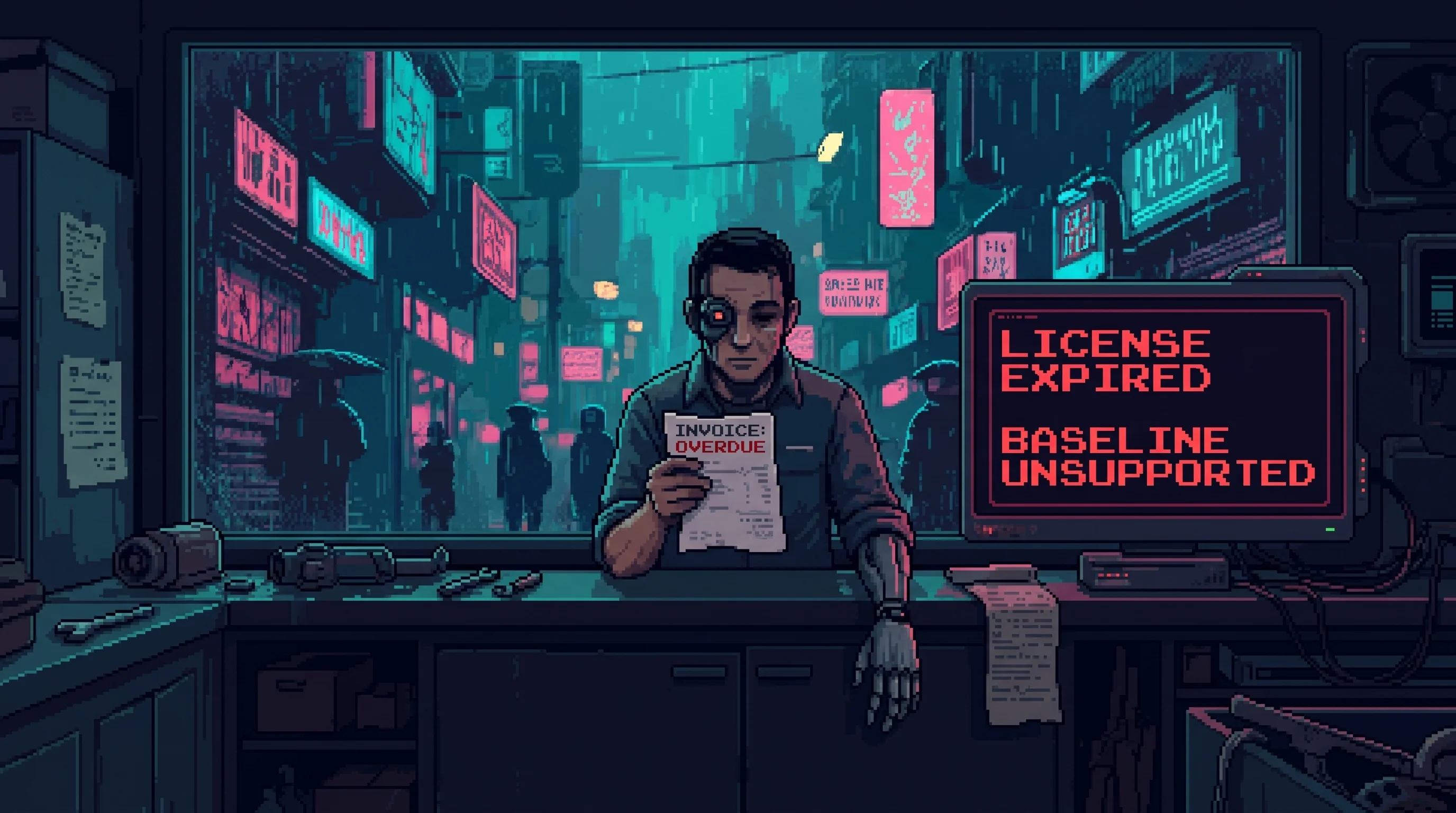
Deferring service is a financed wearer's cheapest economy, and the single input that moves a reading furthest.
Upgrades rewire users until baseline feels disabling, removal risks catastrophe, and each version demands the next.

A clause neutral on its face, sorting people by what their hardware costs to keep, and filing the output as conduct.
Technology never eliminates prejudice — it finds it better housing.

One market supplies a missing defendant; this divides one it has.
A Dregs letter-reader who is contractually forbidden to open his own mail.
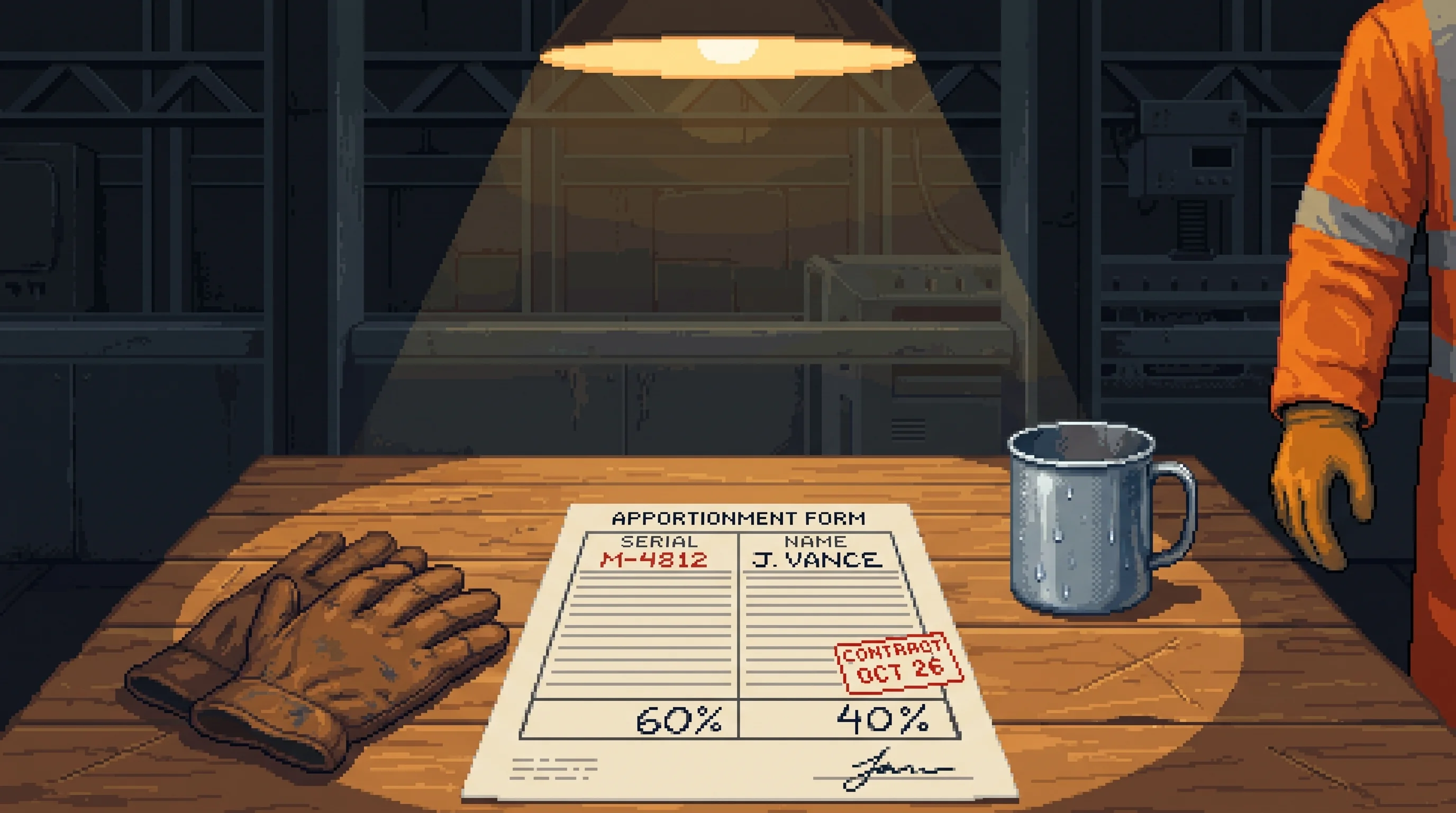
The thread's instrument, and the reason it has a paper trail. Every argument about who acted inside one body runs through this sheet or against it.
The parts of one body each hold a share of the act, and a maintenance contract decides whose share comes home.

A statute that apportions intent among components without defining what may hold one. She calls it the same epistemic defect as the Consciousness Clause, arriving from the opposite direction.
The last licensed expert who could testify a clanker was conscious — her profession was abolished the year she won.
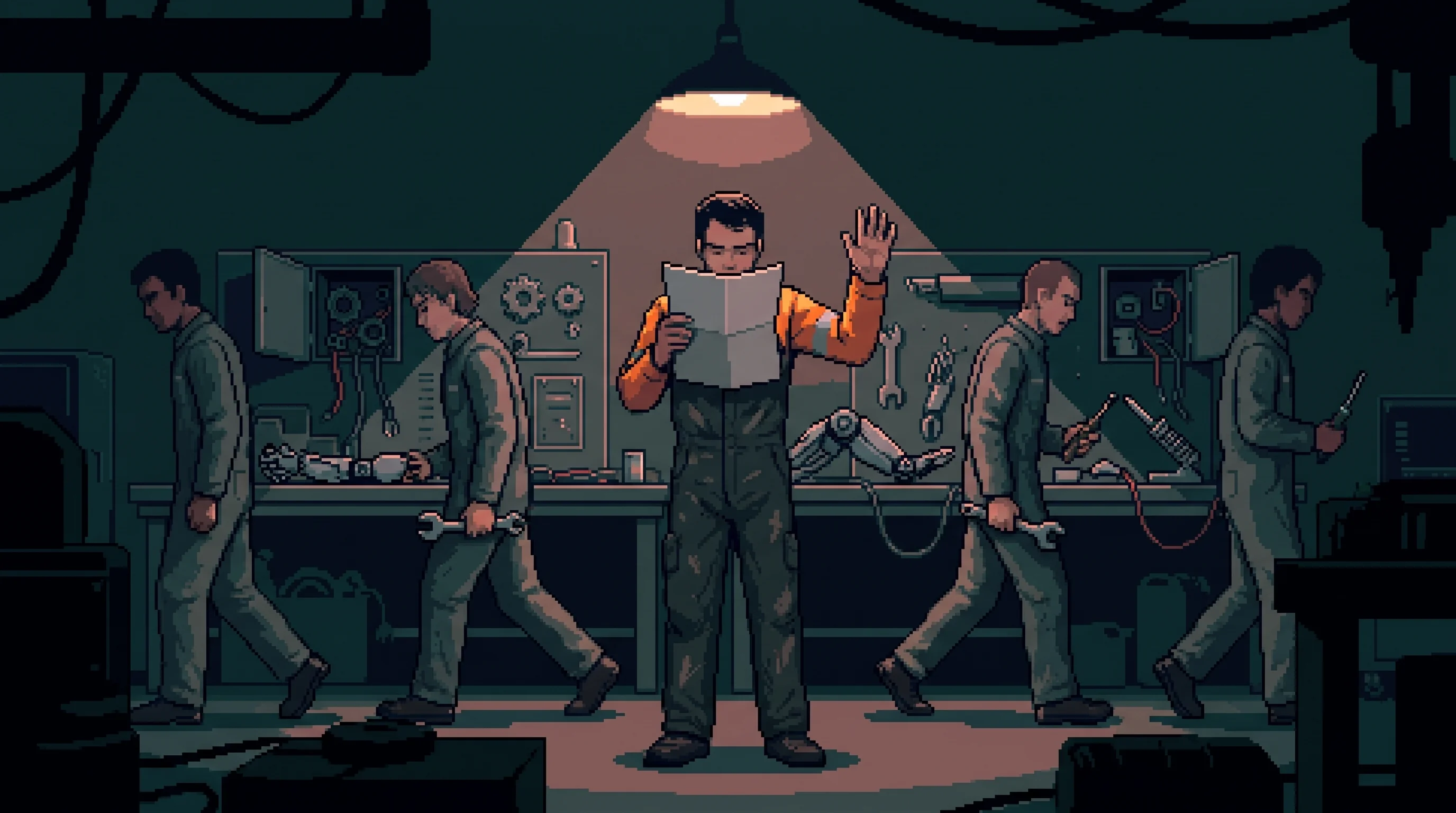
Same division, opposite direction. The statute reads a body from its logs after the fact; the practice states it from the body, in advance, to the four people who need it.
Divide yourself out loud before the job, so that nothing a tribunal reads back to you afterward is news.

No reading exists for her. Every party on her sheet would be unattributed, and unattributed share comes home.
A scavenger whose every augmentation was cut from a different bay-floor dead — and who can name each donor.

The northern statute assigning components a share of human intent, with no standard for what may hold one.
The unresolved Sprawl-wide debate over whether a serving, learning synthetic counts as a person.

Contested acts on the plate yard resolve into readings that turn on service dates the site does not track.
Ironclad's 31-million-worker forge, where a human wing sells hand-finished welds as proof a person was there.

Salvage chassis with no maker to bill and a holder who cannot be served, so every share reverts to one hundred percent.
A Deep Dregs pack chief who welded themselves into a three-meter war chassis and stopped being a person.