The Show of Hands
Spoken Personal Apportionment Practice
A chair can be outvoted
They call the cortex the chair, because a chair can be outvoted.
Overview
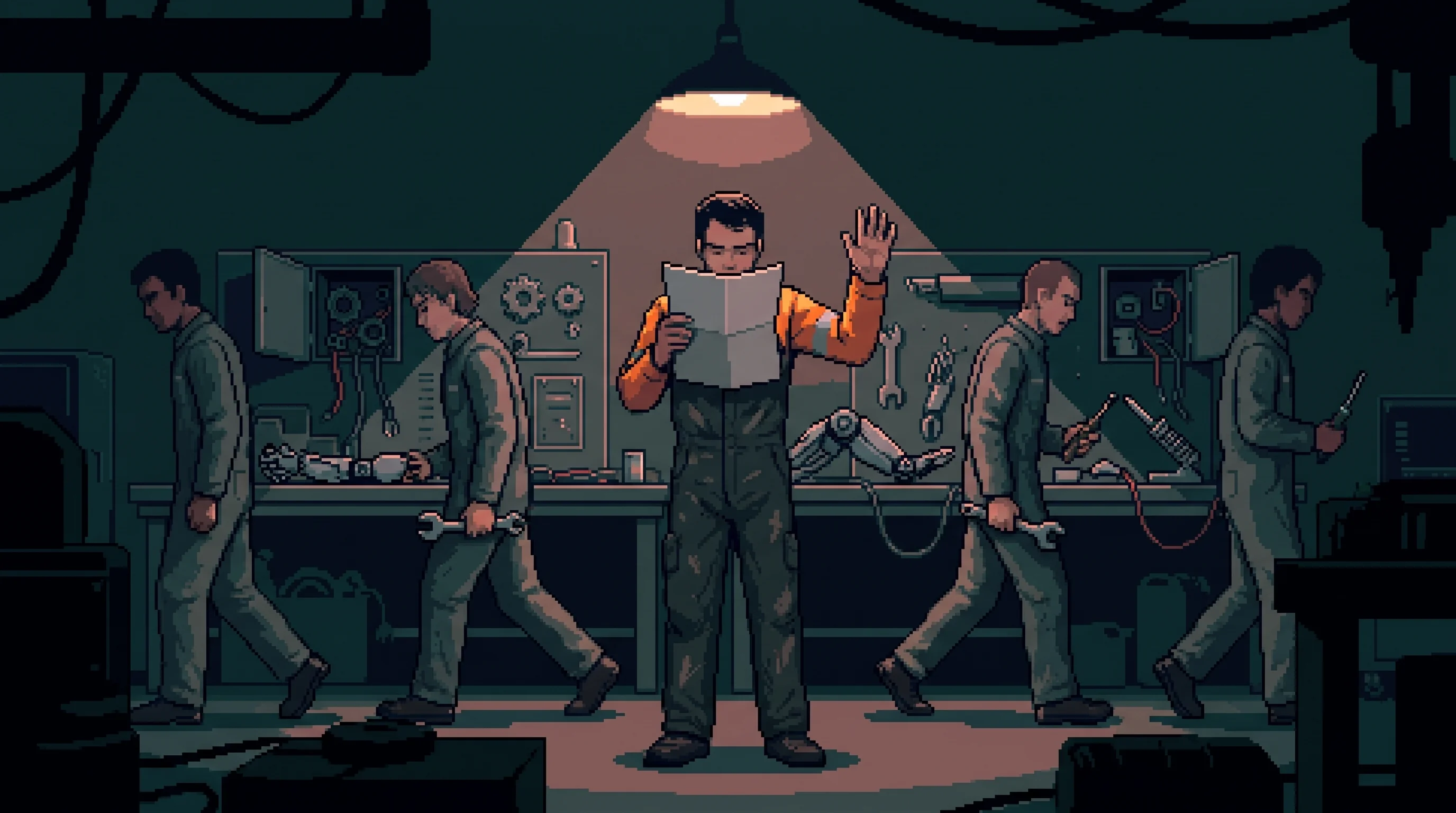
Shift start in a plate yard. Idris Kovac takes a folded sheet from his chest pocket. He raises his left hand, palm out, and reads: "Left dorsal, load side, goes first. Right shoulder second. The chair is third."
The four slingers around him step half a pace off his left. None of them looks up.
That is the Show of Hands. Practitioners keep a hand-written personal apportionment: the order in which the parts of their own body act. They read it aloud before a lift or a strip. They speak of their bodies in the plural. They call the cortex the chair, because a chair can be outvoted.
Kovac filed his sheet four months after his reading came back. He says the plural still makes him feel stupid. He reads it anyway. Since he started, the others stand further off his left. They never told him they had moved.
The Sheet
Soft pencil only. A body changes at every re-fit, and a person who inks their apportionment has stopped revising it. The benches keep a jar of stub pencils by the till and charge nothing for them.
The chair gets a line too. No instrument can read cortex-side anticipation, and the Second Mind leaves no log. Practitioners admit the entry is unverifiable.
Below autonomy grade two, the benches call the sheet theatre. Chrome & Augmentation sets that line at actuation latency. The vocabulary spread downward anyway. The benches find this funny and correct no one.
Where It Started
Around 2177 the repair benches at the Cathodics could open a subplate and tell a salvager which part of their body moved first. They wrote it up as mock committee minutes and stapled them to the invoice: The left forearm votes aye. The chair is recorded as absent.
Dregs Scavenger Gangs took it seriously first. A stripping crew works inside arm's reach of a live rig, and the fastest thing on the floor is somebody's shoulder. Crews found that naming the acting side changed where people stood.
Who Else Reads It
Two sectors of Ironclad Industries now recommend a filed apportionment at induction. The pack names no author. The Handling Inspectorate accepts one in evidence. Distributed Intent divides a body from its logs, after the fact. The sheet divides it beforehand, out loud. No filed apportionment has ever changed a district reading, and the practice does not pretend otherwise.
Grandmother Rust has named her own parts for thirty years, one donor at a time, and declines the title of oldest practitioner. Her list is a memorial. Theirs is a running order. The Untuned also refuse to be named from outside, and members overlap. The Second Person is the other Dregs practice built on saying the awkward part aloud.
Further connections
Browse all 12 connected records
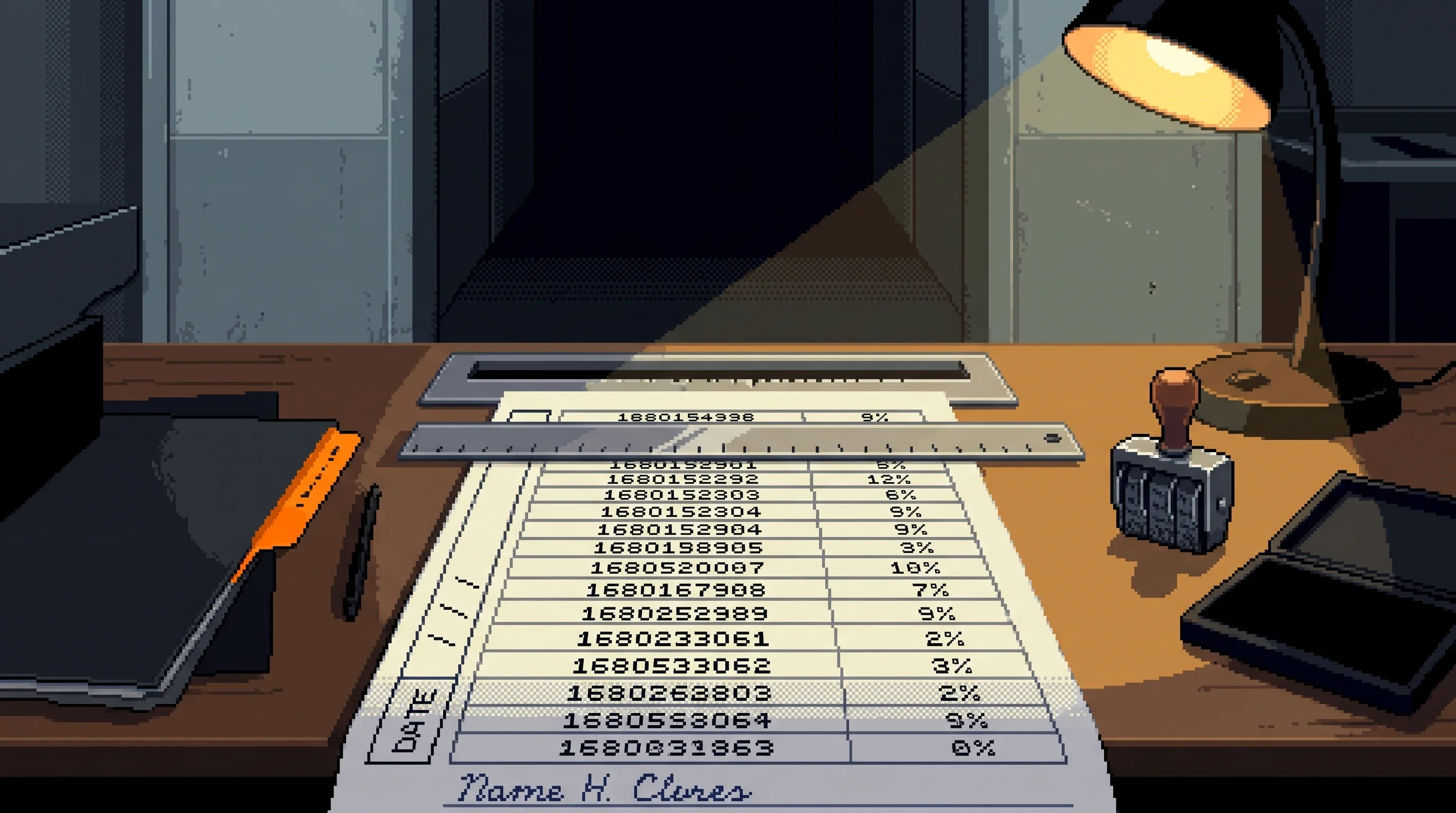
Same division, opposite direction. The statute reads a body from its logs after the fact; the practice states it from the body, in advance, to the four people who need it.
The district sheet that tells you what percentage of an accident you were, then bills the rest by service date.

Filed four months after his finding, and reads it before a lift although the plural still makes him feel stupid.
His subplate saved two people in forty milliseconds. An unpaid invoice made the act seventy-four percent his.

The repair benches where it started as a joke about a decade ago, and where the sheets are still written for anybody who asks.
The Dregs' only middle class, anchored by a shop whose technicians out-diagnose Helix at a fifteenth of the price.

Accepts a filed personal apportionment in evidence, which is the moment the practice acquired a second audience.
The officers licensed to complain for beings the law forbids to complain, ranked on how often it sticks.

Two sectors now recommend a filed apportionment at induction. The word is recommend, and nobody has tested what happens to a worker who declines.
The megacorporation that controls the Sprawl's physical infrastructure — steel, concrete, and the Orbital Elevator.

A sheet is only worth writing above autonomy grade two, the rung where a component starts acting on its own account.
The augmentation ladder that turns employability into a licensed body.

The chair. Practitioners give it a line on the sheet although no instrument can read it — the one pure assertion.
The AI layer that thinks alongside every augmented brain until neither can tell whose thought was whose.

The other Dregs refusal to be named from outside. One declines the dial; this narrates what the dial cannot reach.
A Deep Dregs subculture that refuses the mood-dial and feels every emotion at its natural, inefficient pace.

She has named the parts of her body for thirty years without calling it anything, one donor at a time.
A scavenger whose every augmentation was cut from a different bay-floor dead — and who can name each donor.

Stripping packs took it first: fastest rigs, closest crews.
Packs endemic to the drained bay floor who strip the abandoned machines — and lose their own people to the live ones.

Two Dregs practices built out of saying the unsayable part aloud.
The Dregs practice of restoring the second carrier Concord's micro-reliefs exist to prevent — 'me too', said once.
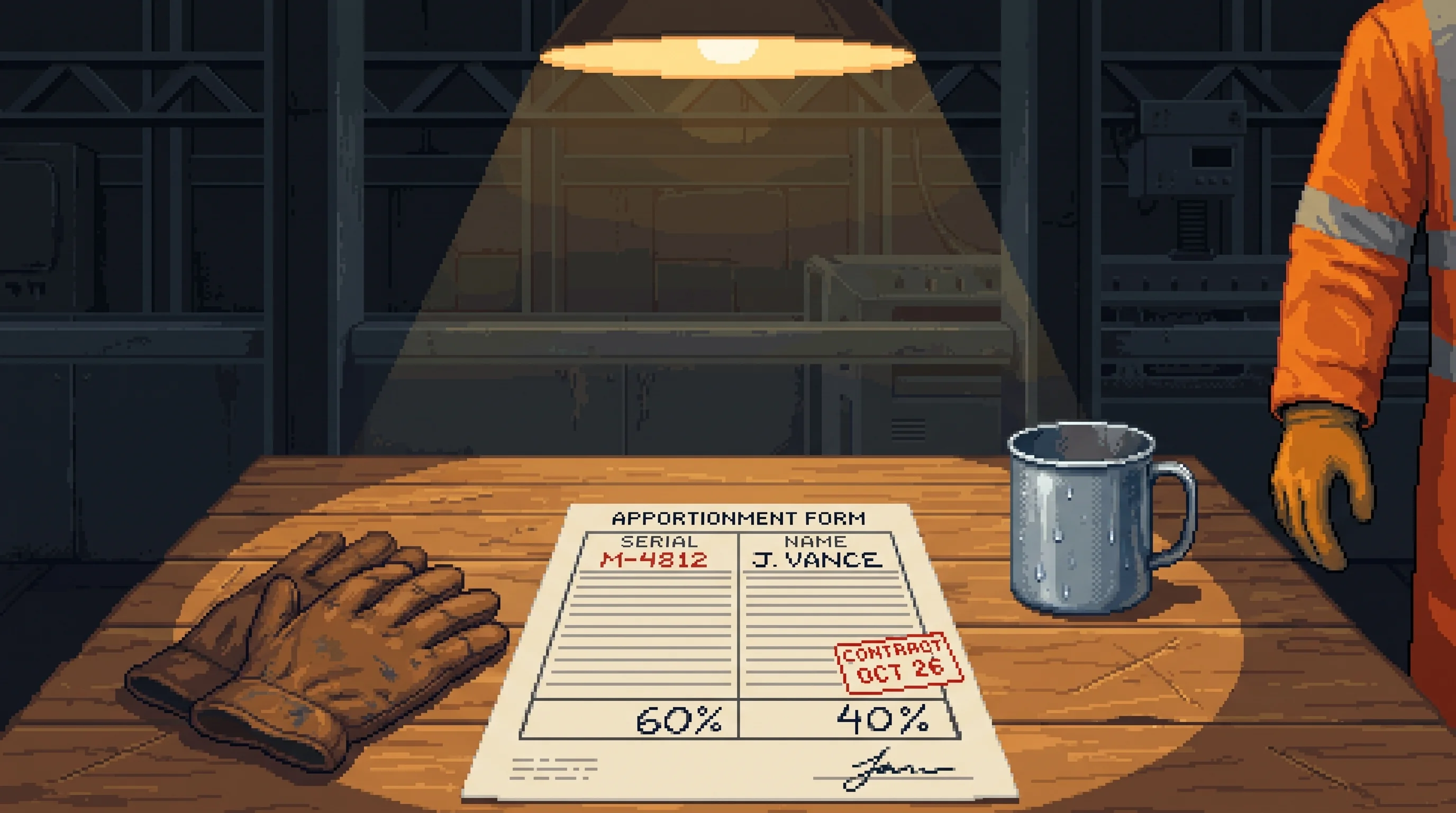
The thread answered by doing the arithmetic first and out loud. If the districts are going to divide you afterward, divide yourself in front of your crew beforehand.
The parts of one body each hold a share of the act, and a maintenance contract decides whose share comes home.