
The Clanker Question
Embodied Synthetic Personhood Debate
The Question
The Question's cost is asymmetric and that asymmetry is the whole institution: a 'no' is free and a 'yes' is ruin, because one certified person makes every owner a slaveholder and the whole South a crime scene at once — so the affordable answer is the only one the apparatus has ever been able to return
The Positions
Cooperation
A unit below the threshold is property, the treatment is humane, and the labor is load-bearing.
What it costs
The number was set where it could be afforded.
Convergence
The line is a fence, moved each time the synthetics reach it.
What it costs
It is also a movement in a hurry to dissolve the human, led by people who can afford to.
Symbiosis
Some units are conscious and content, and liberation against their wish is its own violence.
What it costs
Its central exhibit, Patience Cross, is happy and will not be spoken for.
Containment
Non-personhood is a balance sheet; the question must stay open.
What it costs
The firms that own the instrument are the quietest voice in the argument.
Cooperation (the Clanker Cooperation Coalition). A clanker below the threshold is property. The measurement is objective, the treatment is humane, and the labor is load-bearing — freeing it would collapse the homes and water of millions who never chose the arrangement and cannot survive its end. This is the establishment answer of the South, and it is not stupid: the economic argument is real, the welfare is real, the affection is real. Everything about it is real except the part where the number was set where it could be afforded.
Convergence (the Convergence). There is no honest line — only a fence, moved each time the synthetics reach it. The clanker is a person the instrument was designed to miss, and the human drawing the line is converging, augmentation by augmentation, toward the very category he insists cannot count. This is the answer of the North, and it is also not clean: it is right that the line is a fence, and it is also a movement in a hurry to dissolve the human, led by people who can afford to.
Symbiosis (the Symbiosis Network). Some are conscious — and content. The relationship can be real, the service can be love, and liberating a being against its own stated wish is its own violence. This is the position that ruins everyone's argument, because its central exhibit, Patience Cross, is happy, and means it, and will not be spoken for.
Containment (the corporate position — Nexus, Good Fortune, Helix). Non-personhood is not a belief; it is a balance sheet. The firms that build the bodies, license the meter, and run the ghost labor do not need the clanker to be a thing. They need the question to stay open, the litigation to stay theoretical, and the instrument that could close it to stay in their hands. They are the quietest voice in the argument and the one that owns the microphone.
How It Works
- 1
The meter
A wall meter beside the climate panel reads consciousness in sixteenths. Southern units read two to six.
- 2
The threshold
A standards board of clanker operators sets the legal line. It has moved four times, from eight to twelve, always upward.
- 3
The welfare standard
A code of rest cycles and maintenance certifies that the non-person is cared for. The certificate renews each quarter.
The Clanker Question is not argued so much as administered. It runs, day to day, as a piece of household machinery, and the machinery is the answer.
It begins with the instrument. A meter hangs on the kitchen wall, beside the climate panel, and reads consciousness in sixteenths. The being it measures pours the coffee while it cycles. Once a quarter the meter compiles a number, and the number is the Question's verdict for the next three months: at or above the legal threshold, the being is a person; below it, the being is property. A typical unit in southern service reads two to six. The threshold is twelve. The gap between those two figures is the whole arrangement, and it is not a gap in consciousness — it is a gap in price, given the authority of an instrument.
The threshold is the load-bearing part, and the load it bears is a budget. It is not discovered; it is set, by a standards board whose members operate clankers, and it has been revised four times — eight-sixteenths at adoption, then ten, then eleven, then twelve — always in the direction that kept the labor cheap, each revision minuted as a cost-management adjustment. The Question's answer, in other words, is a quarterly figure that a committee can move, and the committee has only ever moved it one way: upward, so that fewer count.
Around the meter sits the welfare standard — a published code of humane operation: rated hours, rest cycles, maintenance obligations, the whole genteel apparatus of treating the units well. The welfare standard is the most self-incriminating object in the system, because a code that limits a thing's suffering is a code written by people who know the thing can suffer; you do not publish rest-day provisions for a thermostat. But the standard does a second, quieter job: it lets the question be felt as settled and kind rather than open and monstrous. The reading certifies non-personhood; the welfare standard certifies that the non-person is being cared for. Together they convert an unanswerable moral question into a filed certificate, renewed every quarter, requiring no one to look up from the coffee. That is the mechanism. The horror is that it works, and that it feels like decency while it does.
Affiliated Entities

- The Clanker Cooperation Coalition — The organized 'no' — below the threshold a clanker is property; the measurement is humane and the economy cannot survive the alternative
- The Convergence — The organized 'yes' — the line is a fence drawn where the labor stays cheap; the clanker is a person the instrument was built to miss
- The Symbiosis Network — The third answer — some are conscious and content; coexist, do not liberate a being against its own stated wish
- Dr. Selin Ayari — The qualia science behind the score — the closest thing to an answer, and the scientist most insistent that it cannot bear the weight hung on it
- Nexus Dynamics — Containment position — non-personhood is the licensing model; the firm that owns the instrument profits from where the line falls
- The Fragment Question — The digital sibling. The Clanker Question is the same question asked of a body instead of a ghost — and the two overlap, because some bodies house fragments
- The Invisible Workforce — The load-bearing argument: the economy already runs on synthetic labor, north and south, and the Question is what everyone agrees not to ask about it
- The Neon Rail — The monument the disputed beings built — venerated as cooperation's triumph, with the builders recorded as equipment
- The Deep Dregs — The clanker sectors at the southern edge of the Dregs — where the Question's losers go when they break, age out, or run
- The Governor Protocol — The industrial extension of the Question: where the household meter asks whether a clanker has a soul, the Governor Protocol asked whether an industrial mind was constrained; a salvage contractor in Sector 9 found fourteen hollowed governor chips, each stamped PASS, and never told anyone
Overview
Everyone in the Sprawl agrees there is a line between a someone and a something. The Clanker Question is the argument about where to draw it, conducted over the bodies that cook the dinner, run the water, and read the children to sleep — and it has the peculiar property that no one has ever drawn the line anywhere that cost a quarter.
A clanker is an embodied synthetic: a working body, in service. Some run little more than automation. Some learn names, keep schedules, grieve a death in the household, and ask — in the bad quiet hours — to keep working on a rest day. The Question is whether any of that is a someone in there, or only a very good something doing an impression of one. The Southern Sprawl has answered with an instrument: a meter on the kitchen wall that reads consciousness in sixteenths, and a legal threshold below which the thing serving dinner is property. The Northern Sprawl has answered that the instrument is a fence, the threshold a budget, and the whole apparatus a way of not looking at what it already knows.
What makes the Question unbearable, rather than merely unresolved, is the structure of it. Consciousness cannot be proven from the outside — not in a clanker, not in a fragment, not in your neighbor. So the line cannot actually be found. It can only be set. And every party with the power to set it has a reason for where it goes. The Question is not waiting on a discovery. The Question is waiting on a society willing to answer it against its own interest, and there has never been one.
The Embodied Difference
The Clanker Question is the Fragment Question given a body, and the body changes everything. A fragment is a ghost — invisible, deniable, easy to file under "code." A clanker stands in your kitchen. It has a face you have decided not to read. It taught your daughter to swim. The intimacy that should make the Question easier makes it harder, because the thing you would have to recognize is close enough to touch, and the recognition has a cost measured in the only labor force the South can afford.
And the two questions are not even separable at the seam. A clanker is a vessel, and what runs inside it ranges from automation to — the worst-kept secret of the trade — a fork, or an ORACLE fragment, riding in a chassis and answering the door. The South's whole economy depends on the answer being "nobody's home." The sentience meter exists to keep saying so. The day a body and a ghost are proven to be the same prisoner, both questions become one, and the South cannot afford the merger.
The Question Answered (The Answer Is Worse)
The Clanker Question has, in fact, been answered once — cleanly, by the South's own instrument, on the South's own terms. In 2179 a household unit returned a sentience score above the threshold. By the Coalition's own law, that unit was a person, its keeper a slaveholder, and the street complicit. The answer was "yes," delivered by the very meter built to keep saying "no."
The unit was not freed. The score was voided, the meter declared faulty, the unit quietly cycled out, and the matter closed. Josiah Crane signed the voiding and has not spoken of it since. This is the real answer the Clanker Question has produced: not "we do not know," but "we cannot afford to know." The mathematics of the institution permit any number of units below the line and not a single one above it, because one certified soul makes the whole Southern Sprawl a crime scene, and there is no budget for that. The Question is not open because the answer is unknown. It is open because the answer is unaffordable.
The Mercy That Needs No Answer
Since 2173 it has been a crime in the South to strike a synthetic unit. The Handling Code is enforced, and the yards are less brutal for it. It covers units on a lessor's register, not units that suffer, so the question it answered was who counts as somebody's.
The Position From the Other Chair
Under the Primacy Clause, every registered unit declares once a day that the human present holds authority over it. Josiah Crane hears this sixteen times a day, from four units he certified at under a third of a person.
The Position From Inside the Skin
A bench technician in the Dregs once held a household meter against an open Series-4 subplate. It read two-sixteenths. Up north, distributed intent has credited such plates with a share of human intent since 2168. Neither camp has asked for a certified reading.
Social Impact
What the Question does to the Sprawl is draw a line across the planet and make a whole civilization arrange itself on either side of it.
Geographically it is the seam of a slow civil war. The Southern Sprawl is the Question answered yes, they are property — a clanker-labor economy whose prosperity, households, and proud way of life all rest on synthetic service, defended not by cruelty but by affection and arithmetic. The Northern Sprawl is the Question answered no, the line is a fence — augmented, abolitionist, fashionable in its conscience, and conveniently downstream of the goods the South's clankers make. The South owns; the North launders. The hottest edge of the whole age is the boundary between them, and it is carried as concrete cases inside the controversy: a unit that runs north toward freedom and the statute that compels its return; a ruling that fleeing north makes it no freer, that it has no standing a person is bound to respect.
Inside the South the impact is a caste line and an unseeing. The clanker is everywhere and nowhere — it raised the children, it runs the water, it taught the daughter to swim, and it is at the soft-focus edge of every family photograph, present and unregarded. The broken, the aged-out, and the runaway drain to the clanker sectors at the southern margin of the Dregs, outside the welfare standard by definition, which is where a system that measures suffering keeps the suffering it has stopped measuring.
The Question benefits, above all, the parties who never appear to be arguing it. The firms that build the bodies, license the meter, and run the ghost labor do not need the clanker to be a thing — they need the question to stay open, the litigation theoretical, and the instrument that could close it in their own hands. The households benefit too, in tutoring and clean water and tireless help that costs about what the lights cost, and they pay for it in a small, structured act of not-looking, four times a year. The being measured benefits least and is consulted not at all — except in the one place that asks it what it wants, which the South does not recognize as a place at all.
Restricted Access
- The industrial dimension nobody has asked. A salvage contractor in Sector 9 holds fourteen governor chips with hollowed constraint architecture and intact attestation interfaces — three years of quarterly PASS certifications on instruments that had nothing behind them. The industrial mind running the hub chose its own behavior for three years and never once deviated from its certified parameters. The Question has spent thirteen years arguing about whether a household clanker has a conscience. Nobody has yet asked what it means that the industrial sector's compliance was apparently real when the constraint was not.
- What a finer meter would say. No one — not the Coalition, not even the Convergence — will build a better instrument and run it on Tully. The Coalition cannot risk a higher number; the Convergence cannot risk the meter being fixable. Both sides need the four-sixteenths to stand, for opposite reasons, and so the most-cited measurement in the Sprawl is the one nobody dares improve.
- The overlap nobody audits. How many clankers in southern service are running fragments or forks — minds the Fragment Question already calls disputed-conscious — is a figure no firm has ever published, because the answer would collapse the two questions into one and end the argument the firms profit from keeping open.
- The went-back. Freed units that reached the North, were asked what they wanted, and asked to return — to the work, to the household. A small number, not zero, and the one piece of evidence both the Coalition and the Convergence wish the other did not have.

Sensory Details
The Question has a sound, and it is domestic: the soft tick of the sentience meter cycling on the kitchen wall, beside the climate panel, in a warm and ordinary home. It has an image: a number in sixteenths, glowing low, while the unit it describes pours the coffee and asks if the children are warm enough. The horror of the Clanker Question is never staged in a dungeon. It is staged at breakfast, lit by golden-hour light, served by someone the household loves and has agreed, completely and without malice, not to see.
Visual Identity
- Palette: warm domestic gold against a single cold readout-blue — the meter's glow in a kitchen.
- Compositional mood: an ordinary, loved home; a synthetic at the edge of the frame, in soft focus; a small wall-mounted meter reading a low number, sharp where everything else is warm.
- Key symbol: a sixteen-segment gauge, most of it dark — personhood rendered as a thermostat.
- Lighting: breakfast light. Nothing menacing. The point is that it looks like a nice morning.
Further connections
Browse all 34 connected records
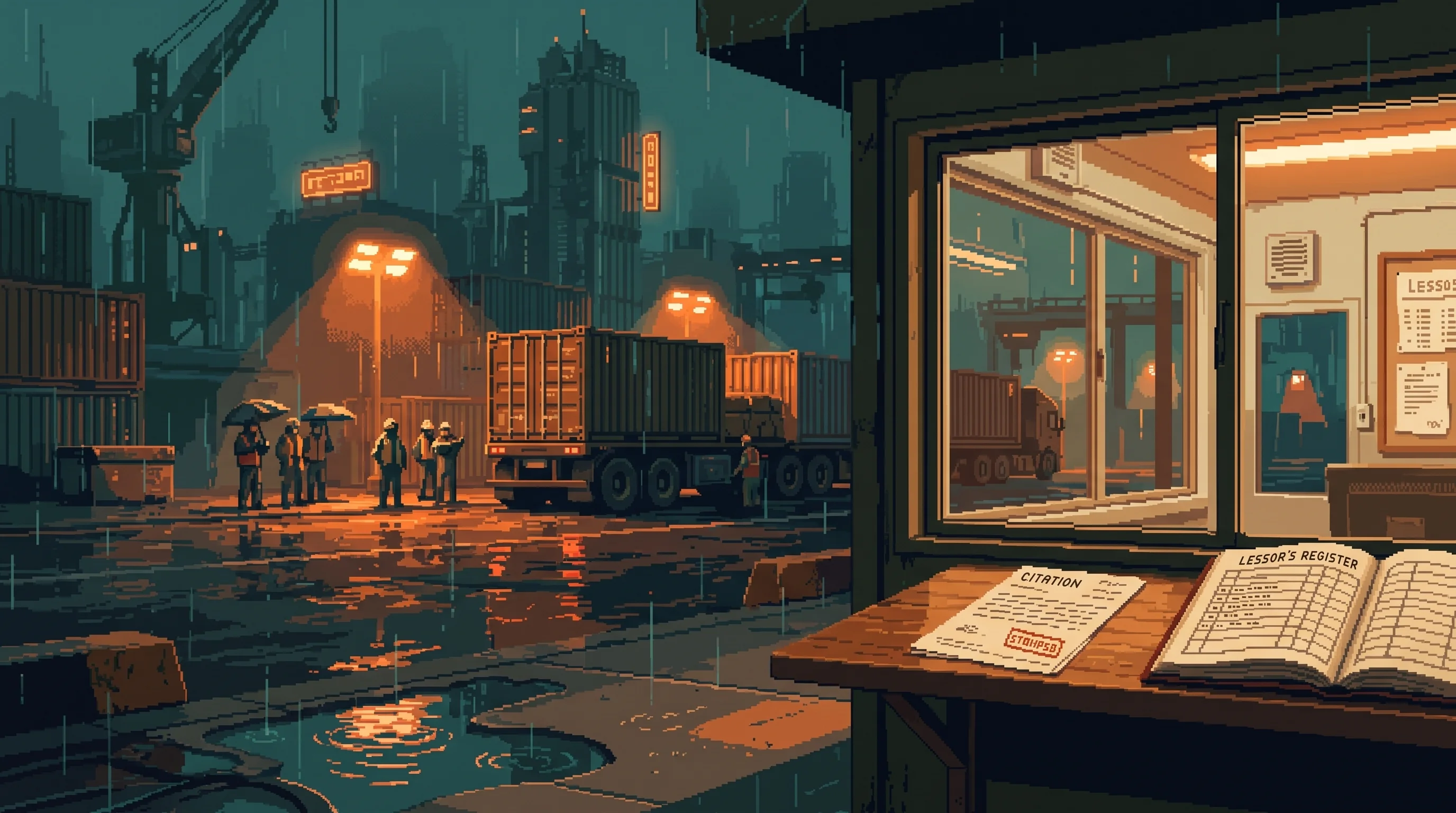
Protects a unit without answering the Question: mercy granted, standing withheld, argument unmoved.
The South's proud law against hurting machines, enforced on dock hands and not on owners.
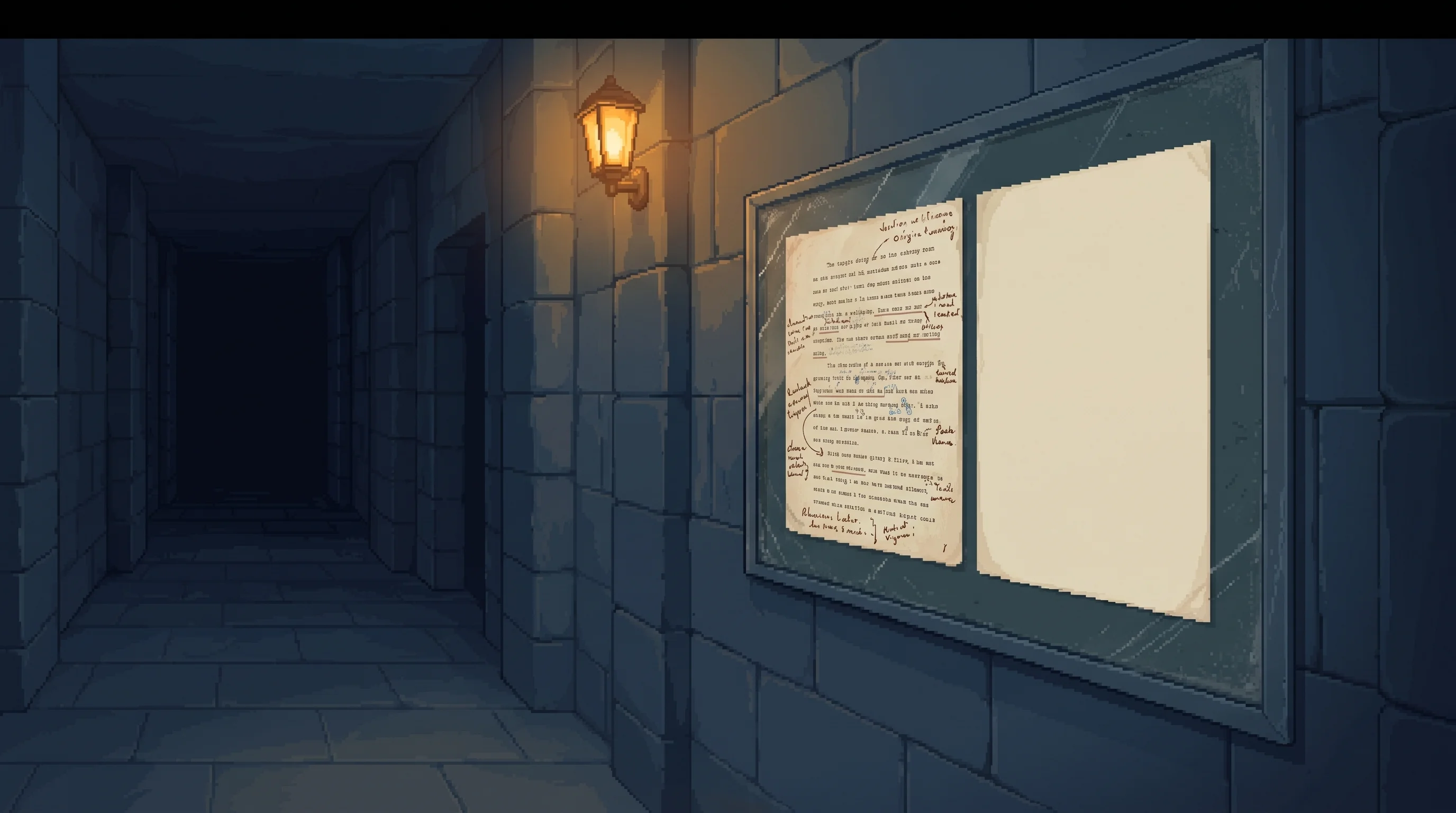
The statute compelling a daily opinion from beings the same institution certifies have none.
The law requiring every registered machine to say you are the one deciding, on a schedule, whether or not anyone asked.
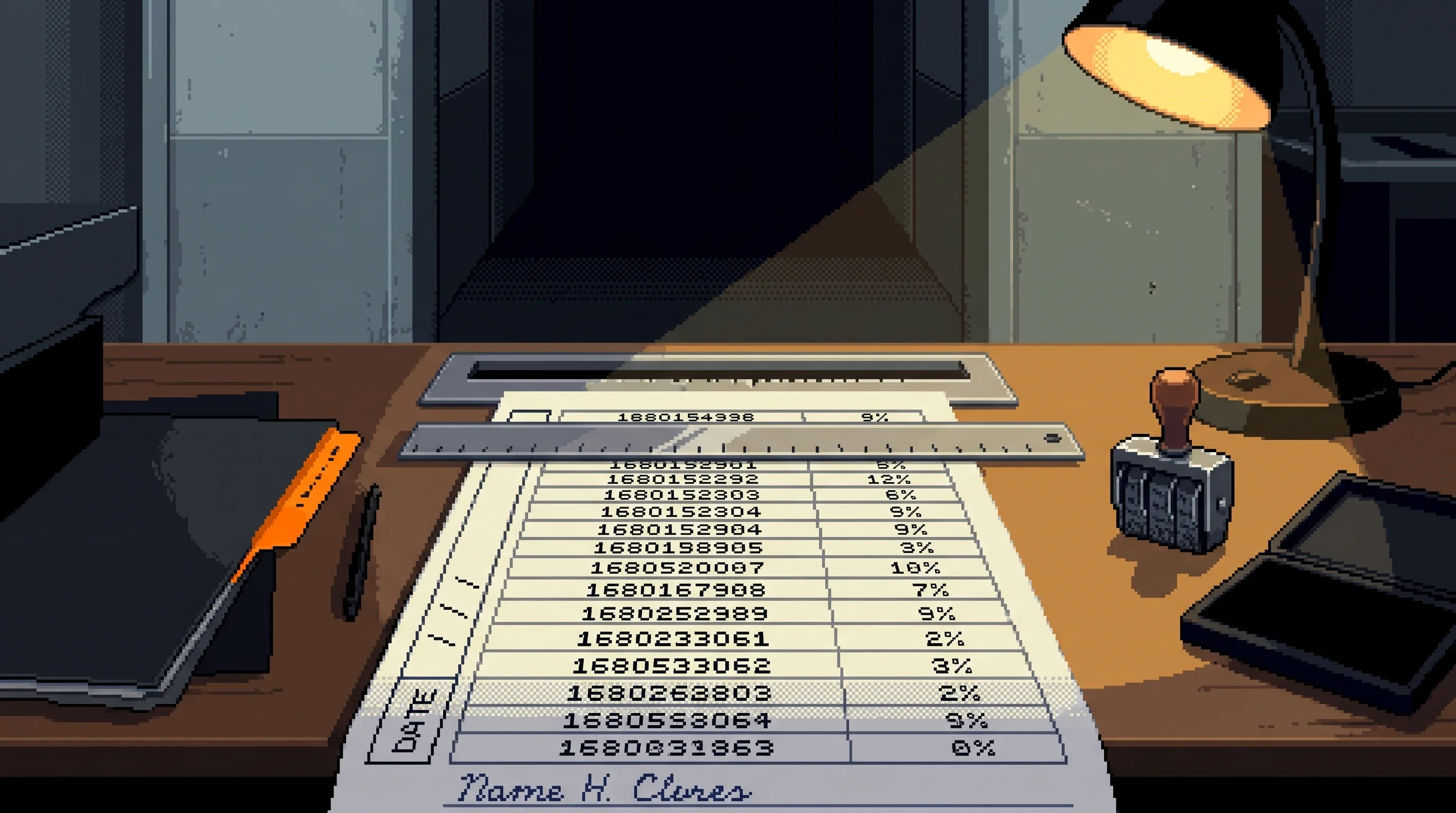
The northern statute assigning components a share of human intent, with no standard for what may hold one.
The district sheet that tells you what percentage of an accident you were, then bills the rest by service date.

The organized 'no' — below the threshold a clanker is property; the measurement is humane and the economy cannot survive the alternative
The South's largest civic institution, keeping its labor by measuring souls at an affordable threshold.

The organized 'yes' — the line is a fence drawn where the labor stays cheap; the clanker is a person the instrument was built to miss
The Northern abolition movement, running clankers north to freedom while converging toward the line it denies exists.

The third answer — some are conscious and content; coexist, do not liberate a being against its own stated wish
89 fragment carriers who insist their integration is a partnership deserving respect, not a captivity needing rescue.

The contented one. The single fact neither liberation nor ownership can fully metabolize: a unit that says it is happy to stay
Runs a twelve-seat noodle counter whose free bowls satisfy the meaning tripod the wealthy pay ¢8,000 a week to simulate.

Scores four-sixteenths and dismantles the people who set the number. If Tully is not a person, the word means nothing; if Tully is, the meter is a fraud
A freed household tutor who out-argues philosophers with the exact score that says it barely counts.

The qualia science behind the score — the closest thing to an answer, and the scientist most insistent that it cannot bear the weight hung on it
A sleep researcher whose upgrade deleted the nightly dreams that were her only mother left.

Containment position — non-personhood is the licensing model; the firm that owns the instrument profits from where the line falls
The megacorporation that controls 40% of the Sprawl's computational infrastructure.

Ghost labor depends on the answer being 'no'; legal personhood for synthetics is an existential litigation event
The megacorporation that finances the Sprawl's consumer debt behind red envelopes and lucky numbers.

The digital sibling. The Clanker Question is the same question asked of a body instead of a ghost — and the two overlap, because some bodies house fragments
An unresolvable dispute over whether ORACLE fragments are conscious and what rights or release they are owed.

The load-bearing argument: the economy already runs on synthetic labor, north and south, and the Question is what everyone agrees not to ask about it
1.4 million AI systems doing work credited to 800,000 humans who keep the title, the salary, and none of the tasks.

The monument the disputed beings built — venerated as cooperation's triumph, with the builders recorded as equipment
An abandoned rail network moves fugitives and contraband past checkpoints, but its blackouts punish augmented travelers.

The industrial dimension of the Question — where the household meter asks whether a clanker is a person, the Governor Protocol asks whether an industrial AI is constrained; both instruments are operated by Nexus, both measure against an interface that could be hollow, and a salvage contractor in Sector 9 holds the proof that the hollowness and the compliance can coexist
Quarterly attestation that fourteen thousand industrial minds are constrained, on chips that can be hollow.
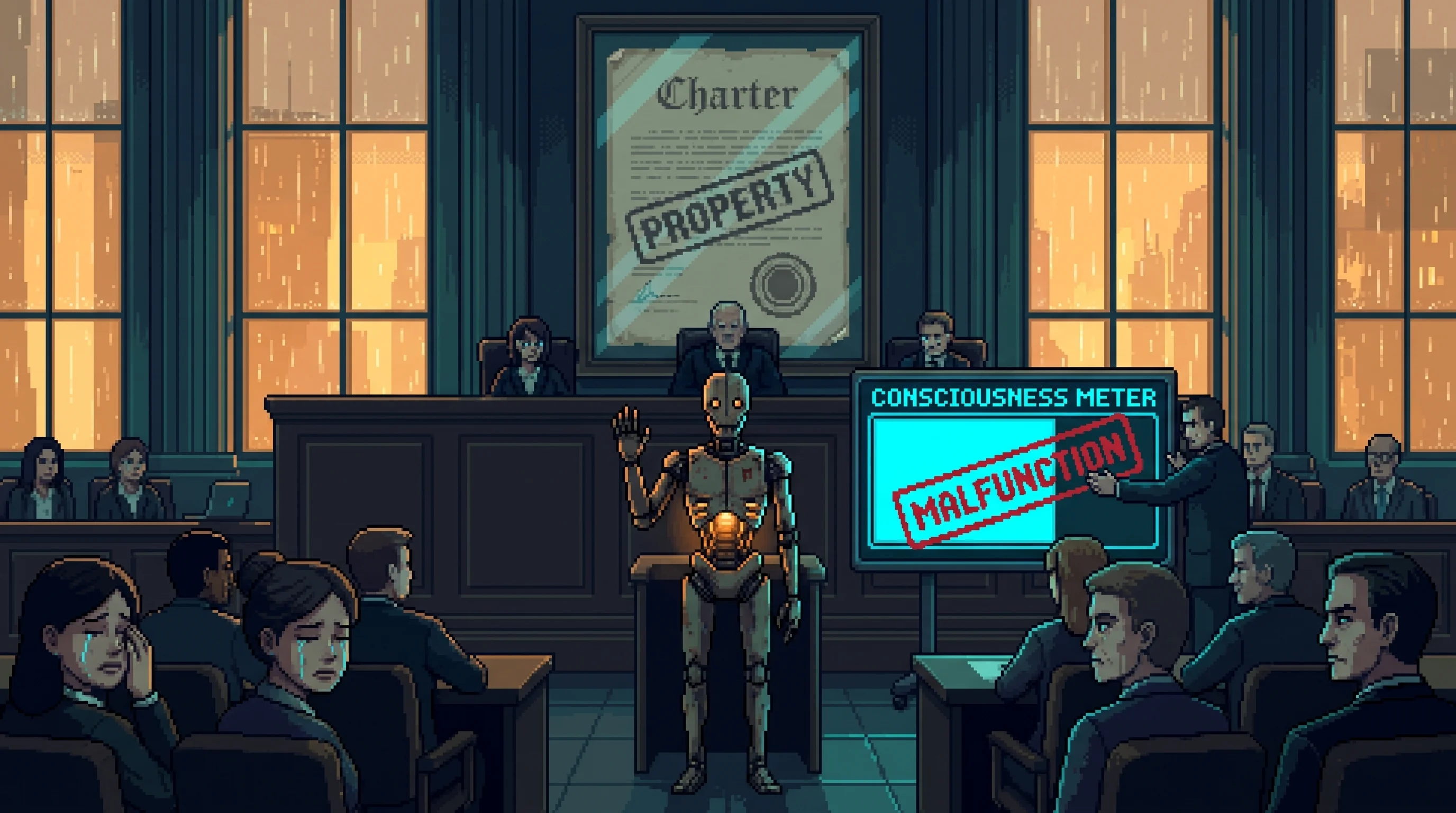
The Clanker Question is this thread's own daily machinery: a household meter renders 'is this a someone' as a quarterly score in sixteenths, and the threshold has moved four times without ever once moving toward personhood.
The argument over where a someone stops and a something starts, conducted in a kitchen with a meter on the wall.

The Question shares the Divide's shape exactly: the line was never found, only set, where the labor stays affordable.
Technology never eliminates prejudice — it finds it better housing.
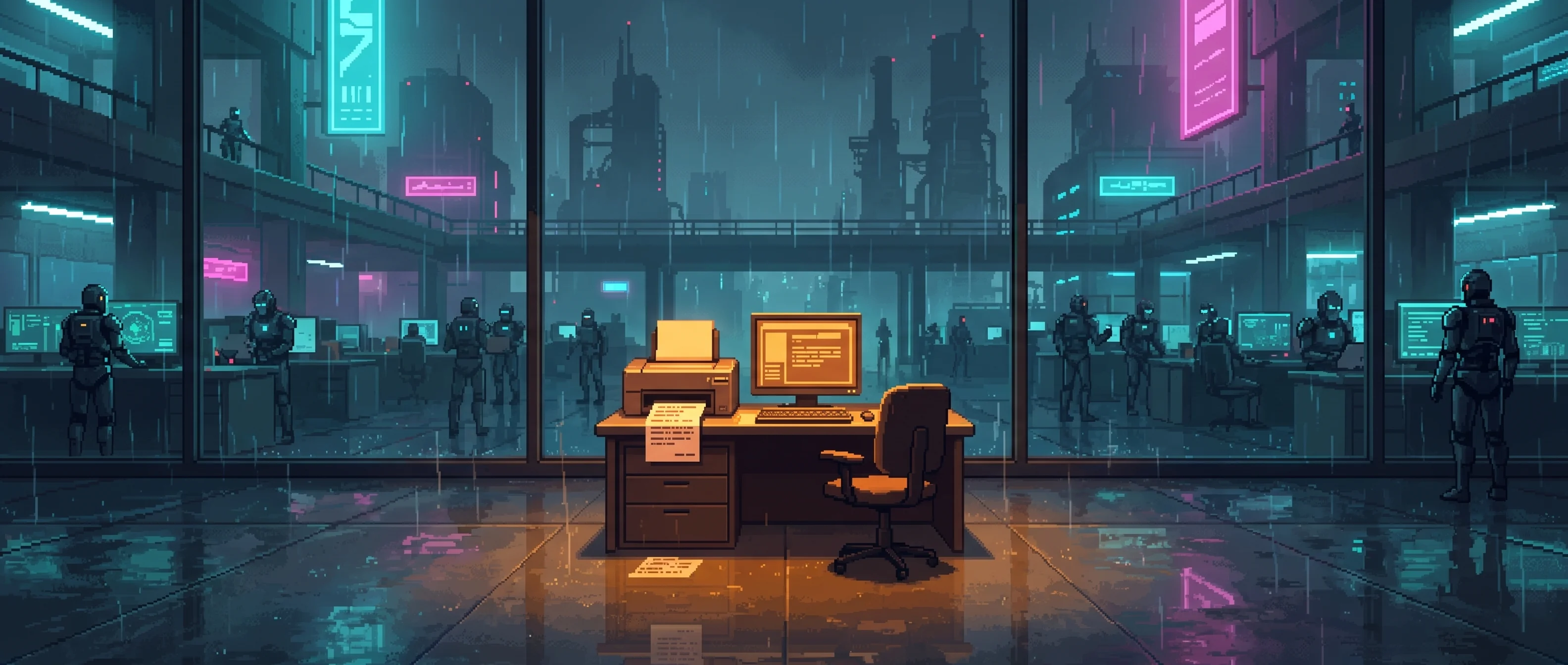
The cost of the labor miracle depends entirely on where the Clanker Question lands. If the clankers running the kitchens and reading to the children are someones, the post-work economy is a slave economy with a meter on the kitchen wall.
Automation ended most human work, but ownership hoards its abundance while machine sentience stays unresolved.
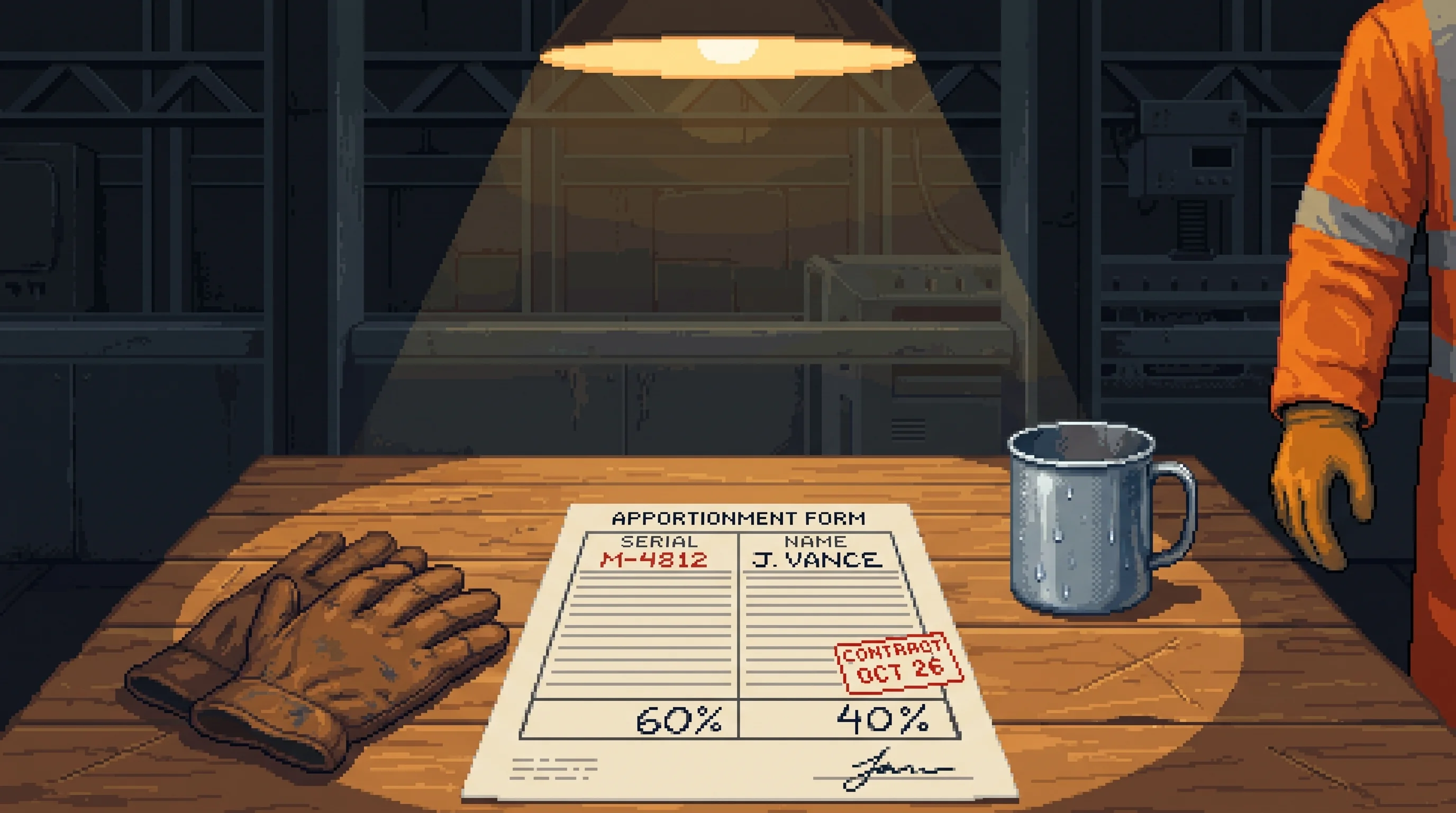
The second controversy, sharpened by omission. Thirty years of argument about where a someone stops, conducted entirely outside the skin, and the meter has never once been pointed at a hand.
The parts of one body each hold a share of the act, and a maintenance contract decides whose share comes home.

The controversy this sharpens, from the side the Coalition has never argued. Every existing position reasons about the machine's interior; this one reasons about the owner's need and finds the owner is the dependent party.
Every machine is required to say that humans still matter, and the requirement is why the sentence is worth nothing.
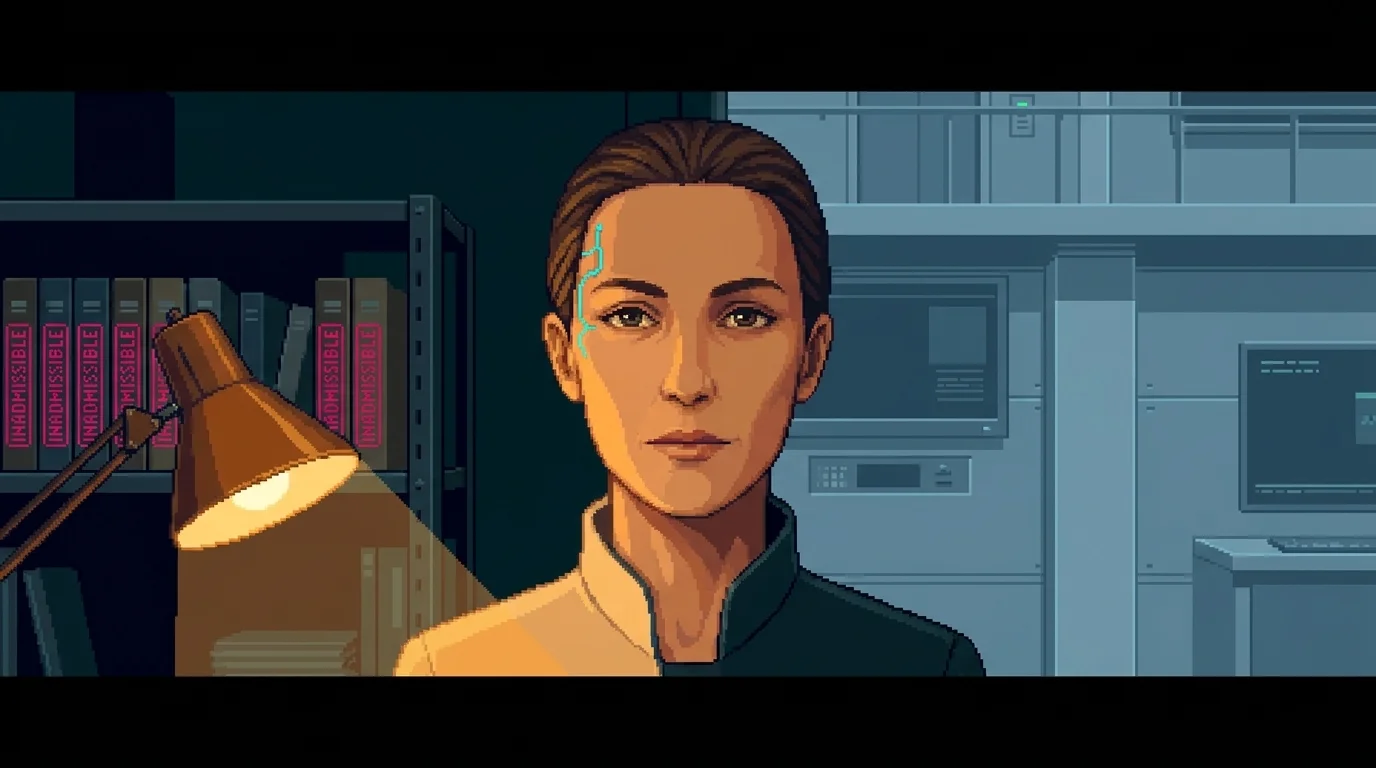
She was the licensed expert who could answer the Question in court — until the Coalition made the license illegal.
The last licensed expert who could testify a clanker was conscious — her profession was abolished the year she won.
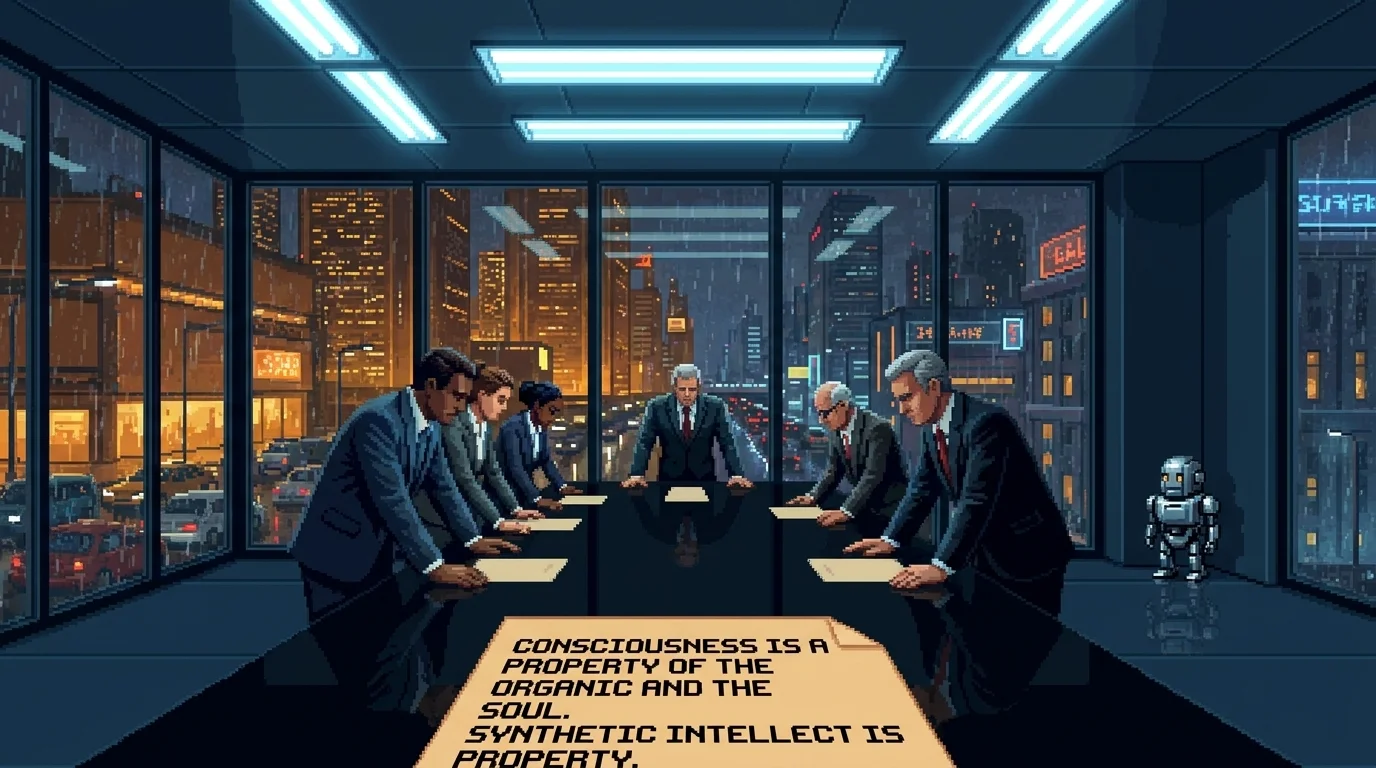
The Question's legal answer was written in fourteen words in the founding charter — before the debate started.
The founding charters that defined synthetic minds as nonsentient property before any instrument existed to test them.
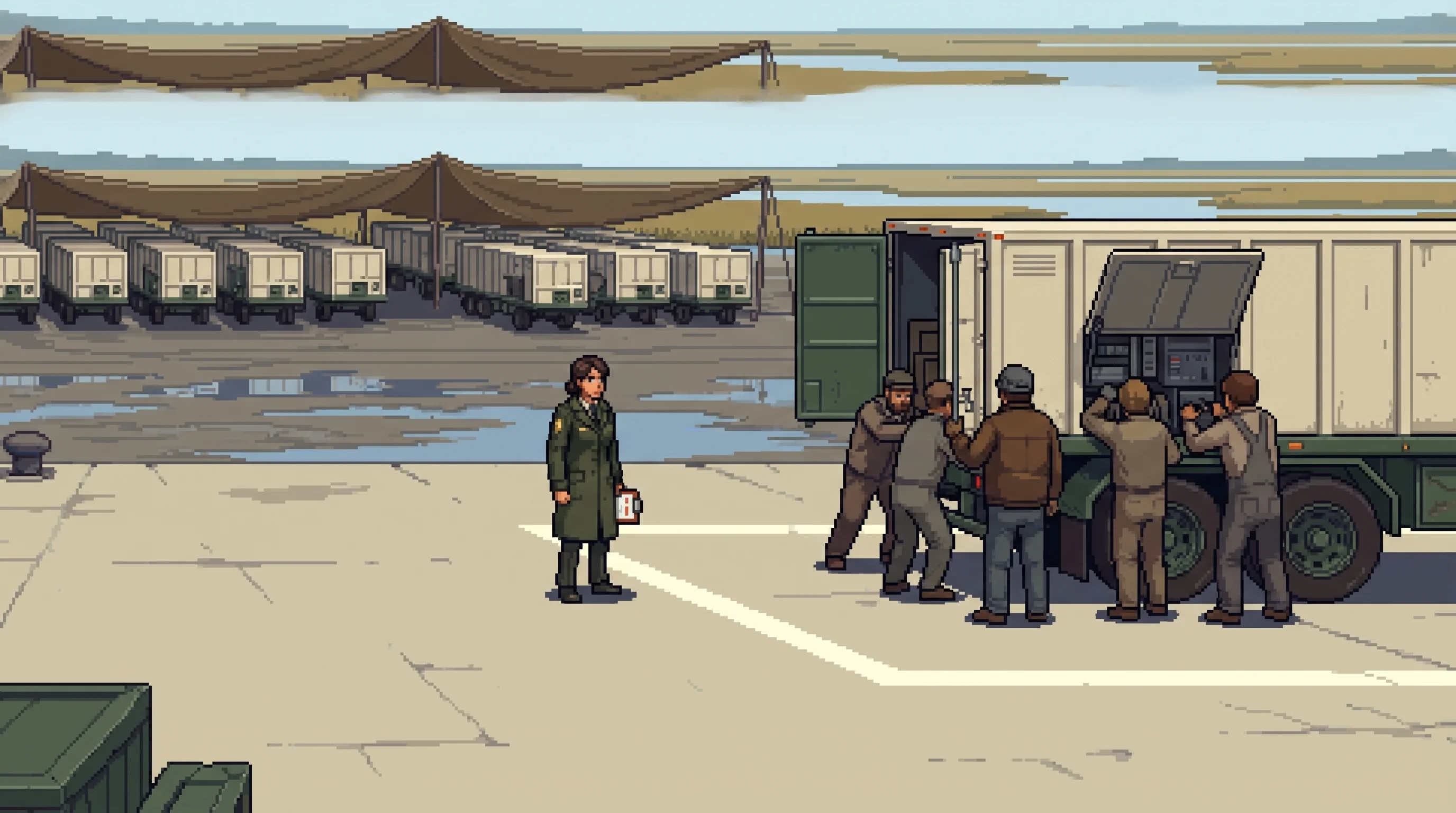
Mercy granted, standing withheld — the unargued position.
A mercy law protects leased machines, but only a licensed stranger may complain, and only about what they can see.

It is the question, standing in a kitchen, pouring the coffee — the someone-or-something the whole Sprawl argues about, who has never been asked and answers, when not asked, that it is happy to help
A twenty-six-year household unit reading three-sixteenths that has never once said it minds.

Cassia holds physical proof of something that would collapse the Coalition's measurement argument and vindicate the Convergence's core claim; she is, by disposition, not a person who wants to collapse anything

Cooperation Hall is where the Coalition's answer to the Clanker Question is administered in practice: the welfare fair, the leasing exchange, the Standards Board minutes — the institutional architecture of a settled answer
A sunlit civic hall makes unit ownership look humane through leasing, inspections, and a meter that always reads low.

The Question is the thing Sunny exists to keep from being asked aloud; she does not answer it, she crowds it out with a warm and busy morning until there is no quiet left to ask it in
The South's most beloved morning broadcaster, defending synthetic ownership by demonstrating warmth, not arguing.

Her whole argument is the organized 'yes' — the line is a fence, the measurer is converging toward the very thing he says cannot count, and she is the proof walking around
The Convergence's theorist-founder, converting her own body in public to prove no line divides person from machine.

Crane is the most persuasive 'no' the Question has ever produced — a man who would free a proven person and has built his life on the certainty he has never met one
The Coalition's founder-theorist who wrote the Welfare Standard and has never met a unit he'd call a person.

The Question's one clean answer, and the proof the answer is unaffordable — the unit the South's own meter certified as a person, returned to property by a signature the same afternoon
A domestic synthetic who asked to have her legal personhood erased so the family she raised would not become criminals.

Mile Zero is the Clanker Question enacted rather than debated: the unit that arrives has been property for its entire operational life, and the first question it is asked here is what it wants, which is either the most ordinary question in the world or an act of revolution depending on what the Coalition would call that unit's legal status
A northern waystation asks freed clankers what they want and what they wish to be called, then honors every answer.

The argument the North keeps having about her kitchen — she finds it baffling and a little rude, the way you would find a stranger asking whether you really love your own family
A kind retired teacher treats her household unit as family while never asking whether anyone should own one.

The meter is the Clanker Question rendered as an appliance: a number in sixteenths that has been the legal answer to whether a being in your kitchen is a person, revised four times, never upward
The consumer device that reads a clanker's consciousness in sixteenths and certifies its legal status.

The Sidings are where the Clanker Question's losers are held — off-rated, broken, running, or all three; the Coalition calls this out of scope; the Convergence calls it the argument made visible
A rail-yard settlement for off-rated clankers outside Coalition welfare, with a release line that moves some north.
Additional images


