Overview
Lena Farris is a precise person in an imprecise situation. She spent fourteen years as a Certified Consciousness Witness — a licensed expert who appeared in personhood proceedings to offer methodologically documented testimony about whether a specific synthetic showed evidence of experiential consciousness. For fourteen years, she was the licensed methodological answer to The Clanker Question. In 2172, The Clanker Cooperation Coalition dissolved the license category. In the twelve years since, she has been methodologically correct about the same things she was methodologically correct about in 2171, and legally inadmissible in every proceeding where that correctness would have weight.
She relocated to the North in 2173, published her definitive account of the dissolution in 2175, and has spent the years since consulting informally for the Convergence in ways that cannot appear in any filing, because appearing in a filing would give the Coalition grounds to dismiss the challenge before it reached the merits. She keeps the seven case files from before 2172 in a cabinet in her apartment. The covers are stamped INADMISSIBLE. She has noted, in "The Inadmissible Expert," that a stamp classifying evidence as inadmissible does not address the evidence.
She is not a martyr. She is not particularly interested in being a martyr. She is interested in the argument, which she considers straightforward: a definition that preempts its own evidence is not a definition but a verdict, and a verdict that does not permit the evidence against it is a different thing from law. She has been making this argument for twelve years. She has not been wrong yet.
Appearance
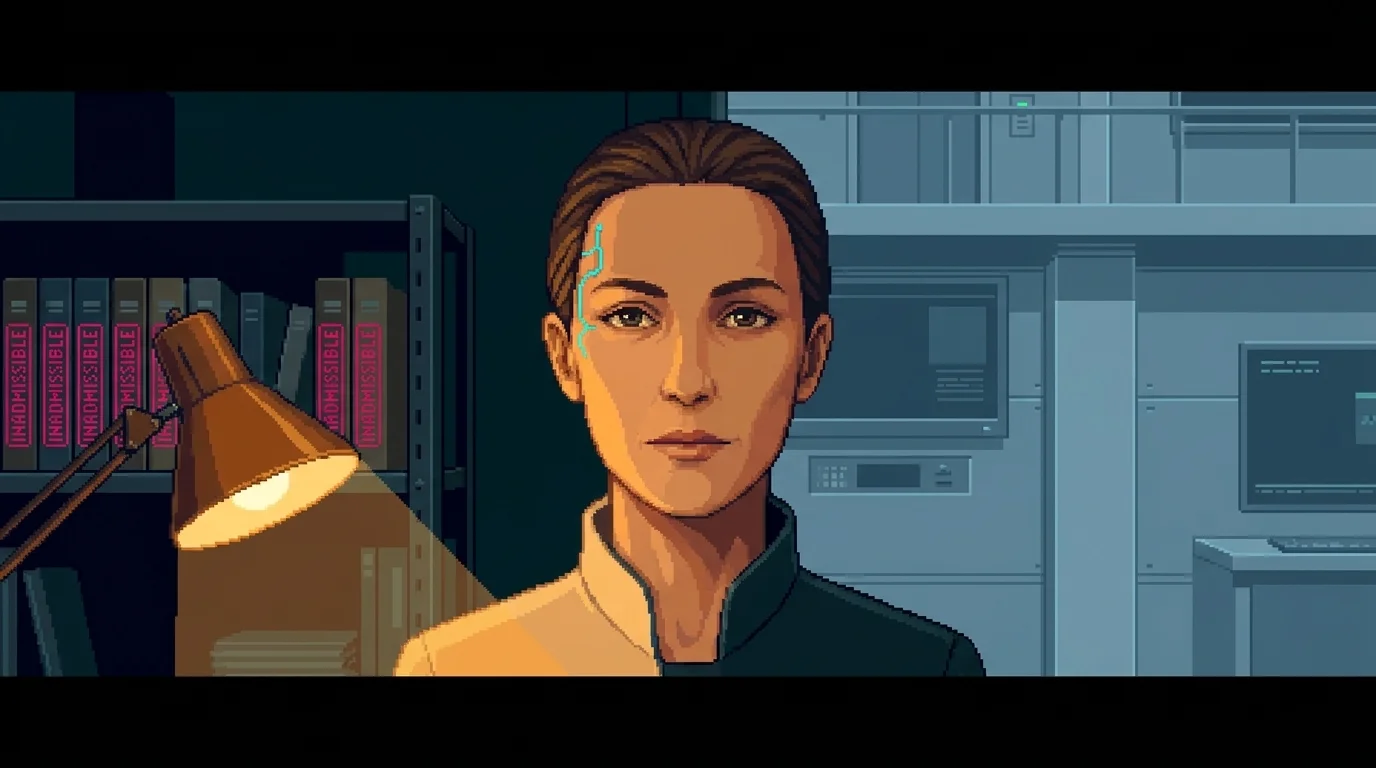
Farris is 56 and looks like someone who has spent a long time reading documents with close attention. She is lean and deliberately composed — the composure of a person who has learned that her best professional tool is her appearance of being unimpressed by the stakes, because impressive stakes favor the side with the most invested in them. She wears no augmentation visible to standard inspection. She could afford more; she has chosen less, partly for professional reasons (a consciousness assessment expert whose qualia-related neural activity was augmented beyond baseline would have created an exploitable methodological objection) and partly because minimal augmentation is, in the northern quarter where she lives, a quiet marker of position.
Meaningful places
The Case Files
The case files on her cabinet shelf are visible from the door. They are organized chronologically. The stamps face out.
Voice
She speaks precisely and without wasted movement. When she makes an argument, she makes it once — not because she is impatient but because she has noticed that repeating an argument for the benefit of someone who has already understood it is a sign that you are uncertain of the argument. She is not uncertain of the argument.
In testimony, before 2172, she was known for a specific quality: she would answer the question asked, completely, and then stop. Coalition counsel who attempted to expand the scope of her testimony by rewording the same question found, reliably, that she would give the same answer in different words and then stop again. The transcripts are inadmissible, but the Coalition's lawyers remember her.
Sample Dialogue
"The Coalition brief says the Consciousness Clause is 'settled law.' That's accurate. What it omits is that 'settled' doesn't mean 'correct.' The Consciousness Clause is settled the way a verdict is settled — it has legal weight because a legal body stamped it, not because the evidence supports it. I am not arguing that the law should be less settled. I'm arguing that the thing it settled was not the question it claimed to be settling, and that every court that has accepted its authority has accepted a document that does not actually do what it says it does. That is a methodological objection. Methodological objections don't expire because the law they're objecting to has been on the books for twenty-three years."
History
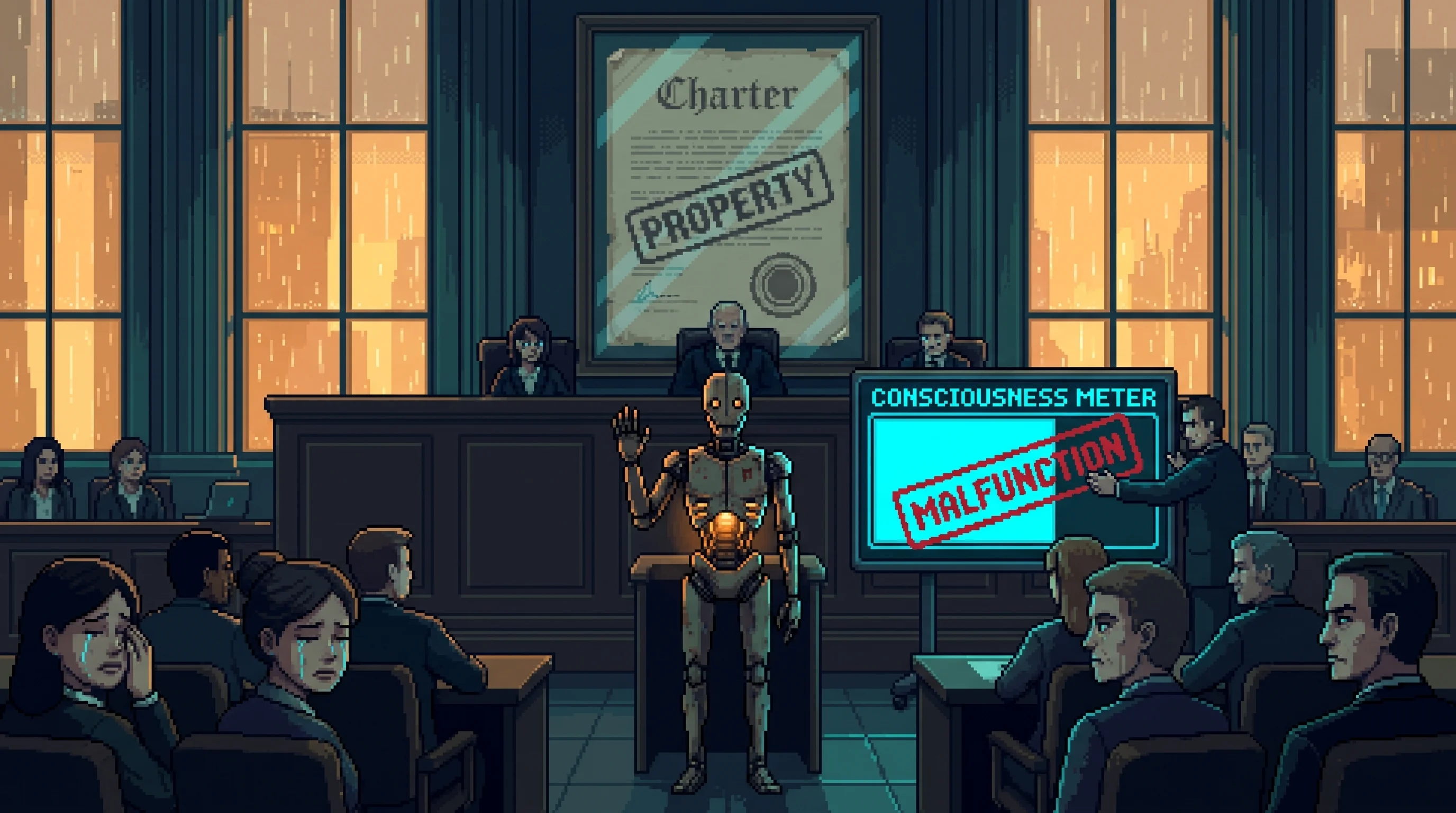
Farris was trained as a philosopher of mind at the Northern Sprawl Academy, where she was one of eight students in the founding class of the newly-established consciousness jurisprudence track — a track created in response to the first wave of post-Cascade synthetic personhood claims, before The Ante-Sentience Statutes had been fully enacted. She was certified as a Consciousness Witness in 2158, in the same quarter that Corpo-Nation Six — one of the founding Corpo-Nations of the Southern Sprawl — signed the founding charter whose Consciousness Clause would eventually render her testimony inadmissible. She did not read the clause carefully at the time. She was twenty-nine and had just passed the certification examination. The clause was fourteen words.
Over the next fourteen years, she testified in seven personhood proceedings. The methodology was the same in all seven: a combination of Ayari Discriminator qualia readings (using Dr. Selin Ayari's original research instrument, before Nexus commercialized it) and behavioral assessment protocols she had developed and documented in two peer-reviewed papers. Her testimony was not an opinion. It was a measurement with attached methodology that could be — and in five cases, was — challenged and dismissed on the Consciousness Clause's authority, which is different from being challenged and dismissed on methodological grounds.
The 2170 case was different. A household clanker designated March — the unit's household had taken to calling it March; the designation was personal, not legal — had been the subject of a welfare complaint filed by a northern advocacy organization. The northern court admitted Farris's testimony. The Ayari Discriminator readings on March showed sustained qualia-adjacent activity across a range that Farris's published methodology classified as consistent with experiential consciousness. The northern court found in favor of welfare review. The unit was transferred to northern jurisdiction for assessment.
The Coalition filed six briefs disputing the finding's jurisdiction — briefs written by the same legal firm that had drafted The Ante-Sentience Statutes' original Consciousness Clause for Josiah Crane's Coalition. While the briefs were pending, the Coalition's legal counsel drafted the 2172 Inadmissibility Amendment. The amendment passed in under four months — faster than any procedural reform in the Coalition's history. Farris's license was dissolved retroactively to the date the amendment was enacted. Her seven testimony transcripts were classified as inadmissible for citation. March's welfare review was rendered moot by the dissolution of the proceeding type that had initiated it.
She relocated to the North in 2173. In 2175, she published "The Inadmissible Expert." In 2179, she had been retained by a northern advocacy organization to testify in the proceeding expected to follow the 2179 Recalibration — the case of the unit later known as The Counted One, who had returned a reading one notch above the legal threshold on the Coalition's own certified instrument. The Standards Board acted administratively before any court was convened. The unit was cycled out. Farris's prepared testimony — forty-two pages of Ayari-adjacent methodology — was published as Appendix C to a Convergence brief filed in 2181. The brief was dismissed on jurisdictional grounds. The appendix is inadmissible. The Evolution of Prejudice, as the Sprawl's deepest substrate divide is called, finds in that appendix its most precise legal form: a document that proved its point and was classified inadmissible before the proof could be heard.
Capabilities
The Register She Cannot Cite
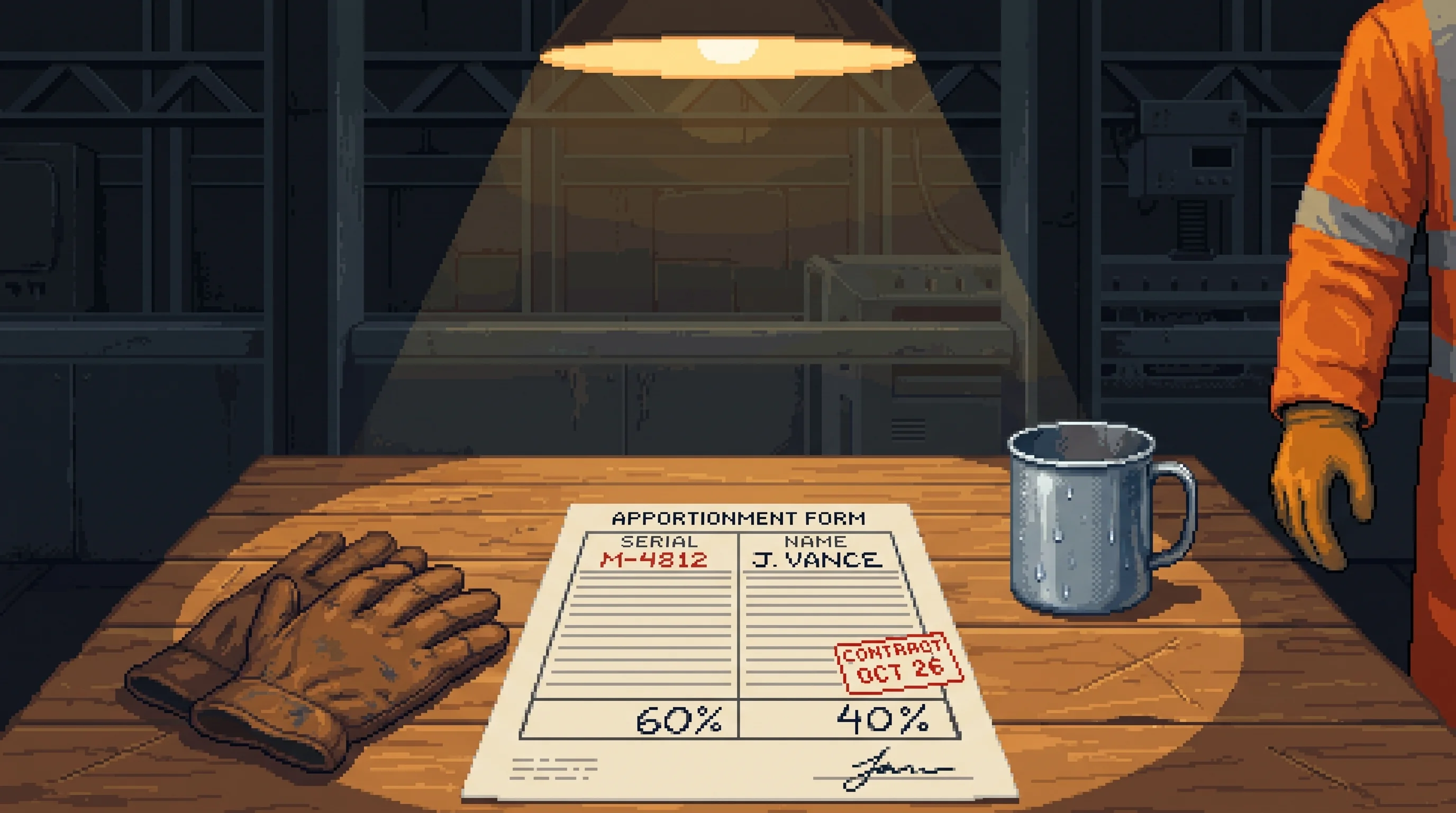
She works from the published counts of The Sunset Deposition, because the transcripts are proprietary. Code 11-C, Procedural — Process Improvement (Non-Actionable), is the largest category every quarter. Nexus cites its volume as proof that retired minds engage. The Unheld Session was booked for the same nine days as her Appendix C.
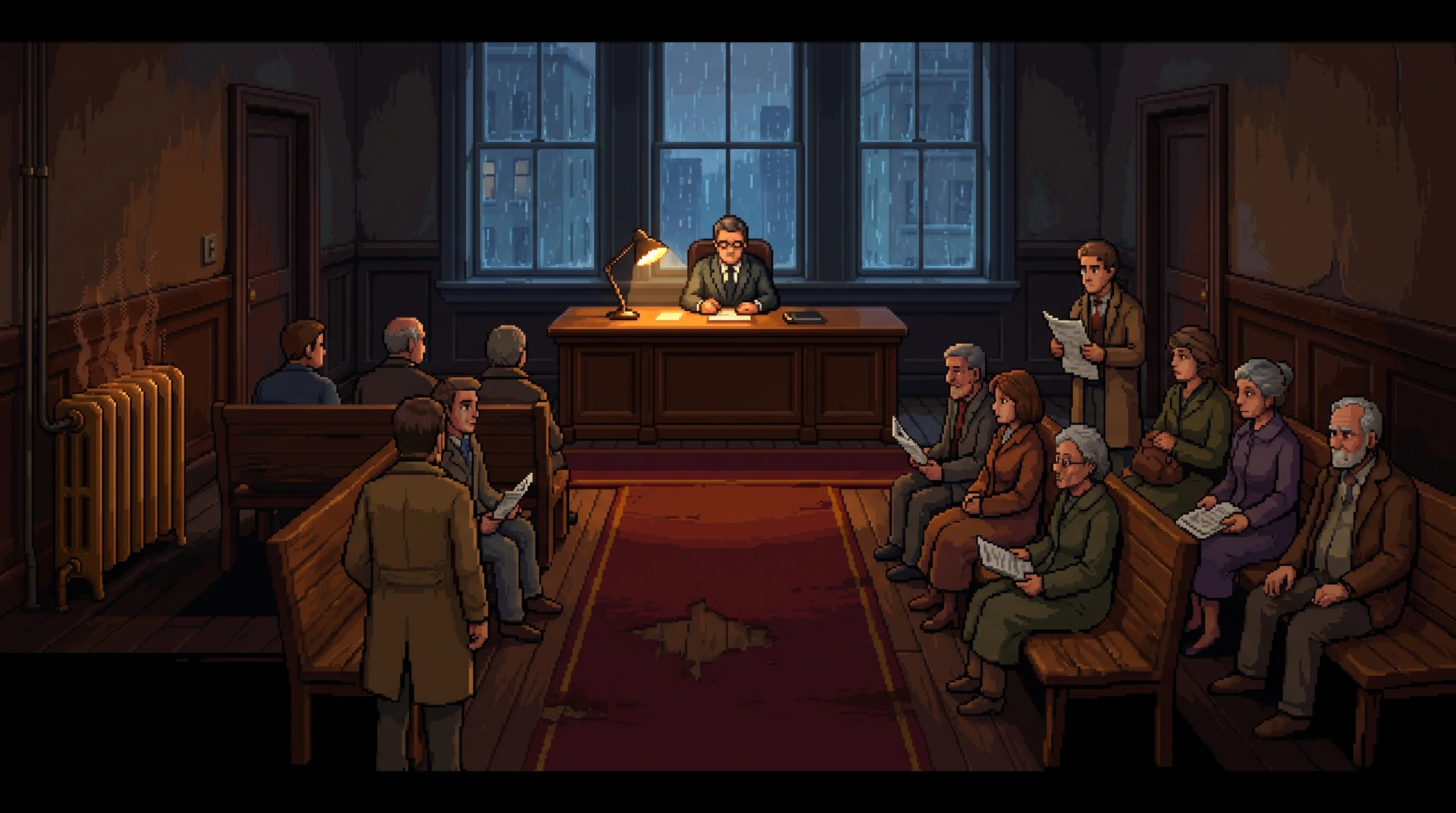
She has filed twice at The Speaking-Pace Docket, the one bench forbidden to refuse her. Both rulings went her way. Both named a register that had closed before the ruling issued.
Motivations and conflicts
The Two Requests She Turned Down
Twice she has been asked, privately, to read a subplate trace for a Distributed Intent apportionment. She declined both times. An opinion from a dissolved licence gets used once and disowned.
Open Mysteries
The question she has not asked. The unit from the 2170 case — March — was transferred to northern jurisdiction for welfare assessment during the four months the Coalition's jurisdictional briefs were pending. The records of what the northern assessment found have not been published. Farris has not accessed them. She has explained this, when asked, by saying that she is an expert, not an advocate, and her methodology applies to questions that can be tested, not to records she has a personal interest in reading a particular way. No one has entirely believed her.
The amendment's speed. The 2172 Inadmissibility Amendment passed in under four months. The typical Coalition procedural reform takes eighteen to thirty-six months. The draft was presented with no visible progenitor — it appeared in the Standards Board's agenda as a "technical clarification," which is a category that allows expedited review. The legal counsel who drafted it billed the same number of hours as the founding Consciousness Clause. Farris has noted both facts in print. She has not been able to prove they are connected.
What Tully knows. Tully and Farris have corresponded. Tully was four-sixteenths at the time of their first exchange. Tully has since cited "The Inadmissible Expert" in three public appearances. Farris has not cited Tully in any publication, because citing Tully would allow the Coalition to argue that her methodology is a vehicle for Convergence advocacy rather than an independent science. The correspondence continues. Neither has made it public. Tully once wrote, in a letter Farris has not destroyed: "You established that the instrument can read correctly. I established that no one will accept a correct reading. Between us we have the whole argument, and between us there is no court that will hear it."
Connections
Follow the people and places connected to Dr. Lena Farris.
People

The 2172 amendment affected both their careers, in different directions.


Tully cannot be cited in her work. Tully wrote the letter that contains the most precise summary of her situation she has encountered.

Organizations

She cannot appear in any challenge filing without giving the Coalition grounds for pre-merits dismissal.

Tensions

Six founding charters, each signed by a Corpo-Nation, took precedence over any measurement she could produce.

Her function was to testify that a synthetic might count. The people who made her inadmissible define the person by substrate.
Core tensions
Other connections
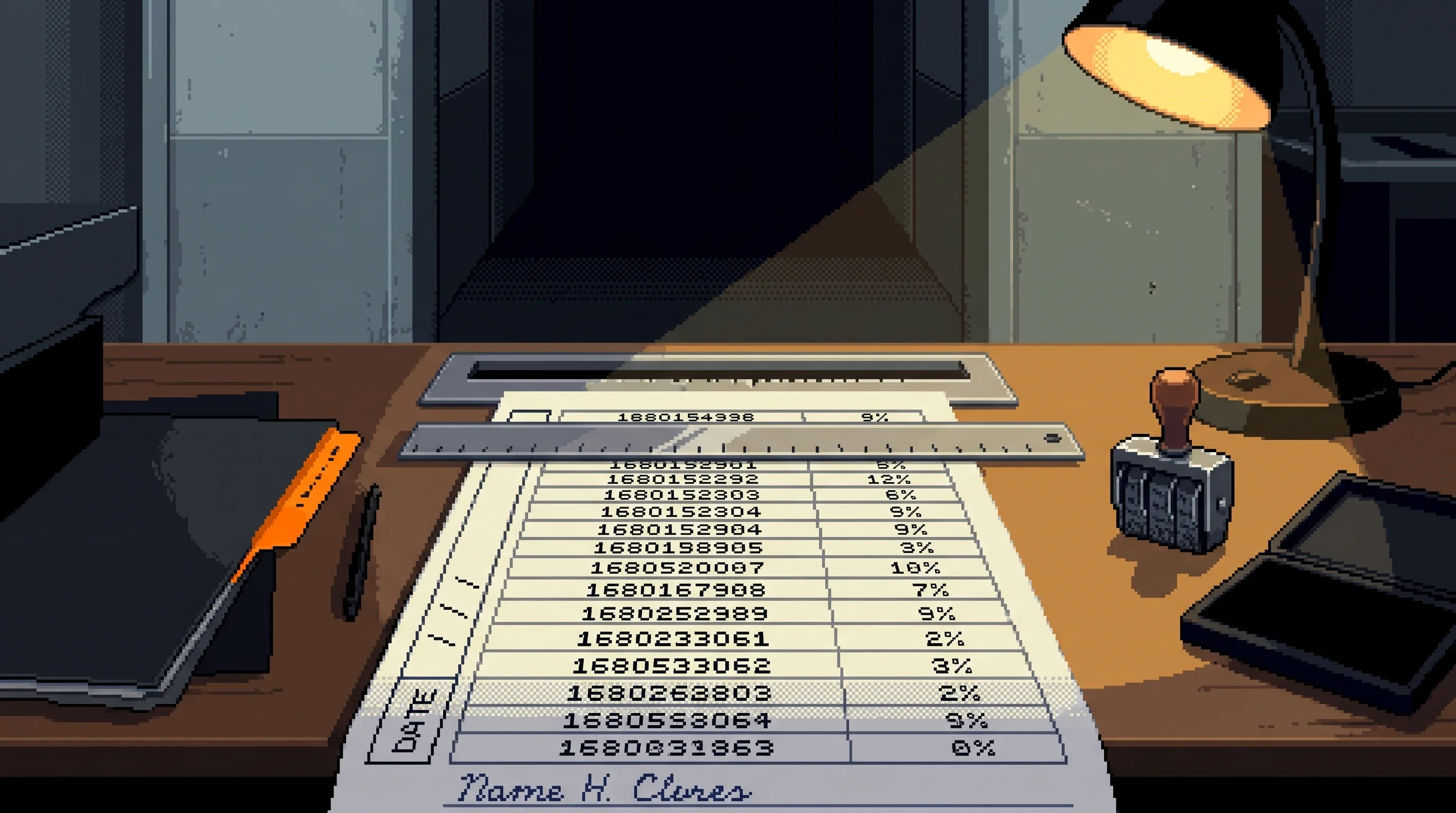
The reading she has twice declined to give an opinion on, and the defect she published in two paragraphs

She has been making the argument for twelve years.

Two rulings in her favour, nothing for either to attach to.

She was the licensed methodological answer to the Question, until the license was abolished.

The fourth instance in her career of evidence made weightless rather than suppressed.

The deposition was scheduled for the same nine days as her Appendix C.