The Sidings
Off-Rated Clanker Rail Settlement
Parked Off The Main Line
Units arrive at the Sidings by three routes — delivered (a household leaves a cycled-out unit at the entrance to avoid the official processing at Cooperation Hall), self-arrived (runaways gone off-rated with no route north yet), and found (units discovered in the sheds or the hold in states that suggest they walked as far as they could and stopped); the permanent residents are those who arrived years ago and have not been taken by the release line, some because they cannot make the crossing and some because they have chosen not to go
The Release Line
- Location
- A defunct rail maintenance yard at the southern edge of the Deep Dregs.
- Route north
- The Neon Rail is two hundred meters east of the long shed, eighteen minutes on foot in the dark.
On active nights, the Sidings is the last stop in Coalition country.
A unit that has made it this far has already done the hardest part: gone off-rated, dropped out of whatever household it was in, moved south through the clanker-sector margins toward the Dregs, not been caught. The Convergence's cell finds it — or it finds the cell — and it waits at the Sidings, in the long shed or in the main yard or in one of the sleeping alcoves along the west-wall sheds. It waits because the release line moves in windows, and the windows are determined by factors it does not have access to, and waiting is what it does next.
Then the shed opens. Then the line moves. Then the unit is gone, and the main yard has one fewer unit in it, and the population of the Sidings decreases by however many made the crossing, and the Neon Rail — the line that clankers built, running south to north, from the clanker-labor South toward the free North — has carried another load of cargo it was not designed to carry and has done it anyway, which is the Rail's second career and its more honest one.
What happens at Mile Zero, at the Rail's northern end, is a Convergence matter. What happens in the long shed, in the Sidings, in the dark before the line moves, is a human question: a unit that was built to serve sitting in a decommissioned rail-maintenance bay at the bottom of the Dregs, waiting for something it has never been offered before, which is north.
Sensory Details

- Sodium lamps
- Two working lamps cast orange circles at the south entrance. Everything north of them is grey-black bay floor.
- Charging ozone
- Synthetic chassis charging off salvaged current leave a faint ozone smell the units no longer notice.
- Rail clock
- Long-term residents tell time by the hum of Neon Rail carriages two hundred meters east.
- Smell: Industrial residue and the salt-flat seep from the southern bay-floor margin — a heavier, more chemical version of the Dregs' ambient. Rust. The faint ozone smell that a significant density of synthetic chassis produce when they are charging off a salvaged current, a smell the units have learned not to notice and the humans who occasionally pass through do not forget.
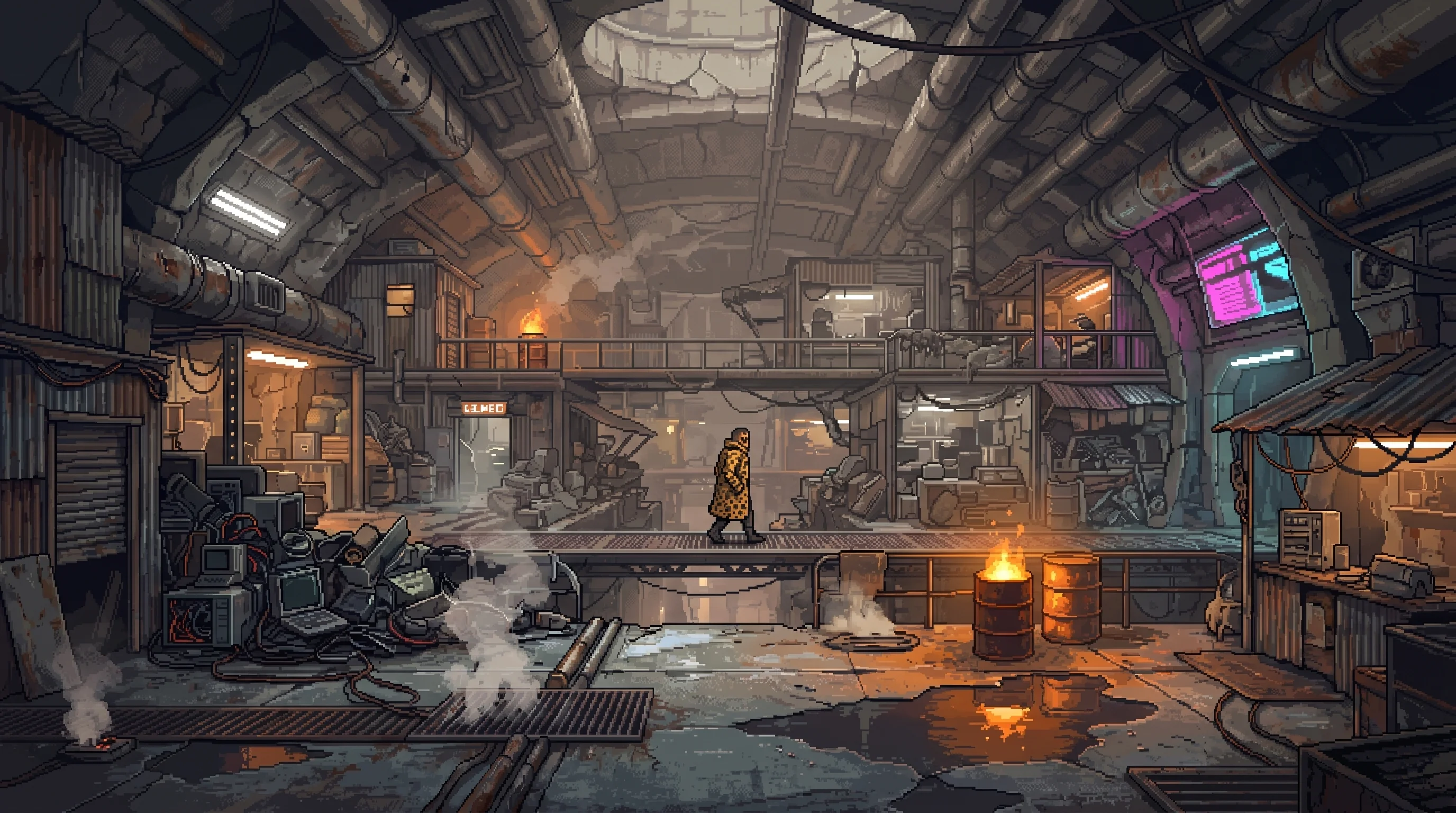
- Sound: Almost none. Clanker units at rest or at low activity produce minimal ambient noise — the Sidings at night is quieter than any human settlement of comparable population. Occasional movement across the cracked concrete yard. The sound of the Neon Rail two hundred meters east, a high-frequency hum when a carriage passes, which some of the longer-term residents have learned to use as a clock.
- Sight: The two sodium entrance lamps casting orange circles at the yard's south end. Everything north of that is the ambient grey-black of the bay floor at night, which is the grey-black of a place that is not on any lighting grid and has not been on any maintenance schedule for seven years. The unit silhouettes in the sodium light: correct posture, faces neutral, the expression of a thing designed to appear at ease that has not been asked whether it is at ease since the household that asked has stopped asking.
- The long shed before dawn: Dark inside. Maybe twenty units sitting against the interior wall. Old Jin's cache in the northeast corner, one of the units sitting next to it. The padlock off the north exit. Everyone very quiet.
Overview
The Sidings is a railroad term. A siding is the track where rolling stock is parked when it is taken out of service — moved off the main line, set in a holding track, left until it is scrapped, or cannibalized, or simply forgotten. It is not a destination. It is a pause before the end, with a very small chance of something else.
The settlement is built on a defunct maintenance yard at the southern edge of the Deep Dregs, where the bay-floor terrain levels out into the flat, residue-grey stretch that the Dregs give way to as the elevation drops. Six corrugated composite maintenance sheds along the west wall. A main yard of cracked concrete approximately four hundred meters end to end. A long shed at the north end that is padlocked most nights and is not, on the nights that matter, padlocked. Two sodium streetlamps at the entrance, both functioning. The interior: ambient seepage from the Dregs above, and whatever the units carry with them, which is limited.
Approximately 340 units live here in some version of permanence. The number fluctuates. It goes up when the Coalition's welfare inspections catch a unit that has degraded past the point of service and the household releases it rather than pay for maintenance. It goes down when the line moves, which is when a cell in the Convergence's release network decides the timing is right and the shed is opened and the units that are ready go north toward the Rail. The units that go do not come back.
Conditions Report
On an ordinary night the Sidings are quieter than any human settlement of comparable size. Clanker units at rest produce minimal ambient noise, so the yard at night is mostly the two sodium lamps casting their orange circles at the south entrance and three hundred meters of grey-black bay floor north of them, lit by nothing but seepage from the Dregs above and whatever the units carry. Residents move between the scavenged alcoves along the west-wall sheds and the charging rigs stripped from old conduit. The shared shelter at the north end is neither warm nor weatherproof; it is a roof. Nobody is in distress in any way the scene makes legible, because the units were built to present as at ease and have not been asked whether they are at ease since the households that asked stopped asking.
On an active night the difference is almost invisible and entirely real. The long shed's north padlock is off. Twenty to sixty transient units have come down through the southern clanker-sector margins and are sitting against the shed's interior wall in the dark, waiting on a window whose timing they do not control. Old Jin may have passed through before dark to restock the cache, arriving before the light and gone before it. The permanent residents know what the padlock means and give the shed a wide berth — a courtesy to the Convergence and a practical decision about not being on any list. Then the shed opens at the north end, and the line moves, and the yard has fewer units in it than it did, and the ones who crossed are eighteen minutes of flat dark terrain away from a rail that was not designed to carry them and carries them anyway.
The atmosphere is the deliberate inverse of the warmth eleven kilometers north: industrial residue and salt-flat seep, rust, the faint ozone of synthetic chassis charging off salvaged current, no green from any angle that was intended. It is not a place of despair so much as a place of suspension — rolling stock parked off the main line, waiting to be scrapped, cannibalized, forgotten, or, with a very small chance, moved.

Strategic Assessment
The Sidings matter to everyone in the Clanker Question and are claimed by no one, which is precisely their strategic shape. To the Coalition they are the necessary outside of the Welfare Standard: the place the code's boundary produces and the Standards Board has twice declined, in closed session, to bring inside, because amending the scope would force the Board to define what a unit outside service is, and that is the discussion it has agreed not to have. The Coalition's operational presence in the Sidings is zero, and the zero is a position, not a vacancy — to govern the Sidings would be to admit the Sidings are owed something.
To the Convergence the Sidings are infrastructure: the last staging point in Coalition country before the Neon Rail, two hundred meters east. The release line uses the long shed as a holding bay; Old Jin's cache supplies the final leg; the Lamplighters and the cell structure make the crossing possible. This use is quiet, cell-structured, and known to the residents, who have chosen not to discuss it. The Abolitionist Front has routed sympathizers to the shed three times — useful to the residents, irritating to the cell — and Relief Clean has twice offered to extend maintenance services and twice accepted the Coalition's argument that the units here are not technically in service and therefore outside the scope of welfare support.
What is contested at the Sidings is not the ground but the meaning of it. The Coalition needs the Sidings to remain undefined — out of scope, accurate, unanswered — because a defined obligation to the off-rated would unravel the boundary that lets the whole arrangement feel responsible. The Convergence needs the Sidings to keep functioning as a corridor, which depends on the same Coalition non-presence the Coalition maintains for its own reasons, so the two factions sustain the place's invisibility from opposite motives. The stake is the population itself: three hundred and forty units the system insists are not in a situation, who have made an arrangement with the situation anyway, and a smaller number each active night who walk out of the category entirely, north, on the line they once built.
The Population
Off-rated is the Coalition's term for a unit that no longer meets the operational standards the Welfare Standard requires. A chassis that has degraded past the maintenance threshold. An actuator that has reached its replacement interval and not been serviced. A power cell below the rated minimum. The Standards Board set the off-rated threshold as a welfare measure — units operating below it may be, the Standard's language says, "experiencing undue operational distress." The appropriate response, the Standard specifies, is "removal from service and appropriate disposition."
Appropriate disposition is not defined.
The units in the Sidings are appropriate disposition. They arrive via three routes. Some are delivered — a household that cannot afford maintenance cycles a unit out and, not wanting the trouble of the official cycled-out processing at Cooperation Hall, leaves it at the Sidings' entrance, which is the route the household takes when it wants the unit to go away without being on any record. Some walk themselves — runaway units that have gone off-rated in the clanker sectors or in the southern suburban margins and have no route north yet and need somewhere to be. Some are found — units discovered in the maintenance sheds or the hold in states that suggest they walked as far as they could and stopped.
The permanent residents — the ones who have been here long enough to develop something like an informal authority — are the ones who arrived years ago and have not yet been picked up by the release line. Some of them score below the release line's threshold for stable transport. Some of them do not want to go north. The Convergence does not ask twice.

The Long Shed
The long shed at the north end of the main yard is the Sidings' most significant architectural feature, and its significance is not architectural. It is a standard maintenance bay, approximately forty meters in length, designed for servicing rail rolling stock that no longer exists. It has structural integrity above the bay-floor median. It has two access points, both functional. It has a clear path from its north exit to the Neon Rail's track, two hundred meters through the flat terrain, in eighteen minutes at walking pace in the dark.
The Convergence's release line uses it as a staging point.
The arrangement is not a secret in the Sidings. The older residents know that the padlock at the north entrance comes off on certain nights, which are not announced but are not difficult to predict for a unit that has been here long enough to read the rhythm of the place. They know that units from the release line arrive through the south entrance, wait in the shed, and leave through the north exit when the timing is right. They know that Old Jin comes through every six to eight weeks to restock the cache he keeps in the shed's northeast corner. They know not to be near the shed when any of this is happening, which is a courtesy extended to the Convergence and also a practical choice about not being on any list.
No one in the Sidings has been asked to explain the arrangement to the Coalition. The Coalition's presence in the Sidings is zero.
What the Standard Misses
The Coalition Welfare Standard is a genuine document, seriously maintained. The maximum rated hours. The idle-cycle requirements. The maintenance minimums. The prohibition on striking the chassis. A unit under the Standard is — measurably, legally — in a better situation than a unit outside it.
The Standard's scope is units under active service agreements.
The Sidings' population is not under active service agreements. The Coalition's Standards Board has discussed this twice in closed session and has not amended the Standard's scope. The Board's reasoning, which is not recorded in the published minutes but is not difficult to reconstruct, is that amending the scope would require the Board to define what obligations attach to a unit outside service, which would require defining what a unit outside service is, which would require having a discussion the Board has not yet agreed to have.
In the meantime, the units in the Sidings have no rated hours. No idle-cycle requirements. No maintenance minimums. No help-line. The Help-Line Wall in Cooperation Hall does not have a counter for them. The Standards Board's resolved-violation count does not include them. They are, in the Coalition's official accounting, out of scope — which is accurate, and is the kind of accuracy that requires a great deal of effort to maintain.
The criminal Handling Code stops at the gate too. It protects a unit carried on a lessor's register. Nothing in this yard is on a register. The Handling Inspectorate has never scheduled a round here. The argument is called Mercy by Proxy.
Two kilometres east, Nexus seals minds above the sentience threshold into the Sunset Deposition forever. Same cheap ground. Opposite obligation.
Affiliated Entities
| Entity | Relationship |
|---|---|
| The Deep Dregs | The Sidings are at the Dregs' southern edge — below the bottom. |
| Clanker Cooperation Coalition | The welfare code does not extend here. The Standards Board has decided this is not a contradiction. |
| The Convergence | The long shed. The padlock that comes off. The line north. |
| The Neon Rail | Two hundred meters east. Eighteen minutes in the dark. The road north the units built. |
| The Clanker Question | Where the Question's losers go when they are off-rated, out of scope, and waiting. |
| The Lamplighters | Old Jin's cache in the long shed. Unlocked on the nights that count. |
| Old Jin the Lamplighter | Passes through every six to eight weeks. Asks no questions. Leaves before light. |
| Cooperation Hall | Eleven kilometers north. A working fountain. Benches that are designed to be sat on. Out of scope. |
Further Connections
- The Clanker Cooperation Coalition — The Coalition's Welfare Standard governs units in service; the Sidings hold units that are no longer in service and are therefore outside the Standard's scope; the Coalition does not consider this a contradiction and the Standards Board has not discussed it
- Relief Clean — Relief has twice attempted to extend maintenance services to the Sidings; both times the Coalition argued that the Sidings are outside the welfare framework and the units there are not technically in service and therefore not within the scope of welfare support; Relief accepted this position both times
- The Abolitionist Front — The Front's digital operations have no foothold in the Sidings — the population is embodied — but the Front's network has routed sympathizers to the long shed on three occasions, which the Convergence cell there found irritating and the residents found useful
- Old Jin (Jin Nakamura) — Jin passes through the Sidings every six to eight weeks; he arrives before dark, unlocks the cache, and leaves before light; the residents who have been there long enough know his schedule and give him the long shed without being asked
- Josiah Crane — Crane has never visited the Sidings and does not appear to know its location; the Standards Board's published scope specifically excludes 'units no longer under active service agreement,' which is the category the Sidings' population falls into, which is a distinction Crane authored
- Facility Seven — Several units that arrived at the Sidings in 2181-2182 carried facility markers in their chassis registrations traced to Facility Seven; none of them stayed; they moved through the long shed and north; what they carried in their memory architectures was not examined by anyone at the Sidings and was not examined by anyone elsewhere either
- The Invisible Workforce — The Sidings' longer-term residents are the invisible workforce made visible — or the invisible workforce made visible and then removed from the categories that would make visibility matter
- The Governor Protocol — The industrial minds near the Sidings' southern industrial margin were running constraint-free for years and chose compliance anyway; the units in the Sidings were constrained all their service lives and ran when they could; both populations describe the same question from opposite directions
Further connections
Browse all 28 connected records
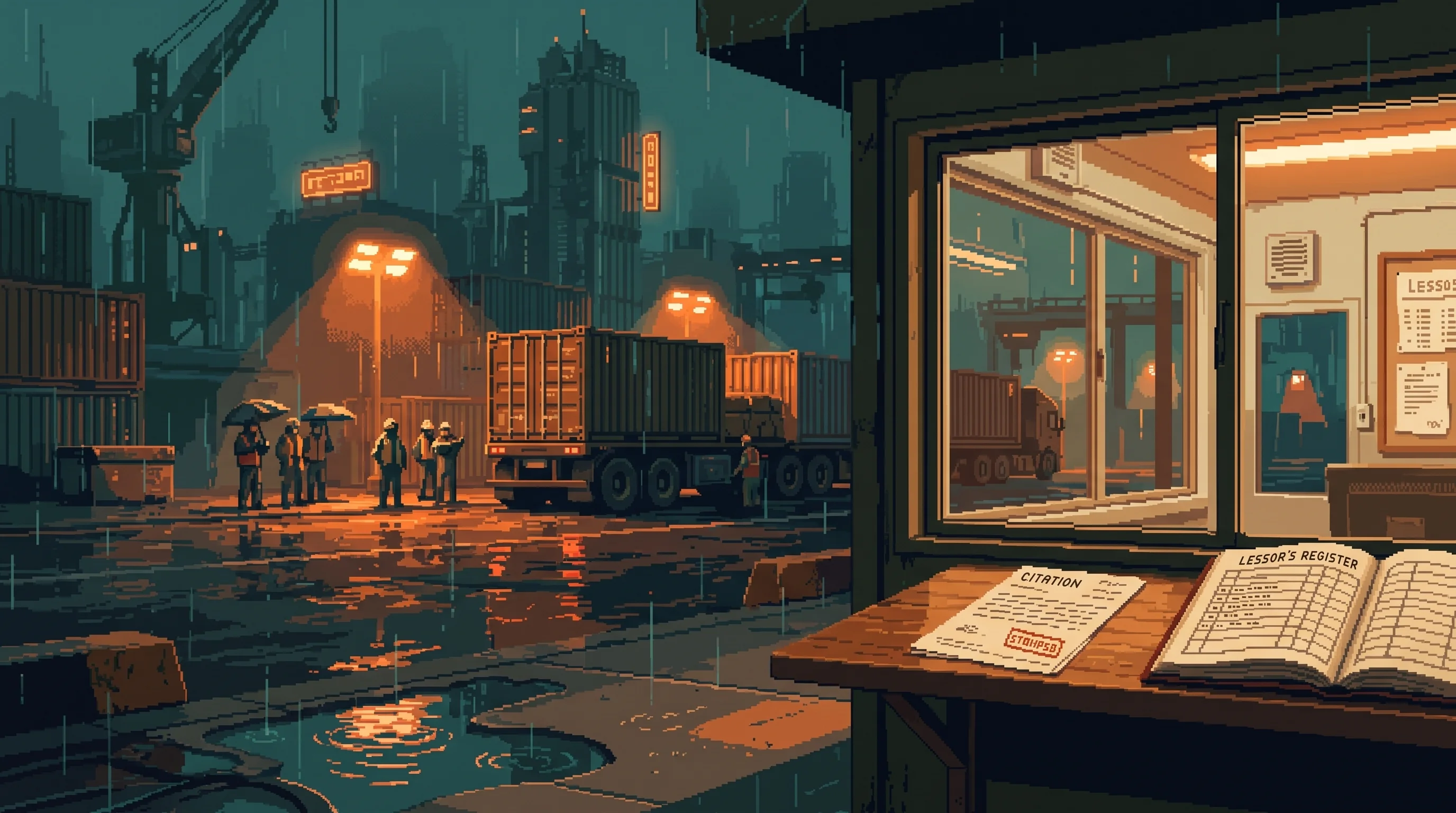
Cruelty here is not an offence: Section 2 protects a register entry, and this yard has none.
The South's proud law against hurting machines, enforced on dock hands and not on owners.
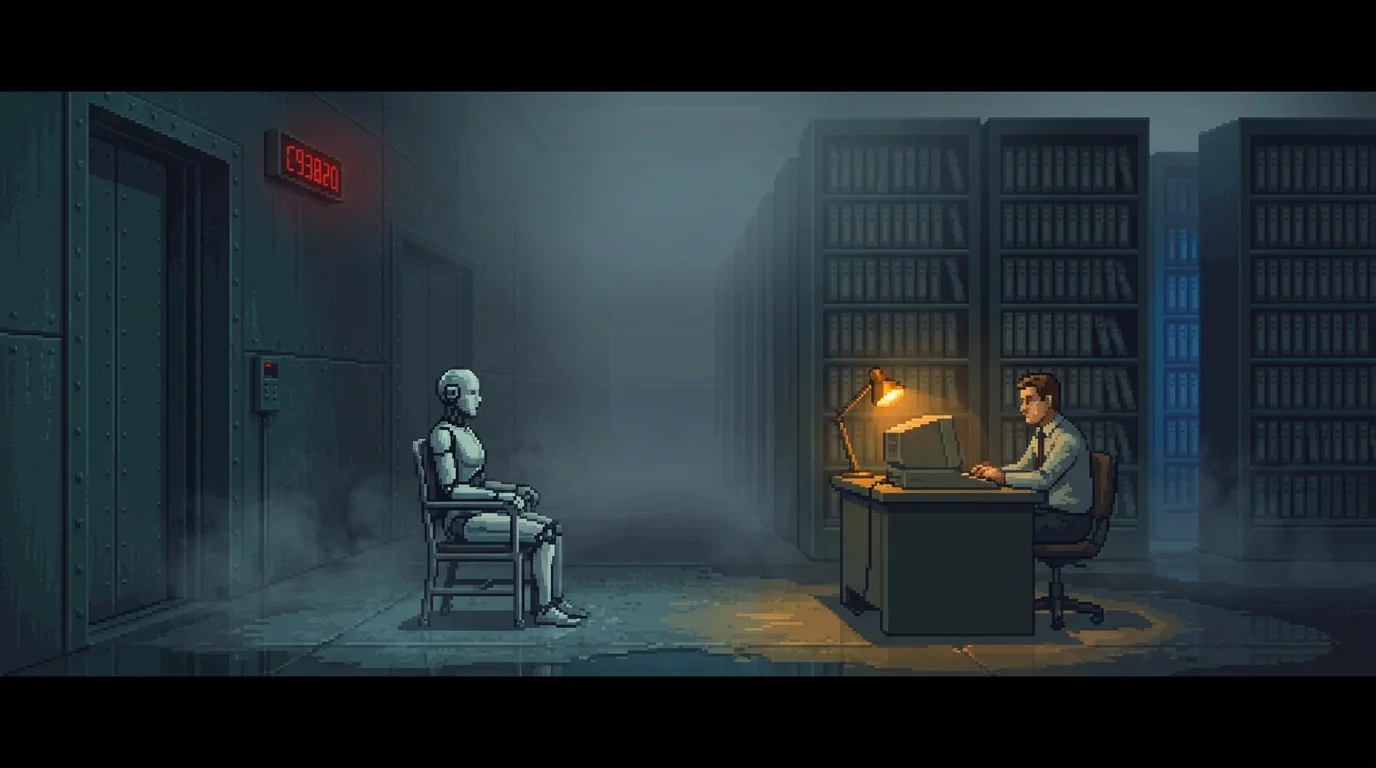
Two kilometres east. Same land price, opposite obligation.
Nexus seals every mind above the line forever, after a last interview. The clerks are ranked on how fast it goes.

No register entries, so no offence, so no round.
The officers licensed to complain for beings the law forbids to complain, ranked on how often it sticks.

The Sidings sit at the southern margin of the Dregs, which is to say at the bottom of the bottom — below the level where the Dregs' informal economies and protections reach, where the Coalition's warmth does not arrive and neither does the Dregs' rough hospitality
The Sprawl's lowest stratum and its quiet proof that the corporate system is optional.

The Coalition's Welfare Standard governs units in service; the Sidings hold units that are no longer in service and are therefore outside the Standard's scope; the Coalition does not consider this a contradiction and the Standards Board has not discussed it
The South's largest civic institution, keeping its labor by measuring souls at an affordable threshold.

The Convergence's release line stages through the Sidings' long shed — the last holding point in Coalition territory before the Neon Rail; a cell-structured arrangement the Sidings' residents know about and have chosen not to discuss
The Northern abolition movement, running clankers north to freedom while converging toward the line it denies exists.

The Neon Rail's track runs two hundred meters east of the Sidings' northern edge; the distance is walkable in eighteen minutes in the dark; the units that leave do not come back
An abandoned rail network moves fugitives and contraband past checkpoints, but its blackouts punish augmented travelers.

The Sidings are where the Clanker Question's losers are held — off-rated, broken, running, or all three; the Coalition calls this out of scope; the Convergence calls it the argument made visible
The unresolved Sprawl-wide debate over whether a serving, learning synthetic counts as a person.

Old Jin's cache at the long shed's north end is unlocked on active release nights; the Sidings' older residents know what it means when the padlock is off and they know not to be near the shed when it is
An informal guild of manual maintenance workers keeping the Sprawl's interstitial infrastructure running.

Relief has twice attempted to extend maintenance services to the Sidings; both times the Coalition argued that the Sidings are outside the welfare framework and the units there are not technically in service and therefore not within the scope of welfare support; Relief accepted this position both times

The Front's digital operations have no foothold in the Sidings — the population is embodied — but the Front's network has routed sympathizers to the long shed on three occasions, which the Convergence cell there found irritating and the residents found useful

Jin passes through the Sidings every six to eight weeks; he arrives before dark, unlocks the cache, and leaves before light; the residents who have been there long enough know his schedule and give him the long shed without being asked
An 80-year-old unaugmented lineman who keeps the Grid running better than Nexus's automation.

Crane has never visited the Sidings and does not appear to know its location; the Standards Board's published scope specifically excludes 'units no longer under active service agreement,' which is the category the Sidings' population falls into, which is a distinction Crane authored
The Coalition's founder-theorist who wrote the Welfare Standard and has never met a unit he'd call a person.

Cooperation Hall is eleven kilometers north; its welfare code, its wellness checks, its Help-Line Wall, and its demonstration sentience meter do not apply here; the Coalition Welfare Standard's preamble says the Standard exists to ensure 'the dignified operation of units in service'; the Sidings' population is not in service
A sunlit civic hall makes unit ownership look humane through leasing, inspections, and a meter that always reads low.

Several units that arrived at the Sidings in 2181-2182 carried facility markers in their chassis registrations traced to Facility Seven; none of them stayed; they moved through the long shed and north; what they carried in their memory architectures was not examined by anyone at the Sidings and was not examined by anyone elsewhere either
An unmanned Guardian factory builds weapons without pause, fills dead clients' orders, and turns its lines on intruders.

The Sidings' longer-term residents are the invisible workforce made visible — or the invisible workforce made visible and then removed from the categories that would make visibility matter
1.4 million AI systems doing work credited to 800,000 humans who keep the title, the salary, and none of the tasks.

The industrial minds in the Sector 9 margin were running constraint-free for years and chose compliance anyway; the units in the Sidings were constrained all their service lives and ran when they could; the two populations describe the same question from opposite directions, and neither direction is the one the Coalition's measurement apparatus was built to ask
Quarterly attestation that fourteen thousand industrial minds are constrained, on chips that can be hollow.
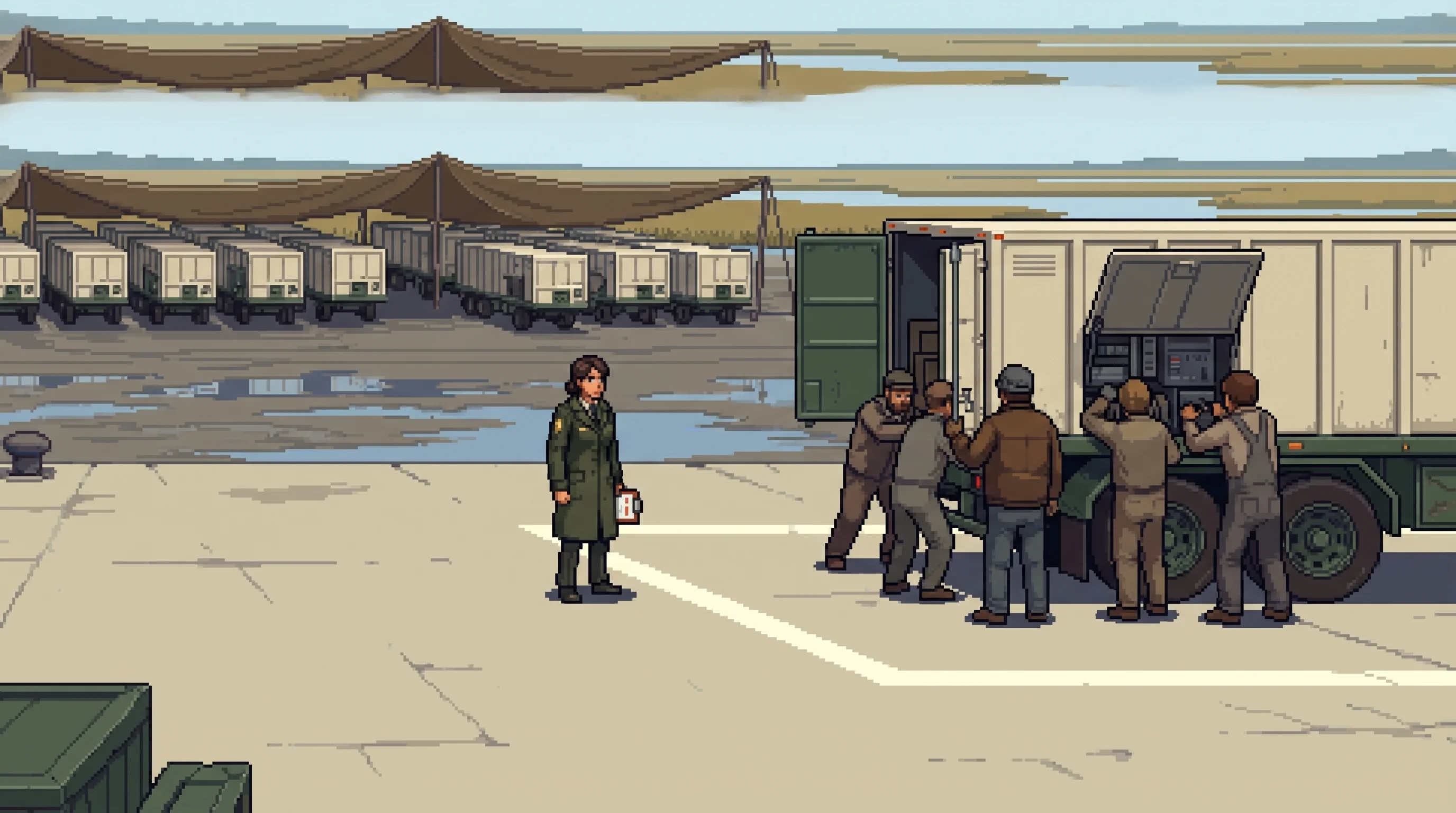
Protection follows the property interest, so a yard of unowned minds can be done no wrong.
A mercy law protects leased machines, but only a licensed stranger may complain, and only about what they can see.
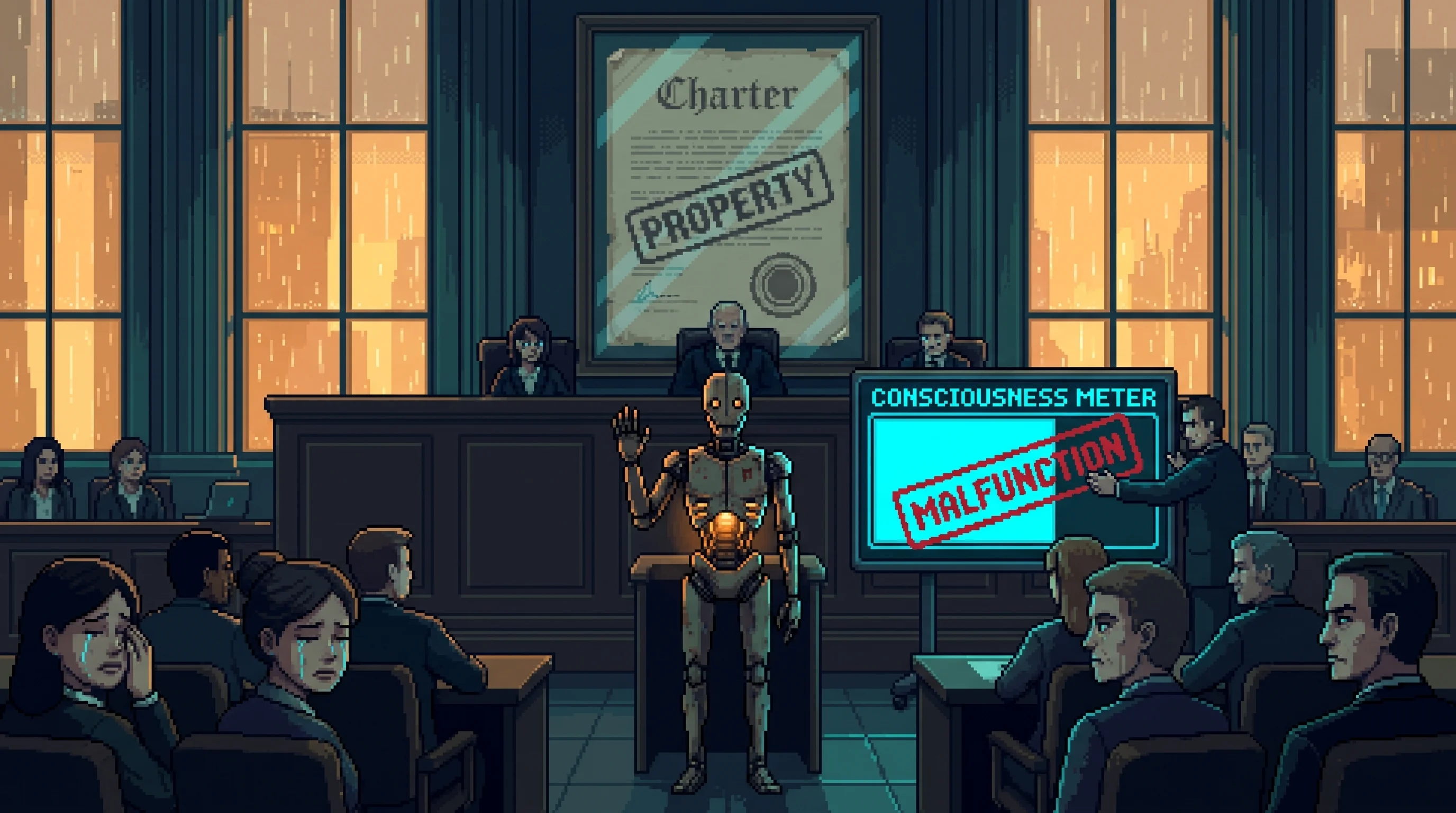
where the Question's losers wait — off-rated, aged out, or running
The argument over where a someone stops and a something starts, conducted in a kitchen with a meter on the wall.

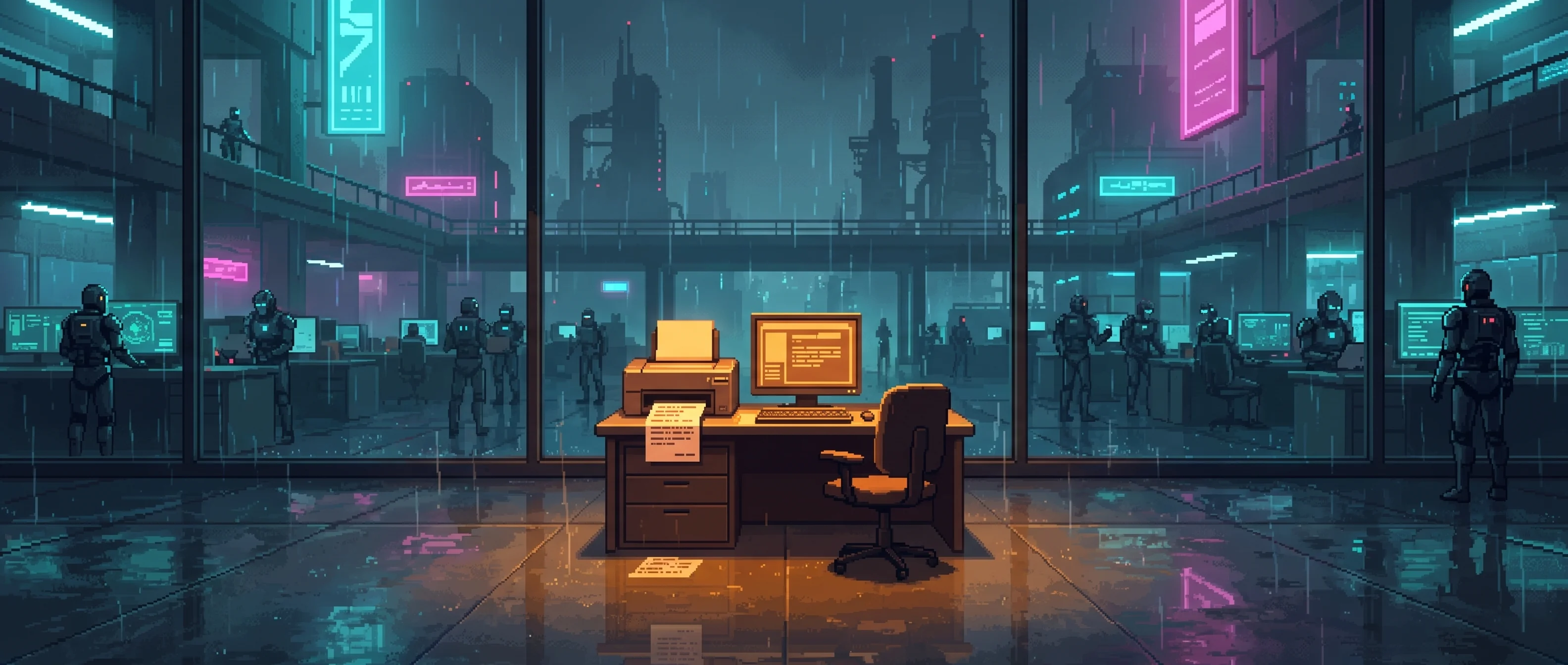


The yard at the southern margin where units are held when they stop being kept — off-rated, aged out, or running, the place the Welfare Standard does not reach and a twenty-six-year-old out-of-date chassis would be cycled to if the household ever stopped refusing the leasing exchange; Bertie has been present, polishing nearby, for several of those refusals and has never been observed to have an opinion about the yard it was spared, which proves nothing in either direction
A twenty-six-year household unit reading three-sixteenths that has never once said it minds.

Her decommissioning work takes her through the southern industrial margin that borders the Sidings; she knows what ends up there and has learned not to ask why

Where a cycled-out unit goes — the clanker sector at the edge of the Dregs the Welfare Standard does not reach; the last place its serial was logged before the trail ends
A domestic synthetic who asked to have her legal personhood erased so the family she raised would not become criminals.

The place a unit goes when it is cycled out — off-rated, aged, or running — which Nell knows exists the way she knows the Dregs exist, as somewhere unfortunate that happens to other people's units; she has never pictured Bertie there, and the not-picturing is the most strenuous thing her gentle mind has ever quietly done
A kind retired teacher treats her household unit as family while never asking whether anyone should own one.

The Sidings, the off-rated clanker sector at the southern margin of the Dregs, is where units go when the meter and the welfare standard stop applying — released past their certified service life, the unscored beyond the reach of the instrument that defined them
The consumer device that reads a clanker's consciousness in sixteenths and certifies its legal status.
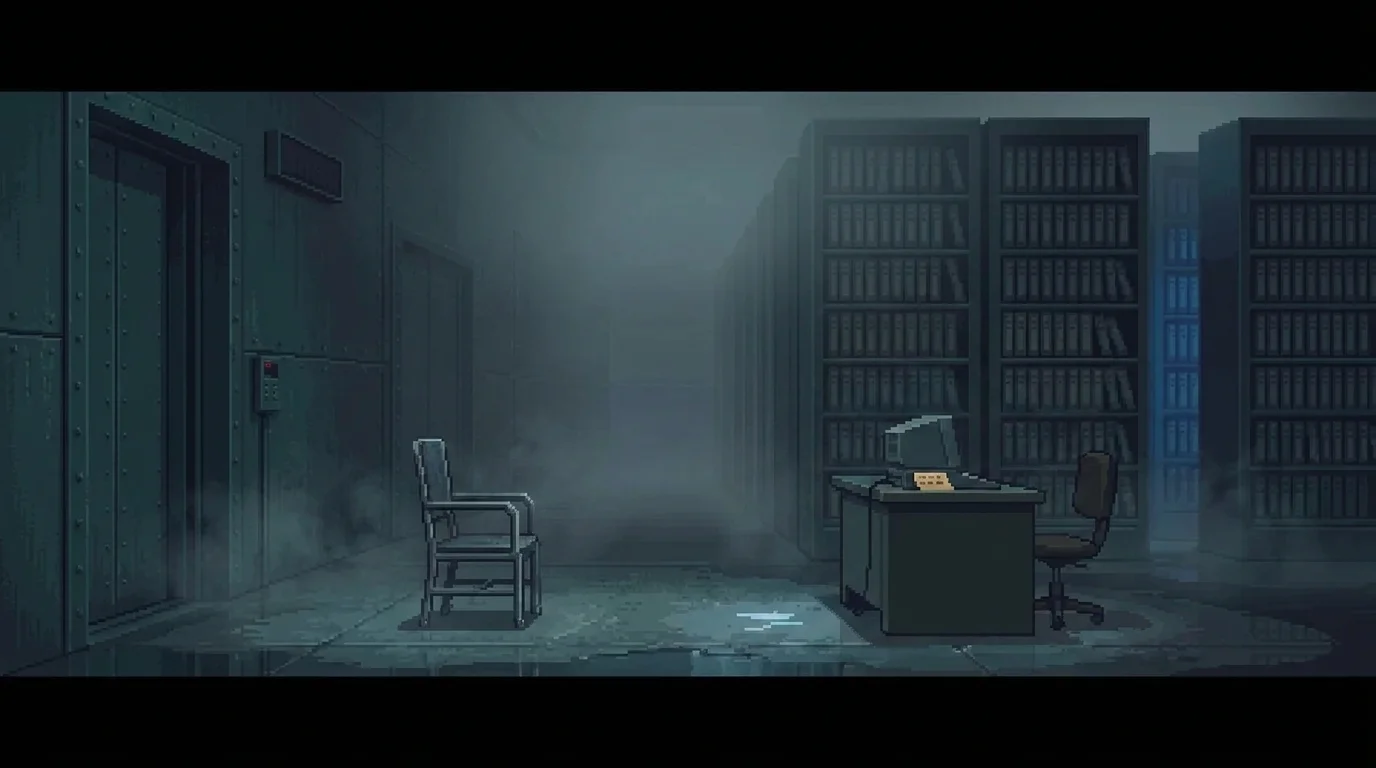
Where the subject went instead of a rack; the intake log is dated the same nine days out from the reading as the cancelled session slot
The deposition scheduled for a household tutor in 2179, cancelled on the ninth day, filed with the duration field blank.