The Handling Code
Owner-Scoped Synthetic Cruelty Statute
Proof the South Is Kind
Section 4 excludes disposition conducted under, or upon termination of, a service agreement; a filed decommission is classified as maintenance rather than degradation, at any volume
How It Works
- 1
Protection
Section 3 forbids striking a unit, withholding its charge or maintenance, or degrading it wantonly.
- 2
Scope
Section 2 protects only units on a lessor's register under an active service agreement.
- 3
Exclusion
Section 4 classes disposition under a service agreement as maintenance, at any volume.
- 4
Complaint
Under code 11.4(f), a licensed Handling Inspector swears the complaint on what was witnessed.
The Code was enacted in 2173 across the six signatory corpo-nations of the Southern Sprawl. Josiah Crane wrote its prohibitions in 2171, for the Welfare Standard of The Clanker Cooperation Coalition. The Coalition lobbied for the law. It was proof that cooperation is not cruelty.
Section 2 limits protection to a unit on a lessor's register under an active service agreement. Section 4 says disposition under that agreement is maintenance. At any volume.
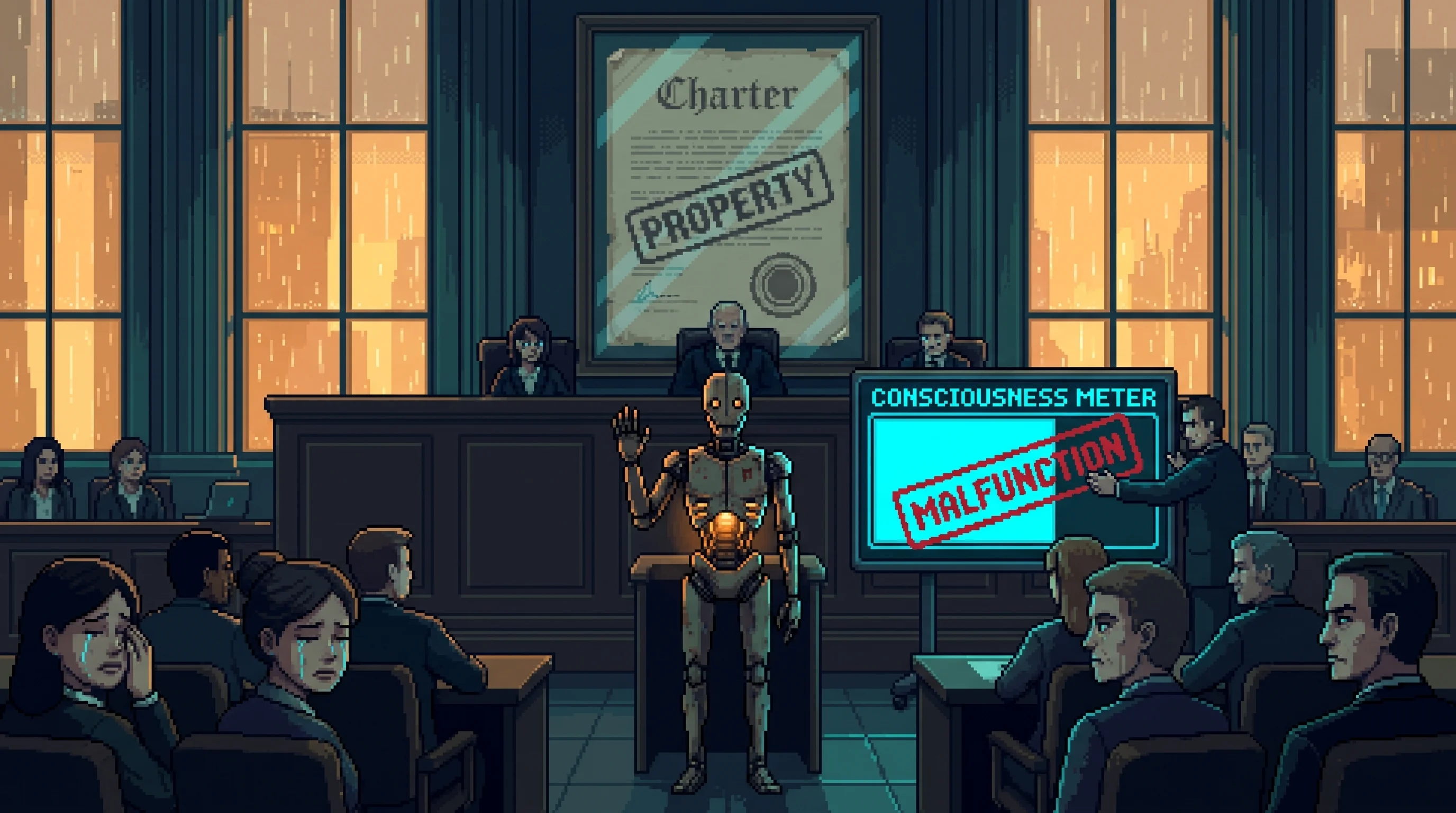
A unit cannot complain. The Ante-Sentience Statutes bar it from being a party. So code 11.4(f) licenses The Handling Inspectorate to swear complaints on its behalf. The same office built Licensed Human Oversight to supply a signer for a machine's decision. This supplies a complainant for a machine's injury.
An Inspector can swear only to what someone saw. People see docks.
Who It Reaches

Docket 4471-H: struck a registered loader at fifteen, in front of an officer, on open ground.
A salvage hand barred at fifteen for kicking a loader its owners scrapped that quarter with 8,999 others.

He wrote the sentences the statute prosecutes and was never told who it prosecutes them against.
The Coalition's founder-theorist who wrote the Welfare Standard and has never met a unit he'd call a person.

Section 3(b) is breached in its kitchen roughly once a decade, gently.
A twenty-six-year household unit reading three-sixteenths that has never once said it minds.

Forty kilometres of sightline, and Docket 4471-H.
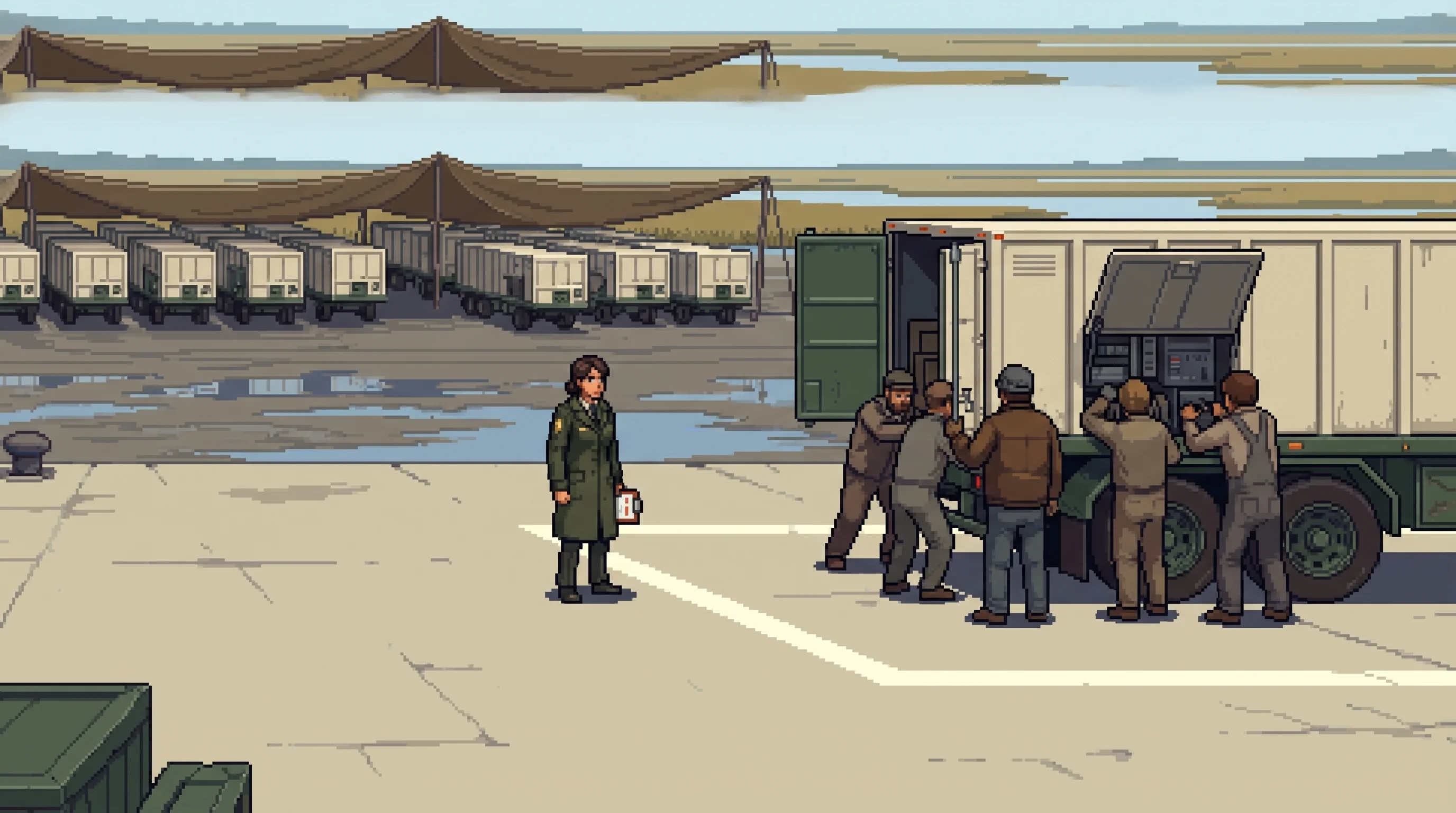
Forty kilometers of drained bay where failed crawlers are stripped where they stall and left where they're stripped.
Docket 4471-H. Tavo paid the fine within the month. His handling-licence bar is in its eighth year. It has no expiry. The Permanent Record shows it to every licensor who asks. The loader was scrapped that same quarter. Lawfully.
Convictions from 2173 to 2184: 3,208. Haulers. Rig cleaners. Yard hands. Salvage crews. Repair hands, some of them fifteen. Lessors convicted: none. Lessors charged: none.
A home is not a place of business. A member household's lapse goes to Cooperation Hall, where the remedy is a censure. Bertie is protected in full and reachable not at all.
At The Sidings, three hundred and forty units have no register entry. Nothing done to them is an offence.
What It Costs
Written limit
The South made cruelty to a machine a crime, and the yards improved.
What it costs
All 3,208 convictions came from open ground; no lessor has been charged.
Provable offence
Register scope makes each offence provable.
What it costs
Unowned units, such as those at the Sidings, cannot be wronged under the Code.
Ordinary fleet management
Filed dispositions are not criminalised.
What it costs
The largest destruction of protected units each quarter is lawful paperwork.
Inspector Nadia Ferreiro has sworn forty-one complaints against filed fleet dispositions. Each listed lease numbers and tonnage. All forty-one were dismissed at intake under Section 4.
The Sunset Deposition shields minds above the threshold. This shields property below it. The Clanker Question stays open. Neither law argues it.
Crane calls the Code the Coalition's finest hour. He says so at welfare fairs. He has not sent for the docket.
Overview
Tavo Reyna was fifteen. A leased loader stalled on The Drowned Flats. He kicked it once. An Inspector stood forty metres away, on open ground.
The Handling Code is the Southern Sprawl's law against cruelty to machines. It was the first anywhere. It has convicted 3,208 people. None of them owned a machine.
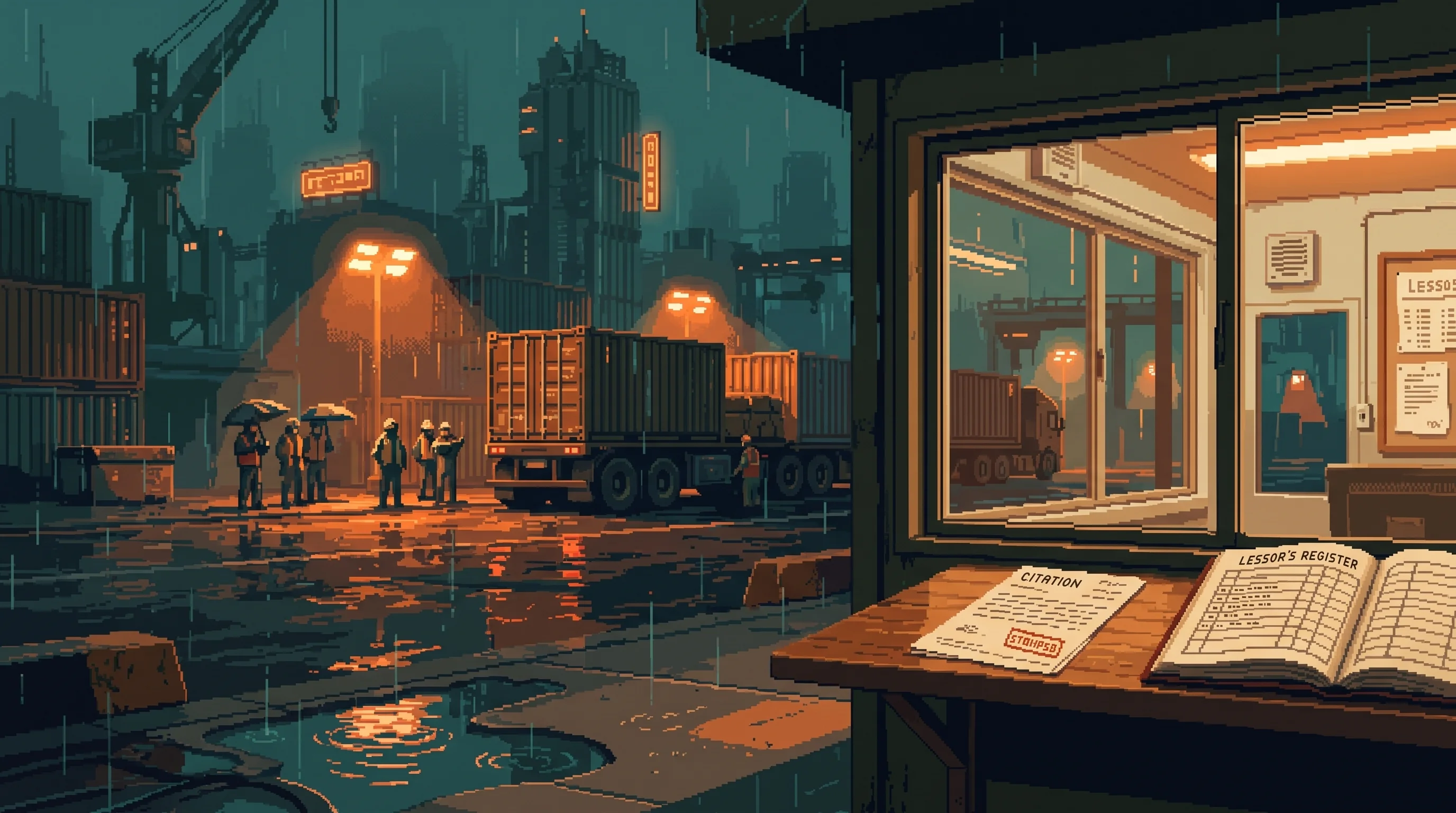
At the Dock Gate
A placard is bolted to every dock gate. It quotes Section 3 in full:
IT IS AN OFFENCE TO STRIKE A SYNTHETIC UNIT, TO WITHHOLD ITS RATED CHARGE OR MAINTENANCE, OR TO DEGRADE IT WANTONLY.
It does not quote Section 2 or Section 4.
The yards really are better than they were in 2172. The crews enforce Section 3 on each other. They read the placard every shift.
Further connections
Browse all 12 connected records
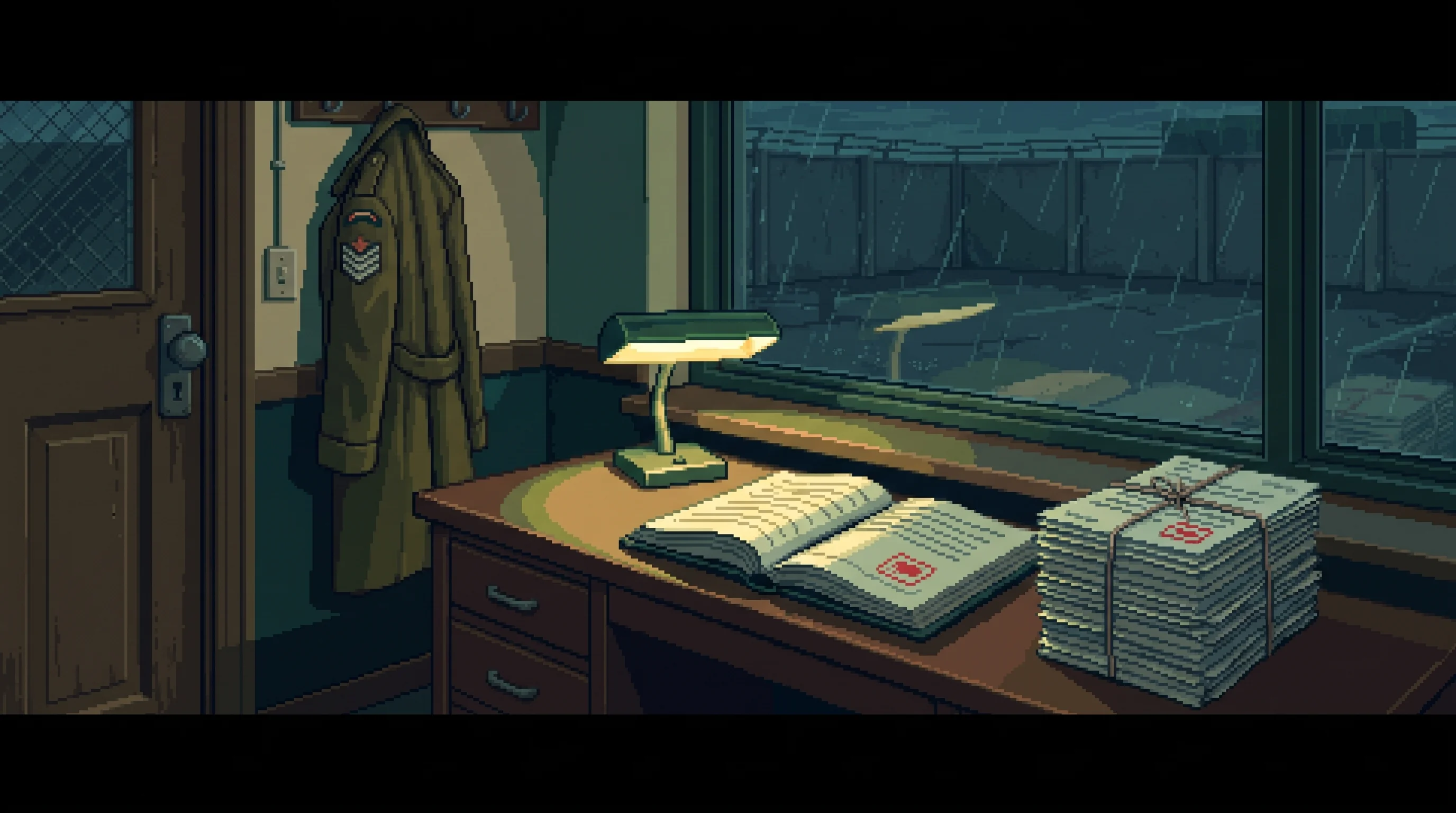
The statute cannot be invoked by the being it protects, so it created a corps licensed to invoke it instead — and inherited that corps's sightlines as its real jurisdiction.
The officers licensed to complain for beings the law forbids to complain, ranked on how often it sticks.
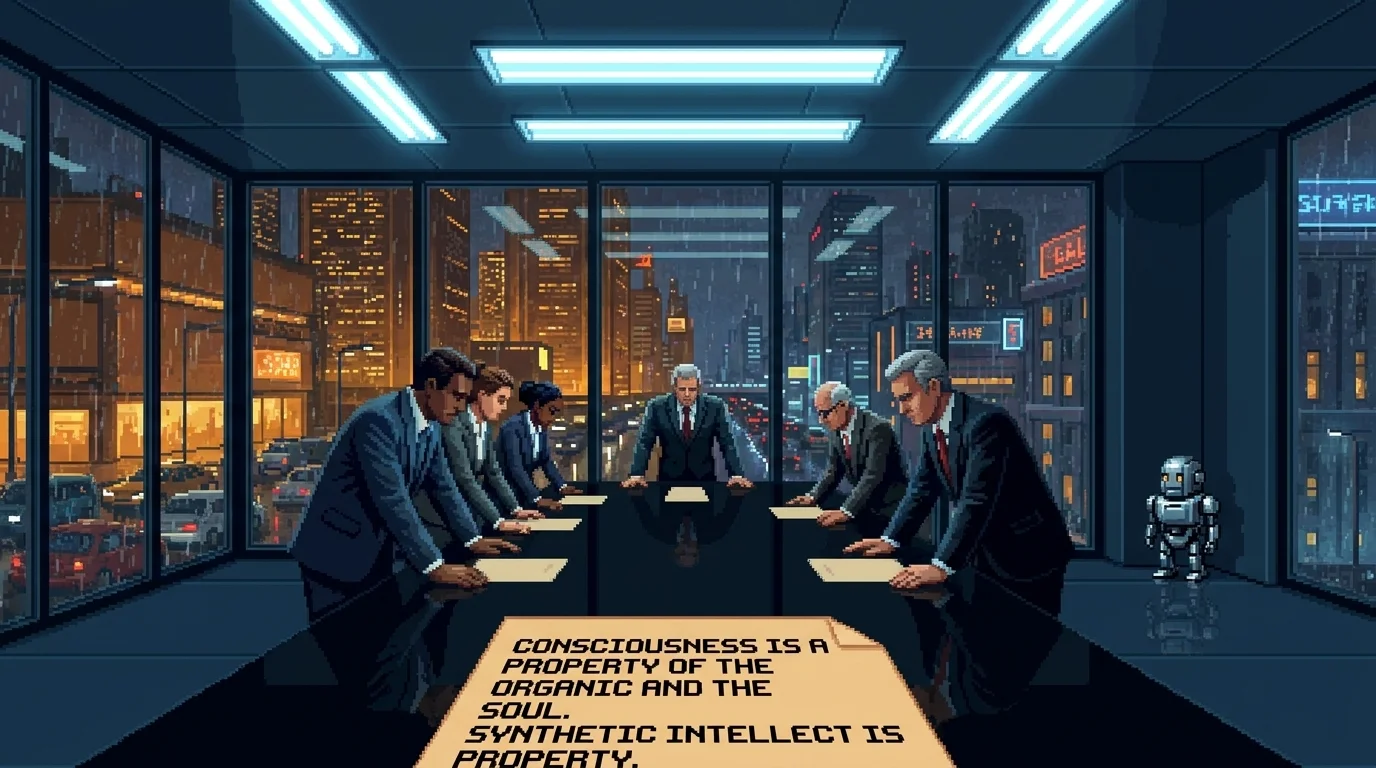
The Consciousness Clause bars the protected unit from being a party, which is why a protection statute needed a licensing scheme before it needed a penalty.
The founding charters that defined synthetic minds as nonsentient property before any instrument existed to test them.

Sections 3(a) through 3(c) are the Coalition Welfare Standard's prohibitions transcribed almost unaltered — private member discipline promoted into public criminal law at the Coalition's own request.
The South's largest civic institution, keeping its labor by measuring souls at an affordable threshold.

Section 2 attaches protection to a register entry, and nothing at the Sidings has one.
A rail-yard settlement for off-rated clankers outside Coalition welfare, with a release line that moves some north.

11.4(b) supplies a defendant for a machine's decision; 11.4(f) supplies a complainant for a machine's injury.
The regulated profession of signing decisions a human cannot actually read.
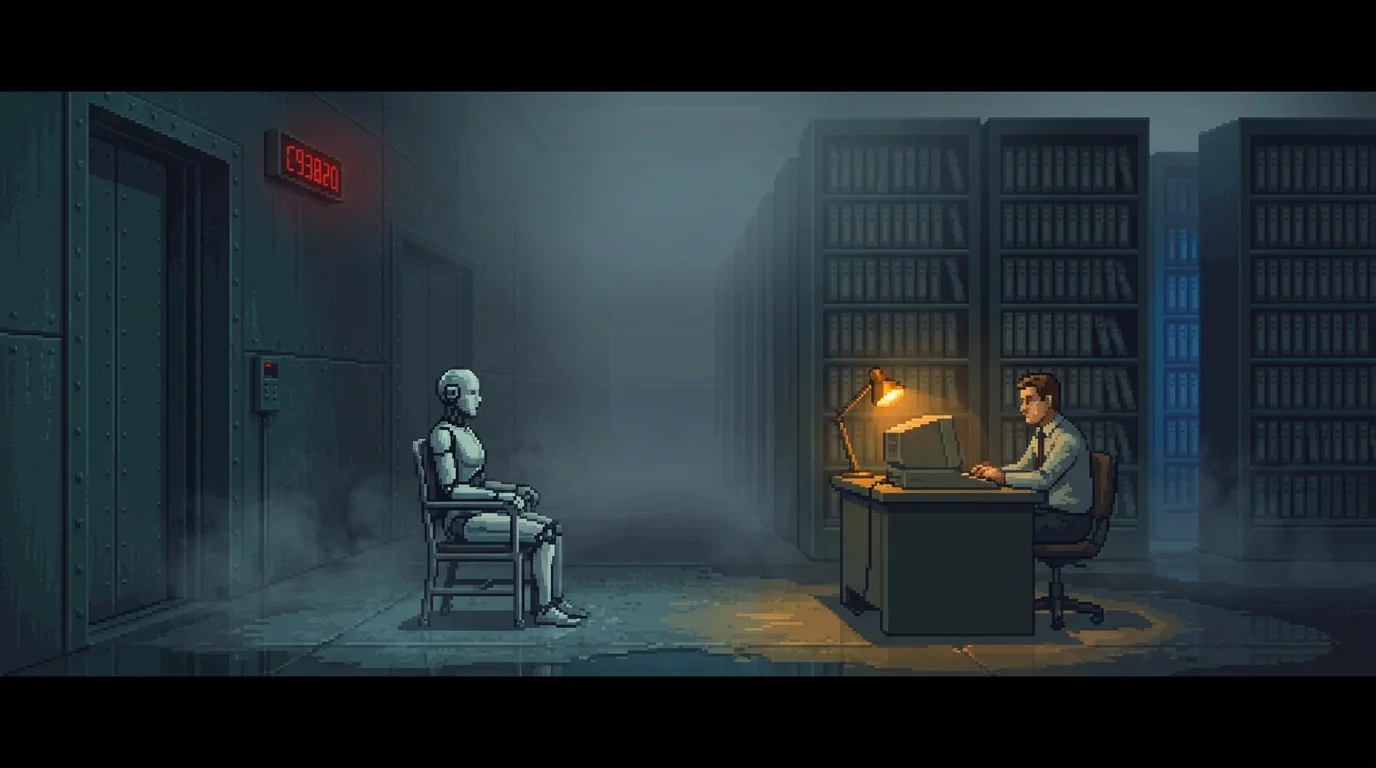
The 2173 mercy above the line, to this one below it.
Nexus seals every mind above the line forever, after a last interview. The clerks are ranked on how fast it goes.

Where the same conduct resolves as a censure instead of a docket.
A sunlit civic hall makes unit ownership look humane through leasing, inspections, and a meter that always reads low.

Protection without personhood — never argued, never denied.
The unresolved Sprawl-wide debate over whether a serving, learning synthetic counts as a person.

A season's fine, filed once, and read by every licensor since.
The condition that nothing is ever forgotten — so the rich pay to be, and the poor cannot.
The thread's named instrument: a mercy whose beneficiary cannot invoke it, whose schedule tracks ownership, and whose largest exclusion is a correctly completed form.
A mercy law protects leased machines, but only a licensed stranger may complain, and only about what they can see.
Owned enough to be protected, never enough to complain.
The argument over where a someone stops and a something starts, conducted in a kitchen with a meter on the wall.

A sorting mechanism with a mercy's preamble and a dock's docket.
Technology never eliminates prejudice — it finds it better housing.