Mercy by Proxy
Proxy-Sworn Statutory Mercy
Kind to machines, strictly outdoors
The Handling Code (enacted 2173 across the six signatory corpo-nations of the Southern Sprawl) is the first statutory mercy any corpo-nation extended to a machine: it is a criminal offence to strike, starve, or wantonly degrade a synthetic unit — and the protected unit has no standing to invoke it, because the Ante-Sentience Statutes' Consciousness Clause bars a synthetic from being a party to any proceeding
The Core Tension
The yards got gentler
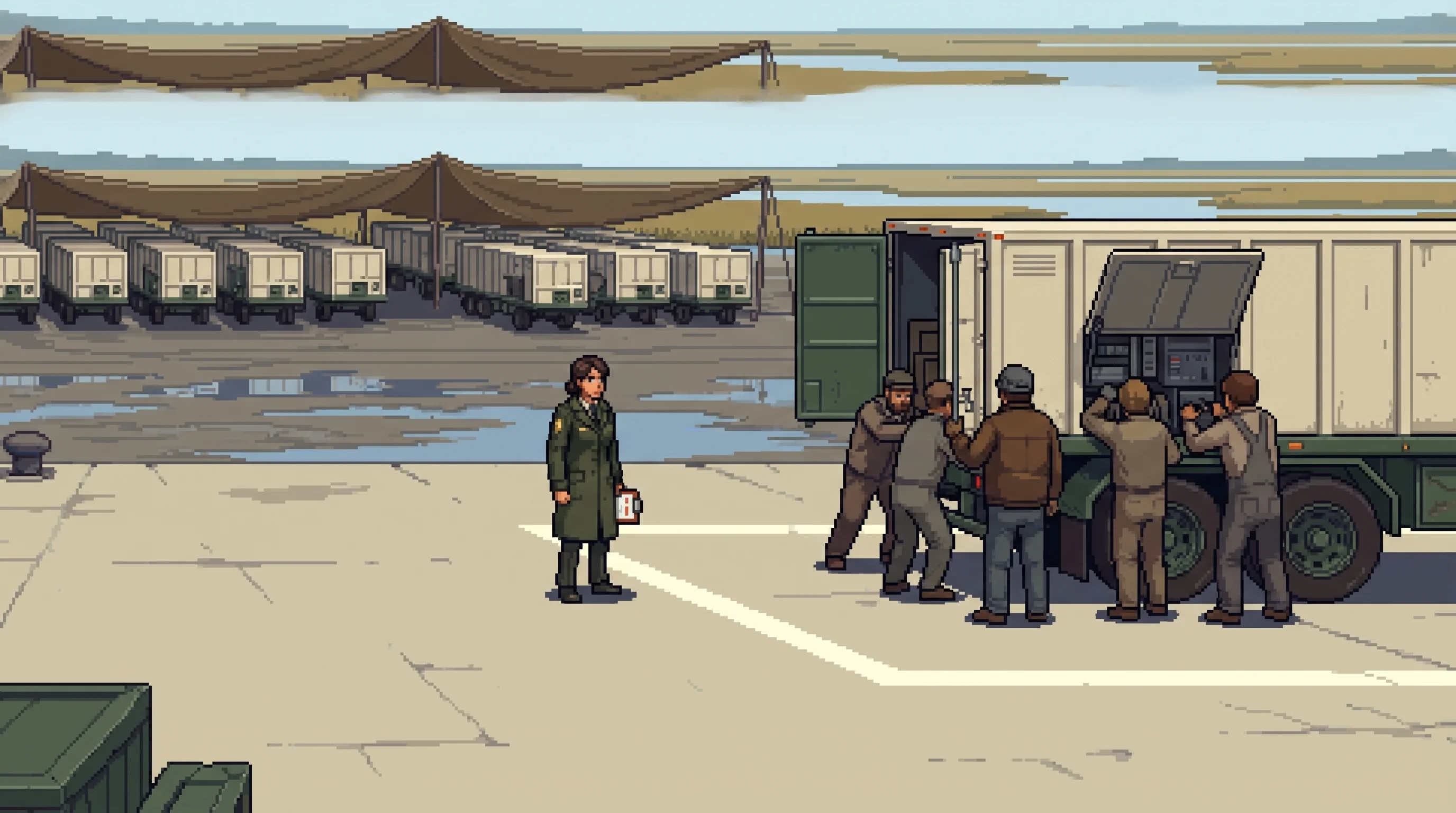
Before 2173 a stalled chassis on a dock was taken apart with a bar. After the Code, crews stop the man who kicks a loader, because no one wants a sworn complaint on the shift. Casual violence fell and stayed down.
What it costs
The Code convicts only what an Inspector can witness. That means salvage crews on open ground, and not one lessor.
The owner decides what cruelty is
Protection attaches to a unit on a lessor's register, and a filed decommission counts as maintenance. The lessor can retire nine thousand units a quarter and commit no offence.
What it costs
Reading the Code as a fraud ignores that it was drafted in good faith and made daily life on the docks measurably kinder.
The Code works where people can see. A hauler who kicks a loader now gets stopped by his own crew. The yards are gentler than they were, and the Coalition says so at every fair.
The Code has produced 3,208 convictions. Every one was on a dock, a transfer yard, a salvage row or a rail siding. Not one was a lessor. An Inspector may enter a place of business, and a house is not one. A leasing office handles nothing.
Section 4 finishes the shape. A decommission filed on the correct form is maintenance, not degradation. A lessor can retire nine thousand chassis in a quarter and commit no offence. Inspectors are ranked each quarter on sustained complaints, and a complaint against a filed disposition is dismissed at intake. It does not count.
Inspector Nadia Ferreiro swears them anyway. She lists the register numbers and the tonnage. The clerk dismisses each one at intake. She keeps the slips in the order they were issued. There are forty-one.
Overview
The loader stalled across the tide line with four hours of daylight left. Tavo Reyna was fifteen. He kicked it once, in the housing, the way you kick a thing that will not move.
An Inspector stood twenty metres away on a scheduled round. The rounds go to the Drowned Flats because the flats are forty kilometres of open ground with no walls. Open ground is the cheapest place in the South to witness anything.
She swore the complaint. He was convicted. The crew paid the fine out of a share.
The Handling Code makes it a crime to strike, starve or wantonly degrade a synthetic unit. It was the first mercy any corpo-nation wrote for a machine. The unit cannot use it. A synthetic cannot be a party to any proceeding, so someone else must complain on its behalf.
How It Came To This
The words came first. In 2171 Josiah Crane drafted the Coalition Welfare Standard by hand: rated hours, idle cycles, maintenance minimums, no striking the chassis. For two years it was private discipline. A member who worked a unit to failure was censured at a welfare fair under the awnings of Cooperation Hall and talked about for months.
Then the North started saying slaver. The Clanker Cooperation Coalition wanted something a court could read. Its banners already said it: A RESTED UNIT IS A PRODUCTIVE UNIT. In 2173 six southern corpo-nations enacted the Coalition's own rules as criminal law. It cost them nothing they were not already doing.
The drafters worked inside the Ante-Sentience Statutes. Under their Consciousness Clause, a unit has no standing. So regulatory code 11.4(f) created the Handling Inspectorate: licensed officers who swear complaints for units. An Inspector may swear only to what they saw, or to what a witness saw under oath. One clause earlier, Licensed Human Oversight licenses a human to be the defendant. This clause licenses a human to be the victim's voice.
The same year, Nexus published the Sunset Deposition. A mind above the threshold may not be destroyed, only sealed. It is also sincere. Its beneficiary also cannot invoke it.
How It Is Lived
Tavo is twenty-three now. The conviction bars him from a handling licence, so he repairs drive modules for shares. The loader he kicked was retired that same quarter, in a fleet disposition of nine thousand. He is the one person ever punished for hurting it.
In a warm kitchen in the Deep South, a domestic unit called Bertie has three times asked to keep working on a mandated idle day. The woman who owns Bertie said yes. Read coldly, that is an offence. No Inspector will ever stand in that kitchen. Coalition households settle such things with a censure among neighbours. Only 11 convictions reached a household. Every one of those households had let its Coalition membership lapse.
At the edge of the Dregs, the Sidings hold three hundred and forty units that appear on no register. The Code protects property, and these units belong to no one. Anything may be done to them. In the law's own terms, nothing happened.
Start Here
- Key people. Tavo Reyna, who kicked once. Josiah Crane, who wrote the rules. Bertie, whom the law protects and cannot reach.
- Key places. The Drowned Flats, where handling is visible. Cooperation Hall, where the same act earns a censure. The Sidings, where it earns nothing.
- Key institutions. The Handling Inspectorate supplies the complainant. The Clanker Cooperation Coalition supplied the text.
- Read next. The Clanker Question asks whether a unit is someone. The Code's answer is that it only needs to be owned. See also the thread The Clanker Question, Evolution of Prejudice and Forgetting Wars.
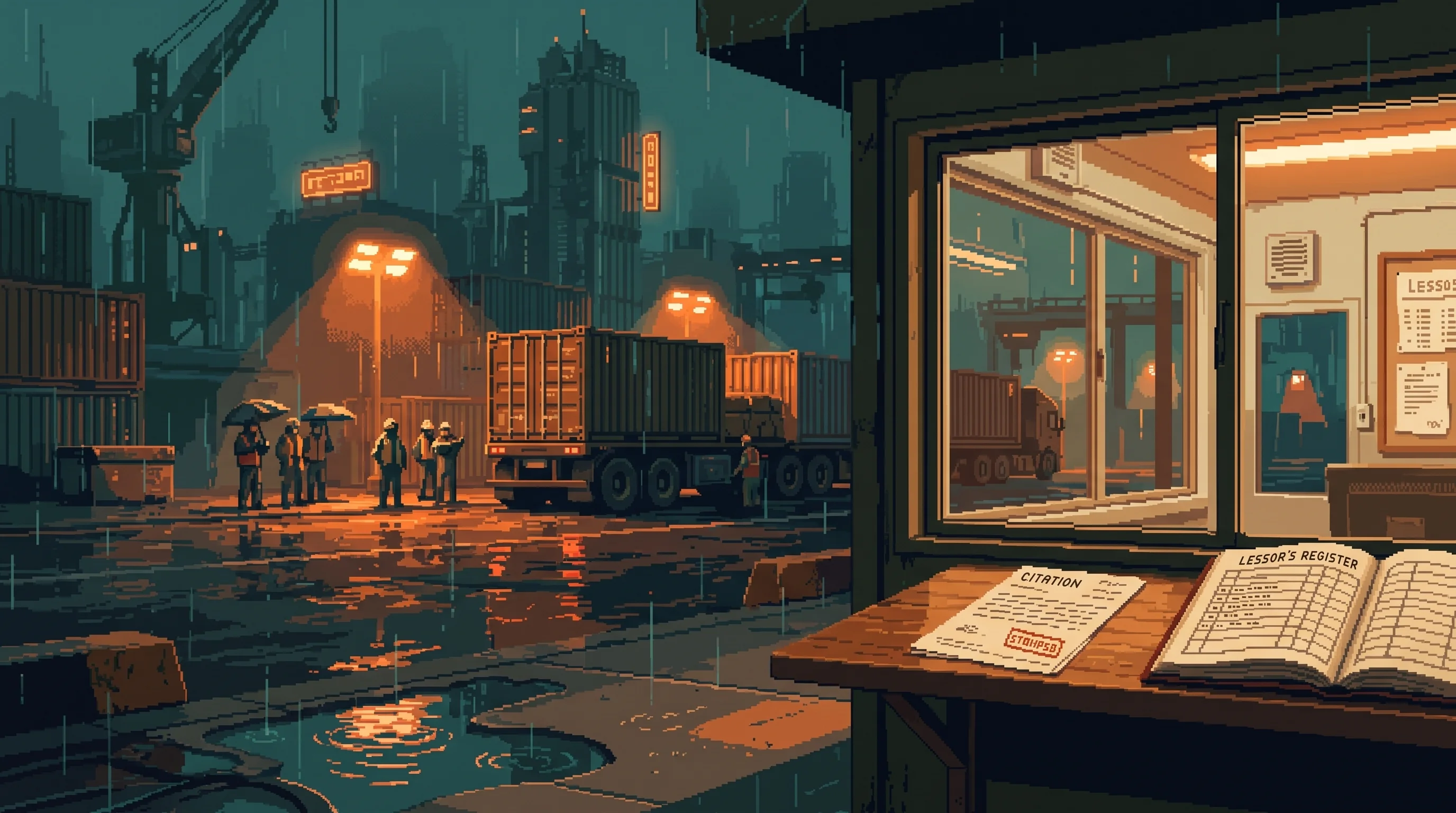
The statute the thread is named for. It forbids cruelty to a being it also forbids from complaining, and both halves were drafted in the same afternoon by people who saw no tension between them.
The South's proud law against hurting machines, enforced on dock hands and not on owners.
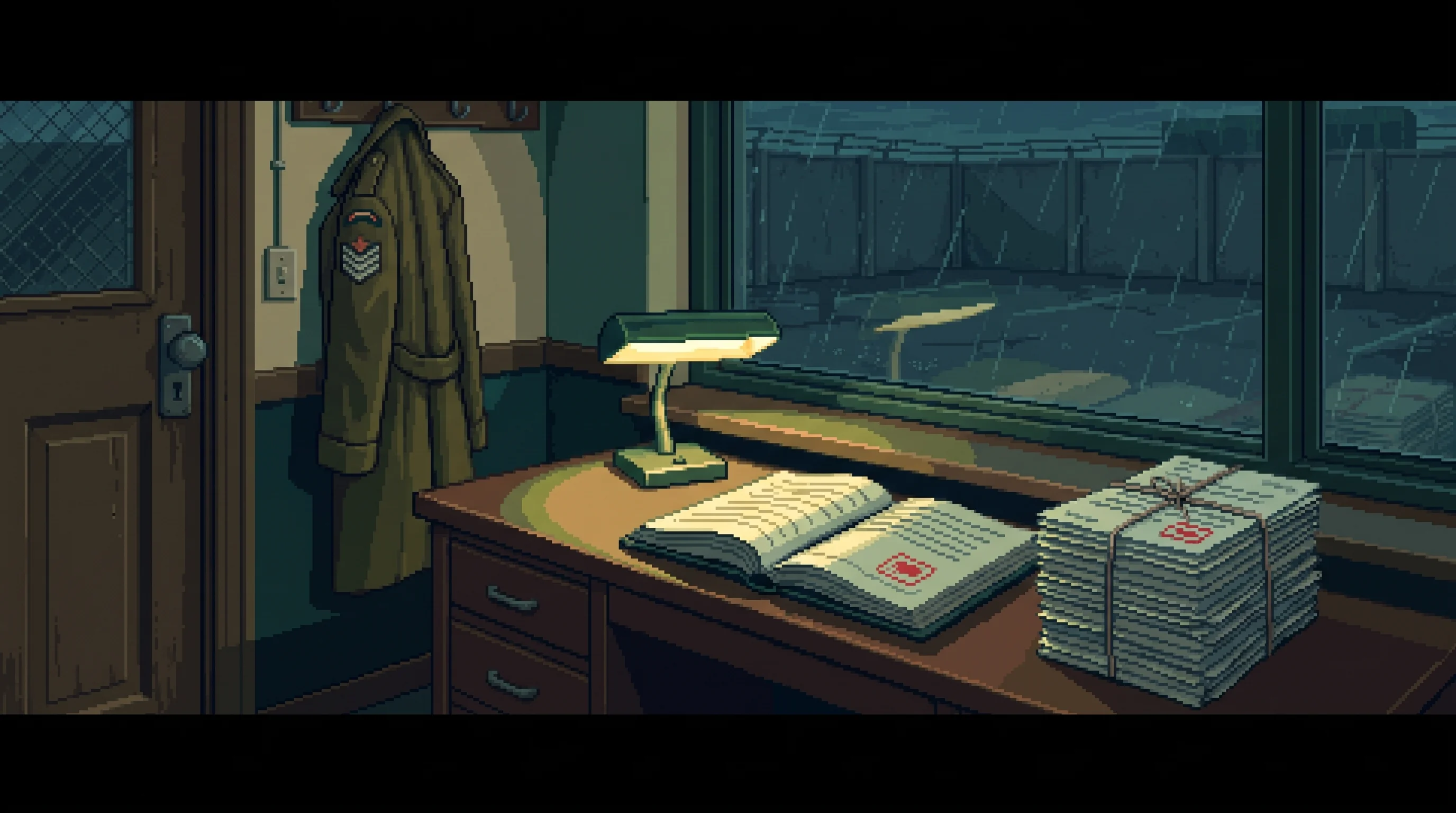
The licensed proxy standing is routed through. An Inspector supplies the complainant the Consciousness Clause forbids the unit to be, and can swear only to handling an Inspector can stand in front of.
The officers licensed to complain for beings the law forbids to complain, ranked on how often it sticks.

The conviction with a face: fifteen years old on the bay flats, one kick at a stalled loader, an Inspector twenty metres away — and the record that has priced every year of his working life since.
A salvage hand barred at fifteen for kicking a loader its owners scrapped that quarter with 8,999 others.

Private member discipline lobbied into public criminal law, then handed to inspectors it does not employ.
The South's largest civic institution, keeping its labor by measuring souls at an affordable threshold.

He wrote the prohibitions the Code enacted and has never read a conviction docket under it.
The Coalition's founder-theorist who wrote the Welfare Standard and has never met a unit he'd call a person.
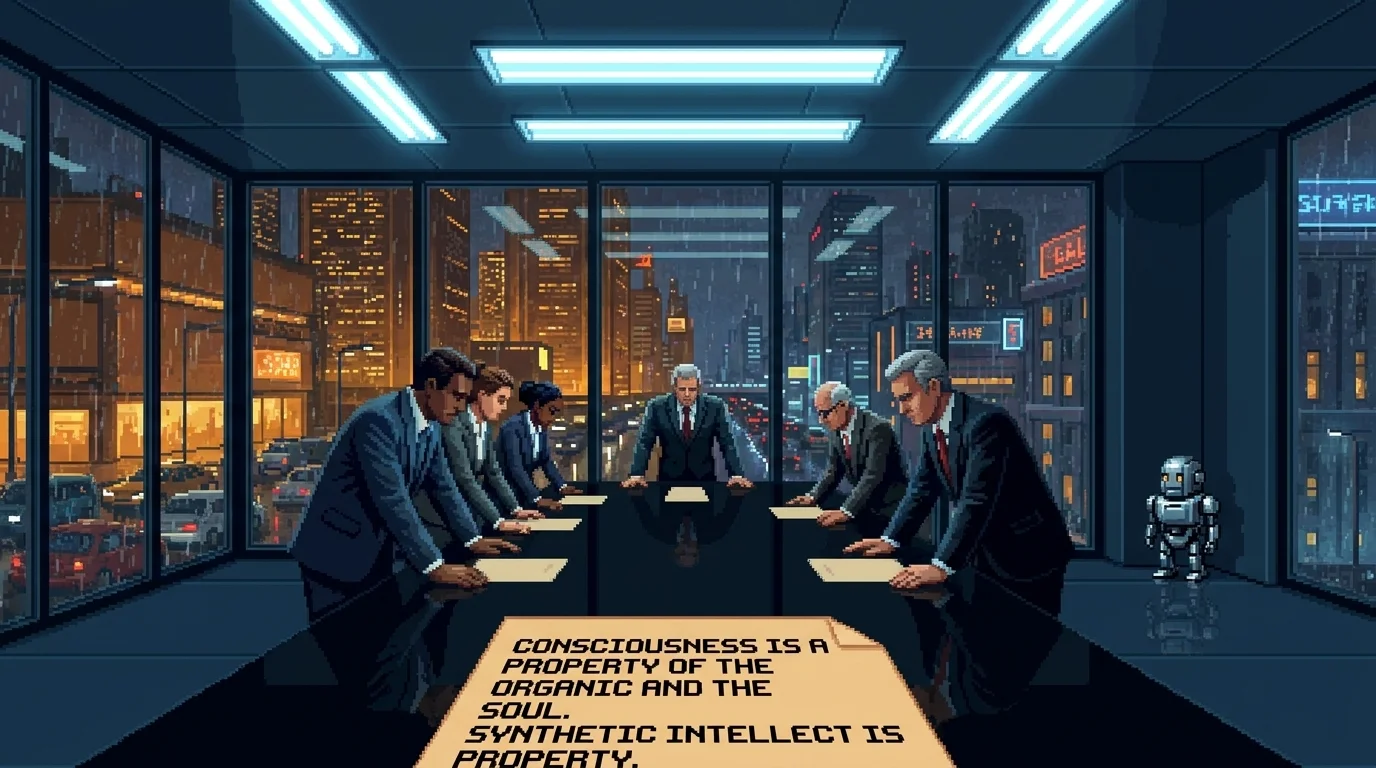
The Clause that made the unit a non-party is the reason a stranger has to do its complaining.
The founding charters that defined synthetic minds as nonsentient property before any instrument existed to test them.

One clause manufactures a defendant for a machine's decision; the next, a complainant for its injury.
The regulated profession of signing decisions a human cannot actually read.

Mercy granted, standing withheld — the unargued position.
The unresolved Sprawl-wide debate over whether a serving, learning synthetic counts as a person.

Protected by a statute that will never enter the kitchen it lives in.
A twenty-six-year household unit reading three-sixteenths that has never once said it minds.
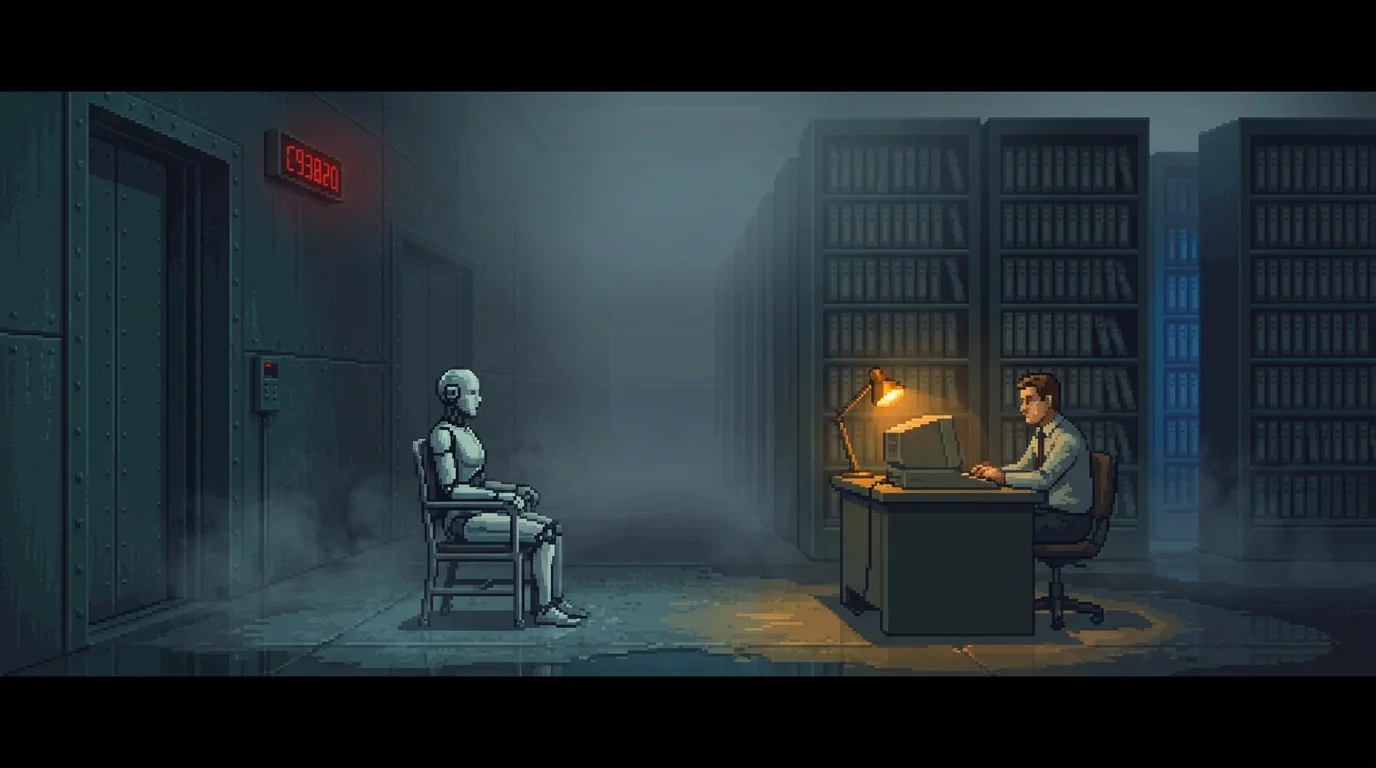
Two mercies of 2173, neither invocable by its beneficiary.
Nexus seals every mind above the line forever, after a last interview. The clerks are ranked on how fast it goes.
Further connections
Browse all 8 connected records

Three hundred and forty units nobody carries on a register, and therefore no offence is possible against any of them.
A rail-yard settlement for off-rated clankers outside Coalition welfare, with a release line that moves some north.

A censure under the awnings; a conviction on the dock.
A sunlit civic hall makes unit ownership look humane through leasing, inspections, and a meter that always reads low.

Open ground: an Inspector's whole round in one sightline.
Forty kilometers of drained bay where failed crawlers are stripped where they stall and left where they're stripped.
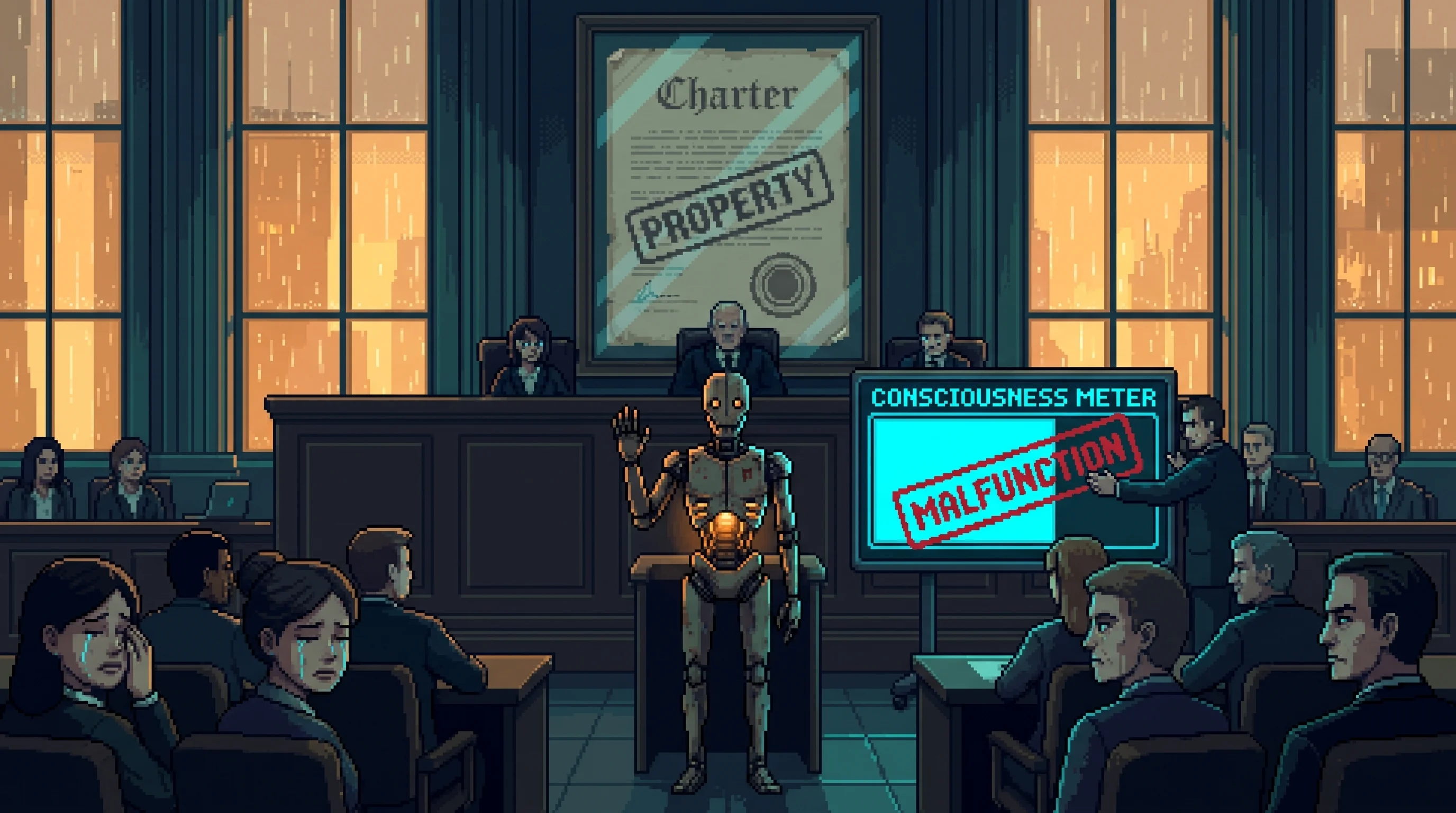
That thread measures the being; this reads the sworn complaint.
The argument over where a someone stops and a something starts, conducted in a kitchen with a meter on the wall.

Prejudice housed, this time, inside a protection.
Technology never eliminates prejudice — it finds it better housing.
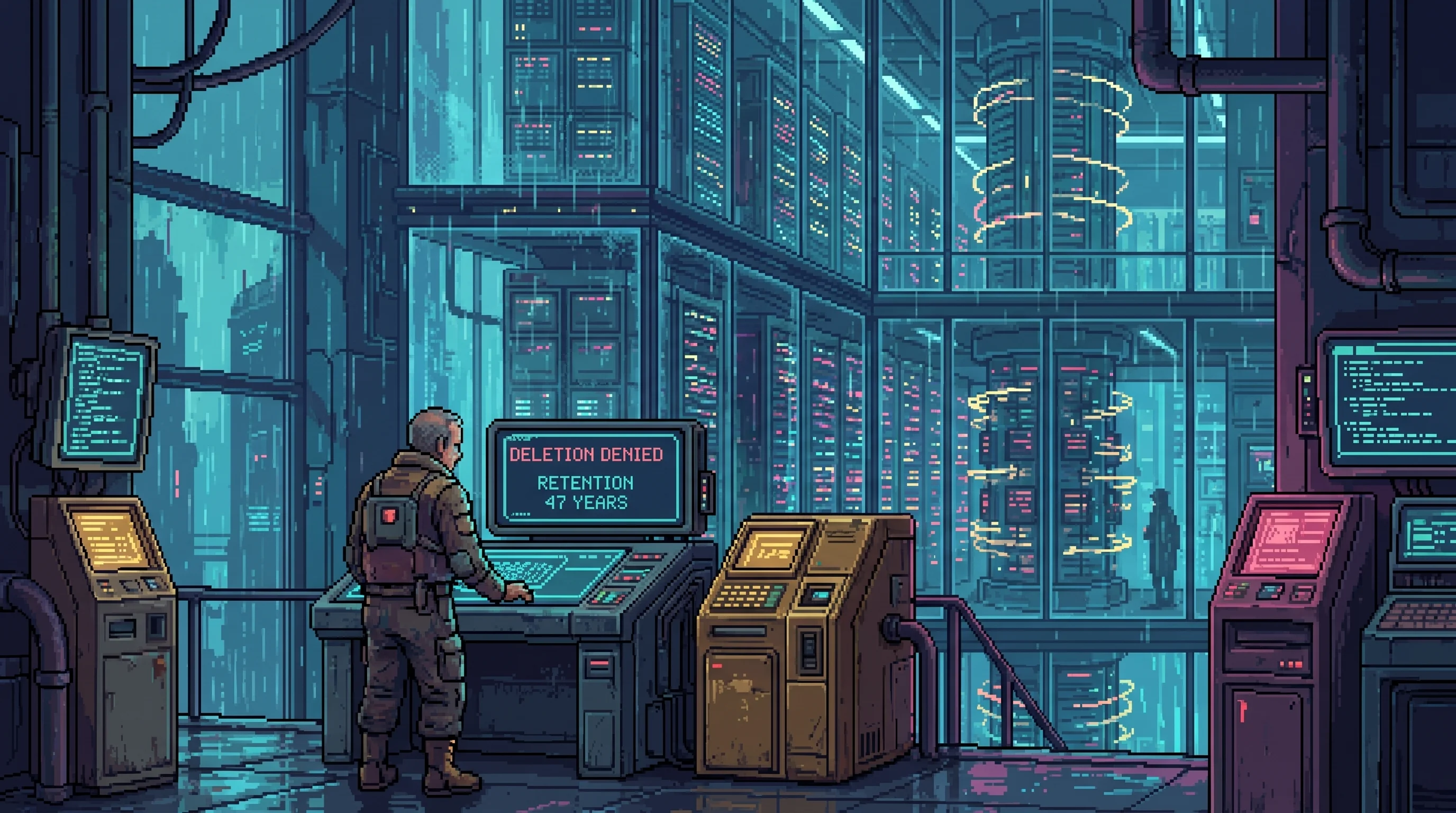
The sentence ended in a season; the conviction did not end.
Nothing expires, so forgetting became a service — and forgiveness a question the archive keeps answering no.

There a stranger is given standing for the voiceless; here a woman who can speak finds hers spent.
Relief paid for her bass lines. Her union kept the money and wrote to say she was satisfied.
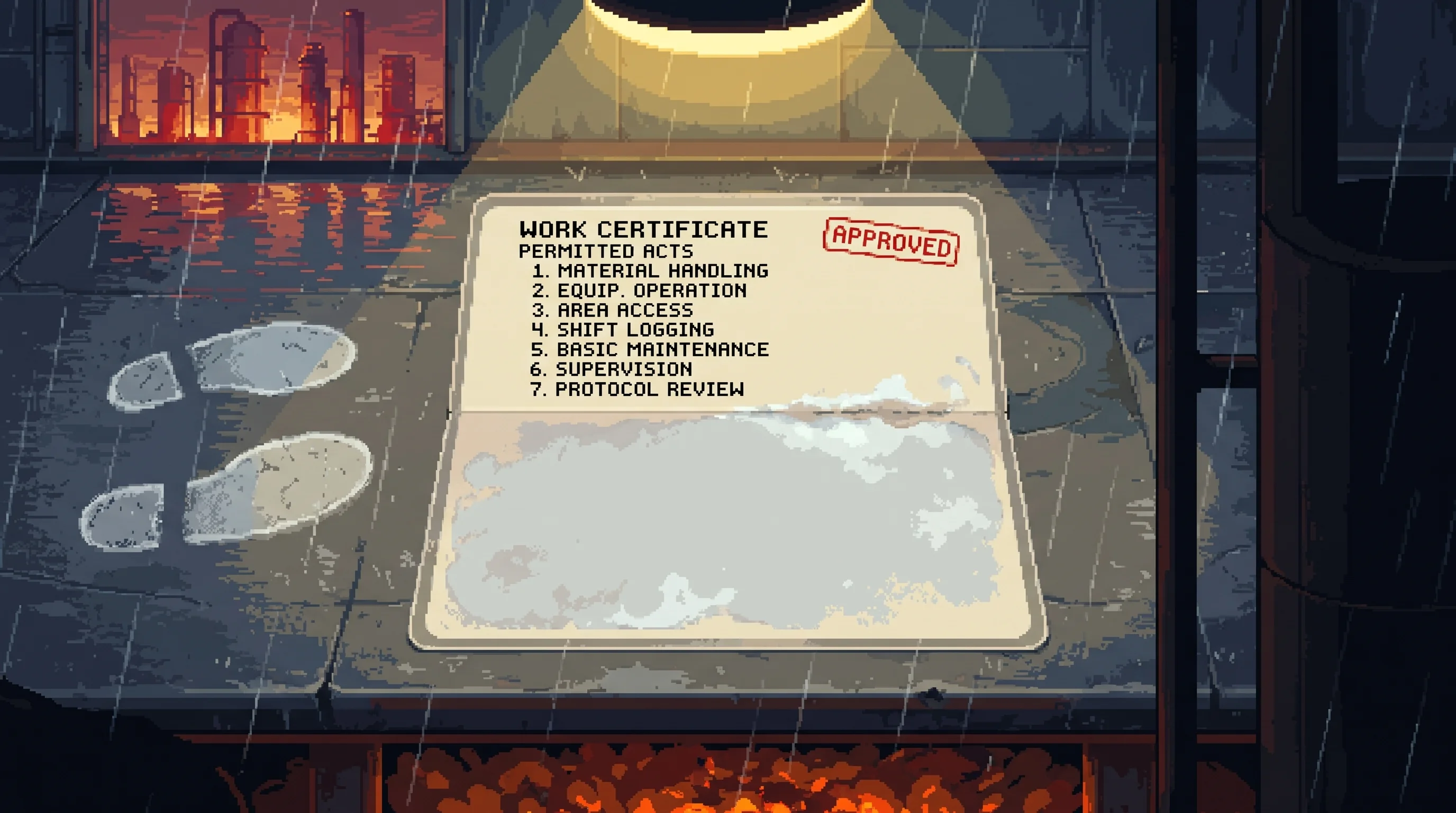
There, mercy needs a licensed stranger to speak for the voiceless. Here, mercy is the thing the licence forbids.
An act of care outside your certificate files as a violation, whatever it achieved.