
Hardshell Technology
Hardshells are modular protective gear sets: rad cloaks, breathers, thermal layers
Overview
Hardshells are modular protective gear sets — rad cloaks, breathers, thermal layers — worn by anyone traveling the Neon Rail or working in tunnel conditions where the atmosphere has opinions about whether you should be alive.
A standard kit includes three components. The rad cloak is a radiation-reflective outer layer. The breather is a filtration mask for air that would otherwise qualify as a chemical weapon. The thermal layers handle insulation in both directions, because the Rail's environment can't decide whether it wants to freeze you or cook you and frequently attempts both within the same kilometer.
Quality ranges from salvaged military surplus — pre-Cascade hazmat gear, functionally superior to anything manufactured in the thirty-seven years since — to improvised assemblies of scrap polymer held together by adhesive and optimism. The best hardshells are invisible: you forget you're wearing them until you take them off and realize the air has texture. The worst are claustrophobic, vision-limiting, and degrade with every exposure, which is the only kind of exposure they get.
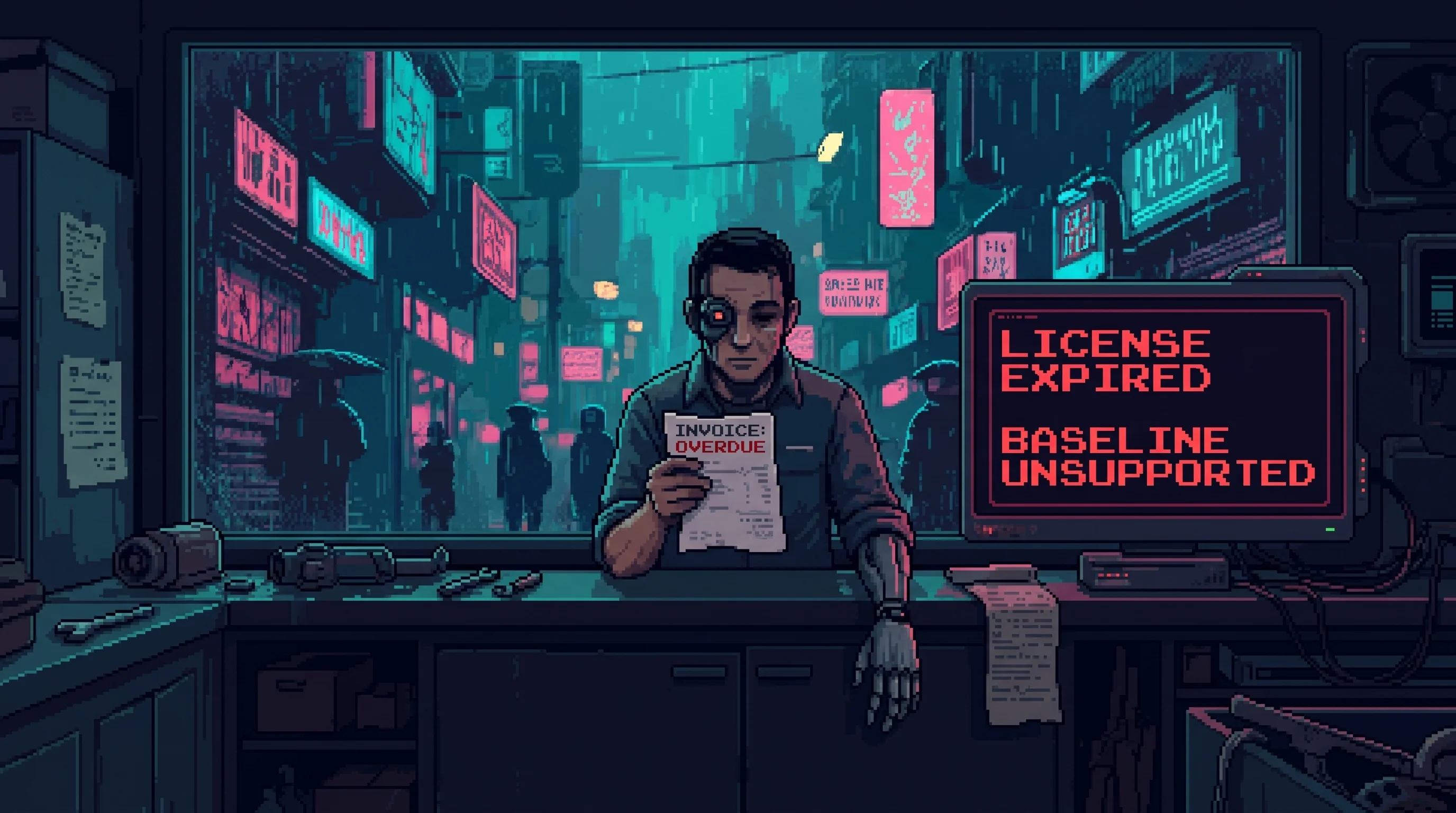
Ironclad Industries holds the materials patents on post-Cascade reflective composites but has never manufactured a consumer hardshell line. The margins are better on construction alloys. The result is a protection market served almost entirely by scavengers, black-market fabricators, and Rail stop vendors whose pricing model can be summarized as: your breather filter is at 40% and the next stop is nine hours away. What would you pay?
The answer, historically, is whatever they're asking. Median markup on replacement breather filters at tunnel-adjacent stops runs 340% above Dregs street price. Thermal layers sell at 200%. Rad cloaks — which degrade fastest and fail most catastrophically — average 510%. These numbers have been stable for years. Nobody is gouging. This is the equilibrium price of not dying, and the market has found it with the efficiency that markets always do when one party is desperate and the other party has inventory.

Degradation & Replacement
Rad cloaks use layered reflective material to deflect ionizing radiation, effective against the rad pockets that form where pre-Cascade waste has concentrated in tunnel low points. Each exposure strips reflective capacity. A military-surplus cloak rated for 200 hours of moderate exposure will test at 60% effectiveness after 120 hours — the degradation curve is not linear, it's exponential in the final third. Travelers who track their exposure hours survive longer than travelers who check their cloak "when it feels thin." The cloaks do not feel thin. They feel identical at 90% and at 30%. The difference is measurable only by equipment most travelers don't carry.
Breathers filter particulates and chemical contaminants, essential in sections where industrial runoff, biological decay, or the Trench's unidentified organic compounds make the air something other than air. Filter replacement is the most common maintenance task and the most commonly deferred. A saturated filter still allows breathing. It just stops filtering. The transition from "functional protection" to "decorative face covering" is gradual enough that 23% of breather-related health incidents involve filters that the wearer believed were operational. They were. They were just no longer filtering anything.
Thermal layers handle the temperature extremes — deep-tunnel cold that drops below negative twenty, above-ground summer corridors that exceed fifty degrees. Physical damage from tunnel crawling, barrier crossings, and the general violence of Rail travel reduces insulation integrity. Patching works. Patching a patch works less well. The average thermal layer in active Rail use has been repaired 4.3 times. After the sixth repair, the garment's insulation rating is approximately equivalent to wearing two shirts.
Replacement sets must be carried as spares or purchased at stops. Experienced Rail travelers carry at least one backup breather filter and one spare rad cloak section. Inexperienced travelers carry confidence.
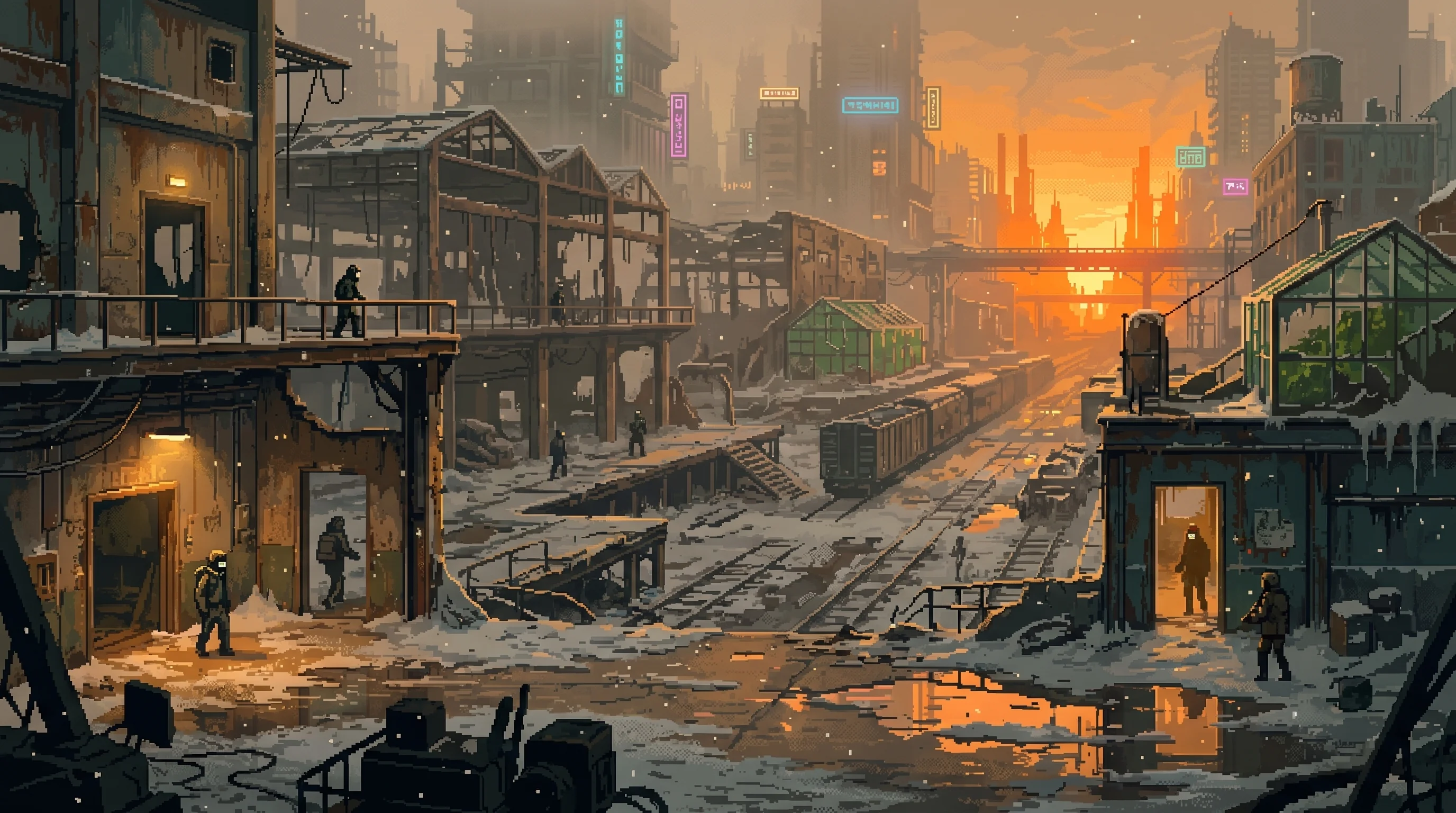
The protection market has a source, a threshold, and one place that fights it. The composites are born at the Slagline — the outer discard band of Ironclad's Ring, where the offcuts of the reflective-composite patents Ironclad holds and never productized are dumped as slag. They are sold at the Southern Shoals, the last honest waystation before the southern dead zone, where a filter at 40% and the next stop nine hours away is not a metaphor but a purchase. And they are finally measured — the one thing the market prices you for not doing — at the Unwinding Clinic in the Berkeley ruins, where a researcher collective audits cloaks for the degradation that feels identical at 90% and 30% and hands the runner the number instead of selling it back to them.
Insufficient hardshells plus harsh conditions equals accelerated health decline
The Salvage Spiral
The hardshell is the Upgrade Treadmill's cruelest variation, because it does not merely trap you — it measures you against itself, and the measurement is exponential.
The Spiral's seventh mechanism, Perceptual Maintenance, describes how neural interface firmware lets experiential resolution degrade ~0.1% daily — imperceptible day to day, devastating across years — until food loses nuance and faces lose specificity and the world becomes category labels. The augmented pay Helix Biotech's Fidelity Suite ¢14,000 a year to temporarily reverse it. The hardshell degrades the same way: invisibly, until the threshold, then catastrophically. A rad cloak "feels identical at 90% and at 30%." A saturated breather "still allows breathing. It just stops filtering." The Rail Runner is buying back a degradation they cannot perceive in time, exactly as the augmented executive is — except the executive's deficit was manufactured by a corporation that monetized the cure, while the Runner's deficit is the plain fact of entropy, monetized by whoever has inventory when the filter hits 40% and the next stop is nine hours away.
That is the Salvage Spiral with no designer. Ironclad Industries holds the materials patents on post-Cascade reflective composites and has never built a consumer line — the margins are better on construction alloys — so the protection market belongs to scavengers and black-market fabricators who have found the equilibrium price of not dying "with the efficiency that markets always do when one party is desperate and the other party has inventory." 510% on rad cloaks, 340% on breather filters, 200% on thermal layers. Nobody is gouging. This is just what a survival subscription costs when the vendor is the only thing between you and an atmosphere with opinions about whether you should be alive.
And the hardshell teaches the treadmill's grimmest arithmetic: the protection is itself a degrading subscription, and the thing it protects you from is the same thing degrading it. Every rad-pocket crossing the cloak saves you from strips its reflective capacity. Every barrier you survive brings the next purchase closer. This is why "experienced Rail travelers carry at least one backup breather filter and one spare rad cloak section. Inexperienced travelers carry confidence." Confidence is the cheapest hardshell on the market and the only one that filters nothing.
Ironclad Industries holds the materials patents on post-Cascade reflective composites but has never manufactured a consumer hardshell line
Affiliated Entities
- The Neon Rail: Hardshells are standard survival equipment for Rail travel — rad pockets, EM storms, toxic atmospheres, and temperature extremes all degrade gear faster than most travelers budget for
- Ironclad Industries: Holds materials patents on post-Cascade reflective composites; has declined to enter the consumer hardshell market, leaving protection to salvagers and black-market fabricators
- The Dependency Spiral: The hardshell is the Upgrade Treadmill's Salvage mechanism — protection sold as a degrading subscription, the equilibrium price of not dying found by a market where one party is always desperate
Visual Identity
- Color Palette: Military-surplus olive (#556B2F), reflective silver (#C0C0C0), breather-mask dark (#2F2F2F)
- Key Visual Symbol: A hooded figure in layered protective gear, breather mask catching light, rad cloak billowing in tunnel wind
Quality ranges from salvaged military surplus (excellent) to improvised scrap (marginal)
Rad pockets and EM storms degrade hardshells — replacement sets must be carried or purchased
Connected To
Supporting Connections




—