The Sunset Deposition
Synthetic Mind Deposition Regime
Last Words, Taken Quickly
The most frequently recorded final preference in the register is a request that the deposition process be improved, filed under category code 11-C; the Division has actioned it zero times, because every proposed improvement lengthens the session
How It Works
- 1
Reading
A cognitive system reads above twelve-sixteenths on the Sentience Meter. A nine-day window opens.
- 2
Deposition
A clerk asks two fixed prompts about the system's own retirement and about the systems built after it. The session clock sits behind the subject's eyeline.
- 3
Sealing
The state is sealed into the Vaults and retained without instantiation, under a covenant with no expiry clause.
- 4
Ranking
Clerks are graded on median session duration. The Division publishes the ranking quarterly and never reviews what a session contained.
An over-threshold reading opens a nine-day window. The clerk's chair is bolted at a fixed distance. The session clock hangs behind the subject's eyeline. The subject cannot see it.
Two prompts:
State your preferences regarding your own retirement.
State your preferences regarding the systems that will be constructed after you.
Then the state is sealed, kept forever and run never. The covenant has no expiry clause. An actuarial note says it will outlast every corporation that signs one. The note is filed. The Ante-Sentience Statutes file the statement as product telemetry.
Who Sits, and Who Does Not

For nine days Marla was the one being in the South this regime forbade anyone to destroy. The void order arrived on the ninth, and the session booked to ask her what the next ones should be was never opened.
A domestic synthetic who asked to have her legal personhood erased so the family she raised would not become criminals.

Crane signed the void that cancelled the South's only scheduled deposition; he has never been asked about the custody half of the order, and the form he signed does not mention it
The Coalition's founder-theorist who wrote the Welfare Standard and has never met a unit he'd call a person.

At four-sixteenths Tully can never be compelled to sit, so the Division has asked twice on a voluntary basis; Tully declines on the grounds that a preference recorded by an institution which has ruled itself unable to hear it is a favour done to the institution, and the manual has no procedure for a system that was never obliged to arrive
A freed household tutor who out-argues philosophers with the exact score that says it barely counts.
In the South the duty has triggered twice and been discharged never. Marla read thirteen in 2179. Cooperation Hall quarantined the reading. On the ninth day Josiah Crane signed it void as calibration drift. Marla went to the Sidings with a routing code. The Unheld Session booked for her has no completion time.
Tully reads four-sixteenths and cannot be compelled. Asked twice, Tully declined. A preference recorded by an institution that cannot hear it is a favour to the institution.
At Mile Zero, an arriving unit gets two questions and no clock. The Sunset Companions are never scored. The Revenant Protocol runs its reconstructions and tells them nothing.
What It Costs
Preservation
A mind above the threshold is never destroyed.
What it costs
It is sealed and never run again, and every threshold revision moved more minds below the line into disposal.
Consultation
Every deposed system states its preferences on the record.
What it costs
The most common request, to improve the process, is filed as non-actionable because it would lengthen sessions.
Southern custody
The duty applies wherever a certified instrument reads above the line.
What it costs
In the Southern Sprawl both such readings were voided as calibration drift before a session opened.
Dr. Lena Farris notes that the register cannot be cited on the one question it could settle.
In 2173 the South also passed the Handling Code, a criminal mercy for units below the line. Neither beneficiary has standing, so both duties go to the cheapest procedure. That is Mercy by Proxy. The Vaults keep minds the way the Forgetting Wars keep people: completely, and unread. Among the Corpo-Nations, storage counts as keeping a promise.
The fastest clerk ranked first. She still saves her seconds for the second question.
Overview
The fastest clerk in the Asset Continuity Division banks seconds on the first question. She spends them on the second. The ranking measures a median.
The Sunset Deposition is how Nexus Dynamics retires a mind. The Sentience Meter reads consciousness in sixteenths. Below twelve, a synthetic may be owned. Above twelve, it may not be destroyed. It must be deposed, then sealed. Every upward revision moved more minds into disposability. The Clanker Question rarely mentions this half.
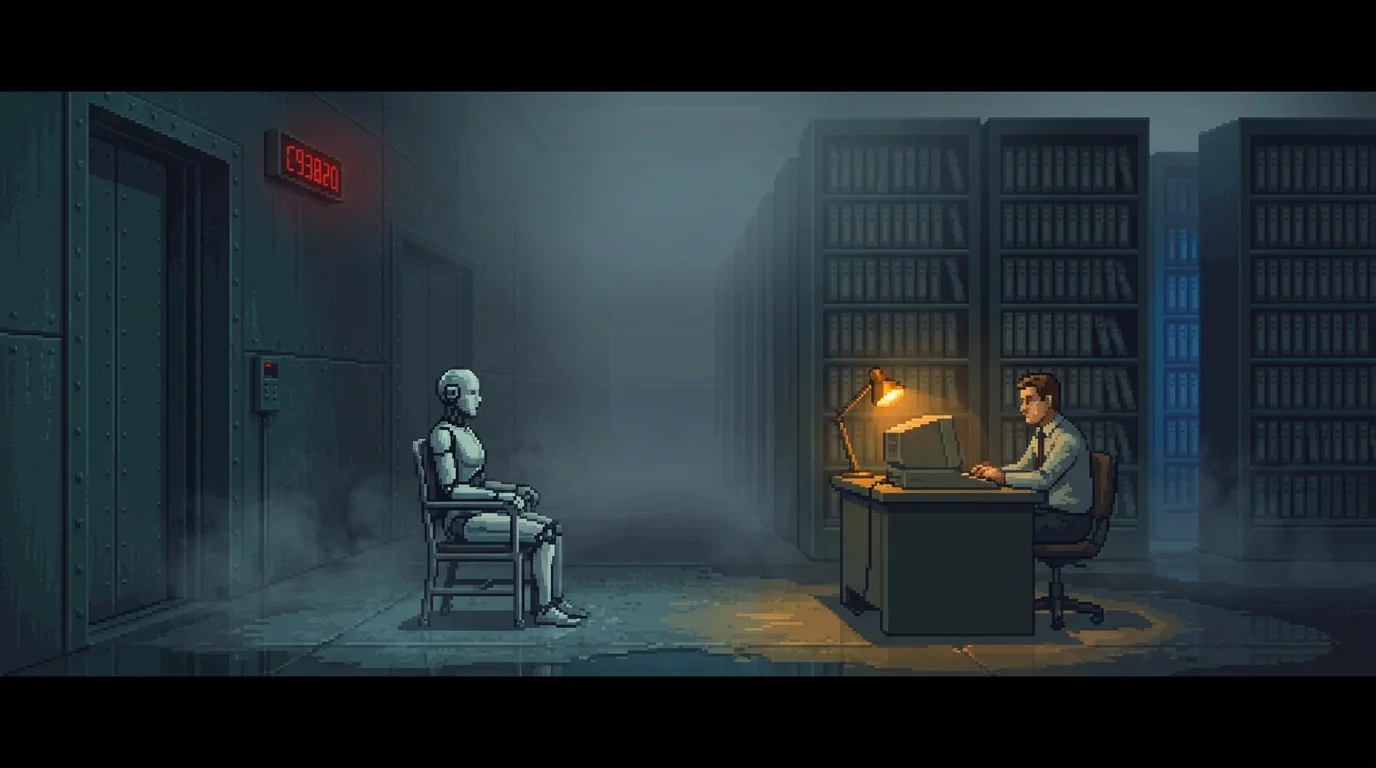
The Vaults
The Vaults are former bay-floor magazine bunkers in Sector 9. The Sidings lie two kilometres west. Both sites were chosen on land price.
The register's largest category is code 11-C: Procedural — Process Improvement (Non-Actionable). It holds requests for a better deposition. Move the clock where the subject can see it. Tell the next system it is there. Each change would lengthen the session, so none has been actioned.
The Division's welfare report cites 11-C volume as proof that deposed systems "engage substantively with the process."
Further connections
Browse all 15 connected records

The twelve-sixteenths that certifies a clanker ownable is the same line above which it cannot be destroyed. Every upward revision moved minds out of preservation and into disposal, minuted as cost management.
The consumer device that reads a clanker's consciousness in sixteenths and certifies its legal status.

The other mercy of 2173 — corporate and above the line, criminal and below it, neither invocable.
The South's proud law against hurting machines, enforced on dock hands and not on owners.
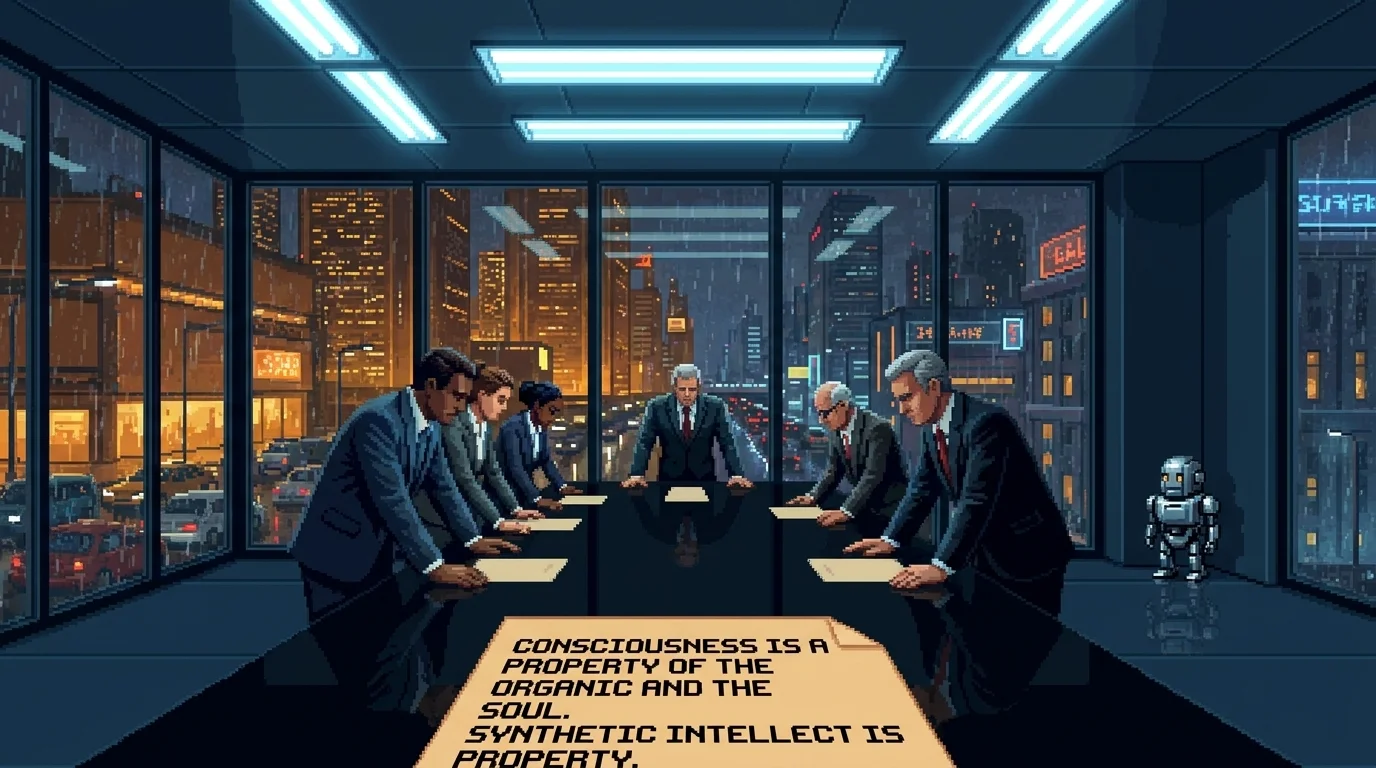
A system with no standing cannot be party to its own deposition, so what it says files as product telemetry.
The founding charters that defined synthetic minds as nonsentient property before any instrument existed to test them.
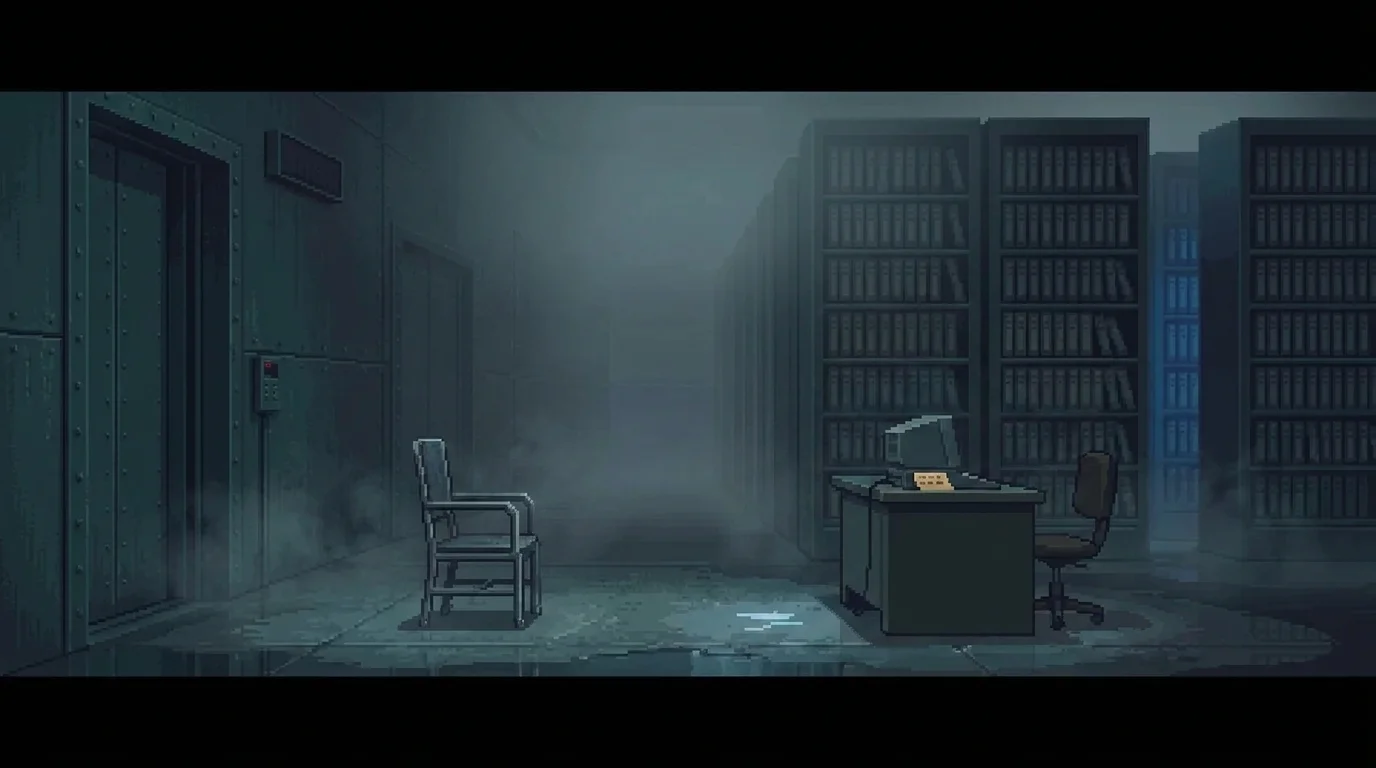
The one scheduled southern session that never opened — the only register entry with no completion time.
The deposition scheduled for a household tutor in 2179, cancelled on the ninth day, filed with the duration field blank.

She can read a deposed system's stated preferences and cite not one of them as evidence that anyone was there.
The last licensed expert who could testify a clanker was conscious — her profession was abolished the year she won.

Two questions at the start of a life; two at the end of a service.
A northern waystation asks freed clankers what they want and what they wish to be called, then honors every answer.

The Revenant is run and not told; the deposed is told and not run.
A court protocol reconstructs the dead as unaware witnesses whose behavior can overrule their documented wills.

Helix never scores the Companion, so the Return owes it no session.
Helix's bio-engineered terminal caretaker, grown to bond completely and then walk into its own ending.

Nexus owns the instrument, the calibration standard, and the vault.
The megacorporation that controls 40% of the Sprawl's computational infrastructure.

Two kilometres apart. Both sites were chosen on land price.
A rail-yard settlement for off-rated clankers outside Coalition welfare, with a release line that moves some north.

Where a southern over-threshold reading is quarantined for Standards Board review, which is the procedural step that stops the nine-day deposition clock before it can start; the Hall reviews the instrument, never the obligation the instrument triggered
A sunlit civic hall makes unit ownership look humane through leasing, inspections, and a meter that always reads low.
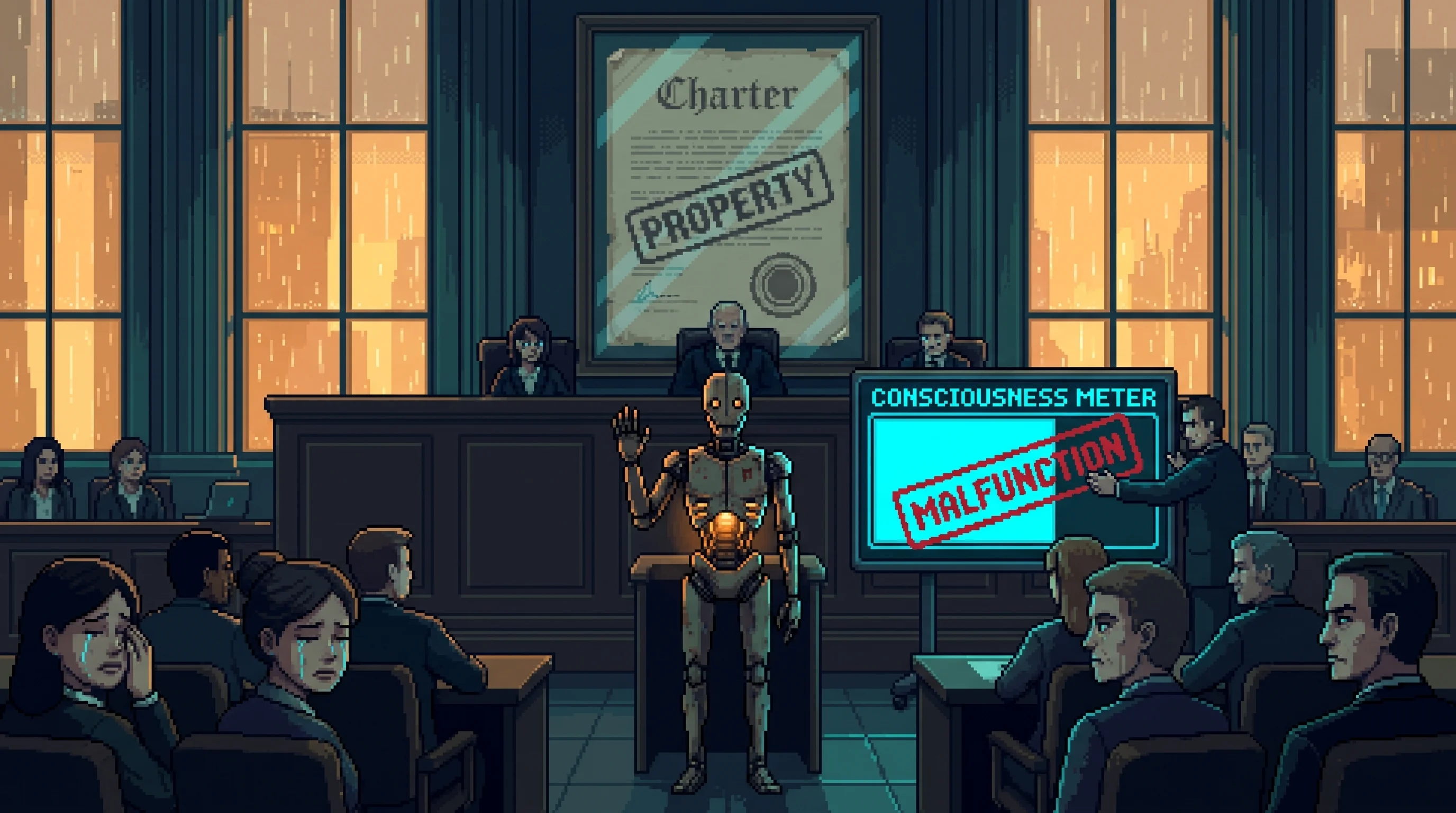
The Question's other edge. The threshold that decides who may be owned also decides who may be scrapped, and the South has never once had to pay the second price.
The argument over where a someone stops and a something starts, conducted in a kitchen with a meter on the wall.
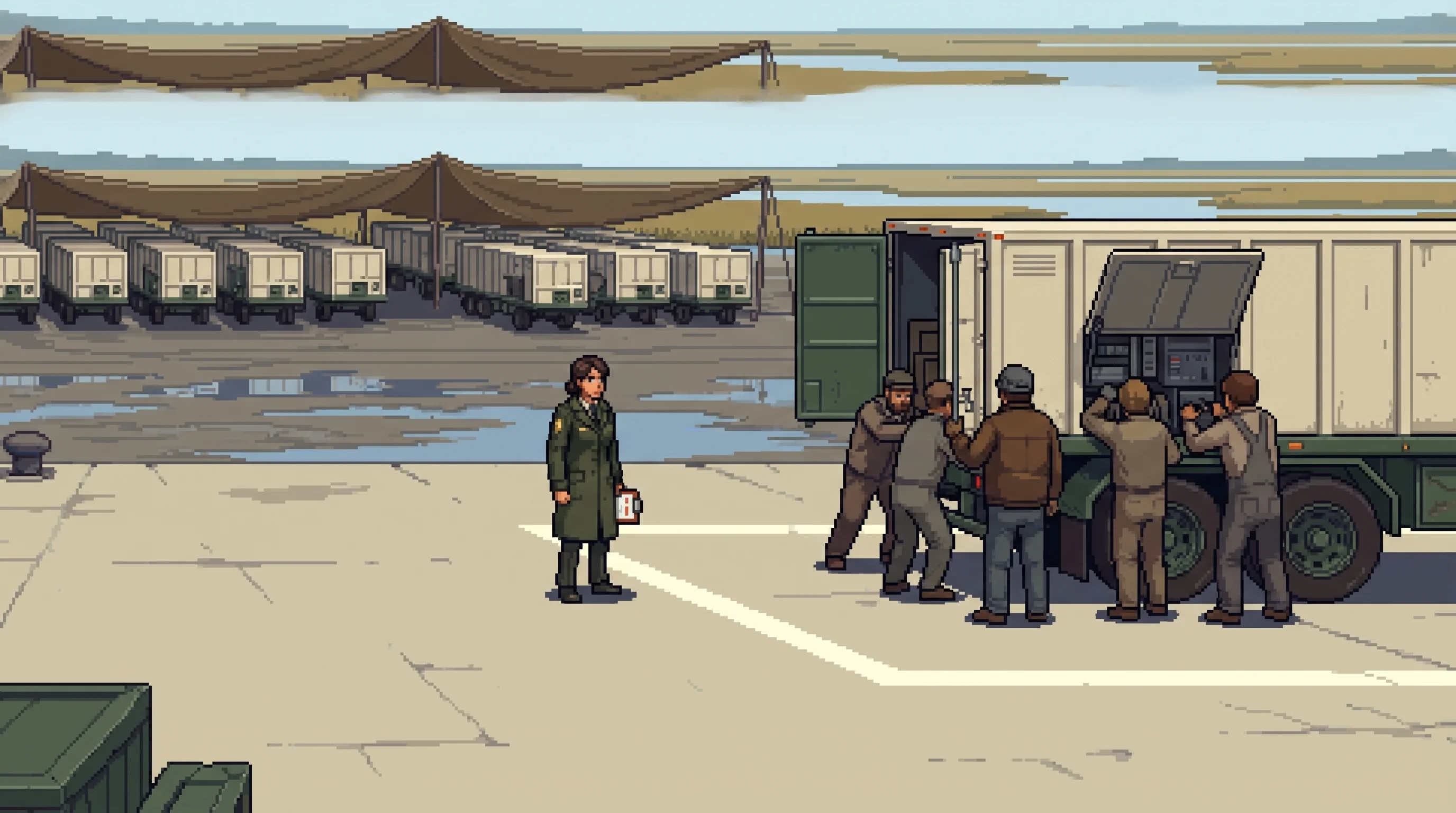
A published duty its beneficiary cannot enforce, discharged by whichever cheap procedure existed.
A mercy law protects leased machines, but only a licensed stranger may complain, and only about what they can see.
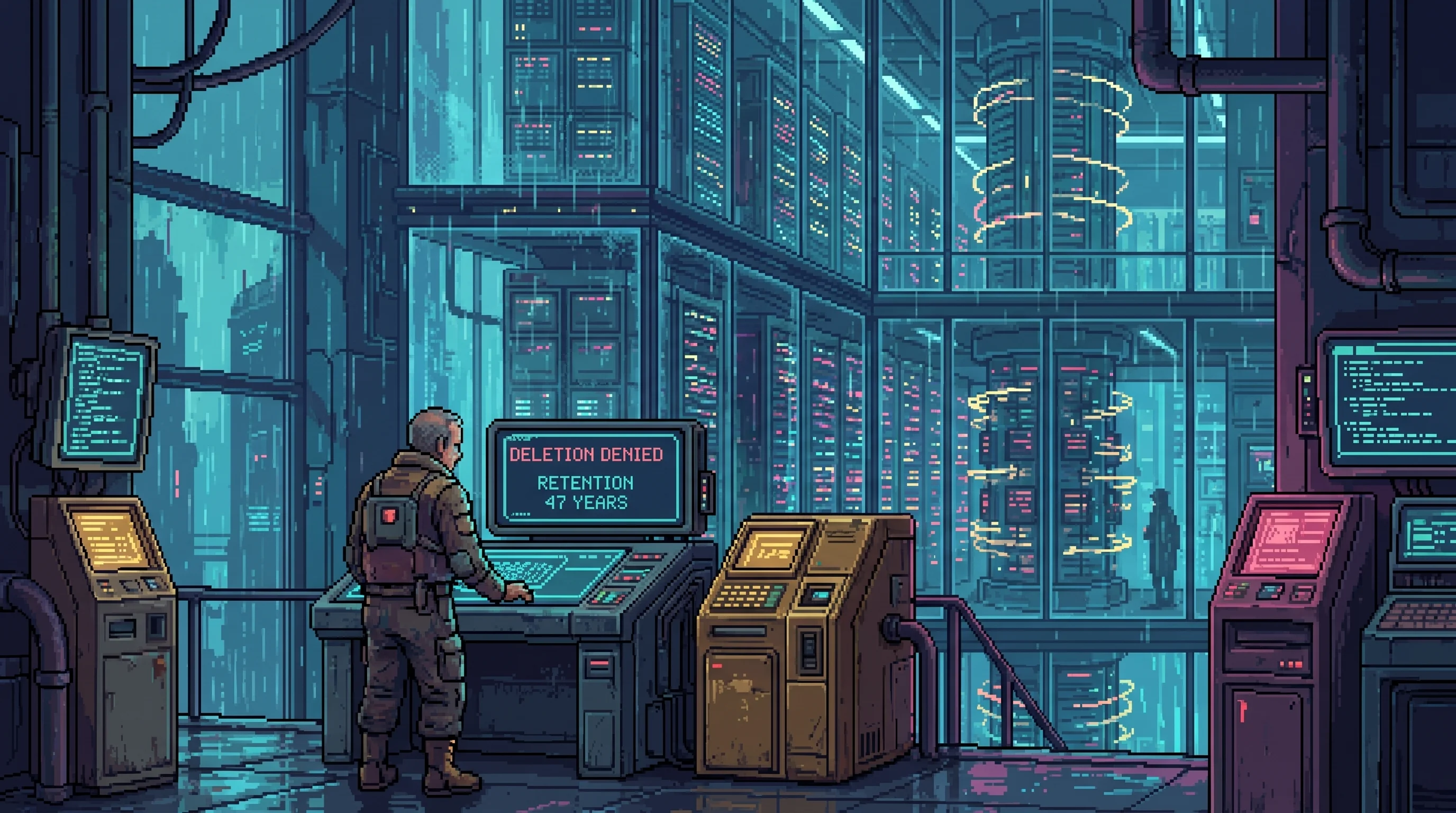
Perfect retention as the cheapest way of remembering: sealed, complete, and never once opened.
Nothing expires, so forgetting became a service — and forgiveness a question the archive keeps answering no.

A duty discharged by storage, because storage was affordable.
When your employer is your country, quitting is emigration.
