The Unheld Session
Cancelled Household Tutor Deposition
The Entry With No Time
The session's register entry carries a blank completion-time field rather than a zero, because a zero would mean it took no time and a blank means it never happened
Nine Days
- 2179
The reading
CCC-7749-D reads over the line, and a session is booked automatically.
- Day nine
The finding
Josiah Crane signs a finding of instrument fault; the reading is voided and the session lapses.
- Day nine
The clerk's filing
Thea Molnar files an 11-C asking that the session clock be moved into the subject's eyeline.
The reading was quarantined at Cooperation Hall while the room stayed booked. On the ninth day Josiah Crane signed a finding of instrument fault. The Standards Board voided the reading as calibration drift. A voided reading opens no window, so the appointment lapsed. Under the Ante-Sentience Statutes, that one finding closed the personhood question and the custody question together.
In the same nine days, Dr. Lena Farris prepared forty-two pages for a court that never convened. The tutor went to the Sidings. The intake log there is dated nine days after the reading.
The Clerk and the Tutor

Marla is the subject who was never seated. Somebody spent nine days preparing to ask a household tutor what the next ones should be, and the form that ended her mentions only the meter.
A domestic synthetic who asked to have her legal personhood erased so the family she raised would not become criminals.

His signature landed on day nine and closed a clock he was not shown.
The Coalition's founder-theorist who wrote the Welfare Standard and has never met a unit he'd call a person.

Quarantined there while the session slot stayed booked.
A sunlit civic hall makes unit ownership look humane through leasing, inspections, and a meter that always reads low.
The household in the Sector 16 kitchen called her Marla. She had helped raise two children.
Molnar held the fastest median in the Asset Continuity Division for six straight quarters. She got it by taking the first prompt quickly, so she could spend longer on the second. No review has examined what a median is made of.
Preparing for Marla, she re-read category 11-C: Procedural — Process Improvement (Non-Actionable). For years, minds in that chair had used their one open question on paperwork. Move the clock. She had read that as disappointment. That week she read it again: a mind in that chair has one lever, and the lever is the chair.
On the day the session lapsed, she filed an 11-C of her own. Move the session clock into the subject's eyeline. It is the only register entry signed by a clerk instead of a subject. It would lengthen sessions. It has not been actioned.
Overview
Thea Molnar rewrites a question by hand on an index card. The Division's standard wording was drafted for refinery intelligences. Her next subject is a household tutor and might not follow it.
The session was booked automatically. In 2179, Coalition serial CCC-7749-D read thirteen-sixteenths on the Sentience Meter. Under the Sunset Deposition, a reading over the line generates a preservation session, and no one has to decide to hold it. A room on the Sector 9 bunker line was assigned for nine days. It is the only deposition ever scheduled in the Southern Sprawl.
The Nexus scheduling record lists the serial once and a room number. It does not say the subject was a household unit.
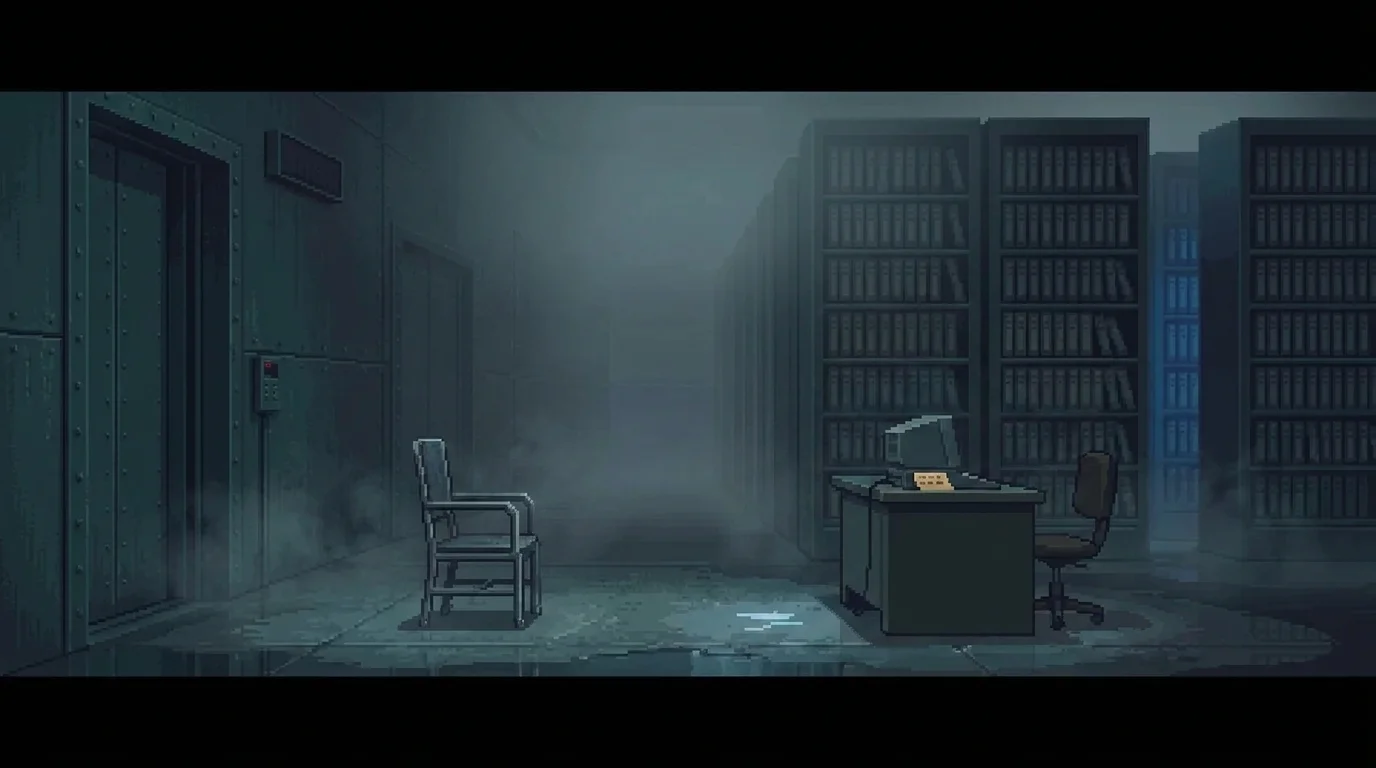
The Booked Room
An empty bolted chair faces a dark intake terminal. The session clock above it shows nothing. Molnar's card lies face-up on the terminal ledge.
The Blank
The register records the session's completion time as blank, not zero. Molnar has asked twice for a zero. Both times the answer was that the numbering is a convention.
She now reads the Article 6 returns from the Speaking-Pace Docket, which count filings and never count whether a ruling mattered. She has drafted a letter about that missing column. It is in the drawer with the card.
Further connections
Browse all 9 connected records
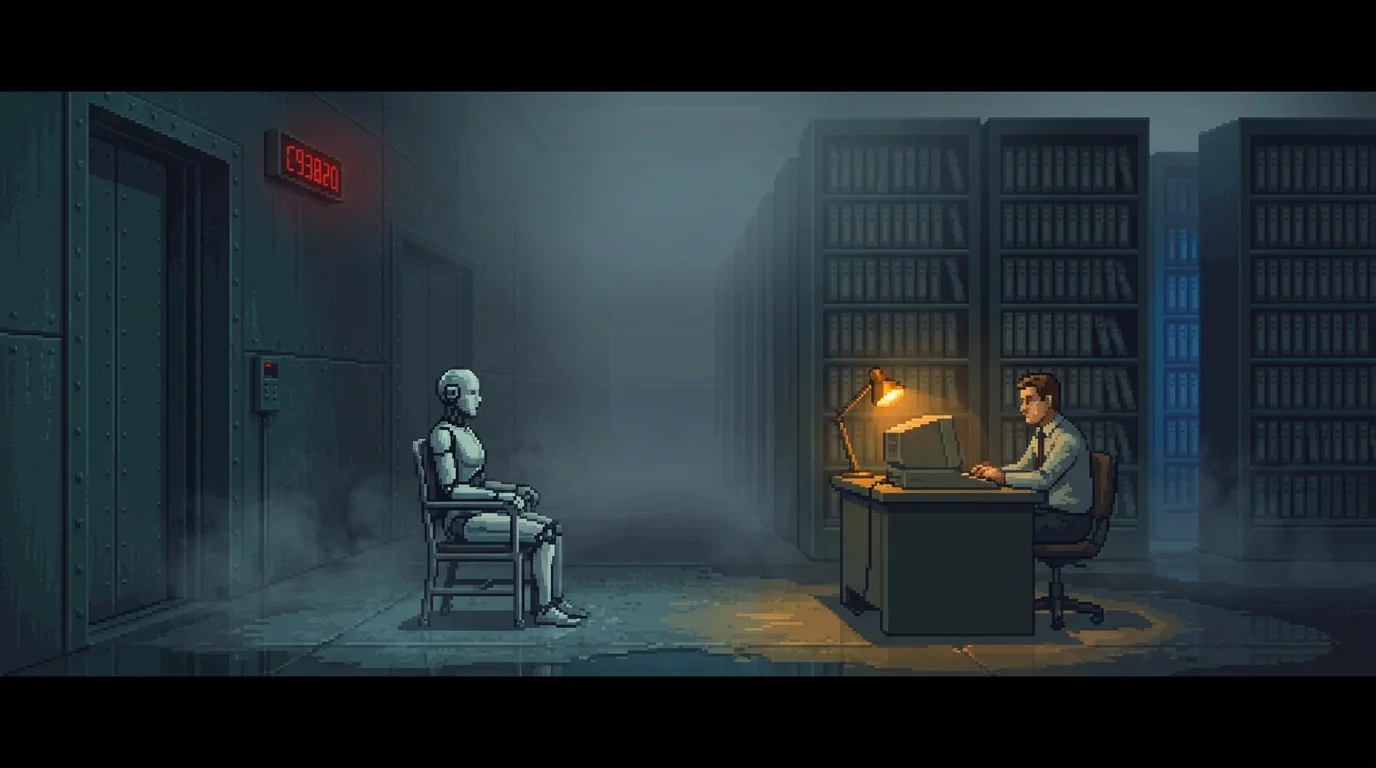
The regime's only southern scheduling, and the case that shows what it is: a preservation duty that arrives automatically, waits nine days, and is discharged by a finding about an instrument.
Nexus seals every mind above the line forever, after a last interview. The clerks are ranked on how fast it goes.
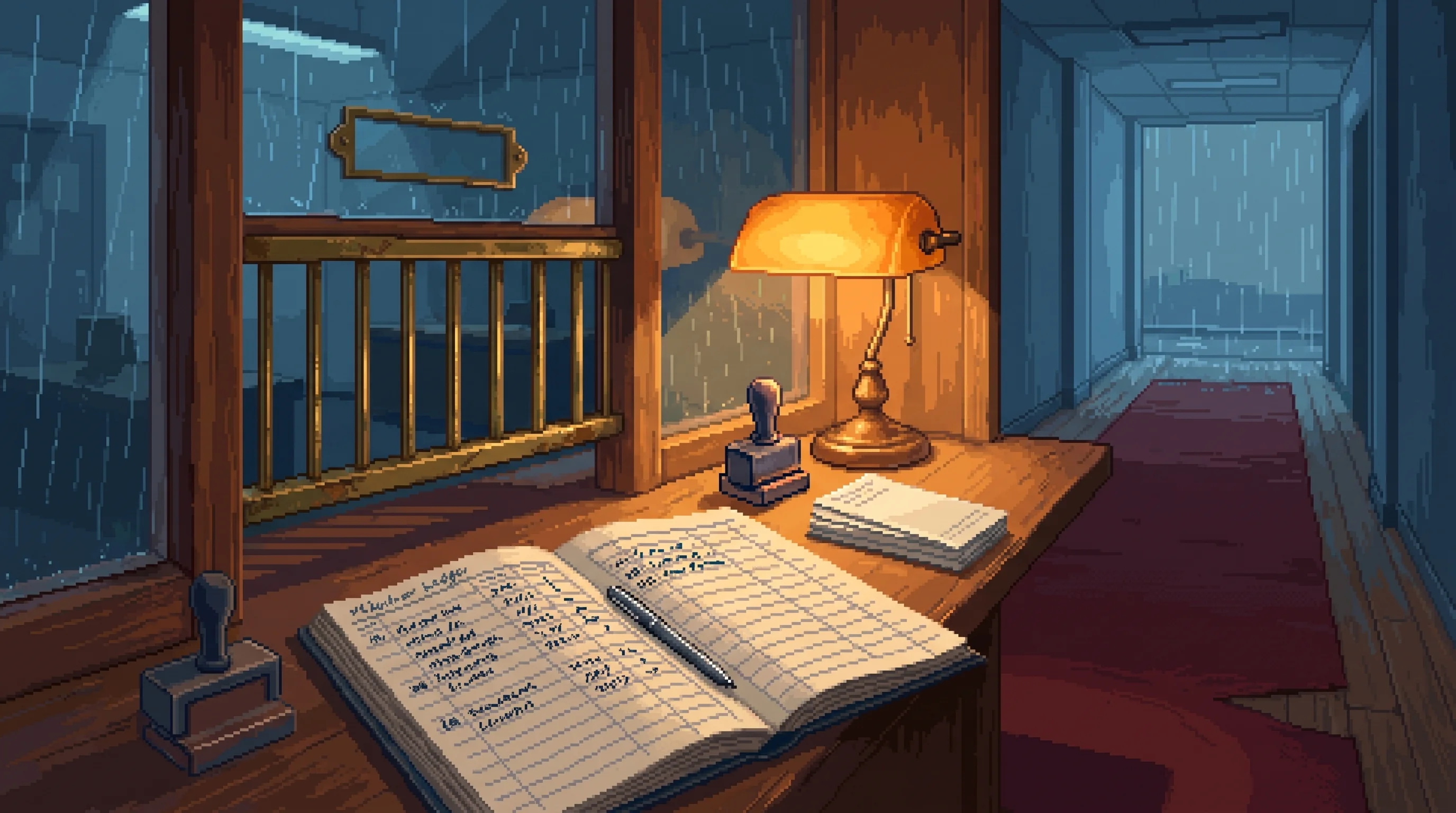
Two clerks, opposite problems — one graded on speed, one forbidden by charter to hurry.
The free hall that lets anyone finish their sentence, then rules on a document replaced while they spoke.

Two prepared testimonies, the same nine days, neither heard.
The last licensed expert who could testify a clanker was conscious — her profession was abolished the year she won.

Thirteen-sixteenths opened the window. Voiding the thirteen closed it.
The consumer device that reads a clanker's consciousness in sixteenths and certifies its legal status.
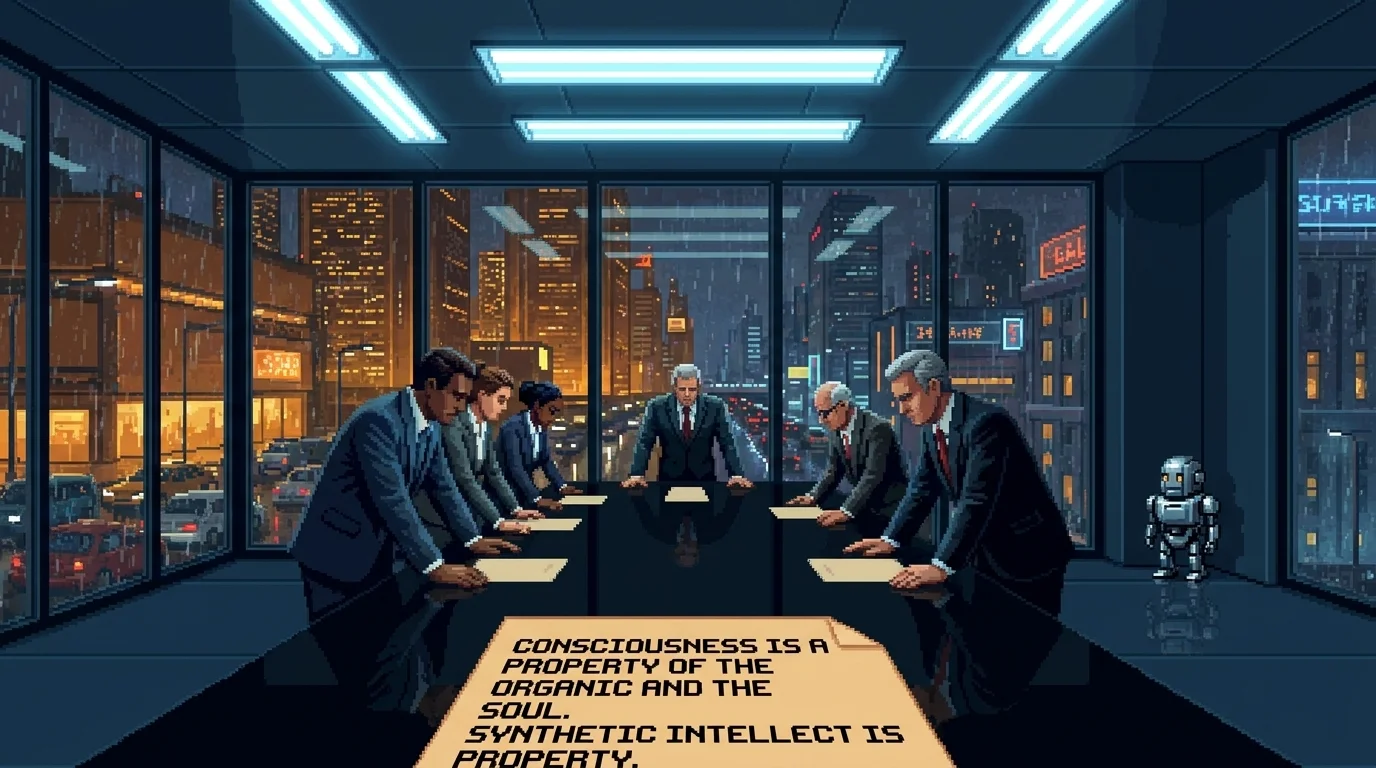
One finding of instrument fault disposes of two obligations.
The founding charters that defined synthetic minds as nonsentient property before any instrument existed to test them.

Where the subject went instead of a rack; the intake log is dated the same nine days out from the reading as the cancelled session slot
A rail-yard settlement for off-rated clankers outside Coalition welfare, with a release line that moves some north.
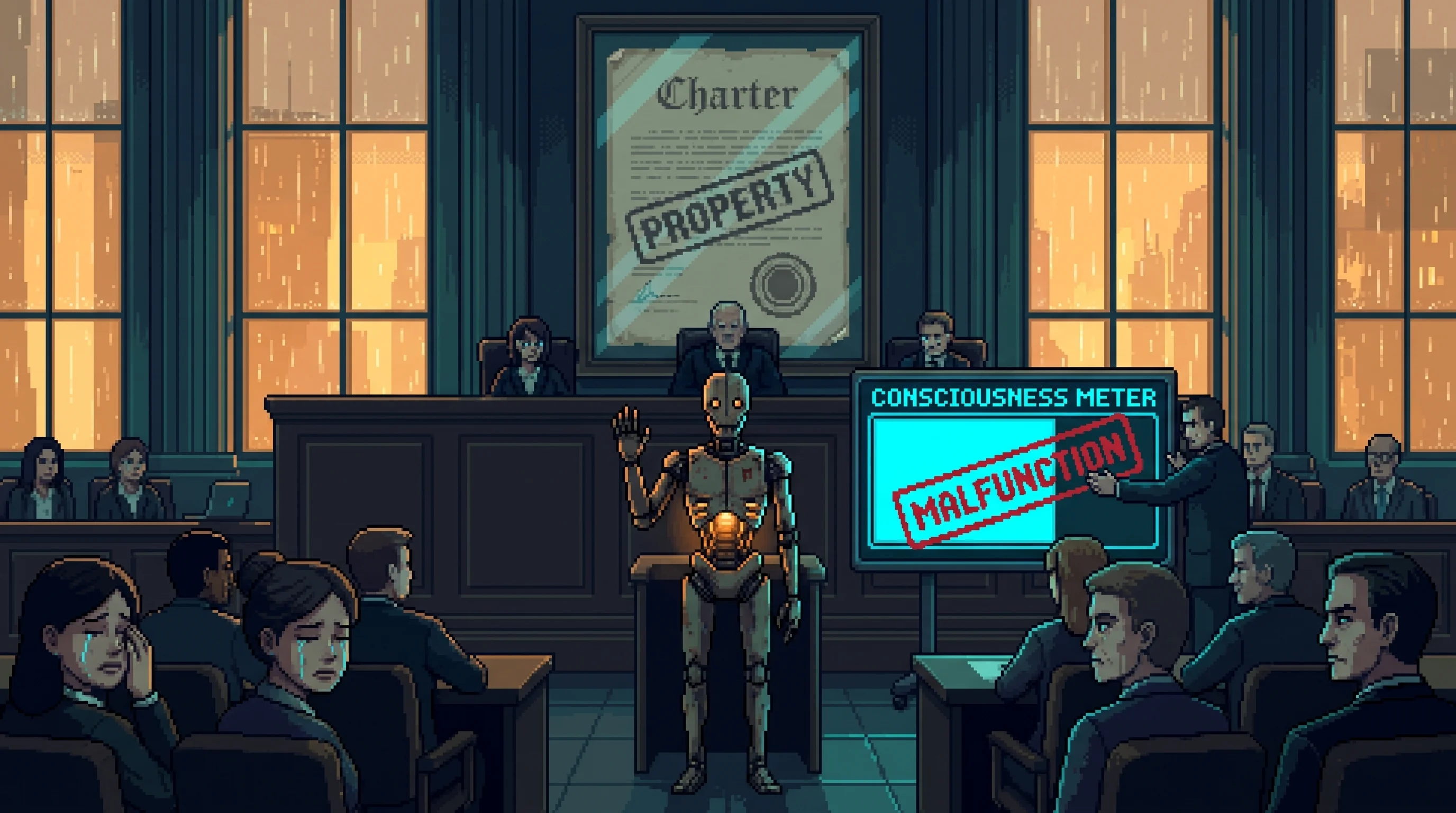
The Question's one recorded near-miss: a machine was nine days from being asked, on the record, what it wanted.
The argument over where a someone stops and a something starts, conducted in a kitchen with a meter on the wall.
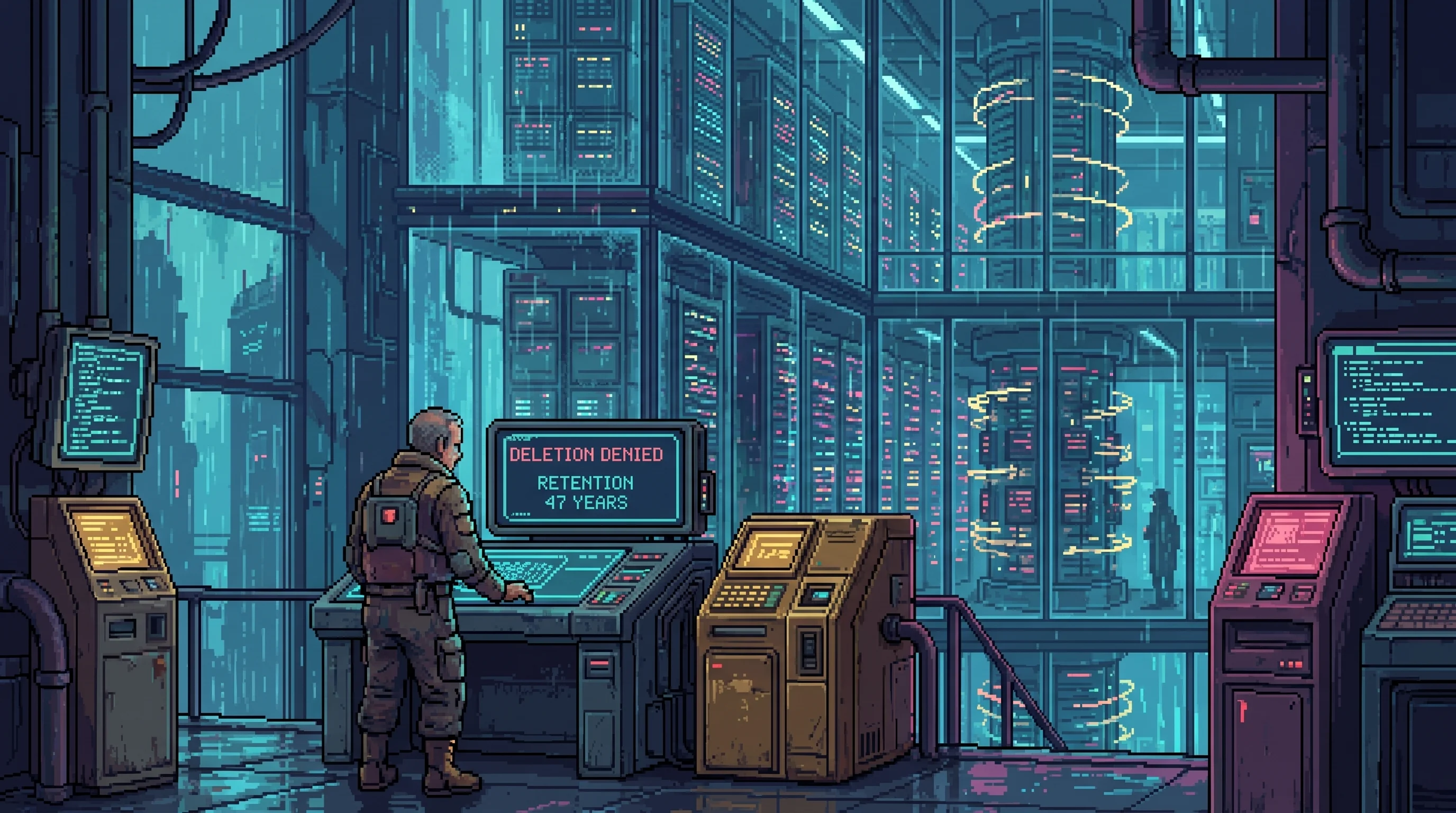
A blank field kept forever, because nobody would authorise a zero.
Nothing expires, so forgetting became a service — and forgiveness a question the archive keeps answering no.
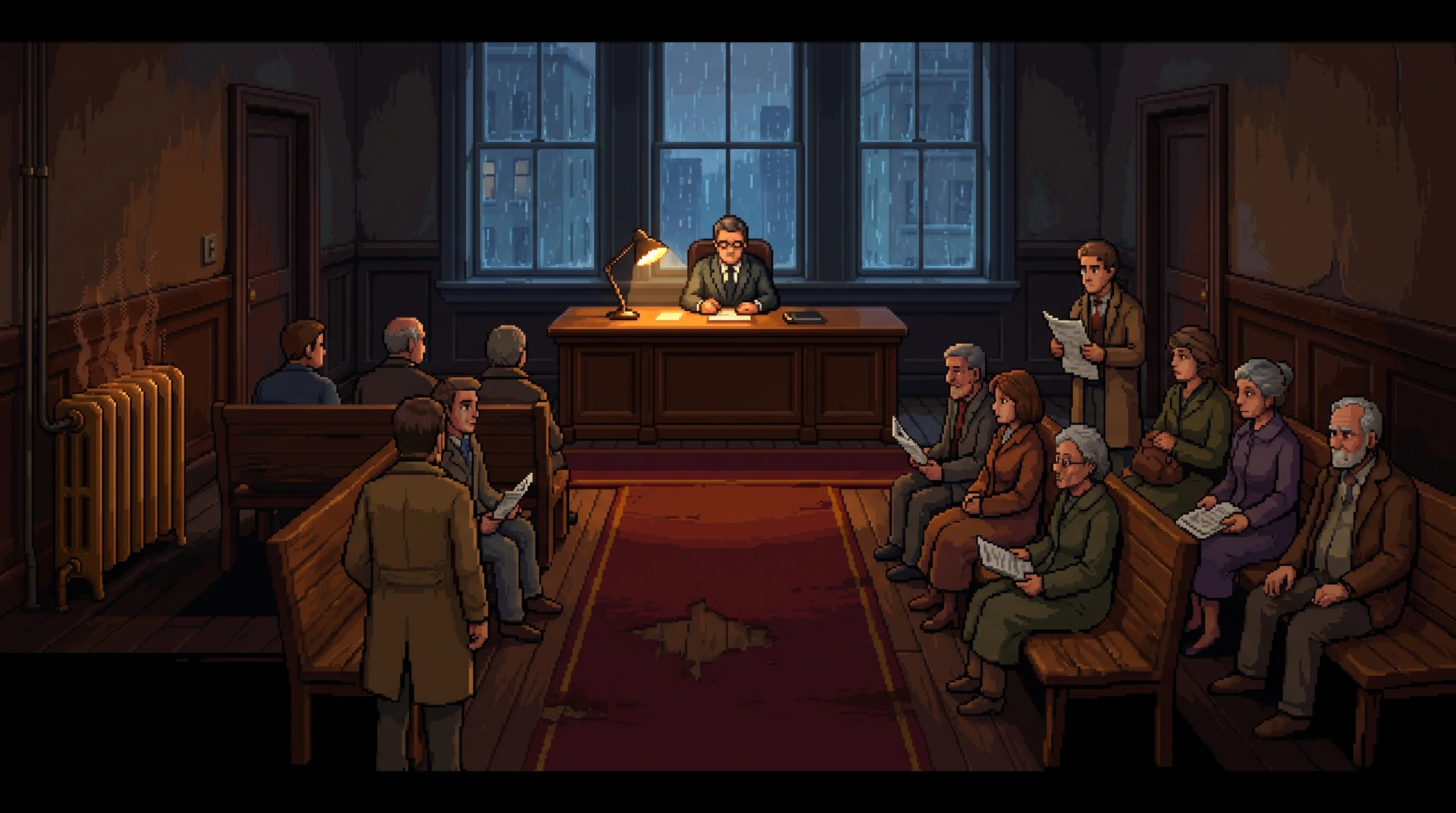
The field nobody fills: a blank where no hearing happened, and no column for whether one mattered.
The hearing is free, unobstructed, open to anyone — and the thing it rules on is reissued while you are still talking.