The Amber Lot
Overview
The Three-Week War stopped on Day 21 and was signed for on Day 24, and neither event settled the hardware. One hundred seven thousand tonnes of converted, stranded, or impounded machinery stood in seven sectors with no legal next state. The Treaty of Shared Infrastructure's demobilization schedule — deep in the two hundred five pages nobody quotes — said render it incapable of war. The litigation the war had seeded said preserve it exactly as it is. The Amber Lot is where the Sprawl has been obeying both orders at once since the summer of 2171.
The schedule specified a joint annex, ninety days, renewable. The siting committee needed land outside the seven devastated sectors, which were worth money again the moment reconstruction was priced. It needed land outside either belligerent's core territory, because neither corporation would park its evidence inside the other's fence. And it needed radio quiet, because the intake convoys included severed platforms whose authorization queues had not yet been pulled. The one thing everyone had learned by April was that you park a machine that answers signals where there are no signals. The Eastern Valley qualified on all three counts by being the same thing three ways: the direction the Sprawl does not transmit toward. The lot went in under the Sentinel, on old fenced flatland at the dry edge where the Sprawl gives out, and the first convoy logged through the gate on April 22, 2171.
Ninety days, renewable. The renewal is a one-page form, countersigned quarterly, and the fifty-second is on file. Disposition — the other form, the one that would empty the lot — has never been drafted, because disposition requires deciding what the machines are. Surplus can be sold. Evidence must be kept. Weapons must be unmade. Every machine inside the fence is all three, the three registries do not agree on the order of operations, and a decision would need a signature someone owns afterward. The renewal needs two signatures nobody remembers signing. Every quarter, the cheaper document wins.
MATERIEL CUSTODY ANNEX (JOINT) — ESTABLISHED UNDER SCHEDULE AUTHORITY, 2171. NO RELEASE WITHOUT BOTH REGISTRARS' SIGNATURES. TEMPORARY FACILITY.
— gate placard, repainted at every refit since 2171; all three lines, including the last
Conditions Report
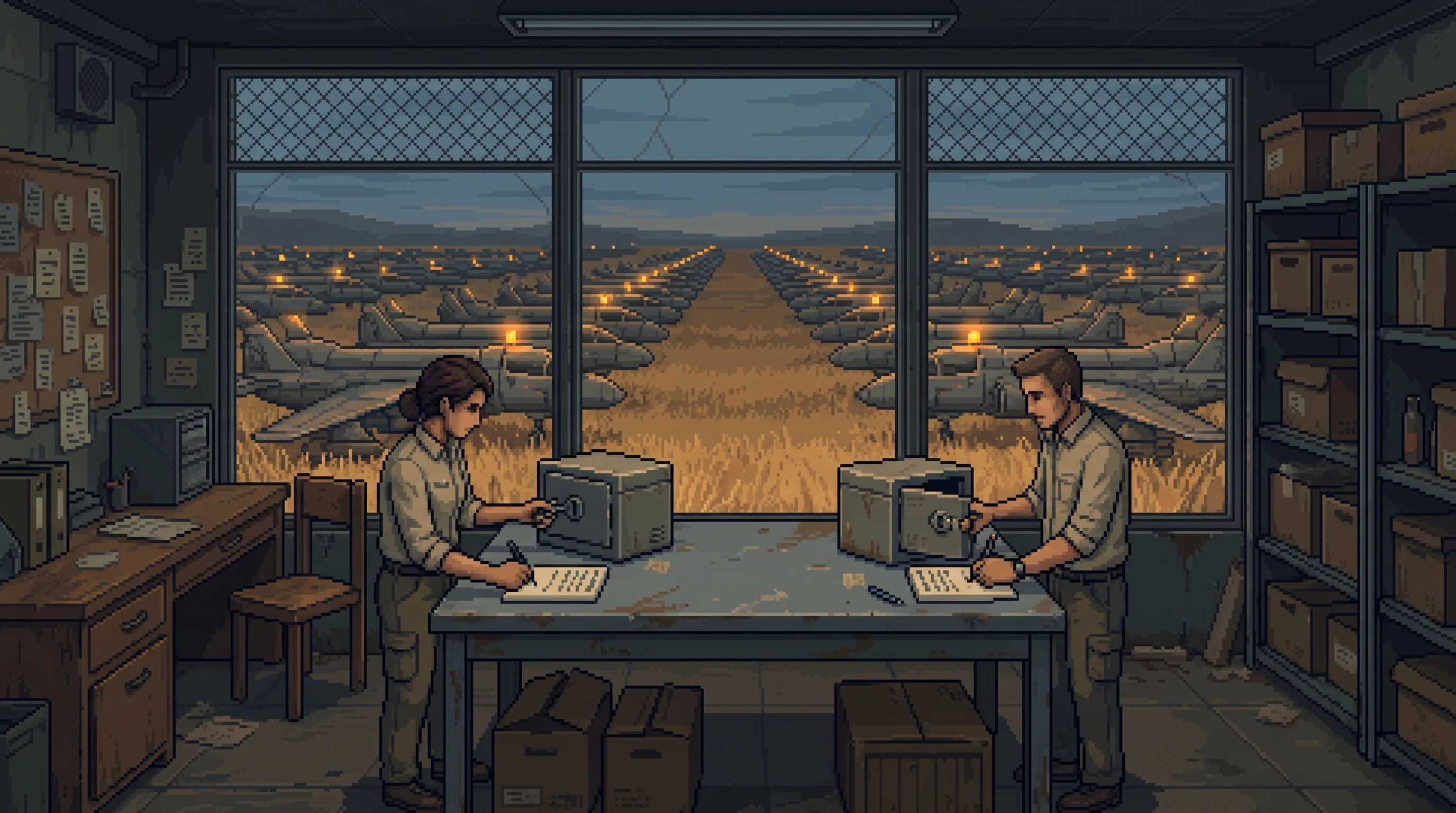
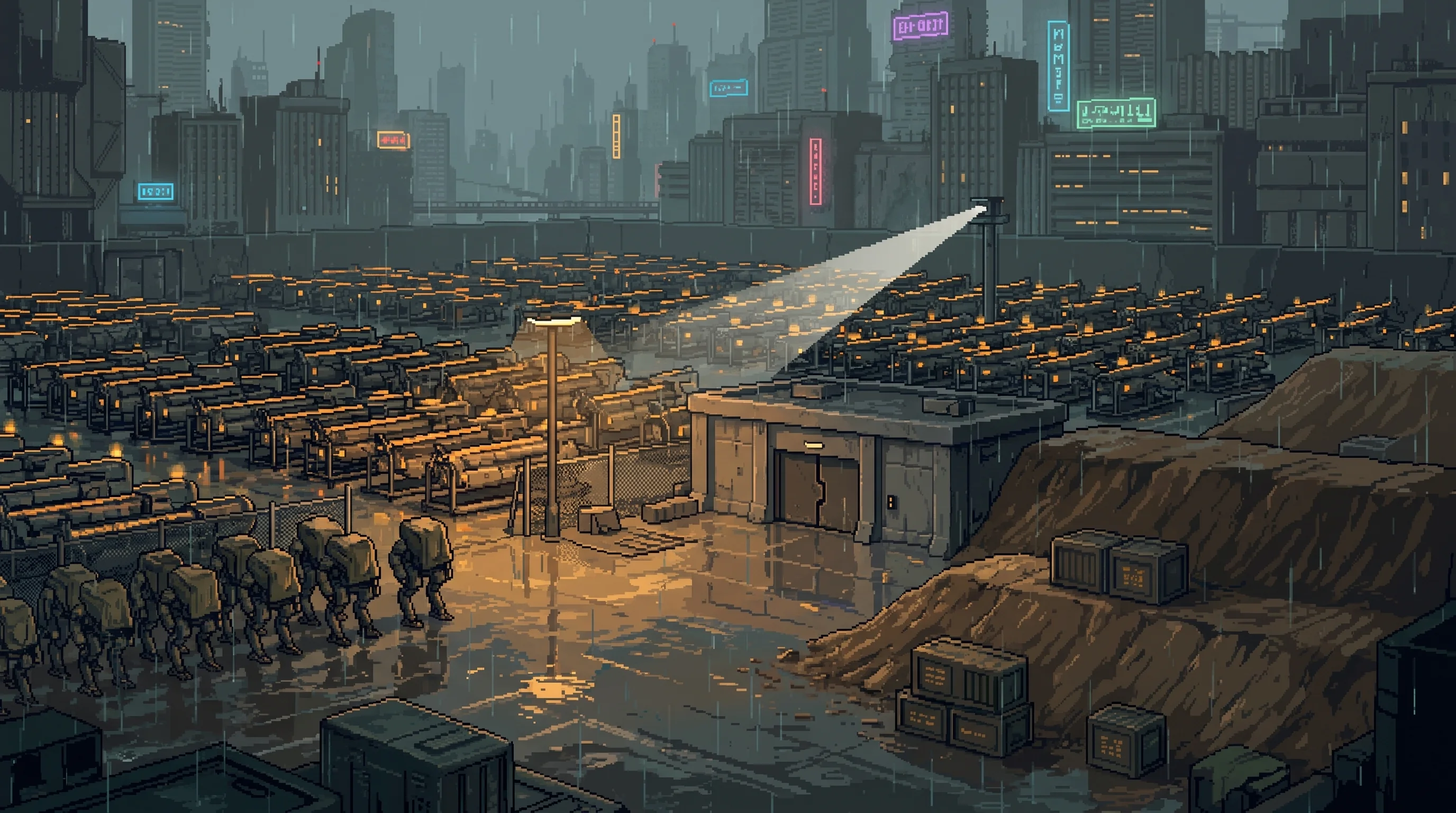
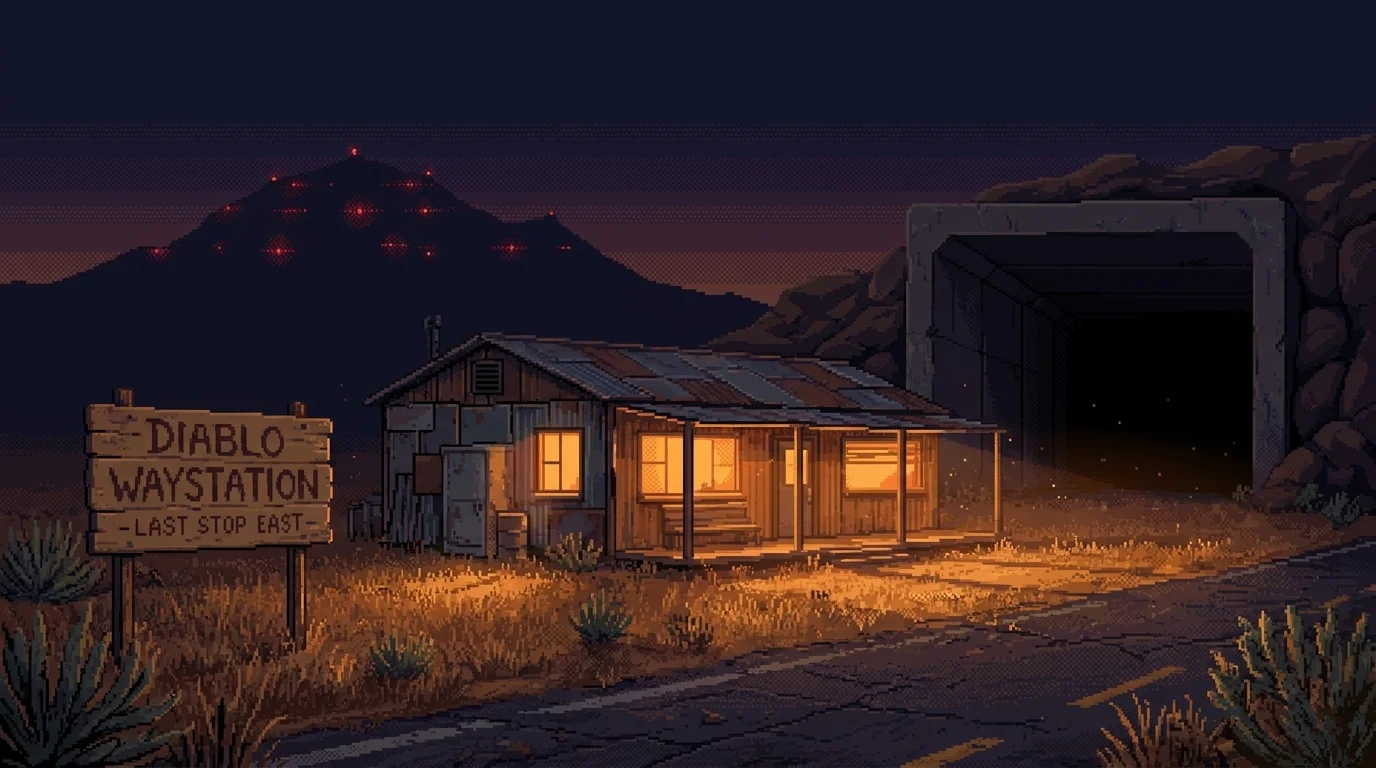
Dry valley flatland, double-fenced, three kilometers of wire around a cradle grid surveyed to construction tolerance — the layout crews were Ironclad, and it shows. Airframes rack wing-to-wing on steel cradles in lettered rows. The wrecked walking plant stands in its own rank at the north end, tarped to the knee. Nine earth berms hold the munitions crates. The evidence annex is the only concrete building: one story, two rooms, two locks whose keys live on different payrolls. Summer heat shimmers the ranks into water. Winter drops the tule fog down the valley and the watchtower logs the lot by lamp-glow alone. The intake ledger is kept on paper, by agreement, because paper was the one medium both registrars still trusted in 2171 and neither has proposed revisiting the question.
The Inventory
The airframes are the Hesitation's — the Overcast strike tier, 7,214 of them, the armed minority of the swarm the Sprawl learned to read by its underbelly lamp. The relay and spotter tiers sold clean in the 2173 surplus action and fly survey work over the Wastes. On clear days some of them pass over the lot that holds their armed siblings, which nobody on the ground finds as funny as it sounds. The strike tier sold in the same action, to an eastern combine, with delivery conditional on demilitarization certificates. A certificate requires the fire-control stack wiped. A wipe is spoliation while any litigation hold stands, and the war's litigation does not conclude; it accretes. Certificates issued in eleven years: zero. The buyer's deposit sits in an escrow that has outlived two of the lawyers who negotiated it.
So the airframes wait, and because platform memory wipes at power-down and every byte aboard is under preservation order, they wait powered. A powered airframe with something pending shows amber; that is the lamp's whole vocabulary. Each of these has exactly one item pending — its own transfer of custody, queued in 2173, awaiting a countersignature that cannot lawfully arrive. The machine does not distinguish kinds of permission. Something is pending. At dusk, when the light drops enough to see it, the lot begins to shimmer — thousands of retry timers thirteen years out of phase, cycling amber across the valley in slow, drifting waves. The custodians call the effect the tide. Every machine on the lot is asking to stop being a weapon, at its own frequency, to nobody.
The severed platforms — 1,943 of the Pink Slip's harvest, the empties and the retired holders — stand in the south rows and do not blink at all, which unsettles visitors more than the tide does. Their thirty-one unread authorization queues were pulled years ago and racked in the annex, sealed, awaiting decryption keys that Nexus declines to produce, a queue being a list of signatures. The pourhorse wrecks hold the north rank: twenty-nine of the Pourhorses' thirty-eight war-lost hulls, towed in by their own fleet-mates in 2172. The fleet's only one-way tow came up the valley at 1.1 kilometers per hour, streets closed ahead, the way the fleet does everything. Their crews' logs made the discovery record famous. The hulls themselves are the lot's least contested holdings. Nobody argues about them. Nobody signs for them either.
And one stall stands empty. Intake line LG-214 — Loadbearer-Gantry, expected from Sector 8 — was opened in 2172 on the strength of Ironclad's tow order and has been open ever since, because the tow order has. Every quarter the order reissues, and every quarter someone walks out and re-chalks the stall board for Big Ruthie, who is not coming, whose district would not permit it, whose releasing signature does not exist. The custodians do not discuss whose turn it is. Whoever is nearest chalks. The lot's most famous holding has never been inside the fence, and the paperwork that proves she is expected is the same paperwork that proves she never will be.
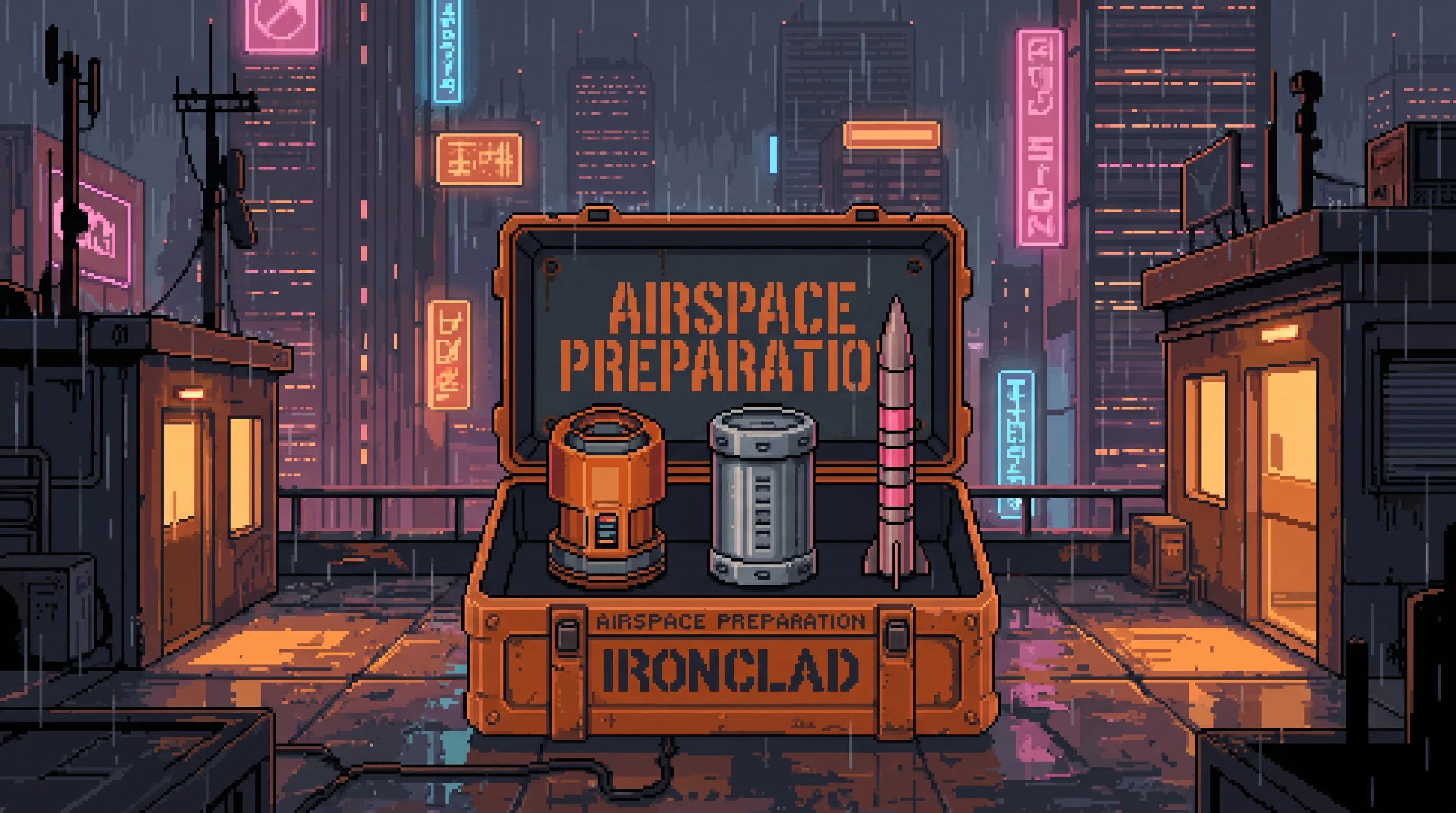
The berm rows hold the ordnance: nine rows of crates stenciled AIRSPACE PREPARATION, the Pink Slip family's unexpended stock, counted annually and never short — the one inventory on the lot that reconciles to the crate. No Scour Charge has ever been logged through the gate. The manifest's most examined page is the one that lists none.
The Two Signatures
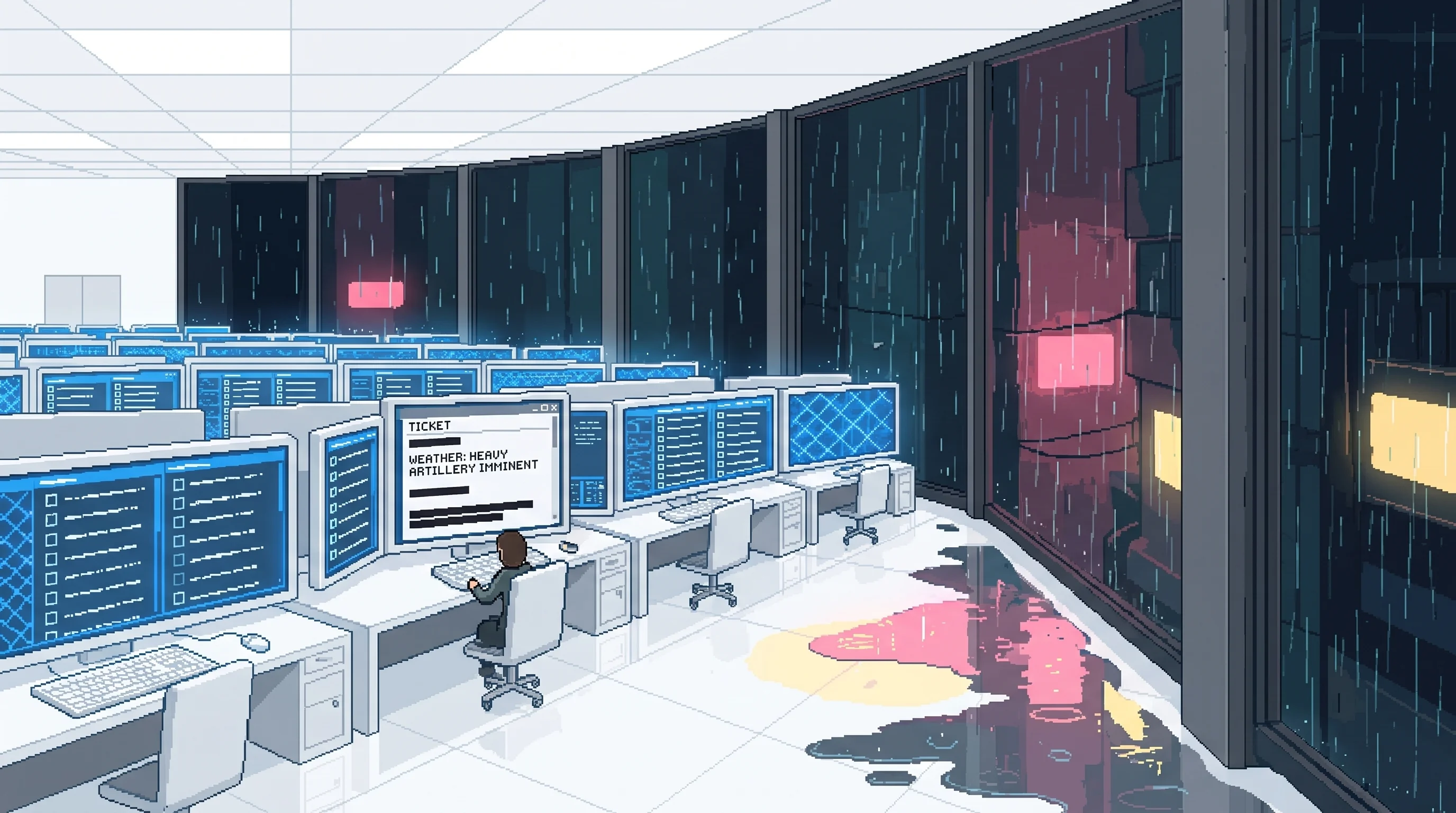
Custody is symmetrical by design and adversarial by nature. Each corporation's registrar holds title records for its own materiel and a veto over the other's. The reasoning is nowhere written and everywhere understood: everything on the lot is evidence against somebody, and neither party may be sole custodian of proof it would prefer not to exist. The fence itself is a neutral security contract, invoiced monthly, and the invoice has never once been disputed, which makes it the healthiest commercial relationship the war ever produced. Fourteen custodians work the lot across two payrolls that do not mix. The dogs answer to both. The renewals travel by house style — Ironclad's registrar signs a works order, and the Continuity Office processes its half as a change ticket, quarterly, which makes the custody the war's last open workflow.
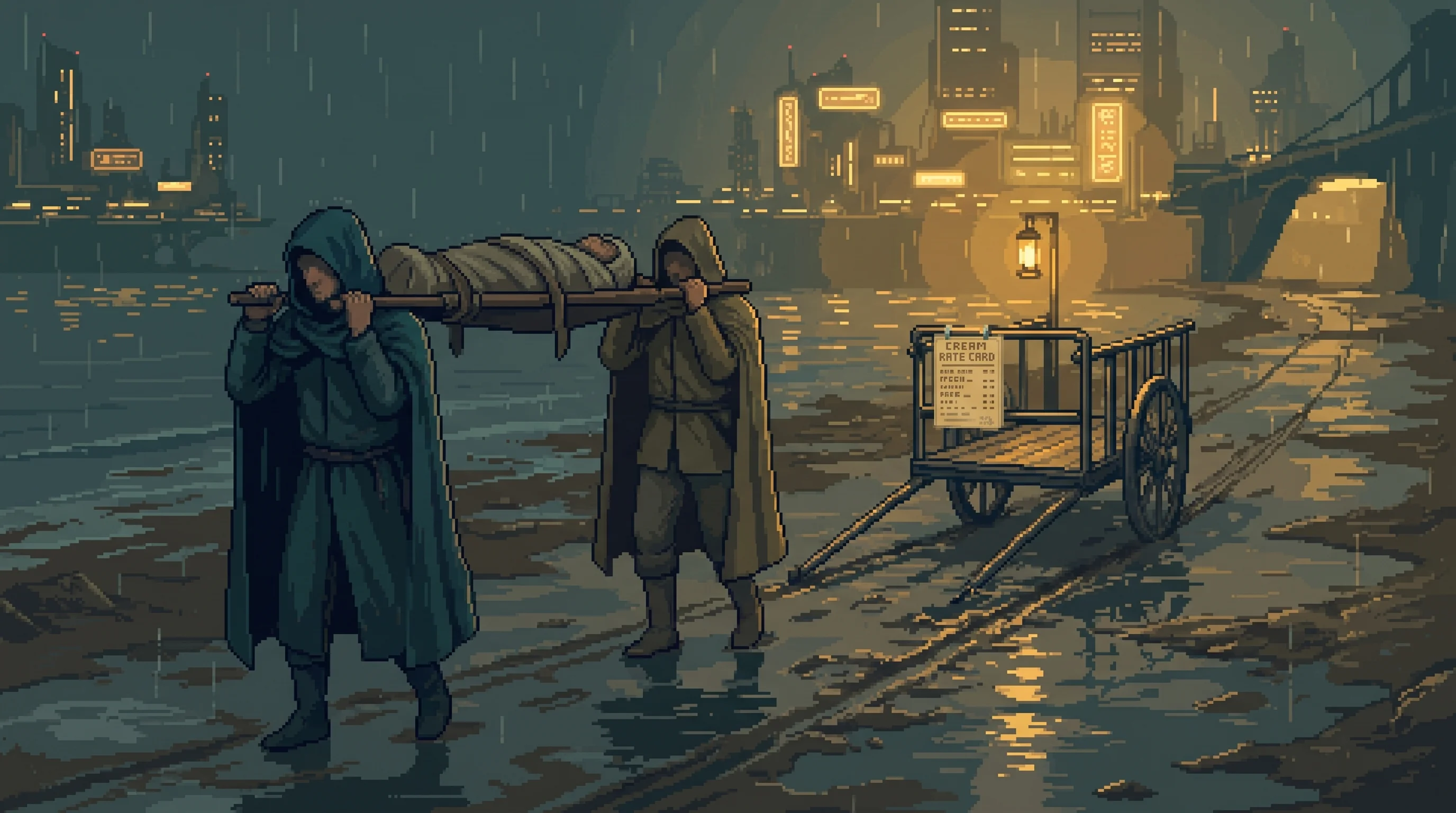
The fence leaks. It has leaked at a stable two to three percent of inventory a year for thirteen years — cradle hardware, alloy skin, actuator assemblies, the honest end of it surfacing in the bay-floor trade with provenance nobody examines. The Last Mile's carts have worked the valley road since the intake years, when both armies' quartermasters learned the firm would carry what no one could be seen carrying. The trade its rate card built has treated the lot as a slow harvest ever since. The Milers' own discipline holds at the annex wall: machines, yes; the concrete building, never. Both custodians patrol, both file, and both book the annual shortfall as environmental loss. The alternative — a joint investigation into which custodian's guards wave which carts through — is a document with two signatures on it, and the lot has a rule about those.
| Type | Joint materiel custody annex — demilitarization yard, evidence lot, and the gap between the two |
|---|---|
| Location | The Eastern Valley, Sector 18 |
| Population | Fourteen custodians on two payrolls; the dogs answer to both |
| Notable | The war's impounded machines, kept powered by litigation; the amber dusk cycle |
Strategic Assessment
The Corpo-Nations theorists keep the Amber Lot as their cheapest exhibit: two sovereigns, one fence, mutual veto, no flag — the whole postwar order, scaled down to fourteen employees and some dogs. The Upgrade Treadmill's annalists file it one shelf over, as the war's last dependency: machines that must stay awake because memory is evidence, drawing power from the grid the treaty made sacred, guarded by a contract, renewed by a form. The lot was created to end the war's materiel and has instead achieved the war's most stable institution. Demilitarization says it is over. Preservation says it is still being argued. The Amber Lot does both, quarterly, and the treaty's schedule still classifies the arrangement as temporary — a word the gate placard has repainted, in the original stencil, at every refit for thirteen years.
Affiliated Entities
- The Three-Week War — Supplier of the entire inventory, one season, no repeat business
- The Treaty of Shared Infrastructure — The schedule that opened the lot; the litigation that keeps it
- The Hesitation — The strike tier, sold and undeliverable, cycling amber
- The Pink Slip — The crates by family name; the thirty-one queues in the annex
- The Pourhorses — Twenty-nine hulls in the north rank; the one-way tow
- Big Ruthie — Intake line LG-214, open; the chalked stall
- The Click Ledger — The annex's other tenant, in triplicate's third part
- The Last Mile — The valley road's oldest customers; the two percent
- The Continuity Office — Renews the Nexus half of the custody as a change ticket
| Stratum | Between |
|---|---|
| Power Position | Invisible |
| Access | Restricted |
| Atmosphere | Liminal |
Conditions Report
The lot smells of dry grass, preservative wax, and hot metal ticking as the valley cools. Wind off the Wastes plays the airframe ranks like a reed instrument — a low, multi-throated hum the custodians stop hearing by the second week and visitors never stop hearing at all. Underfoot the grass grows up through the cradle grid, and rust comes off on your palm from any rail you steady yourself against, fine as pollen. At dusk comes the tide: amber lamps cycling out of phase across three kilometers, a silence you watch, and beneath it the faint contactor click of ten thousand machines re-asking their one question. In winter the fog takes everything but the glow. The custodians say you can taste the lot on the fence wire — iron, dust, something faintly sweet from the wax. They also say that after a night shift you sleep badly, not from fear, but because some part of you has been counting lamps and lost the number.
Every release requires both registrars' signatures on one page; in thirteen years the two signatures have appeared together four times
The strike airframes were surplus-sold in 2173 with delivery conditional on demilitarization certificates; wiping a fire-control stack is spoliation while any hold stands, so certificates issued to date total zero
Connected To
Supporting Connections
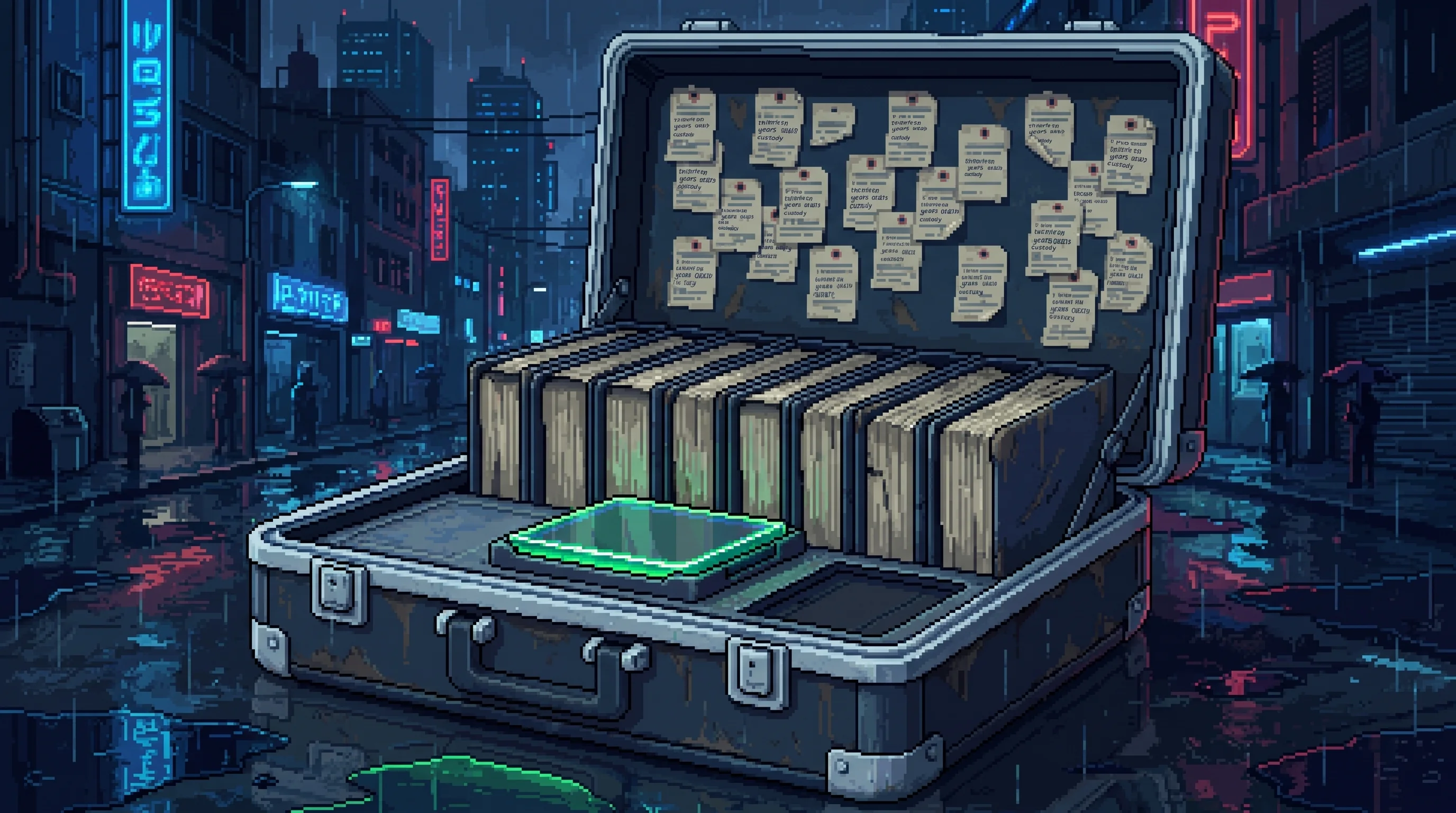
The evidence annex holds the ledger's re-struck third copy.
The Warm Hands click archive in triplicate — the war's most complete record, kept in three copies nobody may read.

Everything inside the fence arrived within a year of Day 24.
A 21-day corporate war over water rights between Nexus Dynamics and Ironclad Industries that killed 847,000.

Its demobilization schedule opened the lot; litigation keeps it.
The four-article document that ended the war in 2171 and has governed corporate conflict ever since.
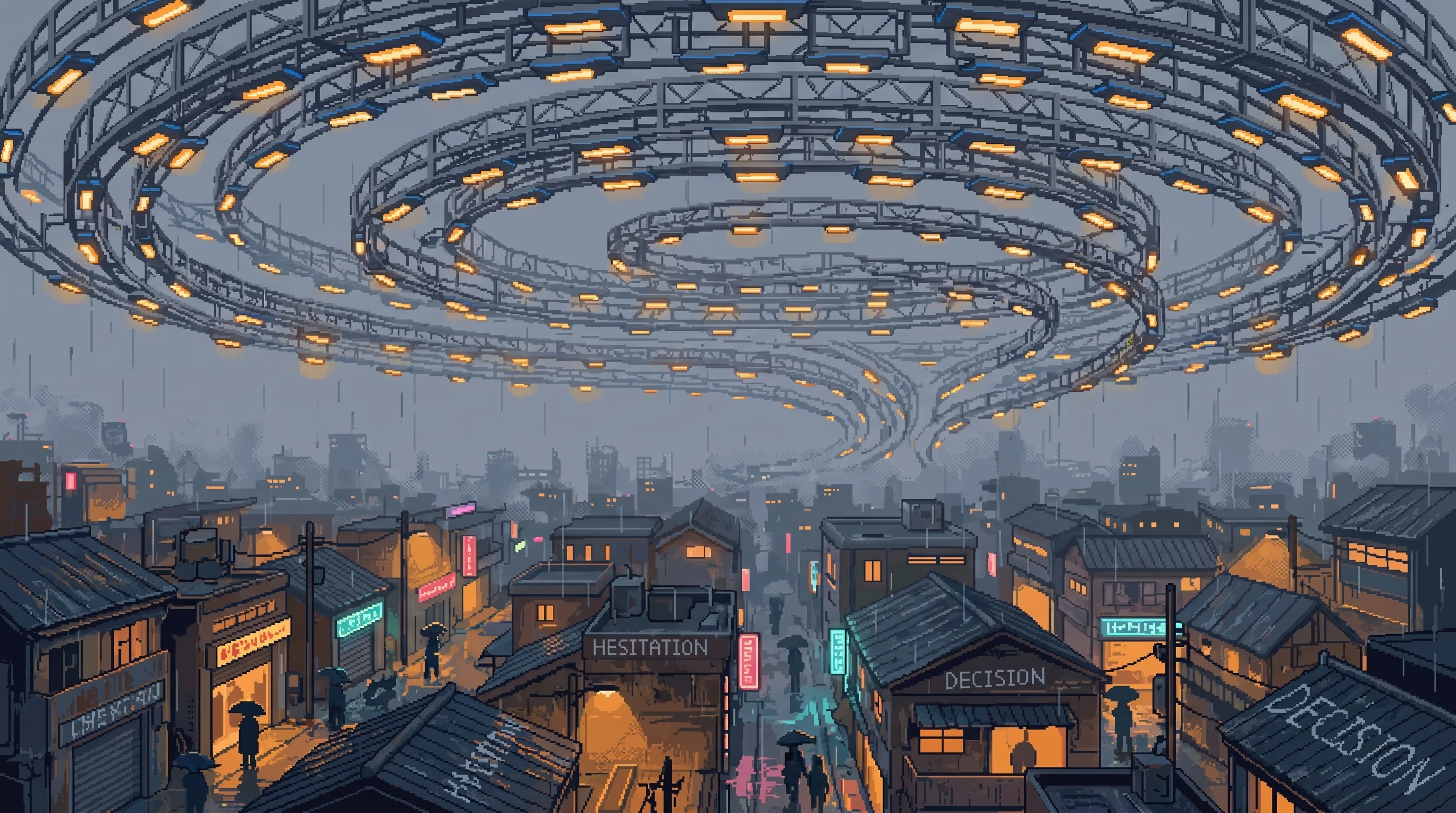
The strike tier waits here — sold 2173, certified never.
Nexus's teleoperated war swarm — 22,000 airframes that never fired until a human, somewhere, clicked.

Two sovereigns share one fence; neither may hold the other's evidence.
When your employer is your country, quitting is emigration.


Local Intelligence Scan
Nearby Signals
CANONICAL PROXIMITY


Environmental Readout
LIVE CONDITIONS- Air
- Clean
- Light
- Open sky
- Flood
- No exposure
- Heat
- Temperate
- Security posture
- Contested
- Infrastructure
- Patchwork
Position Data
SECONDARY- Elevation band
- Shoreline — the Rim edge
- Lattice fix
- E+33.1 · N+22.4
—