
The Pourhorses
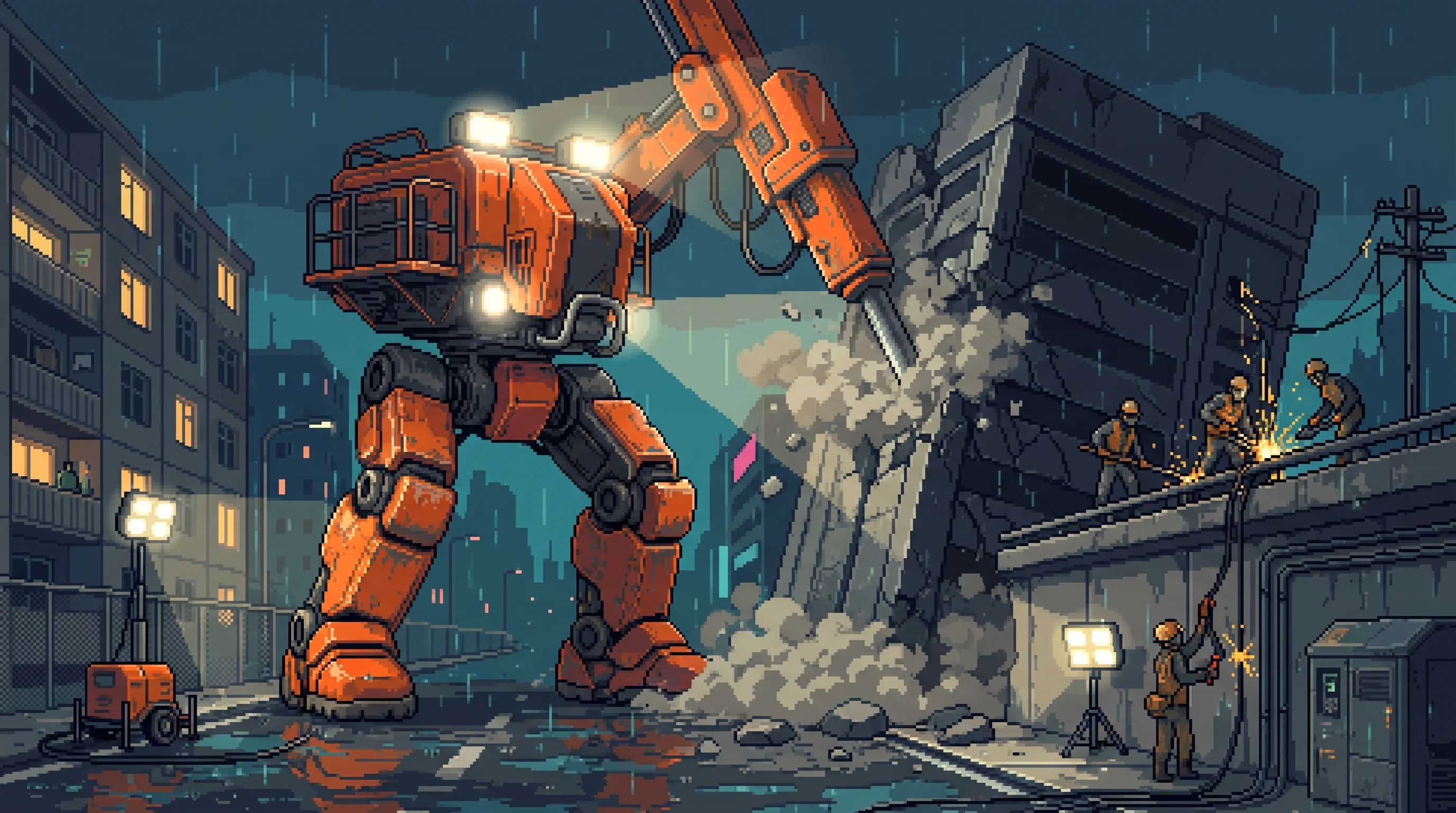
Demolitions executed by pourhorse crews accounted for roughly a third of the war's structural damage and one half of one percent of its deaths; the crews dropped buildings to civilian safety standard by habit
Overview
The Pourhorses are Ironclad Industries' walking heavy plant: pile-driver, gantry, and loader-frame chassis, crewed, slow, and responsible for most of what the Sprawl stands on. The catalog calls the family Loadbearer. The yards have called them pourhorses since the first hulls walked, and the name has outlived its own accuracy — half the fleet never poured anything. Names in the yards are not audited.
For decades their footsteps were civic furniture. A pourhorse walks at 1.1 kilometers per hour, streets closed ahead of it, floodlit, a rigger on the rail with a signal lamp. Whole districts learned to sleep through the stride and wake to the hammer — the morning thump of piles going in, the Sprawl's least popular proof that the Sprawl was still being built. Then, for twenty-one days in the spring of 2171, the same footsteps meant something else. Seven sectors have never quite heard them the old way since.
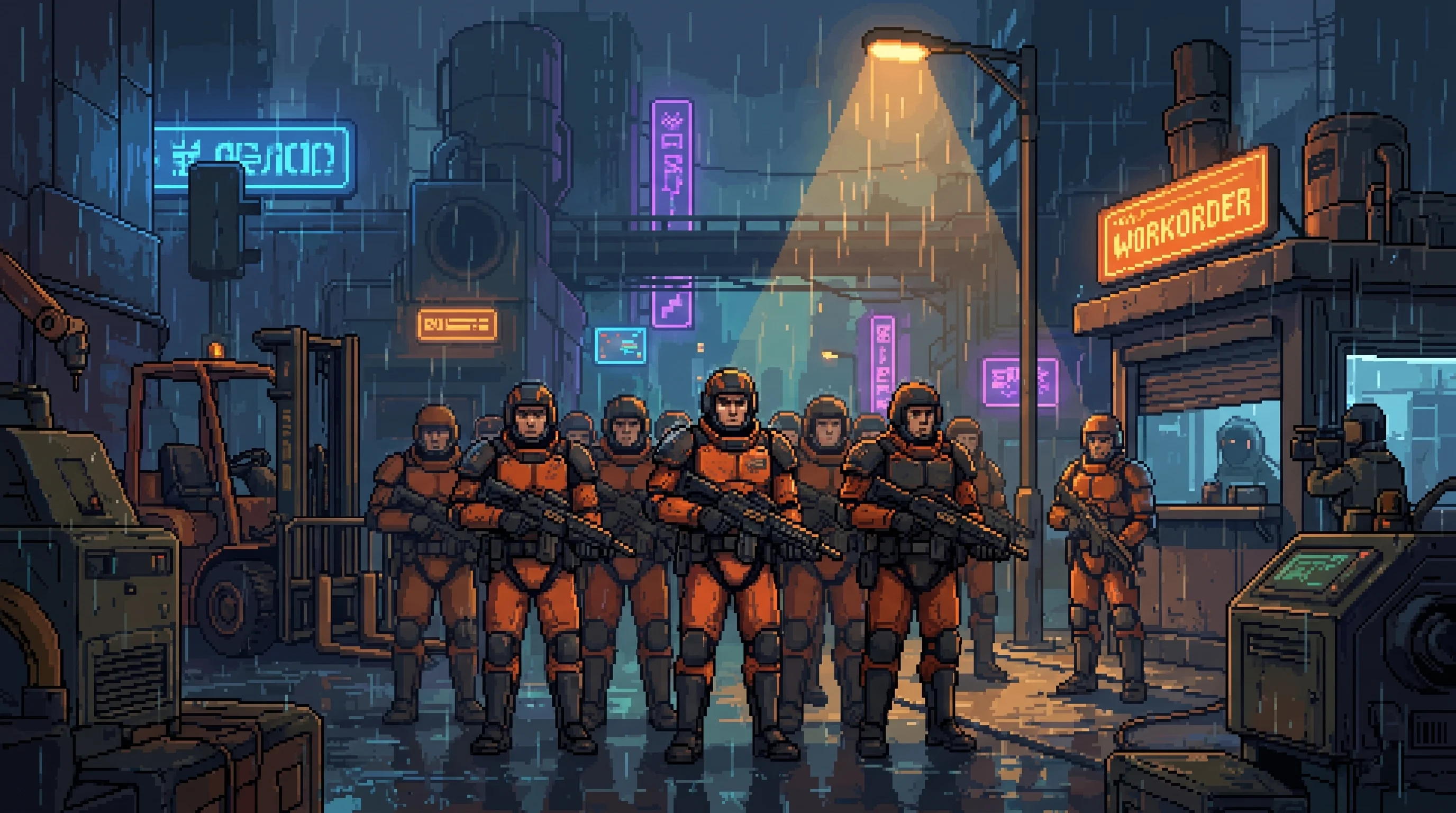
On Day 3 of the Three-Week War, the consolidation order that created the Enforcer Corps requisitioned 412 hulls. The crews came with them — reassigned by the one-page Temporary Works orders their site offices had started cutting a day earlier, attached to the Corps for twenty-one days without ever being Corps personnel. The Converted Brigades went to war in the machines they had run in peacetime, under the doctrine they had always run them by: a named hand on every lever.
How It Works
Three frames, one walk. The LB-D drivers carry the hammer rig — foundation work, and anything else that needs the ground convinced. The LB-G gantries are the tall ones, span-setters, all boom and grapple. The loader-frames are the small cousins that everything else gets strapped to. All of them move on walking shoes taller than a person, lifting and setting the hull a stride at a time, which is why nothing in the family can be surprised and nothing in its path can honestly claim to be.
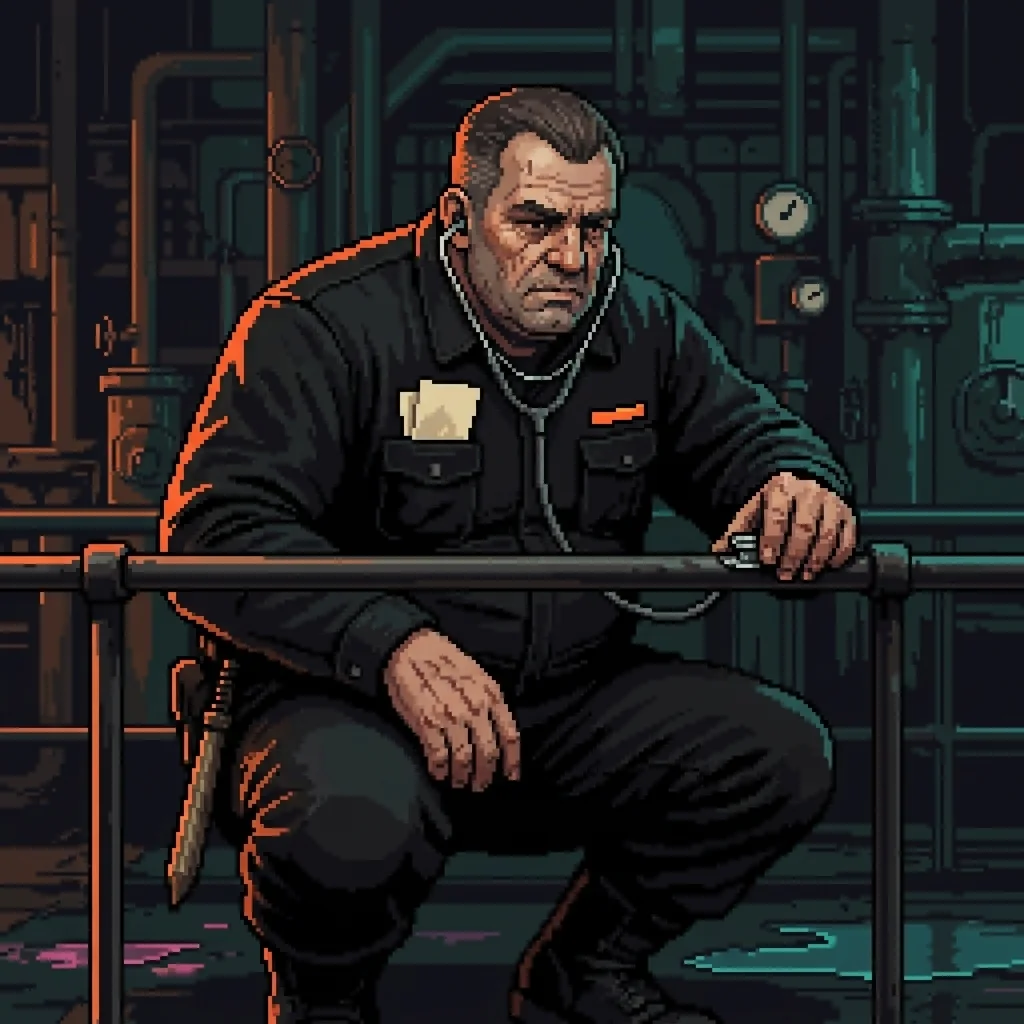
Every hull carries a crew of five to nine: a chief, a walker at the sticks, a fitter who owns the log, riggers who own everything else. Ironclad has never automated the fleet and prices the refusal annually — nine salaries against an autonomous chassis is an arithmetic the company loses on paper every year and files under doctrine. The Labor Question's cataloguers list the pourhorses beside the Enforcer Corps under AI Labor's great exceptions: jobs that exist because Ironclad has decided, as identity rather than analysis, that a machine this heavy answers to a hand it can name. The crews' version is shorter. The machine is fine. The ground lies. Somebody has to notice.
The log is the doctrine's paper shadow. Every shift, every hull, since the first walk: grease, pins, hammer, hours, signature, and the closing line the fleet has used for forty years — Machine performed correctly.
The Change Orders
The conversion to war took four days a hull and consisted, in the fitters' telling, mostly of paperwork. Plate was welded over cab glass and ladder rails; the work was filed, in the fleet's one surviving institutional joke, as change orders. The tools were not converted at all, because the tools did not need to be. A hammer is a hammer. A grapple is a grapple. The war work of the pourhorses — cracking eleven Nexus data centers for Operation BEDROCK, opening corridors, taking down structures whose owners had declined to open them — was the day job with the courtesy removed.
What the war revealed was not what the machines could do but what the crews could not stop doing. Nexus damage assessors kept flagging pourhorse demolitions as anomalously professional: drop zones clean, adjacent structures untouched, utilities cut in the correct order before the fall. The crews were dropping enemy buildings the way you drop a building when your own people are standing around it, because that was the only way they knew. Many of them had set the piles under the buildings they were now sent against. They did not need the survey. The result sits in the Witness Protocol's tables without comment: roughly a third of the war's structural damage, one half of one percent of its deaths. The war's most merciful weapon system was the one with the most people inside it. Both corporations have had thirteen years to decide whether that sentence is an argument for the doctrine or an indictment sized exactly like a mercy, and both have decided, instead, to keep the sentence out of their materials.
The fitters kept the logs through all of it, in the peacetime register, because the register had no other one. The logs entered discovery with everything else and became the record's most-quoted pages — eleven million pages of authorization chains, and the only human voice in them belongs to maintenance. One entry, from a driver hull on Day 14, is quoted more than the rest of the war's paper combined:
"Grease normal. Pins normal. Hammer performed correctly. Set these piles myself, spring of '64. It came down exactly as well as we built it."
The depositions asked the fitters, over and over, what Machine performed correctly meant after Day 9. The fitters answered, over and over: what it says.
| Catalog Name | Ironclad 'Loadbearer' family; the catalog name has never once been said aloud in a yard |
|---|---|
| Crew | Five to nine — chief, walker, fitter, riggers; a named hand on every lever |
Implications
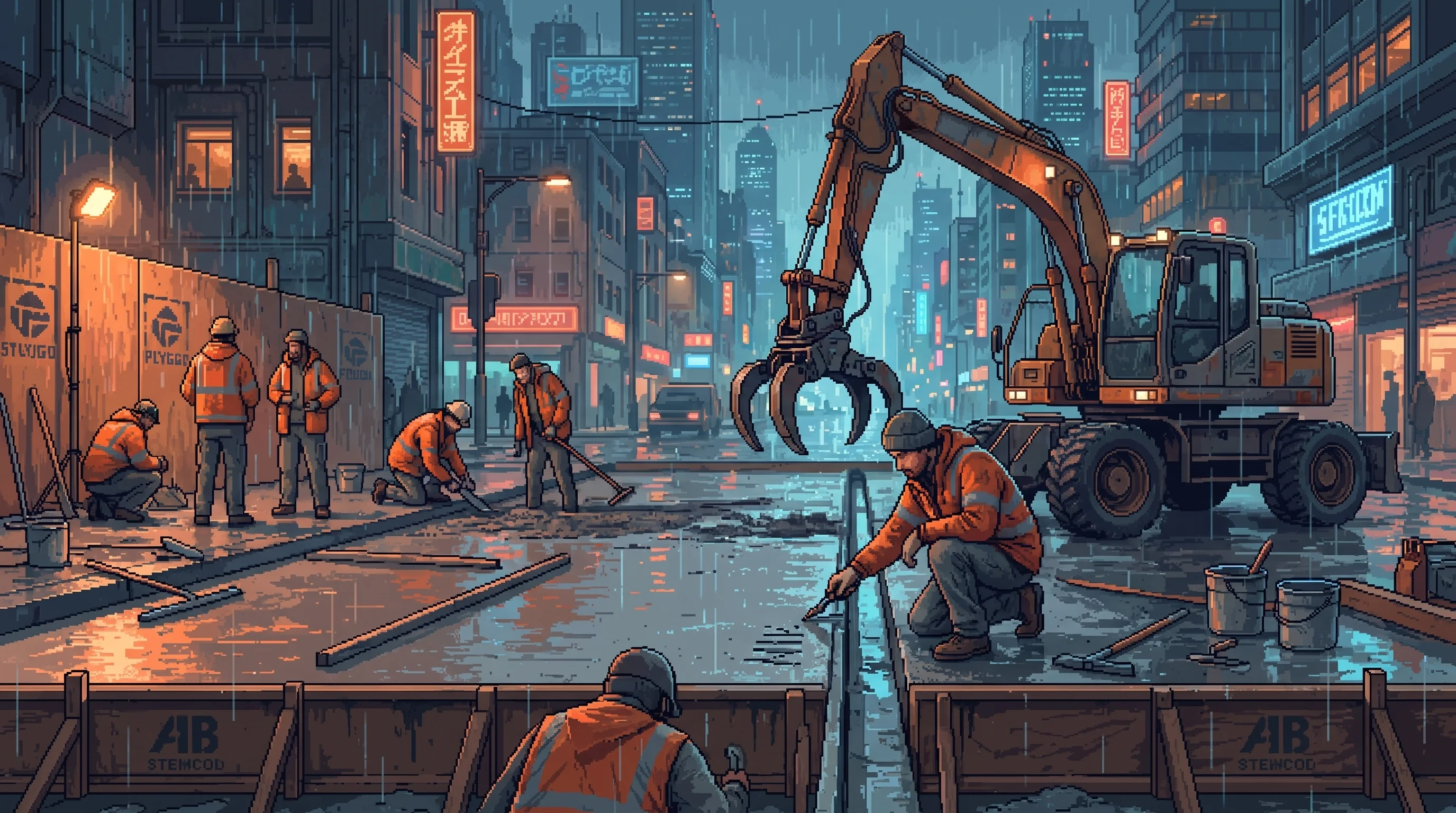
The fleet went back to the yards in 2172 under the same signature that had requisitioned it — Hassan Volkov ordered the fleet in with one clause and spent part of his Marshalate signing it back out hull by hull. The same machines then rebuilt the seven sectors they had opened. Ironclad describes this as continuity of capability. The districts describe it more precisely: they kept ledgers of which hulls had done what, and dispatchers who officially maintain no such lists have, for thirteen years, unofficially honored every one of them. A war hull sent where a war hull is not welcome gets turned around by phone calls no one logs. Word of mouth is the one control surface the company cannot requisition.
The first piles of the reconstruction drew crowds. People stood at the barriers and listened to the thump come back, and the accounts disagree about why — to hear the building start again, or to check what the sound meant now — and the accounts are probably not in conflict. Nexus, meanwhile, spent the same years pouring the Ugly Build over its systems: armor against munitions, air gaps against intrusion, redundancy against elegance. It is a thorough doctrine with one omission the yards find funnier than the Continuity Office does. Nothing in it is sized against a machine that arrives at 1.1 kilometers an hour, with a named crew, and takes the building apart in the right order.
One hull never came back at all. Big Ruthie stands where she stopped, in Sector 8, and has her own record.
The fleet has never been automated: every pourhorse walks with a full crew under Ironclad's human-in-the-loop doctrine — a named hand on every lever, in peace and in war
Affiliated Entities
- Ironclad Industries — Builder and owner; the Loadbearer catalog family
- The Three-Week War — The requisition; Days 3–21, 2171
- The Enforcer Corps — The wartime command; hulls enrolled, crews attached
- The Converted Brigades — The crews; one page each
- Hassan Volkov — Requisitioned the fleet; signed it back out
- The Ugly Build — The rival's armor, sized against everything else
- Big Ruthie — The hull that stayed
- The Witness Protocol — Keeper of the damage-to-deaths tables
Wartime maintenance logs stayed in the peacetime register and became the discovery record's most-quoted pages; every shift of the war closes with the standard entry 'Machine performed correctly'
Connected To
Supporting Connections

The fleet's folk hero — the hull that stayed in Sector 8.
The Outer Works gantry that walked into Sector 8's 47 hours and never walked back — kept by the district ever since.

Requisitioned with their crews on Day 3; the war's siege arm.
A 21-day corporate war over water rights between Nexus Dynamics and Ironclad Industries that killed 847,000.
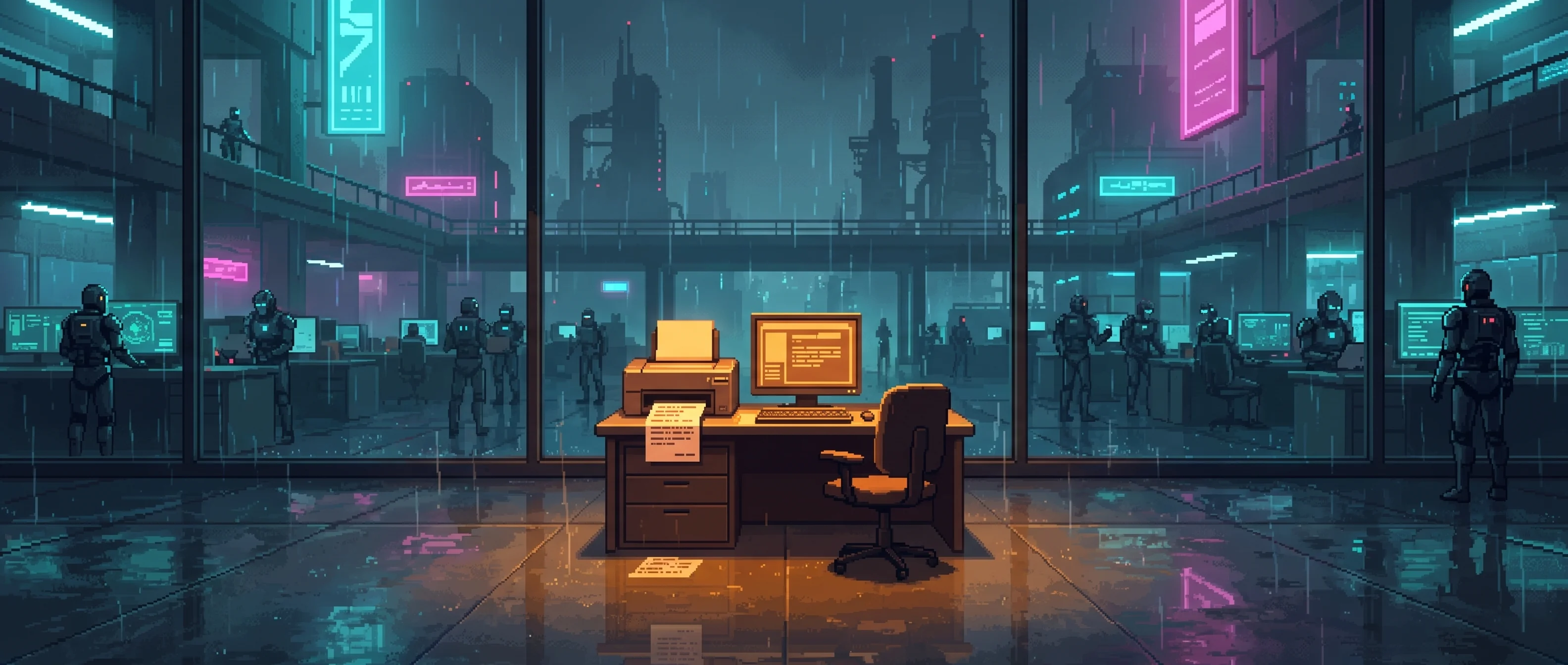
The fleet Ironclad refuses to automate — a crew in every cab.
Automation ended most human work, but ownership hoards its abundance while machine sentience stays unresolved.


—