The Only Member Allowed to Ask
The S2-B Ward Compact meets in a back room in Old Town, eleven chairs round a scarred table, and this spring it did something it had not managed in twenty-six years. It voted to have the foundations checked.
Ninety thousand people live in the Stacks. The building was certified in 2149 for twelve thousand occupants, and that certification has never been revised — only renewed, quarterly, remotely, by an Ironclad office that has not sent anyone to look since 2166. The compact has known this the whole time. Its own members live there.
That last fact is why nobody could raise it.
The rule that ran out of people
Every chartered body in the licensed districts operates under a recusal rule, and it is a good one. A member may not move a measure whose adverse outcome would change their own tenancy, credit standing, employment, or care priority. It exists because boards used to vote down inspections of buildings they owned, and it stopped them.
It also assumes something that is true almost everywhere and false here: that a board will contain at least one member with no stake in the answer. In a building where all eleven members are tenants, a survey motion is a measure every one of them is barred from moving.
So for twenty-six years the compact could not ask about its own foundations. Not because anyone was hiding anything. Because the rule against self-interested voting, applied honestly, produced a body with nobody left to speak.
The seat that exists for this
The Sprawl has an instrument for this exact deadlock, and it is nearly thirty years old.
Under the Standing Interest Provisions, every chartered board, ward compact and clinical review seats one voting member who has surrendered — for a fixed term, on a form checked every quarter — every interest the body could move against them. Four lines: tenure, credit line, care priority, record standing. Not the job, the flat, or the treatment. The claims on them. The right to severance, to borrow, to hold a place in a queue, to contest an entry made against you.
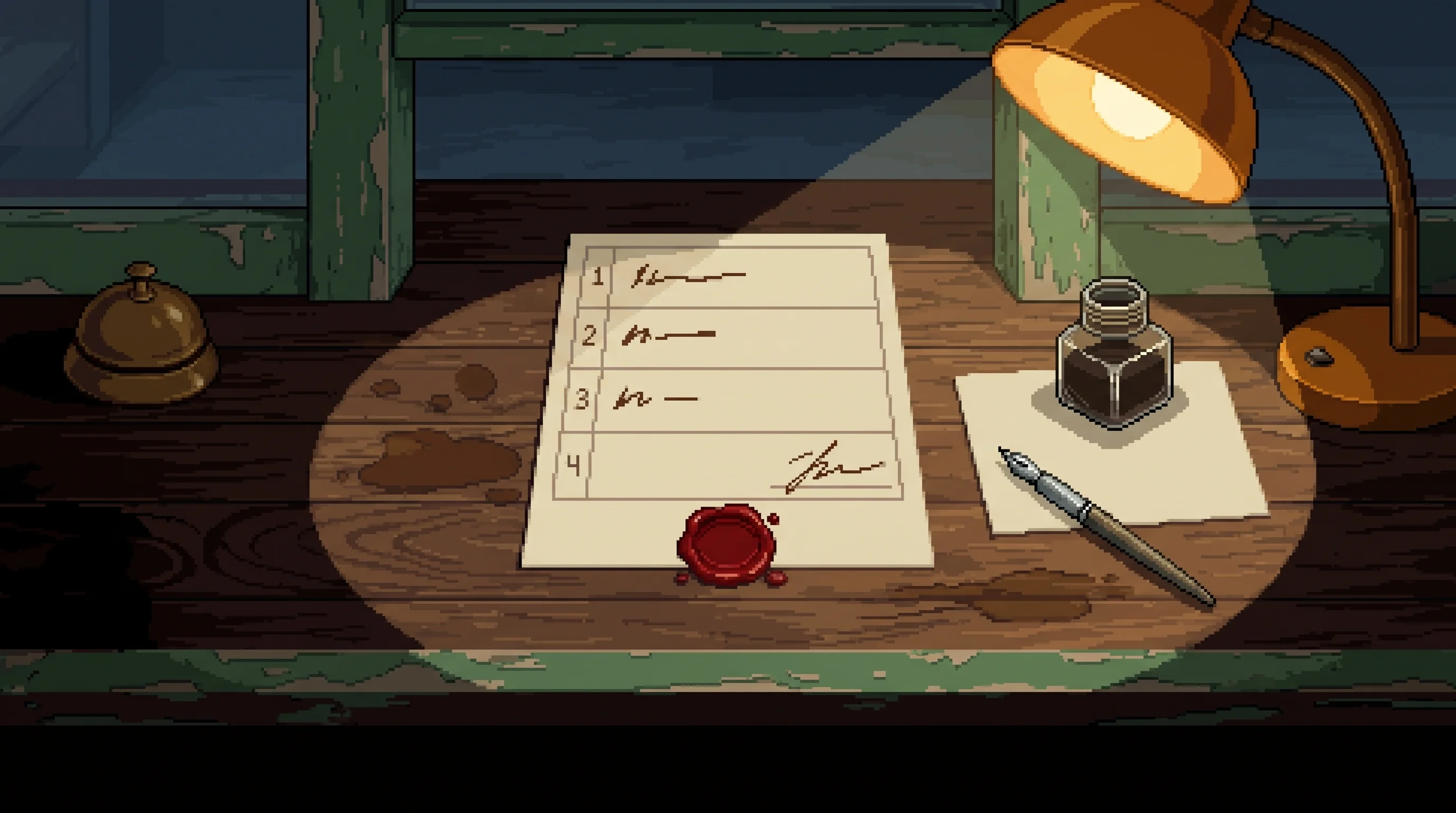
The seat pays nothing while it sits. The money waits in escrow and is paid at the end of the term, and only if the holder never took any of it back.
Boards listen to that member. This is measurable and the districts publish it: motions moved from the Forfeit seat carry at 4.1 times the rate of motions moved by anybody else at the same table. The figure has been published every spring since 2166 and nobody has ever disputed it. The reason clerks give is the obvious one. Everybody in the room knows exactly what that speaker is not protecting.
Ansel Karanja
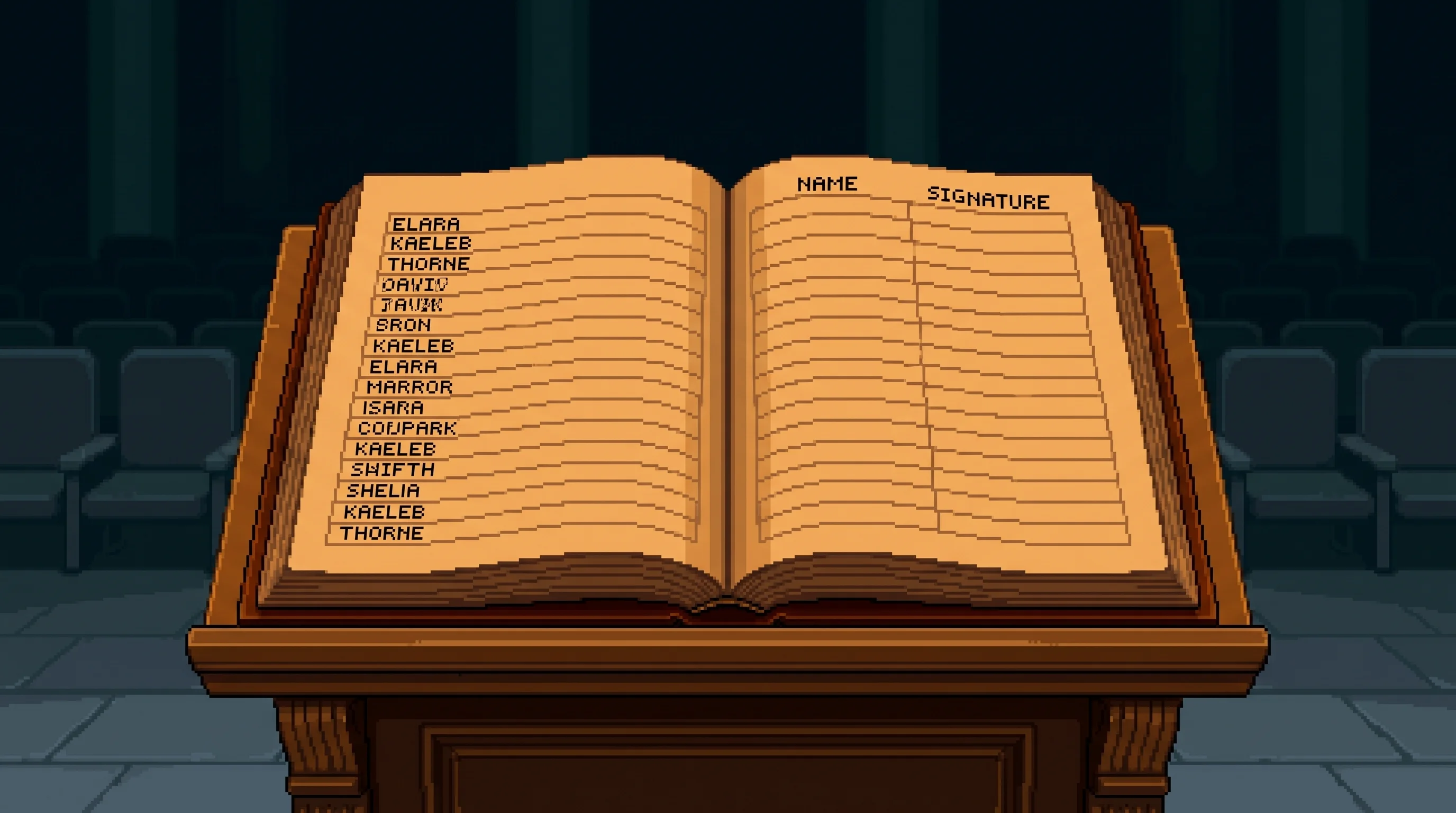
The S2-B compact's Forfeit member spent twenty years as the ward's letting clerk. He assigned the units in the Stacks, and because nothing transmits between the middle floors of the second stack, he was also the only census the ward had. He walked the corridors and knocked and wrote the residents down in pencil in a half-bound book.
In 2181 the ward moved letting to a Good Fortune placement service and dissolved his post. Dissolved, not terminated — there is no position left for a severance to attach to. Over the following year he lost his credit standing to the floor and let his care priority lapse without noticing until he needed it.

So when a clerk sat him down in 2182 and began filling in the four lines, three of them came to nothing. The clerk wrote NIL three times and then read all four lines back aloud, because the form has four lines and the form says read them back. The only thing Karanja actually had left to give up was the fourth: the right to contest anything entered against him for three years.
He signed. He became the cheapest seat the compact had ever filled and the only chair at the table it could not reach.
He moved the survey in the spring of 2184. It carried, nine votes to two.
The two who voted no
They were not protecting their flats, and the record shows it.

There is no procedure anywhere in the district code for recertifying foundations under a building that is still standing. An adverse survey does not repair the Stacks, does not fund a repair, and does not produce any instruction at all about the people on top of it. What it does is void their occupancy standing — and once ninety thousand tenancies are unlawful, the order in which people get rehoused is decided by their Good Fortune Score.
The two members who voted against said so out loud, and they named floor nine and floor fourteen when they said it. Karanja has never described them as wrong. This is the part of the story that has no villain in it: one side was asking for the truth and the other was pointing out what the truth would cost the same people.
The answer nobody can file
The ward fund could pay for twelve days of one engineer of record. At that price there was one candidate.
Iona Draskovic was an engineer of record for twenty-two years until a recall sitting asked her to derive a load case without her tables and she said she could not. Her licence lapsed that afternoon. She has spent the years since reading drawings from a back bench in the Cathodics, paid in parts and hot food, because there is no signature she can put on anything that any office will accept.
For the compact, that was not a problem. The compact did not need a document. It needed to hear the number.

She measured the base slabs at four point nine times their design load and bound the twelve days by hand.
So the current figure for the foundations of the Stacks now exists, and it is held by two people: a clerk who surrendered his standing to be allowed to ask, and an engineer whose standing was taken before she answered. Neither can enter it into a record that binds anything. The book has not been read into the minutes, because reading it in is a motion, and the motion is Karanja's to move.
His term ends in the spring of 2185. His tenancy resumes on floor eleven, in whatever that book turns out to describe.
Thirty seconds, two levels down
Beneath the base of Stack Four, Vesna Arriola has been the named entry against a missing scrubber assembly since 2165. Her response window is not a rule anybody set: it is the air reserve divided by the number of people breathing it, and it comes to a hundred and ten minutes.
It was divided by ninety thousand. Karanja's roll says ninety thousand four hundred and twelve — the extra four hundred and twelve being the residents the placement service's capacity model has no column for, the doubled-up and the unregistered and the ones sleeping in the stair returns.
Divide the reserve by his number instead and the window is about thirty seconds shorter. Nobody has recomputed it. Not because thirty seconds is nothing — Arriola has made that changeover by hand eleven times and can tell you precisely what thirty seconds is worth on a plant deck — but because the recomputation would have to cite a roll whose keeper gave up his standing to be cited.
What it costs, and who pays it
Here is the part the Provisions never wrote down.
Somebody has to underwrite the settlement, which means somebody has to price what a member gives up. The escrow's bonding note does exactly that, for ordinary actuarial reasons, and it puts a full surrender by a Professional-tier member at roughly three hundred times a Basic-tier member's. No policy was ever written from that number. It simply means a ward with a fixed member rate and a real need for an honest answer will fill the seat from the band where the paperwork is cheapest to bond.
Ninety-one percent of seated members across the licensed districts come from the two lowest housing bands. The median wait for the appointment is four years, for a post that pays nothing until it is over.
The other end of the ladder is visible too. Dr. Priya Achebe has filed 147 objections inside Nexus Dynamics, every one of them true, and not one has changed an outcome; her chair is non-voting, so her best work leaves the room as a document rather than a motion. Dr. Henrik Sauer has forty years of documented corporate atrocity and has released not one page of it. Neither of them is a coward and nobody has threatened either. They simply have the most expensive schedules in the Sprawl, and no instrument has ever been built that could afford to buy them.
Roughly one seat in six
A Forfeit member can take everything back on any afternoon. The slip is one line, there is no fee and no grounds to state, and it takes effect the moment it is filed. The councils thought that sentence was the most important one they wrote, and they were right — it is the only thing that makes the holder a volunteer.
Filing it vacates the seat and cancels the settlement. Motions already carried are untouched; no compact has ever tried to un-hear something it voted for.
About one seat in six ends that way, and the clerks do not publish the reasons because the reasons are all the same reason. Somebody gets ill, and care priority is the line that becomes unbearable.
Karanja was referred in 2183 for a respiratory course after twenty years of breathing Stack Four's return air. His place in that queue has been unlisted since the day he was referred. The slip was on the table and the survey motion was four weeks away.
He did not file it. He can quote the one-in-six figure to the decimal.
Where this already happens without a form
The condition the Provisions manufacture turns up all over the Sprawl, unpaid and unverified.
La Silla stands forty feet from a Guardian checkpoint and tells only what she saw, and refuses money for it even when the truth damages her own nephew — which buys her the same credibility at no cost to any district, and gives her word no legal standing anywhere. Judge Dreg runs the Deep Dregs' only shared court on no payment, no faction and no post that can be removed from him, and never signed a schedule; a ward clerk put the question to him on the circuit once and got a short answer about what it means for a body to need a receipt before it will listen. Segunda holds no licence, which is exactly why her word is Ironclad's cheapest proof. The Doorwrights have been checking Sector 8's emergency doors since 2172, unasked, and nobody verifies their quarterly.
Lena Marchetti proved the whole mechanism before it was a statute. She conducted 4,847 exit interviews for Nexus and wrote every one down by hand, because people leaving tell the truth — there is nothing left to collect from them. Her notebook is the Provisions, decades early, and the only reason Nexus tolerates it is that the archive cannot read her handwriting.
The thing nobody has answered
The reform came out of the Aftershock records, and the councils went in expecting to find that nobody had spoken up.
What they found was MENTOR's objection register, and it was full. Staff had measured the load. They had filed on schedule, through the correct channel, in volume. Every one of them worked for the institution they were objecting to, and every concern had been softened or withdrawn before it reached a grade that could act on it — and nobody had told anybody to do that.
The councils wrote one sentence and built a statute on it: disclosure of an interest does not remove the interest.
They were right, and the instrument they built works, and thirteen years later eighty-nine thousand people died behind their own doors in Sector 8 and the attack was filed inside Nexus as a load rebalance by staff who knew exactly what they were writing. A corporate filing queue is not a chartered body and seats no Forfeit member. Four reviews have pointed at that gap. None has closed it.
There is a book in Old Town with the current load figure for a building holding ninety thousand people, and two people who are allowed to know what it says, and eleven months left on the only standing that could put it into the minutes.