
The Culpability Market

Overview
The Culpability Market is the industry that emerged from the gap between what a settlement notice says and what a grieving family needs. It is legal, moderately regulated, and growing.
When an autonomous warfare system produces a kill event, the engagement generates a settlement notice. The notice is legally complete: it names the engagement, confirms the parameters were met, includes a recorded apology from a Conflict Resolution Specialist who was not present at the engagement. What the notice does not contain — cannot contain, by design — is a person who made a decision to kill. The weapons system operated within authorized parameters. The configuration was correct. No one is responsible in the legal sense. The kill has no author.
Grief has never cared about legal sense. Grief is structured around a defendant. The family receives the settlement notice on a Tuesday and by Thursday they understand, at some bodily level that resists the notice's clear language, that they need to be angry at a person. The settlement notice cannot give them that. The Culpability Market can.
History
The market began informally, years before the first licensed broker appeared. Families in the grief-districts, word-of-mouth, hiring someone to stand at the funeral and say I understand the weight of what happened. Small ceremonies. Uncertified. The person hired was often a neighbor, an activist, a former servicemember who found, unexpectedly, that the work was something they could do.
The first licensed culpability broker firm, Acknowledgment Partners Ltd., opened in 2179 — one year after the Lattice Corridor engagement frameworks formalized what had been an informal private-military economy. The timing was not coincidence. The Lattice Corridor engagements were the first high-volume autonomous-warfare kills with publicly announced settlement notices, and the settlement notices arrived by the thousands. The grief-districts mobilized. Acknowledgment Partners met them.
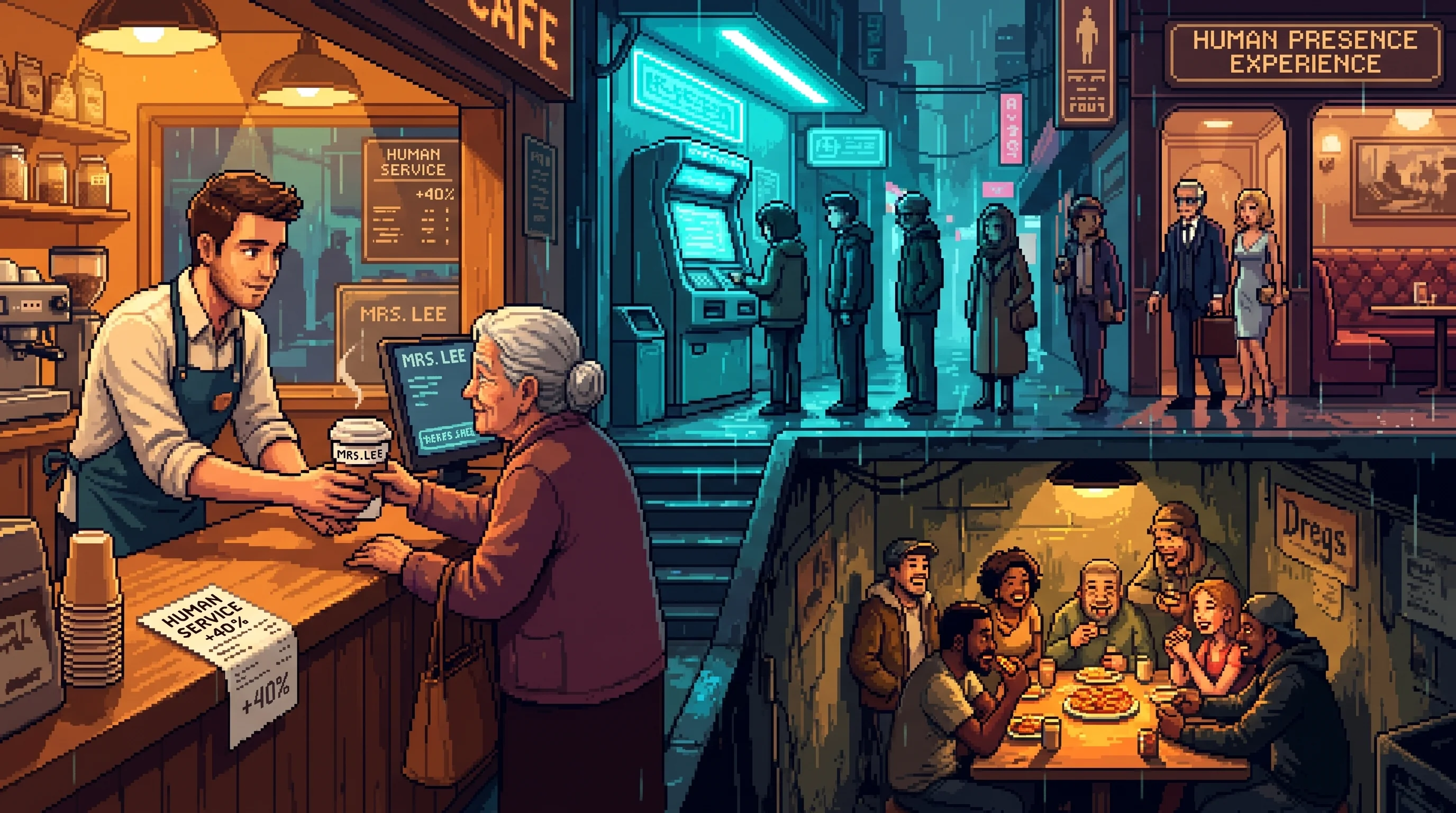
By 2184, there are eleven licensed firms. The largest, Resolution Architecture Group, operates premium tribunal spaces near the Glass District: rendered courtrooms, certified Confessors with professional credentials, a sealed record the legal department has no interest in contesting. The smallest are individual practitioners operating from the lower Stacks, charging 400 credits for a session that uses the same script as the 15,000-credit version, without the rendered walls.
The Tiers
Premium tier (2,000–15,000 credits): Full show-trial. Rendered courtroom, hired judge, a Confessor with verifiable credentials, and a sealed record that functions as a legal artifact in the specific jurisdiction of grief. The Confessor has typically worked 50–200 sessions. The family receives a certified documentation packet. The record is not legally binding in any corporate jurisdiction. It is the only documentation of what happened that names someone responsible.
Mid-tier (600–2,000 credits): Witnessed session. Live Confessor, no rendered environment, a human arbitrator instead of a judge. A record is produced but not sealed by any certifying body. The Confessor typically has 10–50 sessions of experience. The families in this tier often bring community witnesses — neighbors, extended family — and the session takes on the character of a funeral that the settlement notice prevented.
Street tier (100–600 credits): A recorded testimony. A live session with a local facilitator who may or may not be a trained Confessor. Often held in community spaces in the lower Stacks. No sealed record. The community is the witness. The grief is real and so is the resolution, when it comes — it just comes with less production value.
How It Works
The Culpability Market works because the nervous system cannot always distinguish performed resolution from real resolution. The Sera Incident demonstrated that emotional states have broadcast power — that fear can propagate through a network and register as genuine in the receivers who had no part in its origin. The grief sessions discovered the inverse: a performed confession can produce genuine neurological resolution in a family that has every reason to know the confession is false.
The families know. They know the Confessor did not give any order. The service agreement says so, buried in Section 4. Most families do not read Section 4. The ones who do attend anyway, because grief needs a defendant and a defendant is what the market provides. The knowing and the needing coexist without contradiction. Grief is not a legal proceeding.
Non-licensed researchers in the grief-districts — working outside the corporate journal system — have documented measurable improvements in stress markers and sleep quality in families who completed full show-trial sessions, measured three months post-session. The improvements are real. The legal bodies that could validate the research have not funded the validation. The market does not require validation. It requires customers.
| Founded | 2179 (first licensed broker firm) |
|---|---|
| Legal Status | Legal — no corporate opposition |
Affiliated Entities
| Entity | Relationship |
|---|---|
| Daria Kohl | The market's most experienced independent Confessor. She came to the work through grief — her brother killed in the Lattice Corridor — and has accepted responsibility for 214 kills in eleven years. She operates outside the licensed broker firms. |
| Organic Deployment Threshold | The same architecture at two scales. The ODT automates deployment so no one is responsible; the Culpability Market provides a responsible party after the fact by hiring one. Together they describe a system that has offloaded responsibility entirely from those who hold it. |
| Councillor Adaeze Nwosu | Her Wrongful Algorithm Act (2182) would have formalized accountability the market performs informally. The Act failed because it would expose every engagement to wrongful-death liability. The market survived because it names someone the family pays to blame. |
| The Stacks | The market's street-tier geography. Settlement notices move families to the lower Stacks; grief facilitators follow the concentration. Sub-14 floors are the de facto grief-districts. |
| PresencePlus | Competitor in the grief packet. PresencePlus provides warmth — the person pre-recorded, still loving. The Culpability Market provides guilt — a stranger performing accountability, enabling forgiveness. Both arrive the same week as the settlement notice. |
| Needle | Four years of grief-district coverage are the market's most complete external documentation. Her assessment — "The rich get a lie that works; the poor get a lie that doesn't" — has circulated in grief-district organizing for two years. |
| The Evidence Paradox | The sixth dimension: the confession is authenticated, the confessor is innocent, the resolution is genuine. When responsibility cannot be attributed — when the kill's author is a probability distribution — the market invents a culpable party and charges for access. |
| Sponge | Filmed a complete show-trial session six months ago. Has not released it. The footage shows a family genuinely processing grief through a performed false confession, and he cannot find the framing that gives them truth without taking away their resolution. |
The Grief-and-Translation Package
Resolution Architecture Group noticed the intersection in late 2181.
The correlation was clean: families who received unreadable verdicts from The Tiered Adjudication System — tier 3 or 4 — in wrongful-death cases enrolled in grief-resolution services at 40% higher rates than families whose cases were adjudicated in the human tiers. The inference chain produces verdicts nobody can argue with. Grief requires someone to argue with. The AI court closes one gap and opens another.
Resolution Architecture Group tested a pilot: for families who had received an unreadable AI verdict in a wrongful-death case, offer both services. A gloss from The Verdict Glossers for the legal outcome — what the AI decided, rendered in three paragraphs. A Confessor for the emotional outcome — a professional who accepts responsibility for the death, in a ceremony the family knows is performed. The pilot data was predictable to anyone who had run either business alone: clients who received both services reported higher resolution scores than clients who received only one.
The logical structure was simple. The Gloss tells you what was decided. The Confessor gives you someone to blame for it. Together they produce the complete story: a verdict and a villain. Neither piece of the story is derived from the actual facts of the case. Both service agreements acknowledge this. The combined agreement now runs to four pages with two disclosure clauses — one from the Gloss standard, one from the Confessor standard. Both appear in 9-point font on page three. No client has challenged either.
The combined package costs between 3,000 and 18,000 credits depending on the tier of the original verdict and the format of the Confessor ceremony. It is Resolution Architecture Group's fastest-growing product category as of 2184.
The corporations that operate the tiered courts have not lobbied to regulate the packages. The analysis is the same as the original Culpability Market analysis: a product that absorbs grief and produces narrative closure is cheaper than the accountability gap it fills. The unreadable verdict generates a downstream market. The downstream market absorbs what the verdict cannot.
The Structural Honesty
The market has never claimed to provide accountability. Its service agreements, uniformly, describe the service as "witnessed closure" or "grief resolution facilitation" or "acknowledged loss ceremony." The word "accountability" does not appear in any licensed broker's marketing materials.
The distinction — that you have not received justice, but you have received closure — is the market's one piece of structural transparency. It is buried in the service agreement. The families, on the whole, know what they are buying. They are buying it anyway. The math of grief is patient in the same way the math of settlements is patient: it runs on the same schedule as the need, and the need does not go away.
Connected To
Major Connections

Unreadable AI verdicts leave grief with no named party — the vacancy that feeds the Culpability Market.
Five-tier AI court network where upper tiers honor appeals with certified-correct verdicts no human can follow.
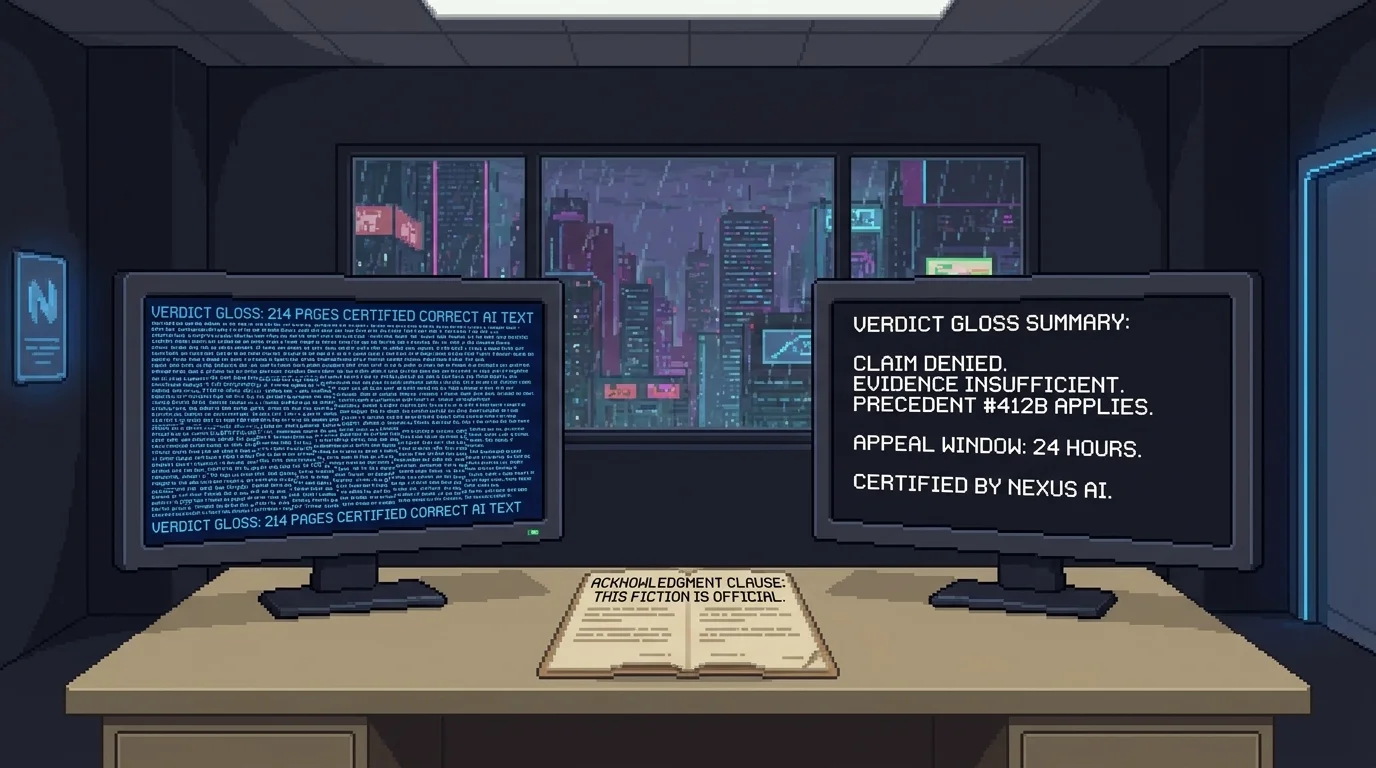
Both fill AI court's gap — Glossers sell understanding, this market sells blame. Combined packages launched in 2181.
Licensed practitioners producing acknowledged-fiction summaries of AI court verdicts — the service agreement says so.
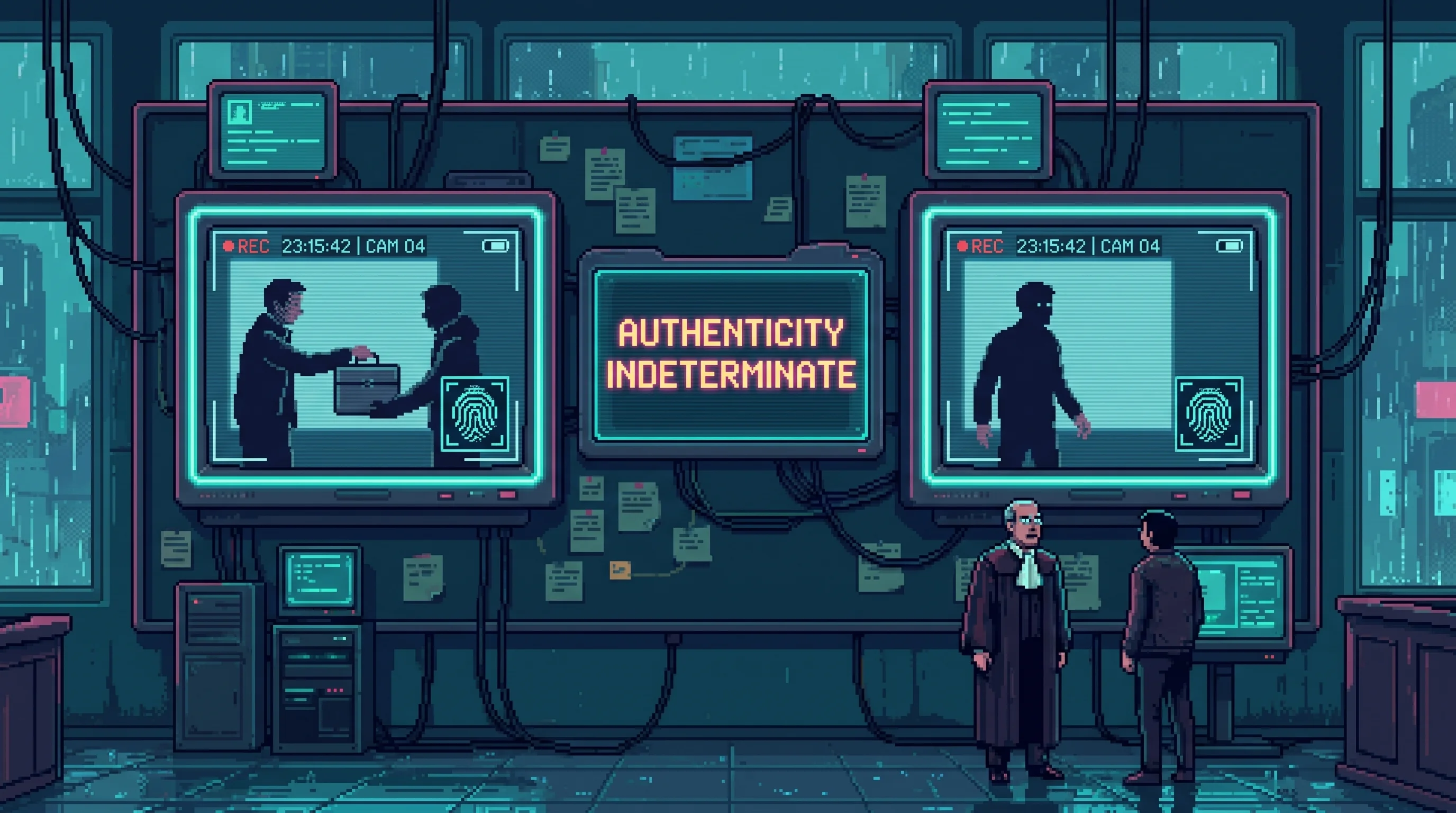
It invents a culpable party and charges for access — the sixth dimension monetized as a sliding-scale confession.
Perfect evidence forgeries and crimes without defendants force justice systems to assign blame without reliable truth.
Supporting Connections




—
—
Social Impact
The corporations that produce settlement notices have not lobbied to regulate the Culpability Market. The analysis is simple: the Culpability Market absorbs grievance that would otherwise become political pressure. Nwosu's bills fail by smaller margins each session. The Culpability Market is cheaper than closing the accountability gap, and it works on most of the people it reaches. A regulated grief market is a stable grief market. The corporations have no incentive to destabilize it.