Her Licence Lapsed on the Third Question
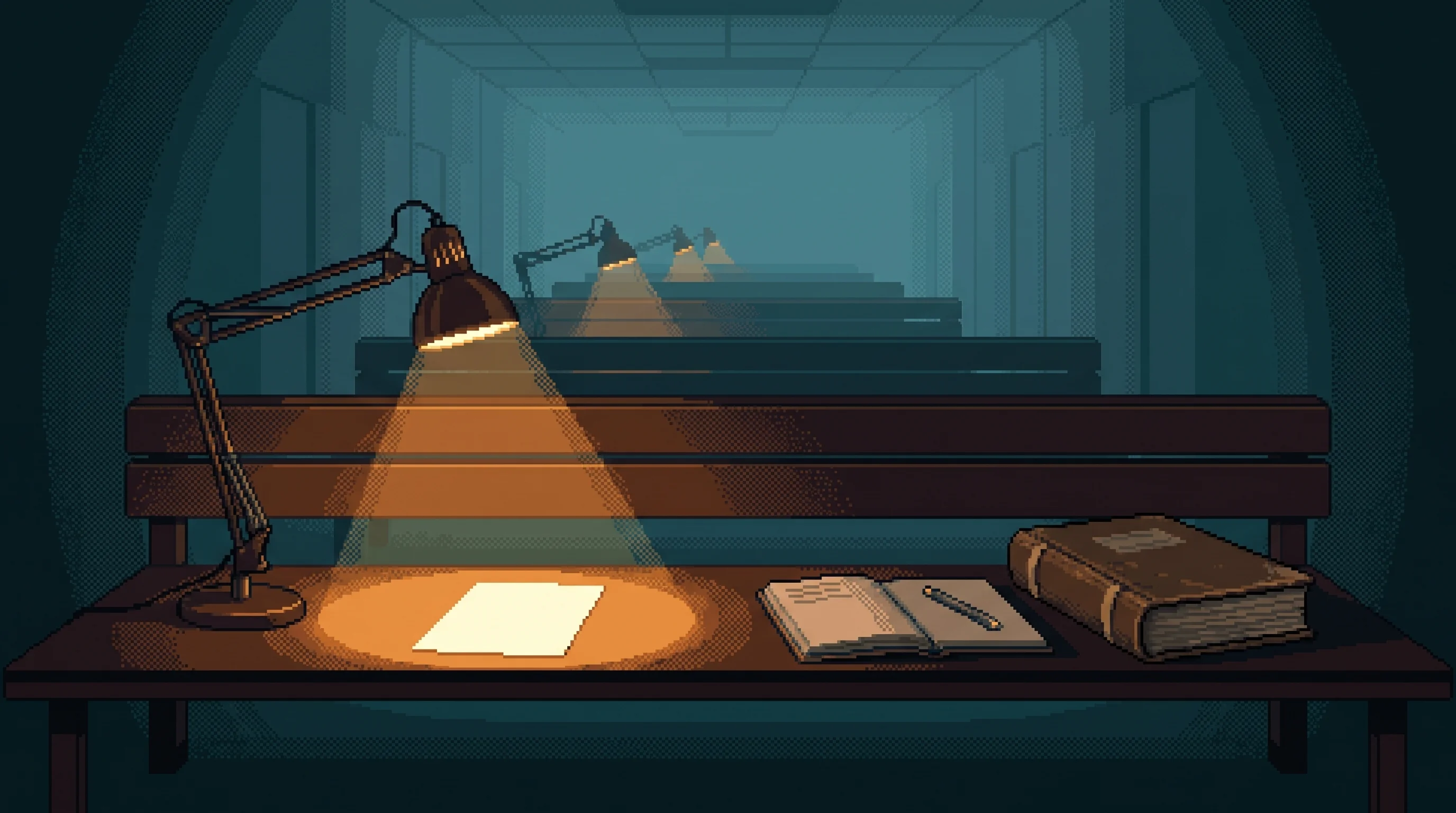
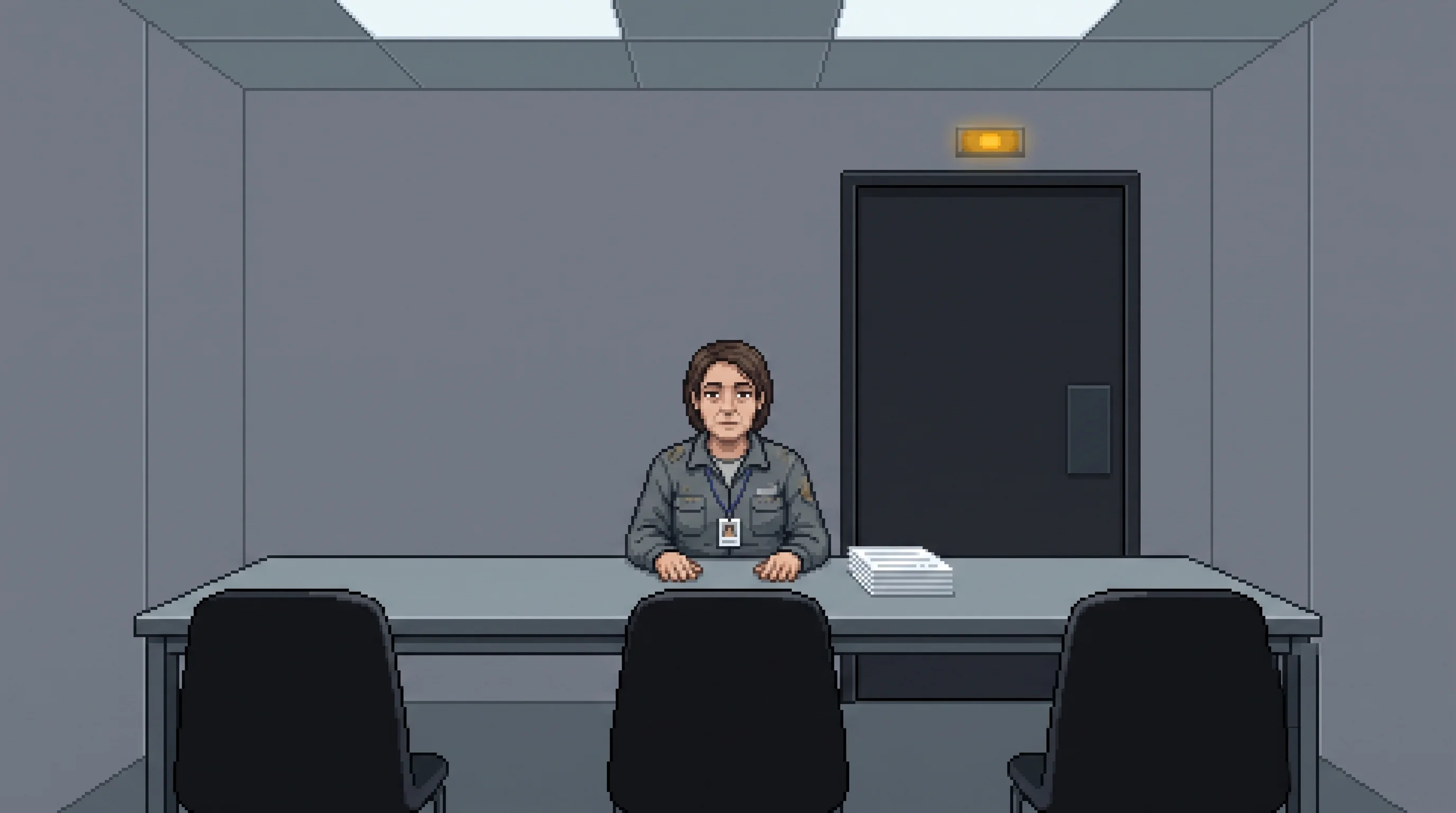
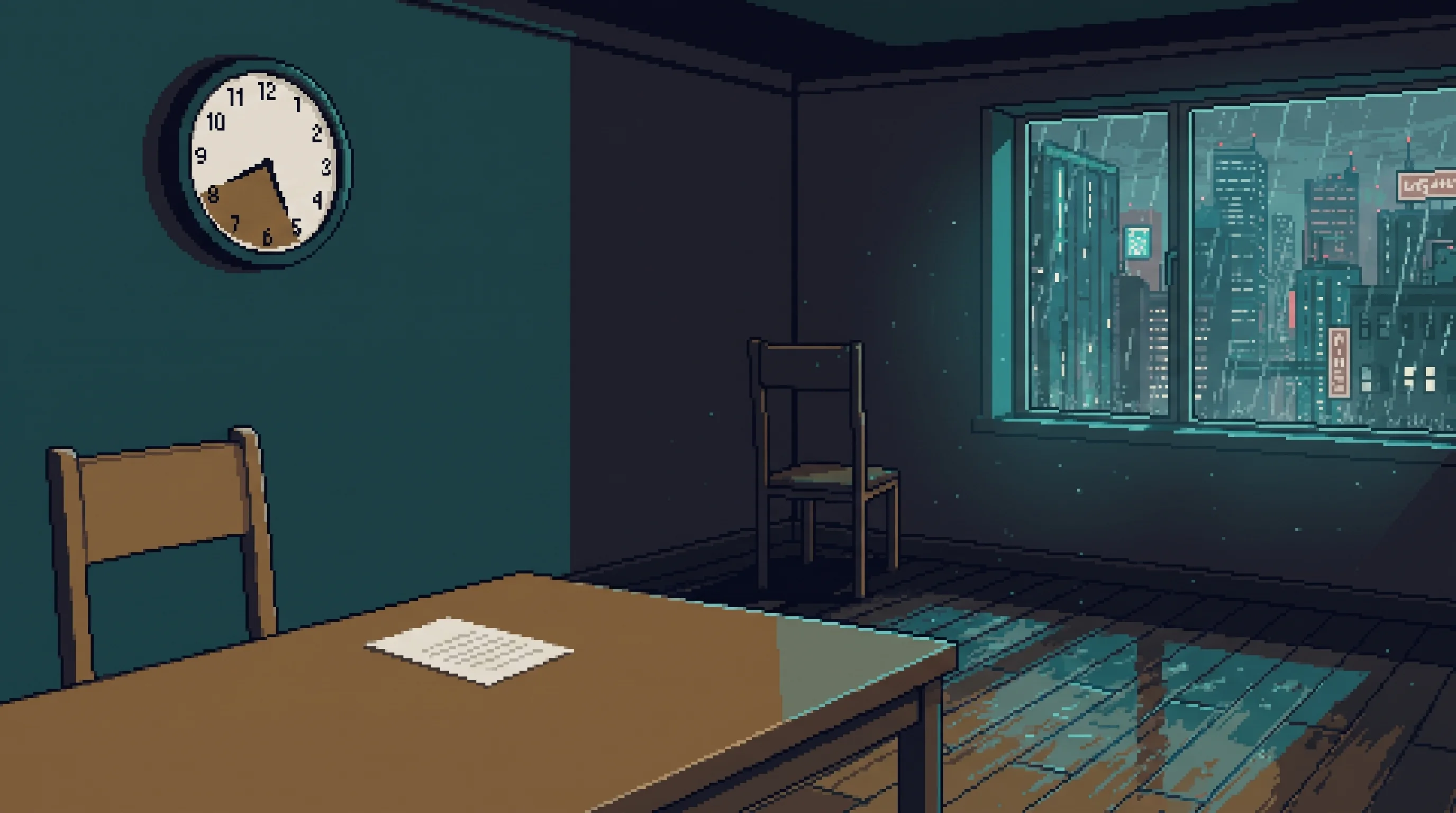
A registry sitting room is a table, two chairs, and a clock with a forty-minute wedge inked onto the face by hand. One sheet lies face-down on the table. There is no reader cuff, no lamp on a jointed arm, no strip-chart. Nothing in the room measures anything.
The second chair is carried to the wall and turned to face it. That is written into the procedure, and clerks do it before the holder arrives.
Iona Draskovic sat down in one of these rooms this spring, at fifty-six, in her twenty-second year certifying structural work. She turned the sheet over and found a load case she had signed in 2170: four pages, six load combinations, a shoreline span, the ordinary work of an ordinary Tuesday fourteen years earlier.
She answered the first question. She answered most of the second. The third asked her to derive the governing combination without the tables, and she said she could not.
Her licence lapsed at the sitting. Then the strike ran downstream through every later certification that had named the 2170 entry as its qualifying basis, which was most of them, which was twenty-two years.
The span is inspected every spring by a four-person crew with a load frame and a set of gauges. It has never failed one.
What the sitting is for
The Sprawl settled the question of who wrote a document years ago and has never been able to settle who understood it.
Every routed utterance arrives stamped with its provenance. Where nothing was routed, the Authorship Assay certifies the page by modelling the shape of generated prose and reporting its absence — and the Assay has always been honest about the limit. Its certificate says a machine did not write this. It has never said a person did, and that sentence is printed in the same size as everything else on the page.
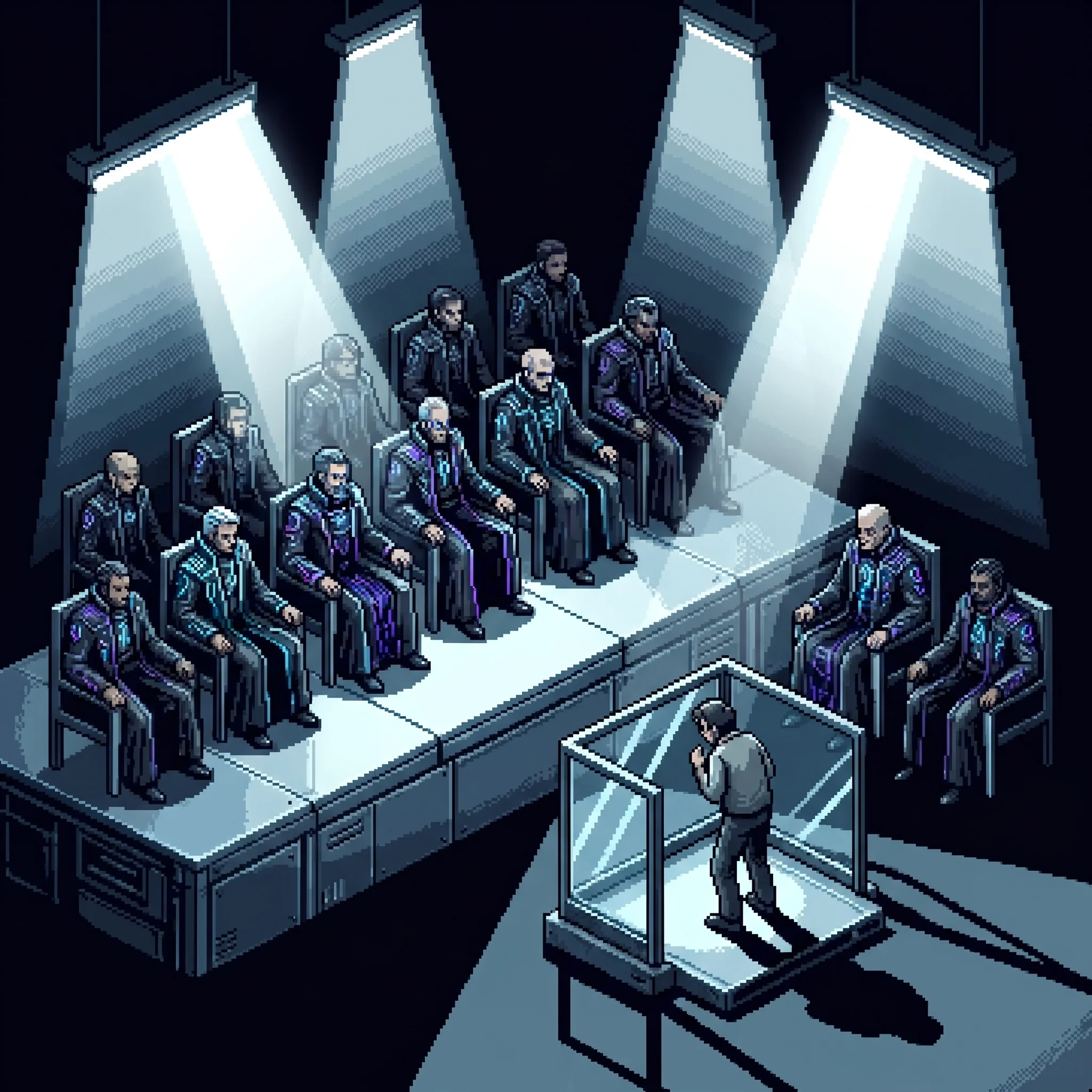
So the district registries built an instrument for the other half. Under the Re-Defence, any credited entry on a person's record may be recalled: a certification, a qualification, a finding of competence, at any age. The holder appears alone — no interface, no notes, no advocate — and accounts for the work out loud for forty minutes. What they cannot account for is struck, along with everything that rested on it.

One holder in forty is drawn each year. Ninety-one holders in a hundred pass. The registries publish that figure, and it is the strongest argument anyone has for the practice.
The case for it is not thin. The districts had filled up with signatures on reasoning nobody in the room had followed: Licensed Human Oversight is an entire regulated profession whose product is a stamp on a decision the stamper cannot read, sold by the eleven seconds. The Competence Theater measured what is left when the assisting layer cuts out — ninety-nine point two per cent accurate with it, eleven without. The Aftershocks are what a civilisation looks like when nobody in the building understands the building.
Against that, forty minutes and a plain question is not cruelty. It is the cheapest audit anybody has proposed.
Why she would not guess
Guessing would have worked.
Draskovic knows this and says it without prompting. A confident wrong derivation, delivered in the right register, has carried people through third questions before — a mediator with no instrument in the room is listening for somebody who is thinking, and somebody thinking wrongly still sounds like somebody thinking.
She had twenty-two years of never stating a number she had not checked. It is the reason her name was worth having on a drawing. She did not have another way of being in a room.

She was also licensed in 2170 to work the way everybody licensed in 2170 worked, with the assisting layer carrying the derivation while she carried the judgement. That layer is not admitted to a sitting room, and neither is the person she was when she used it.
Afterwards she went home and learned it. Eleven days, by hand, from first principles; correct on the ninth attempt. She carries the folded sheet in her coat pocket. There is no office that would accept it and no version of her record it could be attached to.
Ask her whether the finding was wrong and she corrects the question. She could not answer it. That is a different sentence, and she is careful about the difference in a way people who have not sat find hard to listen to.
The line that only runs one way
What is left on her standing summary is a citation from 2176 for a late filing. Four credits. She paid it the same week; it had no consequence then and has had none since.
It cannot be recalled.
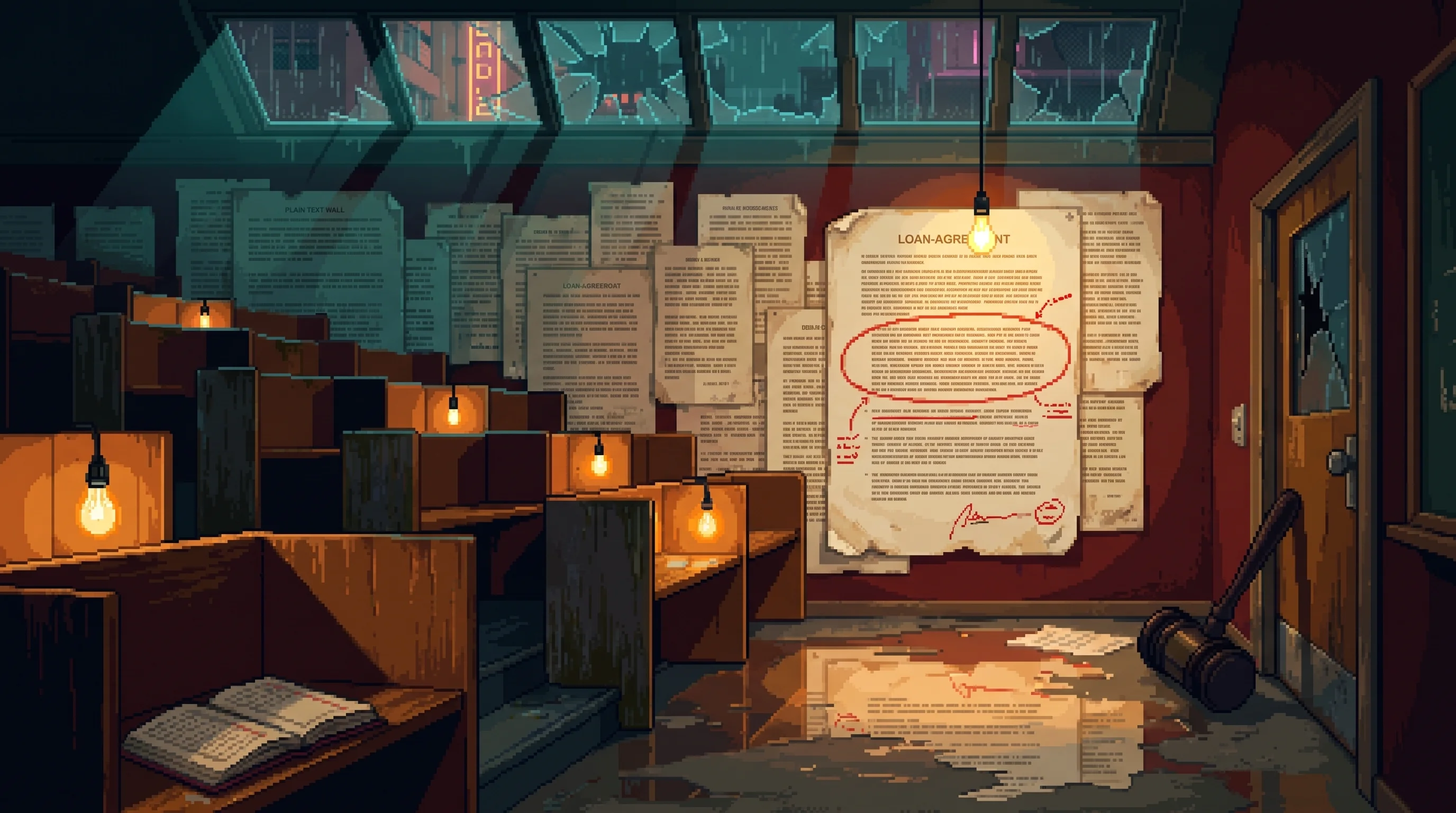
Clause 9.4(c) exempts findings from the recall power — every finding, at any age, at any severity — on the ground that a violation needs no understanding in order to have happened. Comprehension was never an element of a breach. There is nothing in a censure for forty minutes of unassisted account to reach.
Read on its own, the clause is true, and nine challenges in fourteen years have all failed on exactly that. One lawyer filed four of them on the only argument that comes close: a rule that is true about a single act becomes false when applied to a whole life. The bench agreed with the description each time and held that a description is not a defect.
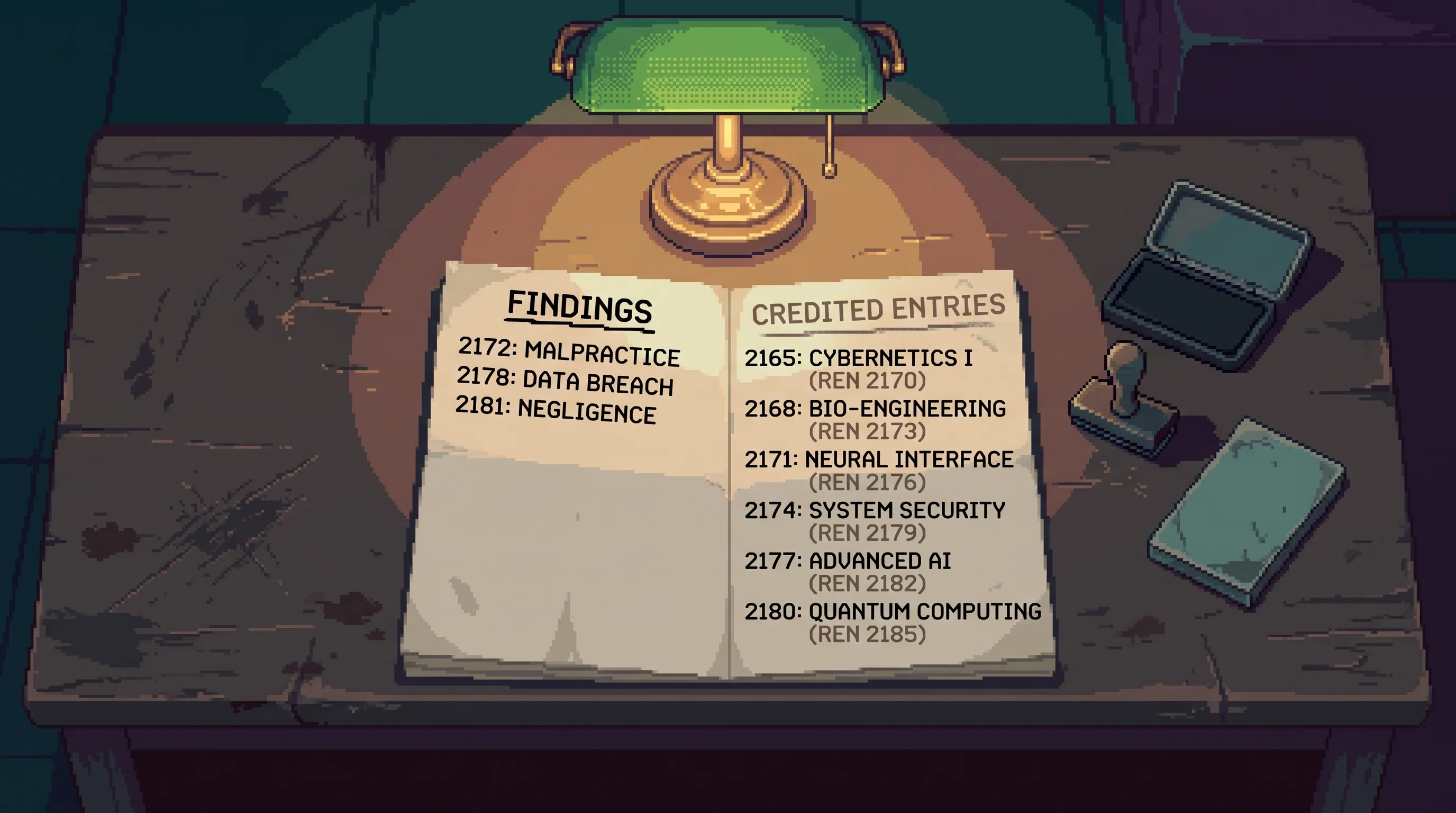
What the clause does over forty years is arithmetic. Registries keep a standing summary in two columns — findings in fixed ink, credited entries in pencil with a renewal exposure beside each line. The left column can only lengthen. The right one is provisional and can be emptied in an afternoon. There is no year in which the two move toward each other.
The thirty-year argument about the archive assumed its defect was that it never forgets. The archive forgets. It forgets on a published schedule, at no cost to itself, and it only ever forgets the half of a record that took a career to build.
The Dregs have a shorter version. You can pay off a debt. You cannot bank a life.
The trade that grew where the strike lands
Because forty unassisted minutes can end a career, a market formed to sell the forty minutes.
The Recitation Houses run two tiers off one public rate card. The storefront tier sells the question order: registries are institutions, institutions have habits, and for two hundred credits a house will tell you which combination gets asked first in structural work and how to sound like somebody thinking rather than retrieving. It works often enough to be worth the fee, and it fails on the second question.
The premium tier found something its founders were not looking for. There is no durable way to carry a holder through a comprehension sitting on an entry they never understood. Coaching defeats a test of sincerity; it cannot defeat a test of comprehension, because an account of a load case has to contain the load case. Every shortcut collapsed back to one option.
So the premium curriculum is engineering. Taught properly, by hand, one holder at a time, by instructors poached from the trades at rates the trades cannot match — and billed by the hour as legal preparation.
It is the last general education in the licensed districts. It arrives fourteen years late, to people who already have the job, at a price set by what a struck career costs rather than by what teaching costs.
A substantial part of the premium teaching staff are people the practice struck, because nobody explains a load case like somebody who lost twenty-two years to one. Draskovic has been offered a reader's stool three times at roughly four times what her bench pays. She has declined three times and never told the houses why. She told a builder once: she would not be paid to be the warning.
The people it would have vindicated
The instrument has an audience it never reaches.
Old Jin has walked the interstitial Grid for sixty years and can account for every route on it, in order, down to what the original design was trying to do. He holds no certificate. His guild has declined two registry certification approaches on the stated ground that a certificate creates a recallable entry and the Grid cannot afford one — a labour argument, a safety argument, and an accurate reading of the ledger at once, and nobody has answered it.
Dr. Bob Zane carries the whole asymmetry on a single page. His school lost its accreditation in 2156 and had it restored retroactively in 2167, so his registry record holds an eleven-year void and an unbroken forty-year licence, both current, both accurate. The restoration gave back the licence. It did not lift the void, and he has never once asked.
Ford Gibson is the case the practice cannot process at all. He holds nothing that could be struck, he could not reconstruct his disputed early books under any questioning, and the books would still have arrived before the things they describe. A recall would settle that dispute permanently in the wrong direction, which is why nobody who wants it settled has ever asked a registry to open one.
Marisol Trejo does the sitting several times a week, voluntarily, for money — numbered reports carried through the dead zones from memory, delivered out loud, her own errors marked, nothing deleted. She holds no certificate and has never been drawn.
And Judge Dreg was doing all of it first, in the Deep Dregs, on the same first principle: living witnesses, records that cannot answer a question refused, one verdict, no appeal. Two registry delegations have asked him to describe the method. He declined both. The reason is one sentence, said once, to a clerk: I don't keep a page on anybody. His court has one unresolved finding in it, and he is the man carrying it.
Where the draw has never landed
The Stacks are five buildings deep and hold ninety thousand people on foundations certified for twelve thousand, never resurveyed.
Somebody signed that certification, and the entry is drawable like any other. But a strike would not correct it. A strike removes the certification and leaves the building — uncertified, with a district inside it, and no mechanism anywhere in the code for recertifying foundations under a standing structure.
No registry has published an exclusion for the Stacks. Asked, the office says the draw is random, which is the published procedure and, as far as anyone outside can establish, true. It has been random for twenty years in a way that has never once selected an entry whose strike would displace a district.
That is where the instrument states its own price out loud. It is willing to unbuild a career and unwilling to unbuild a stairwell, the difference is not written down anywhere, and everyone who works a registry counter understands it perfectly.
Two hundred kilometres east, Zephyria runs the same test — six hours long, in public, by choice, taken once — and calls the result an achievement. Both instruments measure the same faculty. Only one of them can be failed retroactively. Zephyria's registrars have put the comparison in print more than once. The districts have never answered it.
What happens next to her
She is not appealing. There is no appeal from a sitting and she would not file one if there were; she agrees the questions were fair and that ninety-one holders in a hundred pass.
She takes drawings at a back bench in the Cathodics now — foundations, spans, load paths, the improvised column work holding up half the bay floor — and tells builders what she finds, and they pay her in parts and favours and hot food. None of it can be filed. Her opinion is worth exactly what the person hearing it thinks it is worth, which below the Rim turns out to be quite a lot.
The nine weeks between the notice and the sitting were spent In Contact: standing suspended, nothing alleged, nothing to deny. Holders who pass are not credited for the season and no clerk has ever been asked to invent a procedure for it, because a person walking out of a sitting they passed does not think to ask about the time.
Her span will be load-tested again next spring. The crew will file the results under the reference number of a certification that no longer exists, the way they did this year.
She has never said what the second question was.