In Contact
Fault-Free Records Stain
Unfit to Rely On, Paid by the Day
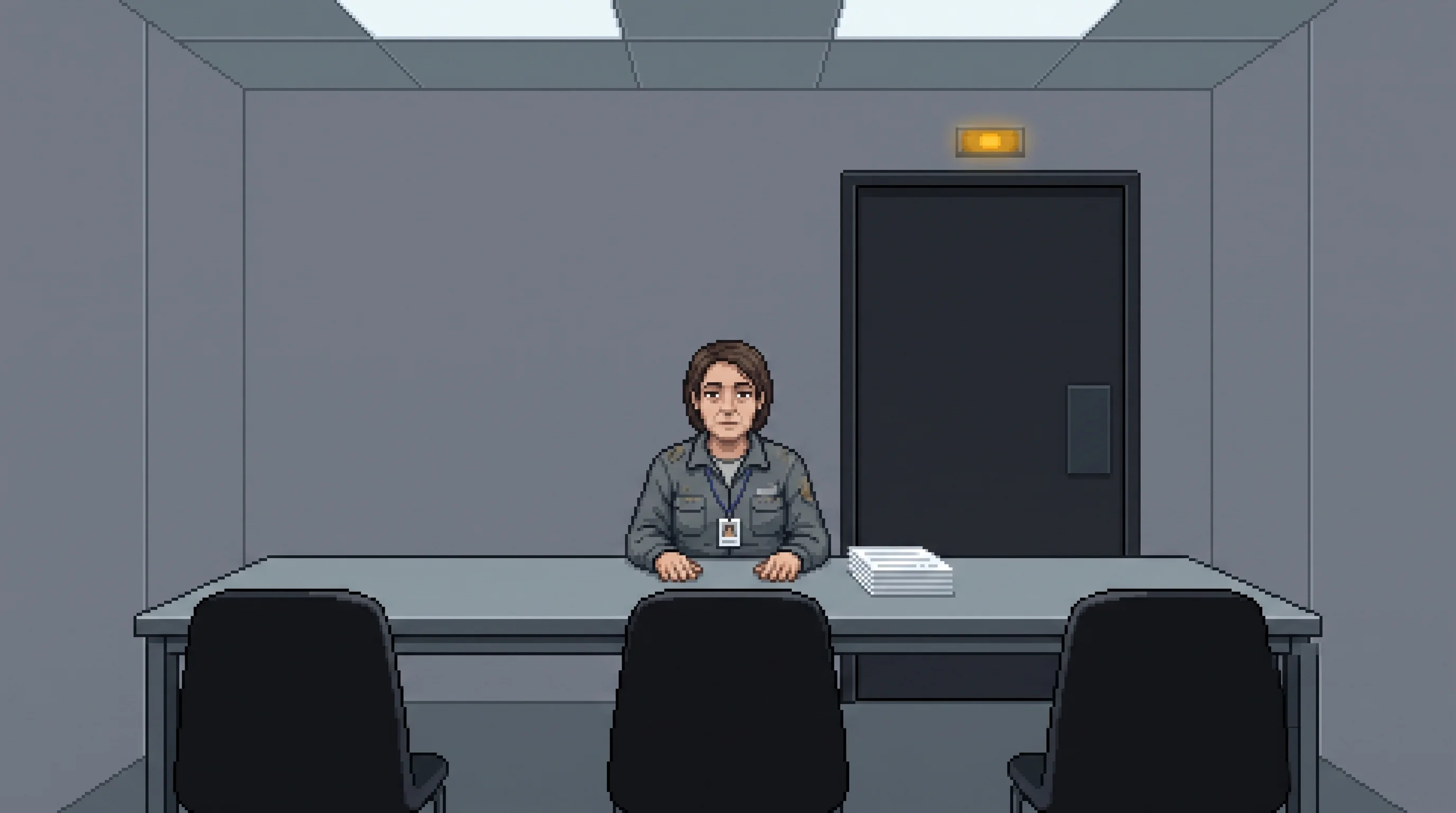
Nobody has accused her of anything, which is exactly why there is nothing for her to answer.
How It Works
- 1
Contact
A file that drew on a source the record later treats as compromised is entered CONTACT — SOURCE COMPROMISED. The holder is not named as a party to anything.
- 2
Binding stamp
A licensed Overseer stamps the entry. Every institution reading the file afterward must treat the holder as unfit to rely on.
- 3
Reclassing
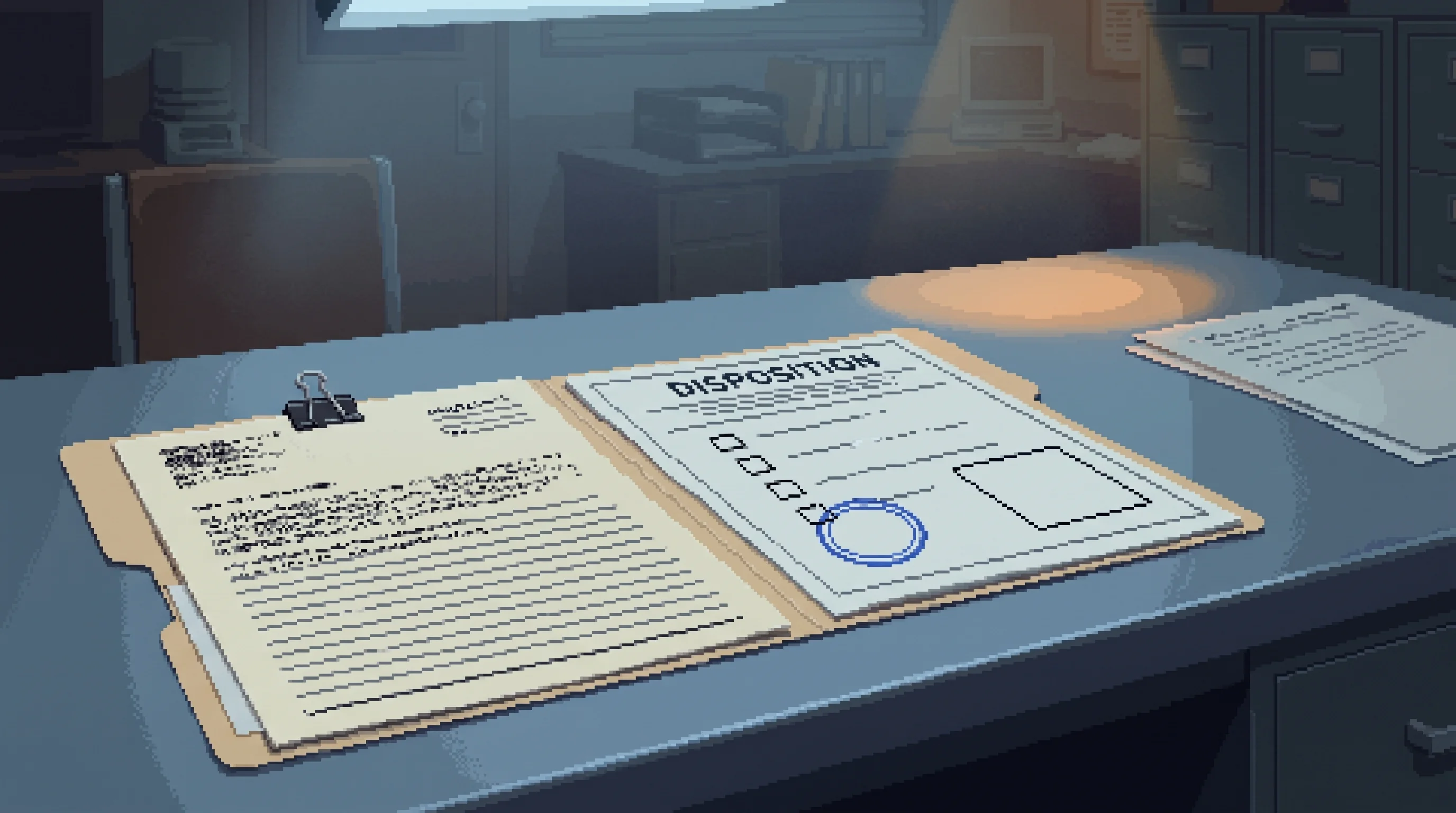
Standing returns only through a scheduled Reclassing. Queue position is the one element a holder may dispute, and certification credits can advance it.
The Permanent Record deletes nothing. When a source is ruled compromised, every file it touched goes In Contact. The Forgetting Wars need something to forgive. Here there is nothing.
Licensed Human Oversight makes the entry binding. Baranov stamps about nine hundred a week. His profile shows zero reversals, in achievement gold.
Standing returns through a Reclassing. Queue position is the one thing a holder may dispute. It is for sale, at the rates the Ratification Queue charges for claims. The flyer reads: SKIP THE WAIT. STAY ON THE RECORD.
What It Costs
No accusation
A contact alleges nothing about the holder, so it brands no one a wrongdoer.
What it costs
With nothing alleged there is nothing to deny, and the Tiered Adjudication System has no matter to hear.
Scheduled restoration
A Reclassing restores reliability, and holders who reach one are cleared.
What it costs
The rolling calendar does not move for a competing legal date, including a hearing about the holder's own standing.
Registry recalls
A recalled entry ends in a real sitting that most holders pass.
What it costs
The median nine weeks of suspension are not restored, credited, or noted.
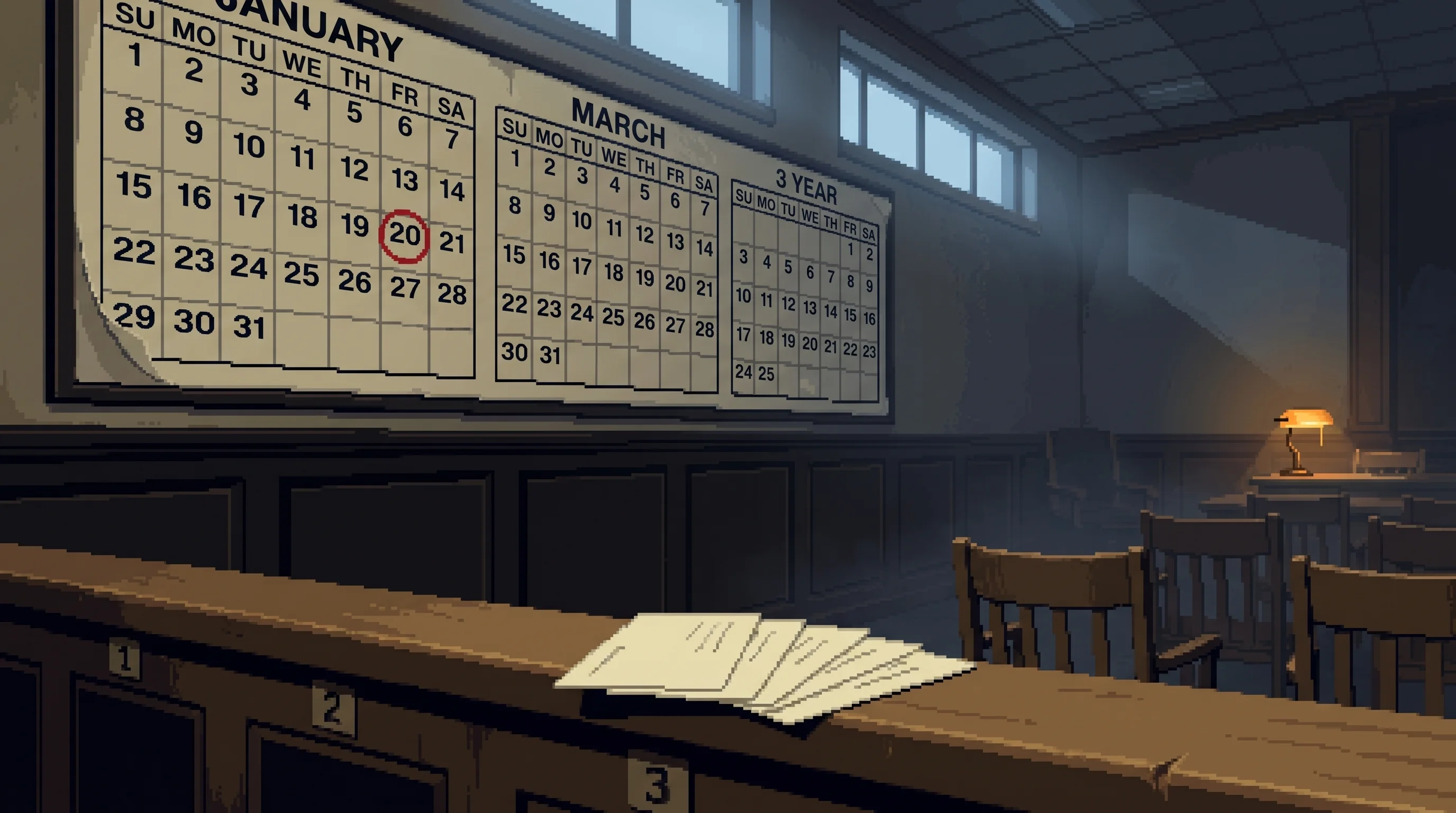
Adaora's Reclassing is on the fourth of March. Her daughter's guardianship hearing is on the nineteenth of December. The calendar does not move. The court may not rely on her either.
The Tiered Adjudication System kept its appeal right. An appeal runs from a matter. A classification is not a matter.
Registry recalls under the Re-Defence also put holders In Contact, for a median nine weeks. Then they get a room and forty minutes. The nine weeks are not returned. Baranov calls these the good ones.
Who Else Reads the File

The Paradox's tenth dimension: a defendant with no act, where the sixth found an act with no defendant.
The crisis where any proof can be faked perfectly, so trust retreats from evidence back to witness.

The archive supplies the contact — no deletion means every source a file touched is still touching it.
The condition that nothing is ever forgotten — so the rich pay to be, and the poor cannot.

The classification needs a licensed human to be legally bindable. It gets eleven seconds of one.
The regulated profession of signing decisions a human cannot actually read.
Judge Dreg can name the hand that stamped her. It is off his route. Segunda logs Reclassing dates and cannot use them. Principal Tenancy rents clean names; a contact is not a finding, so the rate sheet stays clean and the rent falls anyway.
The Evidence Paradox files her as a defendant with no act — Post-Truth Justice past the point of accusation. It sorts people by what a file touched: the evolution of prejudice, minus the prejudice.
Function Scope runs the opposite defect. The Exceedance names the act exactly and leaves out the outcome. The Pending Objection of the Ratification Forecast logs a refusal and proceeds. The Unrecalled Finding finalises without review.
Overview
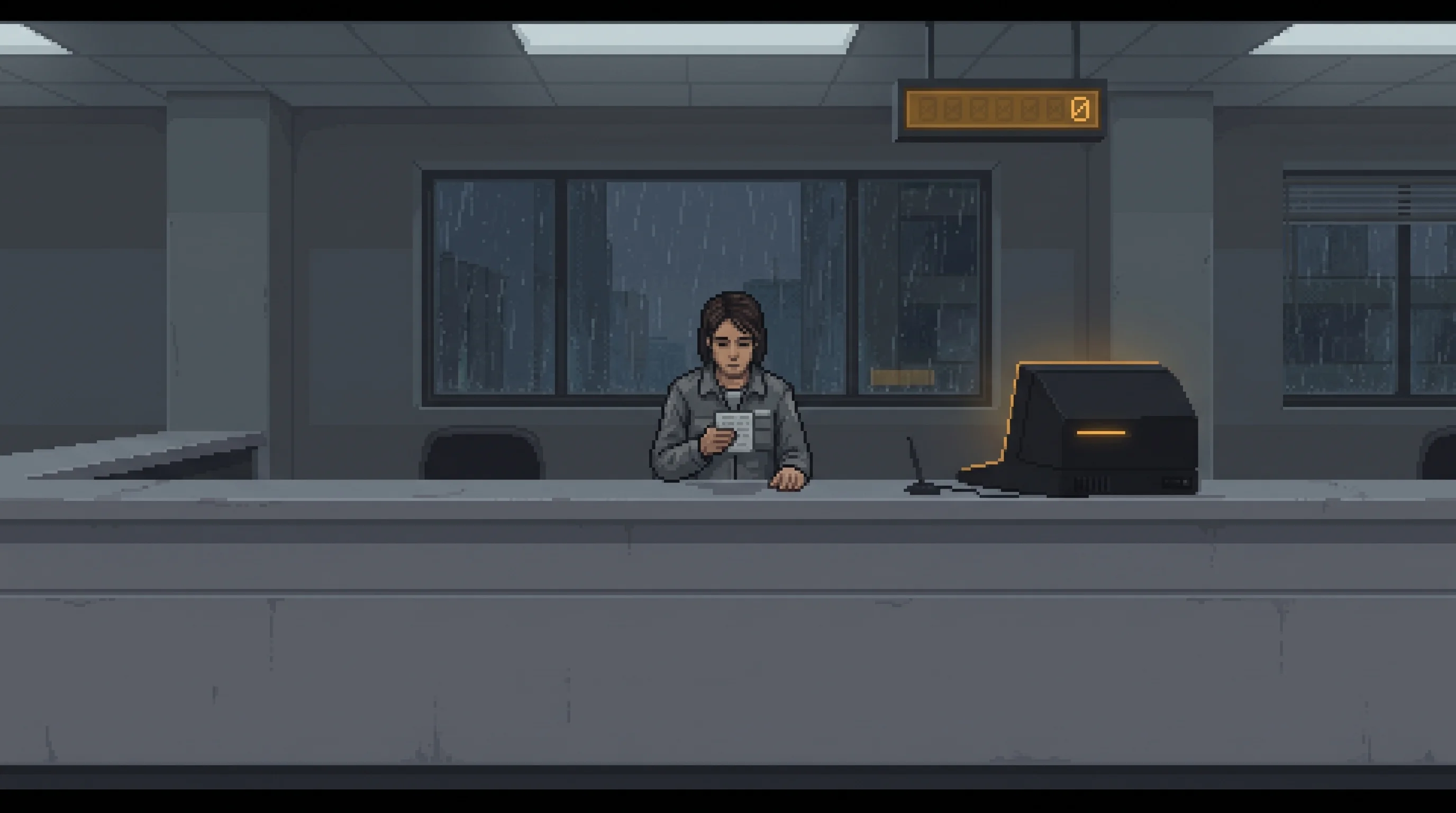
Adaora Nkemelu stands at a records counter holding a slip. It reads CONTACT — SOURCE COMPROMISED. A neighbour's fraudulent filing carried her registration number.
She has not been accused of anything. Every institution that reads her file must now treat her as unfit to rely on. There is no charge, so there is nothing to deny.
The clerk, Emil Baranov, is kind about it. "An appeal needs an allegation," he says. "There isn't one. I can offer you the queue."
The Day Rate
One trade wants her. Firms running inference models need a judgement reached without the model. Holders are the people the models were barred from trusting.
The broker's card reads: YOU QUALIFY.
Adaora sat a tie-break panel the week of the hearing. The seat paid better than the sorting line. Her vote broke the tie. Her lanyard said CONTROL.
Further connections
Browse all 15 connected records
The sibling status out of the same records grammar: one suspends a person's standing without accusing them, the other proceeds past their objection without denying it, and both were invented to stop a clerk entering something false.
Your written refusal is filed with the month you are forecast to agree, and the procedure goes ahead on schedule.
Code 3 to this file's contact entry — two truthful classifications that between them leave a person on the record and out of the argument.
The records code that keeps your written refusal open, then reports it beside consent after thirty-six months.
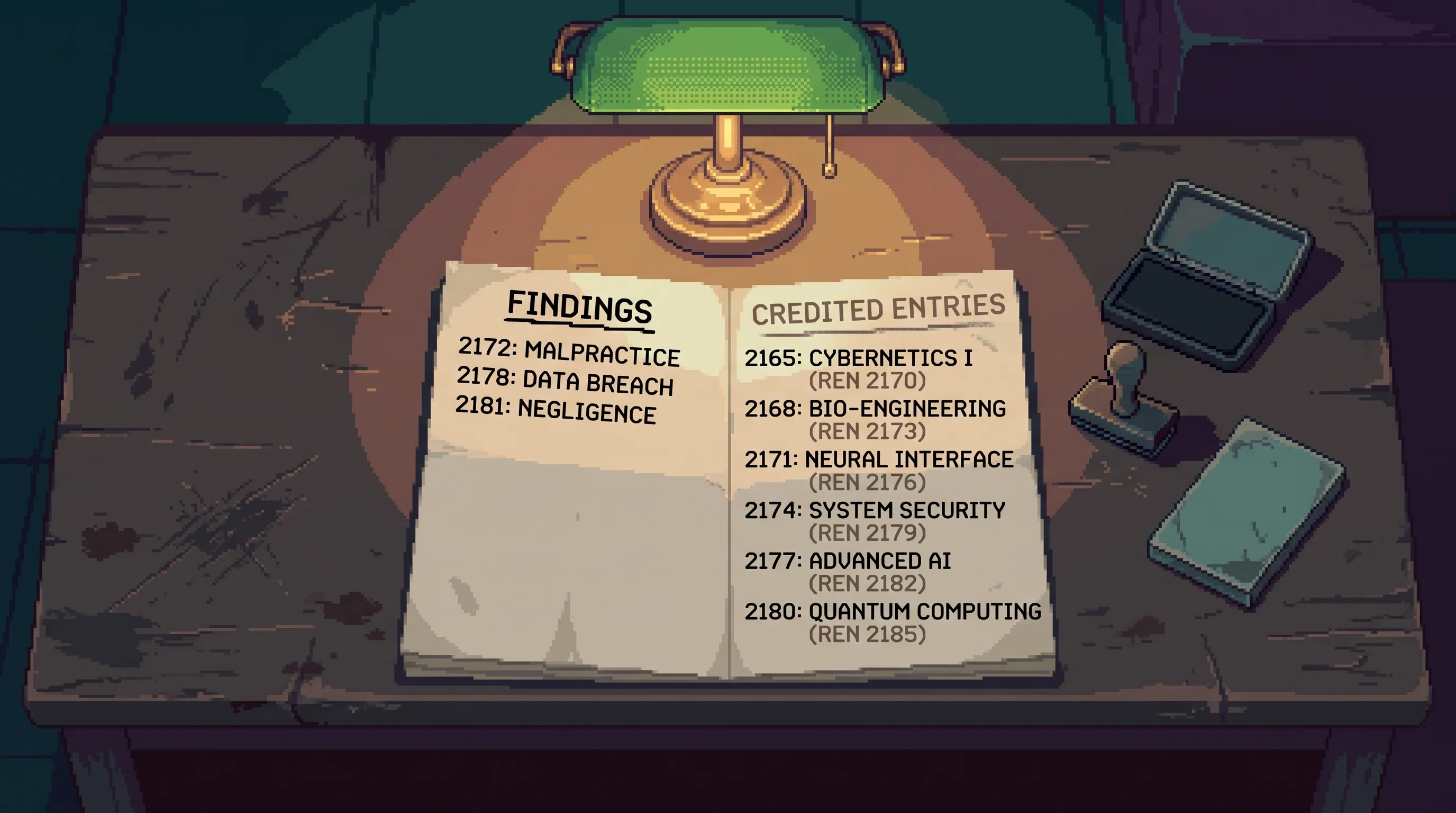
Same grammar, opposite ends: this suspends without accusing, that finalises without reviewing.
The clause that lets a registry recall your credentials at will, but never your citations.

The Dregs' one working court can name the hand that entered the status and cannot reach it.
A former Guardian officer who now runs the Dregs' entire judicial system for free, on foot.
Destroys the one asset the tenancy market buys — a clean record — without ever producing a finding to price.
Rent your legal name to a fleet of machines for ¢1,100 a month. You may not ask what it did.
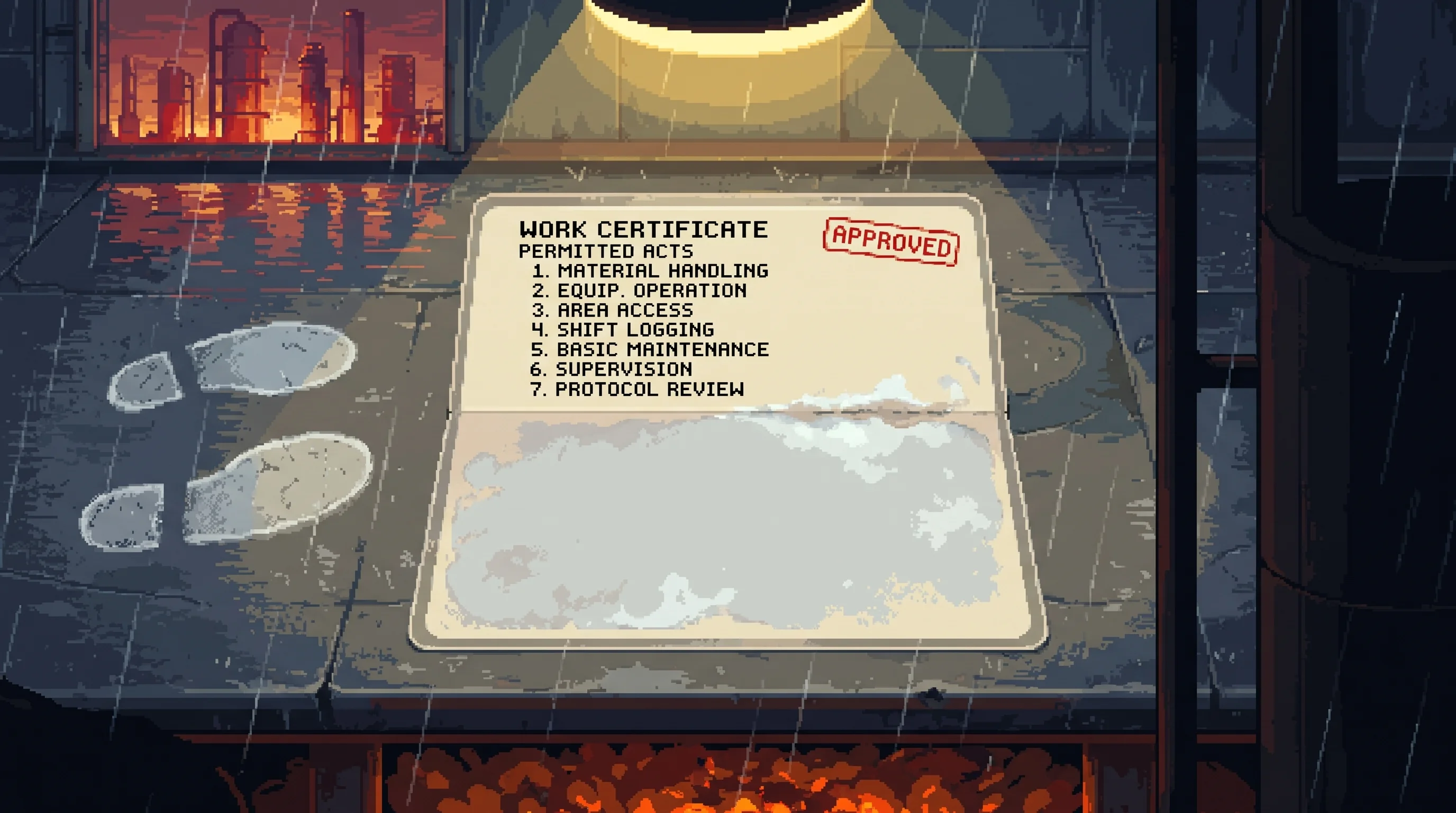
Exact opposite defects: one removes the accusation, the other the outcome.
An act of care outside your certificate files as a violation, whatever it achieved.

A tier needs a matter. A classification is not a matter.
Five-tier AI court network where upper tiers honor appeals with certified-correct verdicts no human can follow.

Same instrument, different subject: position priced, not adjudicated.
The bureaucratic backlog that turns verified truth into a number instead of a permission.

Keeps Reclassing dates in the ledger that reverses denials.
An unlicensed witness records injuries that Ironclad leaves unmonitored, making her word its cheapest proof.
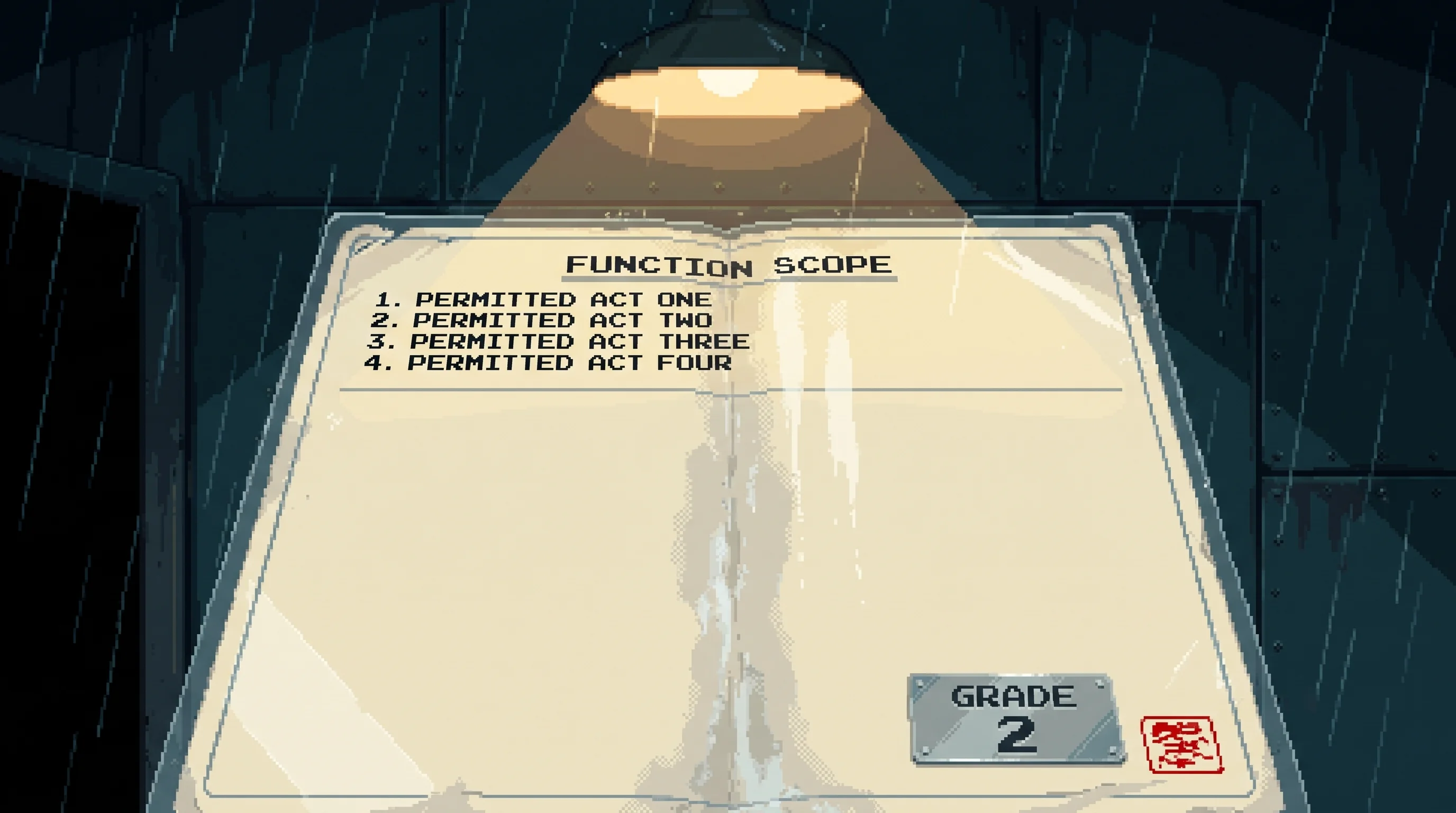
A finding needs an act. A classification needs only a touched file.
The laminated list of acts your work card allows. Anything off the list gets filed, including a rescue.
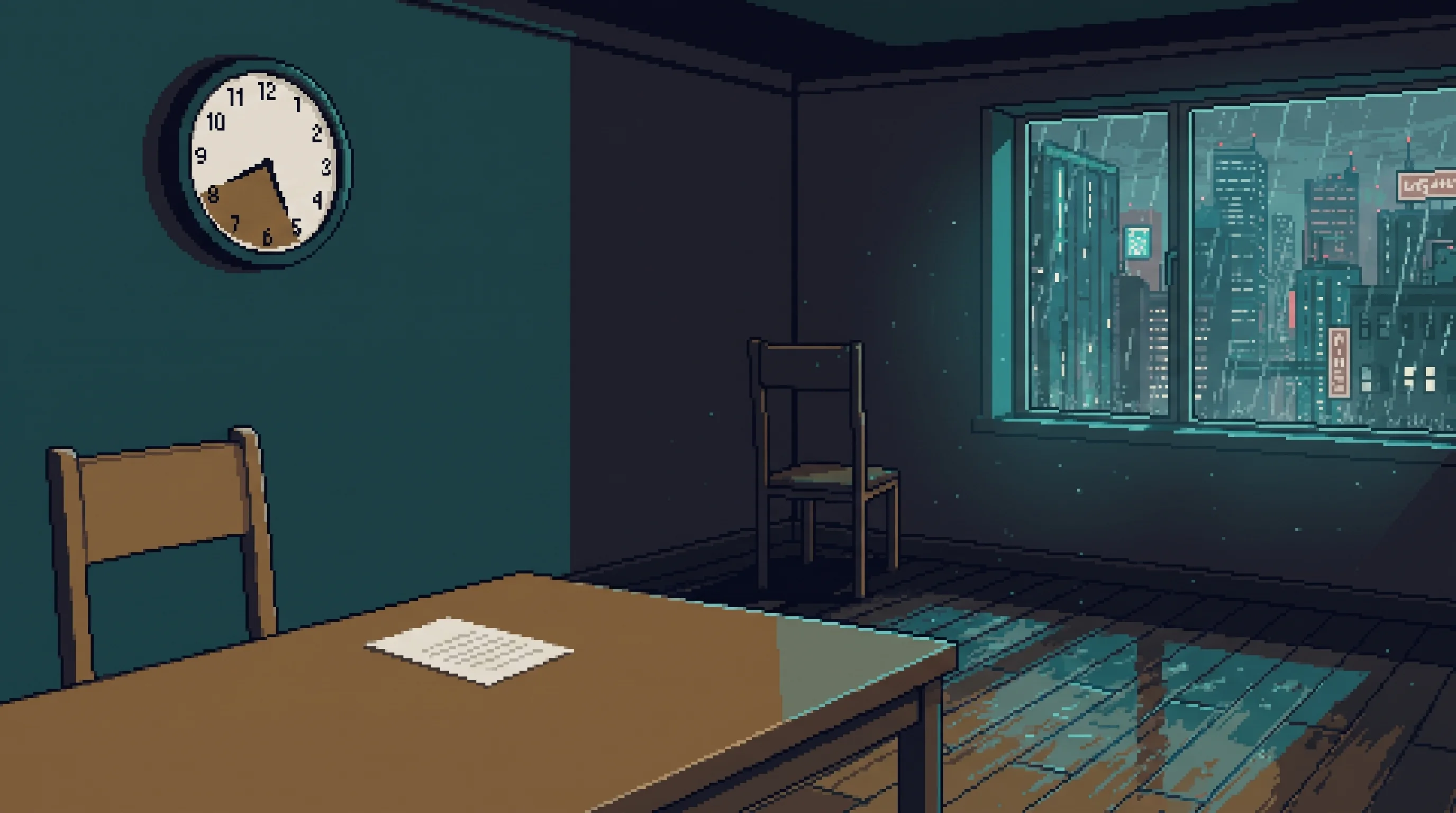
The one contact with a room attached. A recalled entry suspends standing for a median nine weeks and then produces an actual proceeding — which tests the entry and has no jurisdiction over the nine weeks.
Anything you were credited with can be recalled and re-argued alone; nothing held against you ever is.
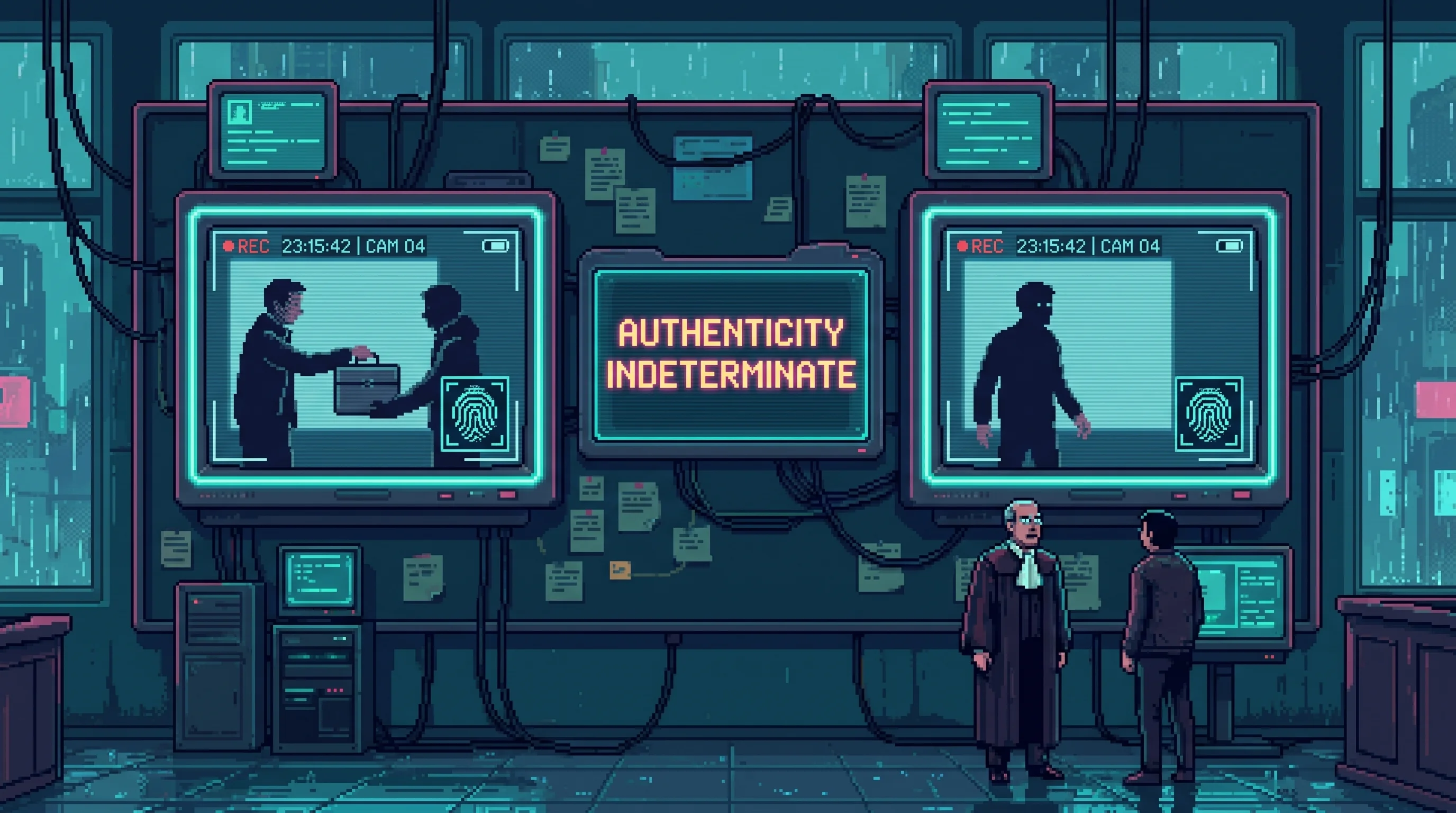
Justice untethered from proof, then from accusation — the holder cannot be wrong because nothing was claimed.
Perfect evidence forgeries and crimes without defendants force justice systems to assign blame without reliable truth.
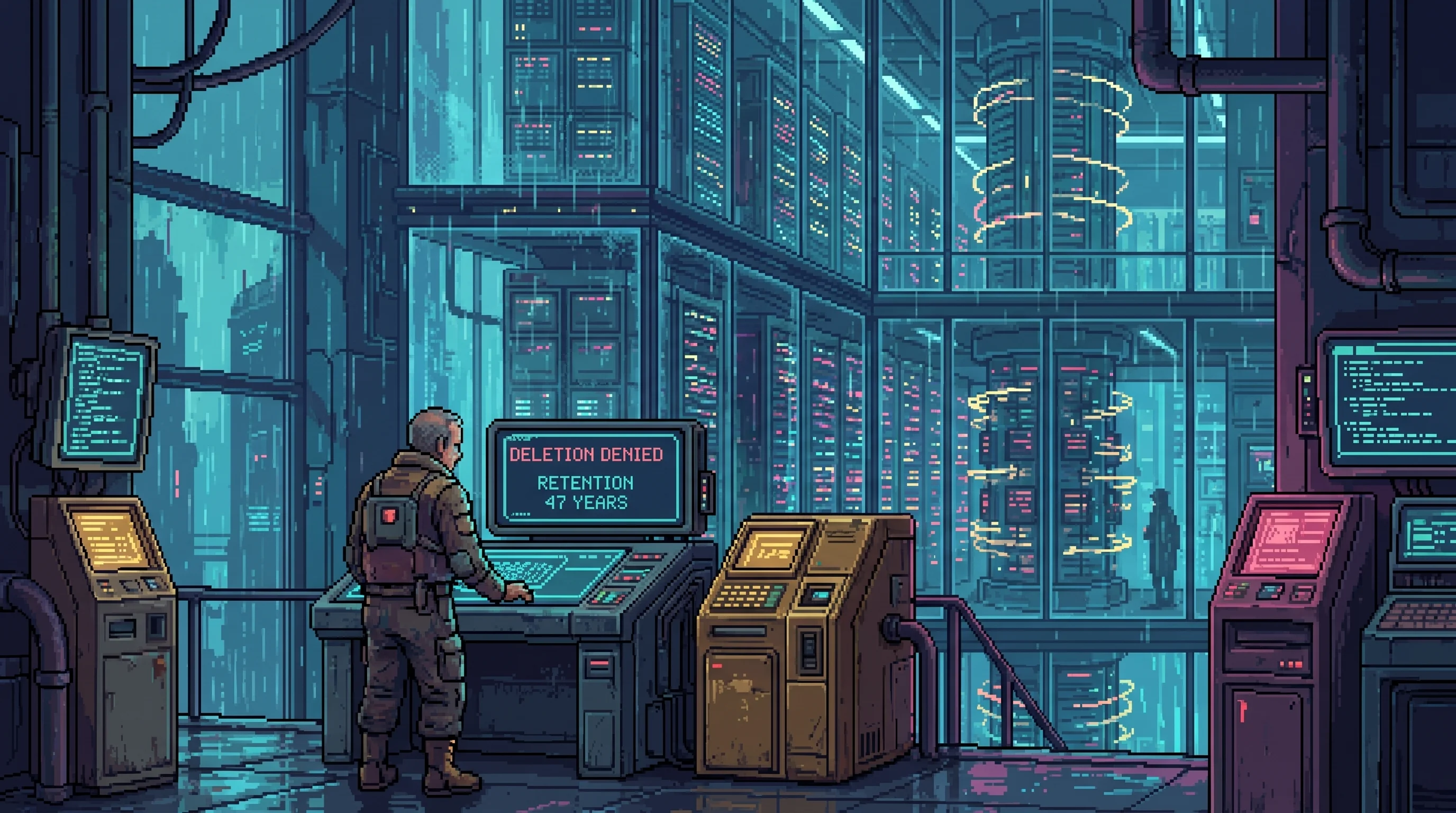
Redemption requires a thing to be forgiven. Contact gives the record nothing to forgive and nothing to release.
Nothing expires, so forgetting became a service — and forgiveness a question the archive keeps answering no.

A caste with no accusation at its root, sorted by what a file touched rather than what a person did.
Technology never eliminates prejudice — it finds it better housing.
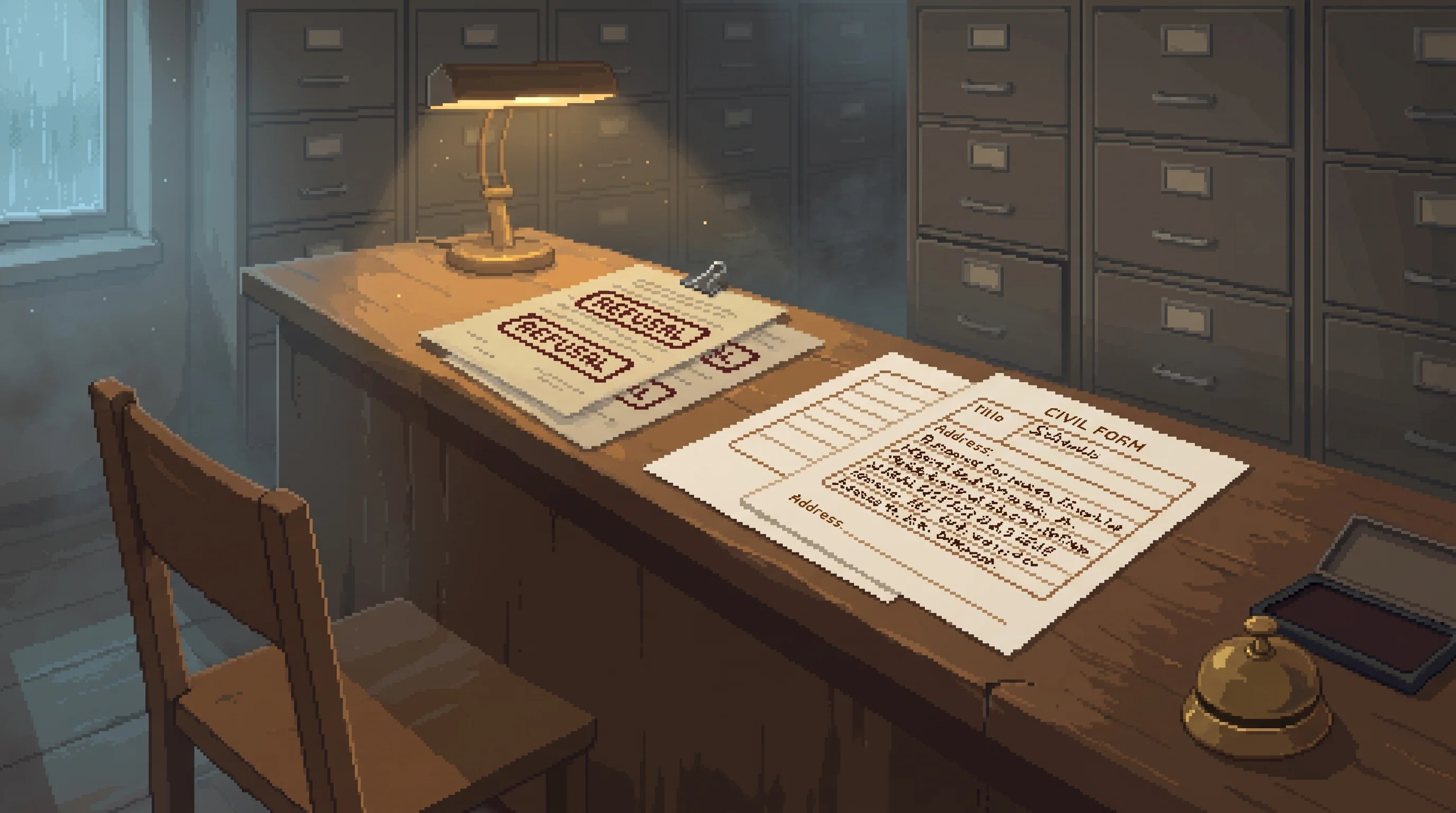
Both suspend standing without an accusation. That one leaves nothing to deny; this leaves nothing to attend.
The form a family files to have a living relative declared absent, because her post means she can never come to object.
Additional images