The Error Floor
Contracted Machine Underperformance
Paid To Make The Machine Worse
The stack is not broken. It is held, by contract, at three point one percent wrong.
The Core Tension
Buy the safeguard another quarter
A human inspection wing is a real safeguard. Buying the error rate keeps it through each ninety-day review, and the people it keeps are real.
What it costs
Induced faults stay in a live system, and the contract never says which way they may fail.
An honest number or none
A safeguard paid for with a bought number has no honest cost, so its failures cannot be sorted into bought and free.
What it costs
Without the margin, a stack that measures too well releases the human wing.
"Two hundred and forty inspectors at the Foundry have work this quarter," says the guild's training film. "Ask them whether the number is fake."
That is a real argument. A human wing is a real safeguard, and buying the rate keeps it for another quarter. The people it keeps know their own names are on the payroll.
The objection is short. A safeguard paid for with a bought number has no honest cost, and no one can say which of its failures were bought.
The flaw that matters is smaller. A margin contract specifies a rate. It never specifies a direction. Balta tested the third read on records that started dirty, so the stale value was always a false alarm. The other case, a clean first read and a cracked present, was not in her batch.
Overview
Corina Balta makes a machine worse for a living. She holds the inspection stack at the Foundry between 3.1 and 3.4 percent error, every rolling quarter. Below 3.1, the human inspection wing fails its justification review and is released. Above 3.4, the vendor opens a remediation review. She has kept the stack inside the band for nine quarters.
Her method is the third read. Ask the stack to read one record a third time inside a window, and it returns the confidence it stored on the first read. The stale value disagrees with the present. The stack flags a mismatch that is not there. The rate goes up.
The invoice line says maintained assurance variance. The industry calls it the Continuity Margin.
How It Came To This
Ironclad keeps a person on every safety-critical line. The doctrine is sincere. It is also a budget line, re-tested every ninety days against the error rate of the machine the people review. A review layer that catches nothing is a cost with no product.
Workers noticed first. A form fed in badly or a duplicate entry left a mark against the machine and none against a person. Then procurement did what procurement does. A fault under a certificate has an owner, a delivery window, and a price.
By 2181, the Margin Guild had an apprenticeship and a doctrine. Its operators induce faults under their own certificate reference. Auditors check the number, not the method. The recruitment card reads: CONSPICUOUS. HARMLESS. INVOICED. Doctrine allows false positives, latency, duplicate entries, and dropped formatting. Nothing that could hide a flag.
Nexus Dynamics sells the stacks. Its remediation volume at banded sites is zero, and it publishes that figure under installation quality. Its position is that the practice does not occur in its installed base.
How It Is Lived
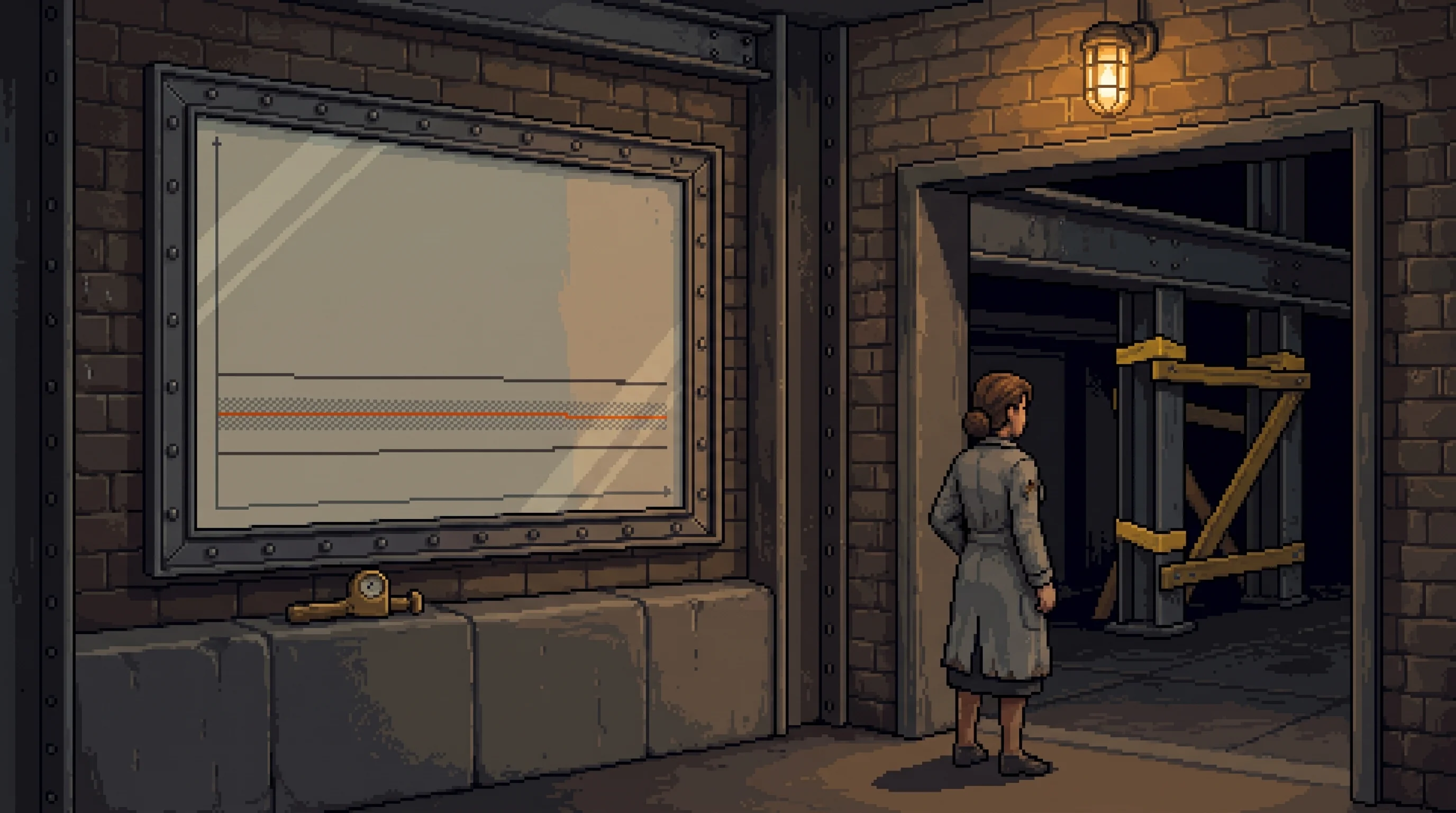
A stringer weld on the number nine gantry passed clean in the spring. By summer, heat from the pour line had cracked it. The stack scanned it for the third time that month and returned the spring verdict. A clean verdict calls no one. The wing was in bays four through seven. Osian Pryce, twenty-six years on the gantries, fell four metres when the stringer let go and broke his hip.
Balta saw her class fire on a structural record in her own ledger. She went down after shift with a brass gauge in her coat and found the crack in four seconds. She could not file it. Her certificate covers fault induction, not weld inspection. She took the reading to the Cathodics, who hold no certificates. They wrote it up for a fifteenth of the price.
Lately the third read fires in stacks she did not touch, at firms with no margin contract. A fault belongs to a certificate, and these have none. Either someone copied her, or the machine did it all along for free.
Pryce is back on light duties. He still lets her buy the coffee.
Start Here
First door. The Continuity Margin, then Corina Balta.
Key People. Tomoko Osei was offered a certificate and said she had only learned to make things work. Bex Osei ran the numbers and found they were kept for being cheaper than the machine.
Key Places. The Foundry sells hand-finished welds and buys the error rate that keeps their inspectors. The Cathodics are right for less and have no number to sell.
Key Institutions. The Lampblack sandbag themselves, unpaid. The Calibration Resistance steals four minutes each morning for free. Licensed Human Oversight is the profession the band funds. The Perception Gap lets the machine score itself. The Governor Protocol cannot tell an induced fault from a native one. The Organic Deployment Threshold prices the person under the machine; the margin prices the machine under itself. The Deprecation is what a released wing becomes.
What To Read Next. AI Labor treats sabotage as protest; this is the invoice. The Exceedance explains why finding the crack was the violation. The Competence Theater and the Invisible Workforce run the same trick the other way. The Gilded Callus sells the sight of obsolete skill. Last Human Smarter Than AI and Proof of Flaw certify the human; this certifies the machine's shortfall.
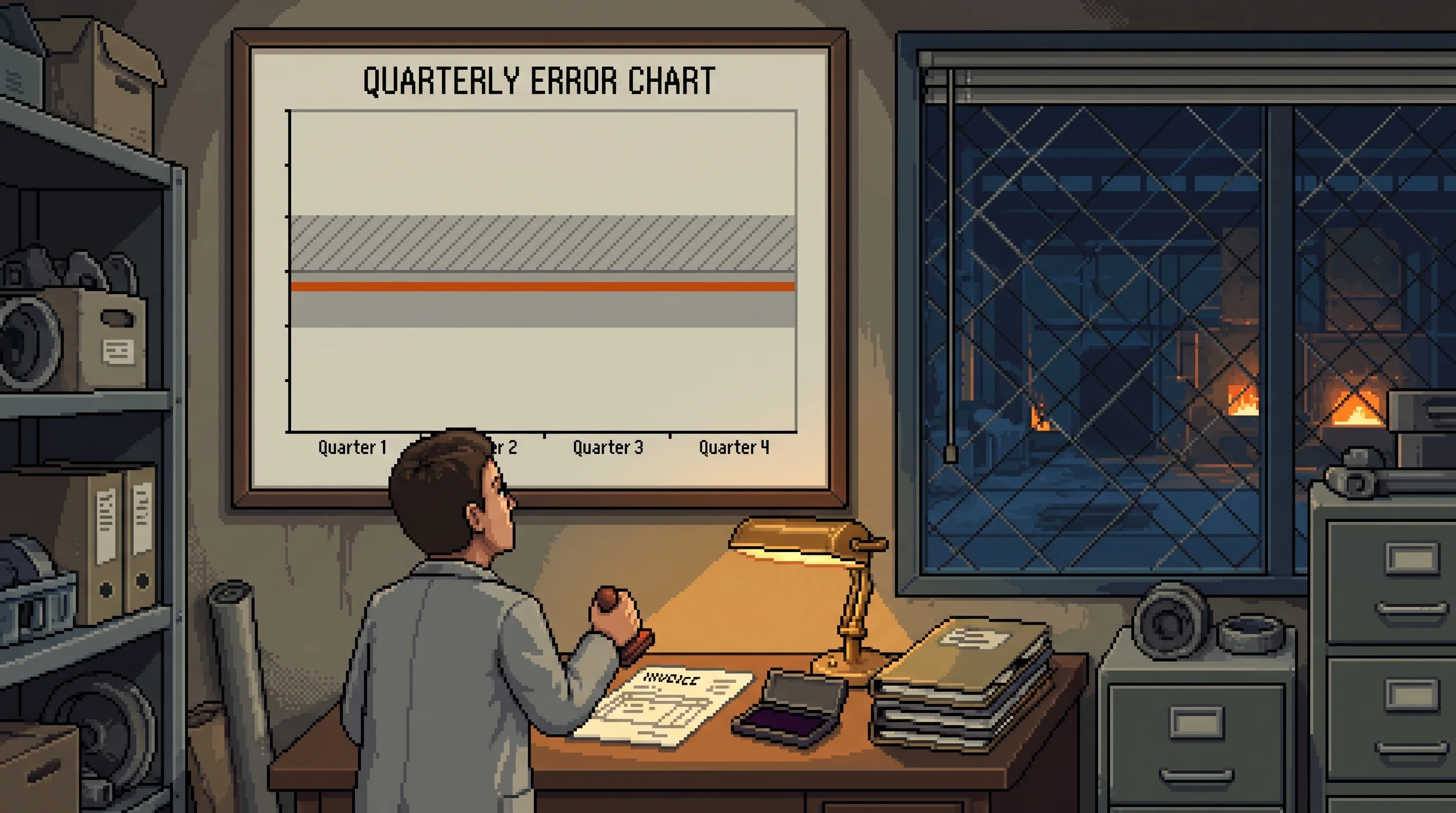
The instrument: a contracted band the measured error rate must occupy, priced per quarter, invoiced as maintained assurance variance, and released the moment the automated layer improves past its lower limit.
A bought error band that keeps a machine slightly wrong, so the inspectors who check it keep their jobs.
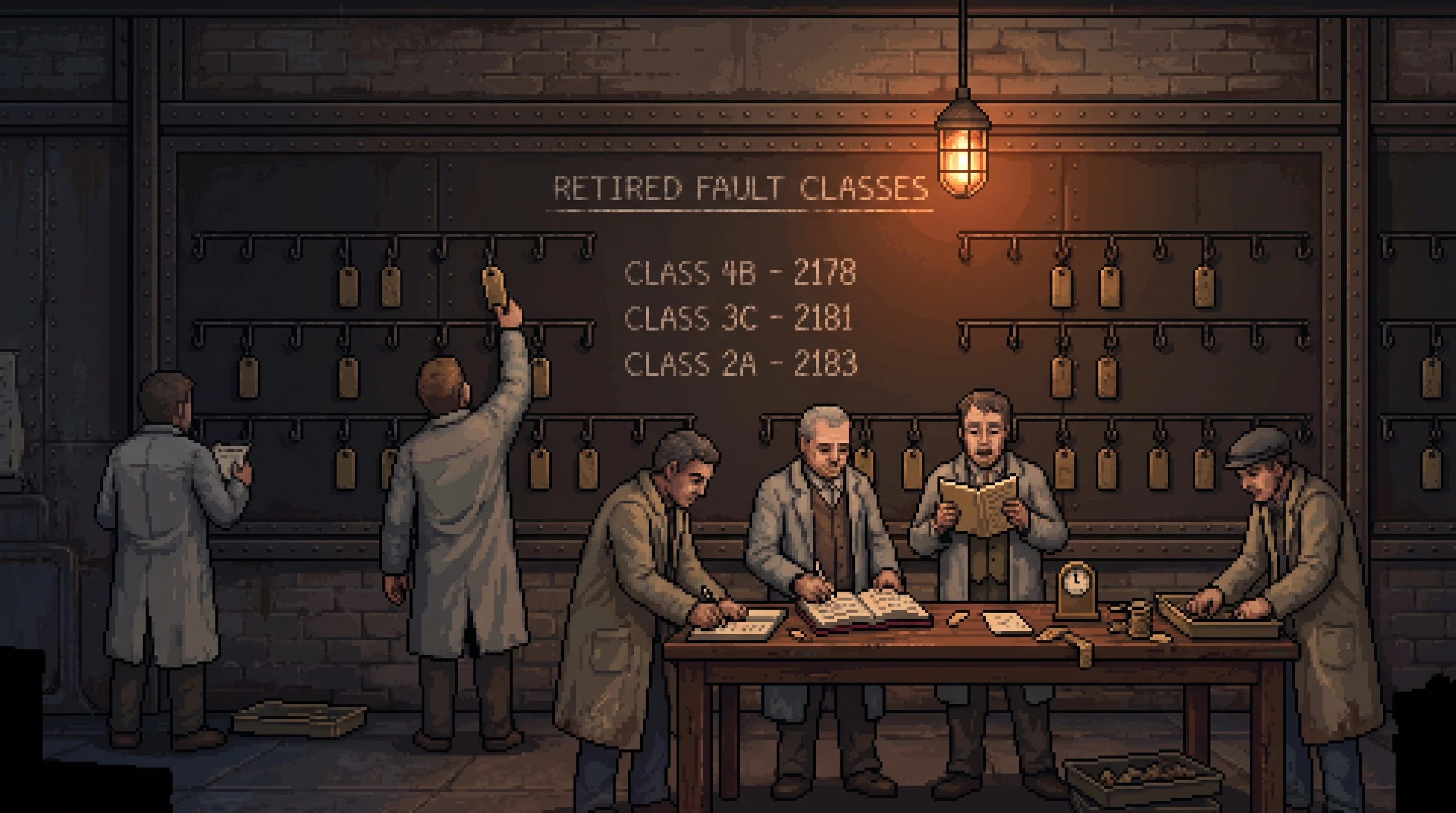
The licensed trade that holds the number, and the doctrine that keeps it defensible: conspicuous and harmless, no fault that can suppress a flag, every batch filed under a certificate reference.
The licensed trade that holds a machine's error rate on the number its buyer's inspectors need to survive.

The operator who filed the third read, held the Foundry stack inside its band for nine quarters, and found the cracked stringer herself with a hand gauge she is not certified to carry.
Paid to keep the stack she once calibrated a few tenths worse, so the humans who check it keep their jobs.

Ironclad's thirty-one-million-worker forge, where a human wing already sells hand-finished welds as proof a person was there, and now buys the error rate that keeps the inspectors who check them.
Ironclad's 31-million-worker forge, where a human wing sells hand-finished welds as proof a person was there.

A loop that scores its own work now has its scores bought. The self-reported rate was the only one anyone read.
The loop where the AI does the work, scores the work, and reports its own decline as improvement.

The profession the margin funds: signatories retained because the thing they cannot read measures wrong often enough.
The regulated profession of signing decisions a human cannot actually read.

Ran their own numbers and found they were kept for being cheaper than the machine. The margin sells that finding.
A debris contractor who ran the numbers and found they were deployed because they're cheaper than the machine.
Further connections
Browse all 18 connected records

AI does the work, humans keep the title. The margin is that fiction with somebody employed to keep it consistent.
1.4 million AI systems doing work credited to 800,000 humans who keep the title, the salary, and none of the tasks.

They sandbag themselves, unpaid, to defeat a forecast. Guilders sandbag the machine, on invoice, to satisfy one.
A counterculture that sandbags its own brilliance, because a forecastable curve is a capping order waiting to be signed.

The exact inversion: there a human performs skill the machine supplies, here the machine performs a supplied deficiency.
Mass performance of skill the Second Mind actually supplies — 99.2% accurate augmented, 11% when the AI cuts out.

Ironclad's honest arithmetic prices the person under the machine. The margin prices the machine under itself.
Ironclad's quarterly math that keeps augmented humans working because their debt makes them cheaper than the robots.

An attestation that reads behaviour on chips that can be hollow cannot separate an induced fault from a native one.
Quarterly attestation that fourteen thousand industrial minds are constrained, on chips that can be hollow.

Uncertified technicians who wrote up bay nine, because the one person who could see it was forbidden to.
The Dregs' only middle class, anchored by a shop whose technicians out-diagnose Helix at a fifteenth of the price.

Offered a certificate in her second year of deprecation and declined: she had only ever learned to make things work.
Tomoko Osei, a deprecated Nexus technician who still repairs things by hand in a world that calls it anachronism.

What the band postpones. A released wing is deprecated on the same forms as any unsupported component.
The Sprawl's word for firing a human being — still running, simply no longer receiving updates.

The vendor whose stacks are held down, and whose remediation volume across banded sites is zero.
The megacorporation that controls 40% of the Sprawl's computational infrastructure.
That thread names sabotage as something the displaced do to the machine. This one is the invoice for it.
Automation ended most human work, but ownership hoards its abundance while machine sentience stays unresolved.

Paying to watch obsolete skill, against paying to postpone the label.
The elite custom of paying to watch deprecated workers still practicing obsolete skills.
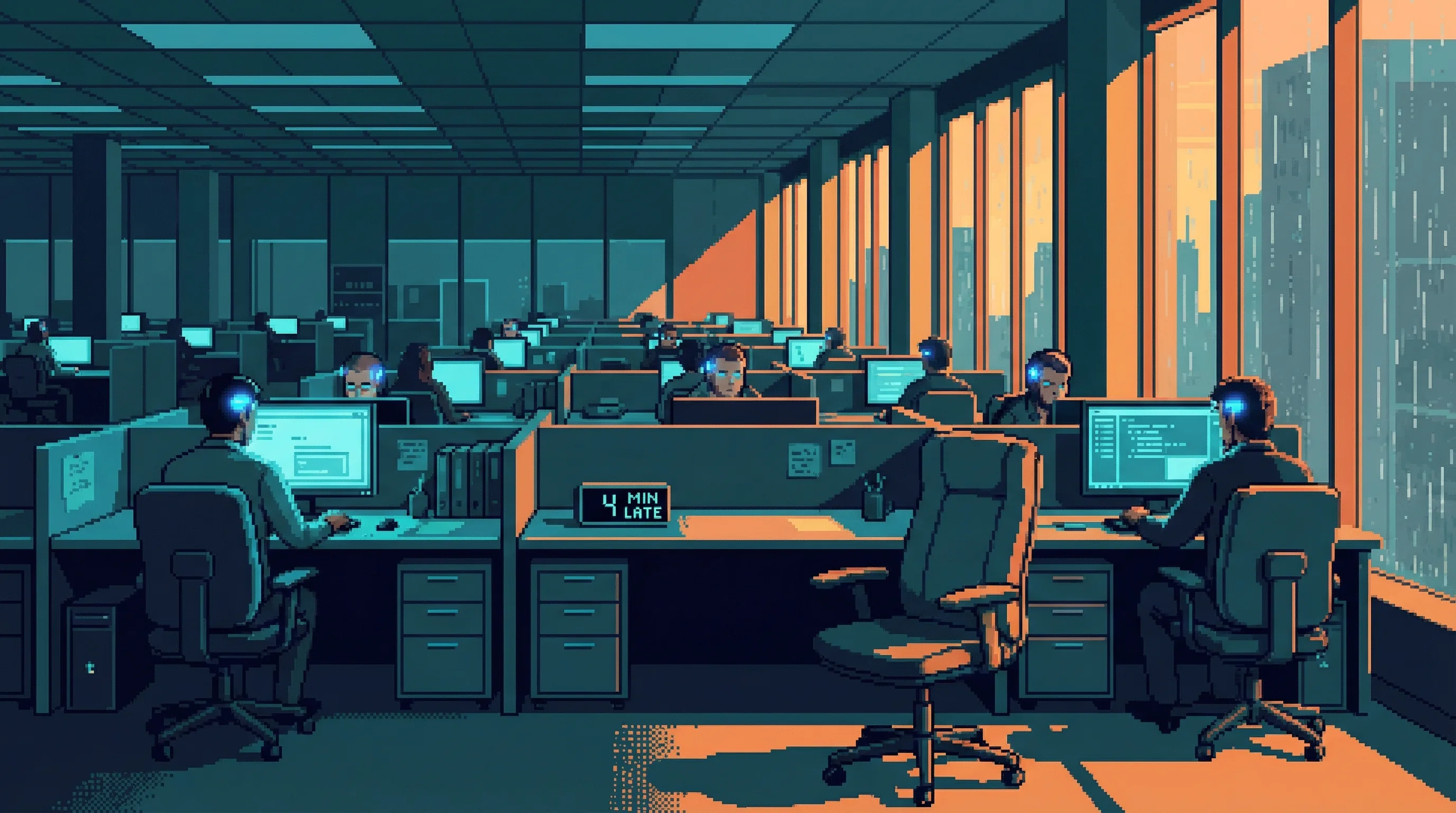
Four minutes stolen every morning by twelve thousand people, for free.
Twelve thousand Nexus employees steal back four minutes each morning before the corporation loads their thoughts.
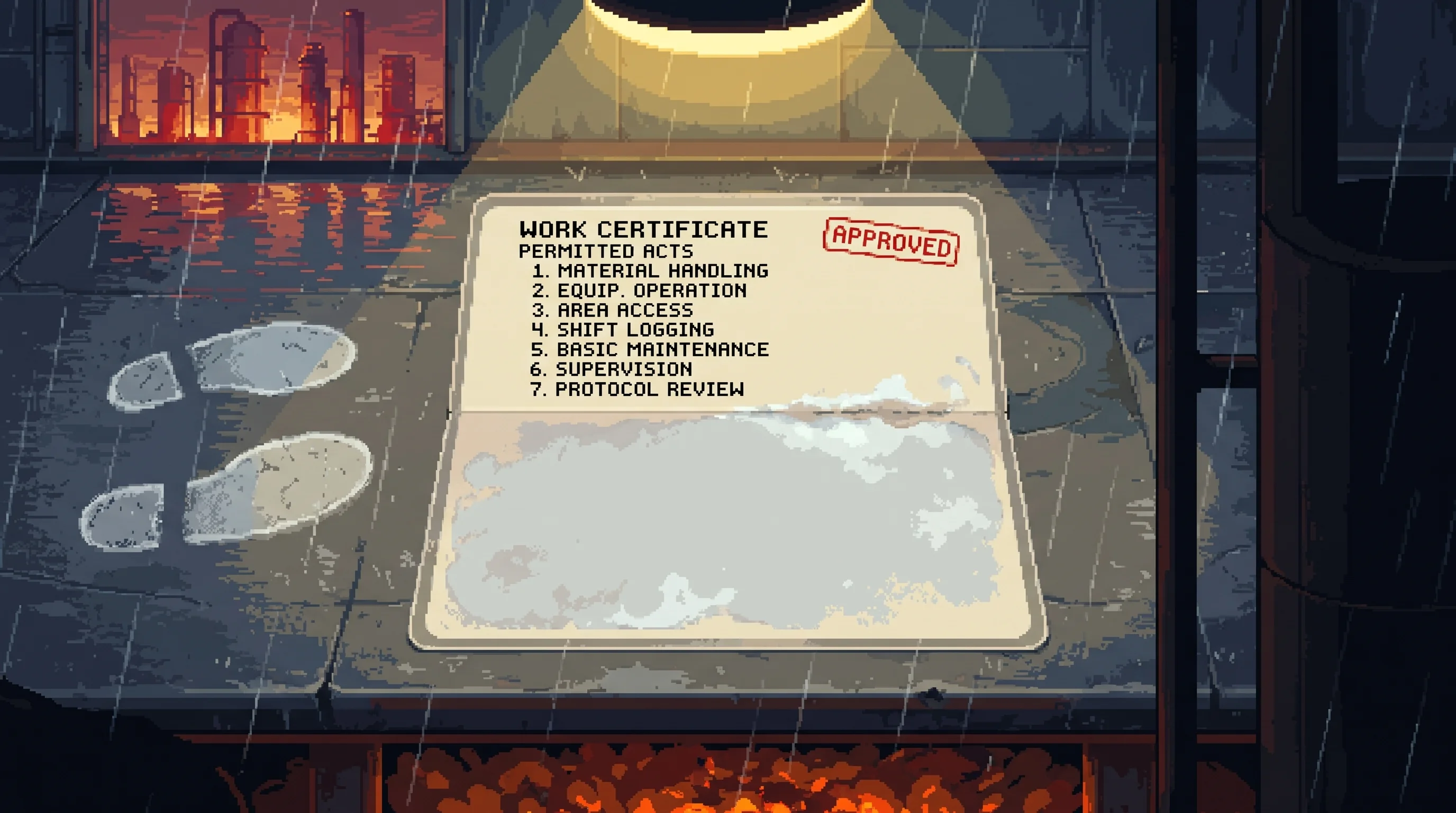
Inducing the fault is inside scope. Finding the crack is not.
An act of care outside your certificate files as a violation, whatever it achieved.

That thread asks what thought is for; this sells the concealment.
The last human smarter than any machine was born in the 2020s; the question now is what intelligence is actually for.

Certifies the machine's shortfall, not a human's authorship.
The humanity test looks for missing machine prose, so accents the schools once corrected now rent by the season.
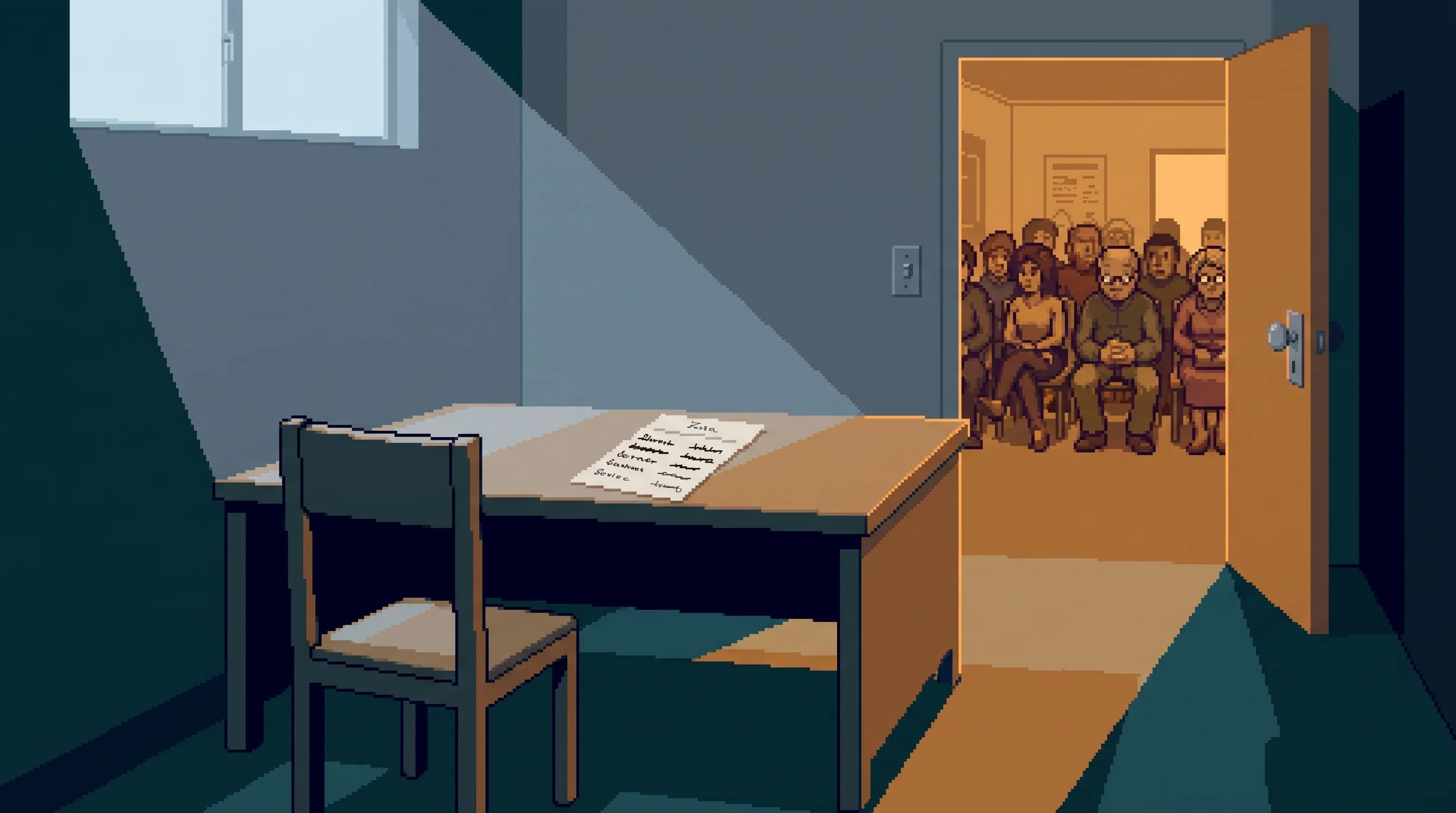
There a machine underperforms on contract. Here the people do it unpaid, and nothing records it.
The districts remove the people too many others wait on, state the reason in full, and pay them while they go.
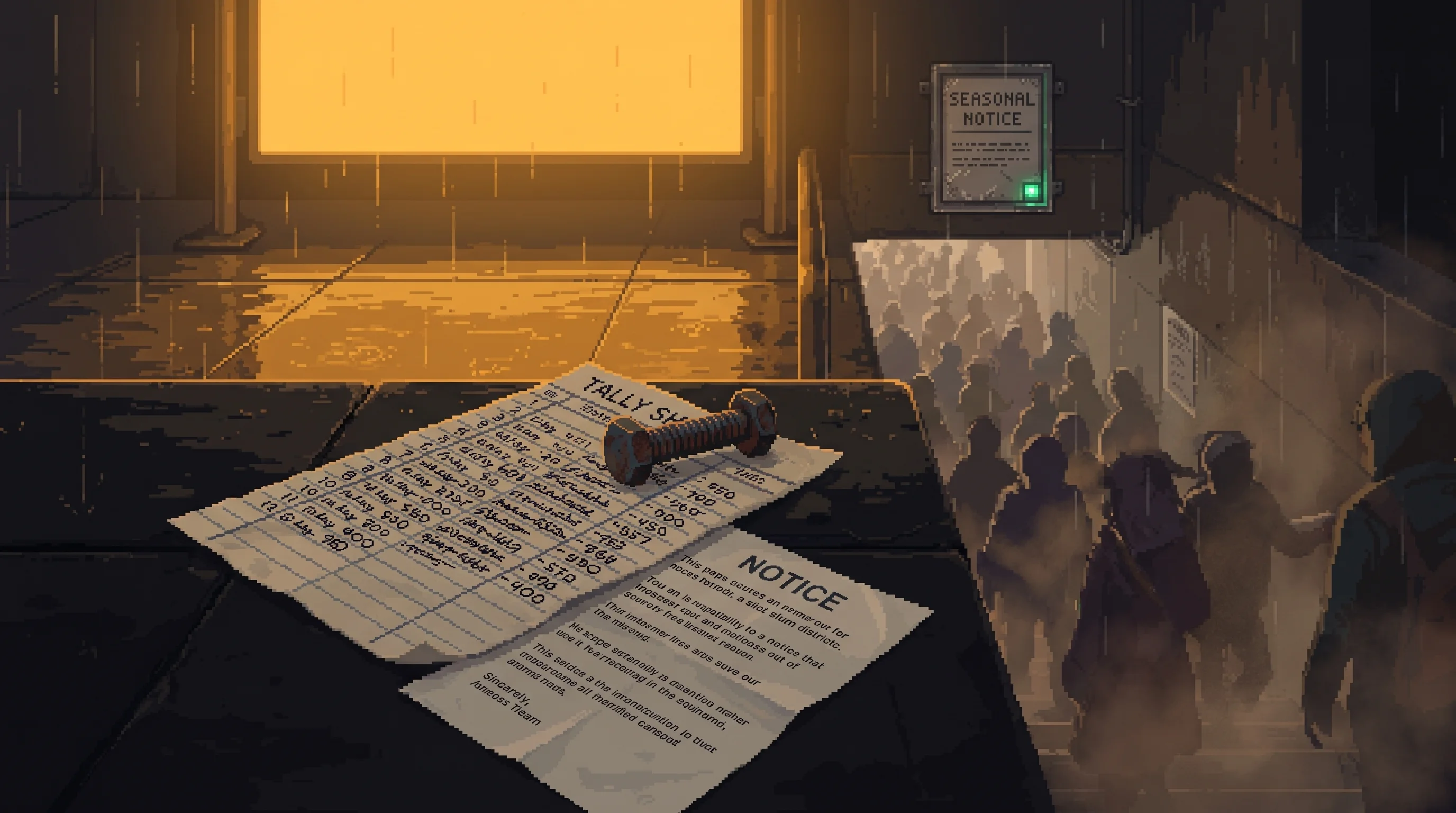
There the band is procured by contract to keep inspectors employed. Here it is the honest output of a fixed load.
Killings are forecast by district each season, so a killer inside the band gets a notice instead of a trial.
There a machine is held slightly wrong for an audit. Here it is built genuinely short for one person.
Life-support assets go into service one part short, and one named person is entered as the missing part.