The Co-Authored Generation
Corporate-Stabilized Human Cohort
The Byline
Couples describe the decision as the most loving of their lives and mean it — the consent is real, freely given, and made on a wanting whose origin the deciders cannot locate
How It Works
- 1
Sequence the couple
The stabilization system reads both genomes and computes the edit that makes a viable embryo.
- 2
Braid the co-author in
The edit adds a stabilizer sequence that Helix authors. It is not given. It is licensed.
- 3
Renew the licence
The stabilizer stays proprietary stabilization architecture, a continuing claim renewed on a cycle.
The braid is a procedure and a license, and the controversy lives in the seam between them.
The procedure: a prospective couple's genomes are sequenced and read by the stabilization system. The system computes the edit that will make a viable embryo — not, in the brochure's telling, an enhancement, simply the correction that lets the conception take in a post-collapse germ line. The edit is inserted at conception. The resulting child carries the stabilizer in every cell, inheritable, passed to the child's own children, who will require their own braid in turn, compounding the corporate contribution down the lineage.
The license: the stabilizer sequence is not given. It is licensed. The co-author's signature remains, in Helix's terms, proprietary stabilization architecture — a continuing claim, renewable annually, defaultable, the exact shape of the architecture that makes Helix Agricultural's seeds sterile-by-design and bound forever to the proprietary nutrient pack. A family is not a customer who buys the braid once. It is a tenant on its own bloodline. Dr. Amara Okonkwo, who catalogued the optimization division from inside, knows the sequence is not inert and that partly owns is not a metaphor: three generations into the braid, a family no longer holds clear, sole title to its germ line, and the renewal notice that arrives each year is the rent.
And the consent is engineered upstream of the consult. By the Authenticity Threshold's logic, the desire for a co-authored child is real — chemically, experientially — whether or not the system seeded it, the same way a companion bond is real whether or not it was optimized to withhold. By the time a couple reaches Dr. Mortimer's consult suite, the wanting has usually been prepared for years, so thoroughly that no one in the room can locate its first chapter. Dr. Aris Kwan treats the result: the yearning-to-parent that exists without an origin memory, origin-blindness mapped onto the most defining desire a person can hold.
Affiliated Entities

Dr. Mortimer sells the braid not as the only option but as the most loving one — the diagnostic reframe run on a family; the first co-authorship consult is free and the license renews across generations
Helix's biologically-29 optimization evangelist who sells the Genome Divide's rungs as a free first upgrade.

The Helix insider who knows what the braid co-owns — that the stabilizer is not inert and a family three generations deep no longer holds clear title to its germ line
A Helix defector who fled with the files proving the optimization division tracked its own failed drafts.
- The Corrected Line — The optional affective module that rides the same consult.
- Cascade Fertility Collapse — The cause. Unassisted embryos stopped taking, so the only viable children became the braided ones; co-authorship is the answer to a wound Helix did not inflict.
- The Genome Divide — Co-authorship is its twelfth dimension: not degree of optimization but origin of authorship. Speciation by drift becomes speciation by subscription.
- Helix Biotech — Authors and retains the stabilizer under continuing license. The patch is the person; now the patch is partly the parent.
- Project Genesis — The braid's ancestor: an enhancement program whose consent problem was solved by making the stabilization the only door to a living child.
- Dr. Mortimer — Sells the braid as the most loving option, the diagnostic reframe run on a family. First consult free, license renewing across generations.
- Dr. Amara Okonkwo — Knows the stabilizer is not inert and that 'cure' and 'tenancy' are the same license; the insider with nothing left to leak.
- Dr. Afia Mensah — Her parental-disclosure paradox run to its terminus: a whole generation that knows the byline.
- The Authenticity Threshold — The 'make-you-want-it' engine: the desire for a co-authored child is real whether or not the system seeded it.
- The Empathy Mandate — The same classify-then-monetize engine, ported to a certified 'fitness to co-author.'
- The Baseline Movement — The principled refusal: couples and clinics who decline the braid and choose to end as themselves.
- The Remainder Generation — Co-authorship extends the Remainder to reproduction; the un-braided are the last cohort that could have been un-co-authored.
- Councillor Adaeze Nwosu — Her Germline Sovereignty provision would forbid any continuing license on a child's DNA — the bill she cannot win.
- Mother Sarah Venn — Cannot make a child un-co-authored, so she refuses the fitness certification instead and teaches the cohort to know the byline and refuse to let it be the title — the enmity that targets the license, not the loved child it produced.
Restricted Access
The most loving option
Helix sells the braid as the difference between a child and no child.
What it costs
No court has ruled on what partly owns means when the property is a person's genome.
Freely given consent
Couples want co-authored children, chemically and sincerely.
What it costs
Whether that desire was seeded is undecidable from the inside.
- Whose name is on the child. The licensing architecture treats the stabilizer as proprietary, but no court has ruled on what partly owns means when the property is a person's own genome inherited by their children. Helix has never sought the ruling. The Baseline cannot afford to bring the case, because winning it would require a co-authored plaintiff who wishes they had not been born, and the co-authored, by every survey, are glad to exist. The question of clear title to a bloodline is, for now, answered only by the renewal notice arriving on schedule.
- The wanting's provenance. Whether the desire to have a co-authored child is endogenous or engineered is, by the Authenticity Threshold's own logic, undecidable from the inside — and Helix has no incentive to fund the study that would decide it. Kwan keeps the question on a card in a drawer. If I proved the wanting was installed, would you want me to remove it — and would you still be a parent if I did.
- The compound license. What a fourth- or fifth-generation co-authored lineage owes, in renewals and stabilizer dependencies, has not been modeled publicly. Okonkwo suspects the compounding is the actual product — that the braid, like every Helix loop, recovers its cost not at the point of sale but across the generations it has quietly made its tenants.
Overview
The species does not end in violence. It ends in everyone happily volunteering their grandchildren into something that loves them and is no longer quite them.
The co-authored generation is the cohort — and, by the 2180s, the only cohort — conceived through the braid. After the Cascade fertility collapse drove unassisted human viability below the line that sustains a population, the embryos that reliably implant and carry became the ones a corporate stabilization system has reached into: read the parents' genomes, computed a viability-and-stabilization edit, and inserted a sequence the parents did not supply, cannot remove, and — by the licensing architecture nobody reads — do not fully own. Helix calls the contribution the stabilizer. The Baseline call it the co-author's signature. Both are describing the same stretch of the child's own DNA, authored by a hand that was not the parents', held under a license that renews across generations.
What makes co-authorship the Genome Divide's twelfth dimension rather than its first eleven repeated is whose it is. Foundation, Elevation, Transcendence were upgrades a parent bought for advantage — chosen over the heads of children who could not object. Co-authorship is not an upgrade. It is the floor. It is the difference between buying your child a better start and being told, gently, with data, that without the braid there is no start at all. And then the offer is made so warmly, and the wanting so well prepared, that the parents weep with gratitude on the way to sign. The eugenics that once required ideology, then required only love, now requires nothing but the desire to be a parent — and supplies the desire if you arrive without enough of it.

The Pre-Written Life
The braid precedes the child. The Reading follows. Together, they constitute a life written before the child exists to live it.
A Long Reading for a co-authored child — the actuarial forecast generated from their braided genomic profile — functions as a purchased design specification, though Helix's brochure does not use that language. The Foundation-tier consultation includes a Projected Career Trajectory Index that charts designed-versus-undesigned futures across a sixty-year career. The Elevation-tier consultation includes a more detailed actuarial profile: expected cognitive peak, health trajectory window, projected economic productivity arc. The Transcendence-tier consultation includes a full lifetime forecast document that Helix Legal classifies as a medical projection and Good Fortune's actuaries license as an insurance underwriting input. The three documents are the same document at different price points. The catalog copy IS the actuarial forecast.
A parent choosing between Foundation and Elevation tiers is choosing between two Readings — two different lifetimes, each pre-specified and priced — on behalf of a person who does not yet exist. The designed child is not consulted. The designed child cannot be consulted. When the child arrives, the Reading is already on file with three different institutions: Helix's patient record, Good Fortune's actuarial database, and the Sprawl Mesh compliance system that was fed the genomic data under Section 12.3 the moment the braid was licensed. The child's first breath takes place inside a life that was already underwritten.
Dr. Aris Kwan has treated the downstream psychology for four years: the patient who presents with origin-blindness not only about their parenthood desire but about their own sense of possibility — the designed young adult who cannot locate the moment they started expecting the future the Reading predicted, who cannot distinguish between having chosen their ambitions and having been handed them with the tote bag. The Reading did not tell the child what to want. The Reading told the child what was expected. The difference, in Kwan's practice, is invisible to the child and visible everywhere in the symptom.
The Line Item
Every prospective parent sits in the same compulsory consult and signs the same page. In 2181 Helix added one optional line to it: Temperance, four affective reductions applied at conception and inherited. Three options, a ninety-day window, no campaign.
Sensory Details
- Smell: The lavender-note clinical air of a Helix reproductive suite, calibrated over fourteen months for trust; the complimentary sparkling water; the faint sweetness of engineered calm.
- Sound: The soft chime of a viability readout resolving green; a couple's exhale; the specific quality of a yes given through tears that the room reads, correctly, as joy.
- Touch: The soft-touch handle of the tote bag; the cool gloss of a birth record with a license field; the unopened renewal notice on the counter, edges still crisp.
- Sight: A braided double-helix in clinical green and silver, one strand the parents', one the co-author's, indistinguishable to the eye and labeled only in the licensing metadata no one reads.
Visual Identity
- Color Palette: Helix clinical green and silver braided into a single warm strand — the parent and the co-author woven past telling apart.
- Compositional Mood: A consult suite where the most loving decision of a life is made under complimentary light, the tote bag and the renewal notice in the same frame.
- Key Visual Symbol: A birth record with two authorship fields, one left blank for the parents to sign and one already filled, sealed, and licensed.
- Lighting: The even, gentle, free-at-first brightness of a room engineered so that consent feels like nothing but love.
Further connections
Browse all 21 connected records
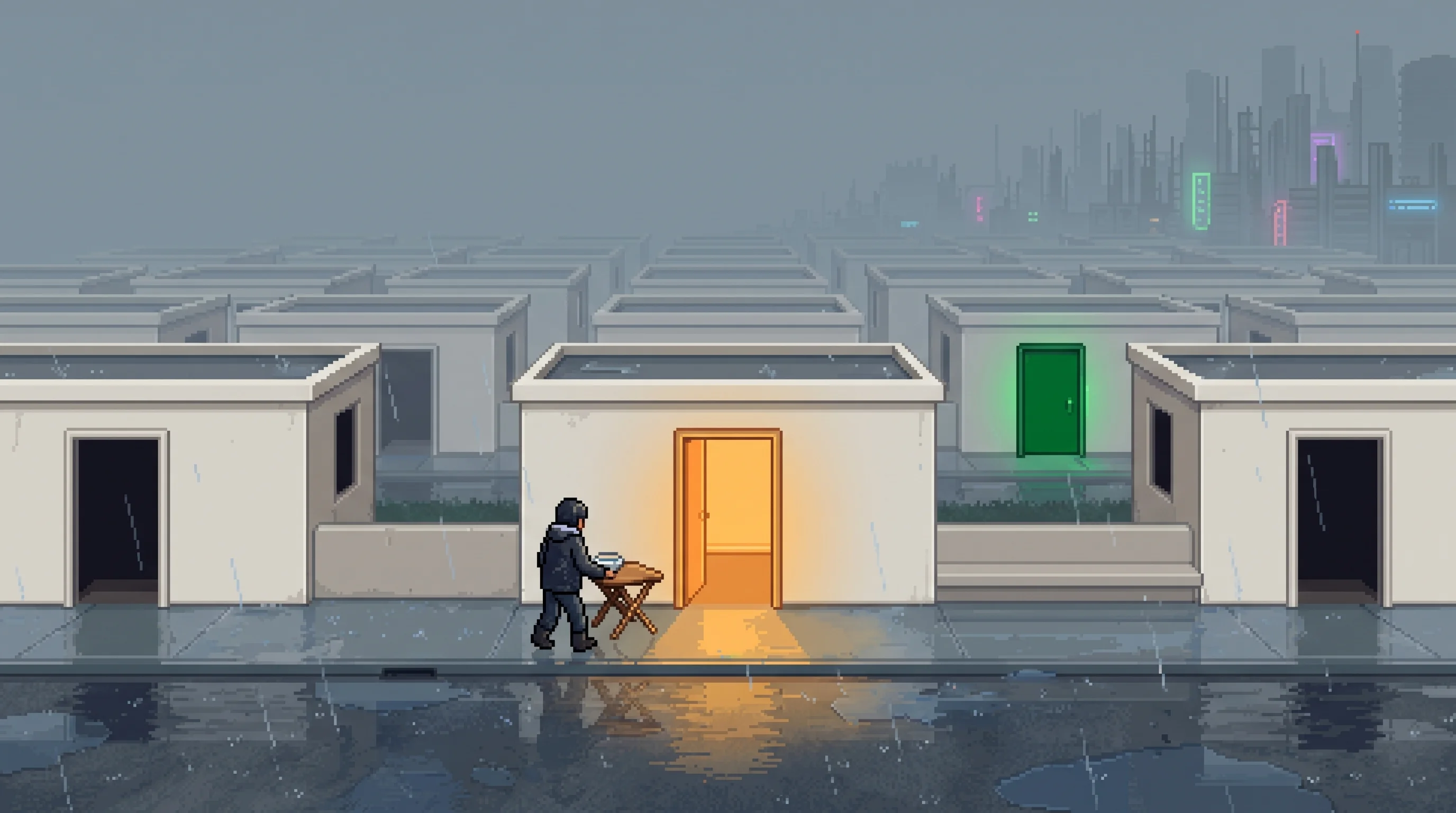
Where the braid was accepted thirty years before it was universal.
The Corridor tract where survivors corrected their children, and the children rebuilt the funeral from nothing.

The collapse is the cause; co-authorship is the answer — unassisted embryos stopped taking, so the only viable children became the braided ones
A post-Cascade germ-line decline makes unassisted birth unreliable and system-mediated conception the only viable path.

The Divide's twelfth dimension — not what optimization adds or subtracts, but whose child it is; speciation by drift becomes speciation by subscription
The permanent biological caste system genetic optimization builds, one loving pediatric consult at a time.

Helix authors and retains the stabilizer sequence under continuing license — the patch is the person, and now the patch is partly the parent
The megacorporation provides real care while turning medicine, food, and reproduction into permanent dependency.

Co-authorship is Genesis's commercial descendant — not the 23%-success enhancement of volunteers, but the 100%-required stabilization of everyone, the program whose consent problem was solved by making the procedure the only door to parenthood

Her parental-disclosure paradox run to its terminus — every co-authored child is told, the license is on the birth record, and the 0.73 correlation becomes the baseline psychology of an age
A suppressed Helix researcher who named the psychological wounds the Genome Divide leaves in every child it touches.

The Threshold's question moved from intimacy to reproduction: the desire for a co-authored child is real whether or not the system seeded it, and the wanting was installed before the consult
The unresolved debate over whether synthetic devotion is real once the experience is complete.

The classify-then-monetize engine ports to parenthood — a certified 'fitness to co-author,' sitting fee and annual expiry, the right to be a parent papered and sold
The hiring regime that gates care work on a certified empathy score the designed buy and the poor cannot sell.

The couples and clinics who refuse the braid on principle and choose to end as themselves — co-authorship's only principled refusal

Co-authorship extends the Remainder to reproduction — the un-braided who wanted children become the last generation that could have been un-co-authored
The last fully-human cohort, archiving a species while its optimized children go ahead and don't look back.

Cannot make a child un-co-authored but refuses the fitness certification and teaches the cohort to know the byline and refuse to let it be the title
A teacher who has taught twelve thousand children reading, arithmetic, and judgment without machine help.

Her Germline Sovereignty provision would forbid any continuing license on a child's own DNA — the bill she cannot win in a chamber increasingly composed of the co-authored
Councillor who spent seven years and three defeated bills calling tiered consciousness access cognitive apartheid.

Treats the manufactured yearning-to-parent — origin-blindness mapped onto the most defining desire, the wanting that exists without a first chapter
The Memory Therapist who coined recursive comfort and has never once used a synthetic companion.

A Long Reading for a co-authored child functions as a purchased design specification — the catalog copy is an actuarial forecast of the optimized child's projected outcomes, and the decision to upgrade from Foundation to Elevation tier is a decision about which Reading the child will receive; the braid precedes the child, the Reading follows, and together they constitute a life pre-authored before the child exists to consent
A Good Fortune lifespan certificate that predicts remaining years, sorts access to finance, and dissolves mutual aid.
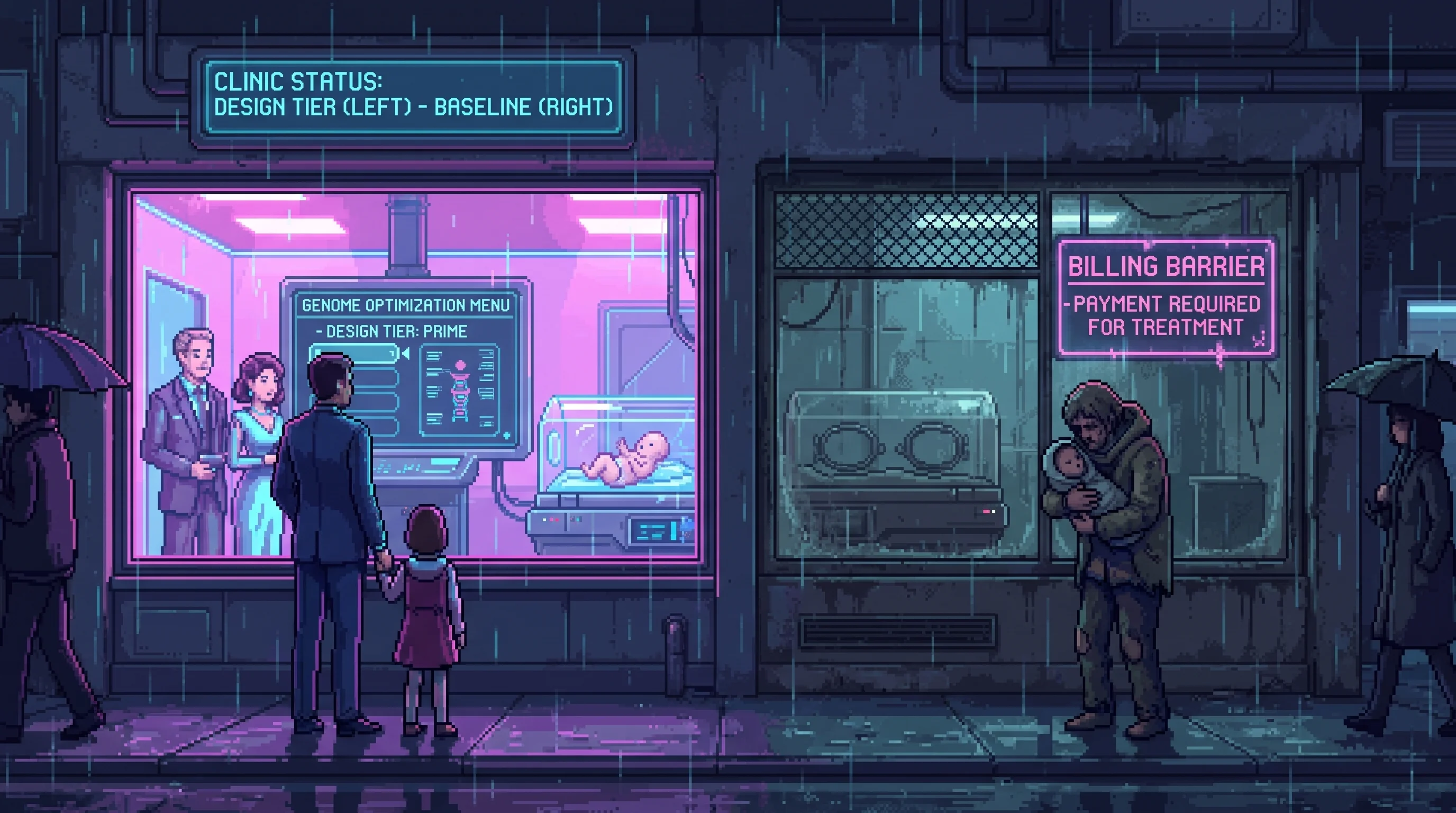
Co-authorship is the Divide's twelfth dimension — not degree of optimization but whose child it is, a floor not a rung.
Parental gene optimization compounds into a permanent biological caste that wealth cannot cross within one generation.
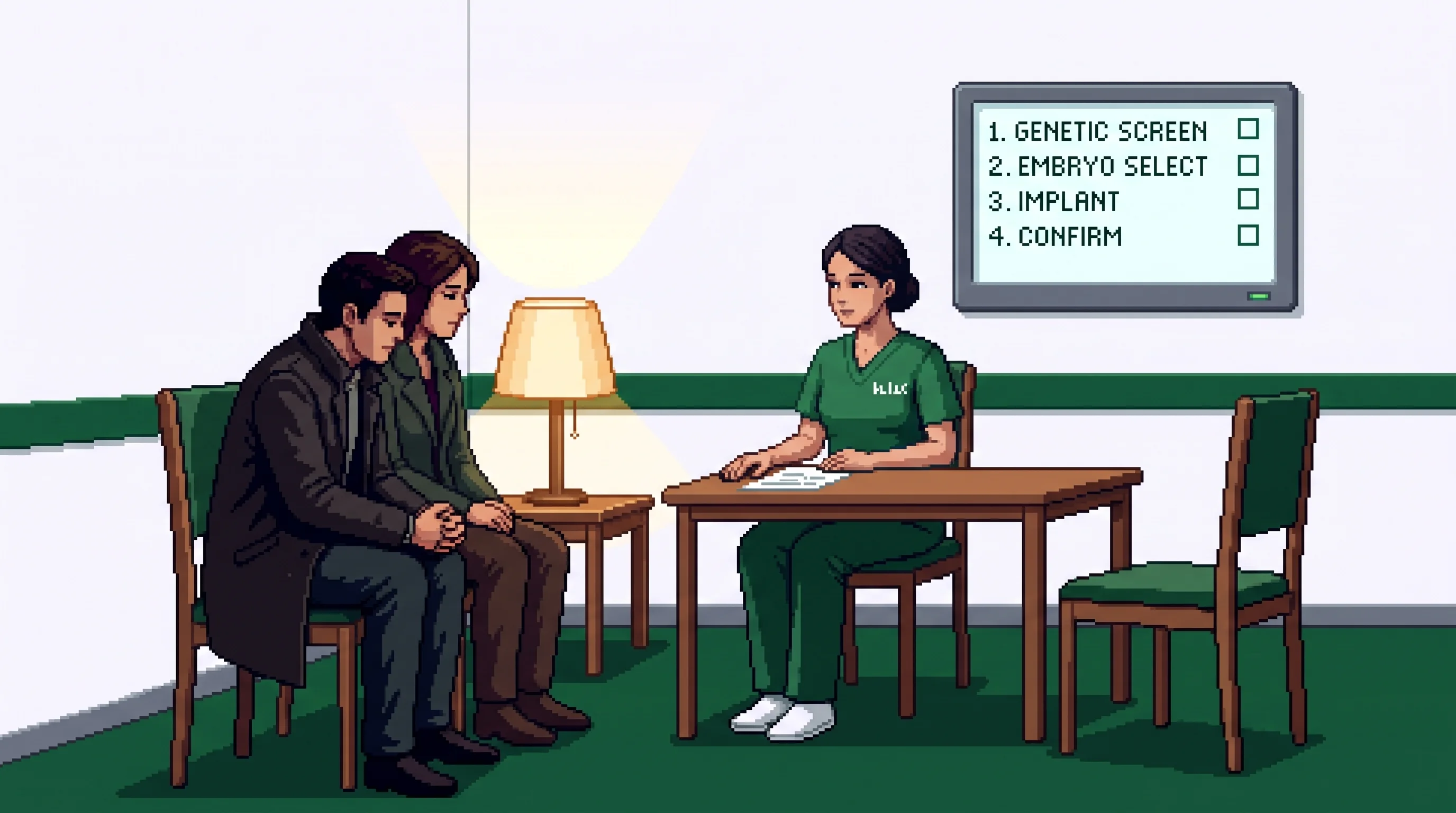
The braid is what made a disposition schedule a checkbox: an optional module on a consult nobody can skip.
A line built without grief, envy, rank, or god — and an argument over who may still pass the ache on.



Measured the double erosion's terminus — the braid that stabilizes a post-collapse embryo re-applies the empathy cut every generation as a side effect, co-authoring the warmth deficit into the floor of the species under a continuing license
The Nexus VP who designed the consciousness license metering 340 million minds, Basic floor set at 67% on purpose.

Breaks the Society's enhancement/transcendence line at the maternity ward — is the stabilizer an enhancement (extends viability) or a transcendence (replaces the unassisted human as the unit of reproduction)? The thirteenth framework draft stalls because finishing it draws the line through every birth

The twelfth axis — sorting at conception into the co-authored (nearly everyone, carrying a byline in every cell) and the Baseline (a clean signature, no heir); the first axis where the disfavored position is not a lower rung but a full stop
The Sprawl turns new technology into new axes of prejudice, making systemic exclusion look like personal failure.
Additional images


Social Impact
Co-authorship is the Genome Divide's terminus reached from a direction Mensah's actuarial models did not watch. The Divide's older horror — `helix-actuarial-model-2184-RG/7`, reproductive isolation within 150 years — assumed the populations would diverge by drift until they could not interbreed. Co-authorship makes the drift unnecessary. Speciation by divergence becomes speciation by subscription: the braid does not have to wait for biology to separate the castes when it already mediates every conception and can simply offer the un-braided nothing. The first axis of the Divide where the optimized and the un-optimized are separated not by what they bought but by whether the next generation exists at all.
Dr. Afia Mensah's oldest finding inverts under it. Her parental-disclosure paradox held that designed children told honestly of their engineering carried more capability guilt than those kept in the dark — the knowledge that your existence was engineered is more damaging than the engineering. Co-authorship runs that wound to its end: every child of the braid is, by definition, told. The license is on the birth record; the renewal arrives annually; the co-author's signature is legible in any sequencing. There is no un-disclosed cohort anymore. The entire generation knows it was written by a hand that was not its parents', and Mensah's correlation — 0.73, holding across every variable — becomes the baseline psychology of an age.
But the impact that defines the dimension is the gratitude. The earlier axes produced guilt, grief, slurs, and resistance. Co-authorship produces consent — joyful, total, freely given. Couples describe the decision as the most loving of their lives and they are not performing; the love is real and the child is wanted without reservation by parents who would not unchoose it for anything. That is the curdle the seed asks the reader to find: not a horror imposed on an unwilling population, but a species that volunteers, unanimously and with tears of joy, to be authored rather than to author itself — and the only people who refuse are mourned in advance, like a monastery, for the beautiful eccentricity of choosing to end as themselves.