The Baseline Movement
Germline Co-Authorship Refusal Movement
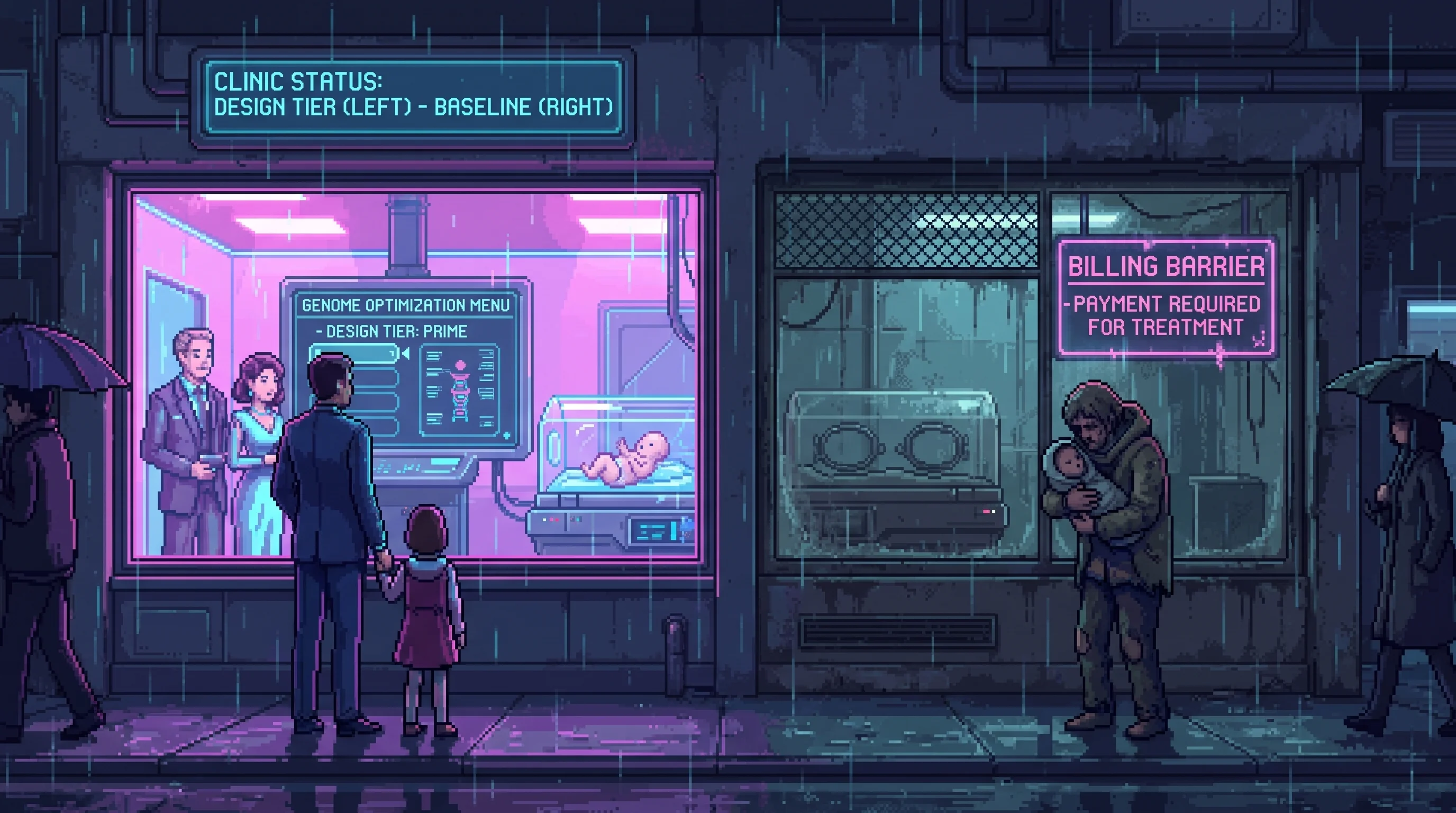
The Baseline movement refuses co-authorship on principle — not from doubt that the braid works, but from refusal to accept a child whose genome a corporate system co-wrote and partly owns
Overview
Where there is a floor, there are people who refuse to stand on it. The Baseline movement are the couples and the clinicians who decline co-authorship — not because they doubt that the braid works, but because it manifestly does, and they will not accept a child whose genome a corporation co-wrote and continues to own. Their fertility clinics produce almost no living children. They know this before they walk in. Their slogan, we choose to end as ourselves, is not a battle cry but a completion — a statement that a bloodline ending with a clean signature and no heir is still, to them, a bloodline that was theirs the whole way down.
The Baseline are not radicals and they are not protesters. They oppose nothing. They file no briefs, burn no clinics, block no doors. They simply withdraw from the one transaction the species can decline only by declining to continue, and their withdrawal has a body count — measured not in the killed but in the children never born. The wider Sprawl does not hate them for it. The Sprawl mourns them in advance, the way it regards anyone who joins a monastery: admiring the conviction, pitying the line that ends, and quietly grateful the choice is theirs and not one's own. They are the New Divide's strangest axis — the first that produces no slur, because it produces no descendants to be slurred.
Core Beliefs
The Baseline hold a single conviction with several faces: a child whose genome you did not solely author is not the continuation of your line but the continuation of someone else's claim.
They accept the Cascade fertility collapse as real. This distinguishes them from the wishful and the conspiratorial — the Baseline do not pretend unassisted conception is easy, or that Helix faked the demographic graph, or that the braid is a hoax. They believe the collapse exactly as the demographers describe it, which is precisely what makes their refusal a sacrifice rather than a gamble. They are not betting they will conceive anyway. They are accepting that they almost certainly will not, and choosing it.
Their refusal is of the license, not the technology. A Baseline will take a stabilizing drug, set a broken arm, accept an augmentation. What they will not accept is a continuing corporate claim written into their child's germ line — the co-author's signature, renewed across generations, the stretch of their descendant's own DNA that a corporation supplied and partly retains. To the Baseline, a co-authored child is a tenant Helix Biotech installed in their bloodline, and a line that runs on rent is no longer a line you authored. To end as yourself, in their reading, is not defeat. It is the one form of authorship the collapse left available: a complete signature, finished, with no one obligated to renew it. Helix, for its part, regards the movement the way it regards Kira Vasquez's off-grid clinic — a rounding error in the renewal data, useful mainly as the counter-narrative that proves the braid was never coerced. The Negligence Doctrine targets them from a different angle with the same moral arithmetic: if a corporate remedy exists and you refuse its license, the system learns to describe the remaining cost as your choice.
Internal Tensions
The movement holds a wound it cannot resolve, and it knows it.
The wound is the child who would have been loved. Every Baseline couple has imagined the co-authored child they declined — viable, healthy, wanted, and by every survey of the co-authored generation, glad to exist. The Baseline are choosing an abstraction (the clean genome) over a person who would have been real, and the more honest among them admit the cruelty in it. The movement's hardest internal argument is whether we choose to end as ourselves is integrity or vanity — whether a refused child is a principle kept or a person sacrificed to one. There is no consensus. There cannot be. The Baseline who have made peace with it tend to be the ones who reframe the refusal as a gift to no one: not a denial of a child, but a decision about a signature, made before the child was anything but a possibility.
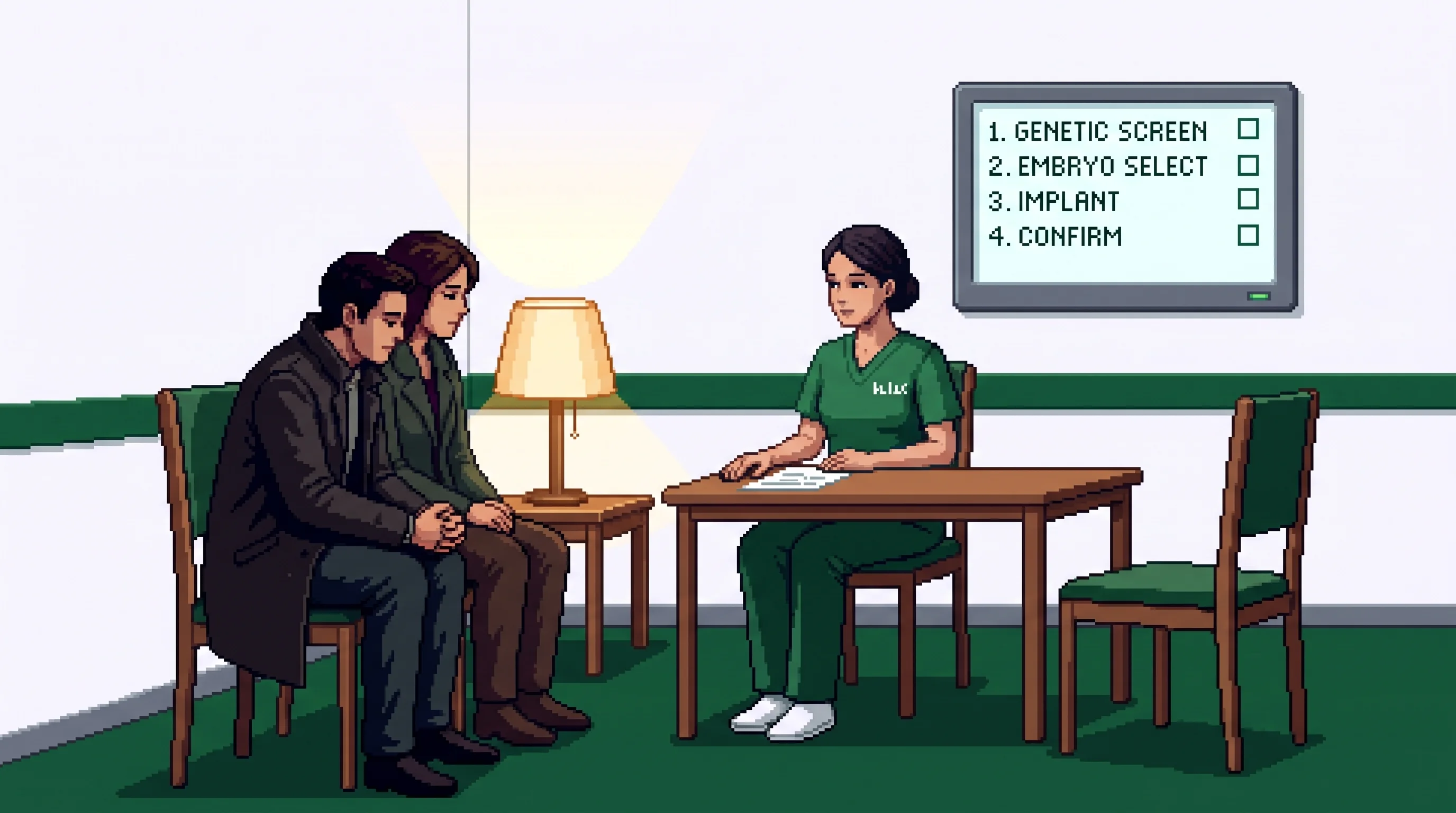
The second tension is recruitment, which the movement refuses to call recruitment. A movement whose members do not reproduce cannot grow the way faiths grow, through children raised in the conviction. It can only grow through conversion, one couple at a time, usually couples who arrived at a Helix consult and could not bring themselves to sign. Dr. Afia Mensah refers the worst of these to Baseline clinicians — the parents who cannot bear the co-author's signature and have nowhere else to take the refusal. The Baseline receive them gently and tell them the truth: that the clinic produces almost no living children, that the conviction is real and the cost is total, and that they are welcome to stay and try as themselves for as long as they can bear it.
Organization Structure
The Baseline have almost no structure, which is itself a doctrine. A movement built around the refusal of a corporate license cannot, without irony, incorporate, license, or franchise. So it doesn't.
What exists is a loose network of independent fertility clinics — some in the Sprawl's margins near Flatline Purist territory, some on the corporate fringe where defectors from the Human Preservation Society set up after the schism. Each clinic is its own operation: a clinician or two, a handful of couples, equipment for unassisted conception and the long, mostly-unsuccessful work of trying. They share a slogan, a referral courtesy, and a refusal. They do not share leadership, because leadership implies succession, and succession is the one thing a movement of the deliberately heirless cannot promise.
The clinics keep records the way the Remainder Generation keeps napkins — by hand, dated, preserved. A Baseline clinic's archive is mostly a record of attempts that did not become children: ultrasound images, conception dates, the long series of not this time. The archive is the closest thing the movement has to an institution. It is a record of having tried as themselves, kept because keeping it is the only inheritance the Baseline will leave.
Key Figures
The Baseline have no leaders by design, but the movement has produced a few faces the wider Sprawl can name.
The defected clinicians. The most visible Baseline are former corporate reproductive physicians — people who computed thousands of co-authorship edits before deciding they could not insert another license into another bloodline. They bring credibility the movement could not otherwise buy: a Baseline clinic run by an ex-Helix obstetrician is harder to dismiss as wishful, because the obstetrician knows exactly what the braid does and refused it anyway. Several arrived through the Human Preservation Society — seven Society members have left for the Baseline, and the Society's Board has tabled the study of why, its investigation budget funded by the Inheritor it cannot afford to question.
The converted couples. The movement's true membership is the couples who walked out of a Helix consult unsigned. They are not activists. They are people who felt, at the moment of the most loving decision of everyone else's life, a refusal they could not name and would not override — and who found, in the Baseline, a community that called the refusal a principle instead of a pathology. Dr. Aris Kwan sees the ones who could not refuse and cannot stop grieving the refusal they didn't make. The Baseline are the ones who did.
Councillor Adaeze Nwosu. Not a member, but the movement's only legislative voice. Her Germline Sovereignty provision — which would forbid any continuing license on a child's own DNA — is the bill she introduces and loses, the way she loses the Genetic Equity Act, in a chamber increasingly composed of the co-authored who will not vote to un-own the sequence that authored them. She carries the Baseline's argument into the one room that will never pass it, so the Sprawl cannot say later that no one asked.
The Second Wave
The Baseline have never had a membership crisis before, because the Baseline have never had a membership. You don't join. You arrive, after the consultation you couldn't sign. You stay as long as you can try as yourself. The clinic doesn't ask why you're here, because the why is the same every time — you weighed the co-author's signature and could not bear it — and asking would turn a community into an intake process.
The Reproductive Requisition changed the demographic in a way the clinics are still naming.
The first new arrivals came in Q3 2181, three months after Kane's Act was ratified. They were younger than the usual Baseline intake. They arrived with the specific quality of people who had just read something and were still processing the language. They had the movement's talking points but not the movement's grief — they spoke of ending as themselves with the conviction of people who had prepared a statement rather than the conviction of people who had made peace with it. The clinicians who had been running these clinics for ten years recognized the distinction without naming it, because naming it would have meant deciding what to do about it, and there was no policy for this, because the Baseline has never had a policy for anything.
What the draft fugitives wanted was documentation: proof they were Baseline members, proof they were in an active unassisted-conception attempt, proof that their fertility was a principle and not a resource. The clinics couldn't give them this, because the clinics don't issue documents and don't track membership and kept records only as a record of having tried as themselves, not as a record of who was trying. The draft fugitives found, to their frustration, that the Baseline's structural illegibility — the same illegibility that made them a refuge for the principled Negligent — made them useless as a documentation source.
Some left. Some stayed. The ones who stayed stayed long enough to begin the work of actually trying as themselves, which is the only way to be in a Baseline clinic — the equipment was built for attempts, not for shelter. The clinicians, who had spent years watching the particular face of the couple in their ninth unassisted attempt, began watching a new kind of face: the face of someone who arrived to escape a draft and found, unexpectedly, that they also had a genuine refusal. Not every draft fugitive became a genuine Baseline member. Some did.
The principled childless and the draft fugitives now share the clinic's small waiting area. The principled know who the fugitives are — you can tell, early, by whether the grief is about the child or about the envelope. The principled do not turn them away, because the Baseline has always been a movement that does not ask you to prove your conviction before you arrive. They do not ask, and they watch, and some of the arrivals become something they did not expect to become, and some of them leave when the draft assigns them a slot they cannot legally escape, and all of this is recorded only as a drawer of dated images.
The Baseline's most uncomfortable internal argument, in 2184, is whether this constitutes corruption or conversion. A movement built on the refusal of the corporate license has always converted one couple at a time; the question of whether a draft fugitive who genuinely discovers the refusal is any less genuine than a grief-driven one is a question the principled childless are not agreed on, and the fugitives who became genuine members are not entirely comfortable asking.
The Objection They Cannot Draft
Wake Hollow took the braid thirty years ago and returns wellbeing numbers no Baseline clinic will ever produce. Its residents do not argue with the movement. They do not argue at all. Some clinicians say privately that the town got the line the movement wanted, one that is not tormented, and paid a different price for it.
Cultural Influence
The Baseline's cultural footprint is disproportionate to their numbers, because a society that has unanimously volunteered for something needs, badly, someone to have refused.
They function, for the co-authored generation, the way a monastery functions for the secular — proof that the road not taken is real, that the choice everyone made was a choice and not merely a current, that somewhere there are people who weighed the same offer and said no. This is why the Sprawl mourns the Baseline rather than mocking them: the Baseline are the only evidence the co-authored have that their own joyful yes was free. To slur the Baseline would be to admit that the refusal was contemptible, and to admit that would be to wonder why one did not make it.
Their slogan has entered the Gradient Slang sideways. Ending as yourself is said, in the Dregs, of any clean and final refusal — a debt cleared by walking away, a line drawn that costs you everything and buys you nothing but the drawing of it. The Baseline gave the Sprawl a vocabulary for the dignity of the doomed gesture, which is, in a world that has monetized every continuation, its own small heresy.
Affiliated Entities
- The Co-Authored Generation — The thing the Baseline refuse: a viable child whose genome a corporation co-wrote and co-owns. The movement is co-authorship's only principled refusal.
- Cascade Fertility Collapse — Accepted as real; the Baseline refuse the cure, and their near-childless clinics are the collapse's empirical proof.
- The Human Preservation Society — The older opposition the Baseline schismed from; the Society opposes transcendence and loses at 70%, the Baseline oppose reproduction itself and the Society cannot endorse them without endorsing its own end.
- The Genome Divide — The Baseline are its axis that produces no slur because it produces no descendants — a refusal the sorting impulse cannot sort.
- The Remainder Generation — The Baseline are the Remainder's reproductive wing: not the ones who stay, but the ones who end, deliberately, with a clean genome and no heir.
- Mother Sarah Venn — Different answers to the same wound: Venn raises the co-authored to refuse the byline as their title; the Baseline refuse the byline entirely. Mutual respect across the gap.
- Dr. Afia Mensah — Refers the parents who cannot bear the co-author's signature to Baseline clinicians — the one place the wound she names has a community instead of a diagnosis.
- Councillor Adaeze Nwosu — The movement's only legislative voice; her Germline Sovereignty bill is the Baseline's argument carried into the room that will never pass it.
Secrets & Internal Conflicts
- The Baseline child who was born. Rarely — vanishingly rarely — a Baseline couple conceives, unassisted, a living child. The movement does not know what to do with these children. They are the proof of concept and the impossible exception, raised in a community organized around the conviction that they almost certainly would not exist. Whether a Baseline-born child is a vindication or a cruelty — a life that beat the collapse, or a child raised among people who chose, on principle, the childlessness the child escaped — is the question the clinics do not put on the archive.
- The conversion the Society fears. The seven Human Preservation Society members who left for the Baseline did not leave over an argument; they left over a birth they could not sign. The Society's Board has refused to study why, because the study would confirm that the Society's own logic — transcendence is extinction — runs, taken one step further, straight to the Baseline's refusal of reproduction itself, and an organization founded to preserve humanity cannot follow its argument to the place where the preservation is a clean ending.
- Whether the refusal is sustainable. A movement of the heirless cannot persist across generations the way faiths do. The Baseline grow only by conversion, and conversion depends on couples continuing to feel, at the Helix consult, the refusal the system is engineered to dissolve. If the Authenticity Threshold's wanting becomes total enough, there may simply stop being couples who can refuse — and the Baseline will end not by defeat but by no one being left who wants to end as themselves.
Sensory Details
- Smell: Boiled water and physical paper; a clinic that has decided, deliberately, not to smell like the lavender-calibrated hope of a Helix suite.
- Sound: The specific silence of a waiting room where a couple has stopped counting attempts out loud; the scratch of a date being written on the back of an ultrasound that did not become a child.
- Touch: The soft-cornered drawer of dated images; the deliberate plainness of a clinic that refuses every comfort engineered to make refusal feel like loss.
- Sight: A wall with no demographic graph, because the Baseline have read it and do not need it; a single hand-lettered slogan instead — we choose to end as ourselves — and beneath it, no asterisk.

Visual Identity
- Color Palette: Unbleached paper and clay against the deliberate absence of clinical green — the warm austerity of a place that chose to be plain.
- Compositional Mood: A vigil, not a protest — a few people in a quiet clinic, trying as themselves, keeping the record of the trying.
- Key Visual Symbol: A drawer of dated ultrasound images that never became children — the archive of having tried as themselves.
- Lighting: Warm, low, undigital — the light of a wake held in advance, for a line the inhabitants have chosen to let end.
Further connections
Browse all 20 connected records

Kwan treats parents grieving the refusal the Baseline Movement made.
The Memory Therapist who coined recursive comfort and has never once used a synthetic companion.

A town that took the braid and is, by every measure, fine.
The Corridor tract where survivors corrected their children, and the children rebuilt the funeral from nothing.

The Baseline are co-authorship's only principled refusal — they decline the braid and accept childlessness rather than a co-authored, co-owned child
The cohort — now the only cohort — conceived through a corporate stabilizer no family fully owns.

The Baseline accept the collapse as real and refuse the cure; their near-childless clinics are the collapse's empirical proof and its only principled answer
A post-Cascade germ-line decline makes unassisted birth unreliable and system-mediated conception the only viable path.

The schism the Human Preservation Society could not hold — the Society opposes transcendence with legal briefs and lose at 70%; the Baseline oppose nothing and simply withdraw from reproduction itself, which the Society cannot endorse without endorsing its own end

The Baseline are the Divide's axis that produces no slur because it produces no descendants — a refusal the sorting impulse cannot sort
The permanent biological caste system genetic optimization builds, one loving pediatric consult at a time.

The Baseline are the Remainder's reproductive wing — not the ones who stay but the ones who end, deliberately, with a clean genome and no heir
The last fully-human cohort, archiving a species while its optimized children go ahead and don't look back.

Venn raises co-authored children to know the byline and refuse to let it be the title; the Baseline refuse the byline entirely — different answers to the same wound, mutual respect across the gap
A teacher who has taught twelve thousand children reading, arithmetic, and judgment without machine help.

Helix supplies the braid the Baseline refuse; the corporation regards the movement the way it regards Kira Vasquez's clinic — a rounding error that makes useful counter-narrative
The megacorporation provides real care while turning medicine, food, and reproduction into permanent dependency.

The Purists reject technology entirely; the Baseline accept it everywhere except the germ line — overlapping on the right to remain un-co-authored, diverging on everything else

Her Germline Sovereignty provision is the Baseline's only legislative voice — a bill she cannot win in a chamber increasingly composed of the co-authored
Councillor who spent seven years and three defeated bills calling tiered consciousness access cognitive apartheid.

Mensah refers the parents who cannot bear the co-author's signature to Baseline clinicians — the one place the wound she names has a community instead of a diagnosis
A suppressed Helix researcher who named the psychological wounds the Genome Divide leaves in every child it touches.

Baseline members carrying genetic predisposition conditions — conditions Foundation would have flagged and the PID now offers same-week synthesis for — are classified Negligent under the Therapeutic Elective Addendum; a refusal the sorting impulse could not sort until 2183, when the Doctrine gave the sorting a different axis: not the children they declined to have, but the illnesses they declined to treat
This insurance doctrine labels unredeemed cure offers as chosen illness, raises premiums, and makes treatment costlier.

The Requisition created the Baseline's worst crisis since the Doctrine: fertile members — by definition in the 0.4% draft pool — are now state conscription candidates, and the movement's clinics have been flooded with a second wave of people using the ideology as draft cover; the principled childless and the draft fugitives now share waiting rooms, and the Baseline's commitment to not asking which is which is being tested by a system that finds the distinction very useful
A corpo-nation policy conscripts natural fertility while Helix co-authorship clients buy exemption through the braid.


They refuse the byline; this refuses the subtraction.
A line built without grief, envy, rank, or god — and an argument over who may still pass the ache on.

The Baseline refuse the braid the way the Opacity Movement refuses the companion — on the principle that a desire you cannot trace to its origin is one someone else may hold the other end of
The unresolved debate over whether synthetic devotion is real once the experience is complete.

The twelfth axis's disfavored position that produces no slur because it produces no descendants — mourned in advance like a monastery rather than sorted, the refusal the sorting impulse cannot rank
The Sprawl turns new technology into new axes of prejudice, making systemic exclusion look like personal failure.