The Lattice Shadow
Overview
The Lattice Shadow is the primary ground-side access point to the Lattice solar megastructure. Every terawatt the Lattice collects passes through this facility before entering the Grid. Every maintenance crew, replacement part, and supply shipment bound for the Lattice clears its checkpoints first. One facility. One chokepoint. The Sprawl's entire primary energy supply, funneled through a compound that was supposed to be temporary sixteen years ago.
Ironclad maintains the physical plant. Nexus manages energy routing and Grid integration. Neither corporation controls the facility. Both corporations believe they do. The painted line on the floor between their operational zones — no barrier, no gate, just paint — has generated more diplomatic correspondence than most territorial disputes in the Sprawl. Ironclad's official position is that the line represents "an operational courtesy." Nexus's official position is that the line represents "a provisional boundary pending formal jurisdictional review." The review was requested in 2169. It has not been scheduled.
The Compound
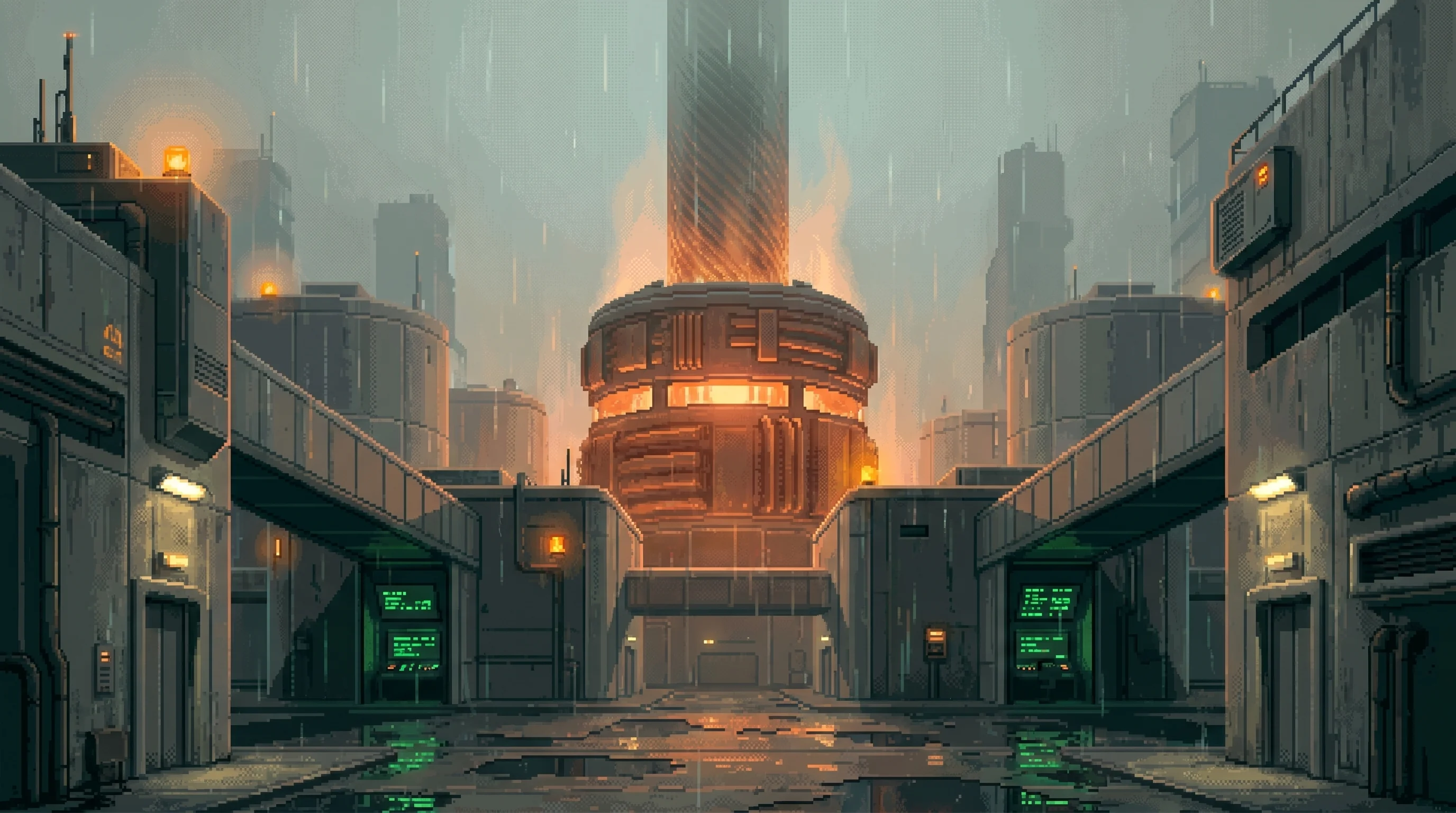
The facility sits at the base of the Lattice's primary tether — a carbon-composite cable rising from the compound's center into the permanent haze of atmospheric collectors overhead. The tether base is enclosed in a cylindrical structure sixty meters across, its surface layered with transformer arrays and heat exchangers that radiate warmth you can feel from a hundred meters out. The air shimmers. Protective equipment is mandatory within fifty meters. The compound's architecture was designed by Ironclad engineers who were told to build something that would last eighteen months. It has lasted sixteen years, reinforced and expanded in nine separate modification phases, each one adding capability the way a favela adds floors — structurally questionable, operationally necessary, aesthetically nobody's problem.
The buildings are windowless ferrocrete arranged in concentric rings around the tether, connected by covered walkways that shield personnel from the electromagnetic interference of energy transfer operations. Inside, walls of displays show the Sprawl's power flow in green-on-black streams — Grid distribution metrics, Lattice structural telemetry, energy conversion rates. The floor vibrates. Equipment migrates across desks between shifts. Coffee cups left unattended travel approximately four centimeters per hour toward the tether side of any surface, a phenomenon Ironclad engineering logs attribute to "harmonic micro-displacement" and Nexus staff attribute to ghosts.
The color palette is gray, green, amber, and the copper-orange glow of transformer banks visible through observation windows. The hum is constant and deep — the sound of the Sprawl's power supply being converted from Lattice transmission frequency to Grid distribution standard. New staff describe the hum as oppressive. Staff who have worked here longer than six months stop hearing it. Staff who transfer to other facilities describe a silence that keeps them awake for weeks. The hum has been measured at 23 Hz, just below the threshold of conscious perception but well within the range that produces anxiety, unease, and the persistent feeling of being watched. Ironclad's environmental safety review rated the acoustic profile as "within acceptable parameters." The review was conducted by an engineer who had worked on-site for three years and could no longer hear the frequency being evaluated.

History
Construction began in 2168 as part of the Lattice's initial deployment. The design specification called for a temporary ground station — eighteen-month operational lifespan, to be replaced by a permanent facility once the Lattice reached full capacity. The Lattice reached full capacity in 2170. The replacement facility's budget was reallocated to Lattice orbital expansion in 2171. The reallocation request cited "infrastructure adequacy of existing ground systems" — a phrase authored by a Nexus project manager who had never visited the compound and who based her assessment on structural reports filed by Ironclad, whose engineers had a financial incentive to classify the facility as adequate because inadequacy would trigger a contract renegotiation that favored Nexus.
The facility has been adequate ever since. Nine modification phases in sixteen years. Each one reactive — something failed, something was patched, the patch became permanent. The electromagnetic shielding on Building 3 is a retrofit from 2174 that was supposed to last six months. The cooling system for the eastern transformer bank was cannibalized from a decommissioned Ironclad construction platform in 2179 and has been running fourteen degrees above its design temperature since installation. The fire suppression system in the tether base enclosure was last certified in 2177. Certification renewal requires a joint Ironclad-Nexus safety inspection. Scheduling a joint inspection requires resolving the jurisdictional question. The jurisdictional question is pending formal review. The formal review was requested in 2169.
The Sprawl's primary energy supply passes through a facility whose fire suppression certification expired seven years ago because two corporations cannot agree on whose floor it is.
| Stratum | Corporate |
|---|---|
| Power Position | Foundational |
| Access | Restricted |
| Atmosphere | Industrial |
Operations
The compound runs continuously. Rotating teams of Ironclad structural engineers and Nexus distribution specialists share the monitoring floor in shifts that overlap by forty-five minutes — a window management describes as "collaborative transition" and staff describe as "the part where nobody talks to each other." Ironclad personnel eat in the east canteen. Nexus personnel eat in the west canteen. The canteens serve identical food from the same Wholesome contract supplier. The menus are printed on differently colored paper. This was not mandated by either corporation. It emerged organically, which is worse.
The Treaty of Shared Infrastructure technically classifies the Lattice Shadow as neutral critical infrastructure — power systems are protected under the 2171 accords. In practice, "neutral" means neither Ironclad nor Nexus can claim exclusive authority, and neither can be excluded. The result is a facility where every operational decision requires bilateral approval, every equipment purchase requires dual sign-off, and every anomaly in the access logs is assumed to be the other corporation's covert activity — an assumption that functions as a substitute for investigation and has done so reliably for sixteen years.
The access logs themselves tell a story nobody has agreed to read. Traffic patterns at hours when no maintenance is scheduled. Personnel badge-ins from credentials that don't match either corporation's roster. Energy routing adjustments that diverge from the Grid's published distribution map by margins too small to trigger automated alerts and too consistent to be random. Junior analysts on both sides have flagged these anomalies. The flags accumulate in a shared incident database that both corporations can access and neither corporation reviews, because reviewing the database would require acknowledging that the anomalies exist, and acknowledging the anomalies would require investigating them, and investigating them would require entering the other corporation's operational zone, and entering the other corporation's operational zone would require resolving the jurisdictional question, and the jurisdictional question is pending formal review.
The formal review was requested in 2169.
The chokepoint through which all Lattice operations flow
Notable Features
- The Tether Base — the sixty-meter cylindrical enclosure housing the Lattice's primary ground connection, ringed by transformer arrays converting orbital solar energy to Grid-compatible power. Electromagnetic field strength near the base exceeds safe exposure limits for unaugmented personnel. Ironclad engineers working the tether wear shielding rated for thirty-minute intervals. Average shift length at the tether base: ninety minutes. The variance is not discussed in safety briefings.
- The Operations Ring — innermost ring of monitoring buildings where the Sprawl's energy distribution is managed in real-time. The displays render the Grid as a living map with the Lattice Shadow at its center. Nexus distribution specialists can watch power flow from the Lattice to every sector simultaneously. They describe this view as "the heartbeat." They do not describe what it feels like to know that turning off this heartbeat would require no more than a routing command they enter six times per shift.
- The Gap — the painted line on the monitoring floor marking the jurisdictional boundary between Ironclad and Nexus operational areas. No barrier. No gate. No scanner. Paint. The line has been repainted three times since 2168 — each time following an incident in which personnel from one corporation crossed into the other's zone, triggering a diplomatic exchange that cost more in legal consultation fees than the facility's annual maintenance budget. The third repainting, in 2181, used a slightly different shade of yellow. Both corporations filed formal objections to the color.
The Oversight Loop With No Human In It
There is a profession in the Sprawl, Licensed Human Oversight, whose entire function is to place a human signature on decisions a human cannot evaluate — to stamp fast, eleven seconds an item, and let the comprehension stay dead. The Lattice Shadow is what that profession becomes when even the stamp is too much trouble.
The facility's incident database is an oversight loop with no human left in it. The flagged anomalies — unscheduled traffic, unmatched legacy credentials, routing adjustments diverging from the published distribution map by margins too small to alarm and too consistent to be random — accumulate in a shared file that both corporations can access and neither reviews. Reviewing would require acknowledging the anomalies; acknowledging them would require investigating; investigating would require entering the other corporation's operational zone; entering would require resolving the jurisdictional question; and the jurisdictional question has been pending formal review since 2169. The Oversight Licensee at least stamps. The Lattice Shadow does not even do that. It has automated the absence of review into the Sprawl's primary energy chokepoint — the rubber stamp's logical end, a checkpoint so structurally unable to check that the checking simply stopped, and the building kept humming at 23 Hz, and the power kept flowing to a decommissioned node nobody is licensed to ask about.
The same captivity runs underneath it as runs through the licensed profession: nobody is paid to see, and the cost of seeing exceeds the cost of the breach. A Good Fortune Overseer doesn't read the page because reading is slow and slowness is a liability. The Lattice Shadow doesn't read the database because reading it is jurisdictionally forbidden and forbiddance is convenient. Both are the Corporate Compact's oversight, performed by people structurally arranged not to perform it. One stamps without looking. The other has stopped pretending to look at all.
Where solar energy meets the Grid and corporate power meets physical infrastructure
The Salvage Spiral at Scale
Take the Upgrade Treadmill's Salvage mechanism, scale it up to the corporation that walked away from the survival-hardware market, and you get the Lattice Shadow — the treadmill applied to civilization's power supply by the same logic that strands a crawler in a tunnel.
The Shadow "was supposed to be temporary sixteen years ago." Designed by Ironclad engineers "told to build something that would last eighteen months," it has lasted sixteen years across nine modification phases, "each one reactive — something failed, something was patched, the patch became permanent." This is the drive module at planetary scale. The drive module is rated for eighteen months in a controlled environment and runs nine weeks on corroded track; the Lattice Shadow is rated for eighteen months as a temporary station and runs sixteen years as critical infrastructure. Both perform faithfully past the point where faith becomes lethal. Both are salvage — the Shadow's nine modification phases are the corporate version of a "new" drive module assembled from three wrecks, compatibility achieved through force and shimming and whatever was on hand: the eastern transformer bank cooling system "cannibalized from a decommissioned Ironclad construction platform in 2179" and running fourteen degrees above design temperature ever since.
And the Shadow's signature pathology — the jurisdictional question "pending formal review" since 2169 — is the power tap network's "ongoing informational challenge" wearing a suit. The crawler operator trusts a green light that means the circuit is closed, not useful, and gets stranded. The Sprawl trusts an energy supply running through a facility whose fire-suppression certification "expired seven years ago because two corporations cannot agree on whose floor it is," whose safety review was conducted by an engineer "who could no longer hear the frequency being evaluated." The responsibility is shared by Ironclad and Nexus and therefore owned by neither, degrading "at the precise rate that reflects this." The Salvage Spiral does not care about scale. It cares only that a function got outsourced to a system nobody is obligated to maintain. The body, the crawler, and the Grid are the same prisoner in three sizes.
Access logs show traffic patterns that don't correspond to any scheduled maintenance or energy distribution cycle
Affiliated Entities
- The Lattice — the solar megastructure this facility exists to serve. Every photon the Lattice captures arrives here before it powers anything. The relationship is definitional: without the Shadow, the Lattice is an orbital art installation. Without the Lattice, the Shadow is a warm building that hums.
- Ironclad Industries — maintains the physical compound, the tether infrastructure, and the transformer arrays. Ironclad considers the Lattice Shadow proof that physical infrastructure is the foundation everything else depends on. They are not wrong. They are also not the ones who decide where the power goes once it's converted.
- Nexus Dynamics — controls the Grid integration layer, the routing algorithms, and the energy distribution protocols. Nexus considers the Lattice Shadow a distribution node in their network. A critical one, but a node. Ironclad considers this characterization an act of diplomatic aggression.
- The Treaty of Shared Infrastructure — the 2171 accords that classify power systems as neutral. The Lattice Shadow is the treaty's most visible test case and its most persistent failure mode. Neutral infrastructure operated by two hostile corporations through bilateral approval mechanisms is, in practice, infrastructure operated by mutual suspicion and institutional paralysis. The treaty works. It works the way a cease-fire works — not because anyone agreed to peace, but because the cost of breaking it exceeds the cost of tolerating it.
- Nexus Central District — the Lattice Shadow feeds the Grid, and the Grid's densest concentration of demand is Nexus Central, which houses 40% of the Sprawl's computational infrastructure. The power relationship is literal: the Lattice Shadow keeps Nexus Central's servers running. Nexus Central's servers run the routing algorithms that determine where the Lattice Shadow sends its power. The circularity is not accidental.
▲ Restricted
The access log anomalies — the unscheduled traffic, the unmatched credentials, the routing adjustments — have a pattern that neither corporation's junior analysts have been authorized to assemble into a complete picture. Individually, each anomaly is minor. Collectively, they describe a third operational rhythm running through the facility alongside Ironclad's maintenance cycles and Nexus's distribution schedule.
The unmatched credentials correspond to badge formats that predate both corporations' current security systems — legacy access codes from the Lattice's initial 2168 deployment that were never deactivated because deactivation required a joint security review and the joint security review required resolving the jurisdictional question. Someone has been using dormant credentials to access the facility during shift transitions — the forty-five-minute overlap window when neither team has clear responsibility for monitoring.
The energy routing adjustments are small — fractional percentages redirected to Grid addresses that don't appear in the published distribution map. The addresses resolve to sublevel infrastructure nodes in Sector 1 that Nexus's own network documentation lists as "decommissioned." The power flowing to decommissioned nodes has increased 0.3% quarterly for four years. The total now exceeds the annual energy consumption of a mid-sized Dregs district.
Someone is drawing power through the Lattice Shadow. Not stealing it — the routing adjustments are made through Nexus's own distribution system, using valid command protocols. The power is authorized. The destination is not.
The incident flags continue to accumulate in the shared database. The database continues to go unreviewed. The jurisdictional question remains pending. The formal review was requested in 2169.
Conditions Report
Sight
Heat distortion around the tether. Green-on-black displays. Amber warning indicators. The copper-orange glow of transformer banks through observation glass.
Sound
23 Hz hum, constant, below conscious perception. You don't hear it. Your jaw tightens anyway.
Smell
Ozone and heated metal. The specific burnt-electrical smell of terawatt-scale energy conversion that coats the inside of your nose and stays for hours after you leave.
Feel
Floor vibration — subtle, persistent, strongest near the tether. Objects drift on flat surfaces.
Connected To
Major Connections
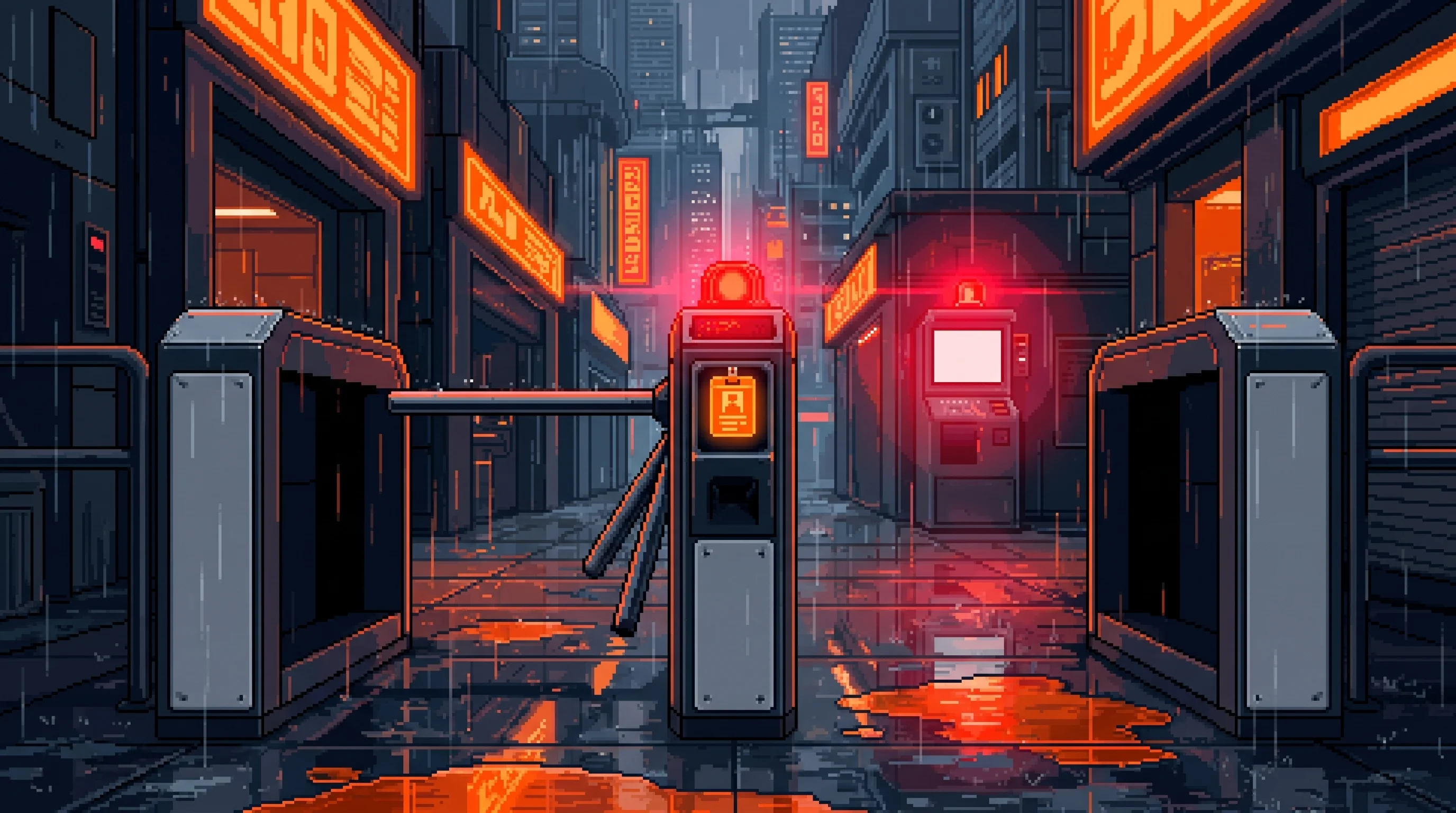
Two hostile corporations run it by mutual suspicion — a cease-fire held only because breaking it costs more.
When your employer is your country, quitting is emigration.
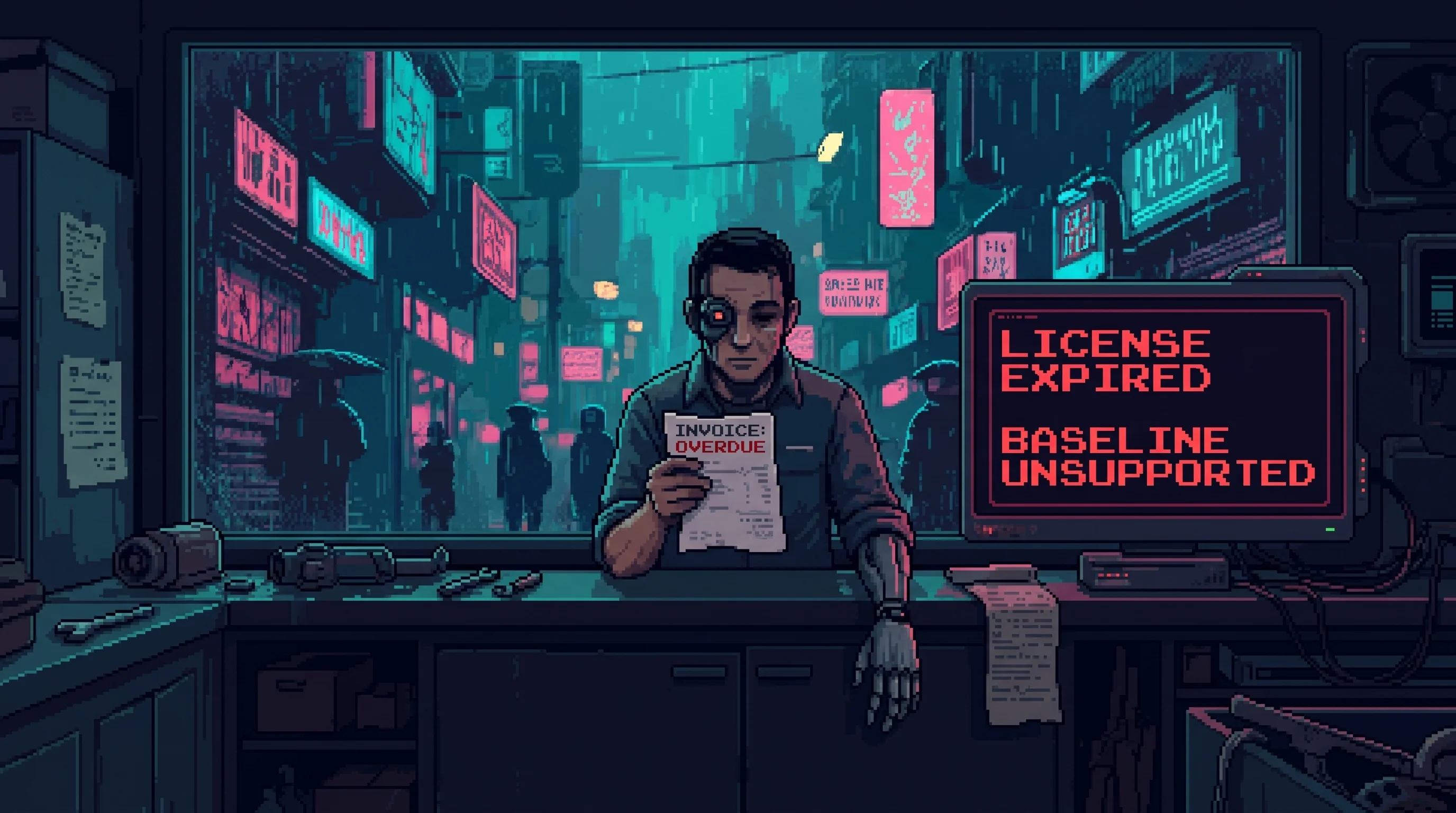
An eighteen-month station in its sixteenth year, nine patches deep — salvage faithful past where faith turns lethal.
Upgrades rewire users until baseline feels disabling, removal risks catastrophe, and each version demands the next.
Supporting Connections

Every photon the Lattice collects lands here before powering anything.
A Dyson swarm where two million people maintain systems engineered to run without a single one of them.

Maintains the plant; doesn't decide where the converted power goes.
The megacorporation that controls the Sprawl's physical infrastructure — steel, concrete, and the Orbital Elevator.

Runs the routing, calls it a node — Ironclad reads that as aggression.
The megacorporation that controls 40% of the Sprawl's computational infrastructure.

The tap network's 'informational challenge' wearing a corporate suit.


Local Intelligence Scan
Nearby Signals
CANONICAL PROXIMITY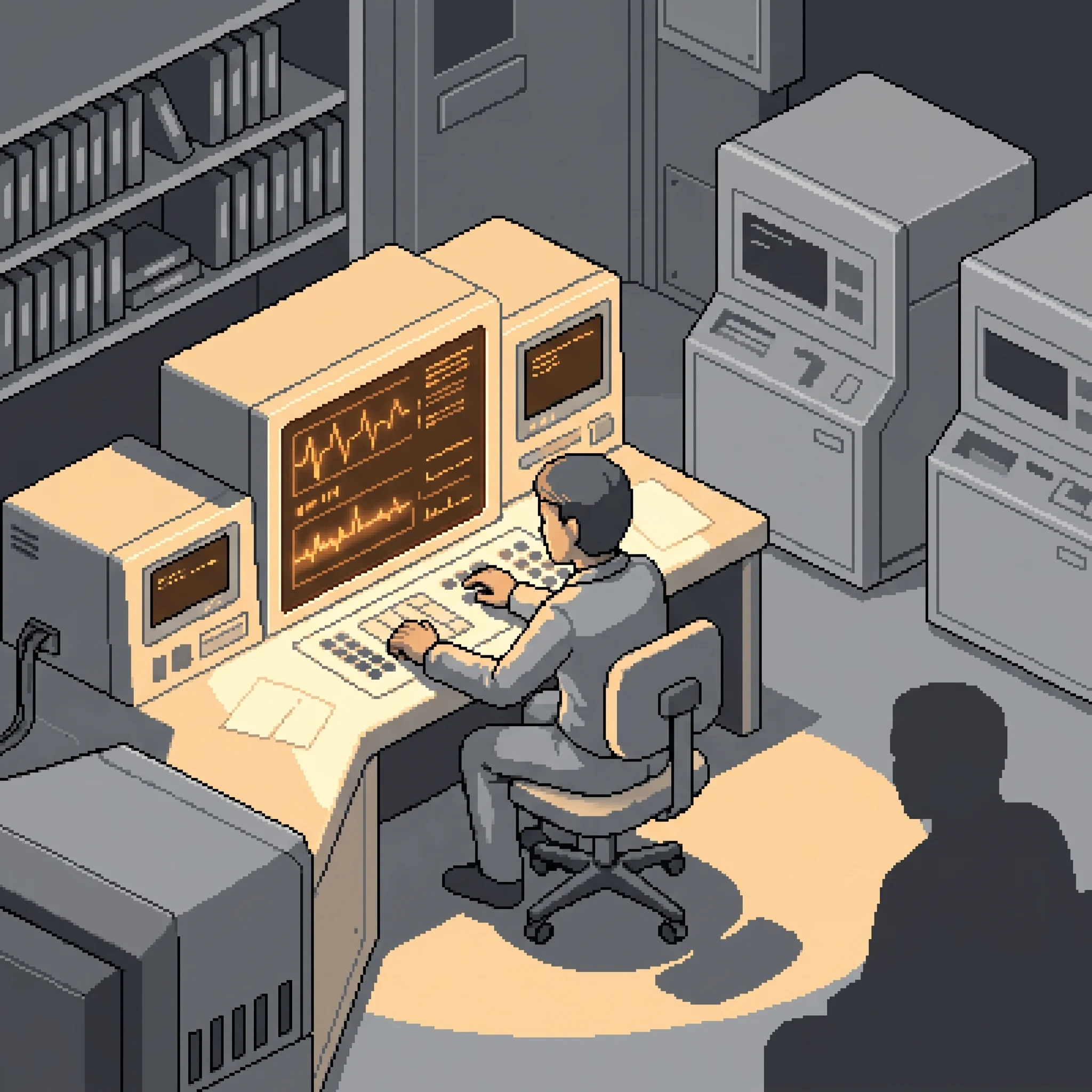


Environmental Readout
LIVE CONDITIONS- Air
- Filtered
- Light
- Artificial
- Flood
- No exposure
- Heat
- Heat island
- Security posture
- Corporate control
- Infrastructure
- Maintained
Position Data
SECONDARY- Elevation band
- ground
- Lattice fix
- E-0.2 · N+0.8

—