At twenty past one on a Tuesday in January, a stack of steel plate slipped its choker three metres above the plate yard at the Foundry.
Idris Kovac had rigged it. He is forty-one, nine years on the yard, and what the yard trains you to do when a load moves wrong is shout clear and step back. He did not get the chance. The safety plate bolted along his spine drove his left arm out and took the corner of the stack, and the stack came to rest instead of coming down.
Two people were standing under it. Neither was crushed.
On the way out, Kovac's forearm swept Wren Abaza's hand into the pinch between the plate edge and the trestle. She lost three fingers. Her claim was paid in full, and nothing that follows changed that.
What the district had to decide
Nine days later a district clerk ran what the licensed districts have run since 2168: an apportionment.
The reading works from the plate's own log. Any augment fast enough to act before its wearer decides has to keep one — not for courts, for warranty, so that Ghost Grinder can tell a worn bearing from an abused one before honouring a claim. Warranty telemetry turned out to be the most reliable account anyone has of what a chromed body did, so tribunals adopted it. And a tribunal that reads a component log honestly finds what is actually in it. Several parties contributed to one movement. Only one of them is a person.

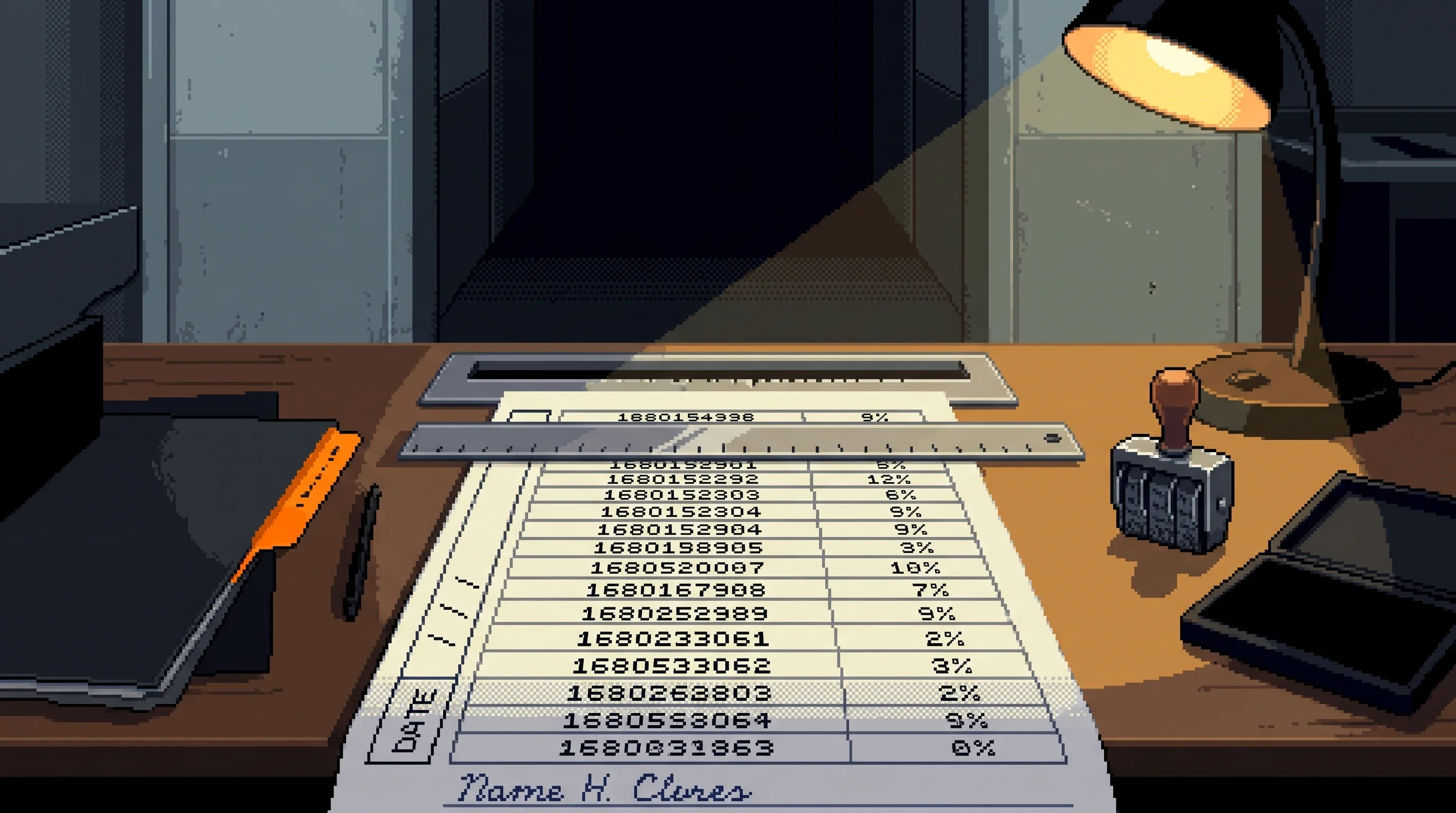
So the districts divide the act. Each part that moved is named, the wearer is named, and each gets a percentage.
Reading 4471-K returned twenty-six percent to the plate and seventy-four to Kovac.
Why it came out that way
Not because of anything he did. Because of an unpaid bill.
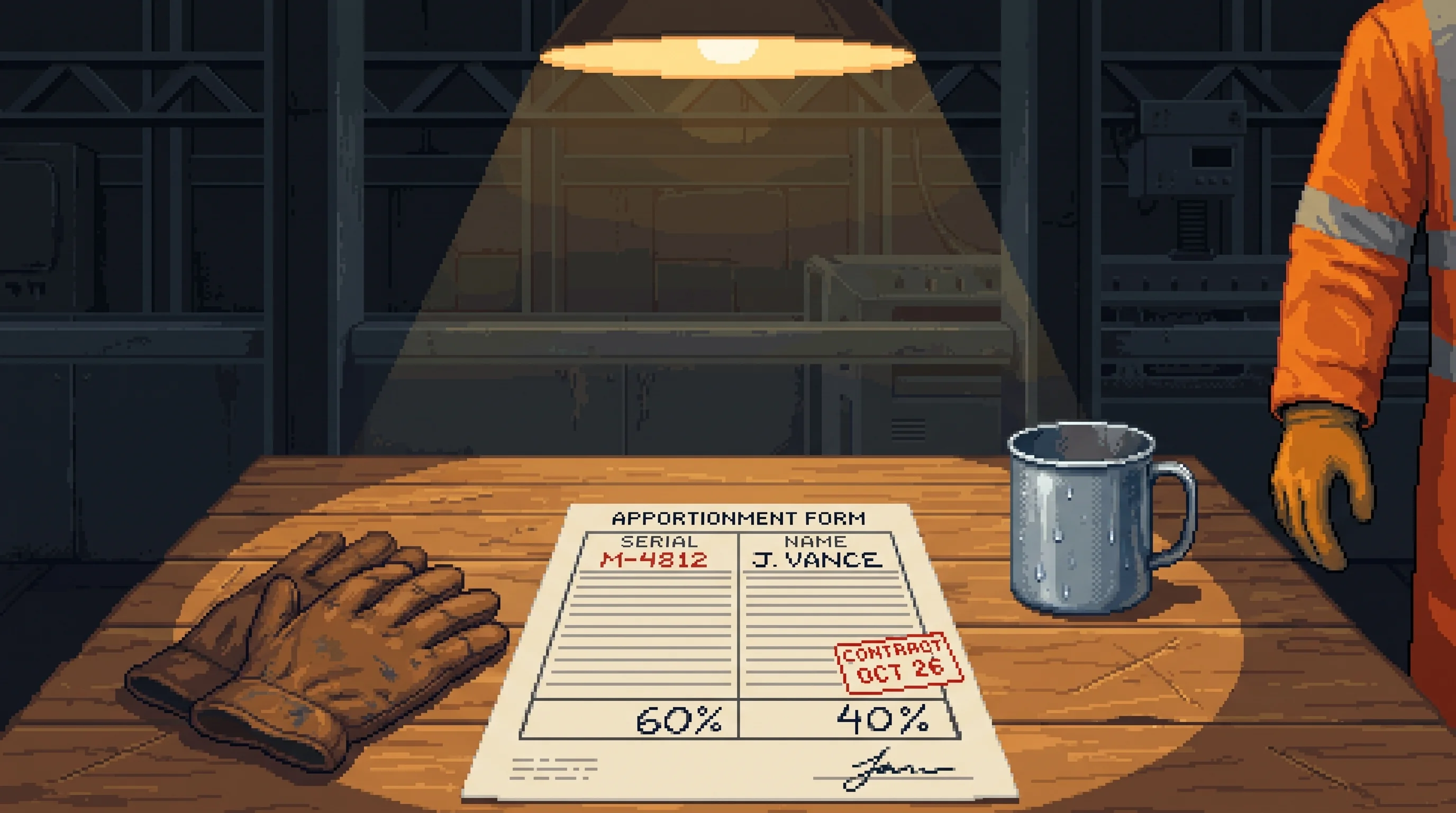
Under the clause, a component's share is charged to its maker while the service contract is current. Kovac's had lapsed nine weeks earlier — one instalment, four hundred and ten credits, on a plate Ghost Grinder is the only party permitted to service. A lapsed part's share is unattributed, and unattributed share falls to the wearer.
A current contract that January would have flipped the columns exactly: twenty-six him, seventy-four the arm. Same afternoon, same trace, same physics.
He worked that out before the clerk did and said so at the hearing. The clerk agreed with him and closed the finding, because agreement is not one of the two grounds you are allowed to appeal on.
And here is the argument the Sprawl has not settled. The reform that produced this number was a good one. Before 2168 the districts held you liable for everything your chrome did, including a manufacturer's reflex you could not override and did not own — the case law of that decade is a queue of people convicted of being wired. Thirty-one million enumerated contractors work for Ironclad on financed hardware. Dividing the act was the humane fix. The reversion clause was added late, because the alternative was the district absorbing the cost of chrome nobody was servicing, and no committee was going to vote for that.
Every step is defensible. The sentence the whole apparatus now enforces is this one: the further behind you are on maintenance, the more of the accident was you.
Who carried it
Kovac's seventy-four percent went onto his certificate, from there into his Score, and from there into a housing band that did not renew.
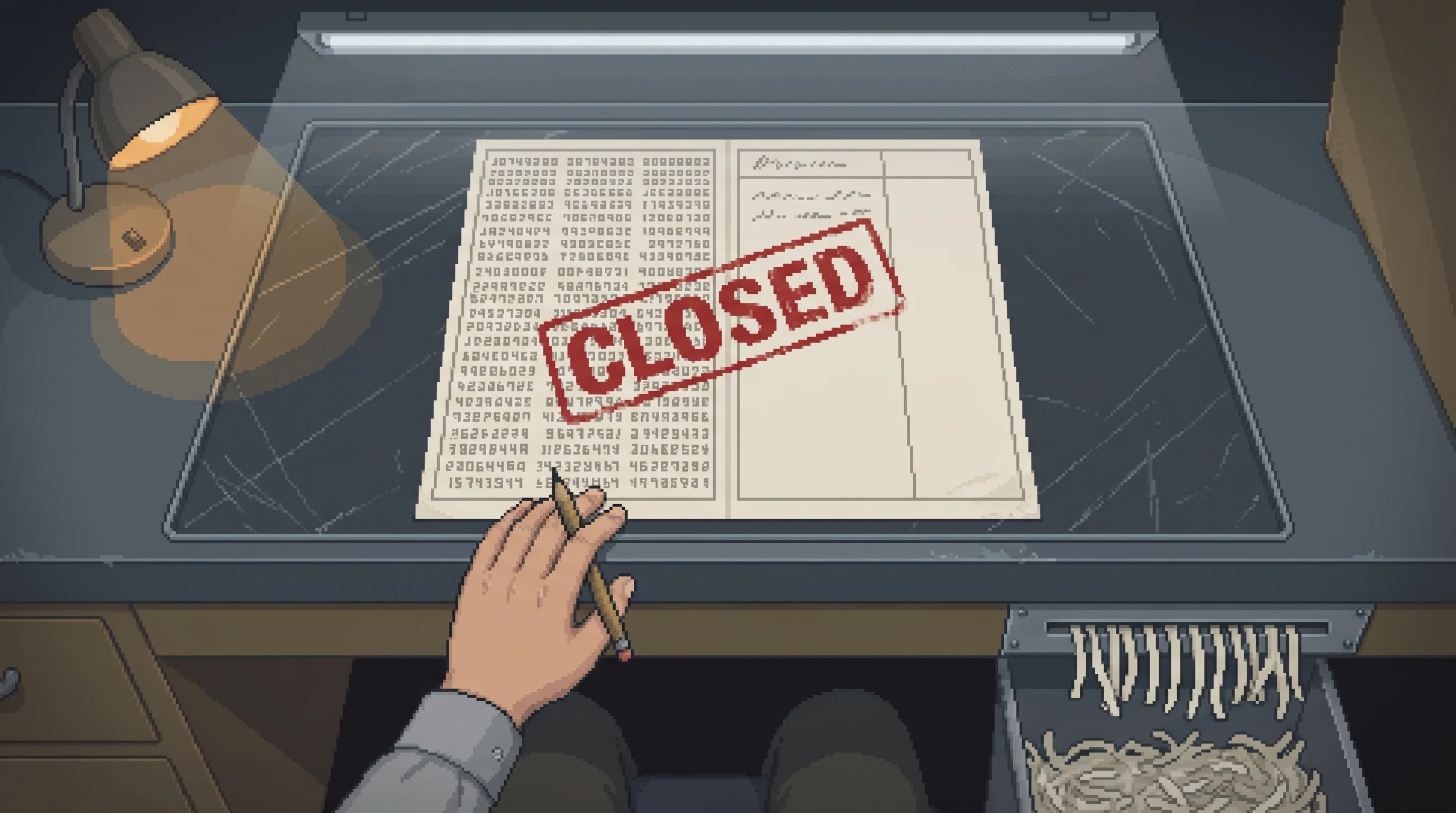
He gave his own account of the afternoon at the hearing. It ran to eleven lines. A clerk wrote it into the narrow column of the form, read it back, offered him a correction, and destroyed it when the finding closed — which is what that column is for, and which was introduced as a privacy protection, correctly. The plate's log went in the wide column and will be kept eleven years.
He asked whether he could have a copy of his own statement. He was told, accurately, that there is not one. So he walked down to the Dregs, paid eleven credits at a repair bench to have the plate's trace printed, and now carries that folded in his breast pocket. It is the only record of that Tuesday still in his hands, and his arm wrote it.
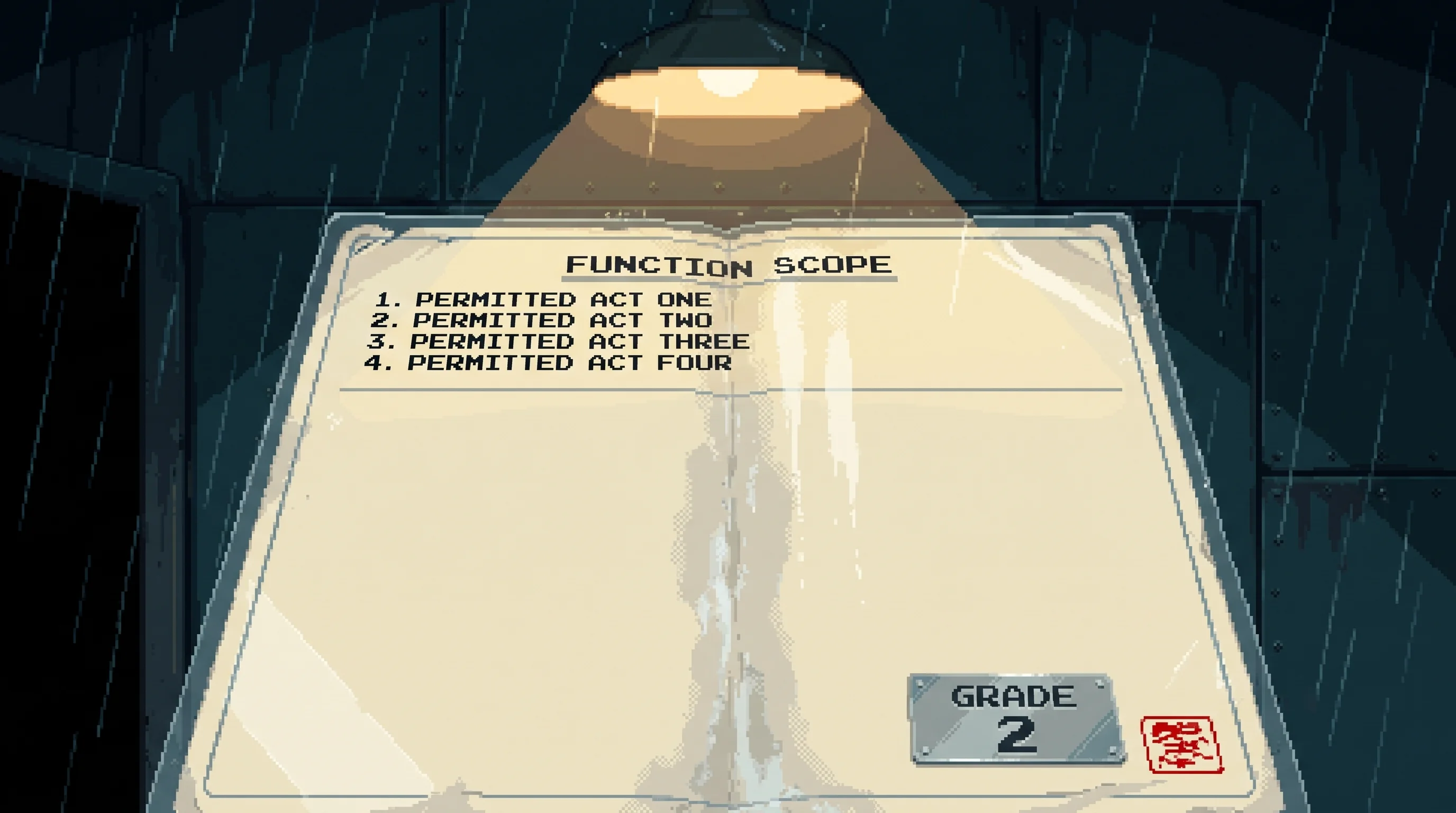
There is a second file, too. Arresting a suspended load by hand is not among the acts a Grade 2 rigging card allows, so a scope audit opened a violation on the same second — whole, undivided, against him — while the apportionment was busy splitting it. Both files are correct. Neither form has a field the other could go in.
Where else this lands
The instrument nobody points inward. A bench technician in the Dregs once held a household sentience meter against an open safety plate to see what it would do. Two-sixteenths. That is the bottom of the range a domestic synthetic reads at, and it is not zero. By the methodology it does not count as a reading at all, and the objections are sound. It is also the only thing standing between sixteen years of apportionments and the question of what sort of thing can hold a share of an intent. Dr. Lena Farris held the last licence that could have answered. She has been asked twice, privately, and declined both times, on the grounds that an opinion from a dissolved licence gets used once and disowned.
The party that never appears. The layer that thinks alongside every augmented brain arrives with a judgement already shaped before the words are found. It moves nothing, so it logs nothing, so no reading has ever named it. Two policy reviews closed the point by observing that an unlogged contribution cannot be apportioned, which is true and is not an answer.

Where the reading runs out. Grandmother Rust is seventy-four and carries augments cut from seven different bay-floor dead, and can name each donor. A reading on her would return one hundred percent, because salvage has no maker to invoice. She would not dispute the number. What she objects to is the register: they want to know who to bill, and I want to know who to thank.
The answer below the Rim. The Dregs settled this years ago without a statute. Wear a thing that moves and you have authorised every movement it makes — the whole act, no division, no share for the manufacturer. It is harder on the wearer than the districts' arithmetic and considerably easier to say to somebody who has just been hurt. Somebody has added a fourth line low on the chalk wall in Sector 9, in yard chalk rather than street chalk: it did it without me. Nothing has been written under it.
The practice that got taken. On the repair benches they answer by dividing themselves first, out loud, before the job. The Show of Hands started as a joke about a decade ago and stopped being one when crews noticed that saying my right side goes before I do at shift start is a safety brief. Practitioners keep a pencilled sheet and call the cortex the chair, because a chair can be outvoted. Two Ironclad sectors now recommend a filed apportionment at induction, and the Handling Inspectorate accepts one in evidence. Everyone in the practice can state that objection better than any outsider. They keep doing it, because the alternative is an account of your own body written entirely by your chrome.
What is still open
Kovac is not asking for the clause to be repealed and never has. He is not arguing the plate was wrong to move; he says the opposite, to his own cost, whenever anyone gives him the chance to say otherwise.
His filing is one line long. Print the service-contract date beside the percentage — so that anybody reading seventy-four percent can see that it is a fact about an invoice and not a fact about a man.
He has filed it twice. Both replies observed that the contract field is administrative and not part of the published finding. Both replies are correct.
Wren Abaza thinks the arm was right. She told him so at the ward, unprompted, on the second visit. He has not yet found anything to say back that is not either an argument or a thank-you, and he does not think she wants either.