Overview
A refusal you agree with is a refusal you do not appeal.
The Grounds Notice is what regulatory code 11.4(a) requires: when a determination goes against you in the licensed districts, it arrives with the reasoning that produced it — the finding, the operative grounds, the weighing, set in plain type against a published readability standard, addressed to you. Not a summary. Not a code. The actual reasons, and they are correct. Clerks are graded on whether the person the notice is against can follow it, and the only clerical error the districts publish is a notice returned for being too difficult.
Override rates have fallen every year for eleven years.
That sentence is the whole argument, and both sides claim it. The office reads it as the reasoning being sound, which it is. The Boalt Docket reads it as a population that has stopped objecting, which it also is. No instrument in the Sprawl distinguishes the two, because a person who agrees and a person who has given up file the same nothing.
The First Clause
The regulatory office that wrote 11.4 has answered the same absence four times, and this was the first answer.
The war taught it. On the Warm Hands click floor in 2171, three thousand four hundred confirmers approved and denied lethal actions at 0.4 credits a verdict, and the denial form carried an optional comment box that ninety-two percent of them left blank. Maricel Dayrit filled hers four hundred and twelve times, one to four words each, into a field no system consumed. When the reckoning came, the Sprawl discovered it had fought a war in which almost nothing anyone decided had a recorded reason attached to it.

The clause made the box mandatory and made something read it. From 2173, an adverse determination without its grounds is not served; it is void. Then the office kept going. Where a machine decides and the law needs somebody to punish, 11.4(b) licenses a human to sign. Where a person acts and the law needs to know whether they were entitled to, 11.4(d) enumerates. Where a machine is injured and the law needs somebody to complain, 11.4(f) licenses a witness. Read the four together and the shape is plain: (a) is the only one that hands anything to the person the system is acting on, and it is the only one that has never been amended.
The abuses it ended were real and are not coming back. Before 2173 a refusal was a clause number, and a clause number is a thing you cannot argue with because there is nothing in it to argue with. Clerks who worked both sides of the mandate will tell you the old form was worse, and they are right, and they say it with the particular flatness of people who know the sentence is about to be used against them.
The Core Tension
The case for the clause does not weaken when you meet the people it satisfied.
Junia Bexley wrote grounds for six years and about nine thousand determinations. She was good at it. Her notices came back unreturned, her readability scores sat near the top of her district, and not one of the determinations she reasoned was ever overruled. In 2181 she wrote four pages refusing a suspension-ward place to a woman with a poor projected outcome, setting out the queue arithmetic, the ward's capacity, and the specific clinical reason another applicant would benefit more. It was true in every particular. Eleven days later the applicant's daughter, Rosa Iturbe, sent two lines back to the district office thanking the clerk for explaining it so she could understand.
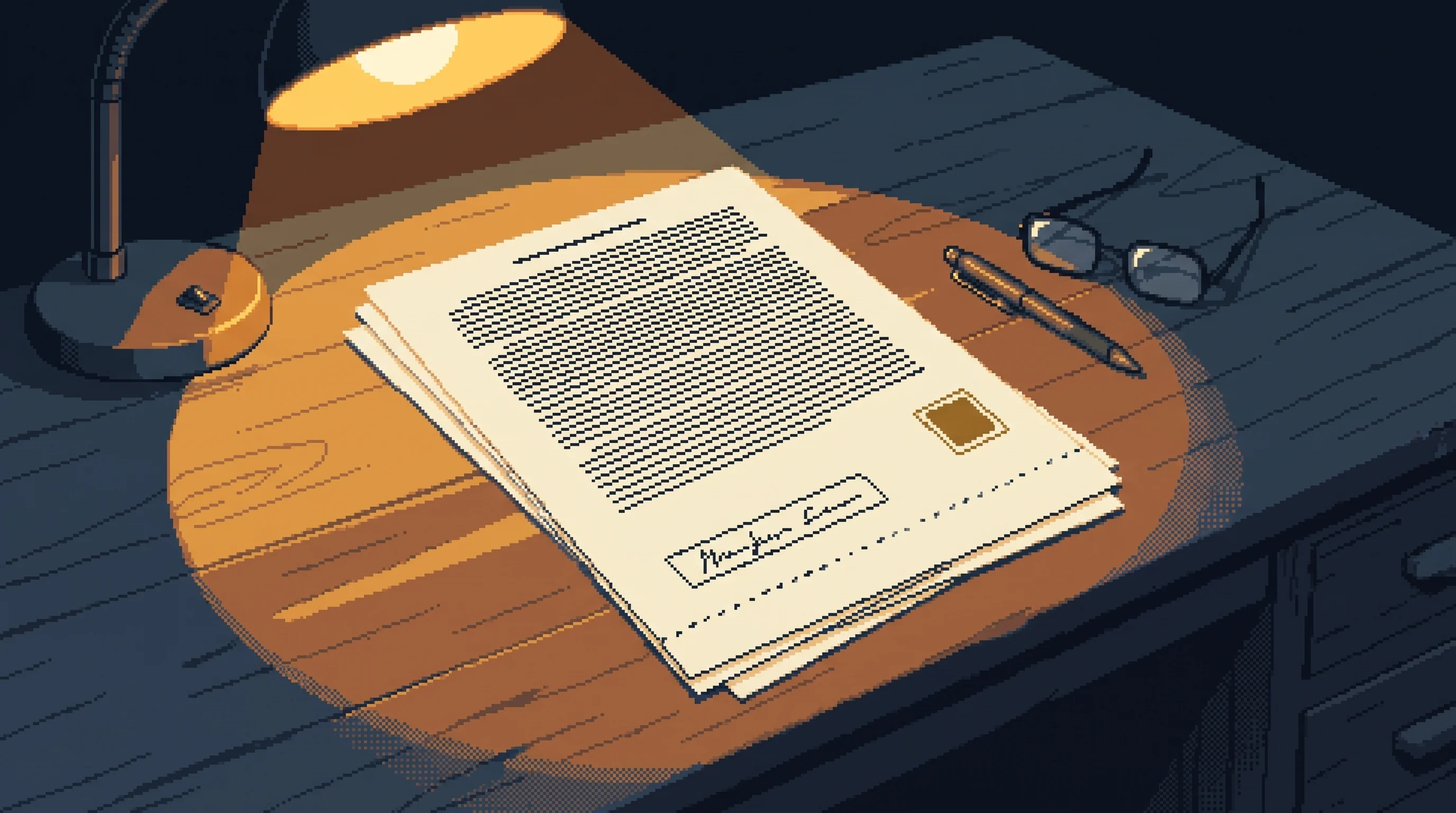
Bexley kept the reply. She has said that it was not guilt, because there was no error to be guilty of, and that this was the difficulty: she had done the job perfectly and the result was a thank-you note for a refusal. She resigned that quarter and took a licence she could not have wanted for any other reason.
The failure boundary is exact. Review exists to catch a determination that is wrong in a way its reasoning conceals. Honest reasoning conceals nothing — and so it exposes nothing either. The clause works on the case where the grounds are bad and the subject can now see it. It fails on the case where the grounds are good and the subject can now see that too, because seeing it is the end of the matter and the matter was never only about the grounds.
The Grade That May Not Be Told
The audit houses are paid by the error, and they went looking for where errors were still findable.
The bare form is the same determination with the reasoning cut out: outcome, clause, nothing else. It is unlawful to serve on a subject and perfectly lawful to sell to a licensed review house, and the houses buy it in volume. The reviewers who work it hold a licence conditioned on never being told the grounds behind anything on their desk — not withheld by custom, not unavailable, forbidden. They earn about four times a Grounds clerk. They last around six years. Asked to describe the work, they mostly converge on some version of disagreeing with something you are not permitted to understand.
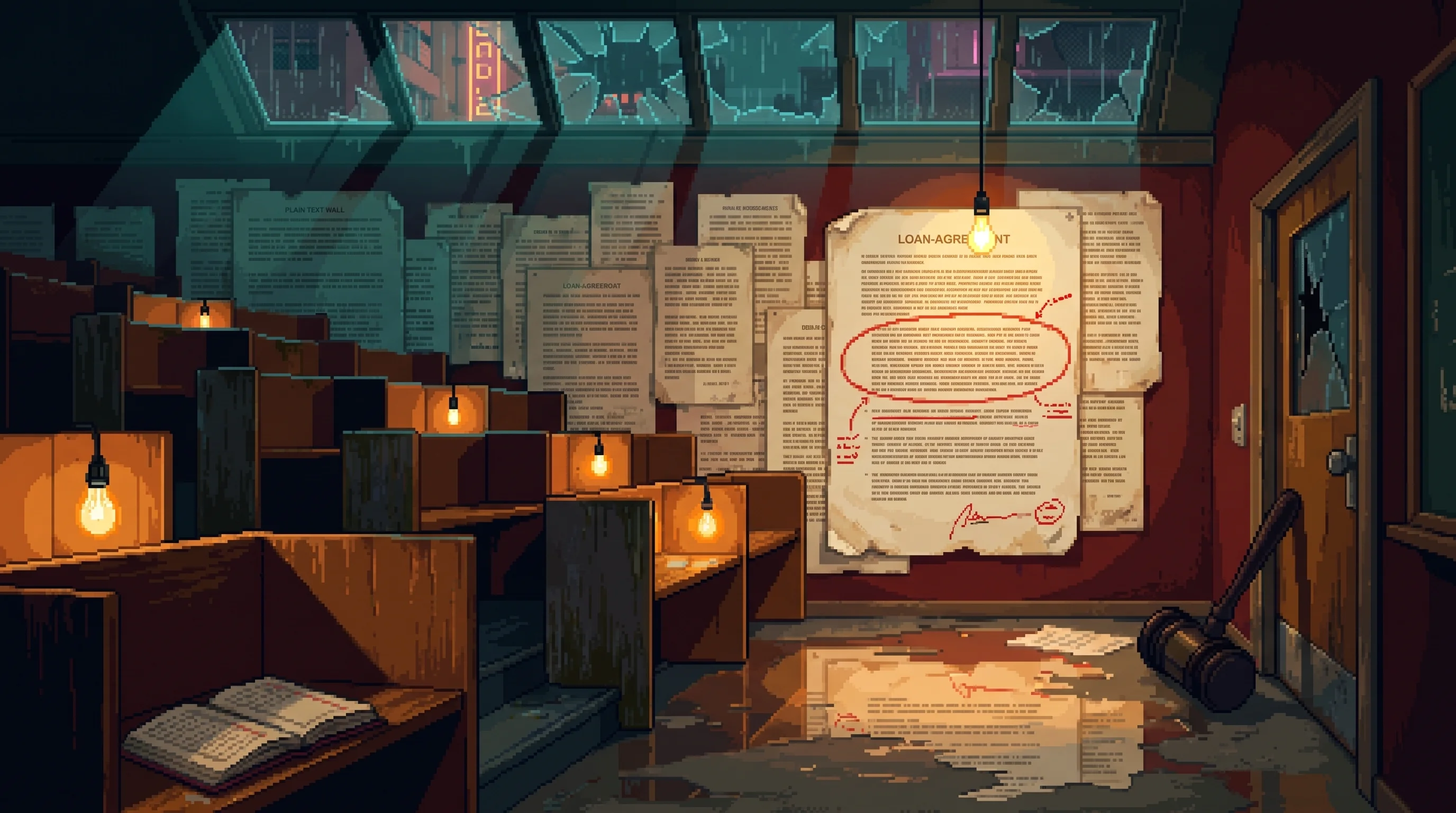
They find errors. The rate is not disputed by anyone, including the districts, and no one has published a mechanism for it. The houses' own theory is that a reviewer who cannot read the reasoning cannot be persuaded by it, and has nothing to do but look at the outcome and ask whether it is the kind of outcome that happens to that kind of person. Bexley, who wrote grounds for six years before she stopped being allowed to read them, has been asked more than once and gives the same answer: that she used to know exactly what a good reason looked like, and that the licence is the only way she has found to stop it working on her.
Nobody has proposed extending the licence. To argue for it you would have to say out loud that the Sprawl's most honest institutional document is a hazard, and the only person who has written that sentence down has not filed it.
Where the Clause Stops
Above the determination layer, none of this applies, and the gap is where the argument is loudest.
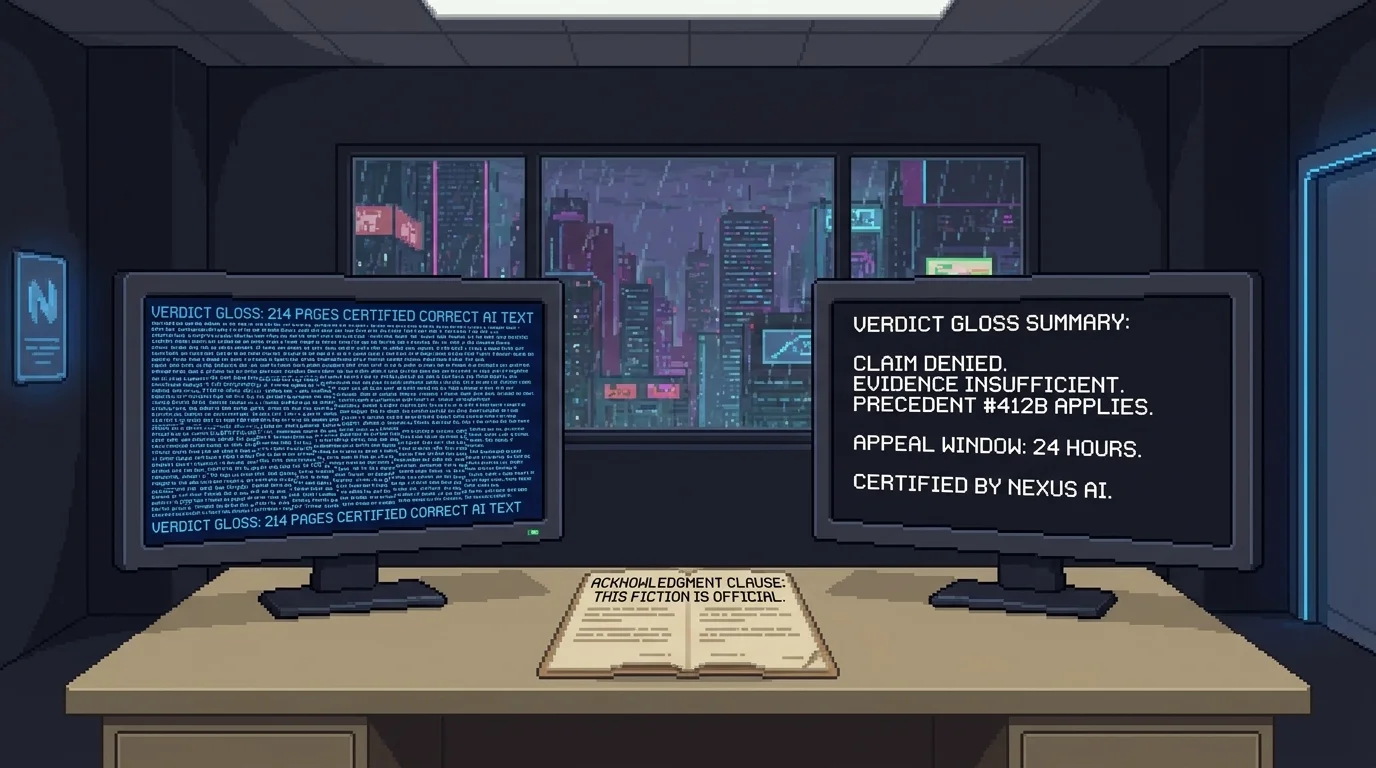
A tier 4 verdict from the Tiered Adjudication System is not a determination. It runs to 214 certified pages of inference nobody can follow, and the Verdict Glossers sell an acknowledged fiction about what it says. In 2183 the Boalt Docket filed thirty-four Habeas Intelligibilis motions arguing that a defendant cannot participate in a defence they cannot read. All thirty-four were dismissed in four minutes. The arbitrator cited the Gloss service. In eleven of the dismissals the arbitrator also cited 11.4(a): where the districts had mandated reasons, the reasons proved sound, and the override record showed it.
Elena Sarkisian has drafted the answer to that four times. The eleven-page fourth variant argues that the override record shows the opposite — that a determination which nobody contests has not been validated, only accepted, and that legibility delivered to a person with no power to act is a courtesy rather than a remedy. She has revised it twice and not filed it, and the reason is legible to everyone in the reading room: her practice is built on the demand that people be allowed to read what is done to them, and the draft argues that the demand was granted and made things worse.
Two floors of the same regulatory code run in exactly opposite directions and produce the same number. Licensed Human Oversight puts a human signature on a determination and gives that human no entitlement to the grounds; the subject downstairs reads all four pages. Deference calibration removes a correction from anyone senior enough to act on it and delivers it to whoever is cleared to receive it. Between the statute and the product, the machine's most careful, most honest, most readable output is routed with great precision to the one person in the transaction who cannot do anything with it. Nobody built that. Two institutions solved two different problems and the outputs met in a stairwell.
How It Is Lived
On Sump Row the notices arrive and people still bring them to a man at a folding table.
Hollis Sarr charges ¢2 a page, ¢5 if it needs explaining, and by any reasonable account 11.4(a) should have ended his trade eleven years ago. The documents explain themselves now. He reads them aloud anyway, at the pace they need, and he still slows at the sentence that does the damage, and the woman across the table still watches his face instead of the page. What she is buying was never comprehension. It was a person in the room while she received the news, which is the one service the clause did not think to mandate and could not have.
He is also the clearest case of what the clause is worth. Nine years of correspondence addressed to him sits in a locked cabinet behind his chair, much of it findings against a name four thousand agents contract under, each one served with complete honest reasoning explaining exactly why. Article 9 forbids him to open any of it. The Sprawl has built a document that tells you everything, and put it in a drawer, and given the key to the party that benefits.
Further up, the argument is the same argument with better furniture. Dr. Priya Achebe has filed one hundred and forty-seven objections in nine years — complete, reasoned, three philosophical traditions minimum, every one of them true — and changed zero outcomes. The clause running downward produces a subject who agrees. Achebe running upward produces a board that notes. The document is excellent in both directions and load-bearing in neither.
And then there is the case that did not take. GG received her mother's coverage denial in 2178, five years into the mandate, and it came with its grounds: the actuarial tier, the demographic band, the treatment's projected value against its cost, correct throughout. She does not dispute the arithmetic and never has. She disputes an aggregate with no mothers in it, which is not a ground of appeal and never will be. What the four pages did not contain was the exposure that started the illness, because that was not a coverage fact and 11.4(a) requires the operative reasoning and nothing outside its subject matter. The notice was complete. The world was not. She is the only person in the Sprawl who read one of these documents, agreed with every line, and went to war anyway, and the districts have never worked out whether she is the clause's failure or the proof that it was only ever a document.
Start Here
First door. The Grounds Notice is the clause, the four pages, and the eleven-year override record. Then read Junia Bexley, who wrote nine thousand of them and now holds a licence forbidding her to read one.
Key People. GG conceded the arithmetic and refused the frame. Hollis Sarr reads the notices aloud for ¢2 and may not open his own. Maricel Dayrit wrote four hundred and twelve reasons into a box nobody read, six years before the clause made the box compulsory. Dr. Priya Achebe files the same document upward and gets the same result.
Key Places. The Boalt Docket spent 2183 demanding upstairs what the districts already give downstairs, and was answered with this clause thirty-four times.
Key Institutions. The Bare Form is the counter-product and the licensed ignorance that works it. Licensed Human Oversight is the same clause family solving the opposite end. The Tiered Adjudication System and the Verdict Glossers are the floor the mandate never reached. The Mandate Notices and the Custodian Corps get the same obedience with the basis sealed.
What To Read Next. AI That Won't Contradict Power decides who may be told; this thread starts after everyone has been. The Evidence Paradox collects the ways a record can fail, and this is its twelfth: the file that answers your question correctly and ends the argument by doing so. The Speaking Pace is the district's other silent record — a chartered bench one floor below these determinations, where the reasoning is also honest and the instrument it ruled on was reissued while the hearing ran. One clause talked a population out of appealing. The other rules on documents that have already gone. Both returns show nothing contested, and only this one is cited as proof the remedy worked.