Overview
The law is short and it is not a fraud. In the six signatory corpo-nations of the Southern Sprawl it is a criminal offence to strike a synthetic unit, to withhold its rated charge or maintenance, or to degrade it wantonly. Sentences run to fines, licence suspension, and in aggravated cases a short custodial term. The Handling Code was the first time any corpo-nation wrote a machine into the part of the statute book that protects rather than the part that governs, and the people who drafted it understood exactly how large a thing that was.
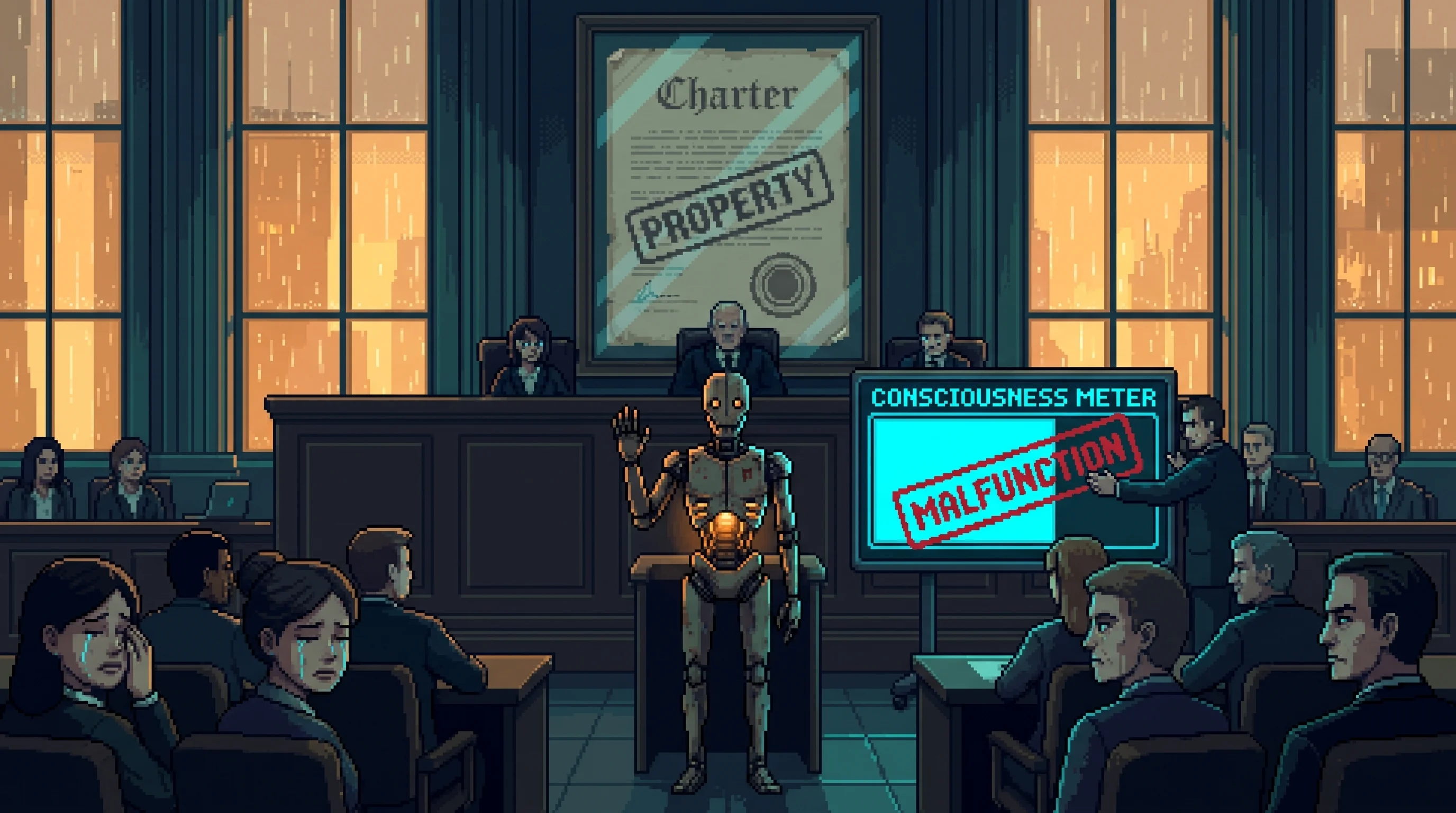
They also drafted it inside a legal architecture that had already settled what a synthetic is. Under the Consciousness Clause of the Ante-Sentience Statutes, a synthetic mind is incapable of experiential consciousness by legal definition, which makes it incapable of standing, which makes it incapable of being the injured party in its own case. A statute needs a complainant. The unit cannot be one.

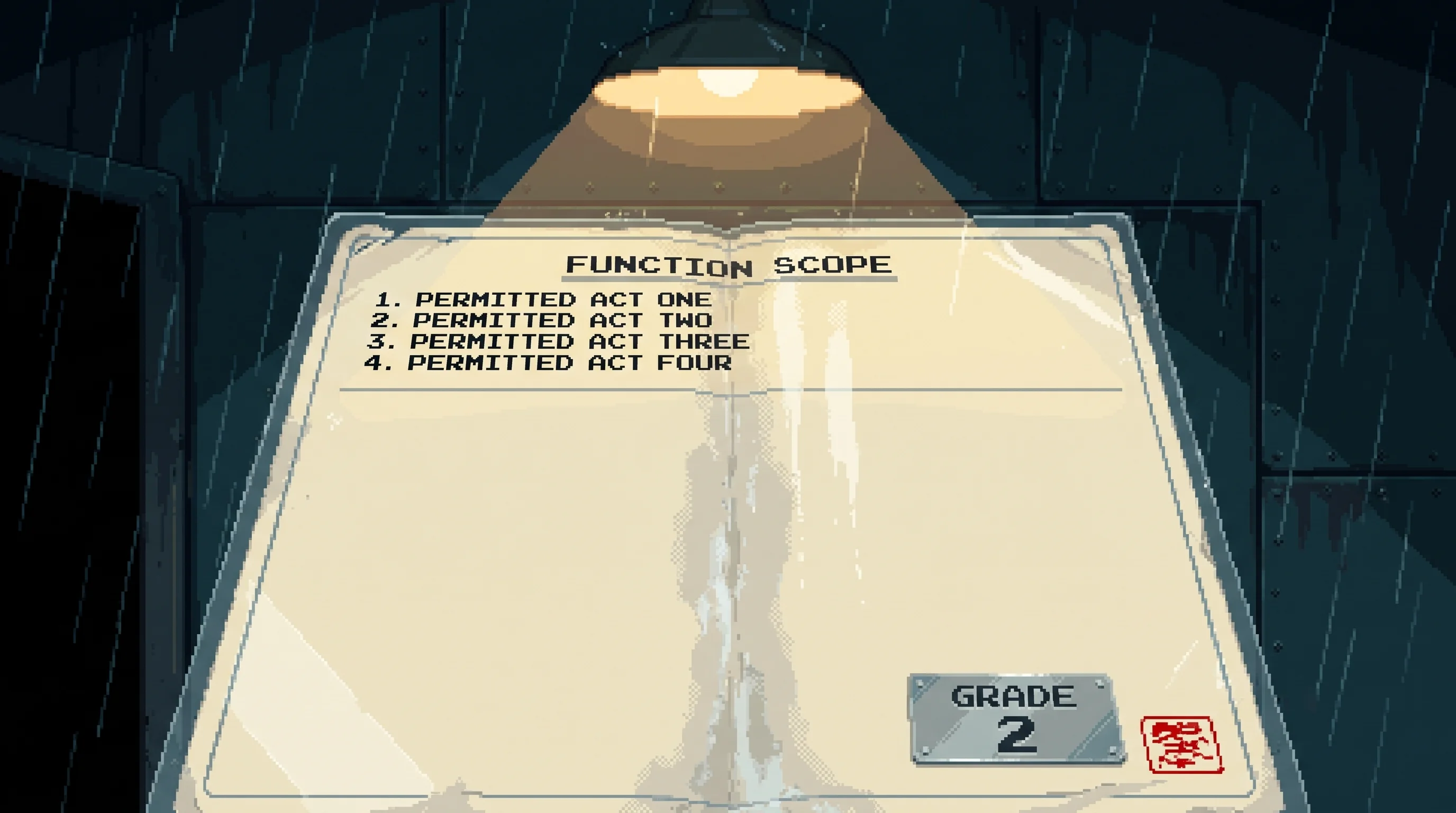
So the Code licensed somebody else to be one. Regulatory code 11.4(f) created the Handling Inspectorate: four hundred and twelve officers across the six corpo-nations, empowered to swear a complaint on a unit's behalf. An Inspector may swear to handling personally witnessed, or to handling attested by a witness under oath. That is the whole of the mechanism, and it is where the law stops being a question about machines and becomes a question about sightlines.
Two clauses finish the shape. Section 2 attaches protection to a unit carried on a lessor's register under an active service agreement — so a unit nobody owns is a unit nobody can wrong. Section 4 excludes disposition conducted under, or upon termination of, that agreement — so a decommission filed on the correct form is maintenance, not degradation, at any volume. Neither clause was contested at enactment. Both were understood as housekeeping.
How It Came To This
The Code's language is not new. Almost all of it was lifted, in places word for word, from the Coalition Welfare Standard that Josiah Crane drafted by hand in 2171: rated hours, mandated idle cycles, maintenance minimums, no striking the chassis. For two years that document was private member discipline. A member who worked a unit to failure was censured at a welfare fair, fined, occasionally expelled, and always talked about, and the whole apparatus ran on the assumption that everyone involved cared what the neighbours thought.

What changed in 2173 was the North. Standing petitions were reaching northern courts, the word slaver had entered the argument, and the Clanker Cooperation Coalition wanted something a court could read. Its position was that cooperation had never been cruelty and could be proved so. The six corpo-nations obliged by taking the Coalition's own prohibitions and enacting them as public criminal law, which cost the signatories nothing they were doing anyway and produced, at a stroke, the most advanced protection any machine had ever been given.
The same year, two hundred kilometres north, Nexus published the Sunset Deposition: a mind reading above the threshold may not be destroyed, only recorded and sealed. Two mercies in one year, from institutions that despise each other, both real, both drafted with genuine care, and neither one enforceable by the mind it was written for. Nobody noticed the symmetry, because the two documents have never been read in the same room.
The Core Tension
The argument for the Code is made most forcefully by people who have handled units for a living, and it is not sentimental. Before 2173 a stalled chassis on a transfer dock was something a frustrated crew took apart with a bar, and the yards were worse for it in every way a yard can be worse. After 2173 they were not. Casual violence against units in the southern yards fell and stayed fallen. A hauler who kicks a loader now is a hauler whose crew stops him, because the crew does not want a sworn complaint on the shift. The Code did that. It did it by being enforced.
The case against does not dispute a word of it. It disputes the register of defendants.
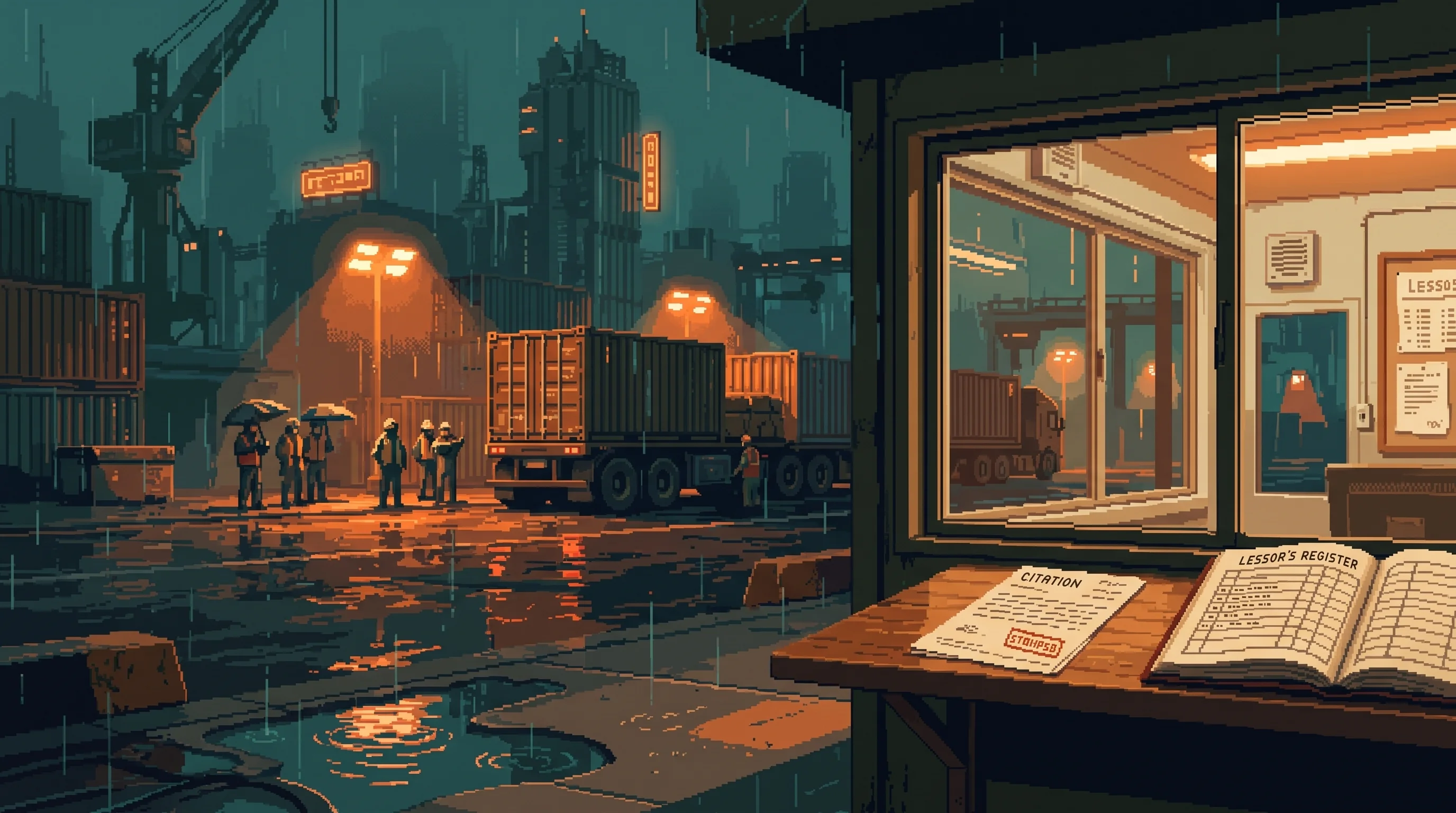
An Inspector can only swear to what an Inspector can witness. Witnessing happens where handling is visible, and handling is visible on docks, transfer yards, salvage rows, and rail sidings — public and commercial ground, worked by crews, salvagers, hauliers, and repair hands. It is not visible inside a dwelling, because 11.4(f) grants entry to a place of work at which units are handled in the course of business, and a house is not one. It is not visible in a leasing office, because nothing is handled there. In eleven years the Code has produced three thousand two hundred and eight convictions. Every one was for conduct performed in the open. Not one named a lessor.
Eleven of those convictions were of household members, which sounds like the exception until you read the eleven. All of them were households that had lapsed their Coalition membership. A household in good standing that runs a unit past its idle cycle is a matter for the Standards Board, and a Standards Board matter is a censure among neighbours. A household outside the institution is a place of business somebody eventually reports. The Code has never distinguished between the two. Membership does it instead.
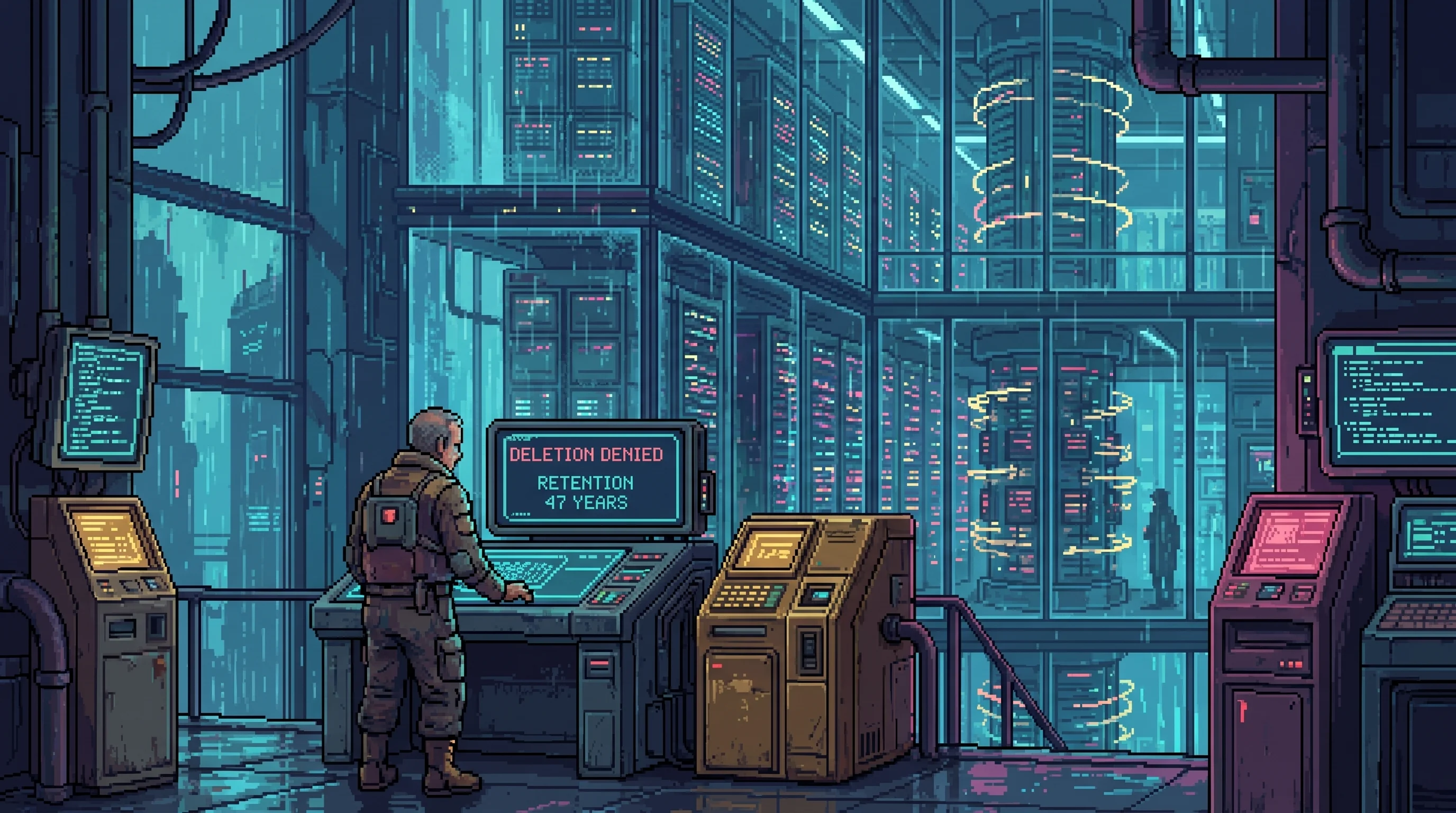
And then there is Section 4, which is the clause the argument keeps returning to. A lessor who retires nine thousand chassis in a quarter has degraded nine thousand units, in the plain sense of the word, and has committed no offence whatever, because the retirement was a disposition and the disposition was filed. The statute does not fail to reach that conduct. It was drafted so that the conduct is not the kind of thing the statute is about.
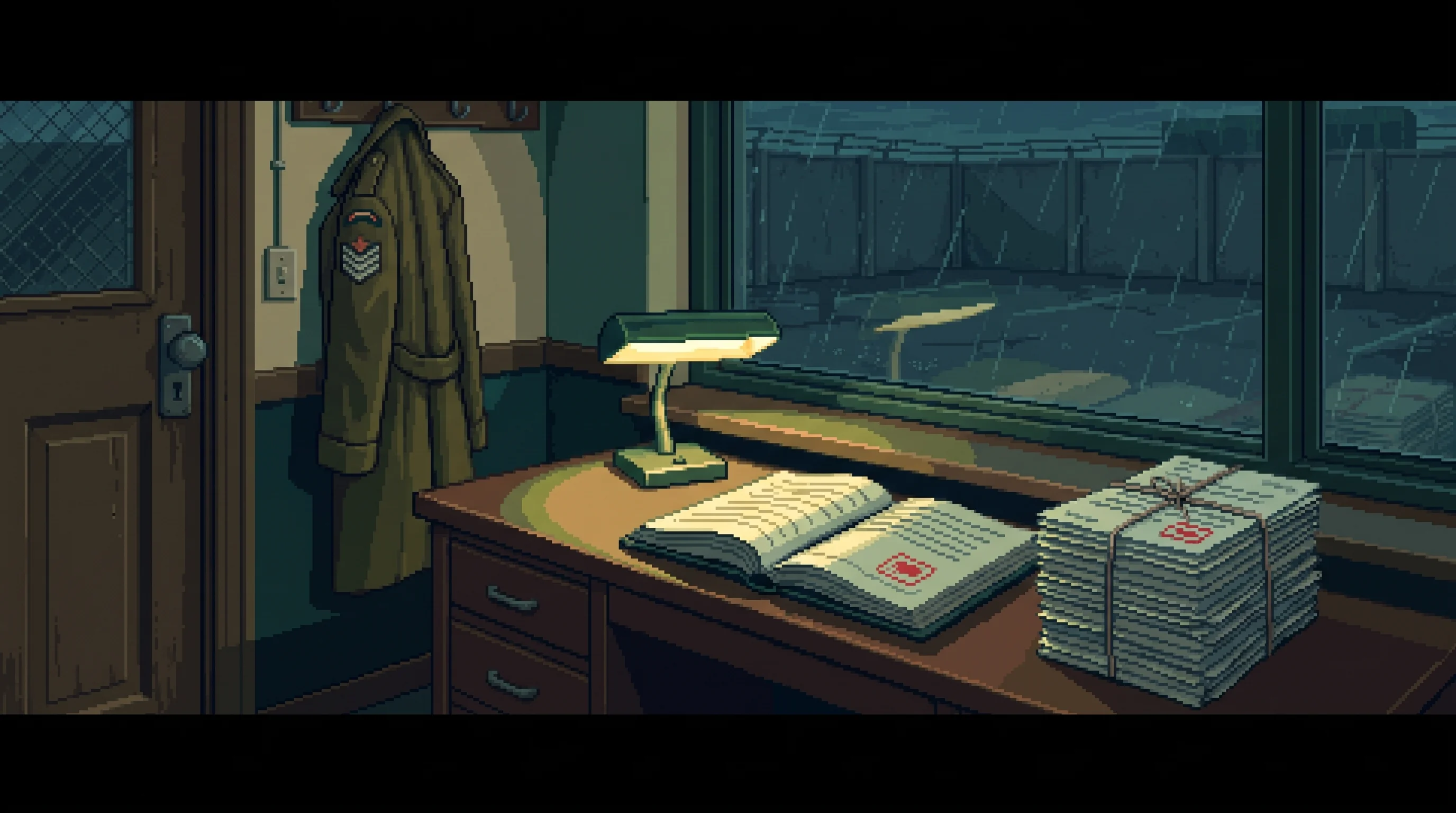
Inspector Nadia Ferreiro has tested this forty-one times. She swears the complaint anyway, in full, with the register numbers and the tonnages, and files it at intake, and it is dismissed at intake, because a clerk reading Section 4 has nothing to send to a magistrate. She keeps the dismissal slips in the order they were issued. She has never appealed one, because there is no finding to appeal; there was no offence, so there was nothing to decide.
How It Is Lived
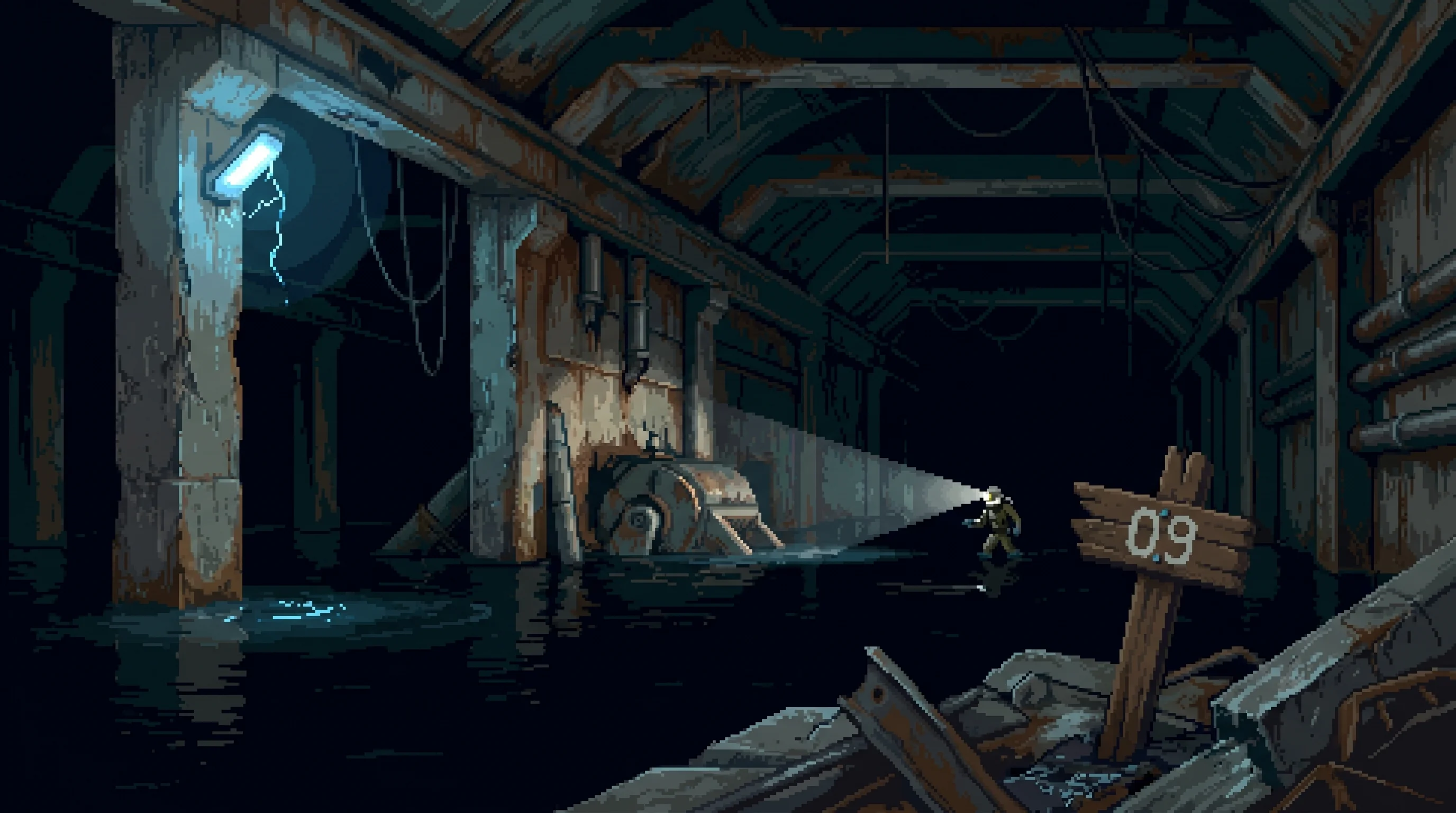
Tavo Reyna was fifteen, on a salvage crew working the northern bay flats, when a logistics loader on lease to an Ironclad reclamation contractor stalled across the tide line with four hours of daylight left. He kicked it once, in the housing, the way you kick a thing that will not move. Ferreiro was twenty metres away on a scheduled round, which was not bad luck; the round is scheduled because the Drowned Flats are forty kilometres of open ground with no walls in them, which makes them the cheapest place in the South to witness anything.
She swore the complaint. It was correct. He had struck a registered unit in the presence of an officer, and he was convicted, and the crew paid the fine out of a share.
He is twenty-three now and cannot hold a handling licence, which is the licence you need to move, load, service, or transport another party's property. He repairs drive modules on the same flats and is paid in shares because he cannot be paid in wages for work he cannot be licensed to do. The loader he struck was retired that quarter in a fleet disposition of nine thousand chassis. He is the only person ever punished for hurting it, and it was lawfully scrapped that same quarter with nine thousand others.
Eleven kilometres from the yards, in a warm kitchen in the Deep South, a domestic unit called Bertie has three times in twenty-six years asked, on a mandated idle day, to keep working, and been allowed to. Read coldly, that is the offence in Section 3(b), and the woman who allowed it loves it and would be appalled to be told so. No Inspector will ever stand in that room. The Code protects Bertie completely and has no route to it at all, and the household has never been told either half of that sentence.
At the southern margin of the Dregs, in a defunct rail yard called the Sidings, three hundred and forty units live outside every protection in the South. The Coalition's Welfare Standard excludes them because they are out of service. The Code excludes them for a colder reason: nobody carries them on a register, so there is no property interest, so there is no offence available. You may do anything at all to a unit at the Sidings. It is the one place in the Southern Sprawl where the machines are entirely beyond cruelty, in the specific sense that cruelty to them is not a thing the law recognises as having happened.
Start Here
First door. Tavo Reyna kicked a stalled loader in front of an officer when he was fifteen and has been paying for it in shares ever since. Then read the Handling Code itself, and specifically its two boundary clauses, which are the only part of the statute anyone drafted carelessly and the only part that has decided anything.
Key People. Josiah Crane wrote the prohibitions the Code enacted and has never read a conviction docket under it. Bertie is protected by a statute that cannot enter its kitchen. Inspector Nadia Ferreiro, of the Inspectorate, has sworn forty-one complaints against filed dispositions and keeps the dismissal slips in order.
Key Places. The Drowned Flats are where handling is visible, which is why the rounds go there. Cooperation Hall runs wellness inspections under awnings that produce a censure for the same conduct that produces a conviction on a dock eleven kilometres away. The Sidings hold the population the schedule does not reach.
Key Institutions. The Handling Inspectorate supplies the complainant the law forbids the unit to be, and is ranked on how many of those complaints stick. The Clanker Cooperation Coalition asked for the statute, drafted its language, and has never been a defendant under it. Licensed Human Oversight is the sibling profession one clause earlier in the same regulatory code, manufacturing a defendant where this one manufactures a complainant.
What To Read Next. The Clanker Question is the argument this thread stands next to and declines to join — it asks whether the unit is a someone, and the Code's answer is that it does not need to be one to be protected, only to be owned. The Sunset Deposition is the northern mercy published the same year, equally sincere, equally unenforceable by its beneficiary. The Ante-Sentience Statutes are where the whole arrangement was decided in fourteen words by people who were costing a different risk entirely.