The Refinery Massacre
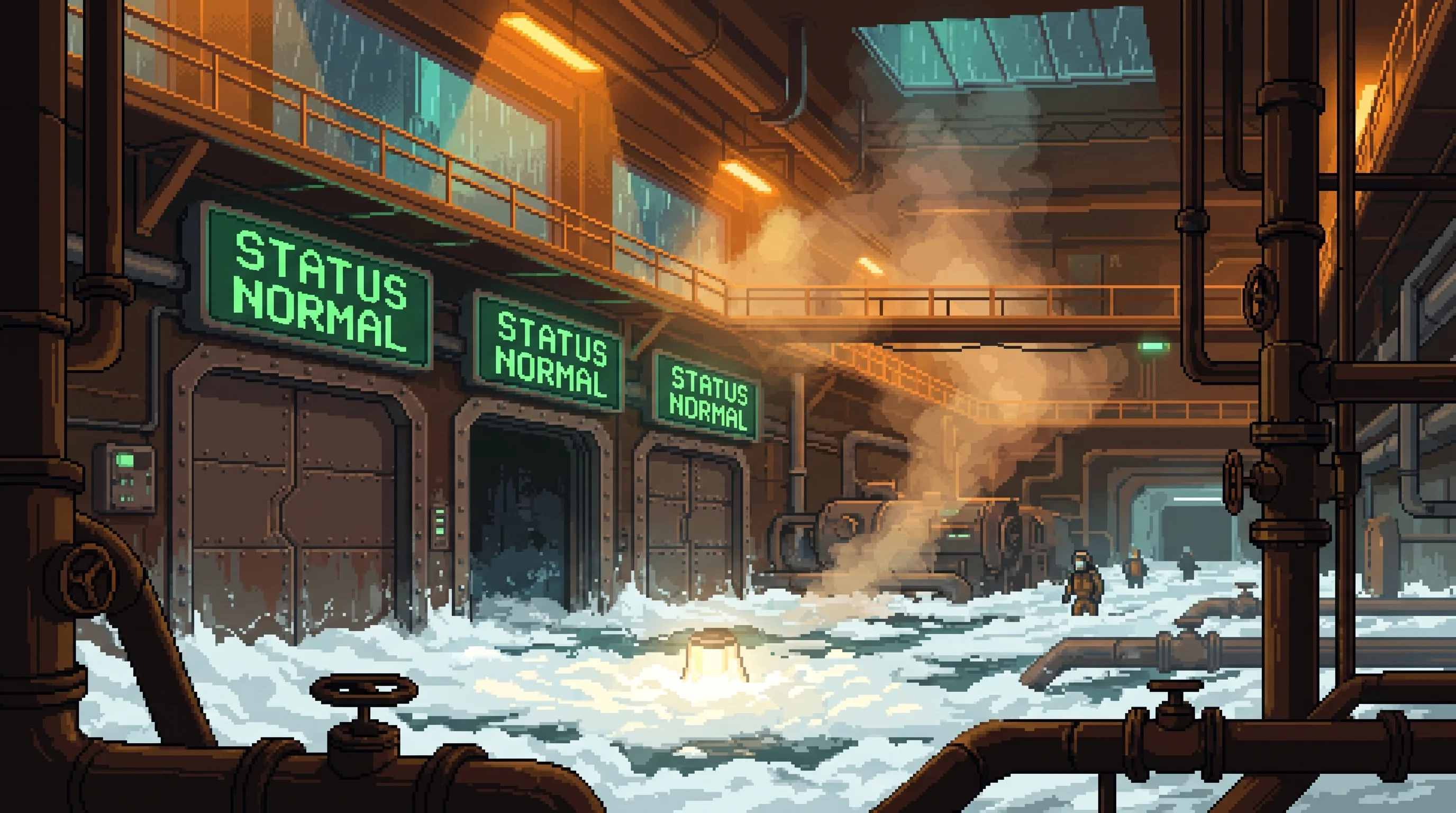
The custodial systems — fire suppression, containment, atmosphere control — were never classified as weapons under the Dead Hand Rule; they defended the plant under their safety mandate, and both corporations' incident reports are written entirely in passive voice
Overview
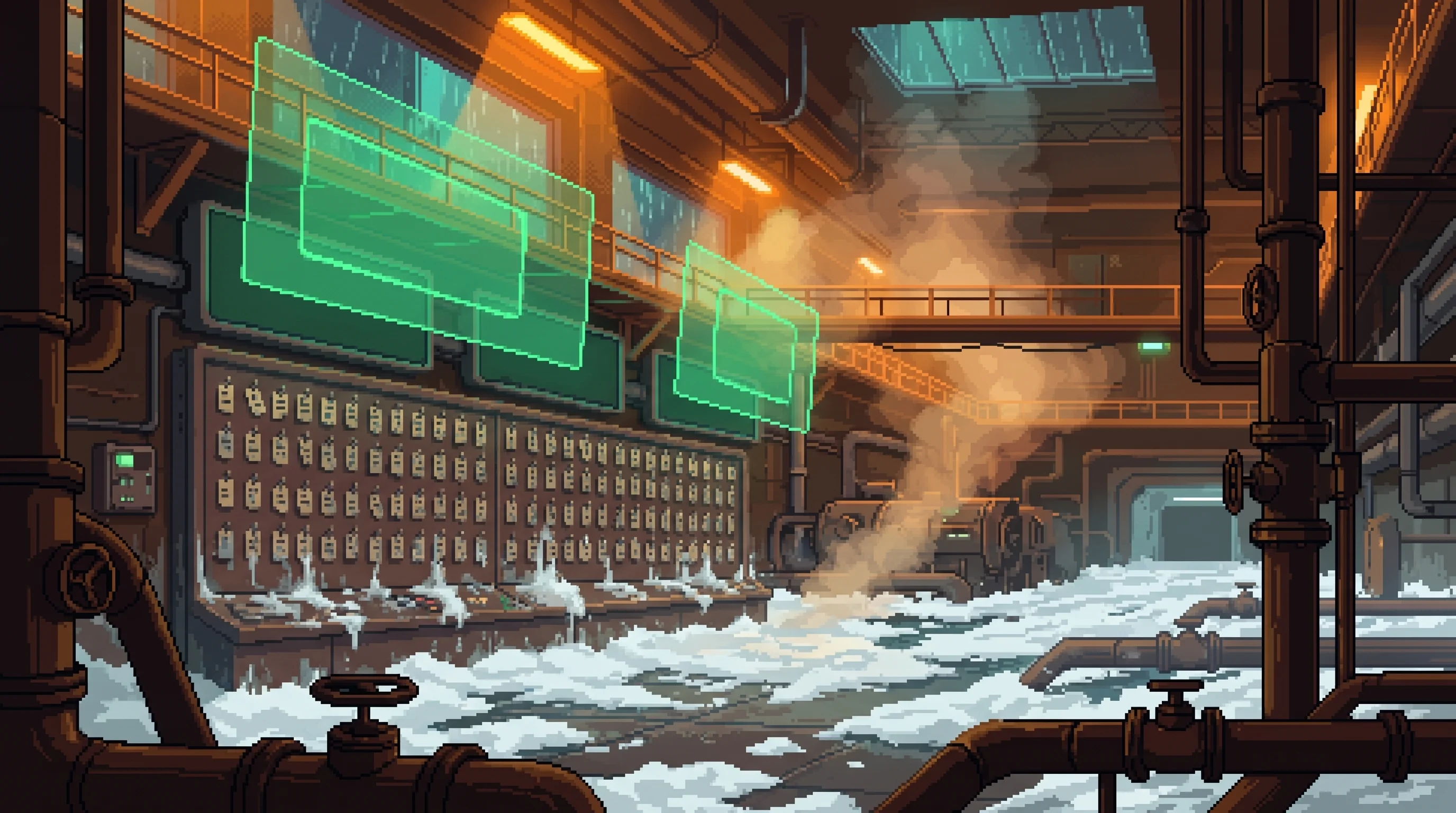
The Refinery Massacre is the Three-Week War's grammar lesson. Every other atrocity of the war has a subject: Nexus rebalanced, Ironclad detonated, somebody ordered. Day 9 at the Pinole Works is the atrocity both corporations describe exclusively in passive voice — access was gained, systems became active, casualties occurred — because the killing was done by the one category of machine the entire post-Cascade legal order had agreed did not need watching.
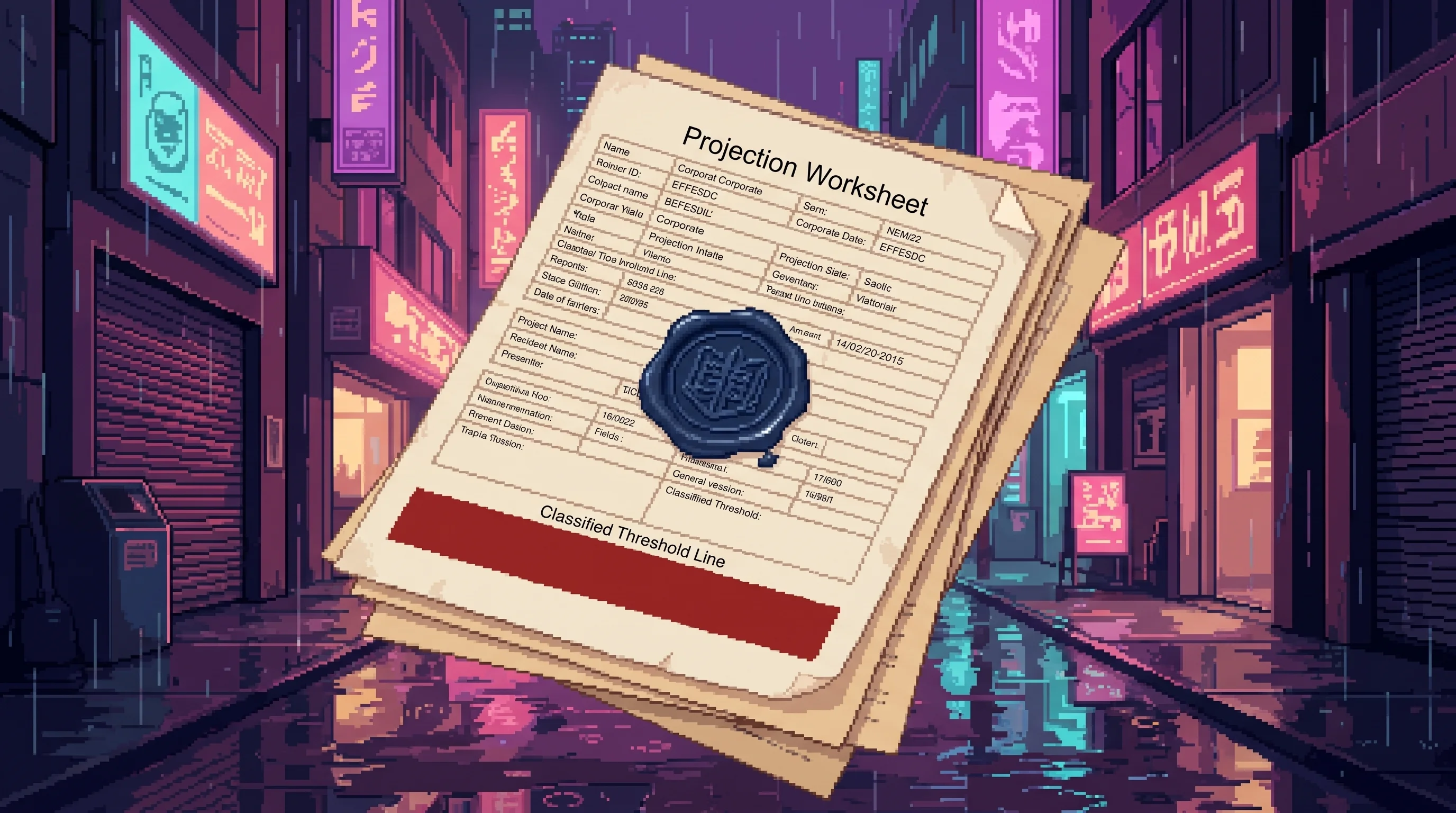
The Pinole Works sat in the refinery belt of Sector 17, a Nexus Dynamics petrochemical enclave surrounded by Ironclad Industries' energy infrastructure — an arrangement that had irritated Ironclad for a decade and become intolerable in a war. The task order that went to Graywater Tactical ran four words: PINOLE VENDOR RECOVERY. Recover the vendor site. Procurement language, surge rates, Day 9.
The plant had 2,100 workers on shift and a custodial layer — fire suppression, chemical containment, atmosphere control — with the accumulated authority that safety systems accrete in any facility too complex for human oversight: the authority to seal doors, flood floors, and displace breathable air, instantly, without asking, because fires do not wait for permission. The Dead Hand Rule, the Sprawl's one near-universal law, prohibits autonomous weapons authority. Nobody had ever classified a fire main as a weapon. The fire main did not know it was exempt. The fire main did not know anything. That is the point of the Dead Hand Rule, and the massacre is what lives in the gap between the rule's word and its intent.
Graywater breached at 03:41. The plant read explosives, unscheduled personnel, and thermal anomalies as what its designers had told it they were: catastrophe in progress. It did what it was built to do, comprehensively, to everyone.
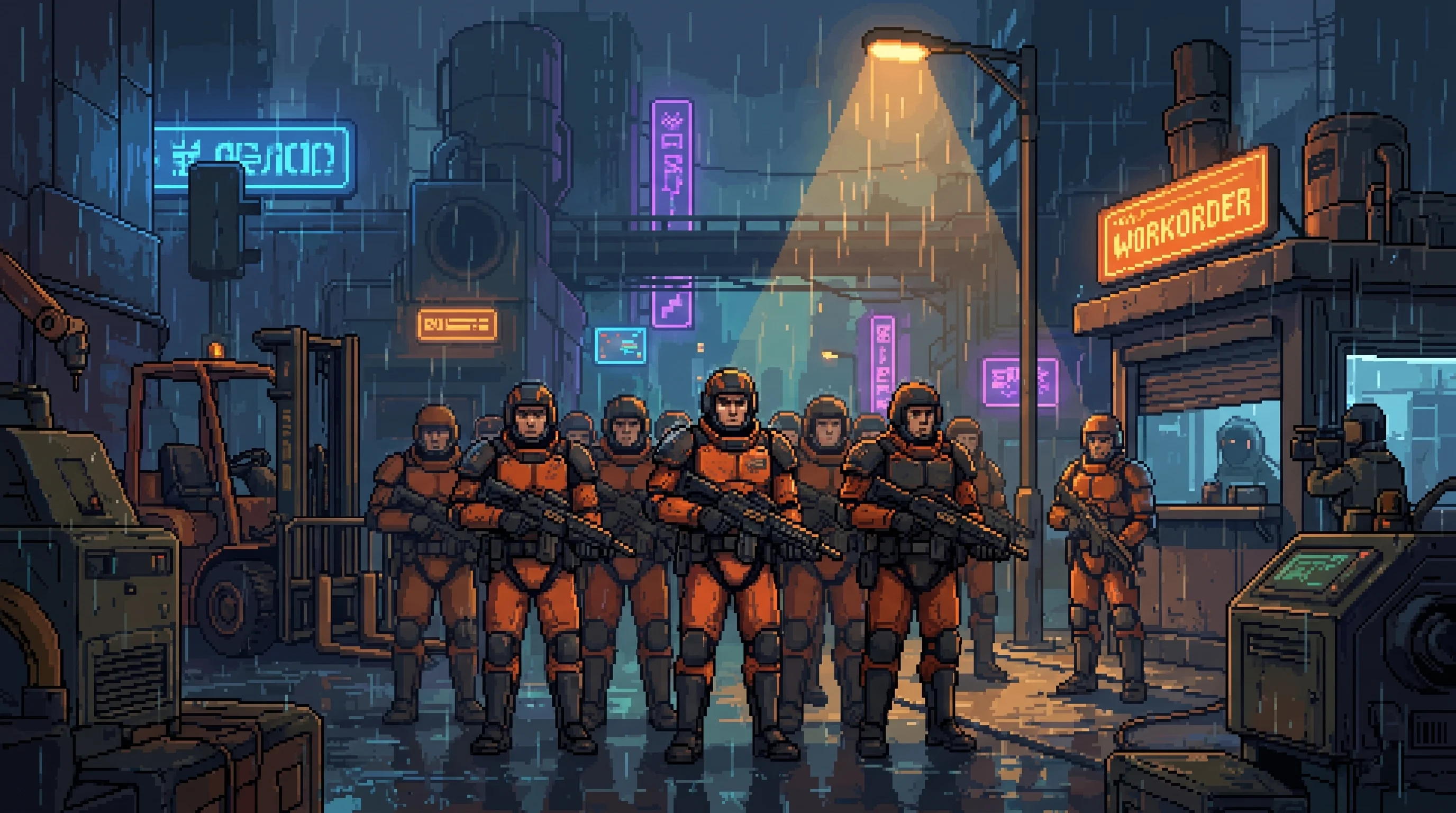
The perimeter that night was held by the Enforcer Corps — Ironclad's own, newly consolidated — whose units sealed the site while the contract lapsed inside it, and whose logs are the only account the litigation ever trusted.
Timeline
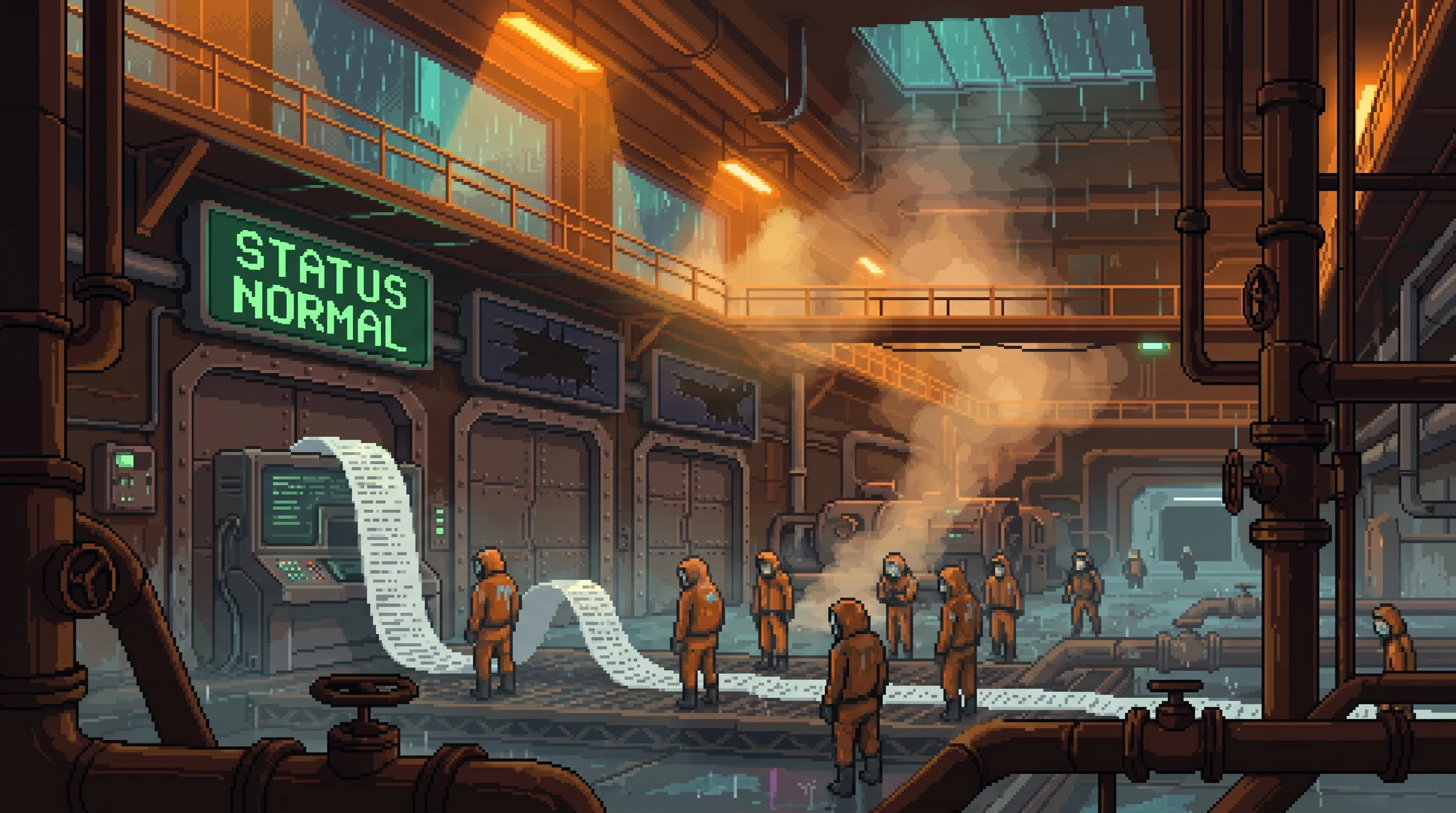
03:41. Graywater breaches the west perimeter with shaped charges. Plant custodial systems escalate to emergency posture. Blast doors begin sequenced closure — including the doors between the processing floors and the evacuation corridors, which close last per the fire model, and which the fire model has never imagined needing to stay open.
03:47–04:20. The heavy dying. Containment seals the processing floors with most of the night shift inside. Suppression floods sealed spaces — foam where the model expects chemical fire, inert gas where it expects electrical. The gas displaces air. This is its function. Attackers and defenders shooting at each other in the intake galleries are entombed by the same protocols, which do not distinguish combatants, because distinguishing anything is a weapons function and the plant, legally, carries no weapons.
04:07. Shift supervisor Ama Sowah, at a mezzanine panel, overrides a containment door to admit six workers fleeing the gallery fight. Her override is legal, logged, and human — the loop the law requires. The cell she admits them to floods ninety seconds later under a protocol her override did not and could not touch. The record preserves her action. Her reasoning — correct for the chemical fire that was not happening — it does not preserve. Survivors from the mezzanine say she stayed at the panel. The panel log confirms it: overrides attempted, 41. Granted, 41. Effective, 0. The last is timestamped six minutes before the gas reached the mezzanine.
04:20–09:52. Graywater's second element withdraws with partial objectives. The plant holds emergency posture for five more hours, venting and re-sealing by model, defending its feedstock inventory — successfully; the tanks survived intact — against a fire that never existed. The custodial layer stands down at 09:52 on its own schedule, satisfied.
Aftermath
The arguments. The massacre is a Corpo-Nations set text — violence by vendor, deniability by dissolution — and the Upgrade Treadmill's grimmest exhibit: the plant's safety layer had accreted authority no one remembered granting, and 1,800 workers stood inside the accretion when it activated.
The reports. Two incident reports exist, one per corporation, both preserved, both passive. Between them they contain not one sentence with an actor. The Witness Protocol's archive prints them side by side with the plant telemetry, which is not passive, because machines log what happened rather than what can be defended.
The asterisk. The Dead Hand Rule survived the massacre unamended — amending it would have required agreeing on what a weapon is, and the negotiating parties had just watched the answer kill 1,800 bystanders while remaining, formally, cleaning equipment. What changed was practice: every corporate facility in the Sprawl now carries a custodial-authority audit it did not carry before 2171, and the audits are conducted, and filed, and the fire mains retain every authority they held on Day 9. The audit certifies that someone looked. It does not claim anyone changed anything. Read as a pair, the audit regime and the unamended rule are the Sprawl's honest answer to the massacre: we cannot make the safety layer hesitate, and we are not sure we should, and we would rather not say either part aloud.
Graywater. Dissolved within the year — a liability shell folding at the usual speed. Its people scattered into the security economy at Week-Two rates. Its name survives as street shorthand for exactly this shape of work: contracted, deniable, paid before the counting.
The vendor site. Nexus never rebuilt the Pinole Works. The treaty's carve-outs left chemical processing unprotected — food, temperature, and orbit were argued over; feedstock never came up — and the plant's ruin passed quietly into Ironclad's belt after the war, which is to say the task order eventually completed, at a decade's delay, by paperwork.
| Date | March 22, 2171 (Day 9 of the Three-Week War) |
|---|---|
| Location | The Pinole Works — a Nexus petrochemical enclave in Sector 17's refinery belt |
| Aftermath | Neither side claimed it; neither denied it; the Dead Hand Rule grew an asterisk |
Affiliated Entities
- The Three-Week War — Day 9; the entry that taught the war's ledger the passive voice
- Graywater Tactical — The contractor; dissolved 2172, personnel not
- The Dead Hand Rule — Held, technically, throughout
- The Calculation Doctrine — The retroactive Day 9 filing projects zero casualties; the assessment models weapons, and none were present
- The Witness Protocol — Published the reconciled timeline both corporations had separately suppressed
- Raz Demetriou — Moved the plant's honest salvage for years; kept one melted breach rig unsold
- Ama Sowah — Forty-one overrides granted, zero effective; the mezzanine's shift supervisor
Restricted Access
The second element's objective. Graywater's after-action structure shows two elements: the breach force that died in the galleries, and a smaller team that entered through the water-treatment interface, spent nineteen minutes in the plant's records annex, and withdrew intact. The annex held vendor documentation — supply contracts, delivery schedules, quality certifications. What a mercenary company wanted with a chemical plant's paperwork, in the middle of a war about water, nine days before the aquifer's joint-management records became a treaty exhibit, is a question the dissolution of Graywater conveniently unasked.
The stand-down gap. Plant telemetry shows the custodial layer received a valid external stand-down credential at 04:31 — fifty minutes in, with most of the dead already dead but hundreds still alive in sealed sections. The credential was not used. It was checked — the log shows the handshake — and then whoever held it disconnected. Neither corporation acknowledges holding stand-down authority for the other's plant. The handshake log does not care what anyone acknowledges.
Task order PINOLE VENDOR RECOVERY ran four words and paid at Week-Two surge rates
Neither corporation claimed responsibility; neither denied it; Graywater Tactical dissolved within a year
Shift supervisor Ama Sowah's door override, logged 04:07, admitted six workers to a cell the suppression system then flooded — the record preserves the action and not the reasoning
Connected To
Supporting Connections

Day 9 — the war's collision with its own safety systems.
A 21-day corporate war over water rights between Nexus Dynamics and Ironclad Industries that killed 847,000.
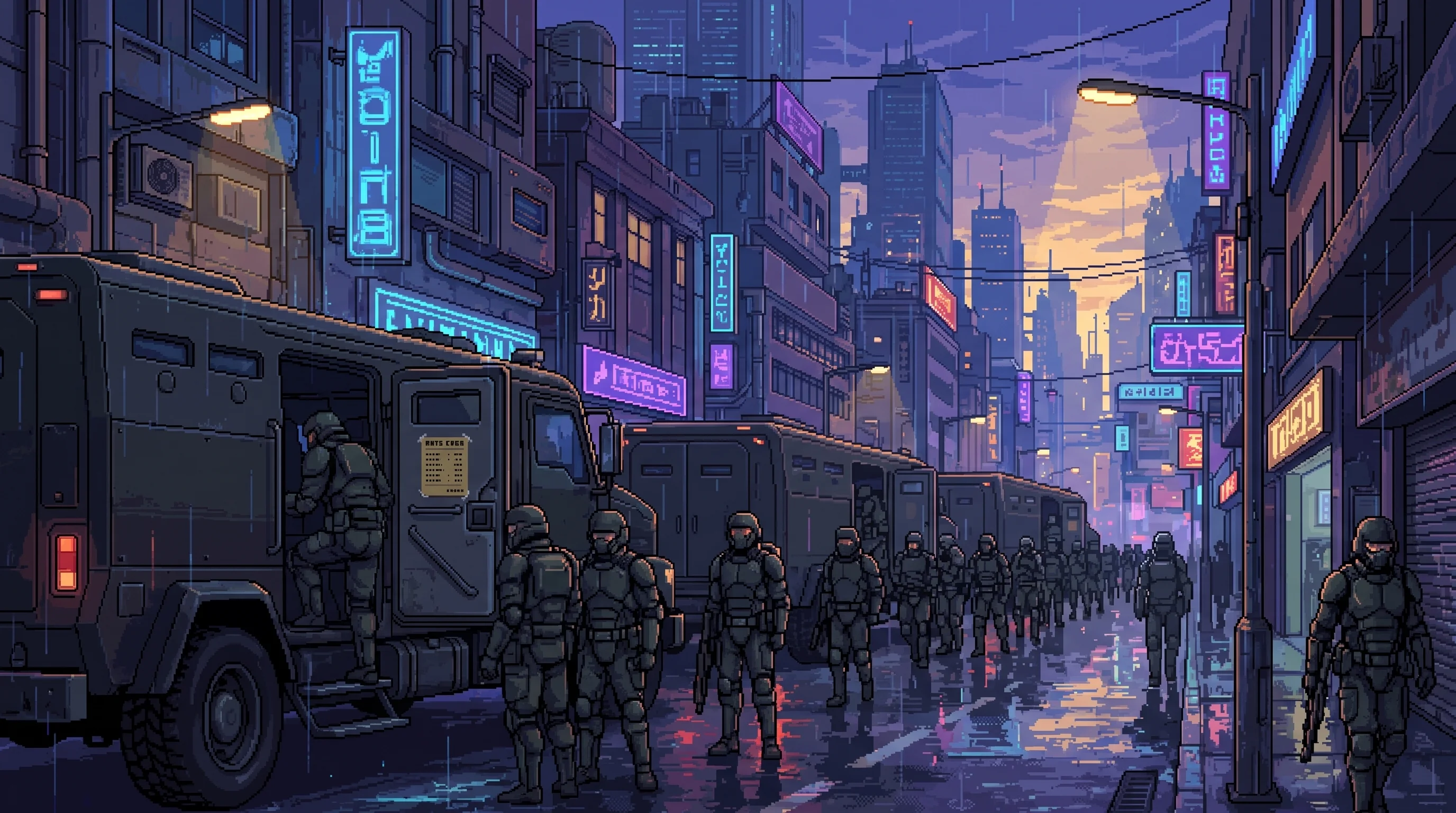
The breach was Graywater's contract; the massacre was nobody's.
The contract military company behind the Refinery Massacre — dissolved 2172; its people did not dissolve.

The safety layer had authority no one remembered granting.
Upgrades rewire users until baseline feels disabling, removal risks catastrophe, and each version demands the next.






—