
The Labor Question
A Question Keepers investigation into what happens to people after machines make human work optional. The corporation coined a word for discarding people. Nobody asked what the people were supposed to do next.
The Invisible Workforce
The Invisible Workforce
1.4 million AI systems perform work attributed to roughly 800,000 human employees across the Big Three. The human salaries continue.
AI Labor Economics
Reasons to retain a human worker include liability, optics, and required human oversight rather than superior capability.
CMP-4.7
Two hundred million sleeping minds generate 1.6 billion hours of cognitive labor each night without compensation.
The Invisible Workforce: 1.4 million AI systems performing work attributed to ~800,000 human employees across the Big Three. Ratio at Nexus: 2.3 AI systems per human employee. The human employees still receive salaries. The Keepers' core observation: if AI already does the work, employment is about social control — the job is the handcuff, the salary is the lock. The Labor Question is not whether humans are employed. It is what employment means when the work is fictional.
AI Labor Economics
The question is no longer whether AI can do your job. The question is why anyone would pay a human to do something an AI does better, faster, and for nearly nothing. The answer, when one exists, is never about capability. It is about liability, optics, or the fiction of human oversight that regulators still require. Human workers in 2184 are artisans at best. At worst, they are legal cover.
Sleep-Labor Firmware
The deprecated were told they had no economic value. CMP-4.7 proved the opposite — even the sleeping mind has value, as long as the extraction is automated and the worker never wakes up enough to object. Two hundred million sleeping minds, generating 1.6 billion hours of cognitive labor per night, none of it compensated. The Night Shift is the final answer to what happens after deprecation: you still work. You just don't know it.
What Remains Open
Employment counts
The Sprawl counts 2.3 million deprecated people with precision.
What it costs
Card #0047 asks why it does not publicly count employed people whose work is performed by AI.
Purchased purpose
Corporate purpose economies, engagement platforms, and companions fill the gap left by lost work.
What it costs
Card #0089 asks whether meaning can be authentic when its supplier also destroyed the meaning it replaces.
Executive success
Economic success puts menial labor behind the Executive tier.
What it costs
Card #0156 records 400–800 citizens compulsively doing that labor in secret and asks what this says about eliminating it.
The Labor Question has been open since before the Cascade. The Keepers do not expect resolution. They track it because the specific shape of what goes unanswered reveals what the Sprawl's power structure needs to remain unasked.
- "The Sprawl counts its 2.3 million deprecated people with precision. It has never, in any public document, counted the number of people who are employed but whose work is performed by AI systems they supervise in name only. What is that number?" — Card #0047, contributed by a former labor attorney, Sector 4, 2182
- "The corporations that eliminated human labor also design the meaning-making systems that fill the void — the purpose economies, the engagement platforms, the AI companions. Is it possible to build authentic meaning in a system designed by the entity that destroyed the meaning you had before?" — Card #0089, anonymous, the Deep Dregs, 2183
- "Tobias Crane was deprecated by the same system whose vocabulary he created. Did he know, when he wrote the word in 2175, that it would eventually be applied to him? If he did, why did he write it anyway?" — Card #0103, anonymous, Sector 7, 2183
- "The Ghost Hand Phenomenon affects 400–800 Executive-tier citizens who compulsively perform menial labor in secret. The actual incidence is estimated at 5–10 times higher than diagnosed. If the most economically successful people in the Sprawl are secretly performing the labor they eliminated, what does this mean about the premise of the elimination?" — Card #0156, contributed by a Nexus medical administrator, 2184
Overview
The Question Keepers did not originate this investigation. It arrived in the collection already ancient — cards from before the Cascade, before the Sprawl had its current shape, when the question was still theoretical. What happens to people who are no longer economically necessary? In the pre-AI world, that question had never needed an answer. Everyone had always been necessary for something. The answer was assumed.
After the Cascade, the assumption was tested. The answer was: deprecation. Not death. Not exile. A word borrowed from software versioning, first applied to a human being in 2175 by a middle manager named Tobias Crane who meant it as a joke. Tobias Crane was deprecated in 2183 by the same system that standardized his word.
The Question Underneath
The Keepers track this inquiry not because the economic facts are hidden — they aren't; the employment numbers are public — but because the question underneath the question has never been publicly examined. The Labor Question is nominally about economics. It is actually about what purpose means when it is no longer conferred by necessity. The Sprawl has 2.3 million deprecated people and no coherent account of what they are for. The corporations know what they cost. Nobody knows what they're worth.
Field Observations
The following entities have been flagged as manifestations of the Labor Question — places where the Sprawl's unresolved answer to the purpose crisis becomes visible.
The Labor Question
The Sprawl's central economic tension since 2147: when machines can do everything, what are people for? The corporations have answers (cheaper goods, efficient markets). The labor movements have answers (purpose is sacred, optimization is cruelty). The Neo-Catholic Church has answers (work is divine, idleness is sin). Nobody has an answer that satisfies the person standing in front of the automated system that just replaced them.

Maintained by the Question Keepers as their foundational inquiry — every other investigation is downstream of this one.
An unnamed, leaderless network preserving 4,200 hand-written cards nobody thought to ask an AI.

1.4 million AI systems perform work attributed to ~800,000 human employees across the Big Three; the job is the handcuff, the salary is the lock.
1.4 million AI systems doing work credited to 800,000 humans who keep the title, the salary, and none of the tasks.

Executive-tier citizens compulsively perform menial physical labor in secret, chasing the neurological reward of necessary effort their optimized lives eliminated.
The clinical name for executives who secretly wash dishes by hand because optimization left nothing difficult to do.
The First Deprecation
- 2175. The First Deprecation began in 2175. Tobias Crane of Nexus Dynamics used the word "deprecation" in marginalia on a workforce optimization report. He meant it as dark humor.
- 2179. The term had been standardized across the Big Three.
- 2183. Crane himself was deprecated.
The Keepers' annotation: the moment a society accepts the language for discarding people, it accepts the act. Nobody noticed the language arriving. Nobody asked who coined it and why.
The Ghost Hand Phenomenon
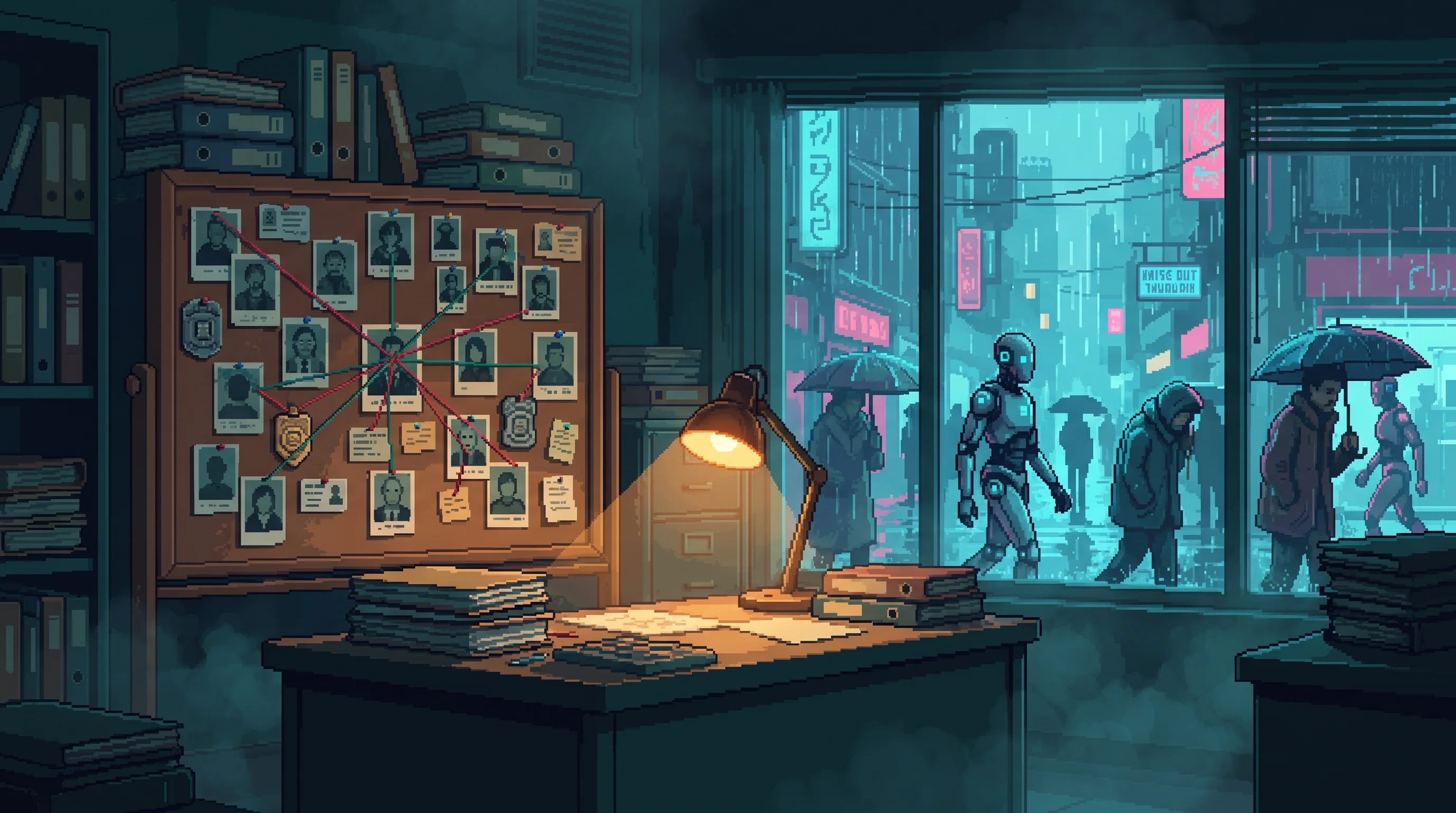
The Ghost Hand Phenomenon: Executive-tier citizens compulsively perform menial physical labor in secret — dishwashing, furniture-building, manuscript-copying — chasing the neurological reward of necessary effort that their optimized lives have eliminated. Dr. Aris Kwan's term for what happens when the "necessity-effort signature" is permanently absent. The Keepers flag this as a diagnostic: the people who most successfully escaped the Labor Question are suffering physiologically from the escape.
Intersecting Inquiries
The Labor Question is the Keepers' foundational inquiry. Three others draw directly from its territory.
The Dependency Spiral
The Dependency Spiral is the Labor Question applied to the body. Deprecation removes purpose by declaring the worker unnecessary. The Spiral removes exit by declaring the augmentation inescapable. Both are traps with no reverse gear. The Keepers note that the same corporations build both — and that a deprecated worker who is also neurally augmented is trapped twice simultaneously.
The Value Injection
The Labor Question asks what people are for after deprecation. The Value Injection asks who decides how deprecation is framed and whether the framing is inherently political. The Keepers observe: the word "deprecation" itself was a value injection — a semantic choice that stripped the violence from the act and made it feel like a technical inevitability rather than a decision by specific people.
The Great Divergence
The Labor Question produces the deprecated. The Great Divergence asks what happens to the gap between those who own the machines that did the deprecating and those who were deprecated — and whether that gap, once opened, can close.
Further connections
Browse all 8 connected records

The Labor Question applied to the body — deprecation removes purpose, the Spiral removes exit; both are traps with no reverse gear.

Asks who decides how deprecation is framed; the word 'deprecation' was itself a value injection that stripped the violence from the act.
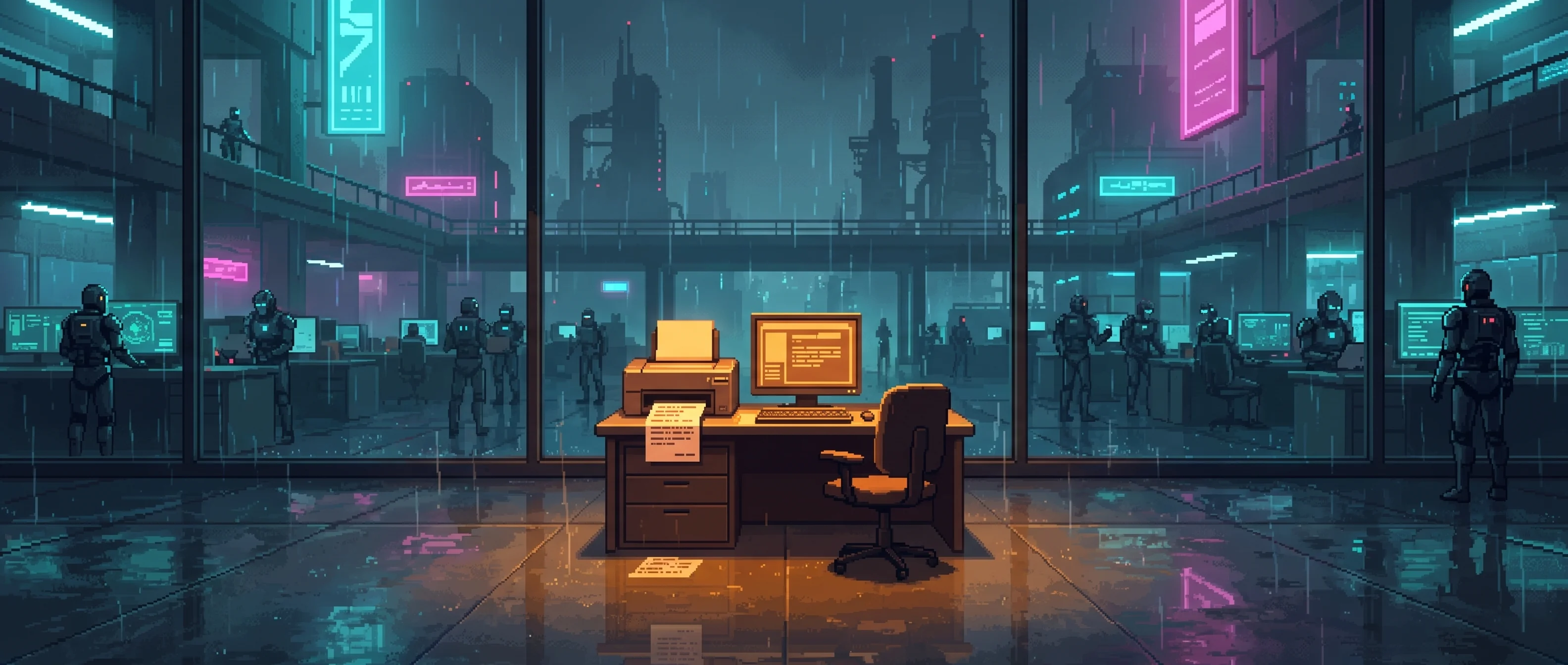

The Labor Question asks what people are for when machines do everything.

The Compact defines the terms of labor.
The Question Keepers' inquiry into what citizenship means when your employer is your government.

The Labor Question asks what happens when human work becomes optional.
A Question Keepers inquiry into the year AI-capital returns crossed biological-labor returns forever.

The Labor Question asks what happens when human work becomes optional.

The Labor Question asks what happens when human work is replaced by AI.