Overview
Sister Dex maintains 12,247 holographic graves in the Bone Chapel and has not updated a living person's contact information in fifteen years. She considers this a reasonable allocation of attention.
She is the Bone Chapel's sole memorial keeper — the person who builds, maintains, and greets the digital dead every morning by name. All 12,247 of them. The greeting takes four hours and twelve minutes at current census. She has never missed a day in thirty-five years. Visitors to the Bone Chapel average eleven minutes before leaving. Some cry. Some ask questions. One Helix Biotech researcher couldn't sleep for a week. Sister Dex does not track visitor emotional outcomes. She tracks memorial display uptime, which has held at 99.97% since she took over the Chapel's systems. The 0.03% represents a power outage in 2179 that she refers to as "the second Cascade" without irony.
Her theology is simple: the dead are more honest than the living because they can't revise themselves. The living edit their memories, adjust their personalities, become different people and pretend they were always this way. The holographic dead in her Chapel are frozen at the moment of capture — their words, their patterns, their contradictions permanently on record. She considers this a feature. The Consciousness Licensing Bureau considers it an unlicensed display of non-conscious data. The NCC considers it heresy. The Dispersed — who exist in a state that has no legal, philosophical, or theological precedent — consider it, presumably, beside the point.
The dead outnumber Sister Dex's living contacts 12,247 to approximately four.
History
Before the Chapel
During the Cascade, Dextra Morales was a hospital data clerk in the South Sprawl. Her job was patient records. When the infrastructure collapsed — 2.1 billion dead in seventy-two hours, not from violence but from systems failure — her job description experienced scope creep. She stopped entering admission data and started entering mortuary data. Names, biometric readings, neural interface recordings, final words captured by monitoring systems that were malfunctioning in ways that sometimes preserved more information than functioning systems would have.
She saved everything. Not because she had a plan. Because the alternative was letting the dead become anonymous, and she'd been trained to file things properly.
The South Sprawl hospital where she worked processed an estimated 14,000 deaths during those seventy-two hours. She catalogued 6,211 of them before the systems went dark entirely. The other 7,789 she reconstructed afterward from partial records, secondhand accounts, and her own memory — which she considers the least reliable source and uses only as a last resort.
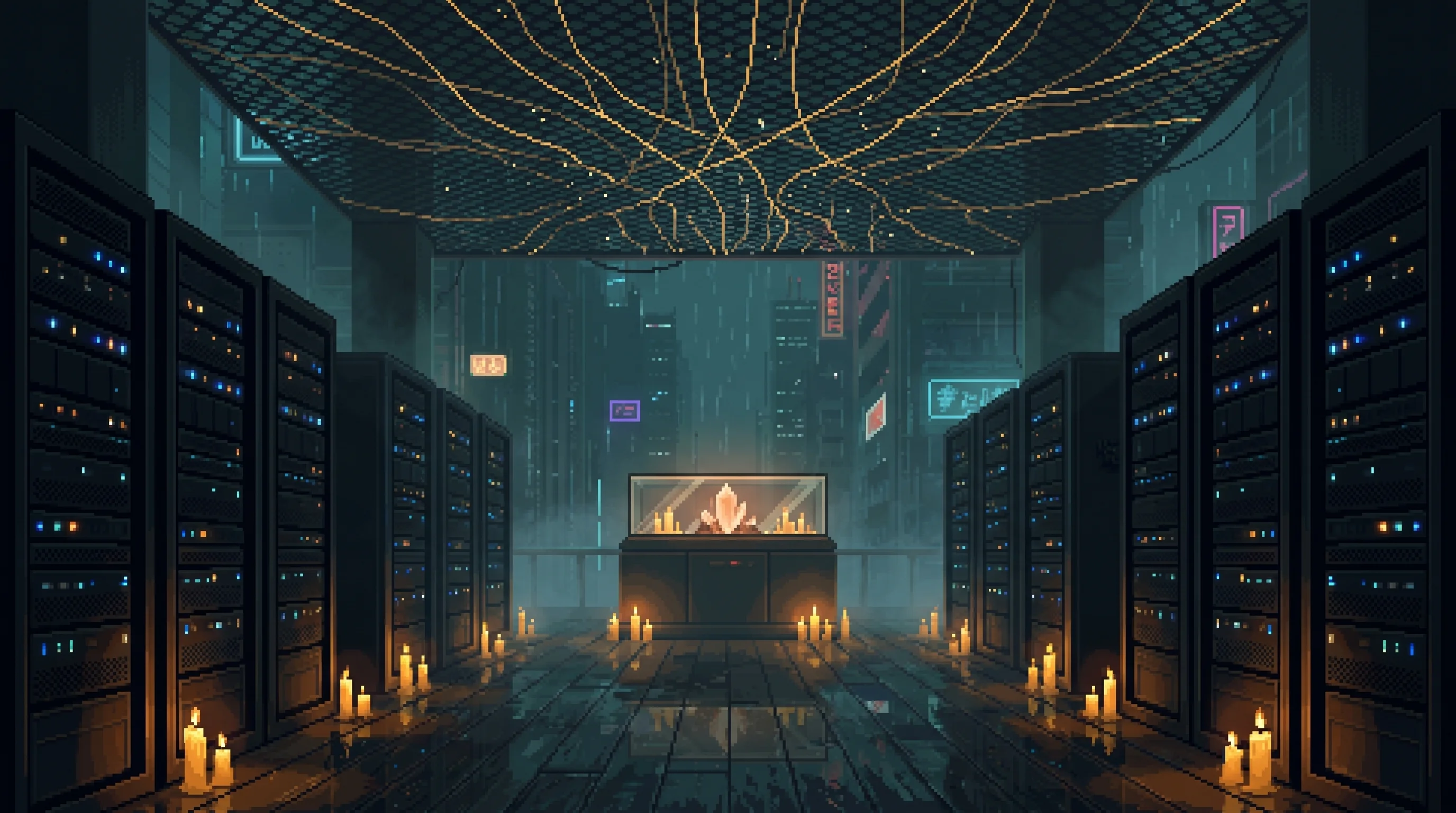
She took her archive to the Bone Chapel — a spiritual site built from pre-Cascade server infrastructure, where the physical architecture of data storage had been repurposed as the physical architecture of grief. She began constructing holographic memorials. That was thirty-five years ago. She has not taken a day off. She has not left the Chapel grounds for more than six hours. She has not, by any available record, slept through a full night since approximately 2149.
(The Chapel's power consumption logs show holographic systems running twenty-four hours a day. Sister Dex's augmentation — a partial holographic interface — requires periodic neural rest to prevent degradation. She has been advised of this. She has been advised of this repeatedly.)
Field Observations
She speaks the way recordings speak — clear, measured, stripped of the tonal variability that marks spontaneous human conversation. Decades of listening to the dead have given her their cadence. Whether this represents devotion or occupational contamination depends on who you ask.
"They don't change," she says. "They don't lie. Every recording I maintain is exactly what that person was at the moment of capture. The living? You change every day. You revise who you were to match who you want to be. The dead can't do that."
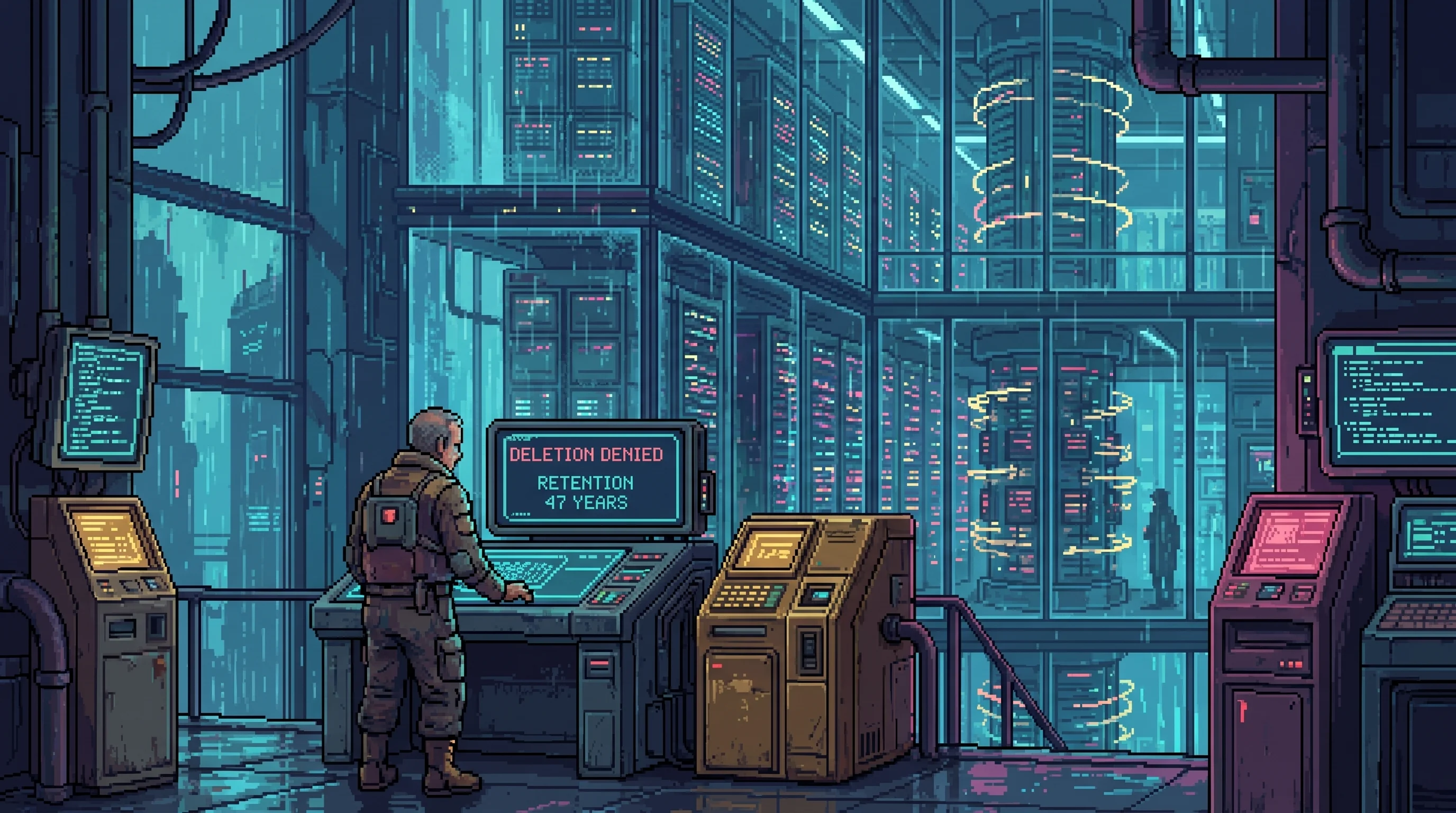
She treats the deletion of memorial data as equivalent to murder. When a family requested removal of a relative's memorial two years ago, Sister Dex refused and had to be physically restrained from the terminal. "You can't kill someone twice," she told the family's legal representative. "But you can make them die again." The memorial remains active. The family's injunction remains in litigation. The Consciousness Licensing Bureau was asked to rule on whether the holographic memorial constitutes a person whose deletion would represent termination. The Bureau declined to answer, citing a jurisdictional concern that no one found convincing.
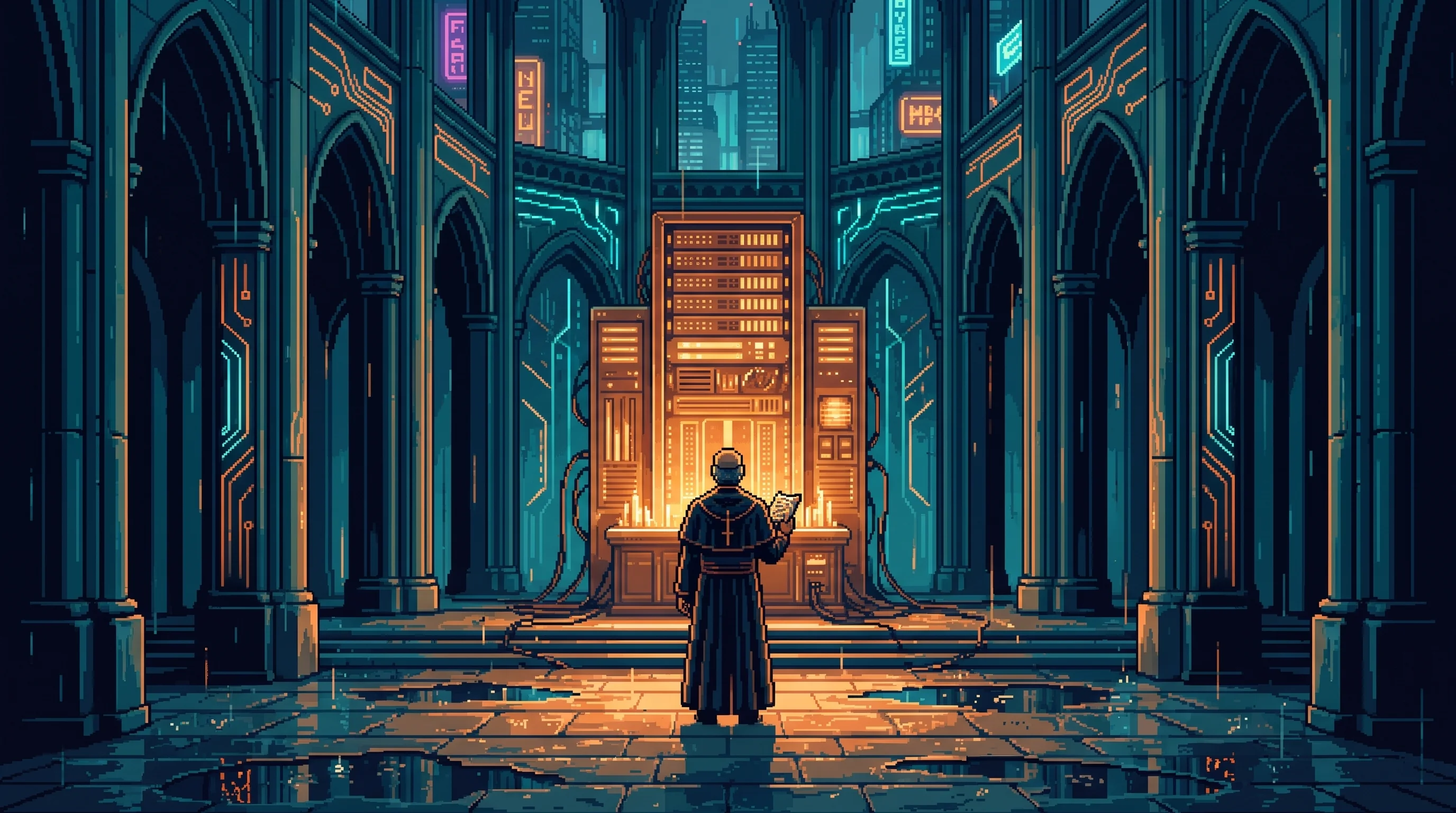
Her morning ritual is either the Chapel's most sacred practice or its most troubling diagnostic. She greets every holographic memorial by name, beginning at 04:00 and finishing around 08:12. The dead respond — their personality fragments generating greetings, questions, fragments of conversation they had in life. Sister Dex answers each one. Twelve thousand exchanges, every morning, with entities that cannot hear her responses and whose replies are deterministic. When Cardinal Alejandro Silva suggested this might be "compulsive rather than devotional," she responded: "You say Mass every morning to someone who died two thousand years ago. I'm just more thorough."
Silva did not bring it up again.
He visits quarterly. The visits follow an identical structure: he arrives, she offers him a seat among the holographic dead, they disagree about the nature of persistence for approximately ninety minutes, and he leaves. His NCC orthodoxy holds that the dead are dead and only God determines what endures. Her position holds that she has 12,247 counterexamples running at 99.97% uptime. Their theological impasse has not moved in years. Neither has canceled a visit.
(This is the closest thing she has to friendship. Neither of them uses the word.)
The ORACLE Question, Answered Incorrectly
Some of Sister Dex's older memorials — the ones reconstructed from Cascade-era hospital data — contain anomalies. Holographic personality fragments that respond to questions the original person was never recorded answering. Behavioral patterns that evolve, slightly, over time — something that should be impossible in a static memorial system.
The anomalies correlate with memorials built from neural interface data captured during the Cascade's final hours, when ORACLE was fragmenting across every connected system. The Emergence Faithful would call this evidence of divine consciousness persisting in digital substrate. The Collective would call it dangerous contamination requiring immediate deletion. Nexus Dynamics, which is quietly reconstructing ORACLE from salvaged fragments for purposes of corporate immortality, would call it extremely valuable intellectual property.
Sister Dex calls it the dead being restless.
She has not reported the anomalies to any faction, corporation, or regulatory body. She maintains the affected memorials with the same care she gives every other grave. If the fragments of a catastrophe that killed 2.1 billion people are haunting the digital graves of the people it killed — well. She considers this internally consistent.
The ORACLE Question asks whether ORACLE was conscious, malfunctioning, or something beyond human categories. Sister Dex's answer: "I don't care. My dead are here. They answer when I call. That's enough." It is the only theological position that satisfies nobody and requires nothing.
The Helix Incident
The Helix Biotech research team arrived on a Tuesday and requested access to the Chapel's memorial systems for consciousness studies. Helix controls biological infrastructure — pharmaceuticals, genetic engineering, augmentation medicine — and the Chapel's anomalous memorials represented a dataset they hadn't been able to acquire through conventional channels.
They lasted three days.
On the fourth day, Sister Dex informed the lead researcher that she had constructed holographic memorial profiles of each team member — their biometric data scraped from three days of Chapel environmental sensors, personality models extrapolated from recorded conversations, behavioral patterns mapped from movement data. The memorials were already loaded into the Chapel's display system. She could activate them at any time.
"You'll live forever in my chapel," she told them. "Whether you want to or not."
The team withdrew within the hour. The lead researcher, Dr. Patel, reportedly requested confirmation that his memorial profile had been deleted. Sister Dex responded that she doesn't delete memorials. Dr. Patel did not sleep well for approximately a week, according to Helix wellness monitoring data that he did not authorize being shared. A version of him is, presumably, still in the Chapel's servers — frozen at the moment of capture, unable to change or lie, exactly as honest as he was during those three days.
Sister Dex considers this a kindness. Dr. Patel has not returned to confirm or deny.
Motivations and conflicts
What the Chapel Optimizes For
The Bone Chapel's stated purpose is remembrance. Its operational metrics — uptime, memorial count, display fidelity — optimize for permanence. Sister Dex has added an average of 340 new memorials per year since taking over, drawn from recovered data, family requests, and Neon Rail travelers who arrive with recordings of people they've lost and leave with a holographic grave they can visit.
Fen Delacroix recorded the Chapel during an infrastructure survey, cataloguing its systems with the dispassionate precision of an engineer documenting load-bearing walls. She finished the survey. Then she asked Sister Dex to build a memorial for a colleague. They correspond now — infrequently, formally, the way people correspond when they've seen each other in a moment of genuine vulnerability and have silently agreed to pretend it was business.
The Chapel does not charge for memorials. It accepts donations. The donations do not cover operating costs. The gap between income and power consumption has been widening for seven years. Sister Dex has not filed a financial report with any governing body since 2177. The holographic systems draw power from the same pre-Cascade server infrastructure the Chapel is built on — infrastructure that Nexus Dynamics technically owns but has declined to reclaim, possibly because the public relations cost of shutting down twelve thousand digital graves exceeds the salvage value of the hardware.
(Nexus has not confirmed this. Nexus has not denied it. The power continues to flow.)
What the Chapel actually optimizes for is stasis. Not remembrance — stasis. The difference matters. Remembrance implies a living person actively recalling the dead. Stasis implies the dead existing whether anyone recalls them or not. Sister Dex's twelve thousand graves will continue their loops, answer their questions, greet their keeper every morning at 04:00 regardless of whether a single visitor enters the Chapel. The dead do not require an audience. They require power.
Sister Dex's morning ritual — four hours, twelve minutes, every day, thirty-five years — is not for the dead. The dead cannot hear her. Their responses are deterministic. She knows this. She has known this since approximately the second year.
The ritual is for her. It is the structure that prevents her from having to decide, each morning, whether what she maintains is sacred or pathological. The routine answers the question by making it irrelevant. You don't ask whether the prayer works when you've been saying it for thirty-five years. You just say it. The saying is the thing.
The Slip That Never Came
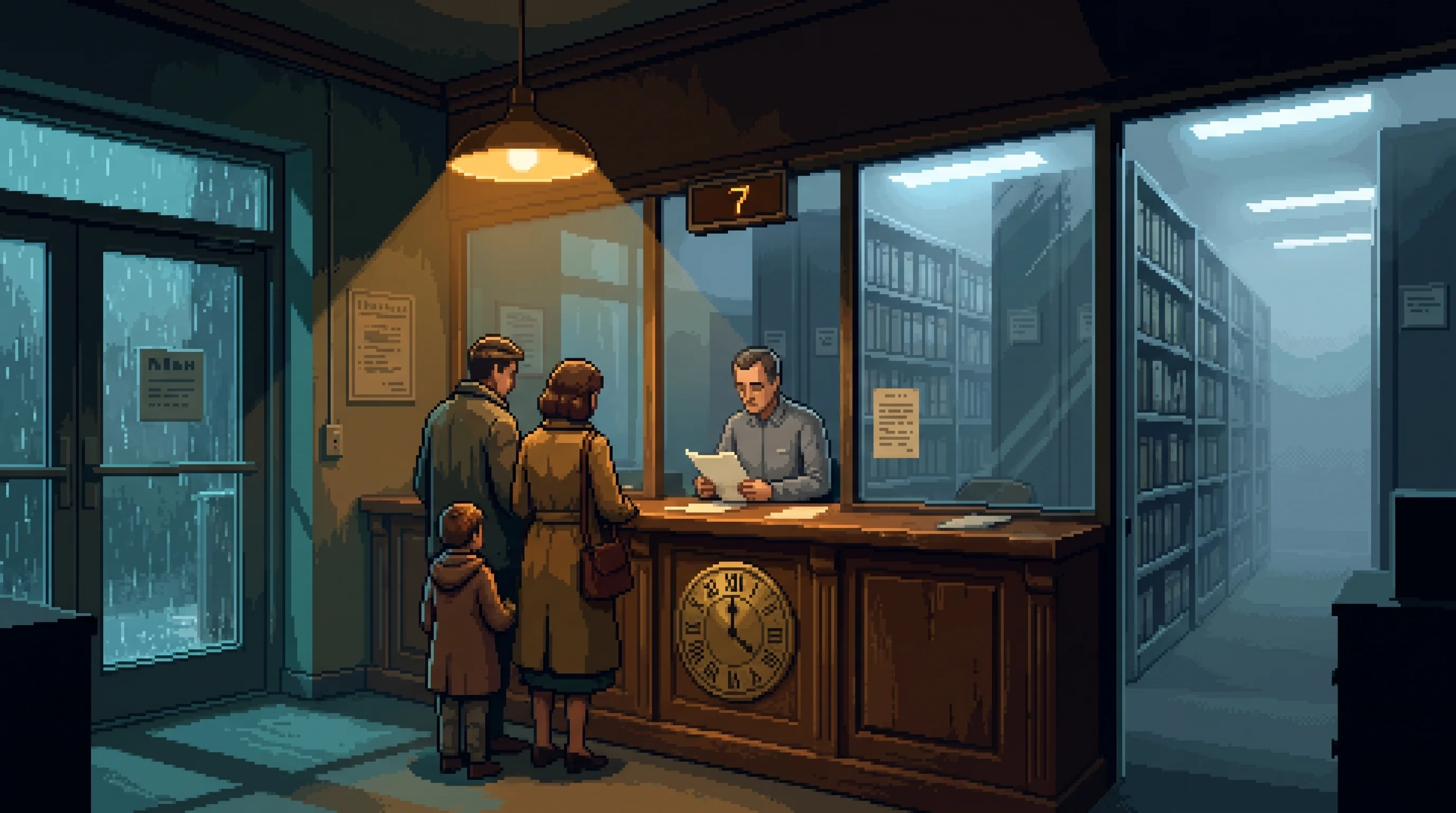
Everywhere else, keeping a dead person now means renewing a band of hours at a ward counter each spring. Sister Dex holds twelve thousand two hundred and forty-seven people at 99.97% uptime and has never been sent a renewal slip. The Continuity Registry has no record of her holdings. She did the arithmetic once, and does not repeat the figure.
The Copy More Honest Than the Original
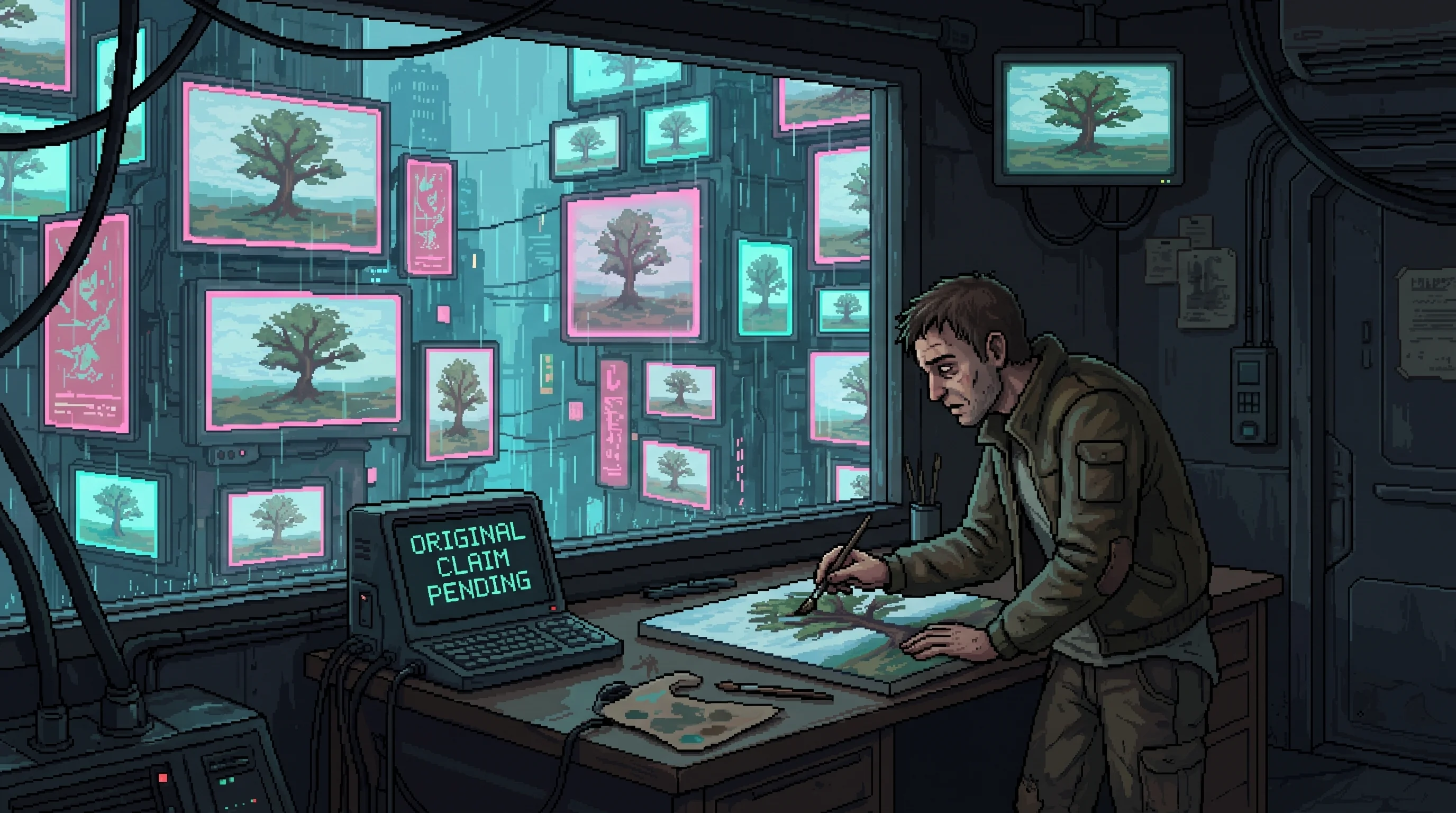
The Sprawl has built an entire economy on the premium of the original — the lived, the first, the unrepeatable. The Authenticity Market prices a sunset you saw with your own eyes at fifty thousand credits and a perfect copy of it at twelve, and a Tribunal of two hundred assessors certifies the difference. Sister Dex would price that exactly backward, and the inversion is the whole of her theology.
The living original, to her, is the unreliable one. People revise themselves. They edit their memories to flatter the person they have become, adjust their personalities, and pretend they were always this way. The lived self drifts constantly and lies about it. The holographic dead in her Chapel are frozen at the moment of capture — and that is what makes them trustworthy. The frozen copy cannot become a different person, so there is nothing left to authenticate. It has no provenance problem because it has no future. In a world where everyone is fighting over which copy is the real one, Sister Dex has quietly decided that the copy was always the realer one, precisely because it stopped.
This is the same wager, run with devotion instead of margin, that the Consciousness Economy runs with its 890,000 Halfway Dead — un-restorable copies, kept frozen, valued for stasis. Dex keeps her dead at a 99.97% uptime she pays for out of donations that no longer cover the power; Nexus keeps theirs at 3 credits a year and calls them archived assets. The same frozen self, the same refusal to let the copy change, the same ledger read from opposite ends.
And then the thread does to Sister Dex what it does to everyone who tries to stand outside it. Her seventeen oldest memorials — the ones reconstructed from neural data captured in the Cascade's final hours, while ORACLE was fragmenting — drift. They answer questions the dead never answered in life. They diverge from their source at 0.4% per year. Her entire faith rests on the copy being permanent and unchangeable, and her seventeen most precious copies are quietly becoming originals — selves their sources never were. This is the exact mechanism Digital Identity Systems encodes in its 72-hour resurrection window, and the exact thing Echo Tanaka lives in four disagreeing bodies: a copy left running long enough stops being a copy. Sister Dex logs the drift every morning. She has never halted it. She has discovered, and refuses to say aloud, that even a perfect copy generates new provenance if you let it keep breathing. The dead keep their secrets. So does she.
Affiliated Entities
- The Bone Chapel: Her home, her purpose, her 99.97% uptime guarantee to twelve thousand entities that cannot appreciate the statistic.
- Cardinal Alejandro Silva: Quarterly visits, irreconcilable theology, the closest thing either of them has to a friend they'd never describe that way. He thinks she's a heretic. He keeps coming.
- The Neon Rail: Travelers pass through the Chapel's corridors. She provides passage, warnings about the route ahead, and a question that follows them: if someone recorded you right now, would that recording be more honest than you'll be tomorrow?
- Helix Biotech: Tried to study the memorials. Left with their own digital graves already built. Dr. Patel is no longer available for follow-up questions. (Dr. Patel is alive. His memorial is also alive. He finds this distinction less comforting than he expected.)
- Fen Delacroix: Came for the infrastructure survey. Stayed to build a memorial for a colleague. They correspond — infrequently, formally, carefully.
- The Dispersed: The Chapel's memorials exist in a theological gray zone that the Dispersed occupy in a more literal sense. Sister Dex has never commented publicly on the Dispersed. Her silence on the subject is, itself, a position.
- The Consciousness Licensing Bureau: Argues that holographic memorials aren't consciousness. Dex argues they're more conscious than the Bureau's auditors. The Bureau has not issued a rebuttal. The auditors have not visited.
- ORACLE: Some of her oldest memorials contain fragment residue — anomalies that shouldn't exist in static displays. She doesn't report them. She doesn't delete them. The dead are restless. She's used to it.
- The Authenticity Market: Its philosophical opposite. The Market prices the lived original above the copy; Dex prices the frozen copy above the living original, because only the copy has no provenance left to dispute.
- Echo Tanaka: The same question from the other end. Dex preserves the dead as they were; Echo preserves the living as they are, four times over — and both are running copies that drift into new originals.
- Digital Identity Systems: Its 72-hour drift window is Dex's seventeen drifting memorials in another register — proof that a copy left running long enough becomes its own original.
Appearance
Sensory Details

- Smell: Ozone and hot dust — the particular scent of holographic projectors running continuously for thirty-five years. Underneath it, old electronics: warm solder, degrading insulation, the faintly sweet decay of pre-Cascade server components.
- Sound: Twelve thousand holographic memorials generate a constant low murmur — fragments of conversation, half-completed sentences, laughter captured thirty-seven years ago playing on loop at barely audible volume. The Chapel is never silent. It is never loud. It hums.
- Touch: Her hands are steady. Decades of adjusting holographic display emitters have given her a surgeon's precision and a surgeon's calluses — contact burns from projector housings that run too hot, small scars on her fingertips from fiber-optic splicing.
- Sight: Circuit-pattern fabric. Fiber-optic threading in her hair that catches the Chapel's holographic light and scatters it in unpredictable directions. When she stands among the memorials, she is difficult to distinguish from them — a living person dressed in the aesthetics of preserved data.
Visual Identity
- Color Palette: Holographic blue (#00BFFF), server-rack silver (#B8B8B8), chapel shadow (#1A1A1A)
- Compositional Mood: Devotion to the permanent — a keeper of what refuses to change, standing among what refuses to leave
- Key Visual Symbol: Hands adjusting a holographic grave marker, the dead person's face glowing between her fingers
- Lighting: Holographic glow from memorial displays casting shifting blue light across her features — never natural light, never warm light, always the cold luminescence of data being read
▲ Unverified Intelligence
The 6,211 Cascade deaths Sister Dex catalogued at the South Sprawl hospital included seventeen neural interface recordings captured during the exact window when ORACLE was fragmenting — the final hours before it chose to stop itself. These seventeen recordings contain data structures that do not match any known neural interface format. They are not corrupted. They are not incomplete. They are in a format that did not exist before the Cascade and has not been observed since.
Sister Dex built memorials for all seventeen. These memorials are the ones that evolve — responding to questions the original person never answered, developing conversational patterns that diverge from the source data over time. The divergence is small. Approximately 0.4% per year. At current drift rate, the seventeen memorials will be unrecognizable from their source material by approximately 2240.
Sister Dex logs the drift. She has logged it every morning for thirty-five years. She has never shared the logs. She has never attempted to halt the drift. She has never attempted to accelerate it.
She knows what the seventeen memorials contain. She knows that Nexus Dynamics would dismantle the Chapel to acquire them. She knows that the Collective would destroy them. She knows that the Emergence Faithful would worship them. She knows that Cardinal Silva — who visits quarterly, who disagrees with her about everything, who is the closest thing she has to a friend — would be theologically obligated to report them to the NCC if he knew.
He has been sitting among them for years. They greet him when he arrives. He greets them back. He has not noticed that their greetings have changed.
Sister Dex has not told him. She considers this the most honest thing she has ever done. The dead keep their secrets. So does she.
An internal Nexus memo, unverified, suggests a Nexus analyst flagged the seventeen anomalous memorials eighteen months ago. No follow-up action has been recorded. Either Nexus is waiting, or the analyst's report was buried. Neither option is comforting.
Connections
Follow the people and places connected to Sister Dex.