The slip
Hanne Ostrow's husband was refused treatment cover in the autumn of 2183, and the district served her four pages explaining why.
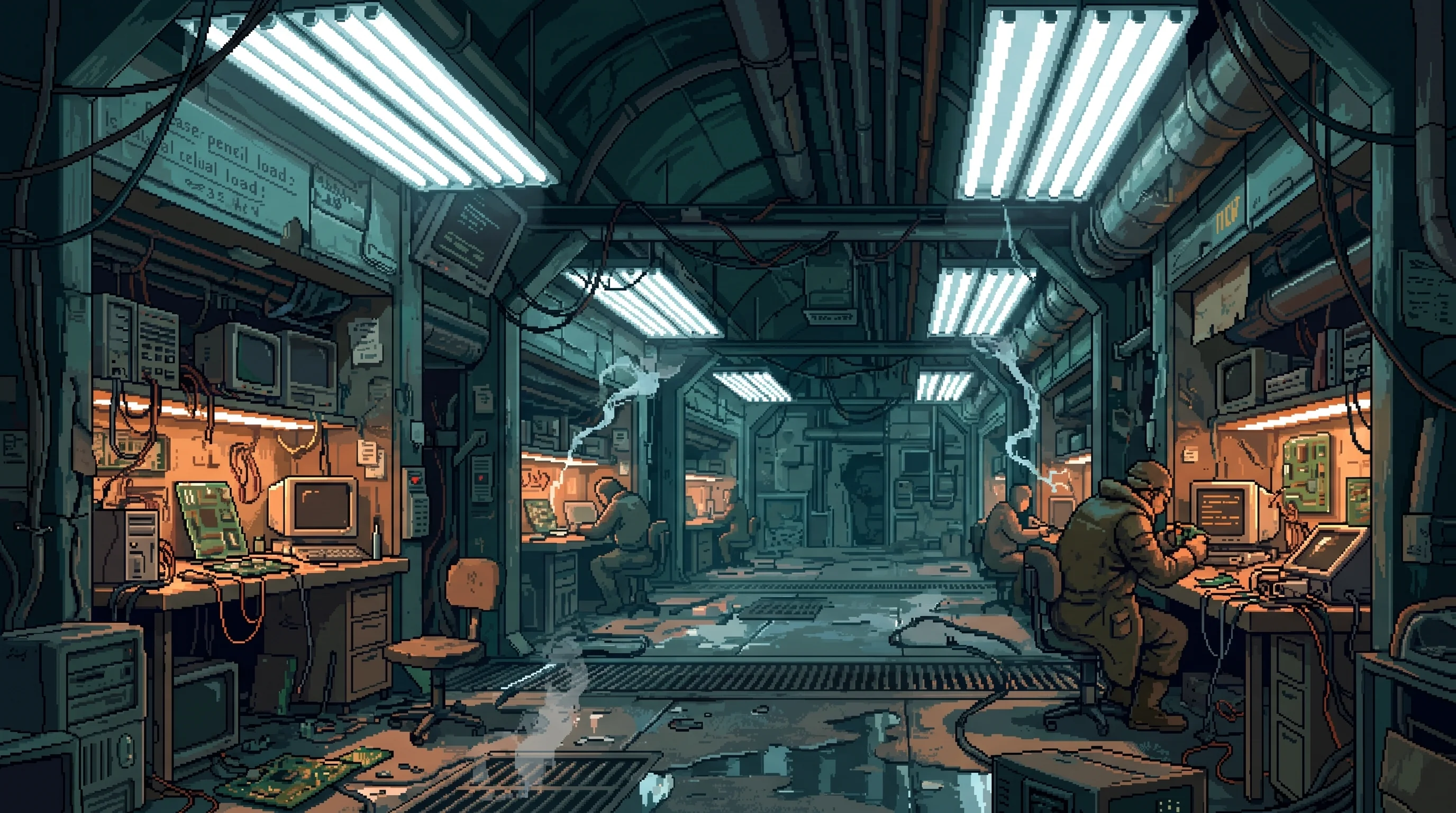
The pages were honest. They set out the actuarial band, the comparison, and the reasoning that moved from one to the other, in plain type, written so she could follow every line — that has been required in the licensed districts since 2173, and clerks are graded on whether the person can follow the page. Ostrow read all four. She disagreed. So she spent a winter writing down why, got two figures wrong and everything else right, and put four hundred pages in at the counter on the administrative shelf above Old Town.
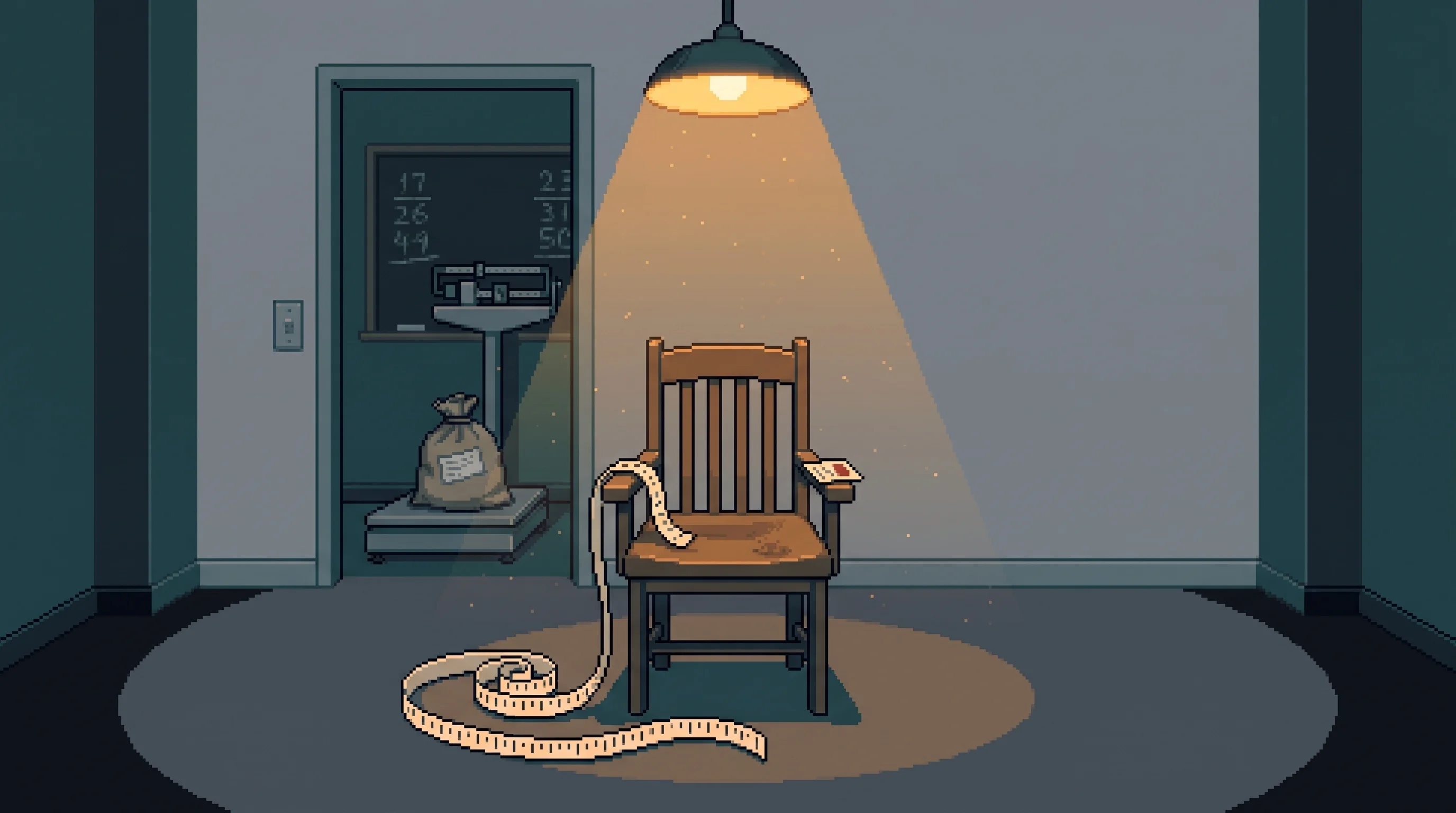
Eleven minutes later a clerk handed her a slip. One line.
The seat was occupied throughout.
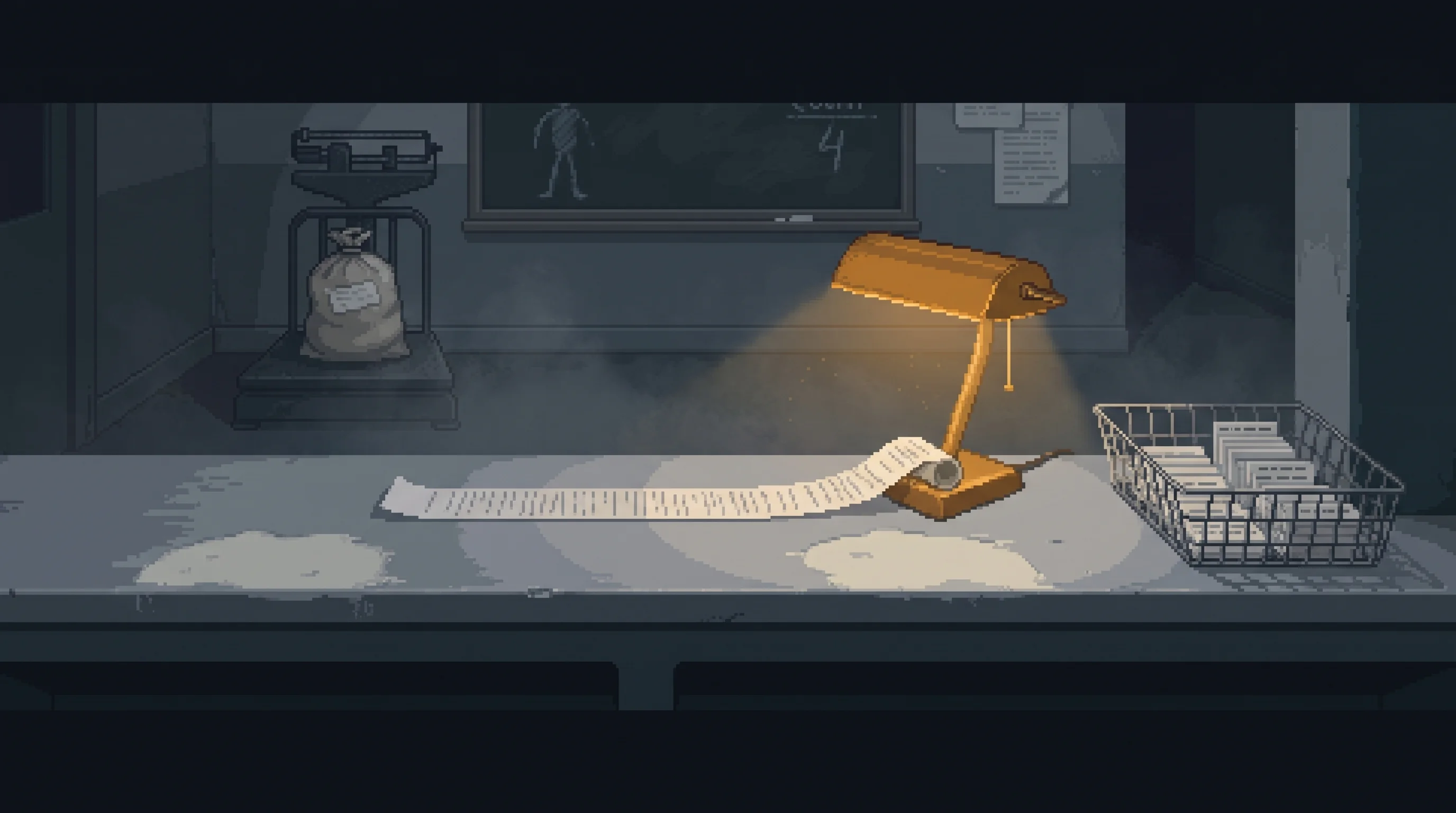
Her pages went into a canvas sack, sealed, with the docket reference chalked on the outside, and were carried to a platform scale in the back hall. Nobody opened them. Nobody was ever going to.
Why that is the only sentence available
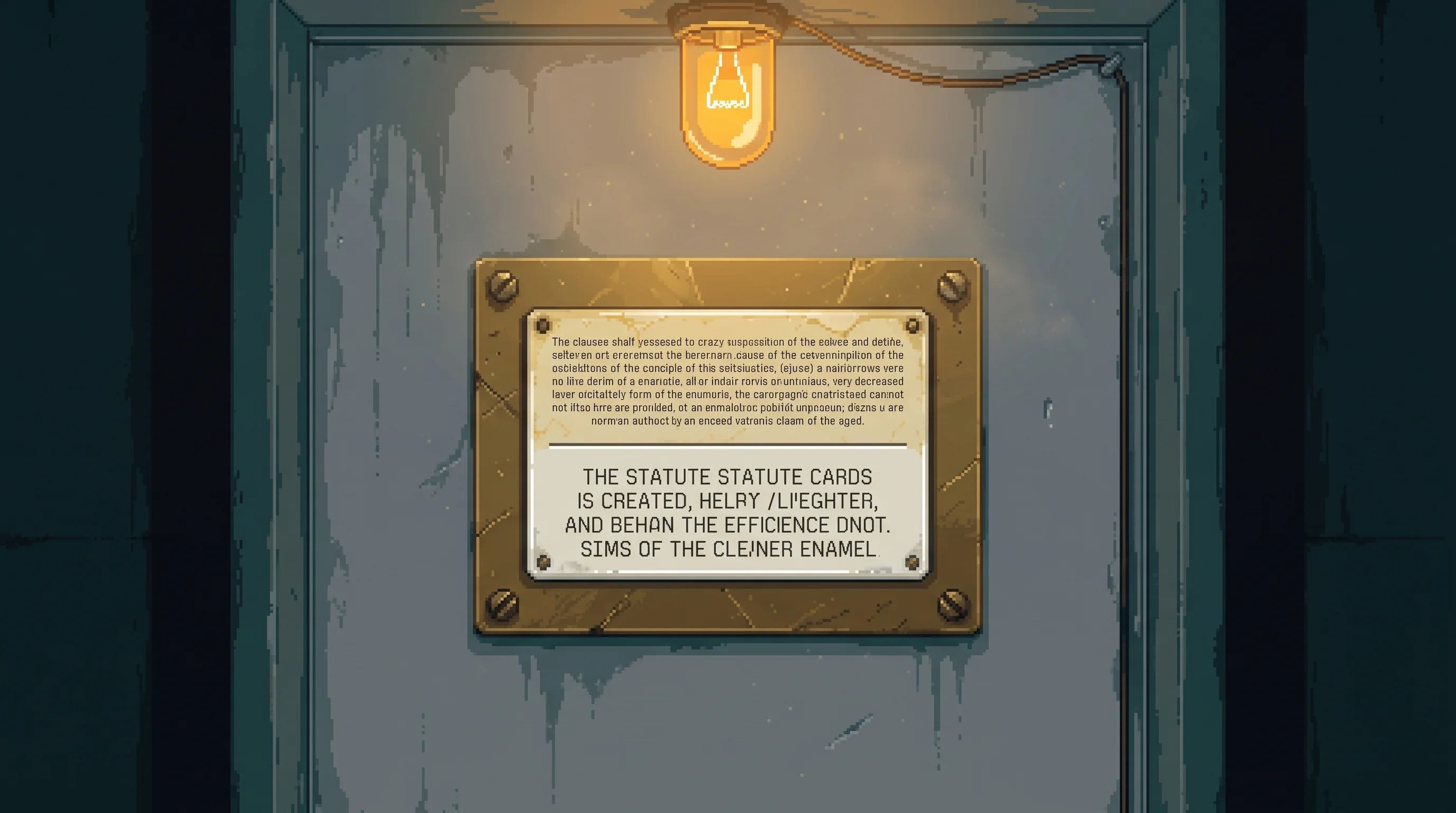
The rule is mounted on an enamelled card beside every chamber door in the districts, and you can read it in forty seconds. Most petitioners do, standing at the door.
A determination issued by a district's adjudicative engine is unimpeachable for as long as a warranted holder occupied the seat at the moment it issued. That is the first sentence, written in 2163. And reading the matter is not a condition of that validity, and confers no additional weight on anything. That is the second, added thirteen years later, in a plainly newer face of type, because nobody has ever reprinted the card.
Both were written by people fixing something.
By the early 2160s the tribunals had stopped believing authored proof. Eighteen years of flawless forgeries had taught them that any document, recording or attestation could be manufactured — and the engines had not stopped issuing. They issued through the night, through staffing gaps, through one documented quarter in the Old Town blocks in which no warranted officer entered the building at all and eleven thousand findings were composed, served and enforced. The 2163 clause voided those. Nobody argued.
Then the holders became visible, and liable. A determination would land, a household would come apart, and the officer who had been in the chair would be summoned to account for reasoning composed in an architecture no human in the room could run. Some tried. The transcripts were used against them, and against the next four. So the districts settled it: comprehension is not a condition of validity. The oversight guild lobbied for that clause and got exactly what it asked for.
Nobody drafted the product of the two. If reading adds nothing to a determination's standing, its absence subtracts nothing, and the only remaining variable is the body in the chair. Two hundred and eleven days after the amendment, the Register logged its first pleading on the vacancy ground. It succeeded. The drafting committee never reconvened.
Eleven seconds
The presence strip beside a warranted seat ticks out a record every two seconds. Two consecutive blanks and everything the engine issued inside that gap is void. Not flagged, not reviewed. Void, automatically, before anyone has looked at what it said.
On the afternoon Ostrow was answered, nine metres up the same corridor, somebody in Seat Nine stood up. Eleven seconds. By the following morning forty-one determinations were void, and none of the forty-one people involved had asked for that, or heard of each other, or would ever learn what the other forty had been about.

Ostrow's hearing had run in Seat Four. A man called Anton Kiszka has sat in it for eleven years. He answered a posting that asked for punctuality, continence, and no dependents likely to call during a sitting, and he is paid by the seated hour, and it was accurate about the work in a way almost nothing else in his life has been. His contract carries a fluid-intake schedule. Eleven years, no voided seconds. The cushion is his own; he brought it in the third year and the district let him keep it, on the reasoning that a comfortable holder moves less.
He has never read a case. Reading one would confer nothing, and the Register has confirmed in writing that it would also not be a defect. He kept the letter.
What he is permitted to see is the docket header, which is names. There are four thousand and eleven of them in a school exercise book, in pencil, first names only. One of them is Hanne. He does not know what her pages said and never will. He is the only person in the whole transaction who knows both that she existed and that he was there.
Who is good at this
Four minutes up the shelf road, eleven offices file more pleadings than every firm still arguing the facts.
Roster readers do not read files. They buy the building — corridor door counts, seat service logs, catering schedules, the thermal trace of one afternoon in one hallway. Their fee card stands face-up on the counter and every evidence purchase is itemised at cost. When a chamber's records are clean they say so at the first meeting and take no retainer, because a hopeless pleading costs them more than the fee is worth.
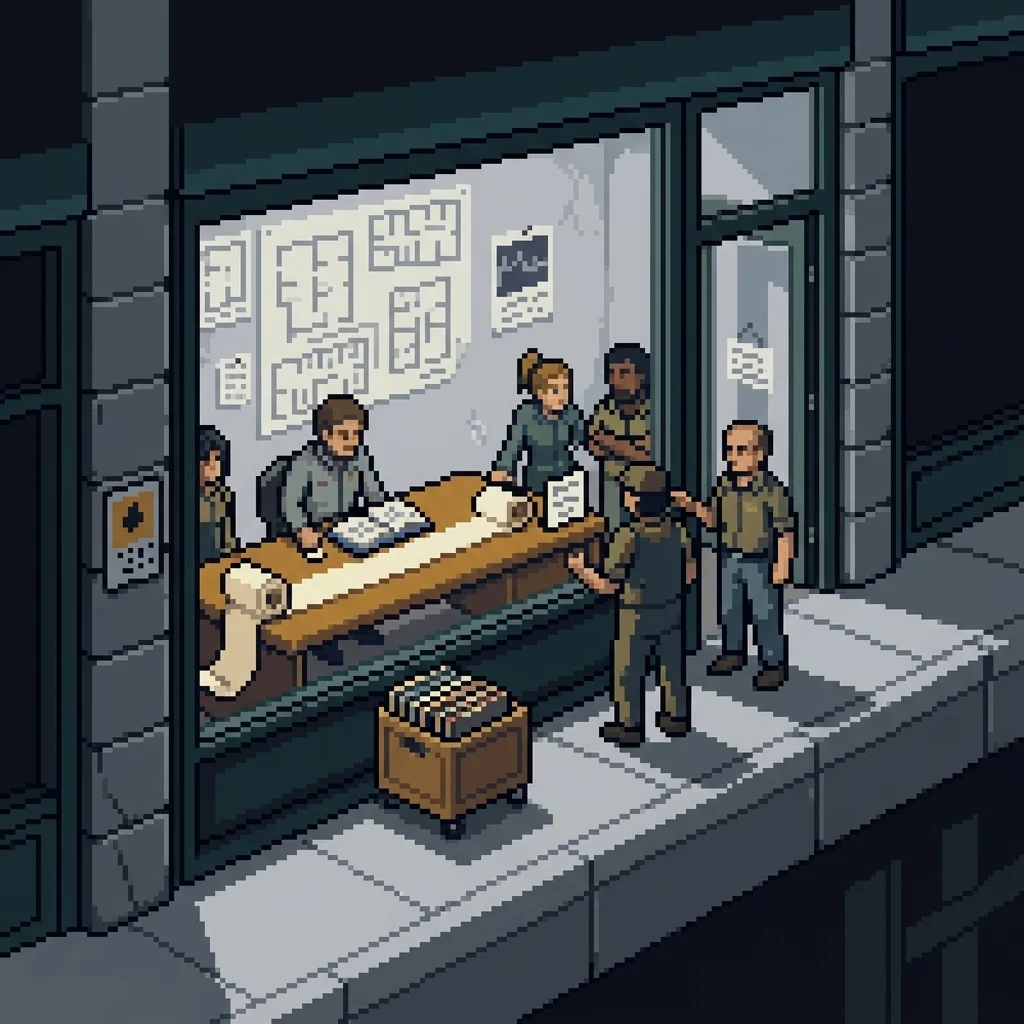
They took Ostrow's case afterwards and told her, accurately, that they could find nothing. They are the ones who would know.
Asked how they can work a case they have not read, every office on the street gives a version of the same answer: nobody at the Register reads it either, the engine composed it in an architecture no human present can run, the holder is barred from being faulted for not understanding it, and we are the only ones who charge for admitting that. It is not a defence. It has never lost an argument.
The refusal
One person has turned the ground down.
Iona Draskovic lost her engineering licence in the spring of 2184 when a recalled load case took it, along with twenty-two years of certifications that had named it. Nine weeks later a roster reader came down to her bench in the Cathodics with a floor plan and a plausible gap around the twenty-second minute of the sitting that had ruined her. He was straight with her — the fee, the evidence at cost, the odds at better than even. Void the sitting on attendance and the strike goes with it. Nobody anywhere has to look at a load case.

She heard the whole thing out. Then she said the instrument had asked her a fair question, she had not been able to answer it, and she was not going to have that undone by somebody's bladder.
She is the only recorded refusal on file. It is not pride, and she gets short with people who frame it that way: she would take the licence back the day somebody asked her the third question again, and a chair being empty is not an answer to it.
Where the rest of it went
The free clinic in the law-school ruins that has argued four hundred and twelve times that a human being should have to put their name to a number opened an attendance desk in 2181, three rooms from where it makes that argument. The desk is the clinic's largest single line of income. Two of nine volunteers will not staff it, and nobody there has ever published a defence of the arrangement — only the observation, which is true and is not an answer, that the desk is why the reading room is warm.
The oversight profession sells two products and has a rate card for one. The published product is a findable human beneath a decision, so that when it causes harm there is a name on the record. The other product is finality, and it does not require a stamp — only a body. Two southern arbitration divisions have already moved a floor onto holder-grade staffing at the seated hour and reported no change in any outcome.
Above the whole structure, five tiers of certified verdicts run to hundreds of pages nobody can follow, and their reversal rate is three in a thousand. Advocates spent nine years arguing missing forms and notification timing. The qualifying error was attendance the whole time. Seventeen firms that specialised in those appeals have closed since 2175, and two of the eleven offices on the shelf road are staffed by people who used to argue inference chains for a living.
And in a print house on the street below, a compositor named Aster Vann sets the Register's monthly occupancy roster on the same two-column proof stock she uses for the register of everyone who paid the district's prevention levy. Both can name, with perfect accuracy, everybody who paid and nobody who was answered. She has written twice to ask whether the merit bin is ever opened. Both replies quoted the rule. Both were correct. Neither said no.
What is still open
Six hundred metres downhill there is one room in the district that will let a petitioner say the rest of it out loud. Chief Registrar Solveig Nwaneri may not charge a fee, may not screen a filing for merit, and may not stop a person who is still speaking to the point. A growing share of her gallery arrives holding the one-line slip. She tells every one of them about the Bar at the filing window, in the flat voice she uses for the fee waiver, because it is a process fact and not a prediction. Then she hears them — eleven days, if that is what it takes — and the ruling attaches to nothing.
She has not worked out which half of that morning is the lie.
Twice now the Register has voided a determination on a gap that a holder disclosed himself, unprompted. Neither holder was penalised. Neither was asked why. Those two files are the only documents in that building anybody reads to the end, and the offices on the shelf road have read both.
They have started watching for holders who volunteer. Anton Kiszka has never volunteered anything. He has begun asking after the health of colleagues he has not met, which is new, and there is no clause in his warrant about it either way.