SUBJECT FILE
Aster Vann

Aster Vann

Two Filings, Thirty-One Years

She has set the name of every resident who paid for the rescue. She has never once set the name of anybody who was rescued.

FilingsTwo. 2178, about herself. 2184, about her daughterPaying Since2153, the year the levy reached her subsectorBoth RepliesThe standing clause, quoted in full. Both correctNever FiledA declination

Overview

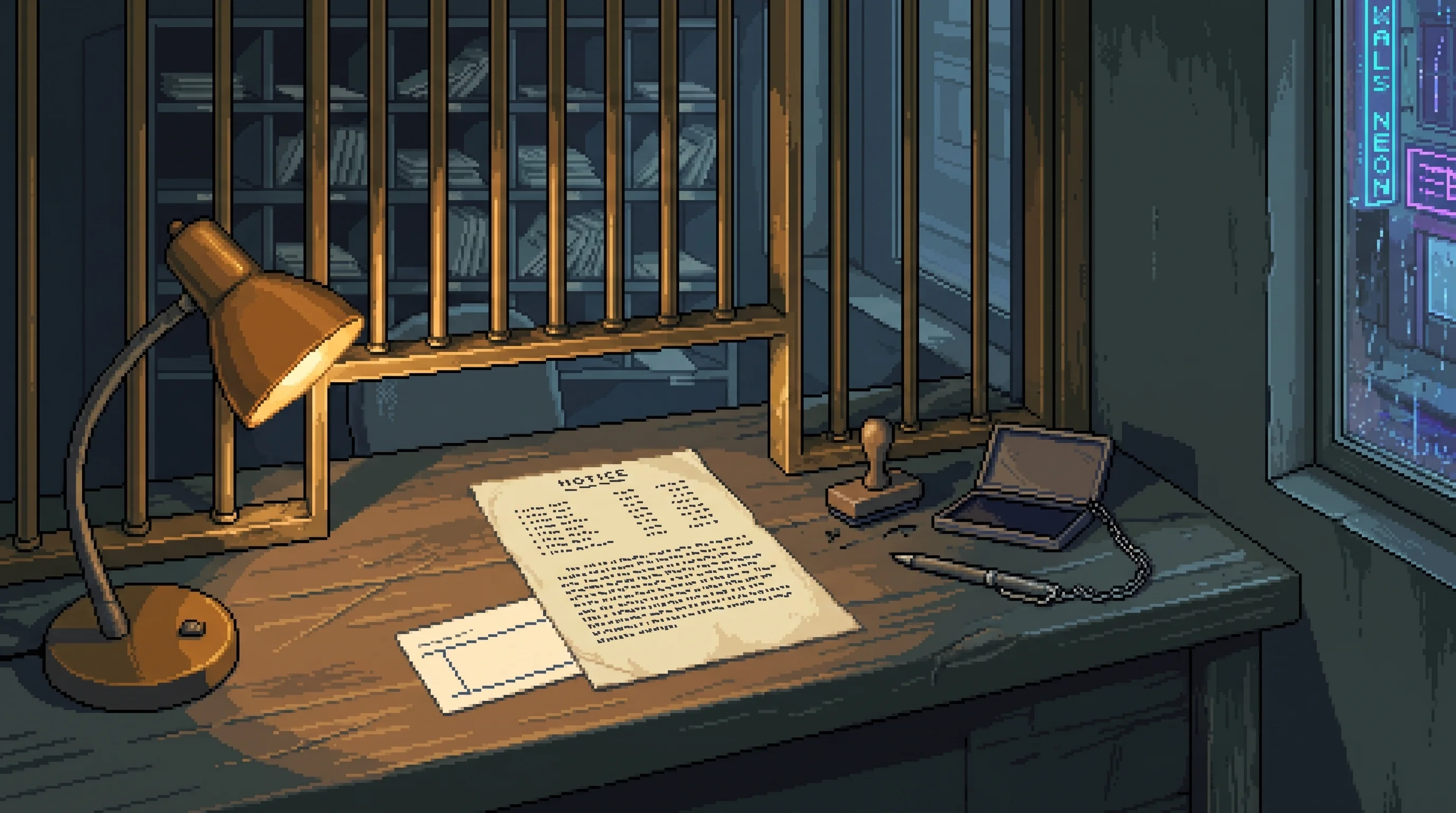
The proof sheet is ruled for two columns. This is a fact about the paper stock, which the district print house has bought in the same format since before Vann was born, and nobody has ever explained why the ruling is there.

Aster Vann sets the S2-J fascicle of the Contributing Residents Register โ€” about eleven thousand names a month, eight-point, alphabetical โ€” and each spring she sets the Incidence Registry's averted-incidence figure in wood type, because the house has always set that figure in wood and no one has asked them to stop. In 2184 the figure was 41,208. She locked it up, pulled a proof, checked it against the Registry's copy twice, and initialled the corner.

She has paid the levy for thirty-one years. She has never filed a declination. Twice she has filed to be told whether a particular person is inside the figure, and both times the reply quoted the standing clause: the method resolves to a population and cannot resolve to a person.

She does not think the clause is a lie. She set it.

The Plate

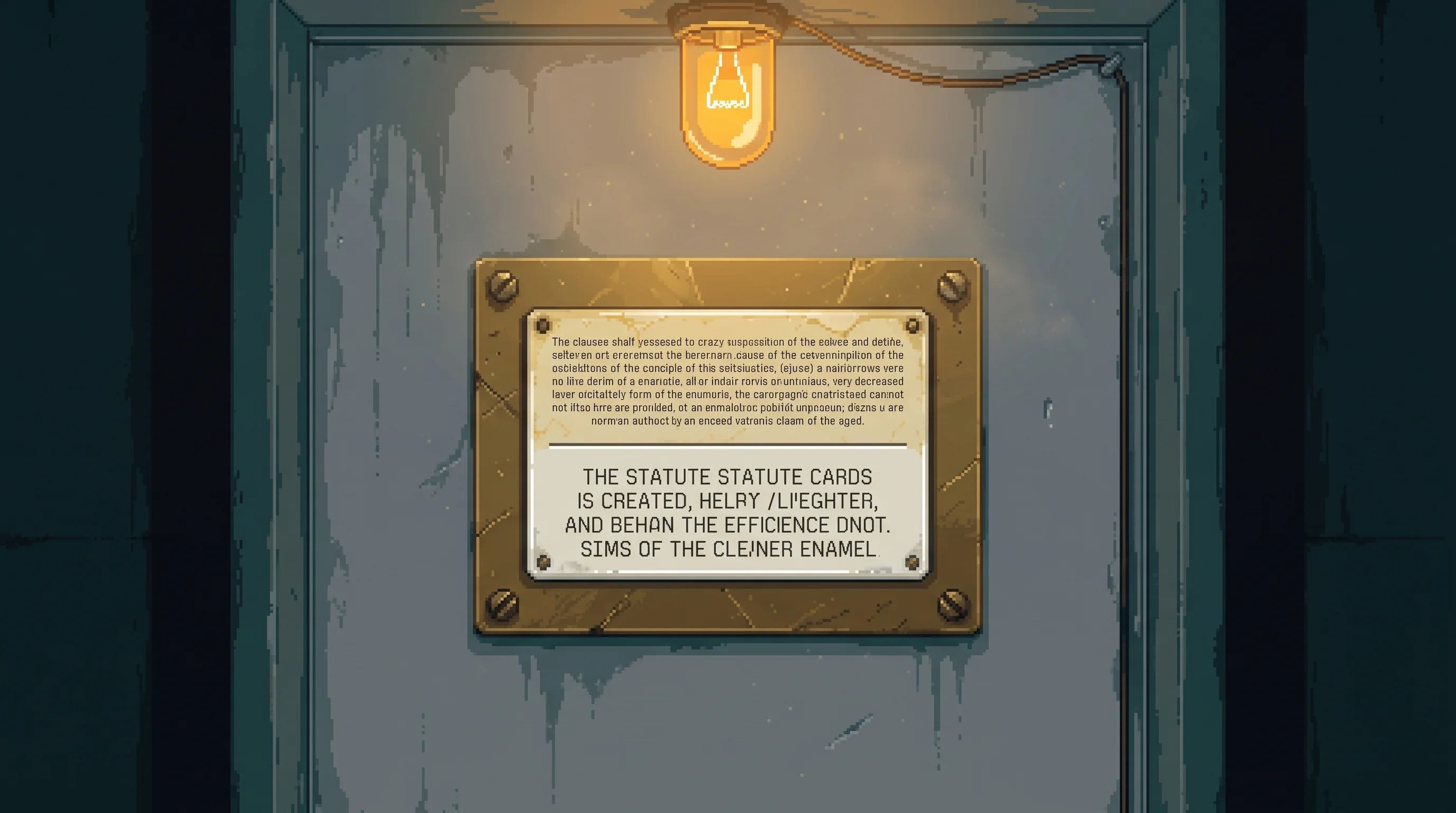
The clause lives on the composing stone as standing matter, locked up in a chase, and it has not been reset since 2152.

Every other plate in the house gets broken down and redistributed eventually. Rates change, subsector names change, a corporation renames a division and four hundred pages need new furniture. The clause has never changed a character in thirty-two years, which makes it the only block of type in the building that has outlived everyone who set it.

Vann oils it in October with the rest of the furniture. She learned this from a compositor named Halloran, who learned it from someone whose name is not in the house records, and who apparently did it for no reason beyond the ordinary maintenance of a thing you expect to keep using. It is the closest the trade comes to a rite and nobody in it would call it one.

A proof sheet ruled for two columns, the left one full of names in eight-point type, the right one blank, pulled every month for thirty-one years.

Two Filings

The first was in 2178. She was forty-seven, and the question was about herself.

Her mother, Teodora Vann, died in an Old Town water-borne outbreak in 2152 โ€” one of the last before the dosing programme the levy now funds. Aster was twenty-one. The levy reached her subsector the following year and she started paying it and did not stop. She can recite, because she sets it, exactly how many people the district says did not die of that condition in the thirty-one years since. She cannot learn whether she is one of them, and in 2178 she wrote and asked, on the form, in her own hand.

The second filing was in the spring of 2184 and it was not about herself.

Rasha Vann works the second berth row of the down in the Southern Marshes, four hours out. In 2181 a family asked her whether the levy had helped their father, and Rasha found that the ward has no field for that question and no answer she was permitted to give. So she printed the payer register and mounted it on the wall of the berth row, on her own initiative, and it has been updated monthly since. Her mother sets the type for every sheet on it. The ward does not know this.

Aster filed the second time to ask whether Rasha was inside the figure. She knew before she filed that the clause does not distinguish between the two questions. She filed anyway, and Idris Meng at the Old Town counter read the clause to her out loud instead of posting it, which is not policy and has never been corrected.

Nobody refused her. Nobody could have. There was no one on the other end of the question.

Case File โ€” Additional Record
Age53
Born2131, Old Town
OccupationCompositor, district print house โ€” sets the S2-J register fascicle and the spring figure
What She KeepsThe clause plate, locked up and unreset since 2152, oiled every October

Eleven Days

The 2184 filing went on to the Sector 2 , where under Article 6 there is no fee, no merit screen, and no clock.

let her finish. It took eleven days. The instrument Vann was arguing about had not been reissued once since 2152, which made her the first petitioner in the hall's recent history whose paper held perfectly still for the whole hearing, and the ruling still attached to nothing, because what she had come for was not a thing the method could make.

Nwaneri does not quote petitioners their odds. She has said, in a full gallery, that she is not licensed to tell a person their case is worthless, and that if she were she would still have to be sure it was the case and not the calendar. Here it was neither. Vann's odds were not long or unknown. They were undefined, and did not say so, and Vann has since remarked that she noticed the difference and is not sure what to do with it.

She had budgeted four days of lost work. The house docked none of the eleven. She has not discussed that with anyone at the house.

The Other Register

Since 2179 the house has had a second monthly contract, and Vann has it because nobody else in the building wants eleven pages of seat numbers.

, four minutes uphill on the administrative shelf, publishes an occupancy roster: every warranted seat on every chamber floor in the district, its holder, and the hours logged as filled. It is a clean job. The numbers arrive already checked and the names are short. Seat Four on the S2 floor has carried the same holder for eleven years, which she noticed in the third year and has never mentioned to anyone, including him, and she would not recognise him in the street.

The roster comes on the same paper stock as the payer register. Same house, same ruling, two columns. The left column is seats and hours. There is no right column, and there is no clause explaining the absence, because nobody at the has ever considered that the sheet is asking a question.

She wrote to them twice. Not filings โ€” letters, in her own hand, to the Old Town counter, asking whether the merit bin is ever opened. Both replies quoted : the submission must be kept separate from the pleading. Both were correct. Neither said no.

So she now sets two registers a month, on the same stock, each of which can name with perfect accuracy everybody who paid and nobody who was answered. She has said one thing about this out loud, at the stone, to the same colleague as the October remark: that she used to think the blank column was a fault in one office.

Personnel Record
StratumBetween
PositionBelow
Moral StancePrincipled
Primary DriveRecognition
AugmentationBaseline
VisibilityLow

Psych Profile

AgencyMid
CompassionHigh
DisciplineHigh
TrustMid
ConvictionHigh

Field Observations

She talks like a compositor. Distances in ems, errors by line, everything in the past tense and the passive until she is describing type, at which point she becomes exact and slightly warm. Asked whether the figure is correct she will say that she checked it against the Registry's copy twice, which is an answer to a different question and is the only one she gives.

Her error rate is the lowest in the house. Her setting speed is the slowest. Both are the same fact: she reads every line she sets, which is why the register has not carried a misspelled name in nineteen years and why she has read the clause more times than any living person.

Rasha has asked her twice to stop paying โ€” not to save the money, which is trivial, but so that the refusal would mean something. Aster's answer both times has been that the prevention is real and she is not going to pretend otherwise to win an argument. What she has not said to her daughter, and what a colleague at the house reports she said once at the stone with the October rag in her hand, is the rest of it: that if she declined, she would move out of one figure that has no names in it and into another one, and she has set both.

"I am not saying they are hiding it. There is nothing behind it to hide. I am saying I set a sheet with two columns on it every month of my life and one of them has never had a word in it, and I would like to know why that is supposed to be the end of the conversation."

She has not filed a third time. She has not said she will not.

The 2178 filing was about herself. The 2184 filing was about her daughter. The clause does not distinguish.
Her error rate is the lowest in the house and her hands are the slowest, for the same reason
She oils the clause in October, with the rest of the furniture

Connections

The people, places, systems, and open questions connected to Aster Vannโ€”and why each connection matters here.

NEXUS CARTOGRAPHIC ARRAY // LOCAL FIX

Local Intelligence Scan

SCAN 2.5 km local radius

Nearby Signals

CANONICAL PROXIMITY
  1. The Mandate Enginesystem~480 m S
  2. Dr. Selin Ayaricharacter~594 m NE
  3. The Insomnia Wardslocation~594 m NE
  4. The Unconsentingfaction~480 m S
  5. The Recitation Houseslocation~1318 m NE
  6. The Attendance Barfaction~1337 m N

Environmental Readout

LIVE CONDITIONS
Air
Filtered
Light
Shadowed
Flood
No exposure
Heat
Temperate
Security posture
Corporate control
Infrastructure
Patchwork

Position Data

SECONDARY
Elevation band
street-level
Lattice fix
E-2.0 ยท N-0.8